📖 About this Collection
Neil Young: Voice from the Wilderness, Ink on Newsprint
The Legend & The Legacy
Long before streaming algorithms and social media feeds could reduce an artist to a curated persona, Neil Young built his legend one magazine stand at a time. From his early days with Buffalo Springfield through the jagged emotional peaks of Harvest and Tonight's the Night, the Canadian-born troubadour occupied a singular, often contradictory space in the public consciousness — a folk purist who embraced distortion, a commercial chart-topper who seemed genuinely indifferent to commerce, a recluse who somehow never disappeared. In an era when Rolling Stone was essentially the official gazette of the counterculture, readers lined up to decode him. His famous "Rust Never Sleeps" ethos, his split identity as both the gentle acoustic poet and the godfather of grunge, his political candor, and his near-mythological battles with illness and personal tragedy all unfolded across the glossy and newsprint pages of the 1970s, '80s, and '90s. His collaborations with David Crosby, Stephen Stills, and Graham Nash placed him at the very epicenter of a generation's idealism, while his stubborn refusal to remain there made him something rarer still — an artist who kept evolving long after his contemporaries had settled into nostalgia. The press loved him for his contradictions, and readers loved the press for trying to explain them. To hold a magazine from that era is to hold the pulse of a generation that genuinely believed music could change the world — and believed he was one of the men most capable of changing it.
Inside the Archive
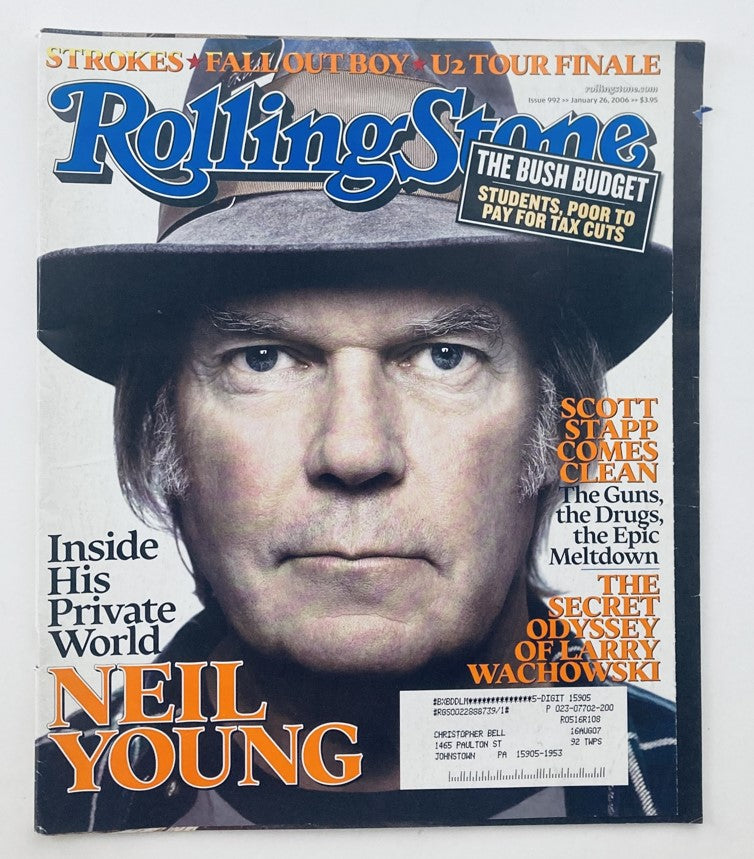
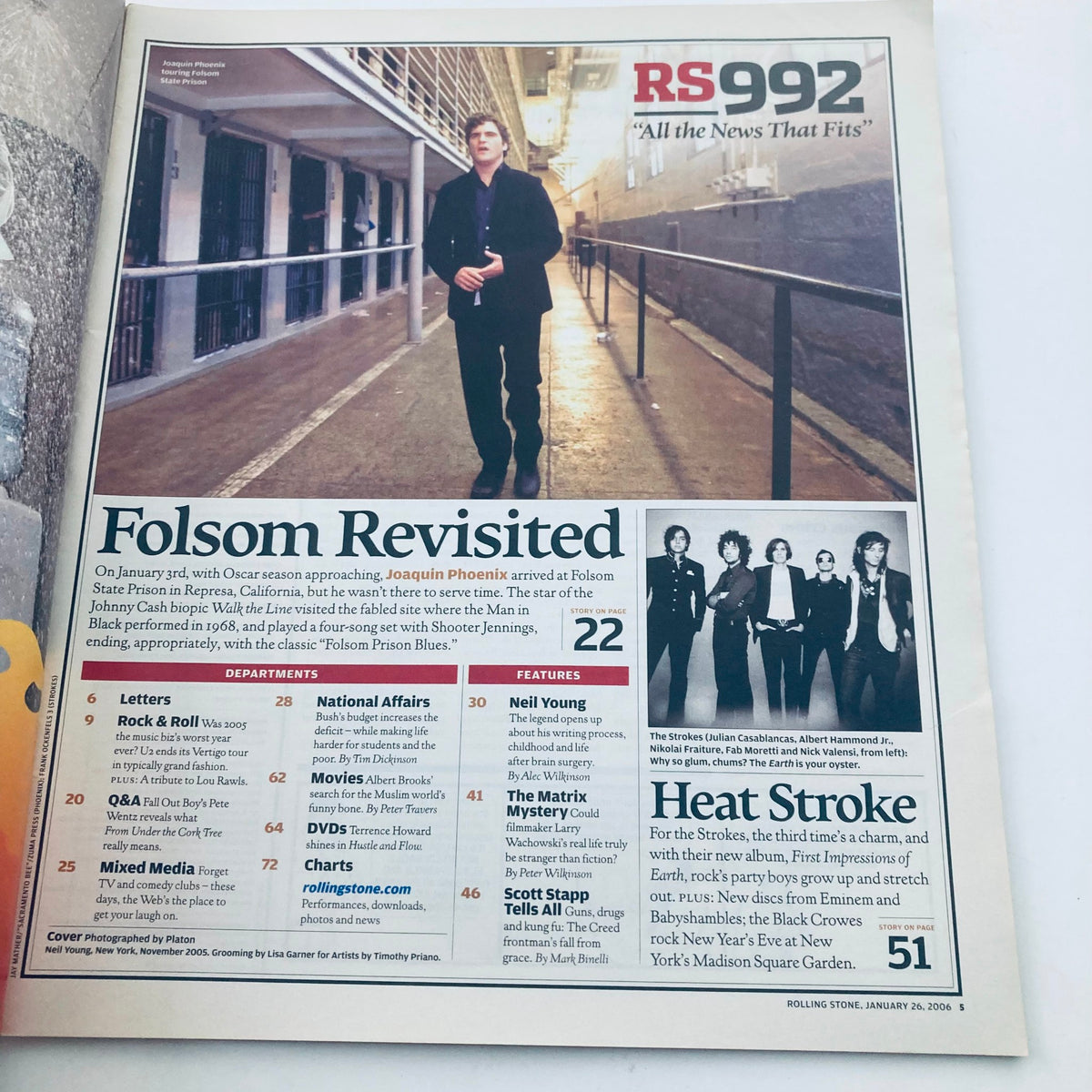
The vintage press covered the Old Man with a reverence usually reserved for poets and prophets. Rolling Stone was perhaps his most faithful chronicler, running sprawling, often combative interview features that read less like celebrity profiles and more like philosophical dispatches from somewhere deep in the Santa Cruz mountains — accompanied by brooding, documentary-style photography that captured his flannel-and-denim austerity with striking intimacy. Creem, the self-styled "America's Only Rock 'n' Roll Magazine," offered a rawer, more irreverent lens, celebrating his noisier excursions into feedback and distortion with the kind of breathless prose that matched the music itself. Across the Atlantic, the British music press — NME and Melody Maker in particular — treated him as a towering, almost literary figure, granting him cover placement and long-form analysis at moments when American media had written him off as uncommercial or difficult. General-interest publications like Time and Newsweek occasionally turned their gaze toward him as well, particularly during his commercial peaks, framing him not merely as a rock star but as a cultural symptom — a sign of something restless and searching in the American spirit. The photography across these publications is its own archive within an archive: stark concert shots lit from below, candid farm-life portraits, tour bus candids that feel almost accidental in their intimacy, and the occasional iconic cover image that managed to make introspection look monumental.
Curator's Checklist: Highlights Often Include
- Early career features from the late 1960s, covering his emergence with Buffalo Springfield and his initial solo output — some of the rarest and most sought-after issues in any rock-era collection, often capturing a young artist still finding the full dimensions of his voice
- Peak-era Rolling Stone covers and features from the Harvest and Comes a Time years (early-to-mid 1970s), when he was among the most discussed and debated artists in American music journalism, his face appearing on newsstands with the regularity of a sitting president
- Coverage of the "Ditch Trilogy" period — the raw, difficult albums Time Fades Away, On the Beach, and Tonight's the Night — reflecting the press's genuine puzzlement and eventual reverence for his deliberate retreat from mainstream success, a creative gamble that history has since judged as visionary
- CSNY reunion coverage and politically charged features, particularly around the Four Way Street live album and the aftermath of the Kent State massacre, which inspired "Ohio" — one of the most urgent protest songs ever committed to vinyl and one that placed him squarely in the center of a nation's open wound
- 1980s retrospectives and comeback coverage, particularly around Re·ac·tor, Trans, and the critically triumphant return of Freedom in 1989, capturing a decade of media ambivalence slowly giving way to renewed and deeper acclaim
- International editions and tour coverage, including British and European music press features that often provided more analytical, historically grounded perspectives than their American counterparts, treating his catalog with the seriousness more commonly afforded to classical composers or literary novelists
The Collector's Value
There is something irreplaceable about encountering Neil Young through the media of his own moment — the slightly yellowed pages of a 1972 Rolling Stone, the ink just faintly set into paper stock that has absorbed four decades of time, the vintage hi-fi and denim advertisements bordering the columns like a perfectly preserved window into a vanished world. These are not reprints, digital scans, or curated retrospectives softened by hindsight; they are primary sources, capturing the critical debate, the cultural anxiety, and the genuine wonder that surrounded one of rock's most uncompromising figures in real time, before history had decided what to make of him. Each issue carries with it a kind of accidental archaeology — the film advertised on the back cover, the concert listings tucked inside, the letters-to-the-editor debating his latest album with a passion that no comment section has ever quite replicated. The tactile experience alone commands a kind of attention that the digital world cannot manufacture: the weight of a large-format music magazine, the slight give of aged newsprint under your fingers, the faint ghost of old ink that rises when you turn a page slowly and carefully, as it deserves. These objects were never meant to last this long, which is precisely what makes their survival so quietly astonishing. For collectors of classic rock memorabilia, 1970s counterculture ephemera, or original music press and journalism, these publications offer not merely decoration but documentation — artifacts of a conversation between a singular artist and his era, still alive and still speaking on the page. Browse the current available inventory below and find the issue that speaks directly to you.