📖 About this Collection
Norman Mailer: The Combatant of the American Conscience
The Legend & The Legacy
Few writers have ever thrown themselves at American life with the same ferocious, full-contact intensity as Norman Mailer. From the publication of The Naked and the Dead in 1948 — a World War II novel that arrived like a detonation on the literary landscape — to his polarizing dispatches on Vietnam, the moon landing, Muhammad Ali, and the 1968 Democratic National Convention, he was perpetually at the center of the culture's most volatile arguments. In an era when print was the public square, readers reached for Time, Esquire, and The Village Voice to find his voice: bellicose, brilliant, and impossible to ignore. He did not merely observe American civilization; he wrestled it to the ground. Before the internet collapsed the distance between writer and reader, a new Mailer piece in a magazine was an event — something you argued about at dinner, dog-eared, and pressed into a friend's hands.
Inside the Archive
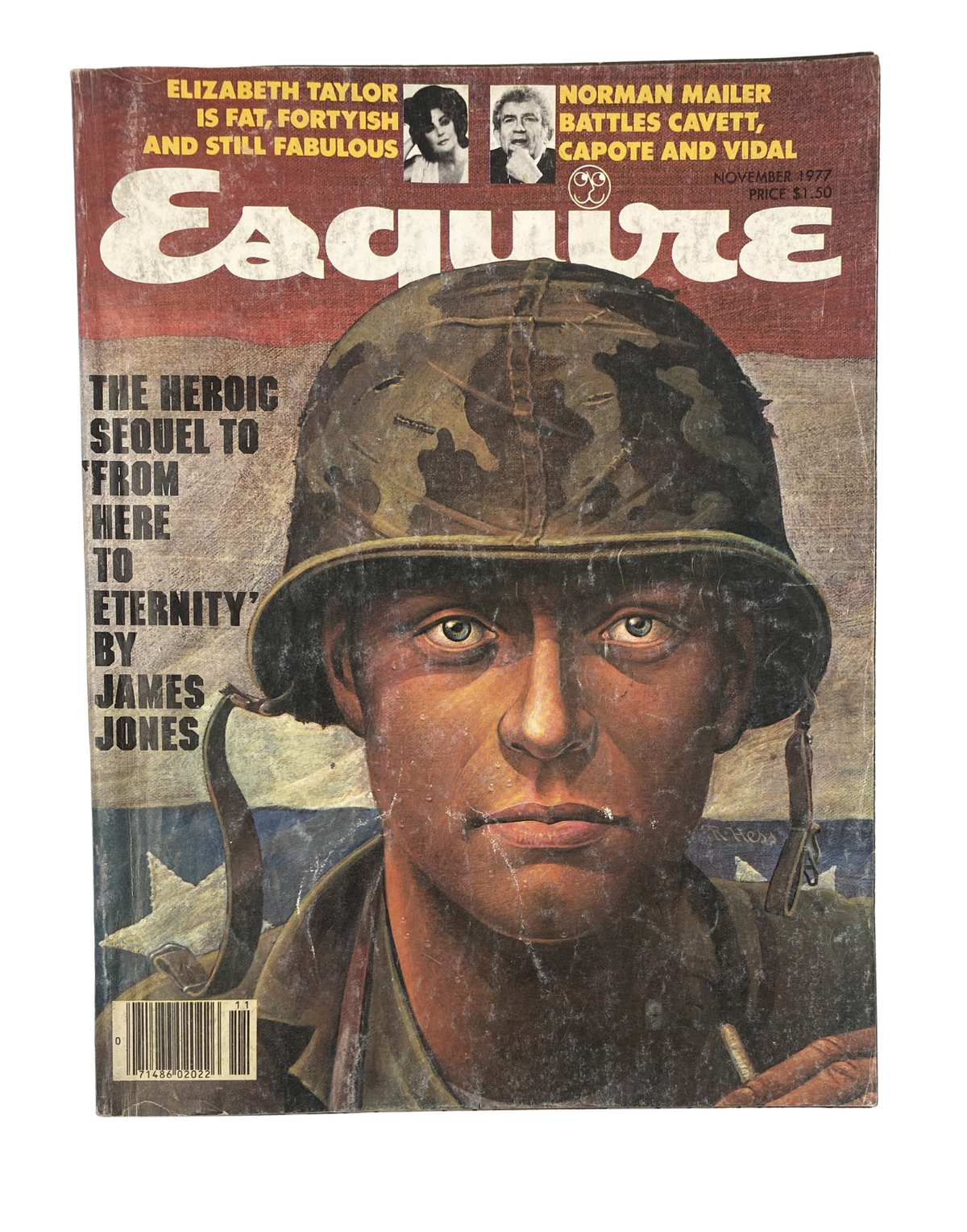
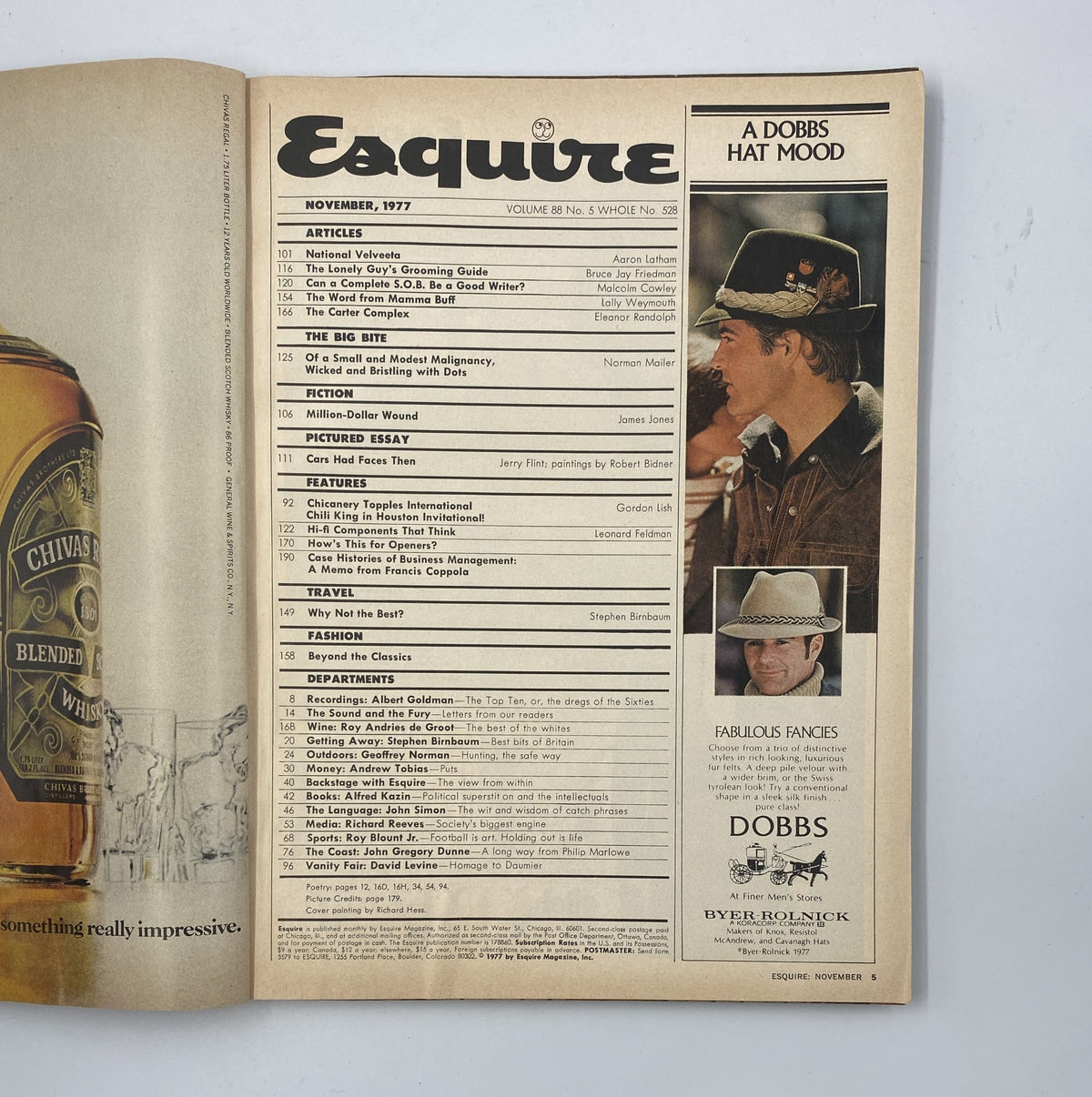
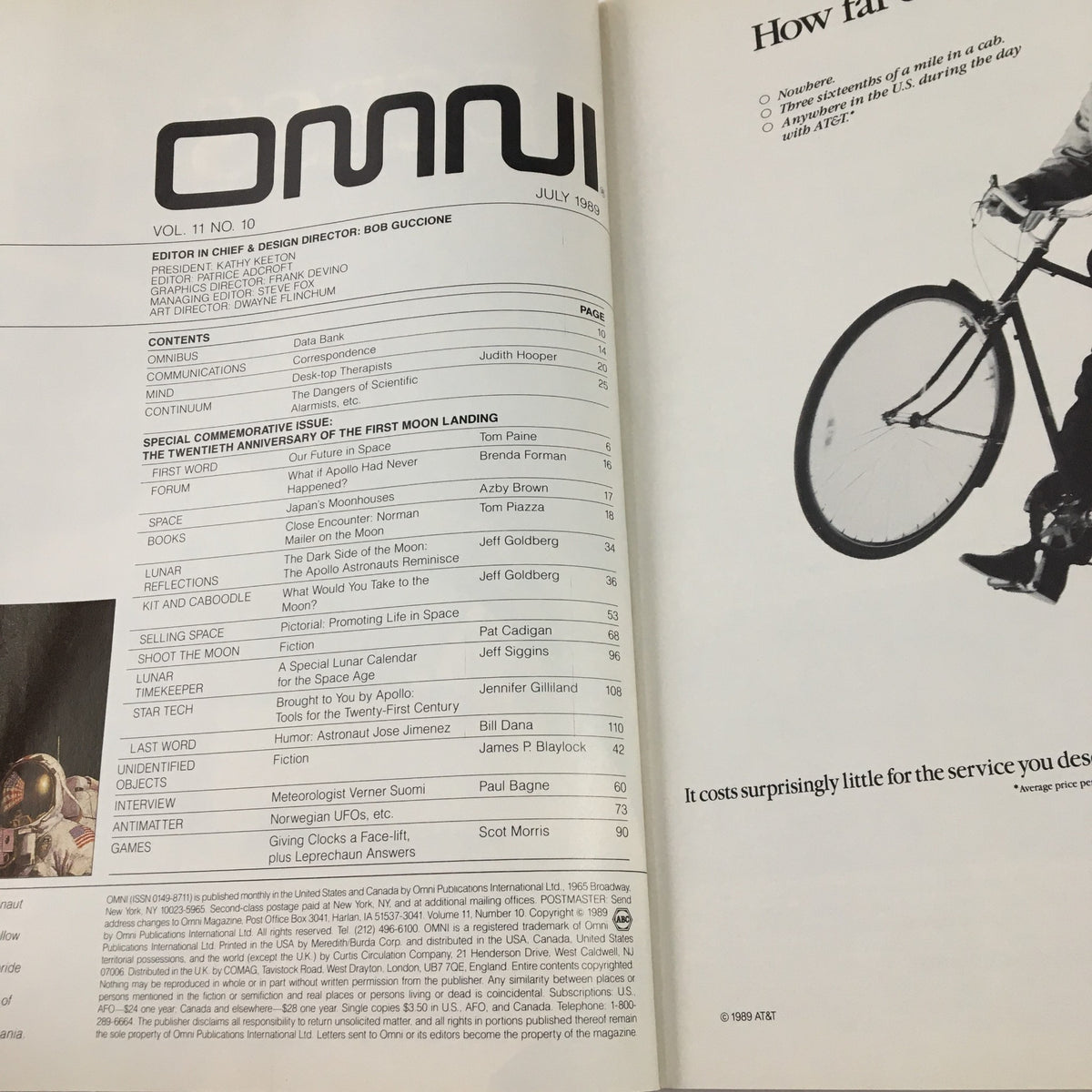
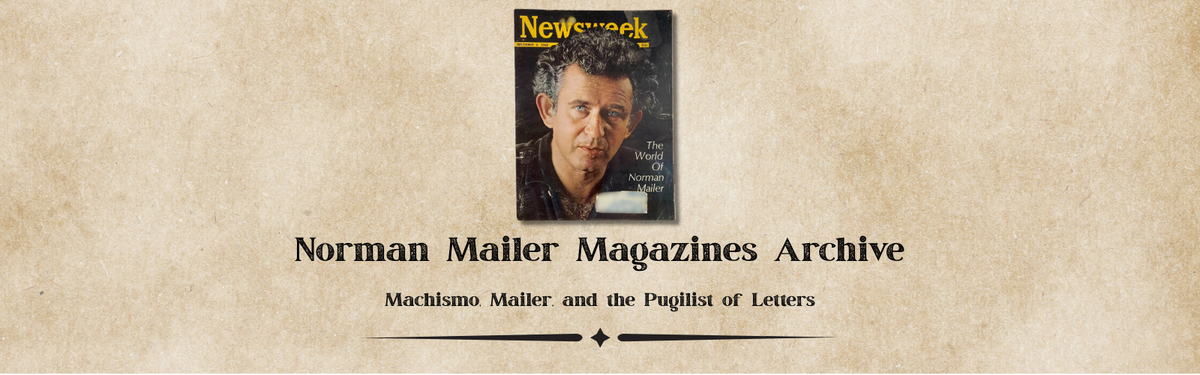
Vintage magazines covered the pugnacious literary lion with a combination of reverence and barely concealed alarm — never quite sure whether they were profiling a genius or a menace, and perhaps suspecting he was both. Esquire was his most natural habitat, publishing some of his most electrifying New Journalism alongside portrait photography that captured the man's characteristic scowl and coiled energy — a fighter's face on a philosopher's body. Time placed him squarely within the broader American cultural conversation, its covers and profiles framing him as both symptom and diagnosis of a turbulent nation in flux. Life, with its sweeping photographic essays, documented the events he himself was covering — the anti-war marches, the heavyweight championship bouts, the Apollo program — often placing his presence within the same visual frame as the history he was narrating. International publications such as Le Nouvel Observateur in France treated him with the solemn gravity Europeans reserved for American intellectuals who dared to be political, recognizing in him a writer whose arguments transcended borders.
Curator's Checklist: Highlights Often Include
- Literary breakthrough coverage — Early 1950s issues reacting to the sensation of The Naked and the Dead, including reviews and author profiles that capture the electricity of a major new voice arriving in postwar American letters
- Countercultural dispatches — Late 1960s issues documenting his participation in the March on the Pentagon and the chaos of the 1968 Chicago convention, events he immortalized in The Armies of the Night and Miami and the Siege of Chicago
- The Mailer-Ali nexus — Boxing coverage from the 1970s in which the writer's ringside obsession with Muhammad Ali placed two of the era's most defiant American figures within the same editorial frame
- The celebrity provocateur — Profiles and features from talk-show culture's print echo, covering his notorious television appearances, his Brooklyn political campaigns, and his reputation as the most argumentative man in any room
- Late-career literary reckoning — 1980s and 1990s issues reassessing his legacy, covering major works like The Executioner's Song and Harlot's Ghost, and positioning him as a flawed monument of twentieth-century American literature
The Collector's Value
To hold a vintage magazine featuring Norman Mailer is to hold a piece of the American century's conscience in your hands — the slightly brittle paper stock, the cool gloss of a mid-century cover photograph, the ghost of ink that has outlasted the arguments it once ignited. These are not reprints or digital facsimiles; they are primary sources, surrounded by the period advertisements, the competing headlines, and the graphic design of their exact cultural moment, all of which conspire to return you, viscerally, to the era in which his words first landed like blows. For collectors of American literary history, New Journalism and countercultural print media, or twentieth-century political and social history, these publications offer an irreplaceable, tactile connection to a writer who believed — above all else — that ideas had consequences and that sentences were weapons. Browse the current available inventory below, and claim your piece of that unfinished argument.