📖 About this Collection
Peter Jennings: The Voice That Held a Nation Together
The Legend & The Legacy
Long before the scroll of a news feed or the ping of a breaking alert, Americans turned to their television sets — and the magazines beside their armchairs — to make sense of the world. For nearly four decades, Peter Jennings was that world's most trusted guide. As the sole anchor of ABC World News Tonight from 1983 until his death in 2005, the Canadian-born broadcaster grew into one of the defining journalistic figures of the late twentieth century, covering everything from the fall of the Berlin Wall to the horrors of September 11th with a composure that felt almost architectural in its steadiness. What made Jennings singular was the arc of his reinvention: a man who anchored network news at 26 without a college degree, stepped back, returned to the foreign desk to rebuild his credibility from the ground up in Beirut and across the Middle East, and emerged as arguably the most cosmopolitan and rigorously prepared voice in American broadcast journalism. In an era when the nightly news was a shared national ritual — households across the continent pausing at 6:30 to hear his measured cadence — he was not merely reporting history. He was the texture of history as millions of people experienced it.
Inside the Archive
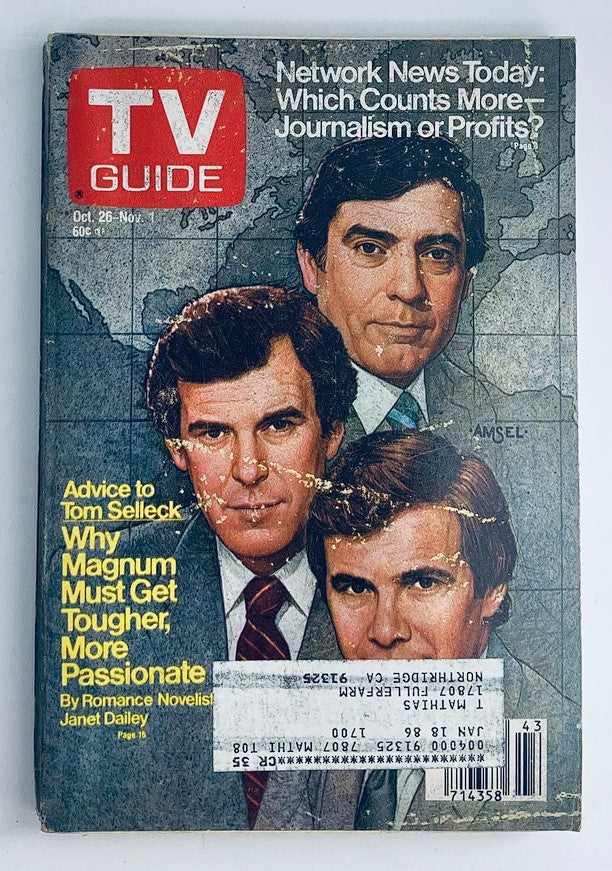
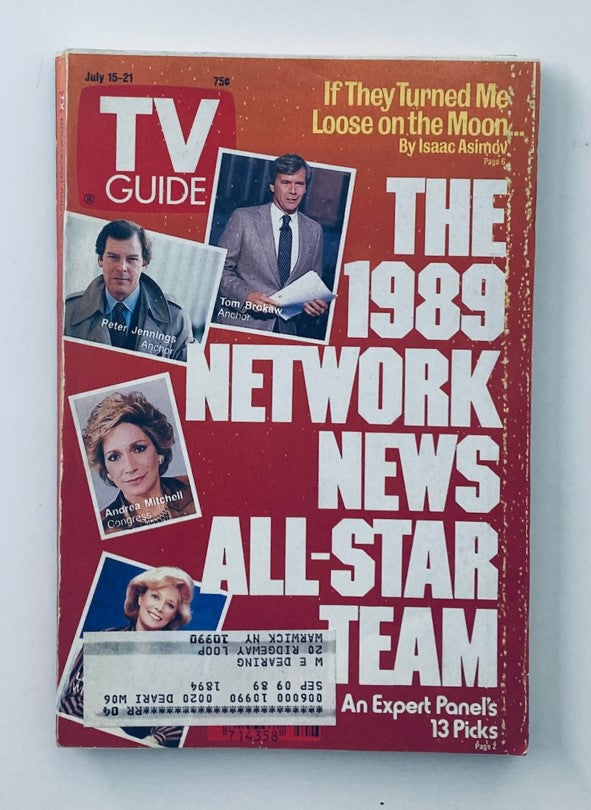
The print media of Jennings' era chronicled his rise with the reverence typically reserved for statesmen and cultural icons. News weeklies were his natural habitat in print — Time and Newsweek featured him repeatedly, both as a subject of media criticism during the fierce anchor wars of the 1980s and as a symbol of broadcast journalism's intellectual ambitions. Life magazine, in its later revival editions, captured the cinematic quality of the man: those wide-set eyes fixed just past the camera, the careful tie, the perpetual sense that somewhere on the planet something momentous was unfolding and he already knew about it. Trade and media-industry publications like Columbia Journalism Review examined his craft with academic seriousness, while mass-market monthlies such as TV Guide — the most widely circulated magazine in America for much of his tenure — brought his face into tens of millions of suburban homes, framing him as both celebrity and conscience. The photography across this body of coverage tends toward the authoritative: anchor desk portraiture, on-location war correspondency shots from the Middle East, and behind-the-scenes glimpses of the ABC News machine humming at full speed during the great breaking stories of the Cold War's final chapter.
Curator's Checklist: Highlights Often Include
- The Anchor Wars Coverage — Features and analyses from the 1980s examining the fierce rivalry between Jennings, Tom Brokaw, and Dan Rather, frequently appearing in news weeklies and media trade publications as all three networks battled for the nightly news crown
- September 11th Memorial Editions — Special issues from the autumn of 2001 in which Jennings' marathon, nearly uninterrupted on-air broadcast became a defining cultural document, with print media often referencing his role as the steady voice during America's longest news day
- Cold War & Foreign Correspondent Era — Coverage from the late 1960s through the 1970s reflecting his years as a Beirut-based Middle East correspondent, a period that shaped his international authority and was noted in retrospective profiles throughout his career
- ABC News Milestone Issues — Anniversary and retrospective editions celebrating landmark moments at ABC — the 1988 Seoul Olympics, the Gulf War, the Clinton impeachment — in which Jennings figures prominently as the network's editorial anchor and face
- Tribute & Legacy Editions — Publications from mid-2005 commemorating his passing from lung cancer, many of which served as sweeping retrospectives of both the man and the golden age of network television news he so elegantly embodied
The Collector's Value
To hold a vintage magazine featuring Peter Jennings is to hold something the internet cannot replicate: the specific gravity of how a culture chose to remember a moment while it was still happening. The slightly rough tooth of a 1980s newsweekly cover stock, the faint petroleum warmth of decades-old ink, the surrounding advertisements for cars and cigarettes and cameras that no longer exist — all of it conspires to place you back inside a world where the nightly news was a communal act of citizenship, and one man's steady voice was the closest thing a fractured world had to a shared narrator. These issues are primary sources in the truest archival sense: editorial choices made under deadline, photographs selected with cultural intent, prose written before the verdict of history was in. For collectors of broadcast journalism history, Cold War and late twentieth-century Americana, or the golden age of network television, these publications offer an irreplaceable window into the media landscape that shaped modern news as we know it — and into the singular figure who embodied its finest aspirations. Explore the current issues available in our archive below.