📖 About this Collection
Phil Collins: The Voice Behind the Thunder
The Legend & The Legacy
Few artists of the late twentieth century achieved what Phil Collins did — a seamless, almost inexplicable crossover from the progressive rock underground into the beating heart of mainstream popular culture. From his early years as the thundering drummer and eventual frontman of Genesis, to the stratospheric solo career that made him one of the best-selling music artists in history, Collins occupied an extraordinary space in the public imagination throughout the 1980s and into the 1990s. In an era before streaming algorithms and social media, his story unfolded exclusively through physical print — fans devoured his interviews in weekly music papers, pored over full-colour spreads in glossy monthlies, and tracked his chart dominance through the printed columns of entertainment trade publications. The emotional rawness of albums like Face Value and No Jacket Required, the tabloid fascination with his personal life, and the sheer ubiquity of his music on radio and MTV made him irresistible copy for editors on both sides of the Atlantic.
Inside the Archive
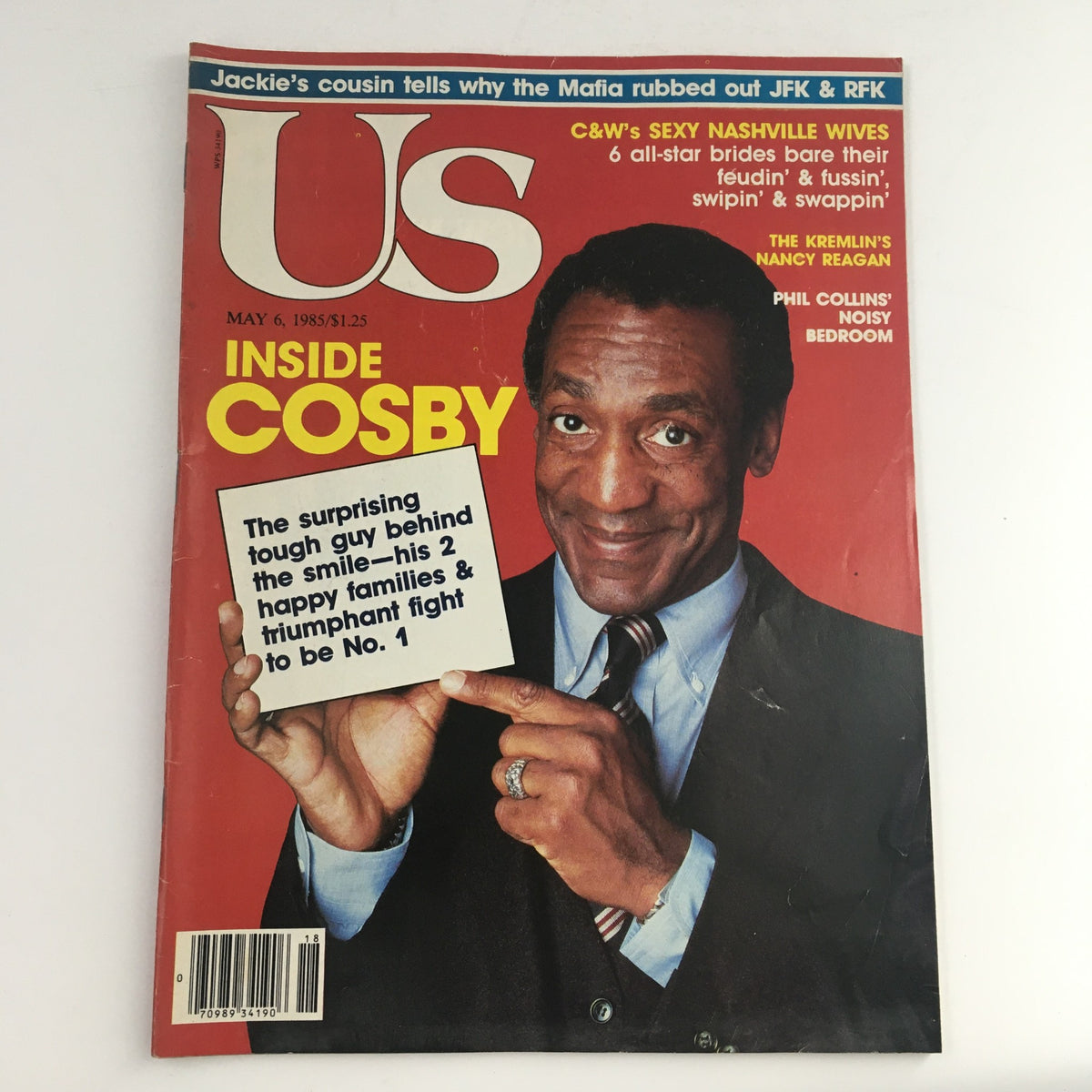
Vintage magazine coverage of Collins spans two distinct but equally rich visual eras. In the late 1970s and early 1980s, he was captured primarily in the earnest, high-contrast style of rock music photography — moody studio portraits, live-action drum kit shots, and candid backstage frames that reflected the seriousness of the progressive rock world from which he emerged. By the mid-1980s, as No Jacket Required conquered global charts and his face became one of the most recognisable on the planet, the editorial tone shifted dramatically: glossy, warm-lit celebrity portraiture replaced the gritty aesthetic, and his presence migrated from specialist press to mainstream lifestyle titles. Rolling Stone placed him at the centre of the decade's defining music narratives, devoting extensive features to his dual career and his legendary Live Aid performance in 1985 — the day he played Wembley Stadium and then boarded Concorde to perform again in Philadelphia. Smash Hits and Record Mirror documented his dominance over the British pop consciousness with a breathless, fan-magazine intimacy, while the more considered pages of Q Magazine, founded in 1986, offered long-form critical reassessment of his catalogue and cultural weight. International titles from Germany's Bravo to Japan's Music Life further reflect just how thoroughly his appeal transcended language and geography.
Curator's Checklist: Highlights Often Include
- Genesis-era features and group spreads from the mid-to-late 1970s, documenting the band's artistic evolution and Collins's pivotal transition from drummer to lead vocalist following Peter Gabriel's departure
- Solo breakthrough coverage from 1981–1985, including reviews and photo features tied to Face Value, Hello, I Must Be Going!, and the global phenomenon of No Jacket Required, winner of the Grammy for Album of the Year
- Live Aid commemorative and retrospective issues from the summer of 1985, capturing one of the most discussed individual performances in rock history — a moment that defined an era of arena philanthropy
- Tabloid-adjacent entertainment weeklies and celebrity monthlies from the late 1980s, reflecting the period when his personal life — divorces, remarriages, and candid interviews — became as much a part of his public story as his music
- End-of-decade retrospectives and "Artist of the 80s" features, in which music journalists grappled with the extraordinary commercial and cultural reach of a man who had quietly become the soundtrack to an entire generation
The Collector's Value
To hold one of these original issues is to hold a document from before the age of the algorithm — a time when a magazine cover was a cultural endorsement, and a centrefold interview was an event. The paper stock of a 1980s Rolling Stone has a particular weight and warmth to it, slightly yellowed at the margins, carrying that distinctive ink-and-newsprint scent that no digital archive can replicate. The advertisements surrounding the editorial are their own time capsule: synthesiser manufacturers, cassette tape brands, now-defunct record shop chains — a complete portrait of the world in which this music was first heard. These are primary sources, not reproductions, and their scarcity only deepens with each passing decade. For collectors of classic rock memorabilia, 1980s pop culture ephemera, or the golden age of music journalism, these publications offer an irreplaceable and deeply personal connection to one of the most decorated solo careers in modern music history. Explore the current available inventory below and discover which pieces of that remarkable era are waiting to find a new home.