📖 About this Collection
Ralph Lauren: The Man Who Dressed the American Dream
The Legend & The Legacy
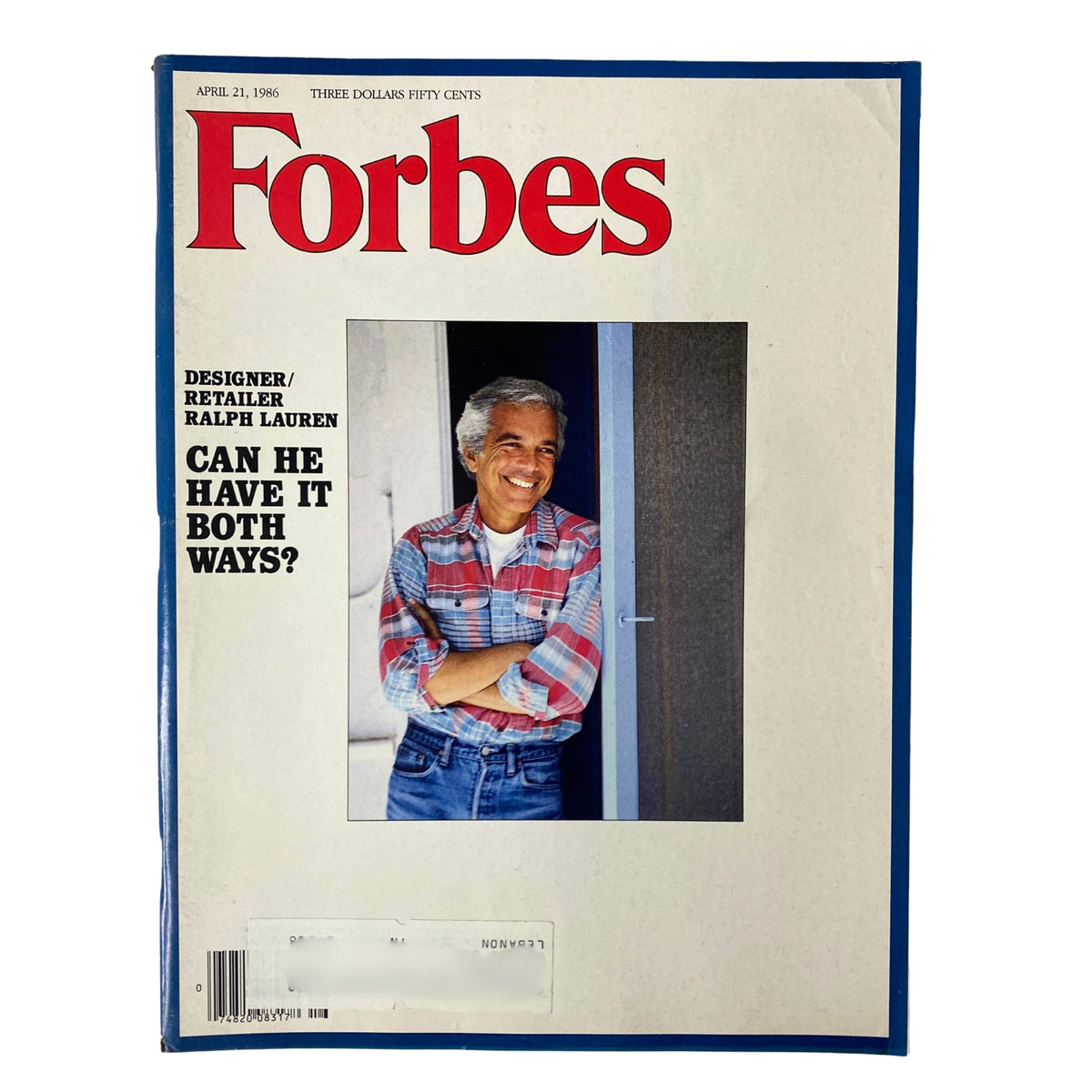
Before Pinterest boards and Instagram feeds dictated personal style, there was a single, singular vision — a boy from the Bronx named Ralph Lifshitz who reinvented himself, and in doing so, reinvented what America believed it could look like. From the moment his wide, kipper ties disrupted Beau Brummell's Manhattan showroom in 1967, Ralph Lauren was not merely designing clothes; he was authoring mythology. His Polo label became the visual language of aspiration itself — the sun-bleached linen, the worn leather, the immaculate cream flannel — communicating a fantasy of old money and open horizons that millions of Americans desperately wanted to inhabit. By the 1980s, he had dressed The Great Gatsby on screen, outfitted the U.S. Olympic team, and opened the Rhinelander Mansion flagship on Madison Avenue, a retail experience so theatrically curated it felt more like a private estate than a shop. In an era before the internet collapsed the distance between a brand and its audience, print magazines were the exclusive portals through which the public witnessed this empire being built — page by page, season by season, cover by cover.
Inside the Archive
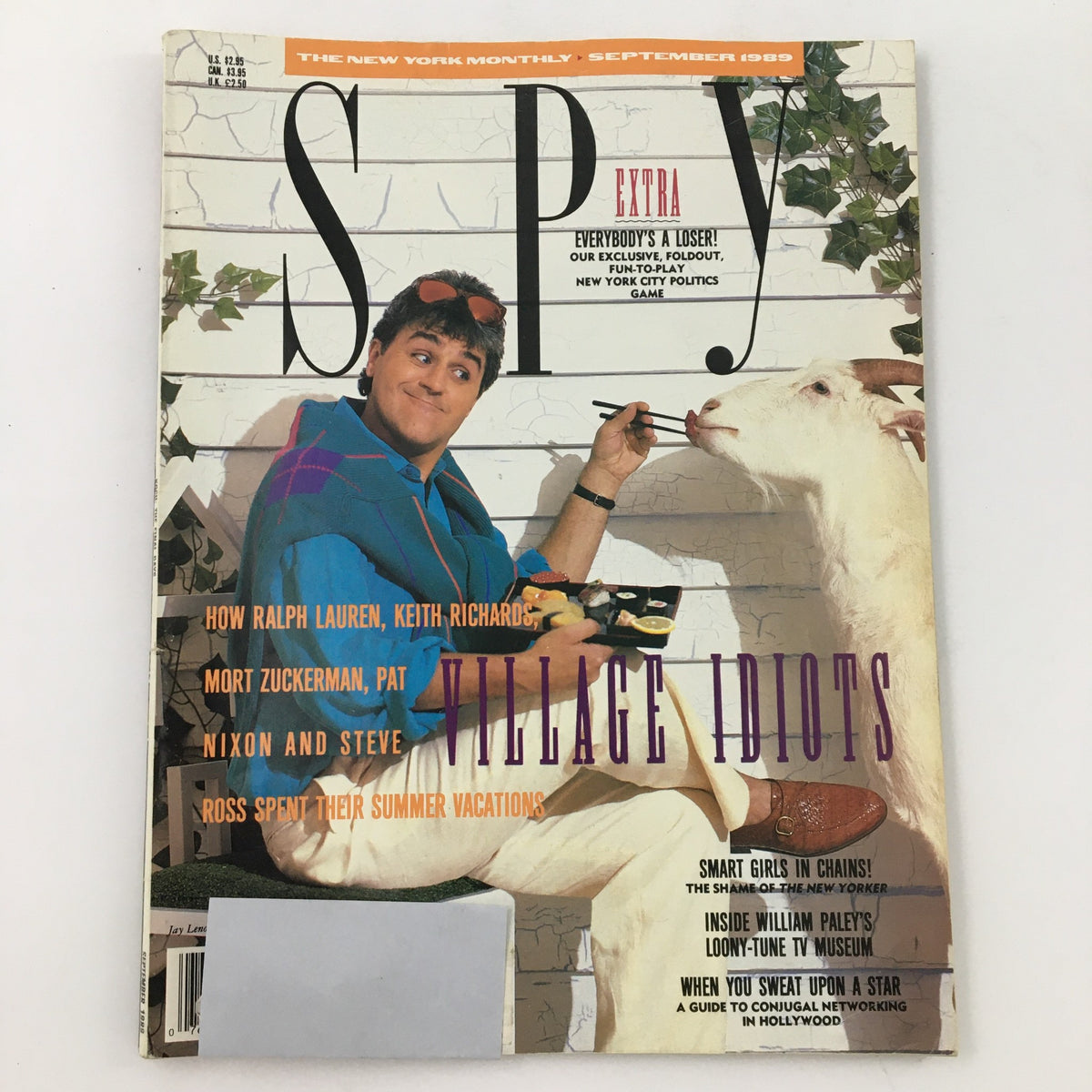
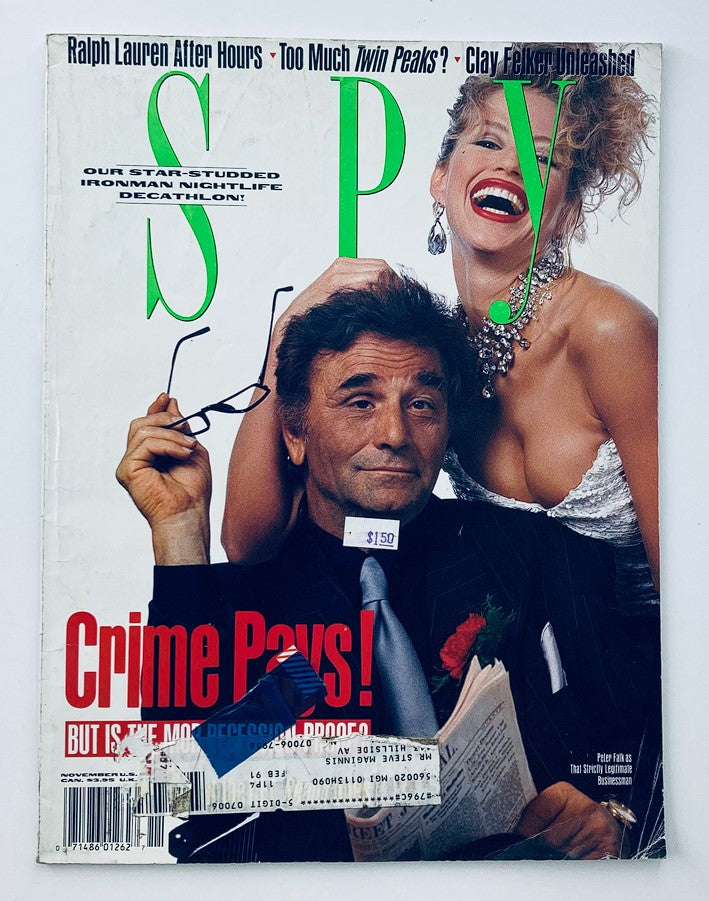
The fashion and lifestyle press of the late twentieth century treated the designer with a reverence usually reserved for heads of state, and the photography that accompanied that coverage was nothing short of cinematic. Editorial spreads were often staged as full narrative tableaux — foxhunts in the Cotswolds, polo grounds in the fading afternoon light, weathered ranch hands on Colorado land that seemed borrowed from a Frederick Remington painting. Vogue documented his collections with an almost scholarly seriousness, running multi-page features that dissected the cultural provenance behind each season's silhouette. GQ and Esquire positioned him as the definitive authority on American masculinity, profiling him not just as a tastemaker but as a philosopher of self-creation. Meanwhile, People and Time brought his story to a broader readership, framing his immigrant-family origins and staggering commercial success as one of the definitive American success stories of his generation. International editions of Harper's Bazaar spread the iconography globally, confirming that the fantasy he was selling — a certain unhurried, patrician ease — had an audience far beyond the shores that inspired it.
Curator's Checklist: Highlights Often Include
- Early-era trade and fashion coverage (late 1960s–1970s) — Features from menswear and retail industry publications documenting the explosive debut of the wide-tie aesthetic and the rapid expansion of the Polo brand beyond its niche origins
- The Gatsby moment (1974) — Magazine coverage tied to the Robert Redford film adaptation, for which Lauren designed the costumes, frequently surfacing in entertainment weeklies and fashion monthlies of the period
- Reagan-era lifestyle spreads (1980s) — The decade that canonized the Polo aesthetic; collectors often seek out glossy, full-bleed editorial campaigns from this period, when the brand's visual identity reached its most iconic and widely reproduced form
- Olympic and sporting coverage — Issues tied to Lauren's design of official U.S. team uniforms, particularly around the 1980s and the subsequent ceremonies where his aesthetic became nationally broadcast
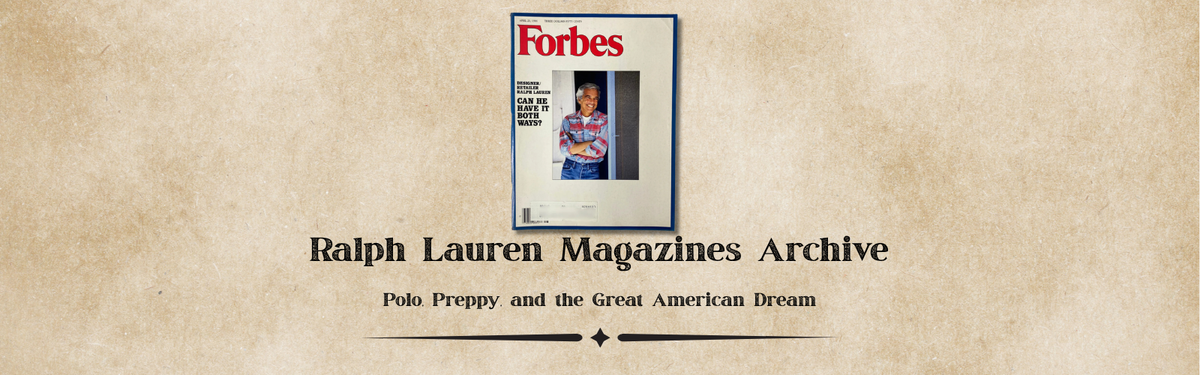
- Executive profile features (1990s–2000s) — In-depth business journalism from publications covering his public company listing, his expansion into home furnishings, and his emergence as one of the most studied brand architects in the history of American commerce
The Collector's Value
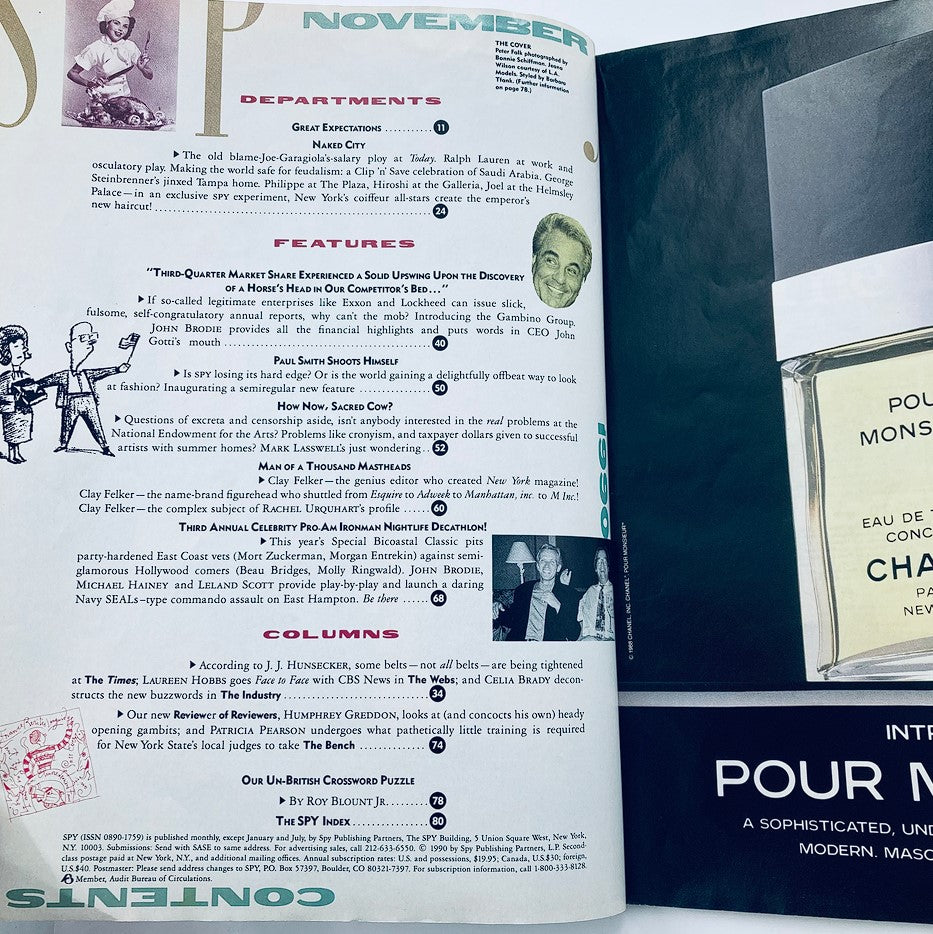
There is something irreplaceable about holding a decades-old issue in which a full-page Polo advertisement bleeds into an editorial spread — the slightly waxy texture of the heavyweight coated stock, the faint botanical sweetness of aged ink, the surrounding advertisements for TWA flights and sterling silver cigarette cases that place the moment in time with the precision of a time capsule. These are not reproductions or digital archives. They are primary sources: the original cultural record of how a civilization processed and celebrated a man who transformed the vocabulary of elegance. The photography has never been compressed into a thumbnail. The typography has never been reflowed for a mobile screen. Every crease in the spine is evidence of a real reader, in a real year, encountering this vision for the first time. For collectors of American fashion history, mid-century and postwar lifestyle ephemera, or the broader cultural history of the American Dream as a commercial and artistic phenomenon, these publications offer an intimacy with the era that no retrospective exhibition or coffee-table reprint can replicate. Browse the current available inventory below, and discover which pieces of this extraordinary legacy are waiting to find their next custodian.