📖 About this Collection
Ralph Nader: The Watchdog Who Rewired America
The Legend & The Legacy
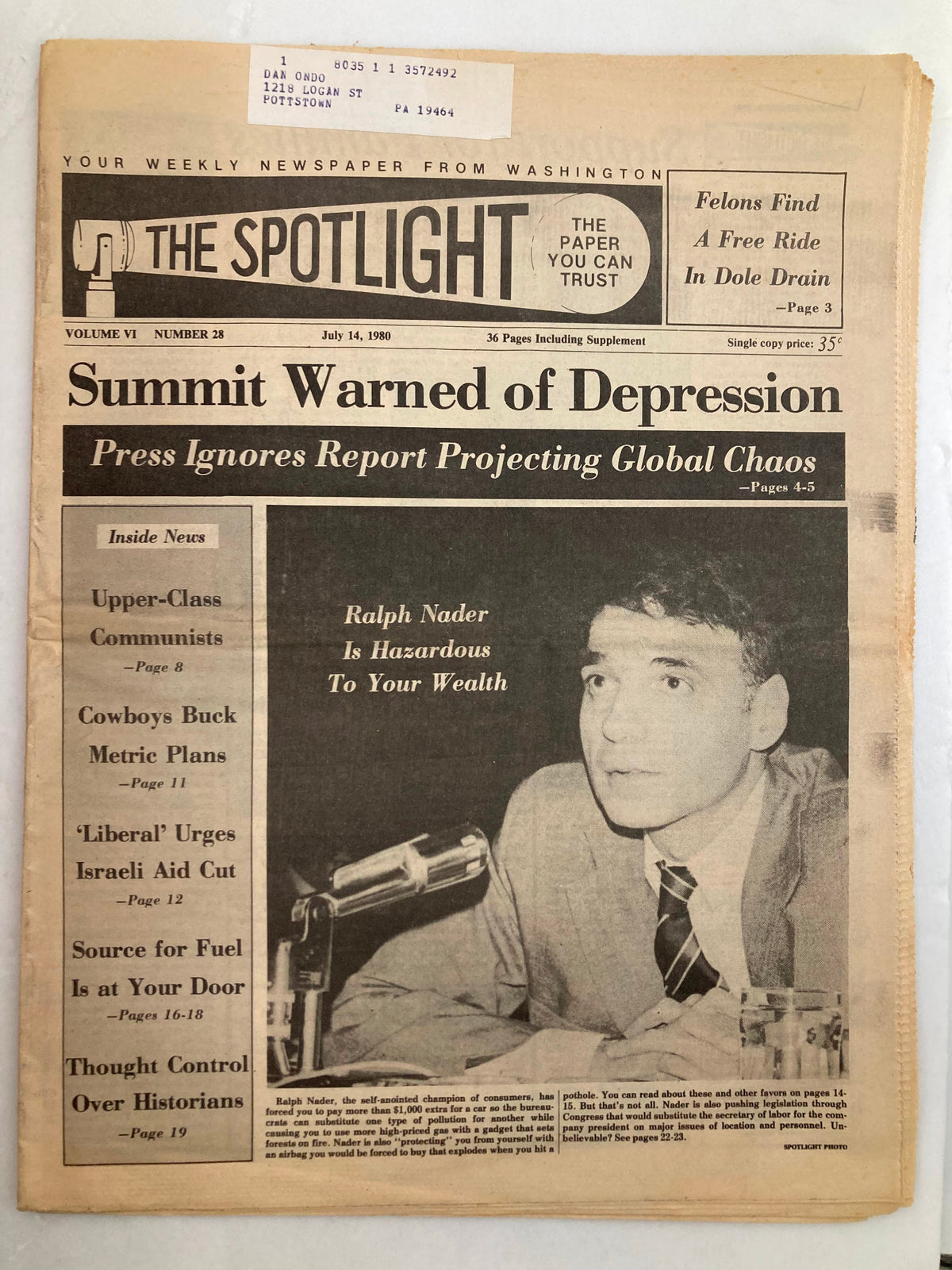
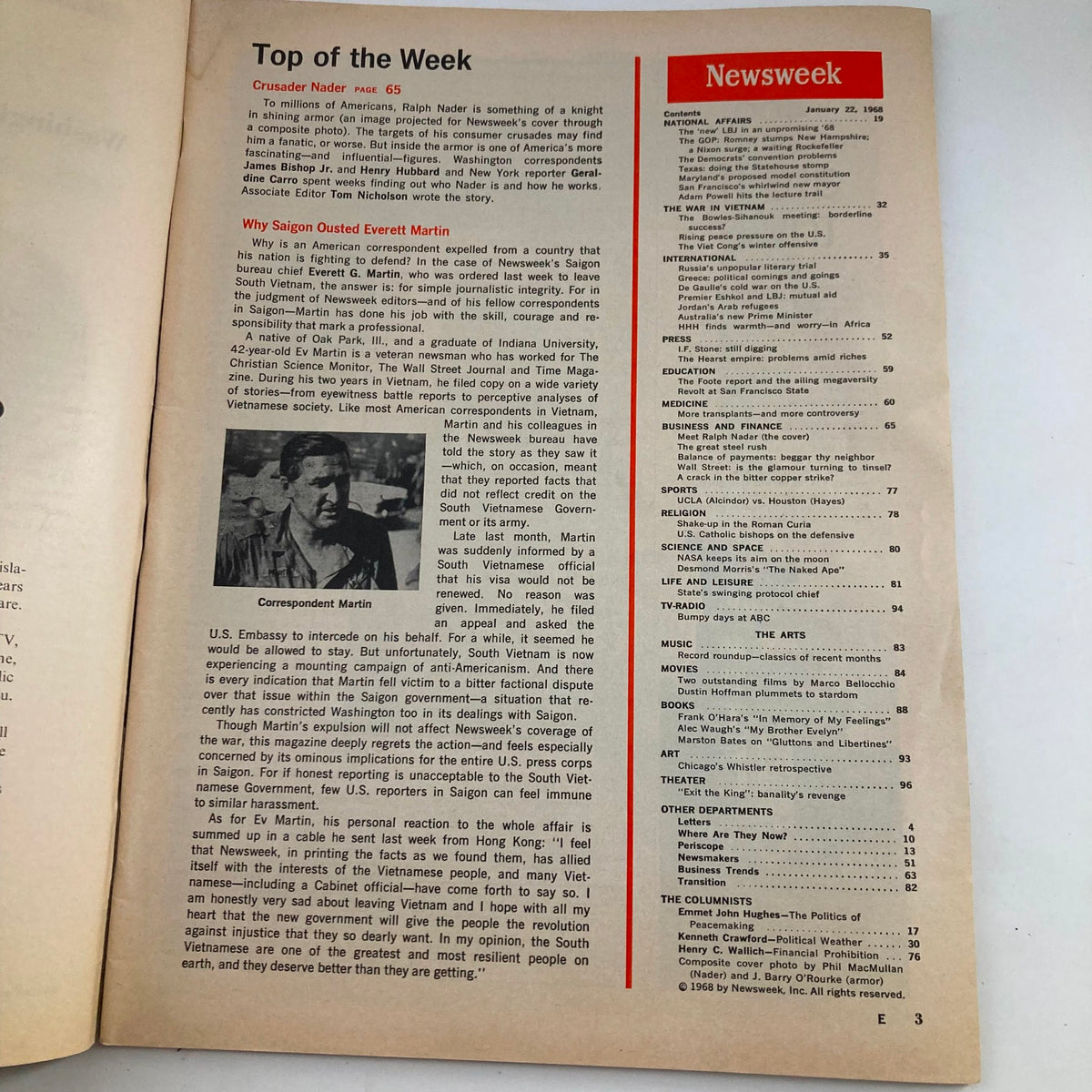
In an era when corporate power operated largely in the shadows of public scrutiny, Ralph Nader stepped into the light armed with nothing more than a typewriter, a law degree, and an unshakeable moral conviction. His 1965 book Unsafe at Any Speed detonated across the American consciousness like a thunderclap, indicting General Motors and igniting the modern consumer protection movement almost overnight. Before Twitter threads and viral exposés, it was the printed page — newsstand magazines folded under commuter arms, dog-eared copies passed between neighbors, and weighty investigative journals stacked in university lounges — that carried his crusade into living rooms across the country. Through the late 1960s and 1970s, "Nader's Raiders," his army of idealistic young lawyers and researchers, became a cultural phenomenon unto themselves, and the press documented every skirmish, every congressional hearing, and every corporate rebuttal with the breathless urgency of a nation genuinely uncertain whether the little man could win against Big Business.
Inside the Archive
Vintage magazines of the late 1960s through the 1980s approached the consumer advocate with a fascinating editorial duality — part investigative reverence, part skeptical fascination. Photography from this era frequently depicted him as austere and unbending: a lean figure at a Senate podium, surrounded by stacks of documents, or captured mid-argument in the fluorescent corridors of Washington power. Time magazine placed him among the most influential Americans of the 20th century and returned to his story repeatedly across decades of cover consideration, while Rolling Stone — in its heyday as the voice of counter-cultural political journalism — profiled him as a rare figure of genuine, uncompromised principle in a compromised age. Meanwhile, The New Republic provided some of the most intellectually rigorous long-form examinations of his legislative impact, charting the cascade of federal agencies and landmark laws his advocacy directly produced. International titles, too, took note: European publications regarded the American consumer movement with a mixture of admiration and bemusement, framing Nader as a singularly democratic archetype — the citizen holding the corporation accountable.
Curator's Checklist: Highlights Often Include
- Landmark consumer safety coverage — Issues documenting the congressional aftermath of Unsafe at Any Speed, the recall scandals, and the founding of the National Highway Traffic Safety Administration, representing the precise moment public policy pivoted toward the individual.
- The "Nader's Raiders" feature era — Spreads from the early 1970s profiling his cadre of young investigators, often accompanied with photo essays that captured the scruffy, idealistic energy of reform-era Washington at its most energized.
- Environmental and corporate accountability issues — Publications from the period of the Clean Water Act and Clean Air Act debates, in which the advocate's fingerprints on American environmental policy were extensively documented by both sympathetic and hostile editorial voices.
- Third-party presidential campaign coverage — Newsweekly and political magazine issues from 1996, 2000, and beyond examining his Green Party and independent runs, with particularly charged coverage surrounding the contested 2000 election and the fierce national debate over his role in its outcome.
- Retrospective and legacy profiles — Feature-length reassessments published through the 1980s and 1990s measuring the full arc of the regulatory revolution he sparked, often rich with archival photography and commentary from the lawmakers and adversaries he outlasted.
The Collector's Value
To hold one of these original issues is to hold a primary source document of American democratic history — the paper slightly brittle at the spine, the ink carrying that unmistakable mustiness of decades past, the surrounding advertisements a vivid time capsule of the very consumer marketplace the man on the editorial pages was fighting to reform. There is a profound irony — and a collector's delight — in finding a vintage magazine where a Nader profile sits cheek-by-jowl with full-page automobile or cigarette advertisements, a juxtaposition that no digital archive can ever replicate with the same visceral immediacy. For collectors of American political history, mid-century investigative journalism, or the broader consumer rights and social reform movements, these publications offer irreplaceable artifacts of a moment when one citizen's conscience genuinely reshaped the legal landscape of a nation. Explore the current inventory below and discover which pieces of that extraordinary era are available today.