📖 About this Collection
Raymond Burr: The Man Behind the Mask of Justice
The Legend & The Legacy
Long before the age of streaming confessions and true-crime podcasts, Raymond Burr commanded American living rooms with a presence so magnetic, so morally complex, that audiences could scarcely separate the man from his characters. He arrived in Hollywood as one of cinema's most compelling villains — menacing, physically imposing, emotionally unpredictable — before reinventing himself as Perry Mason, the undefeated defense attorney whose weekly courtroom victories made him one of the most-watched figures on American television through the late 1950s and 1960s. At a time when television was still earning its legitimacy as a cultural medium, Burr helped prove its power, earning back-to-back Emmy Awards and anchoring CBS with the kind of appointment viewing that sent newspaper columnists scrambling for superlatives. His later role as the wheelchair-bound detective Robert Ironside further cemented his legacy as a man of quiet authority and thunderous screen presence. In an era when celebrity mythology was built entirely through the printed page — the fan letter, the television guide, the glossy newsstand magazine — Burr's story was told, retold, and reverently mythologized in ink and paper.
Inside the Archive
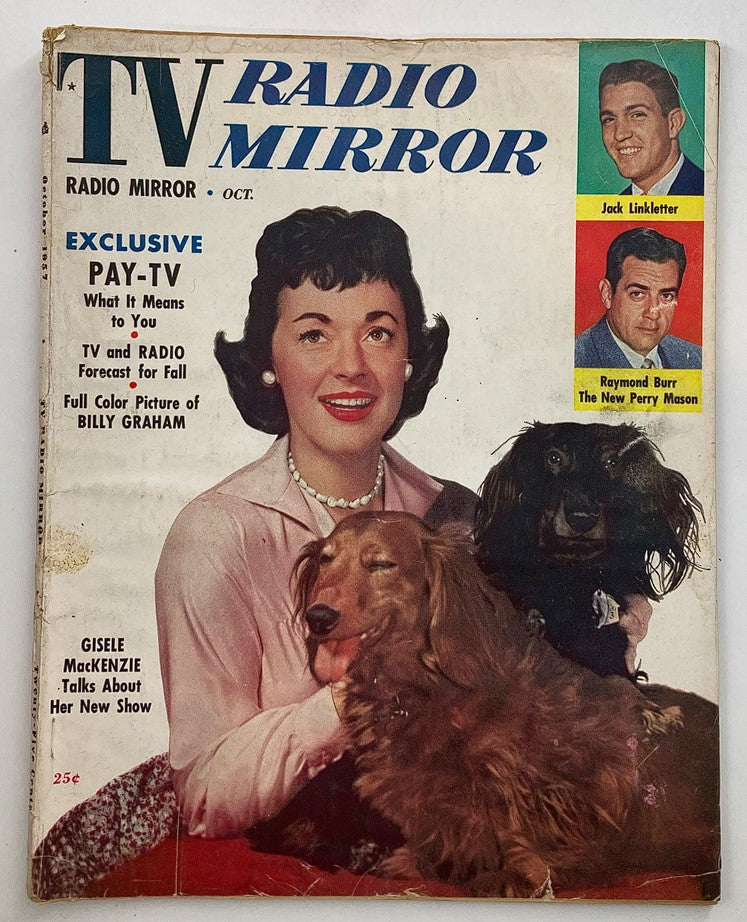
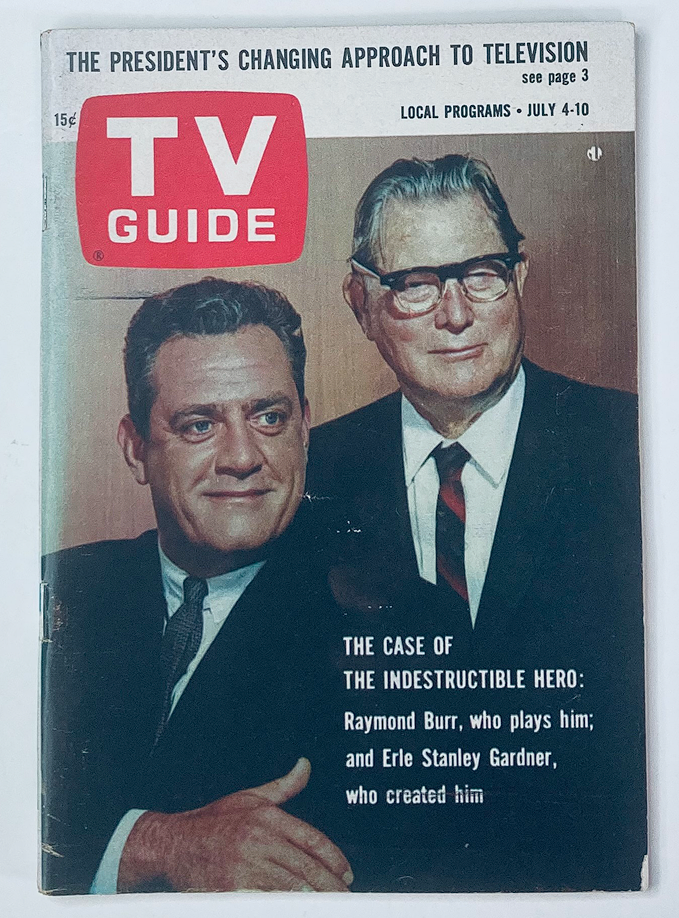
Vintage magazines of the 1950s through 1970s approached Raymond Burr with a curious and evolving editorial lens — first as a brooding character actor worthy of profile pieces in film journals, then as a full-blown television institution demanding cover treatment. Publications like TV Guide, which in its heyday commanded some of the largest circulations in American print history, featured the Perry Mason star repeatedly, often with stately, composed portraiture that emphasized his commanding jaw and steady gaze. Life magazine, ever attuned to the figures reshaping American popular culture, covered the phenomenon of early television drama with Burr frequently at its center, capturing him both on set and in rare candid moments. Fan-oriented publications such as Screen Stories and TV Radio Mirror offered readers something more intimate — staged home photographs, fabricated domesticity, and breathless profile copy that fed a public hungry to know the man beneath the courtroom authority. The photography of this era leaned heavily on dramatic chiaroscuro lighting for his villain years, transitioning to warmer, more approachable portraiture as Perry Mason transformed him into a trusted national institution.
Curator's Checklist: Highlights Often Include
- Perry Mason era television coverage — feature profiles and cast photographs from the show's dominant CBS run between 1957 and 1966, frequently appearing in TV Guide issues and mid-century television weeklies
- Early Hollywood villain years — film magazine coverage from the late 1940s and early 1950s, including reviews and character studies tied to his roles in Rear Window and A Place in the Sun, often found in publications like Photoplay and Modern Screen
- Robert Ironside coverage — editorial features from the late 1960s and early 1970s documenting his groundbreaking role as a disabled detective, a culturally significant casting choice that drew commentary from both entertainment and social affairs publications
- International fan press — British and Canadian television magazines that covered his immense popularity abroad, reflecting his status as one of North America's most exported television personalities
- Emmy and awards season coverage — industry and entertainment publications from 1959 and 1960 documenting his historic consecutive Emmy wins, a milestone that generated substantial press attention across both trade and consumer media
The Collector's Value
To hold a mid-century magazine featuring Raymond Burr is to hold something the internet simply cannot replicate — the slight give of aged coated stock beneath your fingertips, the faint and irreplaceable perfume of decades-old ink, the serendipitous pleasure of turning past a full-page advertisement for a 1961 Chevrolet or a bar of Lux soap before arriving at a four-page spread on the man who made Sunday nights unmissable. These are primary sources: unfiltered documents of how a culture chose to present, celebrate, and mythologize its icons in real time, without the distortion of hindsight. The surrounding ephemera — the advertisements, the editorial design, the typefaces — situate Burr within his precise cultural moment in ways that a digital image never can. For collectors of golden-age television memorabilia, classic Hollywood character actors, or mid-century American print and broadcast history, these publications offer an irreplaceable portal into the world that made him a legend. Browse our current rotating inventory below and discover which pieces of that world are available today.