📖 About this Collection
Ricki Lake: The Queen of Daytime Who Danced Her Way Into America's Living Rooms
The Legend & The Legacy
Long before the age of social media virality and streaming confessionals, Ricki Lake built one of the most improbable and electric careers in American popular culture — entirely on the strength of her authentic, unguarded presence. She burst onto the public consciousness in 1988 as Tracy Turnblad in John Waters' Hairspray, a plump, joyful teenager from Baltimore who became an unlikely symbol of body positivity and racial integration at a time when neither conversation was mainstream. But it was her self-titled daytime talk show, The Ricki Lake Show, premiering in 1993, that cemented her as a genuine cultural phenomenon. At its peak in the mid-1990s, the show drew over eight million daily viewers, and its raw, unscripted energy — young guests airing generational grievances, relationship dramas, and identity crises — felt thrillingly new against the polished formality of network television. In an era when Americans still gathered around the television set and talked about what they saw over dinner, she was everywhere: a tabloid fixture, a cover subject, and a pop cultural shorthand for a generation coming of age in the Clinton years.
Inside the Archive
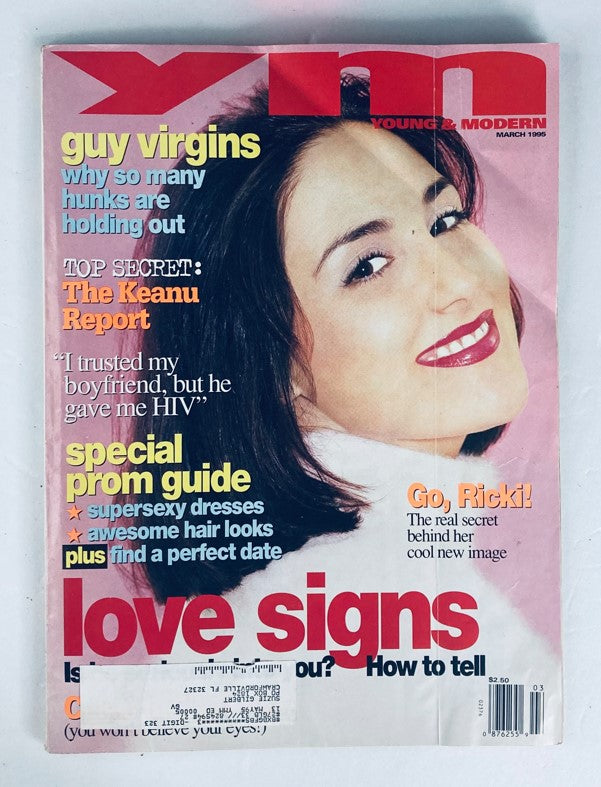
The vintage magazine coverage of Ricki Lake captures a fascinating evolution — from bright-eyed ingénue to daytime television royalty — rendered in the lush, saturated print photography of the late 1980s and 1990s. Early editorial spreads leaned into her girlish charm and the transgressive camp of the Hairspray universe, while her talk show years produced a wave of feature journalism that grappled seriously with her cultural influence, her much-publicized weight loss, and the sociology of her audience. People magazine chronicled her personal transformations with particular devotion, treating her as both a celebrity subject and a mirror of mainstream American anxieties about body image and self-reinvention. TV Guide — then still a coveted cultural barometer of who mattered in American households — featured her prominently during the talk show wars of the mid-1990s, when she was routinely positioned as the scrappier, younger challenger to the reigning giants of daytime. Entertainment-focused publications like Entertainment Weekly offered longer critical assessments of her cultural staying power, while tabloid weeklies of the era captured the breathless, week-to-week drama of her public and private life in the wonderfully overwrought visual language only 1990s print journalism could produce.
Curator's Checklist: Highlights Often Include
- Feature spreads from the Hairspray era (1988–1990): Early coverage celebrating her breakthrough role as Tracy Turnblad, often accompanied by vibrant, high-contrast photography reflective of the film's pop-art aesthetic and John Waters' Baltimore universe.
- Talk show ascendancy profiles (1993–1996): In-depth features from the height of The Ricki Lake Show's dominance, exploring her appeal to younger demographics and her role in reshaping the daytime television landscape alongside contemporaries like Jerry Springer and Jenny Jones.
- Body image and personal transformation coverage: A recurring and culturally significant thread throughout the 1990s press, her publicly documented weight journey generated thoughtful — and occasionally sensationalist — editorial coverage that collectors of that era frequently seek out.
- Television industry trade and crossover coverage: Issues from publications straddling entertainment news and cultural criticism, offering a window into how the media establishment assessed the talk show phenomenon as a sociological force, not merely a ratings curiosity.
- Late 1990s and early 2000s reinvention pieces: Coverage documenting her transition away from daily television, including film and television appearances, and the quieter but compelling second chapter of a career that refused easy categorization.
The Collector's Value
There is something irreplaceable about holding a 1994 copy of People or a dog-eared TV Guide from the height of the daytime wars — the slight give of the coated paper stock, the faintly sweet, chemical perfume of decades-old ink, the advertisements surrounding her image selling hairspray, diet soda, and VHS rentals that conjure an entire vanished world in a single glance. These are not reprints or digital facsimiles; they are primary documents of a specific, unrepeatable cultural moment, capturing Ricki Lake as her contemporaries actually saw and consumed her — unfiltered by nostalgia, algorithm, or retrospective revision. The editorial choices, the styling, the language used to describe her, even the letters-to-the-editor pages, tell a richer and stranger story than any biography could. For collectors of 1990s pop culture ephemera, daytime television history, or body positivity and feminist media studies, these publications offer an intimate, tactile portal into the decade that shaped so much of contemporary culture. Browse the current available inventory below and discover which pieces of this remarkable story are waiting to find a new home.