📖 About this Collection
River Phoenix: A Light That Burned Too Briefly, Too Brilliantly
The Legend & The Legacy
In the years before social media could fragment a rising star's mystique into a thousand scrollable moments, the story of River Phoenix was told almost entirely through the printed page — through lavish full-spreads and intimate profile pieces that arrived on newsstands and lingered on coffee tables, absorbed slowly and reverently. He emerged in the mid-1980s as something the entertainment press instinctively recognized but struggled to categorize: a teenager of preternatural seriousness, an actor of the New Hollywood school who seemed to carry the full moral weight of his roles rather than simply perform them. From Stand by Me to Running on Empty — which earned him an Academy Award nomination at just seventeen — to the raw, haunted brilliance of My Own Private Idaho, he became the defining young actor of his generation, a figure whose talent critics compared to James Dean and Marlon Brando with an earnestness that, in print, felt entirely warranted. He was also a committed environmentalist and vegan activist in an era when neither position was fashionable, lending his magazine profiles a philosophical depth unusual for a Hollywood subject of his age. His death in October 1993, at twenty-three, transformed a celebrated career into a cultural watershed — and every magazine that had covered him during his brief, incandescent life instantly became a primary document of a story the world was not ready to lose.
Inside the Archive
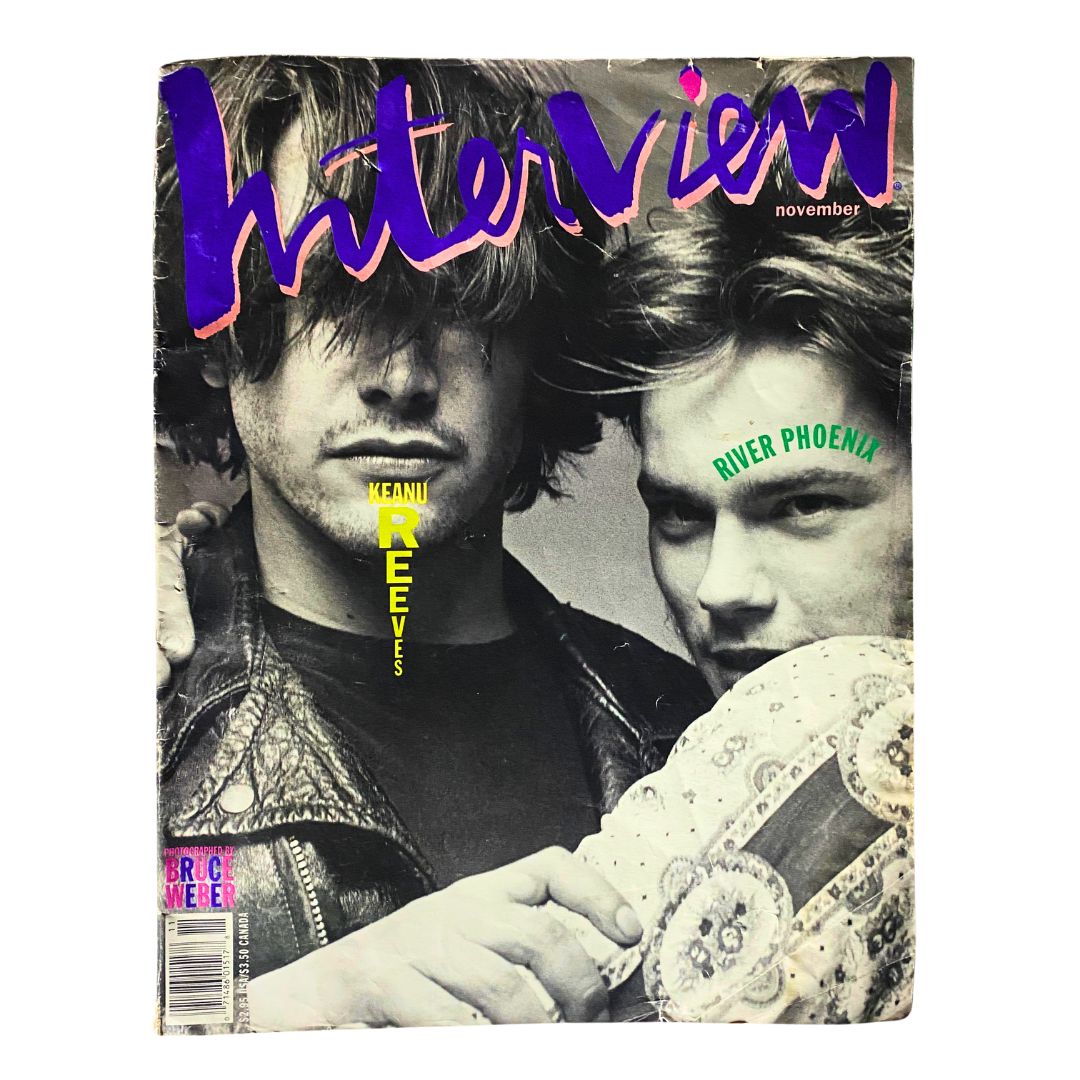
The entertainment and culture press of the late 1980s and early 1990s treated the young actor with a seriousness that mirrored his own artistic gravity. Photography in this era favored naturalistic, almost literary portraiture — brooding location shoots, candid frames that caught him mid-thought, images that emphasized introspection over glamour. Rolling Stone, which championed him as the conscience of a new generation of Hollywood talent, ran some of the most enduring portraits of his career, their editorial tone blending rock-and-roll irreverence with genuine critical admiration. Interview magazine — Andy Warhol's storied creation, then at the apex of its cultural authority — featured him in the kind of artist-to-artist conversations that treated their subject as an intellectual equal rather than a promotional vehicle. Internationally, publications such as Empire in the United Kingdom and various European film journals tracked his rise with the particular fascination that continent reserves for American actors who seem to transcend the machinery of Hollywood. Fan-oriented titles of the era, from Teen Beat to Bop, captured an entirely different register of his fame — the devoted, almost devotional coverage of a generation of young readers who saw in him something more than a movie star.
Curator's Checklist: Highlights Often Include
- Early career features and rising-star profiles from the late 1980s, coinciding with the critical breakthroughs of Stand by Me and Running on Empty, often including early photographic sessions that now possess the quality of discovered artifacts
- Awards season coverage from 1989, when his Running on Empty performance drove significant Oscar conversation, including trade publications and mainstream entertainment weeklies that placed him alongside the major nominees of the era
- My Own Private Idaho era press from 1991–1992, when his collaboration with director Gus Van Sant and co-star Keanu Reeves made him the subject of serious cinematic analysis in both mainstream and independent film publications
- Activist and lifestyle features exploring his environmentalism, veganism, and life on his family's Florida farm — a strand of coverage that appeared in both music and counterculture publications, reflecting the breadth of his cultural identity beyond Hollywood
- Memorial and tribute issues from late 1993 and into 1994, produced by publications across the entertainment spectrum, which now serve as profoundly moving time capsules of collective grief and retrospective critical appreciation
The Collector's Value
To hold one of these magazines is to hold time itself — the particular weight of coated stock from a pre-digital press run, the slight foxing at the edges of a newsstand copy that sat in a bedroom for thirty years, the ghost of ink that transfers faintly to the fingertip. The advertisements surrounding the editorial content are their own vivid archaeology: the film posters, the fragrance campaigns, the cassette releases that bracket each profile in the material culture of a specific, irretrievable moment. These are not reproductions or digital archives; they are the actual physical objects that fans, critics, and strangers on a Tuesday morning in 1991 held in their hands and read. The ephemera of a life cut short is always scarce, and original print coverage of this particular subject — finite by nature, diminishing with every passing year — carries a rarity that only deepens over time. For collectors of 1990s independent cinema memorabilia, New Hollywood and method acting history, or Gen X pop culture and music press, these publications offer an irreplaceable connection to both an artist and an era that shaped modern American culture in ways still being measured. Explore the current inventory below and discover which primary documents are available today.