📖 About this Collection
Roger Maris: The Reluctant Hero Who Rewrote the Record Books
The Legend & The Legacy
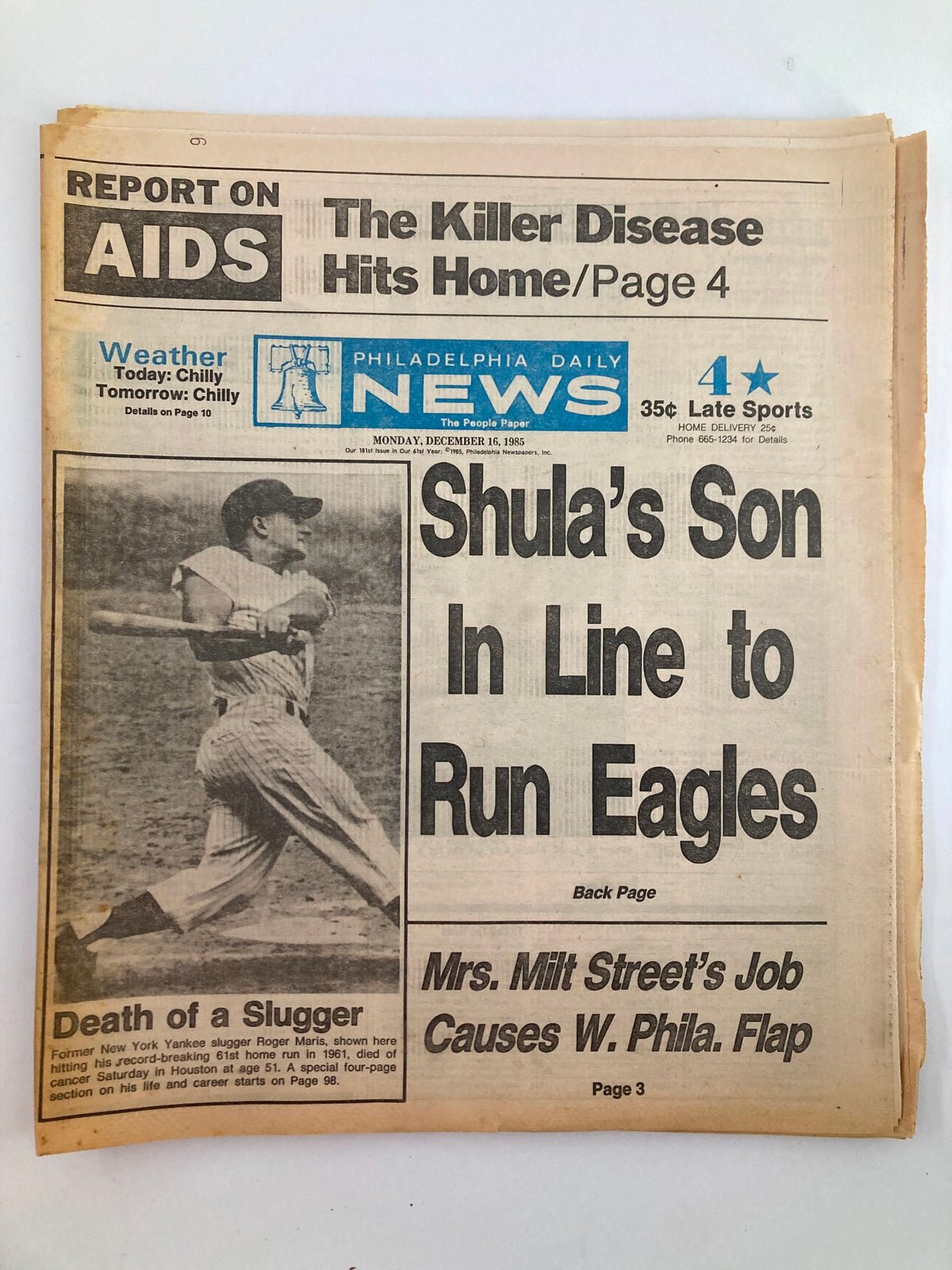
In the summer of 1961, America held its breath. Roger Maris — a quiet, crew-cut outfielder from Fargo, North Dakota — was chasing the most sacred number in all of sports: Babe Ruth's single-season home run record of 60. What unfolded was one of the most dramatic, psychologically brutal, and culturally defining chapters in baseball history. Unlike the gregarious, larger-than-life Ruth, Maris was a private man thrust into a pitiless spotlight, his pursuit chronicled game by game, at-bat by at-bat, in the pages of newspapers and magazines that hit doorsteps and newsstands from coast to coast. In an era before cable television dominated the sports conversation, it was print media that shaped public opinion — and public opinion was deeply divided. Some saw a worthy heir to Ruth's throne; others resented the unassuming Yankee for daring to surpass a legend. When he hit number 61 on the final day of the season, the moment detonated across the front pages of publications worldwide, cementing his name in history even as the establishment — represented by Commissioner Ford Frick's infamous asterisk — attempted to diminish it.
Inside the Archive
Vintage magazines of the early 1960s captured the Maris saga with an intimacy and gravitas that only print could deliver. Editorial photographers shot him in the raw geometry of Yankee Stadium — the arc of his left-handed swing frozen in black-and-white or the rich, saturated color stock of the era, his expression always revealing that characteristic tension between determination and discomfort with fame. Sports Illustrated, then ascending to its golden age of long-form sports journalism, offered some of the most probing coverage of the man, examining not just the statistics but the psychological toll of the chase. Life magazine, the premier visual chronicle of mid-century America, brought the story into living rooms with full-spread photography that made the drama feel cinematic and monumental. Look magazine — a rival to Life and equally devoted to the American story in pictures — ran extensive features on the Yankees dynasty of which Maris was the unlikely crown jewel, often pairing him with teammate Mickey Mantle in spreads that dramatized their simultaneous pursuit of Ruth's record. International sports publications, too, recognized that a record of this magnitude transcended American borders, making the home run king of 1961 a figure of genuinely global fascination.
Curator's Checklist: Highlights Often Include
- The 1961 Home Run Chase — Features documenting the week-by-week, sometimes day-by-day tension of Maris and Mantle's parallel pursuit of Babe Ruth's record, including statistical tracking graphics and dugout photography characteristic of the era
- World Series Championship Coverage — Issues from the Yankees' dominant early-1960s dynasty years, in which Maris played a central role, offering celebratory spreads and player profiles from 1961 and 1962
- The Asterisk Controversy — Editorial pieces and opinion columns grappling with Commissioner Frick's ruling that Maris's 162-game record be marked separately from Ruth's, reflecting the era's fierce debate about tradition versus progress in America's pastime
- Human Interest & Behind-the-Scenes Profiles — Intimate features exploring his private nature, his small-town roots, and the visible strain the spotlight placed on him — the hair loss, the exhaustion, the complicated relationship with New York fans and press
- Post-Record Career & St. Louis Cardinals Years — Later-era coverage following his 1967–68 seasons with St. Louis, offering a quieter, more reflective portrait of a champion in the twilight of his career
The Collector's Value
To hold one of these original issues is to hold the moment itself — unfiltered, undigitized, and irreplaceable. The slightly coarse texture of mid-century magazine paper, the faint ghost of ink that blooms when you turn a page under warm light, the surrounding advertisements for Chevrolets and Lucky Strikes and Gillette razors that place you irrevocably inside 1961 — none of this can be approximated by a screen. These are primary sources: the actual documents through which millions of Americans first understood what Roger Maris had accomplished and what it meant. His story was contested in these very pages, his legacy argued over in these columns before history quietly — and posthumously — vindicated him. For collectors of vintage baseball memorabilia, mid-century Americana, or the golden age of sports journalism, these publications offer something no modern reproduction can replicate: the unmediated voice of an era speaking about one of its most complicated heroes in real time. Explore our current available inventory below and discover which pieces of that irreplaceable conversation are waiting to find a new home.