📖 About this Collection
Sally Field: America's Sweetheart, Unbound
The Legend & The Legacy
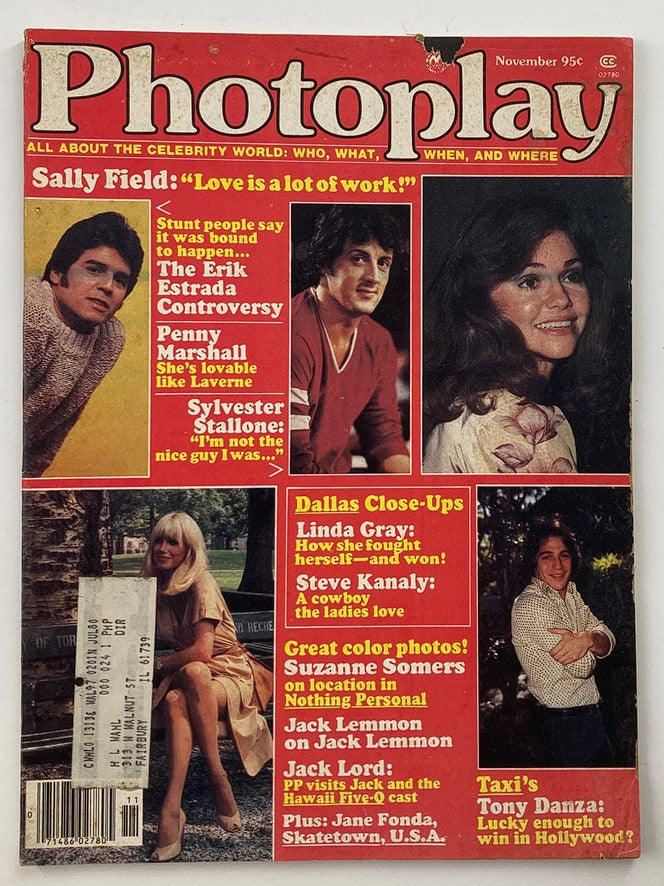
Few careers in American entertainment trace as honest and hard-won an arc as Sally Field's. She emerged in the mid-1960s as the perky, winsome star of Gidget and The Flying Nun — television confections that made her a household face but nearly typecast her into irrelevance. What followed was one of Hollywood's most compelling reinventions: a serious, tenacious actress who fought her way to the dramatic stage and never looked back. Her Oscar-winning performances in Norma Rae (1979) and Places in the Heart (1984) weren't simply critical triumphs — they were cultural moments, arriving at a time when working-class women, labor rights, and female agency were live wires in the American conversation. In an era before social media or entertainment blogs, the public followed her transformation entirely through the printed page — through fan magazines left on coffee tables, through glossy profiles picked up at the airport newsstand, and through Sunday supplement cover stories read over breakfast. She was a figure people felt they knew, and print was the intimate medium through which that relationship was built.
Inside the Archive
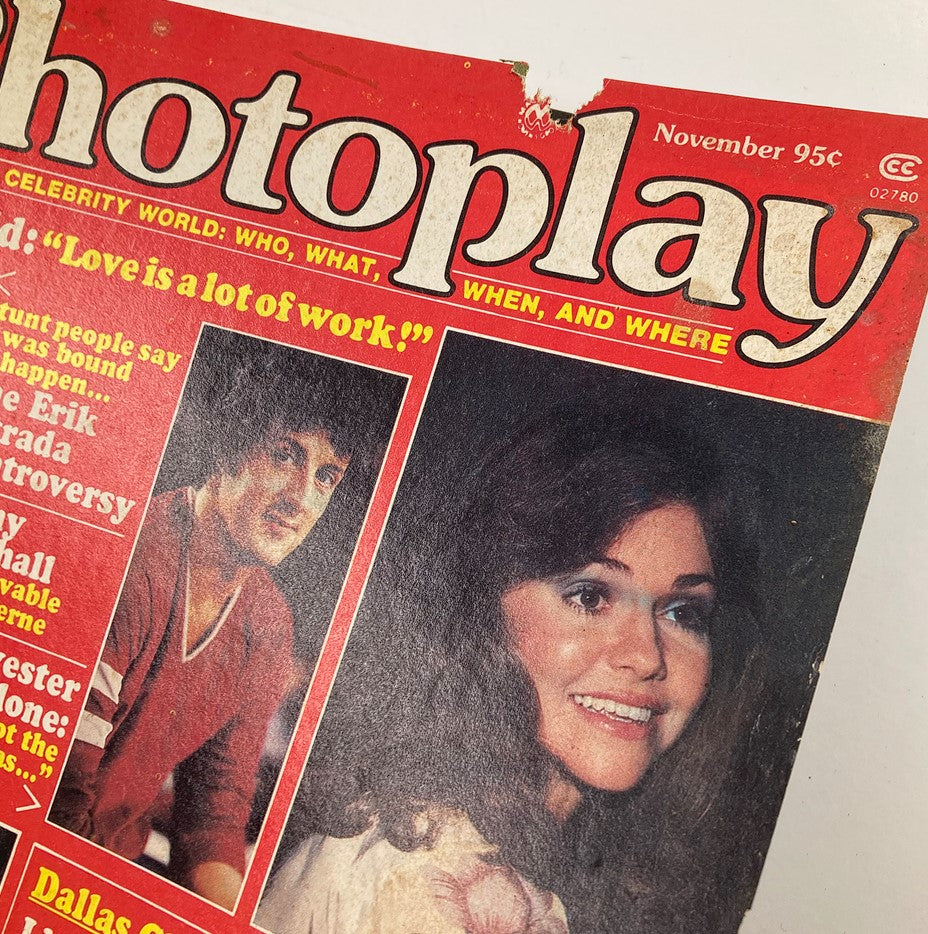
Vintage magazine coverage of Sally Field spans nearly four decades of shifting editorial aesthetics and cultural priorities. In her early television years, publications like TV Guide and 16 Magazine captured her with the bright, bubbly photography of the late-1960s fan press — soft-focus studio portraits, cheerful on-set candids, and breathless profile copy aimed squarely at a teenage readership. As her career deepened through the 1970s and into the 1980s, the tone grew considerably more serious and sophisticated. People magazine — launched in 1974 and tailor-made for her brand of relatable, emotionally accessible stardom — returned to her story again and again, from her early comeback roles through her Oscar victories and her high-profile relationship with Burt Reynolds. Rolling Stone, in its golden editorial era, profiled her as a symbol of Hollywood authenticity in a decade of excess. Ms. Magazine, attuned to the feminist undercurrents of Norma Rae in particular, treated her less as a celebrity and more as a cultural signifier — a working woman who played working women. The photography across these eras tells its own story: sun-drenched and wholesome in the Nixon years, raw and purposeful in the Carter era, luminous and authoritative as she accepted her second Academy Award before a worldwide television audience in 1985.
Curator's Checklist: Highlights Often Include
- Early television coverage (1965–1970): Fan magazine features from the Gidget and Flying Nun years, often including color photo spreads and reader Q&A columns pitched to a young, devoted audience
- The comeback and Norma Rae era (mid-to-late 1970s): Arts and entertainment profiles documenting her dramatic pivot, frequently discussing her study at the Actors Studio and her deliberate break from her wholesome image
- Award season and Oscar coverage (1980 & 1985): Issues featuring Academy Awards ceremony coverage, including her legendary and often-misquoted acceptance speech from the 1985 ceremony — a moment replayed in cultural memory for decades
- Burt Reynolds relationship coverage: A long chapter of celebrity press throughout the late 1970s and early 1980s, chronicled extensively in People, supermarket tabloids, and mainstream entertainment weeklies of the period
- 1980s prestige Hollywood features: Broader cinema-focused publications covering her alongside the decade's dramatic renaissance, positioning her among the most respected film actresses of her generation
The Collector's Value
To hold one of these original issues is to hold the conversation as it actually happened — unfiltered, undigitized, and alive with the texture of its moment. The paper stock tells time in its own way: the slightly brittle feel of a 1968 teen magazine, the heavier coated gloss of a 1979 People cover story, the ink that still carries the faintest trace of the press room decades later. Surrounding the editorial content are the advertisements of their era — pantyhose and cigarettes, Kodak film and Ford sedans — each one a tiny time capsule reinforcing that this object existed in a specific, irretrievable world. These are primary sources, not reprints or retrospectives; they capture the public's relationship with one of America's most enduring actresses in real time, issue by issue. For collectors of classic Hollywood memorabilia, second-wave feminist cultural history, or vintage American television and film ephemera, these publications offer an irreplaceable window into how a nation watched, debated, and fell in love with a performer who refused, on every occasion, to be anything less than fully herself. Browse the current available inventory below and discover which pieces of that story are waiting to come home with you.