📖 About this Collection
Salvador Dalí: Where Genius Bleeds Into Dream
The Legend & The Legacy
In an age before algorithms curated our cultural diet, the surrealist master from Catalonia conquered the public imagination through the sheer, undeniable force of his presence — on canvas, on stage, and most theatrically, on the printed page. Salvador Dalí was not merely an artist; he was a living manifesto, a performance of genius so relentless and so deliberate that the 20th century had little choice but to document his every provocation. From the melting clocks of The Persistence of Memory to his flamboyant collaborations with Hitchcock and Disney, from his exile during Franco's Spain to his triumphant reinvention as New York's most eccentric celebrity, the Catalan iconoclast shaped surrealism into a household word. Readers in the 1930s through the 1980s followed his metamorphoses the way later generations would follow a feed — breathlessly, issue by issue, spread by spread — relying entirely on the magazine rack to deliver the spectacle of a man who had made his own biography into the grandest work of art he ever produced.
Inside the Archive
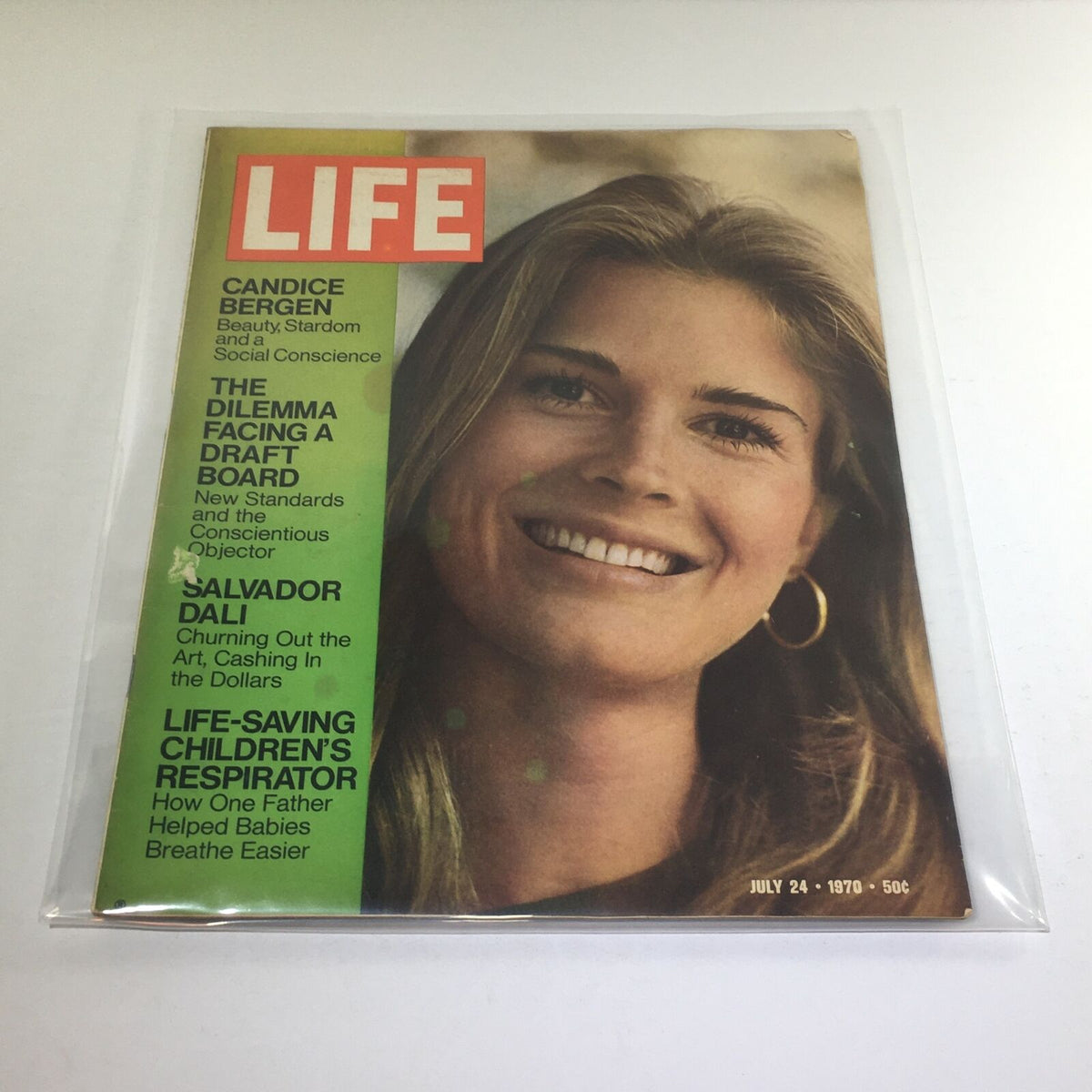
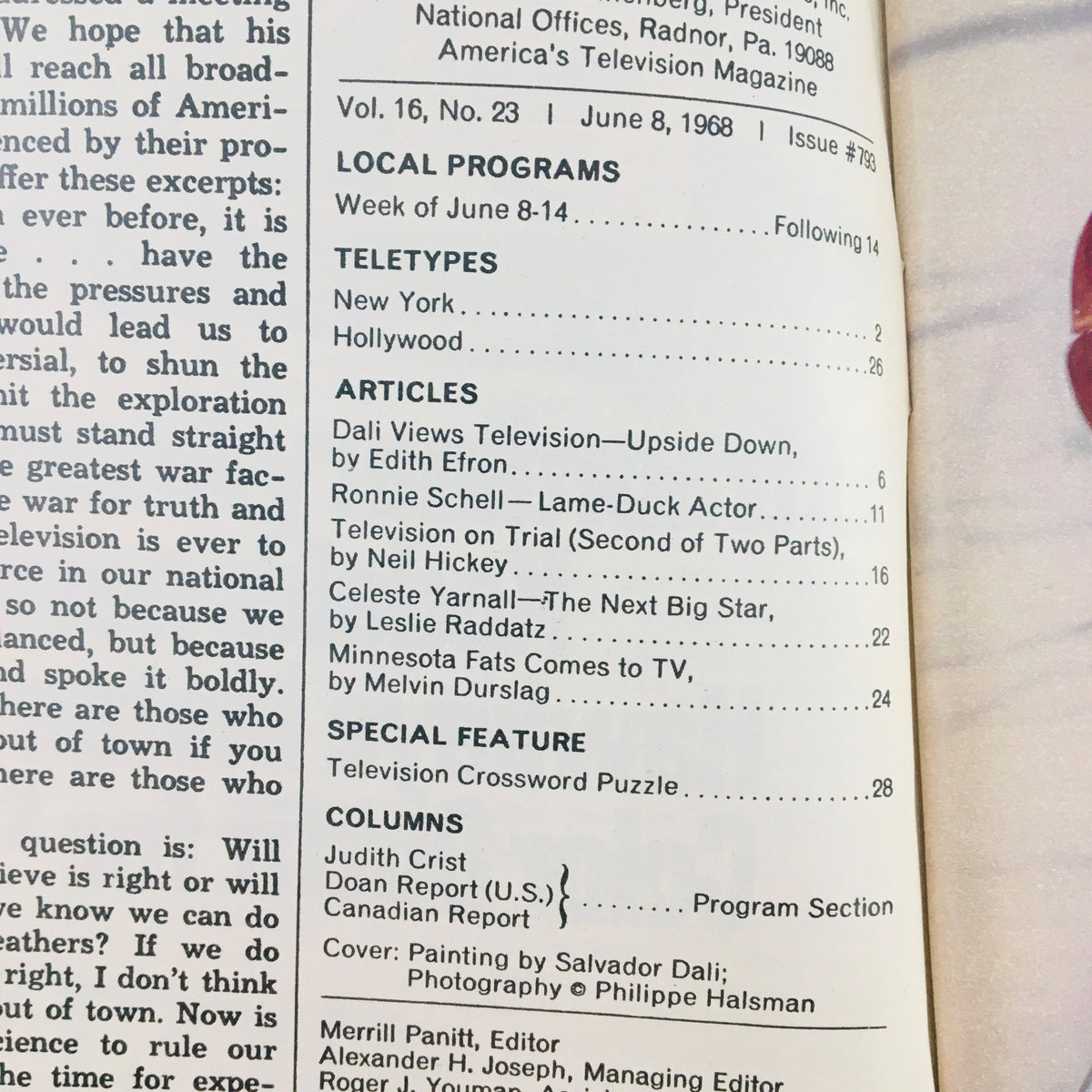
Vintage publications pursued the Surrealist Patriarch with an intensity befitting his stature, and the resulting coverage is among the most visually arresting in the entire history of print media. Photographers like Philippe Halsman — whose decades-long collaboration with the maestro yielded some of the most iconic portraiture of the century — gave magazine editors imagery that stopped readers cold: the upswept moustache, the hypnotic eyes, the baroque props and theatrical staging that made every portrait feel like a riddle. Life magazine returned to him repeatedly, treating its readership to in-depth profiles that balanced genuine critical appraisal with unabashed wonder at his celebrity. Vogue and Harper's Bazaar, for whom he designed surrealist fashion editorials and cover illustrations, enshrined him as the rare fine artist who moved fluidly through the world of couture, lending their pages an atmosphere of elegant derangement. Meanwhile, European titles such as Paris Match and the Spanish press chronicled his personal mythology — his muse and wife Gala, his castle at Púbol, his final years in Figueres — with the reverence ordinarily reserved for heads of state, recognising that they were recording not just a career, but a civilisation's most colourful dream.
Curator's Checklist: Highlights Often Include
- Surrealist movement features from the 1930s and 1940s, in which arts publications and literary journals contextualised his work alongside Breton, Ernst, and Miró — essential primary documents of modernism's most radical chapter
- New York celebrity profiles from the 1940s–1960s, capturing his arrival on the American scene, his residency at the St. Regis Hotel, and the wit and spectacle he brought to a post-war culture hungry for colour
- Fashion and design collaborations, including editorial spreads in style publications where his surrealist sensibility infiltrated haute couture, window displays, and advertising — a crossover that fascinated both art and fashion readers
- Retrospectives and museum exhibition coverage, particularly around landmark shows at the Tate, MoMA, and the opening of the Dalí Theatre-Museum in Figueres in 1974, which prompted major international features reassessing his legacy in real time
- Late-career and retrospective interviews, in which the elder provocateur — still performing, still outraging, still magnificent — reflected on Gala's death, his Catholic mysticism, and the long arc of a life lived entirely on his own extraordinary terms
The Collector's Value
To hold an original vintage magazine featuring the great Surrealist is to possess something no digital archive can replicate: the tactile weight of mid-century coated stock beneath your fingers, the faint mineral perfume of decades-old ink, the surprise of a Packard automobile advertisement or a Revlon beauty campaign tucked beside a full-bleed Halsman portrait — the entire commercial and cultural world of its moment preserved in a single object. These are not reproductions or commemoratives; they are the primary sources, the very pages that a reader in Paris or Manhattan or Buenos Aires turned on the morning they first encountered his genius, and their physical survival across half a century only deepens their gravity. For collectors of Surrealist and modernist art history, 20th-century fashion and design ephemera, or rare photography and portraiture, these publications offer an irreplaceable window into both the man and the magnificent, turbulent world that produced him. Explore the current available inventory below, and discover which chapter of his extraordinary story awaits you.