📖 About this Collection
Sharon Stone: Ice, Fire, and the Unblinking Lens
The Legend & The Legacy
Few figures in the twilight of the twentieth century so completely commanded the attention of the printed page as Sharon Stone. When she emerged as a cultural force in the early 1990s, the world was still processing its stories through glossy covers and ink-stained feature wells — and the press was utterly transfixed. Here was someone who defied the available categories: a Pennsylvania farm girl turned artist's muse turned Hollywood leading woman, possessed of a classical beauty that photographers likened to a young Grace Kelly and an intelligence that routinely disarmed the journalists sent to diminish her. Before algorithms could curate her image and social media could flatten her complexity, it was the magazine — the physical, hold-in-your-hands magazine — that mediated her story to the world. Each issue was a dispatches from a particular cultural moment, capturing not just a face but an era's entire set of anxieties and aspirations projected onto a single, magnetic presence.
Inside the Archive
The editorial world's fascination with Stone manifested in a remarkable range of visual registers. Fashion-forward glossies favored severe, high-contrast lighting that emphasized the architecture of her features — ice-blue eyes rendered in full bleed across spreads that felt more like fine art prints than celebrity journalism. Vogue approached her as a study in controlled elegance, while Rolling Stone preferred a looser, more confrontational frame that matched the provocateur the public had come to know. Vanity Fair, drawn to her particular combination of glamour and candor, published some of the era's most discussed portraits and long-form profiles, positioning her as a figure worthy of the same serious cultural excavation they applied to statesmen and novelists. International titles from Paris Match to Elle France tracked her with particular intensity, recognizing in her a kind of transatlantic archetype — the American blonde as both fantasy and enigma. The editorial copy that accompanied these images was rarely neutral; writers either lionized her wit or scrambled to explain it, and either way, the reader was left with the sense of encountering someone genuinely difficult to reduce.
Curator's Checklist: Highlights Often Include
- Post-Basic Instinct coverage (1992–1993): The cultural shockwave from that film's release generated an extraordinary volume of magazine response — think-pieces, profile features, and cover treatments that attempted to parse what, exactly, had just happened to popular culture and who was responsible for it.
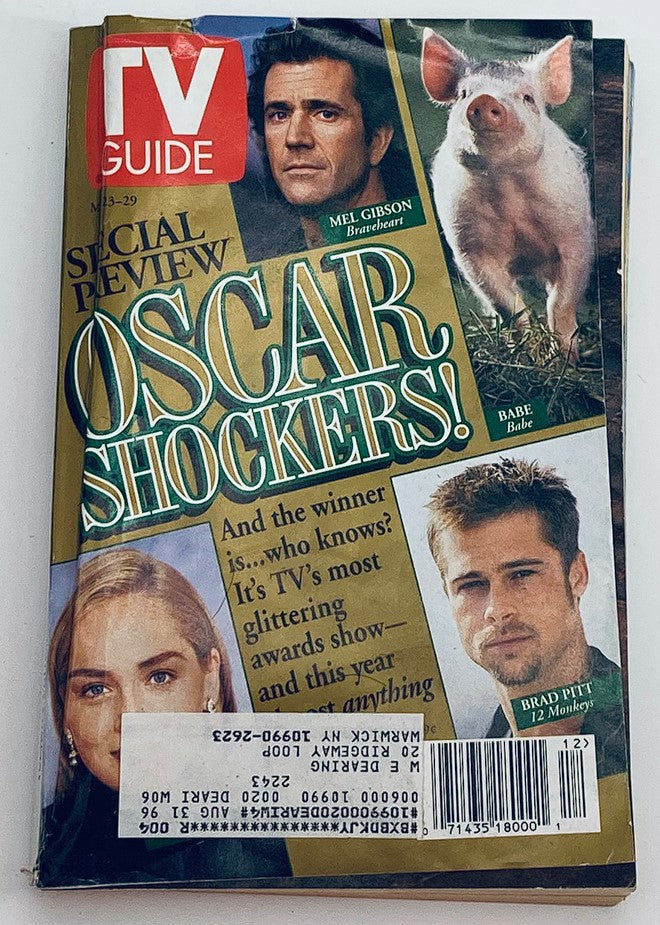
- Awards season and red carpet documentation: The mid-to-late 1990s found her at the apex of Hollywood's prestige circuit, and the glossies tracked every appearance with the kind of devoted, full-color attention that now exists only in fragments online.
- Serious interview features: Known for being unexpectedly forthcoming with journalists, her long-form interviews in publications ranging from Interview magazine to mainstream entertainment monthlies are prized for their candor — a quality increasingly rare in the managed celebrity coverage that would follow.
- International fashion editorials: European editions of major fashion titles commissioned original photography that often diverged dramatically from her American image, presenting a more sculptural, avant-garde interpretation that rewards collectors of mid-century fashion photography.
- Advocacy and public intellectual coverage: From the late 1990s onward, her HIV/AIDS activism and her commentary on the film industry attracted coverage in publications beyond the entertainment press, including pieces in more journalistically rigorous monthlies that treated her as a thinker as much as a star.
The Collector's Value
To hold one of these original issues is to hold something the internet cannot replicate. The paper stock of a 1992 Vanity Fair carries a specific weight, a faint resistance when you turn the page — nothing like the thin, utilitarian feel of modern print. The ink has a depth and a slight texture, and on the best offset printing of that era, a portrait photograph achieves a tonal richness that digital reproduction consistently fails to honor. The surrounding advertisements — for perfumes now discontinued, for cars that no longer exist, for films opening that very weekend — place the subject back inside a living cultural moment, transforming a simple celebrity profile into a genuine primary source document. These are not reprints or commemorative facsimiles; they are the original artifacts, each one a survivor of thirty-odd years of attics, newsstands, and estate sales. For collectors of Hollywood memorabilia and film history, vintage feminist cultural artifacts, or high-end fashion and photography ephemera, these publications offer an irreplaceable window into the moment when a genuinely singular talent met the full force of the last golden age of print. Explore the current available inventory below and claim a piece of that history before it moves on.