📖 About this Collection
Tab Hunter: Golden Boy, Silver Screen, and the Last Secret of Hollywood's Perfect Son
The Legend & The Legacy
In the gilded machinery of 1950s Hollywood, few stars burned as brightly — or as carefully — as Tab Hunter. Born Arthur Andrew Kelm, he was reinvented by the studio system into the quintessential all-American idol: blond, blue-eyed, and devastatingly handsome, his image plastered across fan magazines from coast to coast at a time when those glossy pages were the only portal between a dreaming teenager in Iowa and the glamour of the silver screen. His 1957 recording of Young Love topped the Billboard charts, making him a rare double threat in an era when Hollywood jealously guarded its stars from competing mediums. Warner Bros. packaged and sold him like a precious commodity — and the American public, starved for postwar sweetness and romantic fantasy, consumed him voraciously through every fan letter, every pullout poster, and every breathless column inch that the print press could produce. Decades later, the story deepened immeasurably: his 2005 memoir revealed a life lived in careful concealment, recasting every studio portrait and every manufactured romance as a layered, poignant artifact of a more repressive, more complicated America.
Inside the Archive
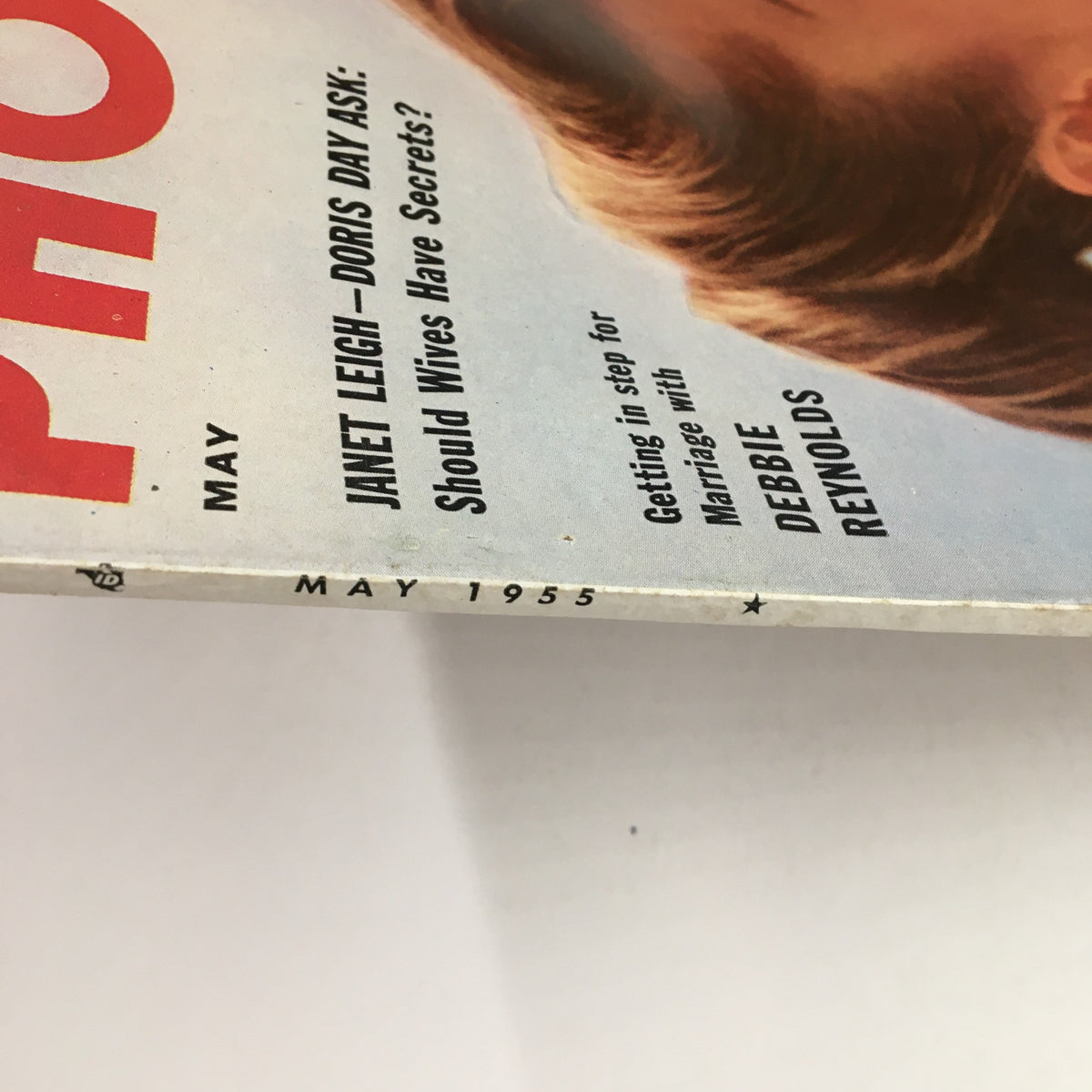
The vintage press covered Tab Hunter with a kind of worshipful intensity that was the hallmark of the studio-era fan magazine industry. Publications like Photoplay and Modern Screen — the twin bibles of mid-century celebrity culture — devoted lavish spreads to him, their photographers capturing him in the contrived candor of the era: posed shirtless on the beach, caught "off-guard" on a studio backlot, or locked in a carefully choreographed embrace with a female co-star. The photography was luminous and deliberately soft, lit to emphasize youth and approachability, while the editorial copy trafficked in the language of destiny and romance. TV Radio Mirror chronicled his crossover into popular music with particular enthusiasm, reflecting the era's anxiety and excitement about the blurring of Hollywood and rock-and-roll. International fan press — particularly British publications that idolized American screen culture in the postwar years — also featured him prominently, treating his image as an export of aspirational Americana. What makes these pages so electrically charged in retrospect is the tension between the carefully manufactured narrative and the private truth hidden just beneath the surface — a tension invisible to readers at the time, but now utterly transformative to anyone who holds these issues today.
Curator's Checklist: Highlights Often Include
- Studio-era fan magazine profiles and centerfolds from the mid-to-late 1950s, featuring the carefully managed romantic narratives crafted by the Warner Bros. publicity machine — including coverage of his highly publicized, studio-arranged dates with actresses like Natalie Wood
- Music press coverage following the unexpected success of Young Love in 1957, when trade publications and pop music monthlies grappled with Hollywood's sudden invasion of the pop charts
- Film promotional spreads and on-set photography tied to his notable pictures, including Battle Cry (1955) and Damn Yankees (1958), the latter pairing him memorably with Gwen Verdon
- Retrospective and reassessment features from the 1980s and beyond, when his career found a second, campy life through his collaborations with John Waters and his celebrated friendship with Divine — coverage that reflects a dramatically different cultural moment
- Post-memoir cultural features from the mid-2000s, when his candid autobiography prompted journalists and historians to reexamine the entire architecture of the Hollywood closet and the studio system's control over identity
The Collector's Value
To hold a vintage Photoplay or Modern Screen featuring Tab Hunter is to hold something far more than a celebrity keepsake — it is to hold a primary document of American cultural performance, a relic of the last great era of manufactured innocence. The paper itself tells part of the story: the slightly brittle, warm-toned stock of a mid-century magazine, the faint ghost of ink that rises when you turn a page slowly, the surrounding advertisements for Brylcreem and Chesterfield cigarettes that root you irrevocably in a specific, vanished moment of national life. These are objects that no digital archive can replicate, because the physical artifact carries the full weight of its original context — the reader who once dog-eared this page, the newsstand where it once stood. For collectors of Hollywood Golden Age memorabilia, LGBTQ+ cultural history, or mid-century American print ephemera, these publications offer an extraordinarily rare convergence: the chance to own a tangible piece of a story that was being told on two registers at once — the public myth and the hidden truth — and to trace, issue by issue, how a nation both constructed and consumed its most beautiful illusions. Explore the current inventory below and discover which pieces of this remarkable history are available today.