📖 About this Collection
Tammy Wynette: The Paper Trail of a Standing Woman
The Legend & The Legacy
Long before streaming playlists or social media tributes could carry a voice across generations, Tammy Wynette's story unfolded in ink and glossy print — passed hand to hand at beauty parlors, kitchen tables, and truck stop newsstands across America. Born Virginia Wynette Pugh in a Mississippi sharecropper's cabin, she rose to become the undisputed First Lady of Country Music, selling over thirty million records and redefining what it meant for a woman to stand at the center of Nashville's stage. Her music was inseparable from her life — the marriages, the heartbreaks, the headline-making abduction claim, the complicated devotion to George Jones — and the reading public consumed every chapter of it voraciously. In an era when print was the only way a fan in rural Alabama or suburban Ohio could feel close to a star, magazines became the living biography of a woman whose art and existence were one and the same. Each issue that featured her was a cultural artifact in real time, documenting the triumphs and turbulences of country music's most emotionally resonant voice.
Inside the Archive
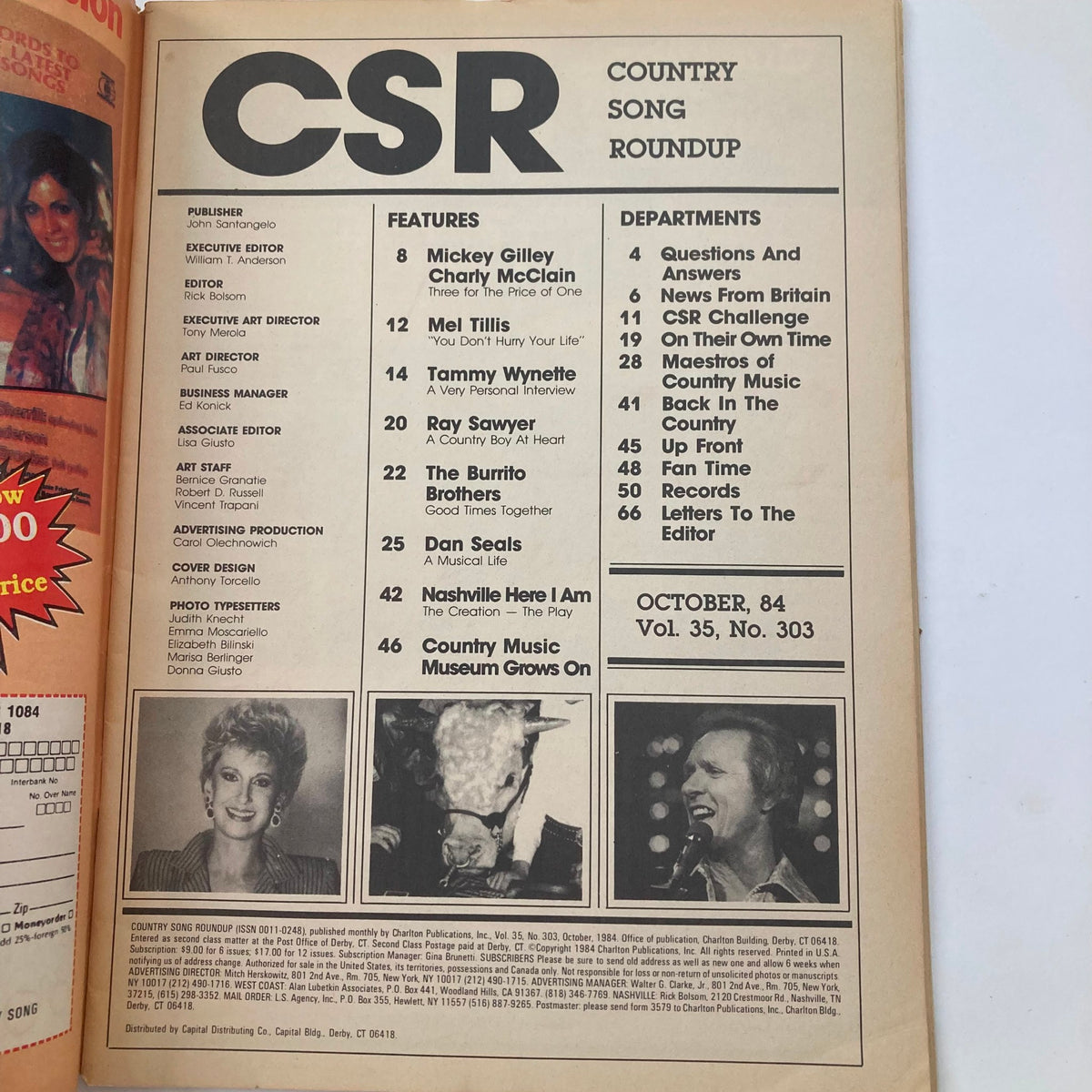
Vintage coverage of the First Lady of Country Music ranged from reverential portraiture to deeply personal exposés, reflecting the contradictions of a woman who was simultaneously a symbol of feminine resilience and a tabloid fixture. Publications like People magazine, which launched in 1974 at the very height of her stardom, returned to her story repeatedly — her relationship with George Jones providing an almost operatic narrative that editors knew readers could not resist. TV Guide frequently featured her as country music crossed aggressively into television variety programming through the 1970s, while Country Song Roundup and Music City News — the essential trade publications of Nashville's golden era — offered the kind of intimate, industry-insider coverage that no mainstream outlet could replicate. Photographically, she was captured in the lush, warm-toned style of 1970s celebrity portraiture: big hair luminous under studio lighting, floor-length gowns, and an expression that always seemed to hold something back. The editorial tone oscillated beautifully between the celebratory and the confessional, mirroring the emotional register of the songs that made her famous.
Curator's Checklist: Highlights Often Include
- Career milestone features covering the recording and cultural explosion of Stand By Your Man (1968) and the fierce feminist debate the song ignited in the early 1970s press
- Dual profiles and couple features documenting her tumultuous marriage to George Jones — one of country music's great love stories — appearing in both fan publications and mainstream celebrity weeklies
- Television crossover coverage from the period when she and Jones hosted variety specials, placing her in the broader landscape of 1970s American entertainment media
- Personal crisis and comeback narratives — including her highly publicized health struggles and the 1978 kidnapping story — covered extensively by tabloid-adjacent weeklies and human interest magazines
- Memorial and retrospective issues following her passing in April 1998, when publications from People to niche country music journals reflected on a career that had permanently altered the sound and soul of American popular music
The Collector's Value
There is something irreplaceable about holding a 1970s magazine feature on Wynette — the slightly yielding weight of the newsprint, the faint sweetness of decades-old ink, the full-page advertisements for Tab cola and Clairol hair color that frame her story in the unmistakable texture of her actual era. These are not reproductions or digital scans; they are primary documents, printed when she was alive and at her most compelling, distributed to a public that was living the same cultural moment in real time. The paper stock carries the warmth of its age, and the photography — reproduced with the grain and saturation of pre-digital press printing — possesses an emotional quality that no HD image can manufacture. For collectors of country music history, 1970s Americana and pop culture, or women's cultural history and feminist iconography, these publications offer something no biography or documentary can: the unmediated, contemporaneous record of how the world actually saw her, issue by issue, year by year. Browse the current available inventory below and find the piece of that world waiting to come home with you.