📖 About this Collection
Timothy McVeigh: The Face America Could Not Look Away From
The Legend & The Legacy
When the Alfred P. Murrah Federal Building collapsed into rubble on the morning of April 19, 1995, killing 168 people — including 19 children in its second-floor daycare center — the United States confronted a terror it had not yet named: domestic. Timothy McVeigh, a decorated Gulf War veteran turned anti-government extremist, had detonated the deadliest act of domestic terrorism in American history, and a nation accustomed to fearing threats from abroad was forced to look inward. In an era before social media algorithms and rolling internet commentary, the public processed this shattering event almost entirely through print — through ink on paper, through cover photographs and long-form investigative essays, through the slow, deliberate journalism of weekly and monthly magazines that had the space and the mandate to ask why. His arrest, trial, conviction, and 2001 execution unfolded across nearly six years of sustained coverage, making him one of the most exhaustively documented criminal figures of the late twentieth century.
Inside the Archive
The print media of the mid-to-late 1990s approached McVeigh with an unsettled, almost clinical intensity — editors and photographers alike grappling with how to frame a face so ordinary against an act so monstrous. TIME magazine, which placed him on its cover in stark, unadorned portraiture, set the editorial tone: direct, unflinching, and deeply interrogative. Newsweek produced some of the era's most expansive long-form features, charting the trajectory from decorated soldier to convicted bomber with the measured gravity the story demanded. People, meanwhile, humanized the surrounding tragedy — the survivors, the families, the rescuers — while still returning, issue after issue, to the central, haunting question of the perpetrator's ideology. International publications including Paris Match and Der Spiegel covered the trial and execution with particular attention, framing the story through the lens of American exceptionalism and the paradox of a democracy producing its own destroyer. Photography from this period is remarkably stark: courtroom sketches, federal booking photographs, and the iconic images of the bombed-out building's façade appear throughout, lending these issues a documentary gravity that no digital archive can replicate.
Curator's Checklist: Highlights Often Include
- Arrest & Indictment Coverage (1995): Issues from the weeks immediately following April 19th, featuring breaking-news spreads, maps of the blast radius, and early profiles examining McVeigh's military background and ties to militia movements
- The Oklahoma City Community & Survivors: Feature-length human interest coverage spotlighting the 168 victims, first responders, and the broader healing of a city — essential context that surrounds nearly all coverage of the perpetrator
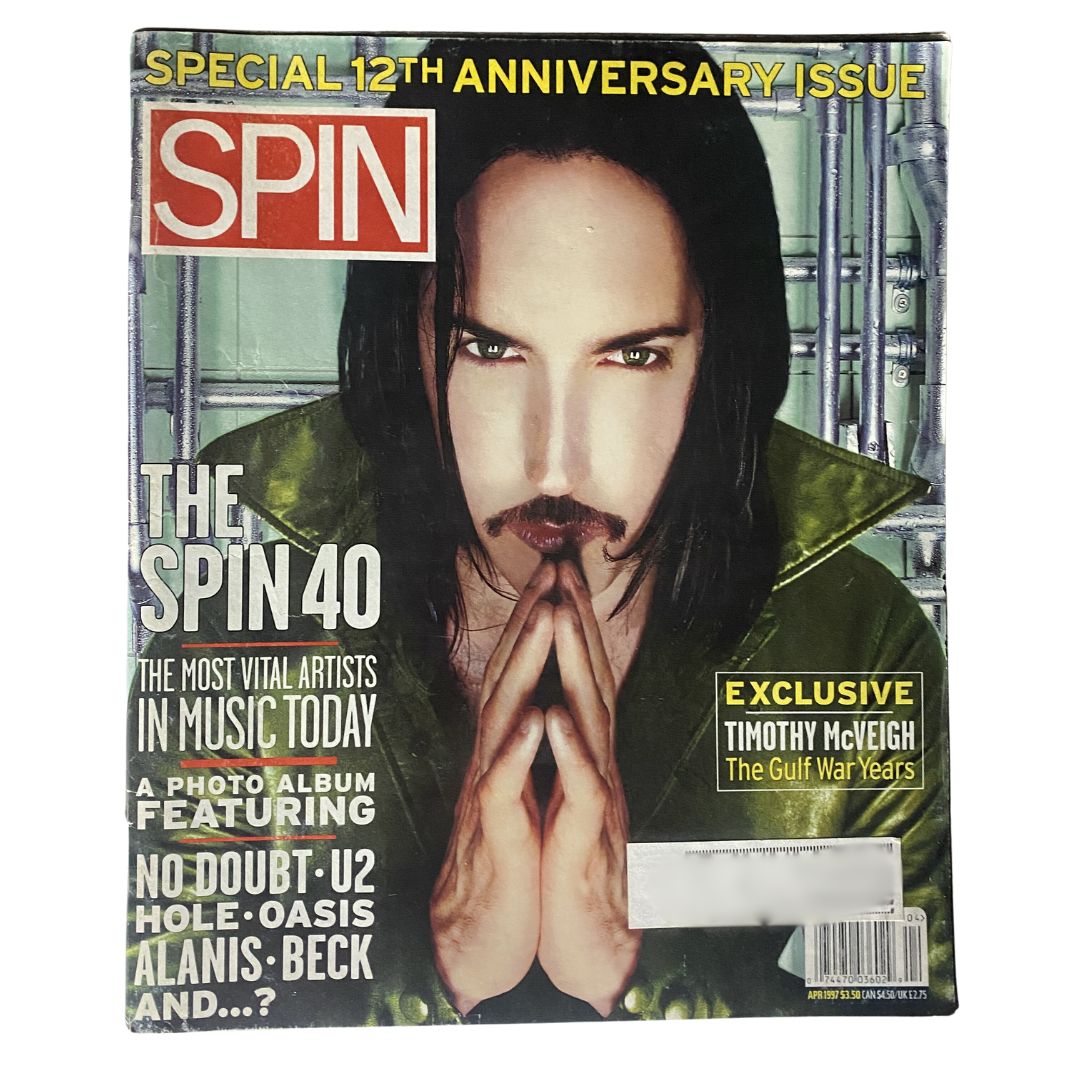
- The Trial of the Decade (1997): Gavel-to-gavel print journalism from the Denver federal trial, including courtroom illustration, legal analysis, and the landmark guilty verdict across major weekly newsmagazines
- Militia Movement & Anti-Government Ideology: Investigative deep-dives — frequently found in Rolling Stone, The New Republic, and major newsweeklies — exploring the broader landscape of 1990s domestic extremism that contextualizes his radicalization
- The Execution (June 2001): A rare and historically significant moment in American justice, covered extensively in the final weeks before and after — representing some of the last major print-era coverage before the September 11th attacks permanently shifted the national conversation
The Collector's Value
There is something irreplaceable about holding a 1995 TIME or Newsweek in your hands — feeling the slightly rough tooth of the newsstand paper stock, catching the faint chemical memory of period ink, and turning past advertisements for Windows 95 and Oldsmobile sedans before arriving at the journalism itself. These are primary source documents: artifacts of how an entire society processed collective trauma in real time, without the noise of comment sections or the distortion of retrospective framing. They capture journalism at its most purposeful — long-form, considered, and accountable to the printed page. For collectors of true crime and criminal justice history, 1990s American political and social history, or Cold War-era militia and anti-government movements, these publications offer an irreplaceable window into one of the most consequential and disturbing chapters of modern American domestic history, told in the language and visual grammar of its own moment. Browse the current available inventory below and find the issue that speaks to your collection.