📖 About this Collection
Walter Mondale: The Conscience of a Generation
The Legend & The Legacy
In an era when political fortunes were won and lost on the printed page, Walter Mondale occupied a singular place in the American imagination — a statesman of quiet conviction navigating some of the most turbulent decades of the twentieth century. As Hubert Humphrey's protégé, a long-serving U.S. Senator from Minnesota, and ultimately Jimmy Carter's Vice President, he embodied a brand of principled liberal politics that magazines of the 1970s and early 1980s debated with fervor and ink in equal measure. Then came 1984 — the moment that defined him in the public consciousness forever. His audacious selection of Geraldine Ferraro as his running mate, the first woman ever nominated for Vice President on a major party ticket, sent editors scrambling and cover designers reaching for their boldest layouts. Readers followed every twist of that historic campaign not through a scroll or a stream, but through the deliberate, considered prose of weekly newsmagazines spread across kitchen tables and airport lounges across the country.
Inside the Archive
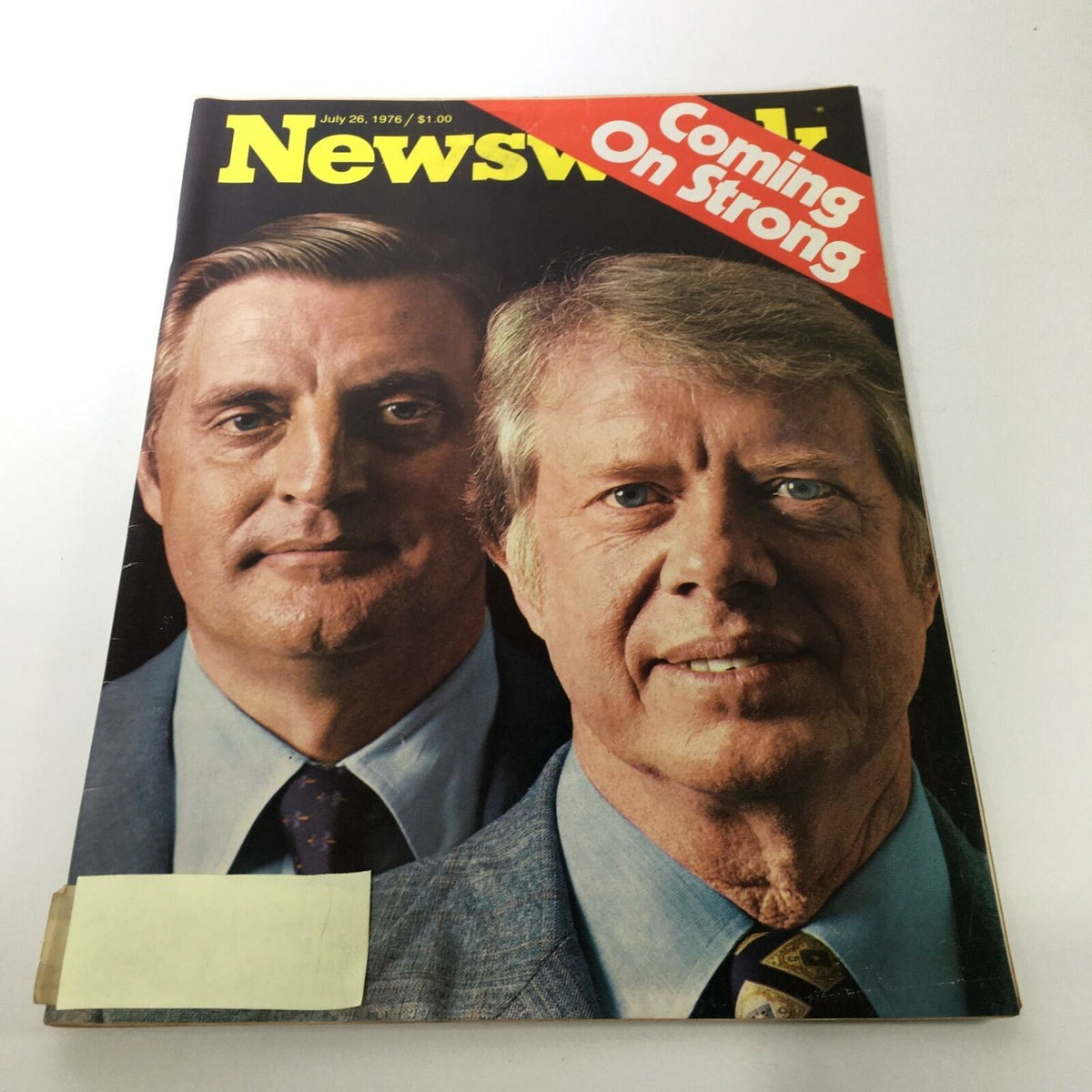
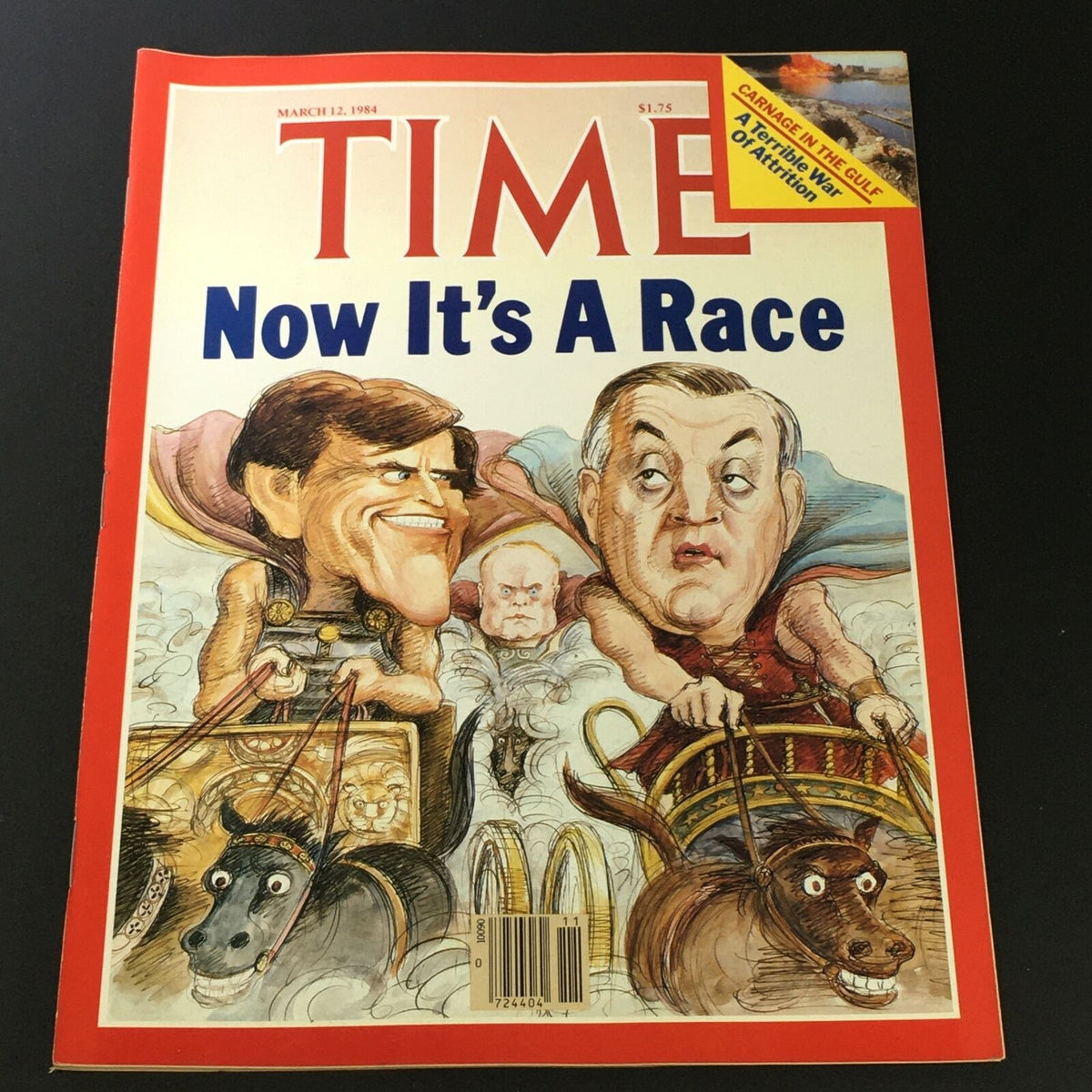
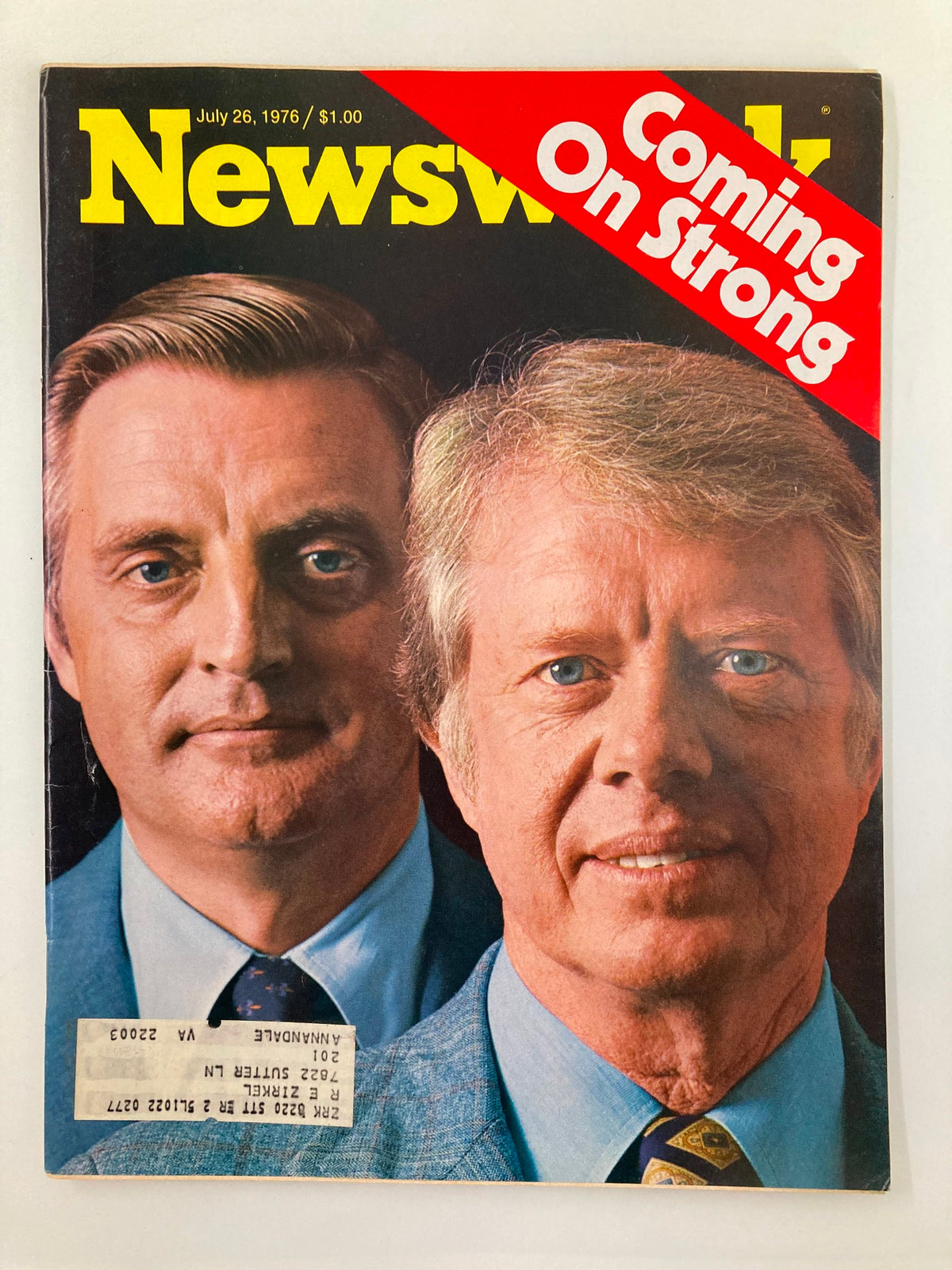
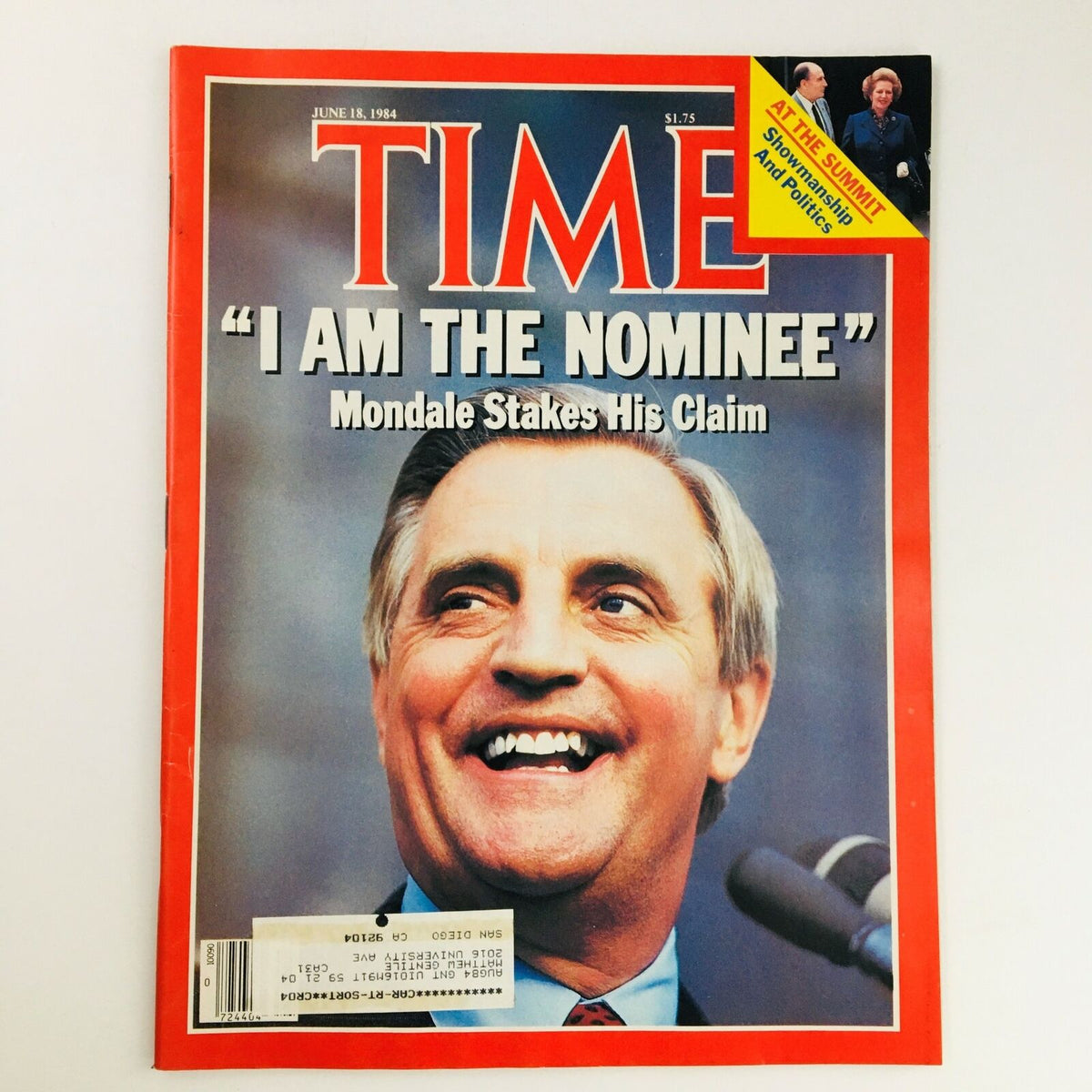
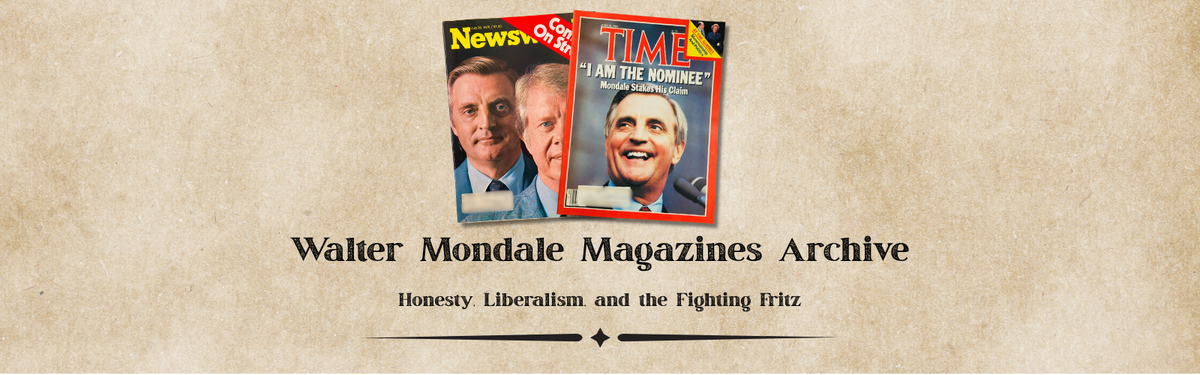
The photographic record of the Minnesota Democrat is one of earnestness rendered in silver halide — campaign trail crowds pressing in under bunting and fluorescent light, Cabinet Room handshakes captured in the solemn tones of official Washington portraiture, and the iconic dual-portrait covers that announced the Mondale-Ferraro ticket to a stunned and riveted nation. Time and Newsweek were his most devoted chroniclers, their rival cover treatments of the 1984 Democratic National Convention forming some of the most collectible political ephemera of the Reagan decade. U.S. News & World Report, with its wonkier editorial disposition, gave particular depth to his policy legacy — his early warnings on the federal deficit and his steadfast advocacy for the middle class rendered in the careful, column-heavy layouts of the period. Beyond the major newsweeklies, regional and political journals tracked his Senate career with the granular attention that only print allowed, creating a layered archive that spans from Great Society idealism to the Cold War anxieties of the early 1980s.
Curator's Checklist: Highlights Often Include
- Convention & Campaign Coverage — Newsweekly issues from the 1984 presidential race, frequently featuring dramatic convention-floor photography and in-depth analyses of the historic Ferraro vice-presidential selection
- The Carter White House Years — Coverage of his tenure as the 42nd Vice President, including state visits, the Iran hostage crisis, and the complex inner workings of a presidency that leaned heavily on its second-in-command
- Senate Era Retrospectives — Profile pieces from the late 1960s and 1970s documenting his rise as one of the Senate's most effective liberal voices and his close association with the Humphrey political tradition
- The Reagan Landslide Post-Mortems — November and December 1984 issues featuring extensive analysis of one of the most lopsided electoral defeats in modern American history, with the former Vice President reflecting with characteristic candor on the result
- Cold War Foreign Policy Features — International and domestic publications covering his positions on nuclear arms, détente, and American engagement abroad during one of the most anxious chapters of the Cold War
The Collector's Value
To hold a newsmagazine from the autumn of 1984 is to hold the weight of a pivotal American moment — the paper stock slightly browned at the edges, the ink carrying that unmistakable minerality of offset printing, the surrounding advertisements a vivid time capsule of Reagan-era consumer culture, from luxury sedans to cigarette brands that would vanish from print media within the decade. These are not reprints or digital facsimiles; they are primary sources, artifacts of a democracy working through its own story in real time, with all the urgency and imperfection that entails. For collectors of American political history, Cold War–era Americana, or feminist and women's history milestones, these publications offer an irreplaceable window into a watershed moment — the year a major party dared to reimagine what a presidential ticket could look like, and the nation watched through these very pages. Explore our current available inventory below and discover which pieces of this remarkable chapter are waiting to find their next keeper.