

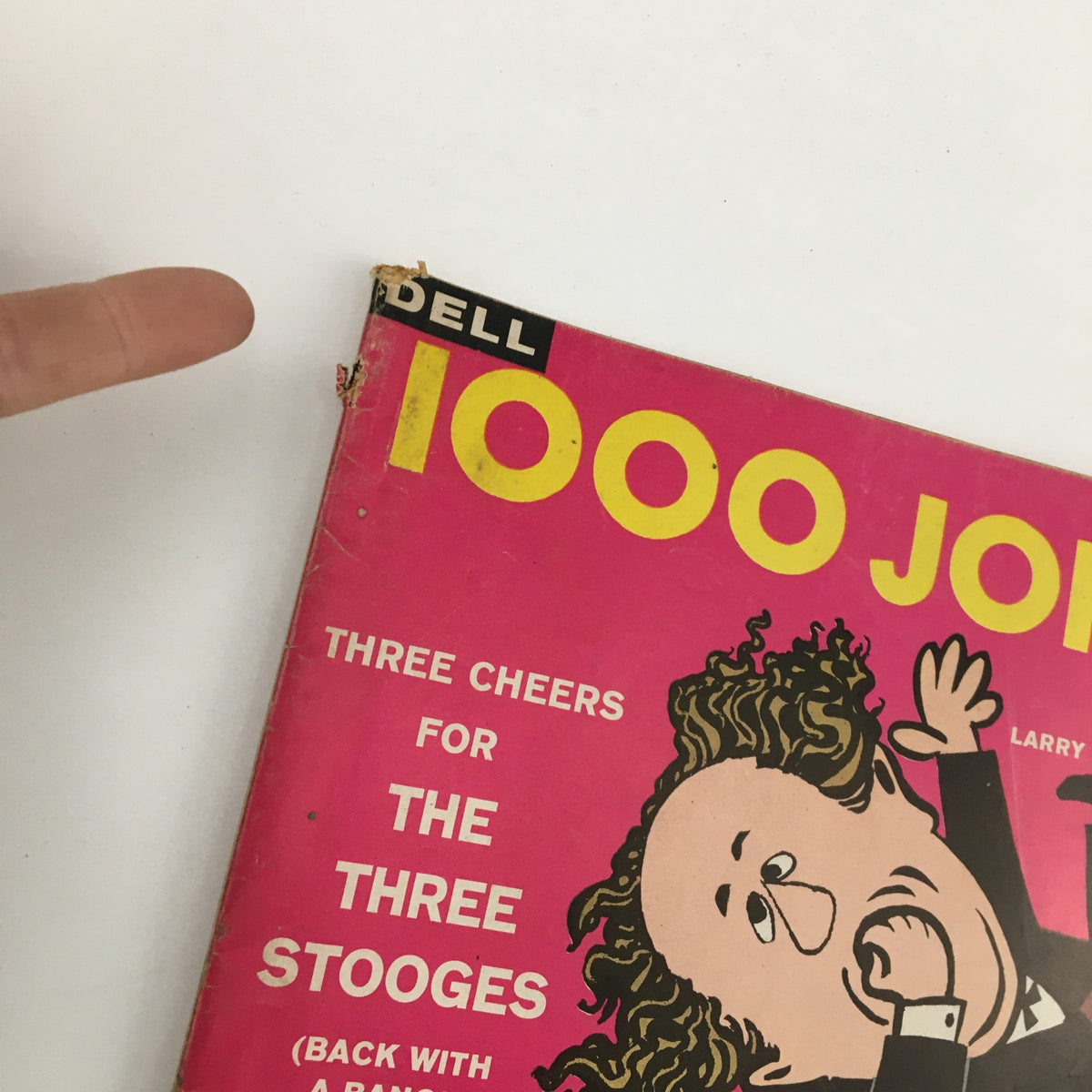


Description
Collector's Note – Why This Issue Matters
The September 1959 issue of 1000 Jokes Magazine — Number 91, featuring a tribute to the Three Stooges — documents one of the most beloved comedy acts in American entertainment history at a specific and revealing moment in their cultural trajectory. By September 1959, the Three Stooges were experiencing a remarkable second act. Their original Columbia Pictures short film series had ended in 1959 after nearly a quarter century of production, but the syndication of those shorts to television had introduced them to an entirely new generation of young viewers who had never seen them in theaters. The late 1950s were the beginning of the television Three Stooges phenomenon — a rediscovery that would make Moe Howard, Larry Fine, and Curly Joe DeRita (who had replaced the late Shemp Howard) enormously popular with postwar American children in ways that surprised even the studio that had let their contract expire. A humor magazine tribute to the Three Stooges published in September 1959 was riding the very first wave of that television revival, produced at the precise moment when the Stooges were transitioning from a film comedy legacy into a living television institution. For collectors building archives of 1959 magazines covering American comedy and popular culture, this issue documents that transition at its earliest and most historically significant stage.
1000 Jokes Magazine occupied a specific niche in the late-1950s American humor publishing landscape — the digest-format joke and gag magazine that had been a staple of newsstands since the postwar era. These publications served a readership that wanted accessible, family-friendly humor in a portable and inexpensive format, and they were among the primary vehicles through which popular comedy figures crossed from their primary media — film, television, radio — into the print humor market. A Three Stooges tribute in a September 1959 joke digest is a document of how popular entertainment culture was being translated into accessible print content for a mass readership, and it captures the Stooges at the precise moment their television syndication was beginning to generate the kind of broad popular enthusiasm that would sustain their cultural presence for decades. The magazine's Number 91 designation confirms it had been publishing continuously for years by this point, reflecting the sustained commercial viability of the digest humor format through the late 1950s.
The Three Stooges' cultural legacy has proven extraordinarily durable, and the late-1950s period documented by this issue is now recognized by comedy historians as the beginning of their most sustained popular revival. Print humor tributes and features from this specific transitional moment are primary documents of how the comedy culture of the era understood and celebrated them before their television presence had fully crystallized into the canonical status they would later achieve.
About the Publication
1000 Jokes Magazine was an American digest-format humor publication that combined joke collections, comic strips, humorous anecdotes, and illustrated gag content in a compact, inexpensive format aimed at a broad general readership. Publications of this type were a staple of American newsstands from the postwar era through the 1960s and 1970s, filling a market niche for accessible humor content between the more literary humor of publications like The New Yorker and the purely visual content of cartoon-focused titles. The numbered issue format — Number 91 by September 1959 — indicates a publication with a sustained publishing history by this point, having maintained consistent newsstand presence across multiple years. Its editorial format prioritized volume and variety of humor content over depth or editorial ambition, making it a populist publication in the best sense: wide-ranging, accessible, and calibrated for genuine entertainment rather than critical engagement.
Key Highlights Inside
- "Cheers for the Three Stooges" tribute feature — A dedicated feature honoring the Three Stooges published at the precise moment their television syndication was generating a major popular revival, documenting early print recognition of the comedy act's renewed cultural prominence in the late 1950s.
- Late-1950s American humor content — Joke collections, comic strips, and illustrated gag material reflecting the specific humor vocabulary and comedic sensibility of 1959 American popular culture, providing a time-capsule record of what Americans found funny at the end of the decade.
- Newsstand edition, no label — The absence of a subscription mailing label confirms retail newsstand origin, preserving the full cover presentation without address obstruction.
- Stamped mark on back cover — The listing notes a stamped marking on the back cover, a permanent condition factor that adds provenance interest while affecting the back cover's presentation for display-focused collectors.
Note: Specific joke titles, named contributors, and additional named content beyond the Three Stooges tribute have not been confirmed from available sources for this issue. The highlights above reflect only what is verifiable from the listing and well-documented facts about the publication format and its cover subject.
Condition & Rarity
Good condition with minor wear across pages and binding, a stamped mark on the back cover, newsstand origin, and plastic protective covering represents a workable and honest assessment for a sixty-five-year-old digest humor magazine. Digest-format publications from the late 1950s were printed on paper stock of modest quality — lighter and more acid-prone than the coated stock used in glossy monthlies — and surviving copies in any collectible condition are less commonly encountered than their original newsstand ubiquity might suggest. The minor wear on pages and binding is standard and expected at the good-condition grade for a publication of this age and format. The stamped mark on the back is a permanent surface factor; its location on the back rather than the front preserves the cover presentation intact. The no-label newsstand origin confirms the front cover is fully visible without address obstruction. The plastic protective covering indicates deliberate preservation. For collectors of Three Stooges memorabilia and late-1950s American humor publications, the content condition — the legibility and completeness of the tribute feature — is the primary evaluation factor beyond surface presentation.
Looking for More Issues Like This?
Late-1950s humor digest magazines with Three Stooges content are a genuinely specialized find — they document the act at the specific moment of their television revival, and surviving copies in collector-grade condition are uncommon given the modest paper stock and active use these publications typically received. The full 1959 magazine collection at OriginalMagazines.com covers a wide range of titles from a year that documented American popular culture at a productive and historically interesting transitional moment, and is worth browsing for other humor, entertainment, and popular culture publications from the end of the decade.