



Description
Collector's Note – Why This Issue Matters
This May 1981 issue of 16 Magazine captures an unusually dense lineup of teen idols and pop culture figures, several of whom were at genuinely distinct stages of their careers that exact spring. John Schneider and Tom Wopat were riding the height of The Dukes of Hazzard's cultural dominance, having become overnight teen idols on the strength of the show's massive ratings and merchandise sales, with Schneider's country crossover single "It's Now or Never" climbing both the country and pop charts that very year. Scott Baio was likewise deep into his own teen-idol moment as Chachi Arcola on Happy Days, having just earned a Daytime Emmy nomination for the 1981 television movie Stoned, and roughly a year away from his own ill-fated Joanie Loves Chachi spin-off. Gene Simmons and KISS, by contrast, were in a far rockier patch: the band was deep into recording the famously misguided concept album Music from the Elder, a project born out of the commercial disappointment of 1980's Unmasked and widely regarded by critics and fans alike as one of the lowest points in the band's history.
The interior names mentioned alongside the cover trio round out a similarly varied snapshot of the moment. Matt Dillon was freshly established as a teen-idol actor on the strength of 1980's My Bodyguard and Little Darlings, both box office successes that had raised his profile considerably, though his more critically acclaimed work in the S.E. Hinton adaptations and films like The Outsiders was still a year or two away. Olivia Newton-John, meanwhile, was in a genuine transitional period of her own: fresh off the critically panned but commercially successful Xanadu soundtrack, she was working that same year toward the far more provocative reinvention that would arrive that October with the album Physical, a record that would become the best-selling single of the entire decade. None of these trajectories had fully resolved yet in May 1981, which is exactly what makes a single issue capturing all of them simultaneously such an interesting time capsule.
For collectors, that combination of a teen-idol TV duo, a rising sitcom star, a rock band mid-stumble, a breakout teen actor, and a pop singer on the cusp of reinvention reflects just how broad a single issue of 16 Magazine could be in its cultural reach during this period. It's a useful reminder that teen magazines of the early 1980s weren't narrowly focused on any one corner of entertainment, but rather tracked whoever was capturing young audiences' attention across television, film, and music in a given month, regardless of how differently those careers would ultimately unfold. This issue sits at a genuinely interesting crossroads for several of its featured names, making it a notable reference point for anyone researching how the era's youth-oriented press covered celebrities before their more famous or more infamous chapters had even begun.
About the Publication
16 Magazine was one of the most prominent American teen fan magazines of the postwar era, known for its mix of celebrity pin-ups, interviews, and contests aimed primarily at teenage and preteen readers. The magazine built its identity around access to whichever musicians, television stars, and young actors were capturing youth attention in a given month, often pairing multiple names on a single cover to maximize newsstand appeal. A defining feature of the title throughout its run was its centerfold and pin-up format, with issues regularly including poster-style images of featured stars designed to be removed and displayed by readers, a format reflected directly in the cover line of this issue. The magazine also leaned heavily on contests, giveaways, and reader engagement features as a way of building loyalty among its young audience, a common strategy across the broader teen fan magazine category during this period. 16 Magazine existed alongside several similarly formatted competitors throughout the 1970s and 1980s, all competing for the same young readership through largely interchangeable formulas of pin-ups, interviews, and celebrity gossip. Specific editorial details unique to this particular issue beyond what's described in the listing are not independently confirmed here, but the format and audience are fully consistent with the magazine's well-established identity throughout this era.
Key Highlights Inside
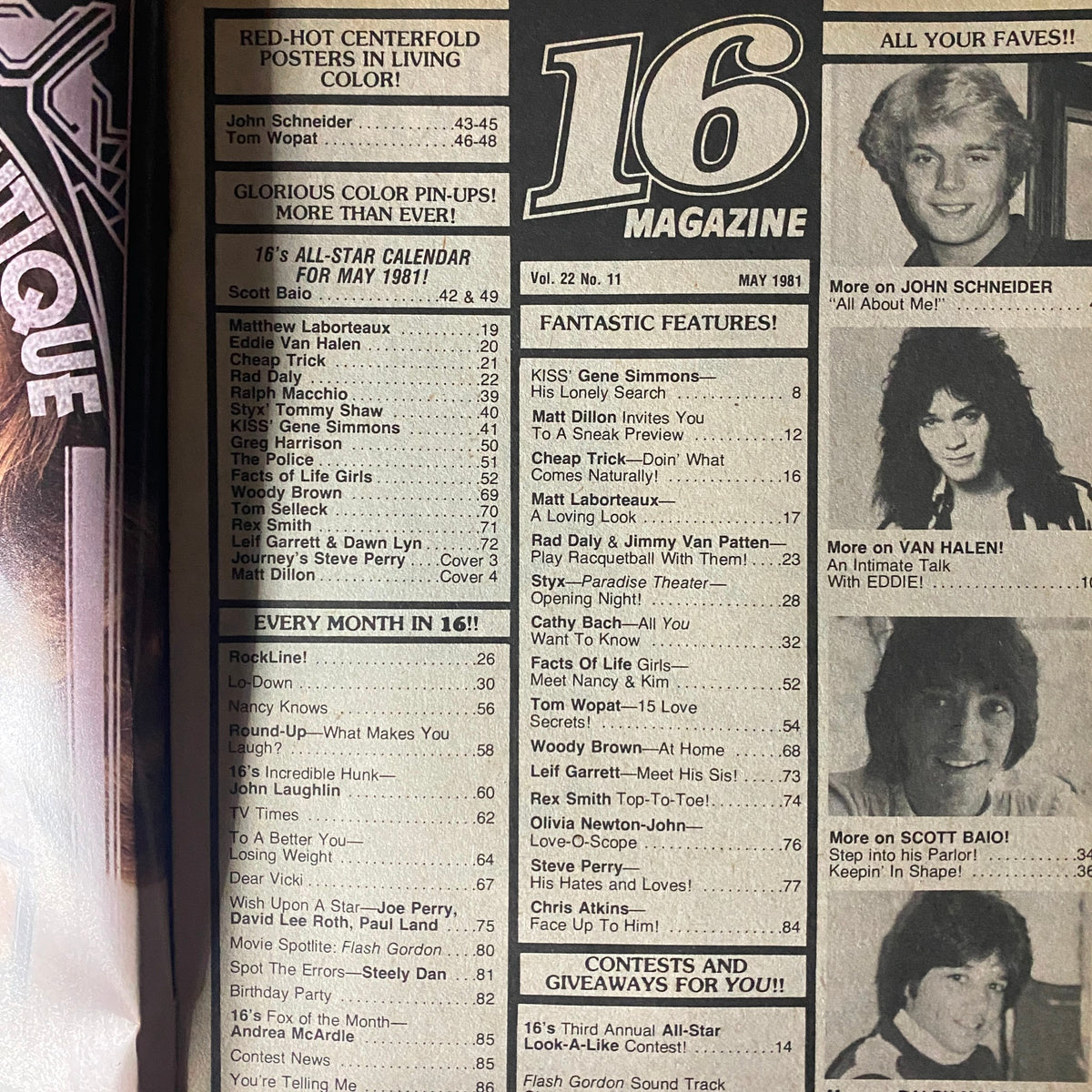
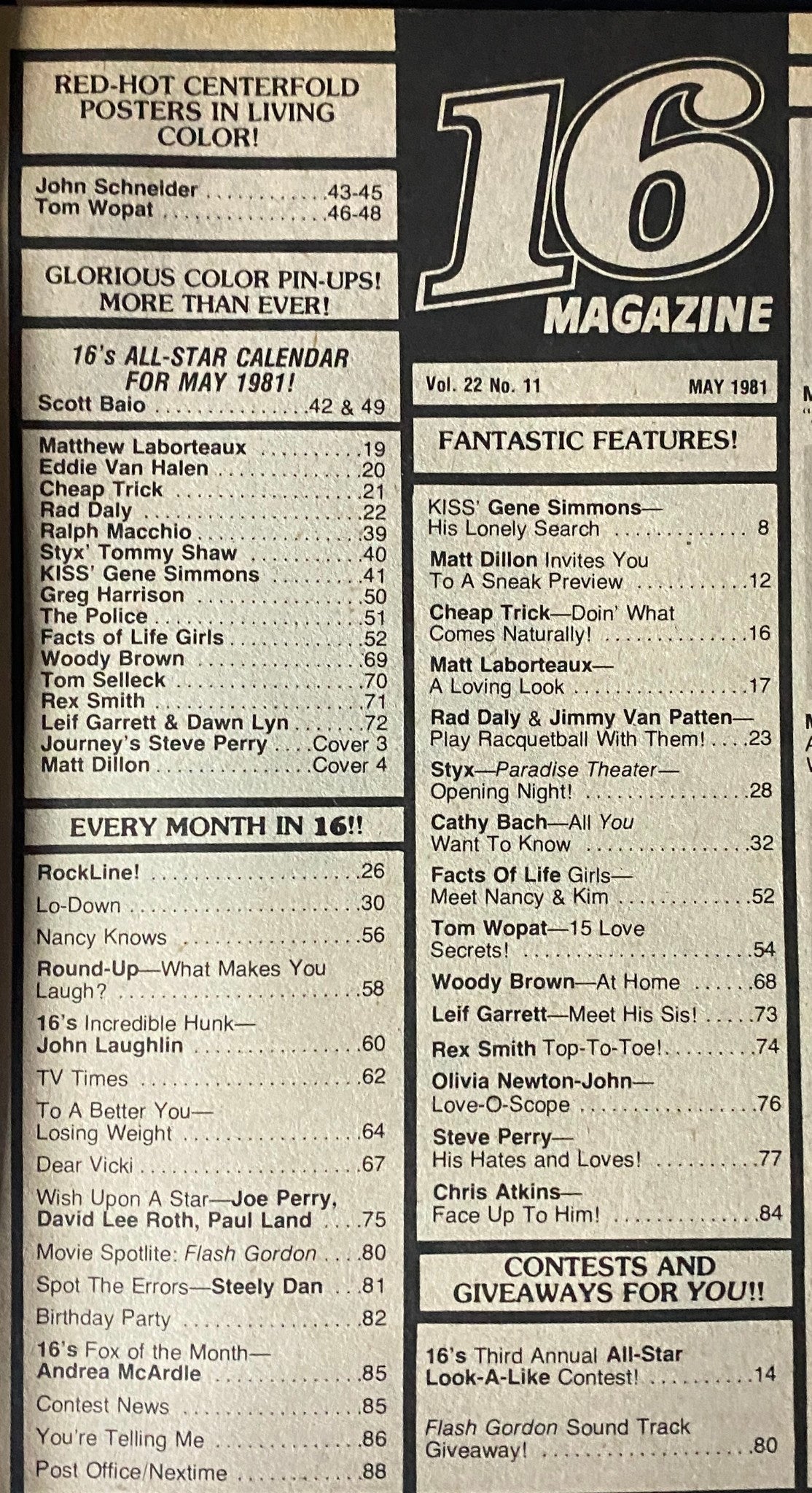
- Cover feature on John Schneider, Scott Baio, and Gene Simmons, three figures occupying very different positions in their careers that spring. Schneider and his Dukes of Hazzard co-star Tom Wopat were at the height of their teen-idol fame, while Schneider's first country crossover single was actively climbing the charts that same year. Baio, meanwhile, had just earned a Daytime Emmy nomination for his performance in the 1981 television movie Stoned, reflecting his standing as one of the era's most prominent young sitcom stars.
- Includes a centerfold poster featuring John Schneider and Tom Wopat, capturing the Dukes of Hazzard pairing at the absolute peak of the show's merchandising and ratings dominance. Posters of the two actors were a major driver of merchandise sales during this period, reflecting just how significant their teen-idol status had become. Their popularity was substantial enough that the pair would clash with producers over merchandising compensation the following year, leading to a contract dispute that briefly pulled them from the series.
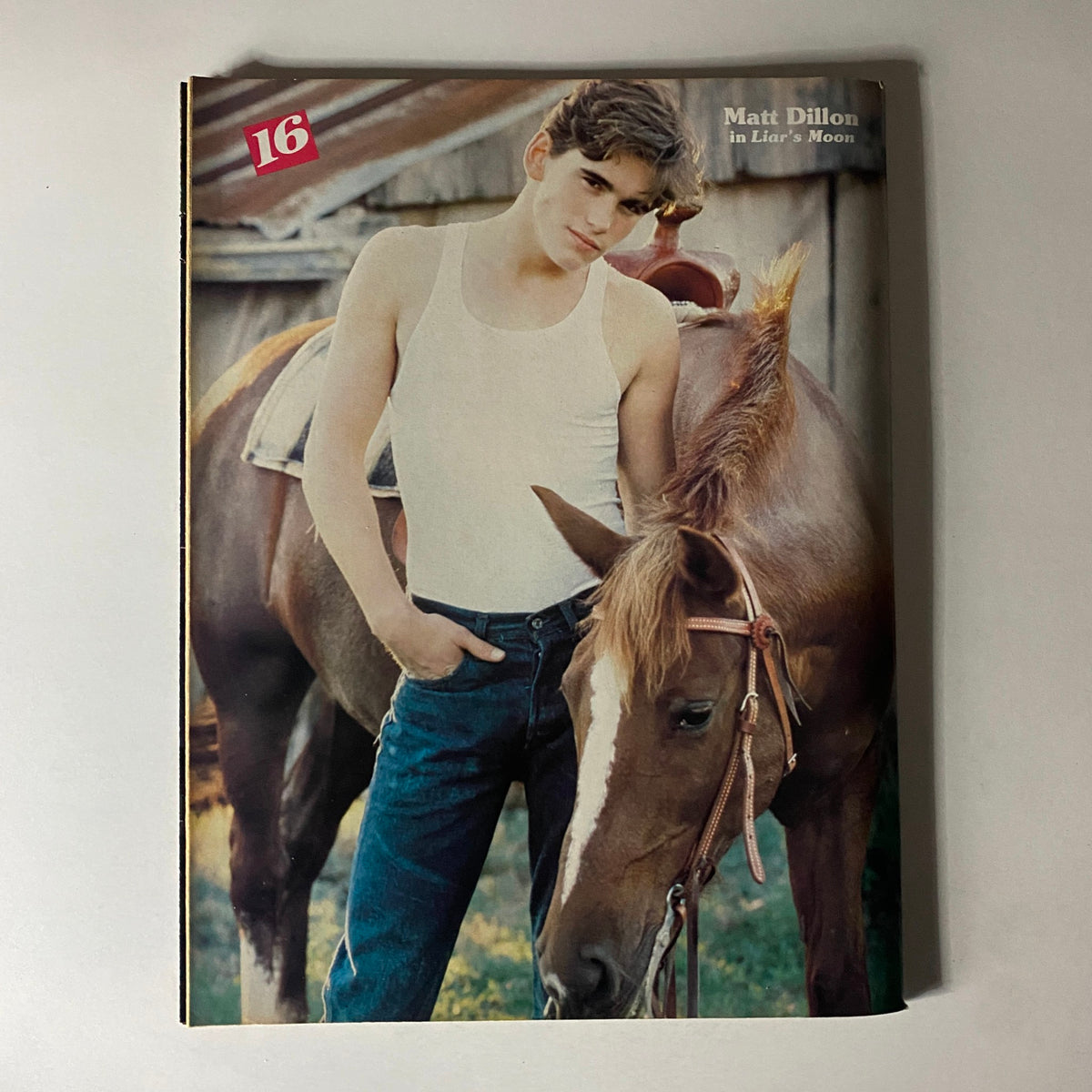
- Interviews with Gene Simmons, Matt Dillon, and Olivia Newton-John, three figures at notably different career inflection points in May 1981. Simmons and KISS were deep into recording the divisive concept album Music from the Elder, a project that would go on to become widely regarded as one of the lowest points in the band's history. Dillon, by contrast, was riding high on the box office success of My Bodyguard and Little Darlings, while Newton-John was in the midst of reinventing her public image ahead of that October's Physical, the album that would become the best-selling single of the decade.
- Beyond the named cover and interior features, additional article titles, contest details, and the full scope of interior content for this specific issue are not confirmed here. 16 Magazine issues of this era typically included multiple pin-ups, reader contests, and shorter celebrity profiles beyond the marquee names listed. Collectors interested in the complete contents should plan to verify them directly against the physical issue.
Condition & Rarity
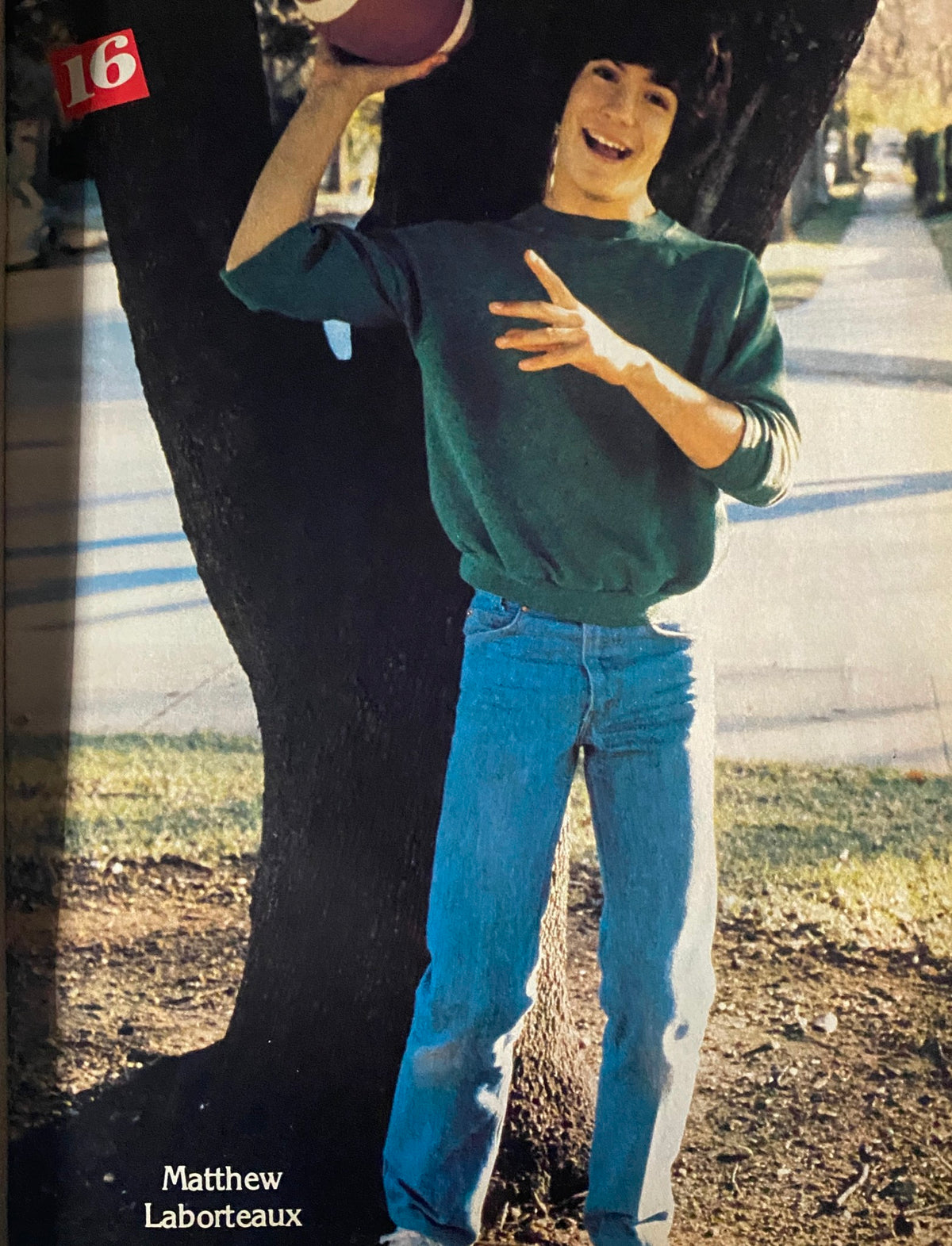
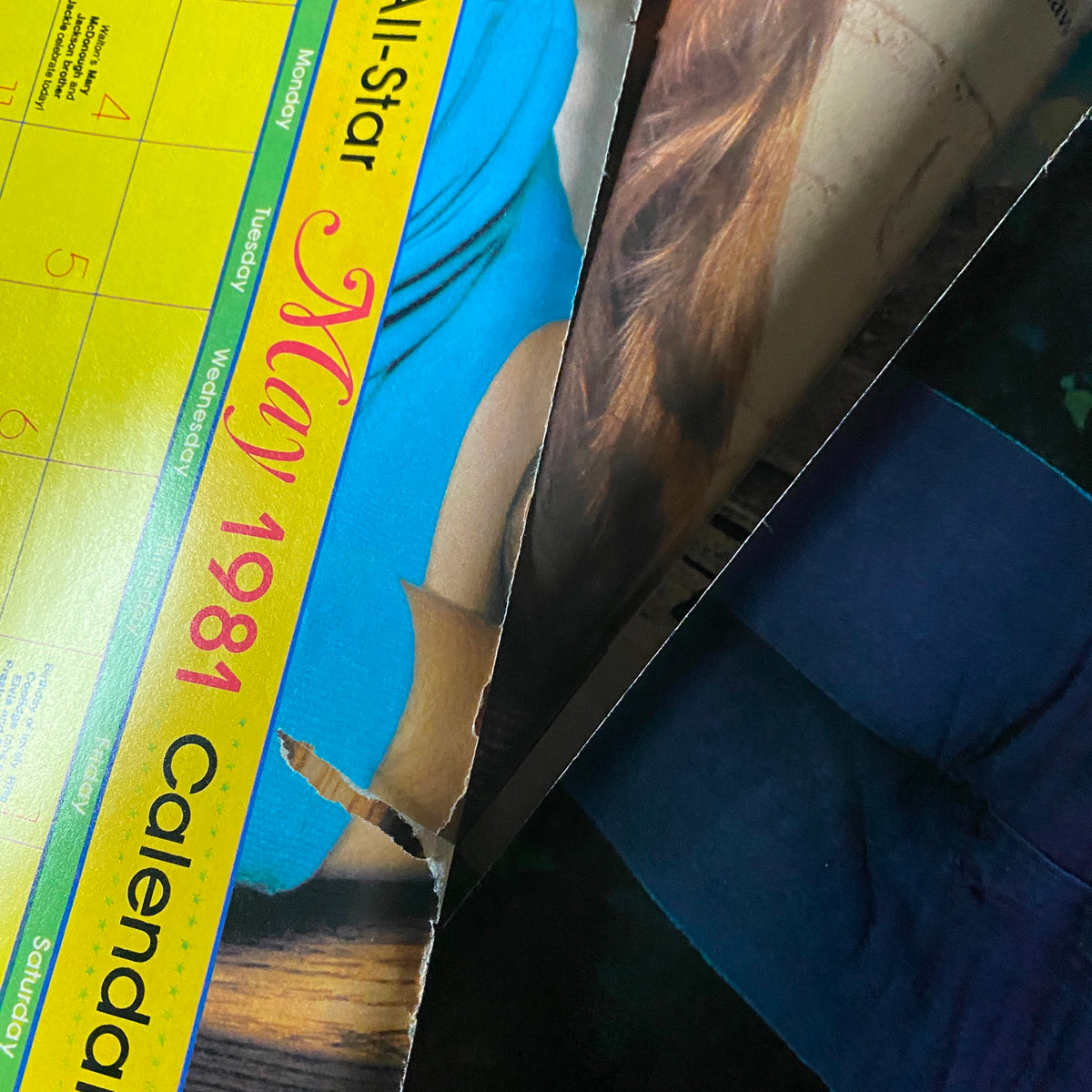
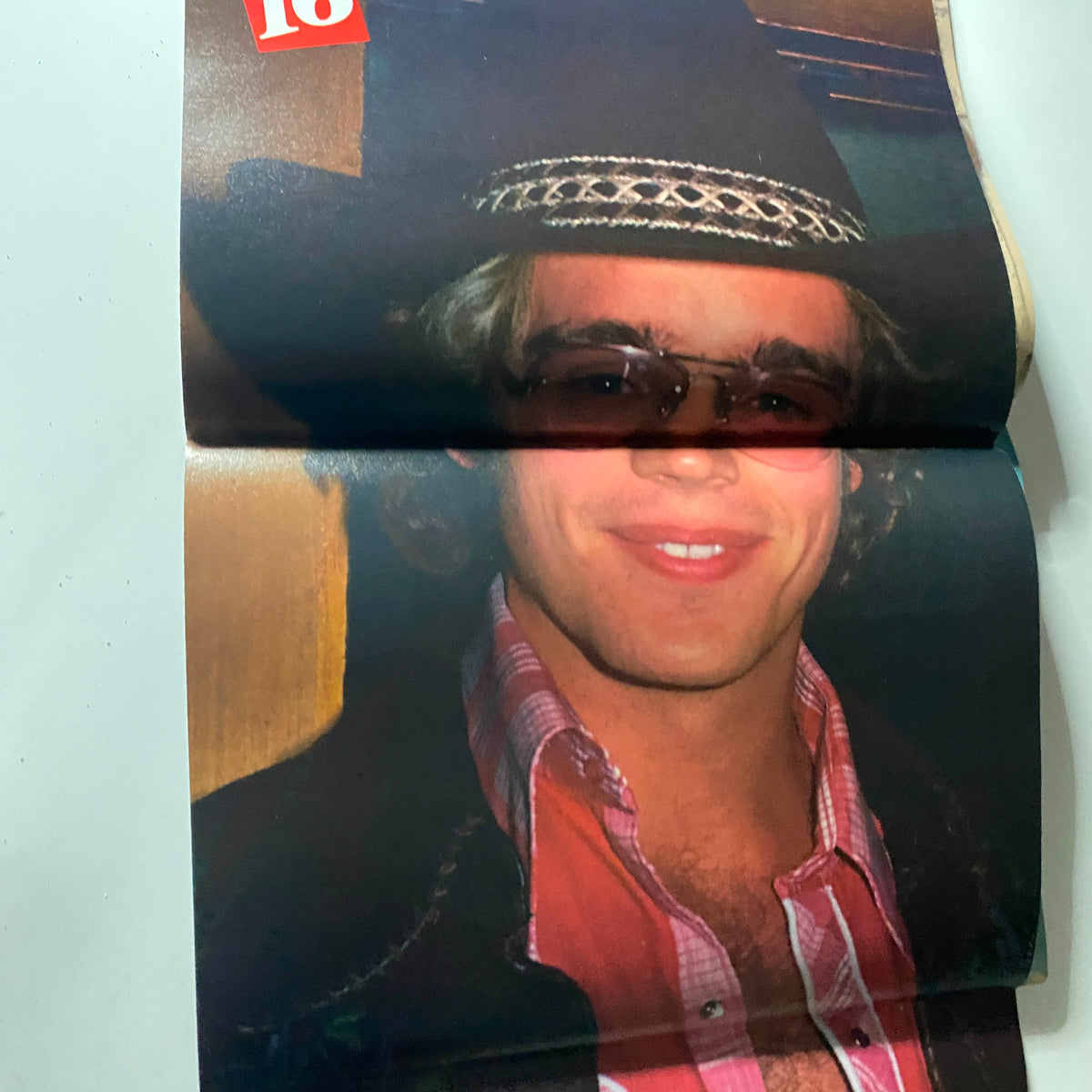
Issues of this type are generally evaluated by collectors against a few key benchmarks: whether the copy is a newsstand edition or a subscription copy, whether a mailing label is present on the cover, and, critically for fan magazines like this one, the completeness of any centerfold posters or pin-outs originally included in the issue. A newsstand edition without a label is typically considered more desirable than a labeled subscription copy, since the unmarked cover preserves the original cover photography and design exactly as it appeared on the rack. Completeness is an especially significant factor for teen fan magazines of this era, since pin-ups and centerfolds were specifically designed to be removed and displayed, meaning fully intact issues are considerably harder to find than the base magazine alone. In this case, the Scott Baio and Gene Simmons pin-ups are present but detached from the binding, which collectors generally regard as a meaningful but lesser condition issue compared to outright loss, since the images themselves have survived even if no longer bound into the issue. The missing Greg Harrison centerfold, however, represents a more significant gap in completeness, and is the kind of absence that collectors specifically weigh when assessing the overall value of a given copy relative to a complete one. A grade of "good" generally reflects light, age-appropriate wear consistent with a magazine of this vintage that has been read and handled, rather than a pristine, unhandled copy. Protective plastic sleeving is a common and recommended storage method for vintage fan magazines and their separated inserts alike, helping to prevent any further handling wear or separation. Collectors evaluating any surviving copy of this issue should pay close attention to which pin-ups and centerfolds are present, whether they remain attached, and the overall condition of the binding and spine relative to the listed grade.
Looking for More Issues Like This?
A May 1981 16 Magazine bringing together this particular lineup of teen idols, sitcom stars, a rock band, and a pop icon mid-reinvention is a distinctive find, especially with its centerfold material at least partially intact. If you're chasing more from this golden era of teen fan magazine publishing, our 16 Magazine collection is a great place to keep browsing, and our broader 1981 magazines collection offers a wider look at everything else that hit newsstands that year. Either is a strong starting point whether you're filling a specific gap tied to one of these names or simply exploring the teen pop culture landscape of the early 1980s more generally.