


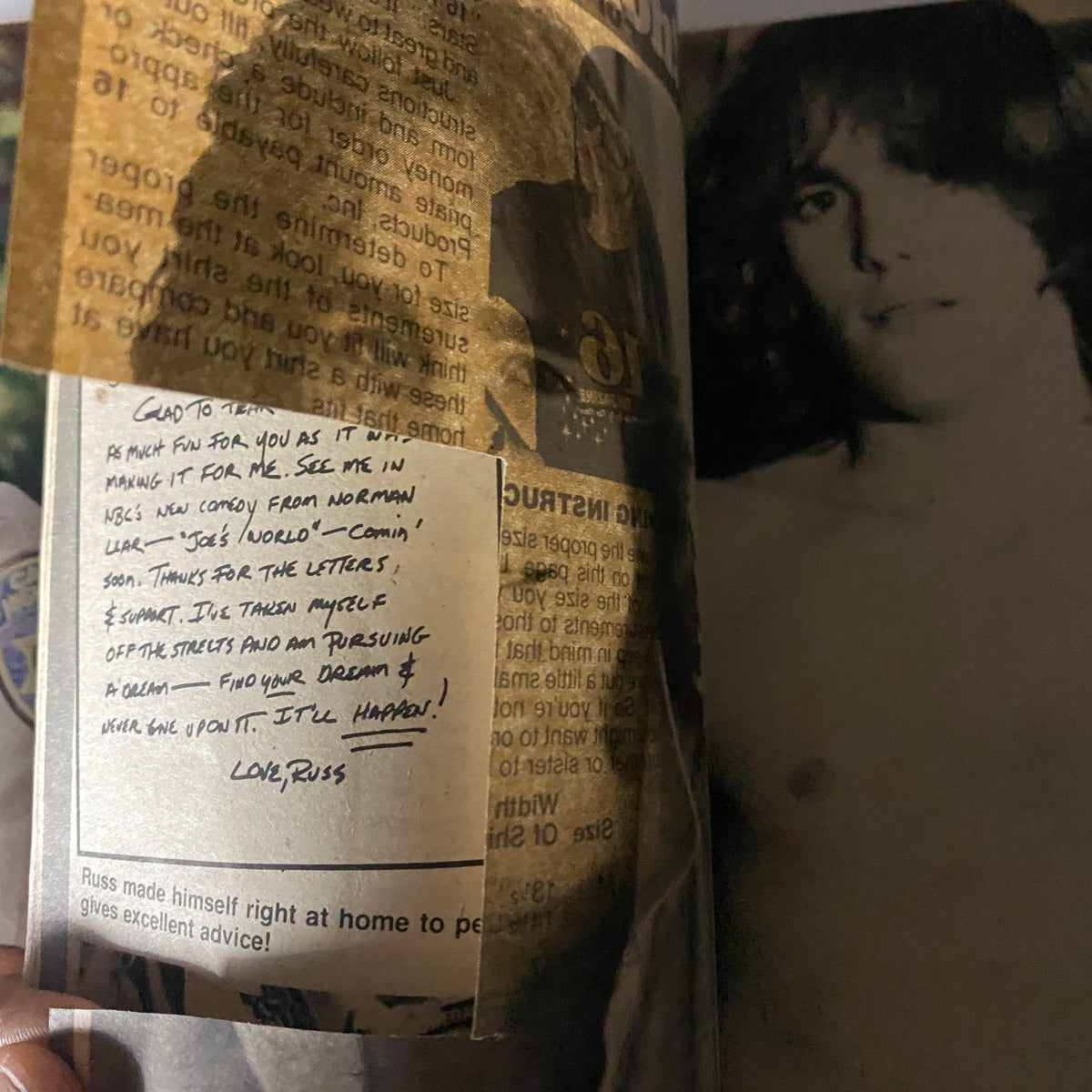


Description
Collector's Note – Why This Issue Matters
The November 1979 issue of 16 Magazine featuring KISS, the Bay City Rollers, and Scott Baio documents the American teen entertainment landscape at a specific and historically well-defined transitional moment — the final months of the 1970s teen idol era before the MTV-driven culture of the early 1980s would reshape the commercial entertainment landscape. By November 1979, each of the three named cover subjects occupied a distinct and revealing position in the teen entertainment hierarchy. KISS had spent the previous months navigating a pivotal commercial moment: the four simultaneous solo albums of September 1978 had been followed by Dynasty in June 1979, which produced their first top-ten pop single "I Was Made for Lovin' You" and brought them to a new, broader audience even as some of their original rock fan base questioned the direction. The Bay City Rollers, who had been one of the defining teen idol acts of the mid-1970s, were in the active decline phase of their commercial prominence by late 1979 — their presence on a November 1979 16 cover alongside newer acts reflects the magazine's editorial practice of maintaining coverage of established idol figures even as their commercial peak receded. Scott Baio, whose role on Happy Days and its spinoff Joanie Loves Chachi had made him one of the most prominent teenage television heartthrobs of the late 1970s, represents the television-based teen idol strand that was becoming increasingly central to the magazine's coverage mix. For collectors building archives of KISS magazine covers and features, this November 1979 16 appearance documents the band at the commercially complex and creatively transitional Dynasty-era phase of their career.
The confirmed additional content — interviews with KISS and Leif Garrett noted in the listing — extends the issue's documentary range. Garrett's inclusion alongside the cover trio reflects his sustained commercial prominence through 1979, the year of his hit "I Was Made for Lovin' You" — though his career was beginning its own gradual commercial trajectory change by the year's end. The confirmed included poster is a meaningful completeness attribute for a teen fan magazine from this era, where poster and pin-up removal was standard original-reader practice. The listing's specific note about missing cutouts and pin-ups alongside the intact poster provides a useful partial completeness picture that distinguishes this issue from examples where the poster itself has been removed. The broader 16 Magazine archive from the late 1970s represents the publication at the mature phase of its most commercially successful period, and a November 1979 issue with the KISS-Bay City Rollers-Scott Baio cover combination captures that specific editorial range at its most characteristic.
The November 1979 date positions this issue in the final two months of the decade, and the specific combination of subjects — a rock theatrical act crossing into pop, a fading British teen idol group, and a television-based American heartthrob — reflects the specific character of late-1970s teen entertainment's diversity. The entertainment landscape documented here would be fundamentally altered within two years by MTV's August 1981 launch, which would create an entirely new framework for how musicians and entertainers reached teen audiences. A November 1979 16 cover is a primary document of the pre-MTV teen entertainment media ecosystem in its final fully-formed phase.
About the Publication
16 Magazine, founded in 1957 by publisher Gloria Stavers and published through the 1980s and into the 1990s, was one of the dominant American teen fan magazines, specializing in the television, film, and music personalities who attracted devoted adolescent female followings. Its editorial format combined cover features and exclusive interviews with large-format color pin-ups, centerfold posters, reader mail, and the intimate celebrity coverage that defined the genre. By November 1979 it was operating at the height of its commercial influence, with a readership that spanned rock music fans, television drama devotees, and pop idol followers — precisely the diverse entertainment landscape that the KISS-Bay City Rollers-Scott Baio cover captured.
Key Highlights Inside
- KISS, Bay City Rollers, and Scott Baio cover — A confirmed joint cover documenting three distinct strands of late-1970s teen entertainment simultaneously: rock theatrical crossover, fading British teen idol, and American television heartthrob — in the final months of the pre-MTV teen fan magazine era.
- KISS interview — confirmed content — A confirmed interview with the band during the Dynasty-era phase of their commercial trajectory, when their pop crossover was generating both new audiences and internal tensions among their established fan base.
- Leif Garrett interview — confirmed content — A confirmed interview with one of 1979's most commercially prominent teen idols, documented during the late phase of his sustained commercial peak.
- Poster included — confirmed present — The listing confirms a poster remains with the issue, a meaningful completeness attribute for a teen fan magazine from this era where poster removal was standard original-reader practice.
- Missing cutouts and pin-ups — confirmed completeness factors — The listing specifically notes missing cutouts and pin-ups as condition factors, providing a transparent partial completeness picture that collectors should weigh against the retained poster and intact interior reading content.
Condition & Rarity
Acceptable condition with cover creases and imperfections, confirmed missing cutouts and pin-ups, a retained and presumably intact poster, intact interior reading content, and plastic protective covering represents an honest lower-mid-grade assessment for a forty-five-year-old teen fan magazine. The missing pin-ups and cutouts are standard condition factors for this publication type — teen magazines were used actively by their original readers and pin-up/cutout removal was essentially universal at the time of purchase. The retained poster is the most positive completeness attribute, as poster removal was equally standard. Cover creases are permanent surface condition factors whose extent and placement relative to the KISS, Bay City Rollers, and Scott Baio cover images should be confirmed from available photographs. The acceptable condition grade reflects the cumulative effect of cover surface wear and missing content; interior reading content intact means the interviews and editorial features remain accessible.
Looking for More Issues Like This?
Late-1970s KISS teen fan magazine covers — particularly from the commercially complex Dynasty transition period — are a specific and historically interesting collecting category, and a November 1979 16 cover with confirmed KISS and Leif Garrett interviews is a documentarily rich find for collectors working in either the KISS or late-seventies teen entertainment space. The dedicated KISS magazine collection at OriginalMagazines.com is the most direct place to search for other cover appearances and features across the band's full career. The broader 16 Magazine archive is worth exploring for other late-seventies and early-eighties issues from the publication's most commercially influential period.