
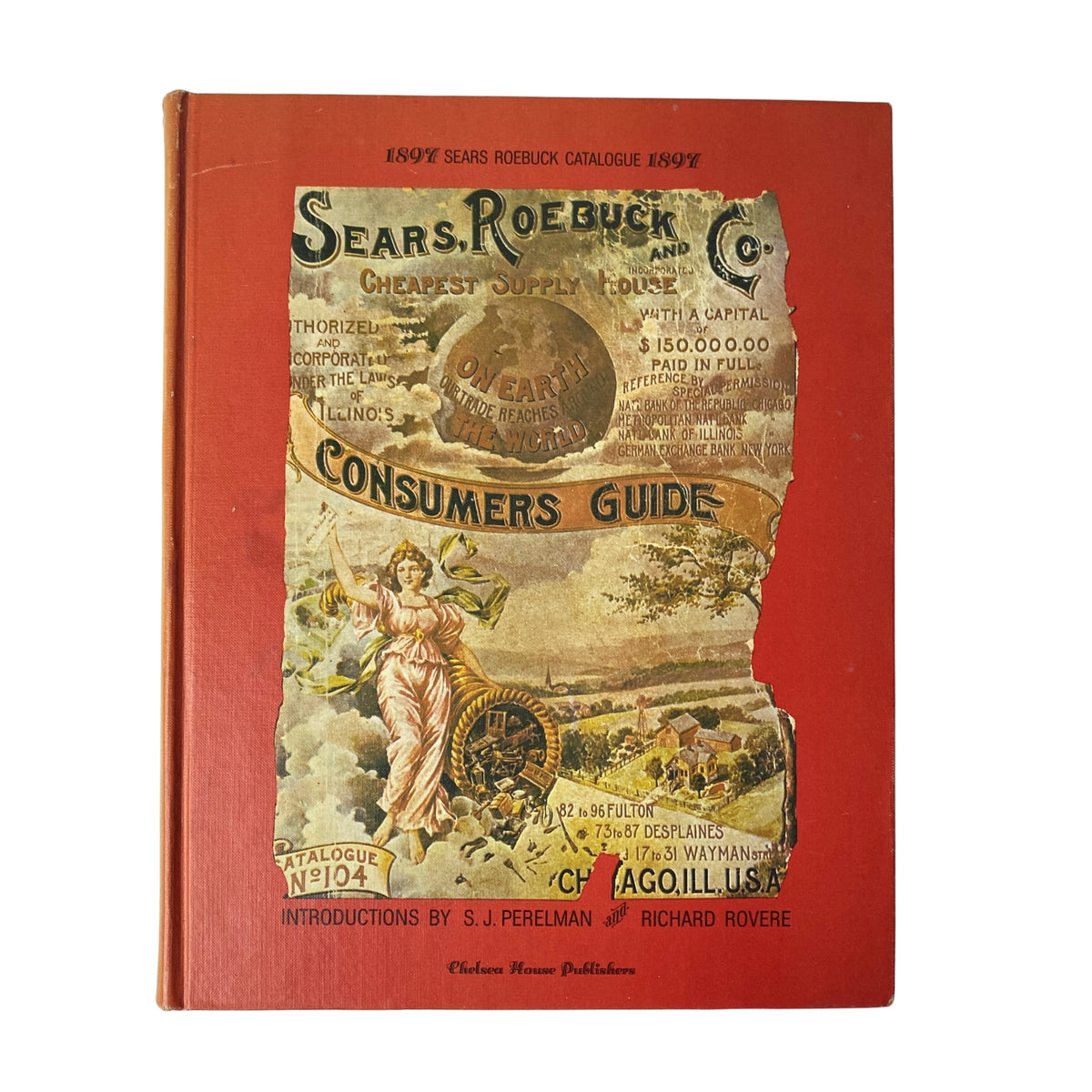
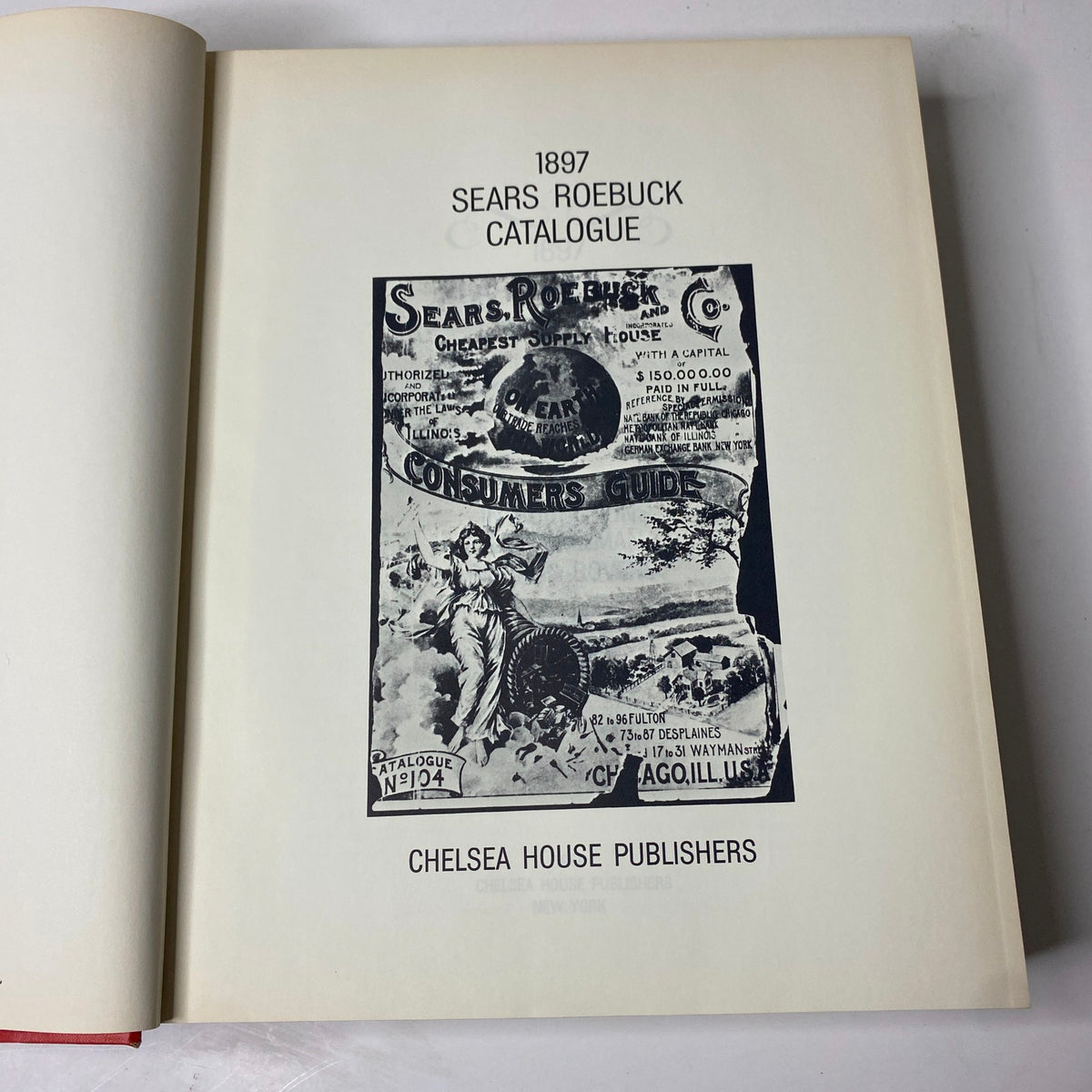


Description
Collector's Note – Why This Issue Matters
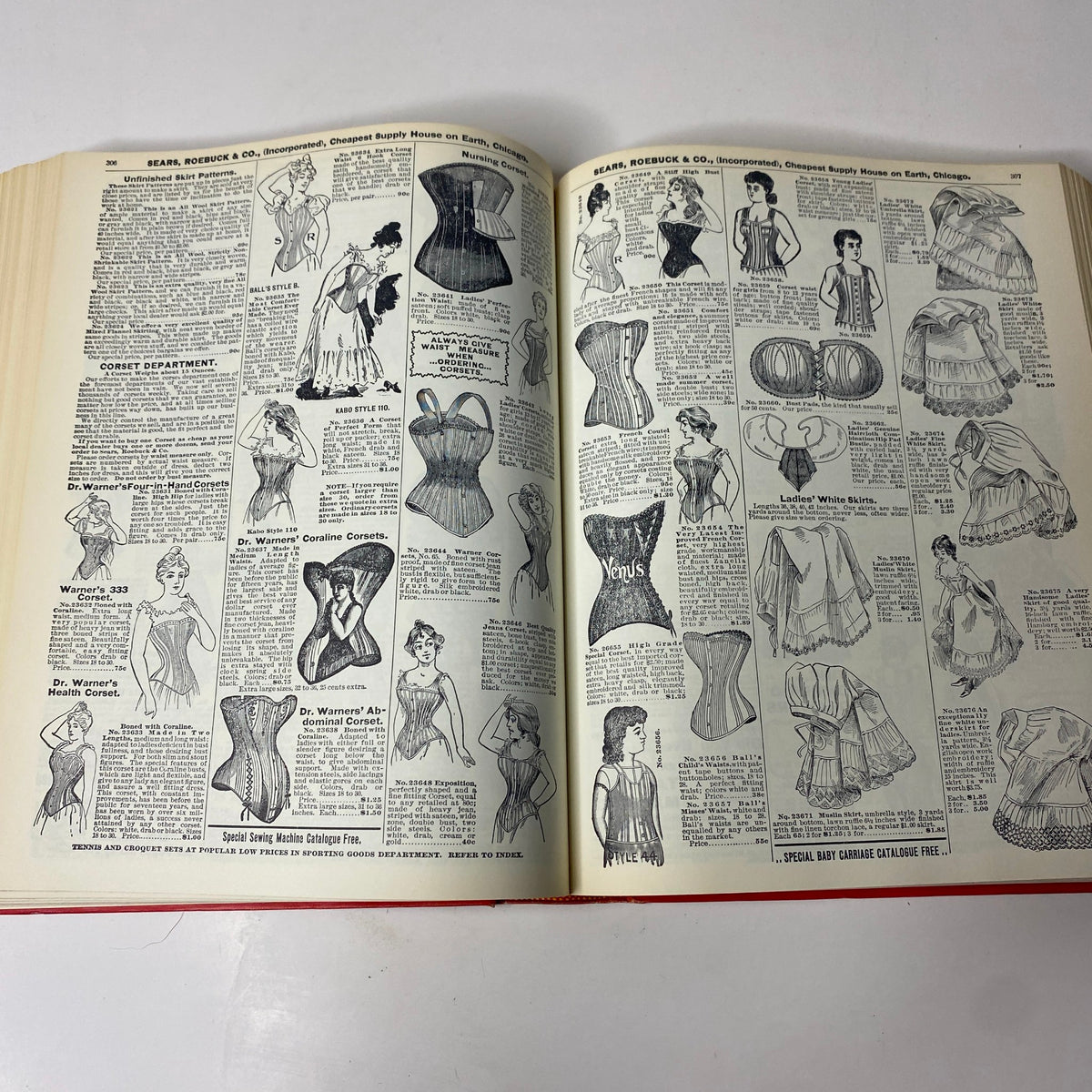
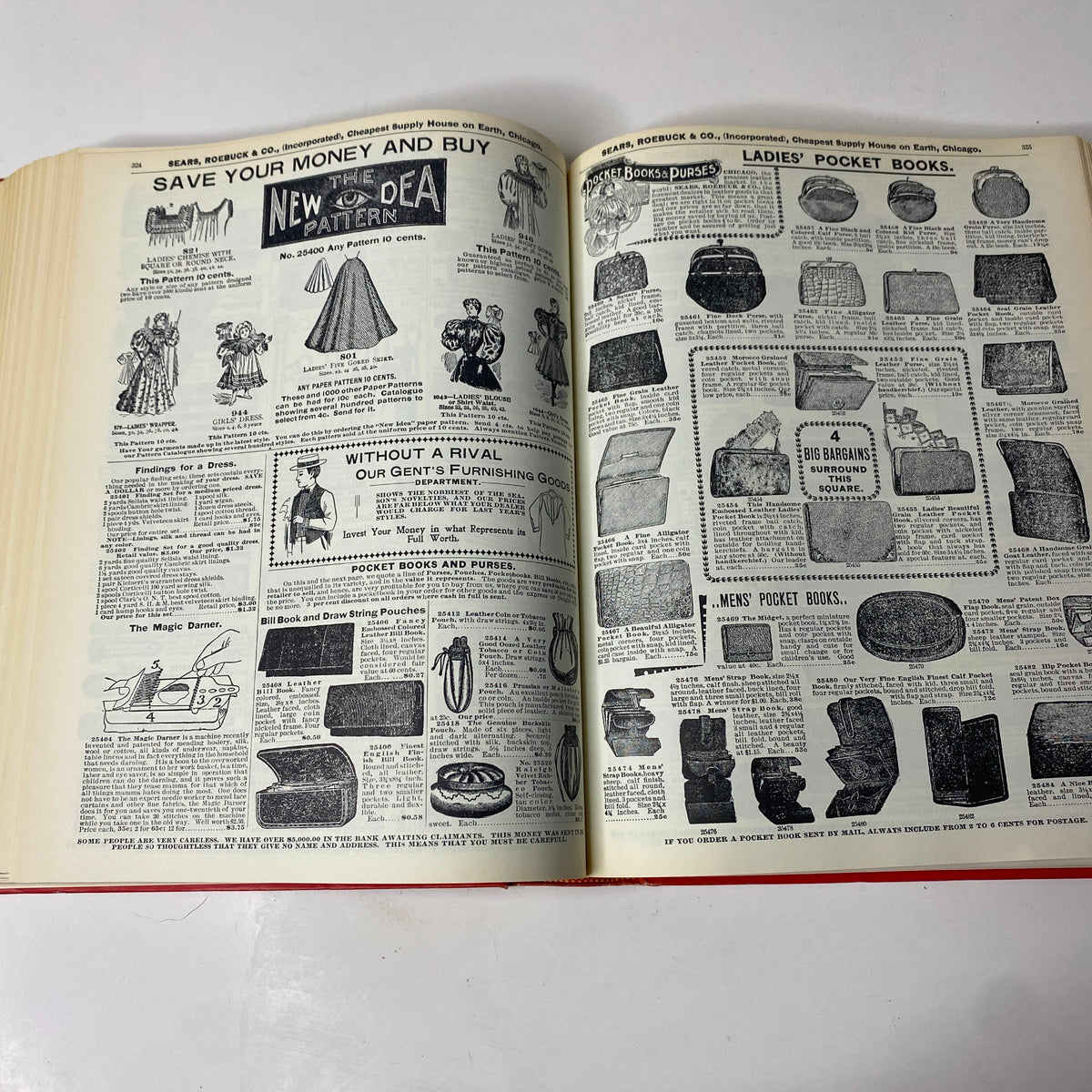
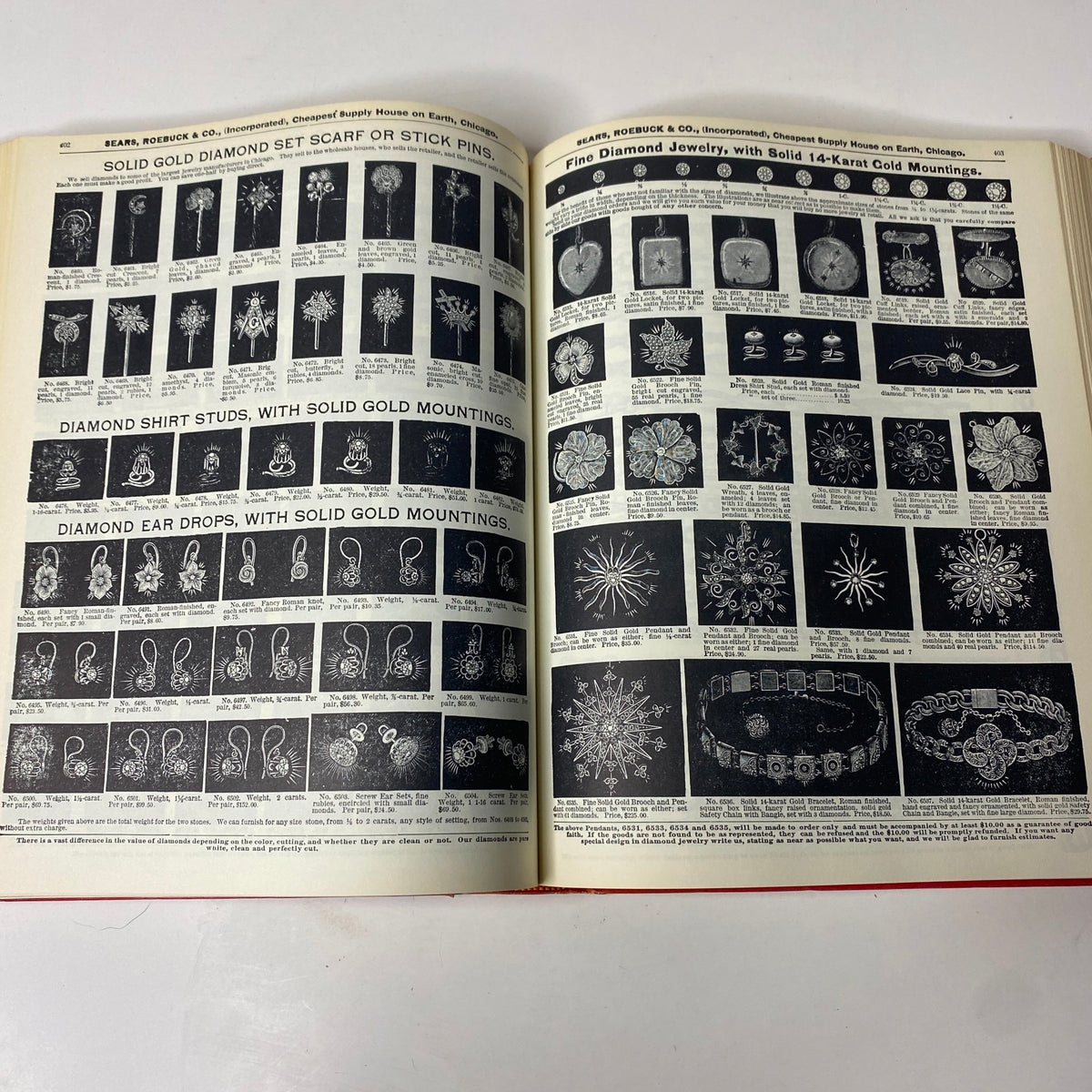
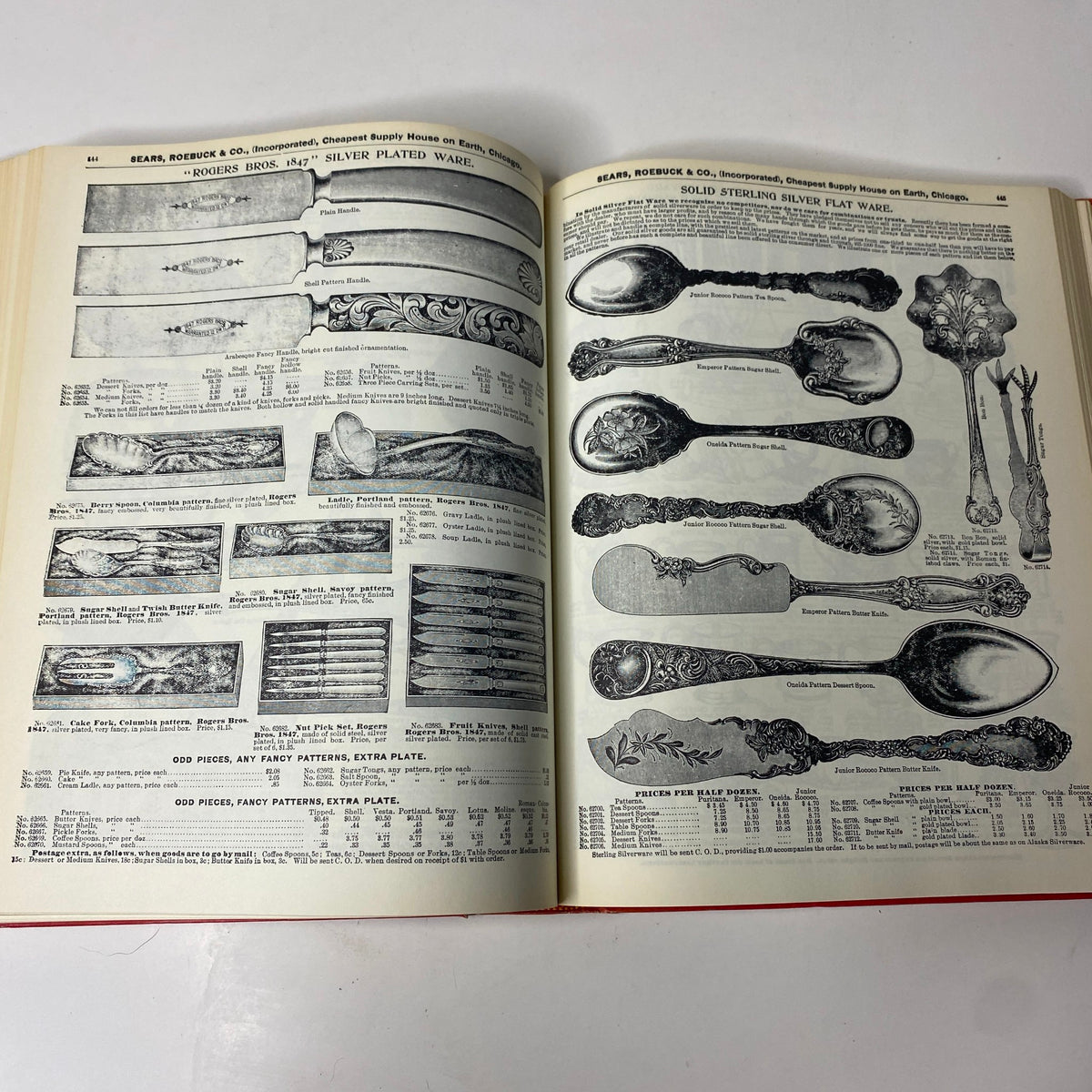
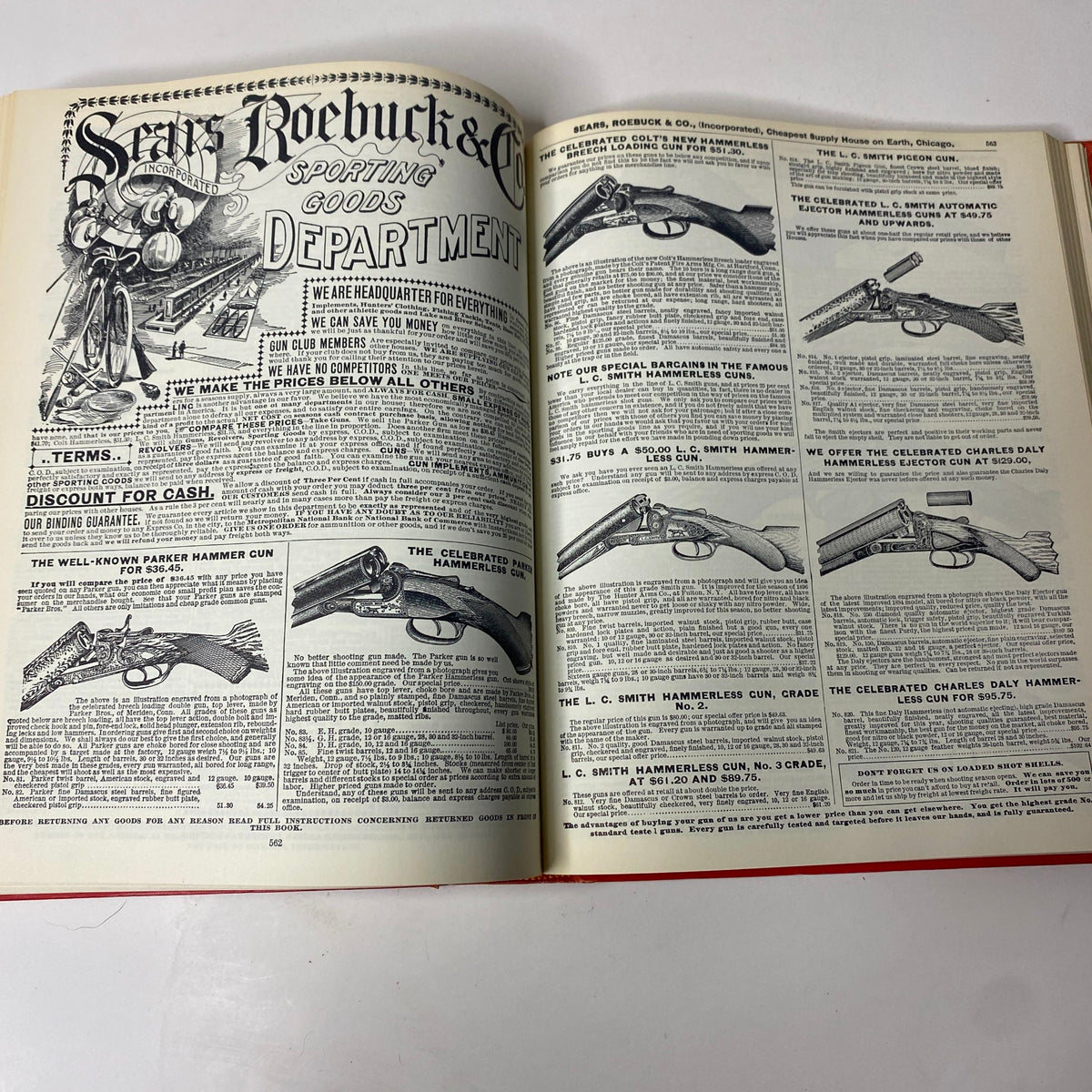
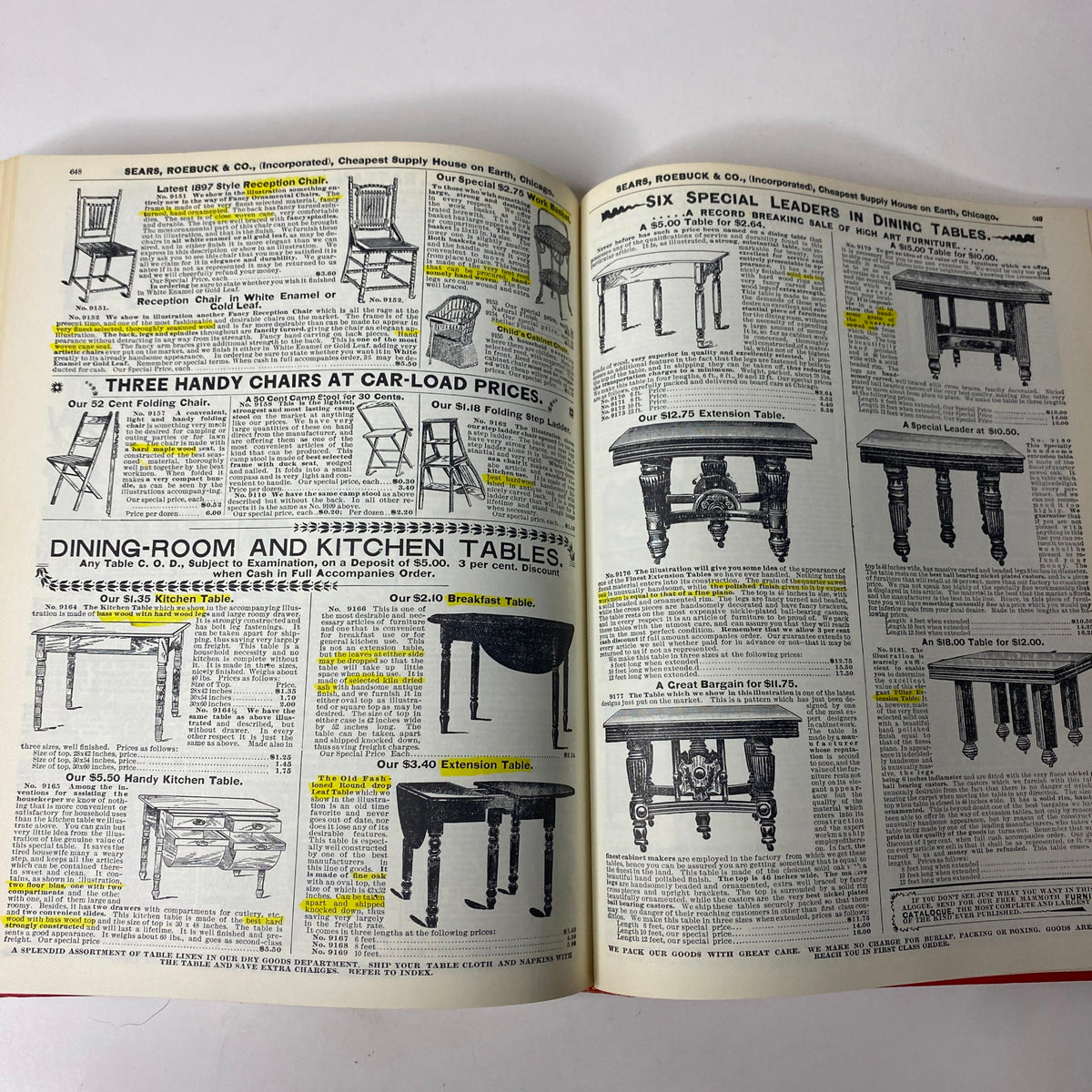
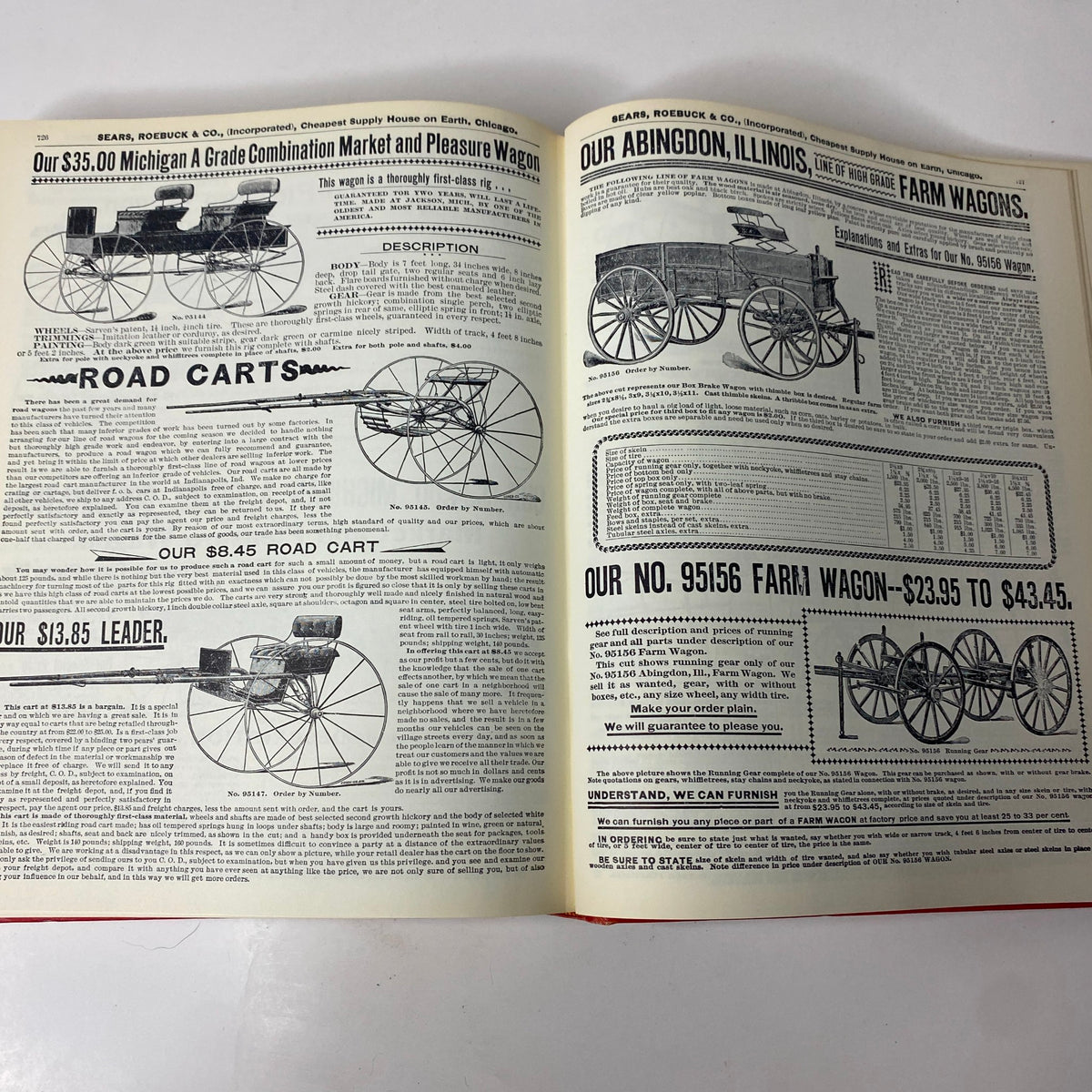
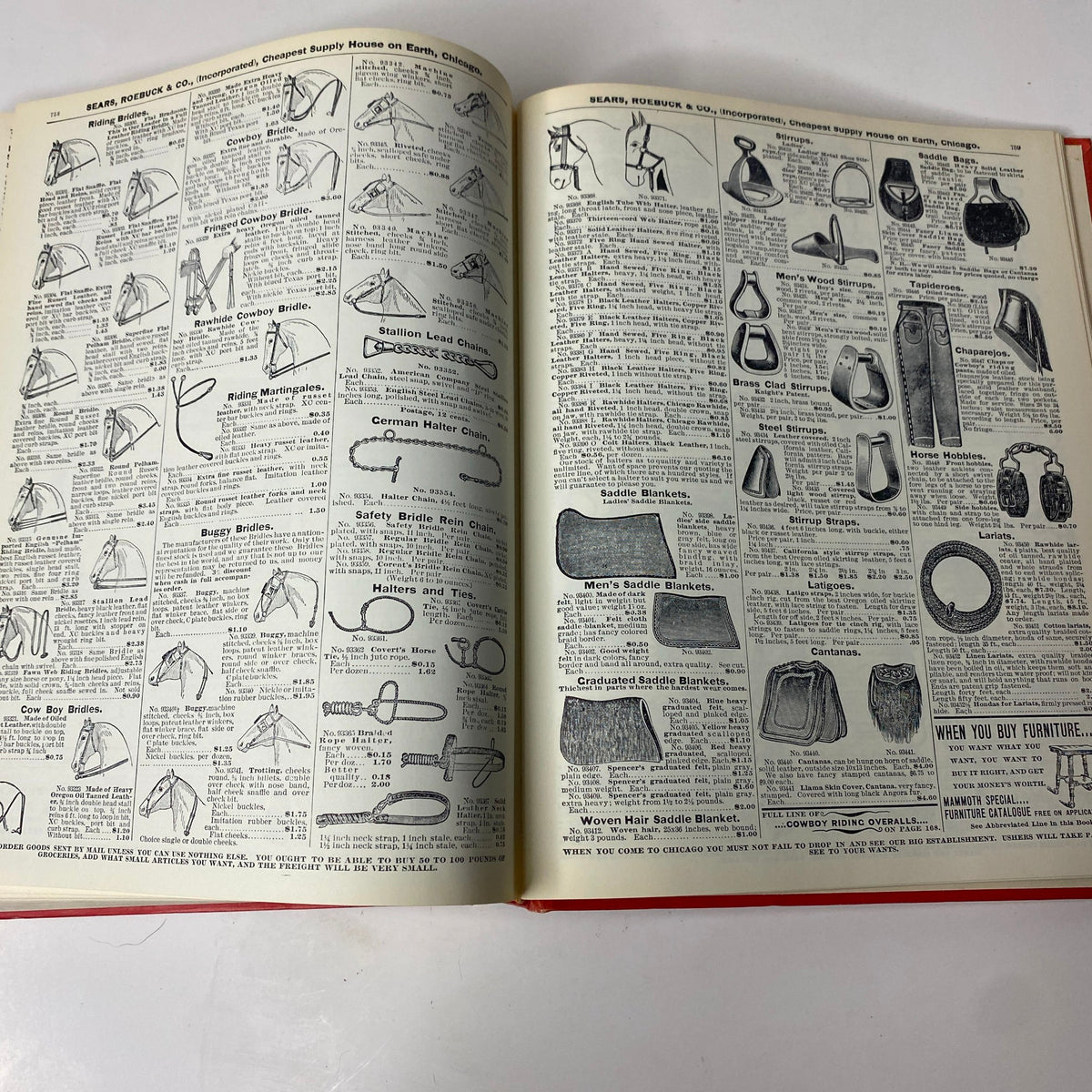
The 1897 Sears Roebuck Consumers Guide is not simply a catalog — it is one of the most important primary documents of American commercial and social history from the Gilded Age. By 1897, Sears Roebuck had perfected the mail-order model that would transform American consumer culture, bringing the full range of manufactured goods directly to rural and small-town households that had previously depended on local general stores with limited inventory and inflated prices. The catalog was, for millions of American families, their primary access to the national marketplace — a democratizing force that allowed a farm family in Kansas or a small-town household in Mississippi to order the same goods, at the same prices, as a city dweller in Chicago. The 1897 edition falls at a specific moment in Sears's history: Richard Warren Sears and Alvah Curtis Roebuck had founded the company in 1892, and by 1897 the catalog had grown into the comprehensive commercial document represented by this edition's table of contents — everything from groceries and drugs to cameras, musical instruments, surveying equipment, and furniture, all available by mail with Sears's celebrated money-back guarantee. For collectors exploring original Sears catalog issues, an 1897 edition is a primary artifact from the founding decade of the most consequential mail-order operation in American commercial history.
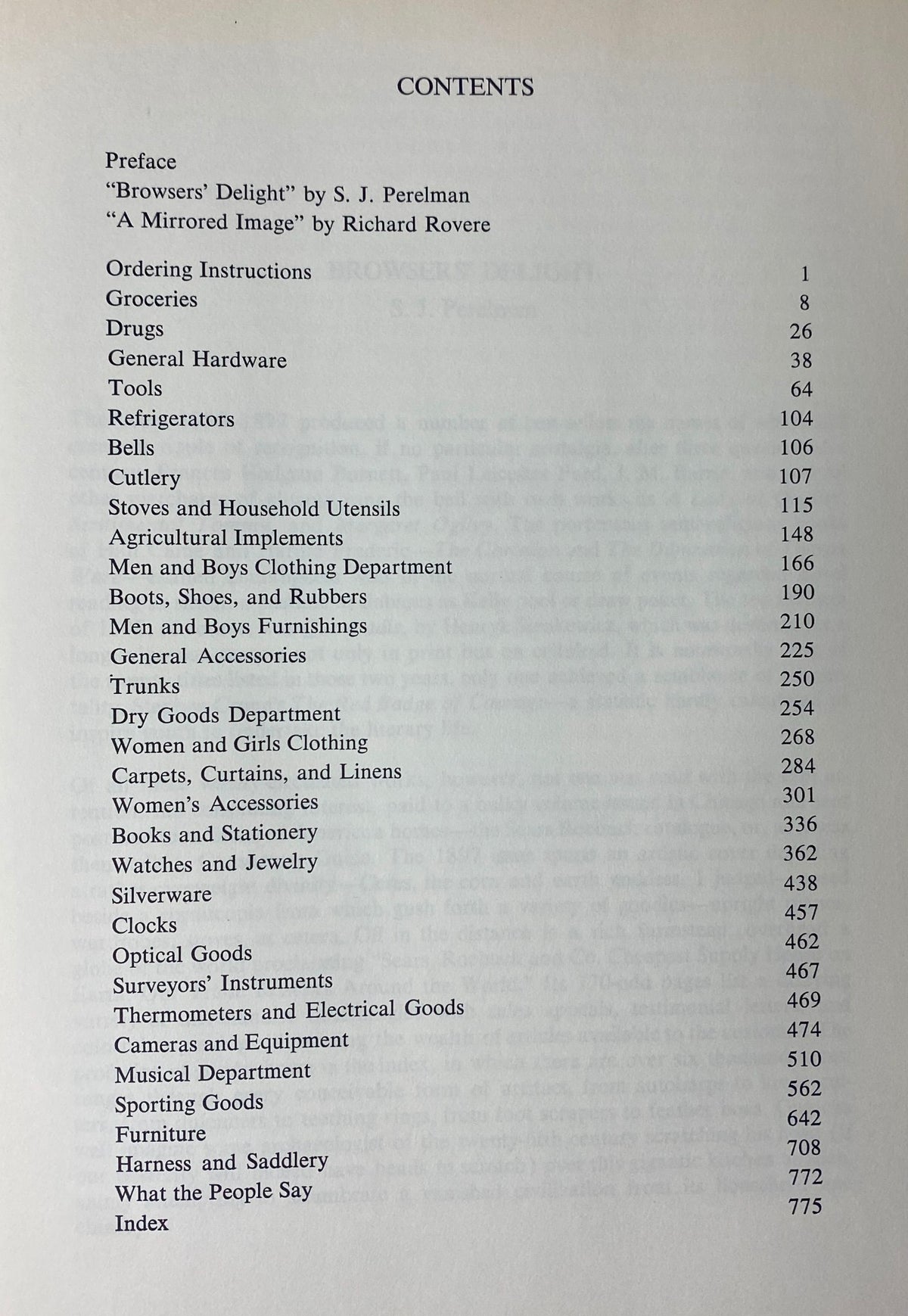
The historical context of 1897 gives this specific edition additional documentary weight. The United States was in the middle of the recovery from the Panic of 1893 — the most severe economic depression of the nineteenth century — and the democratization of consumer goods through the Sears model was playing a specific role in the economic recovery of rural America. The catalog's "What the People Say" section — confirmed in the table of contents — is itself a remarkable document: authentic customer testimonials from 1897 that provide a direct primary record of how ordinary Americans experienced and valued the mail-order revolution. The inclusion of a preface by S. J. Perelman — the celebrated New Yorker humorist — and an essay by Richard Rovere confirms that this is a facsimile or reprint edition with editorial apparatus, rather than an original 1897 catalog, though the contents themselves reproduce the full historical document. The listing describes it as a hardcover edition with Perelman and Rovere contributions, which places it in the tradition of scholarly and popular facsimile reprints that were produced to make the original document accessible to collectors and historians. The contents list remains a complete and reliable guide to what the 1897 Sears catalog contained, regardless of the edition format.
The range of goods documented in the table of contents is itself a historical document of the material culture of 1897 America. Cameras and equipment alongside harness and saddlery; electrical goods alongside agricultural implements; surveyors' instruments alongside women's accessories — the full breadth of the catalog reflects the technological moment of the late nineteenth century, when the industrial age's products were becoming accessible to ordinary households for the first time while the horse-and-farm economy that predated it was still fully operational. A catalog that contains both a photographic camera section and a saddlery section is documenting a society in transition, and the 1897 Sears guide captures that transition with unusual comprehensiveness.
About the Publication
The Sears Roebuck catalog was first published in 1888 and grew into the most widely distributed commercial publication in the United States, sometimes called "the consumer's bible" or "the wish book" — a comprehensive mail-order guide that reached millions of American households annually and served as both a commercial document and a primary record of American material culture across nearly a century of publication. The 1897 edition represents the catalog in its early maturity, before the company's full twentieth-century expansion, capturing the complete range of goods that Sears offered during the Gilded Age's consumer revolution. Its table of contents — ranging from groceries to cameras to furniture — reflects the ambition of a company that was actively reshaping the relationship between manufacturers and consumers across the entire country.
Key Highlights Inside
- Preface by S. J. Perelman — "Browsers' Delight": As confirmed in the contents — an essay by the celebrated New Yorker humorist and writer, whose engagement with the 1897 catalog's material provides a culturally rich editorial frame for the historical document.
- "A Mirrored Image" by Richard Rovere: As confirmed in the contents — an essay by the respected American political journalist and commentator, providing additional historical and cultural context for the 1897 catalog's place in American commercial history.
- "What the People Say" section: As confirmed in the table of contents — authentic customer testimonials from 1897, representing a direct primary record of how ordinary Americans experienced the Sears mail-order system at the height of the Gilded Age consumer revolution.
- Cameras and Equipment section: A documented section on photographic equipment from 1897 — a specific artifact of the early consumer photography market, just six years before the Brownie camera would democratize snapshot photography, capturing the moment when cameras were transitioning from professional to consumer goods.
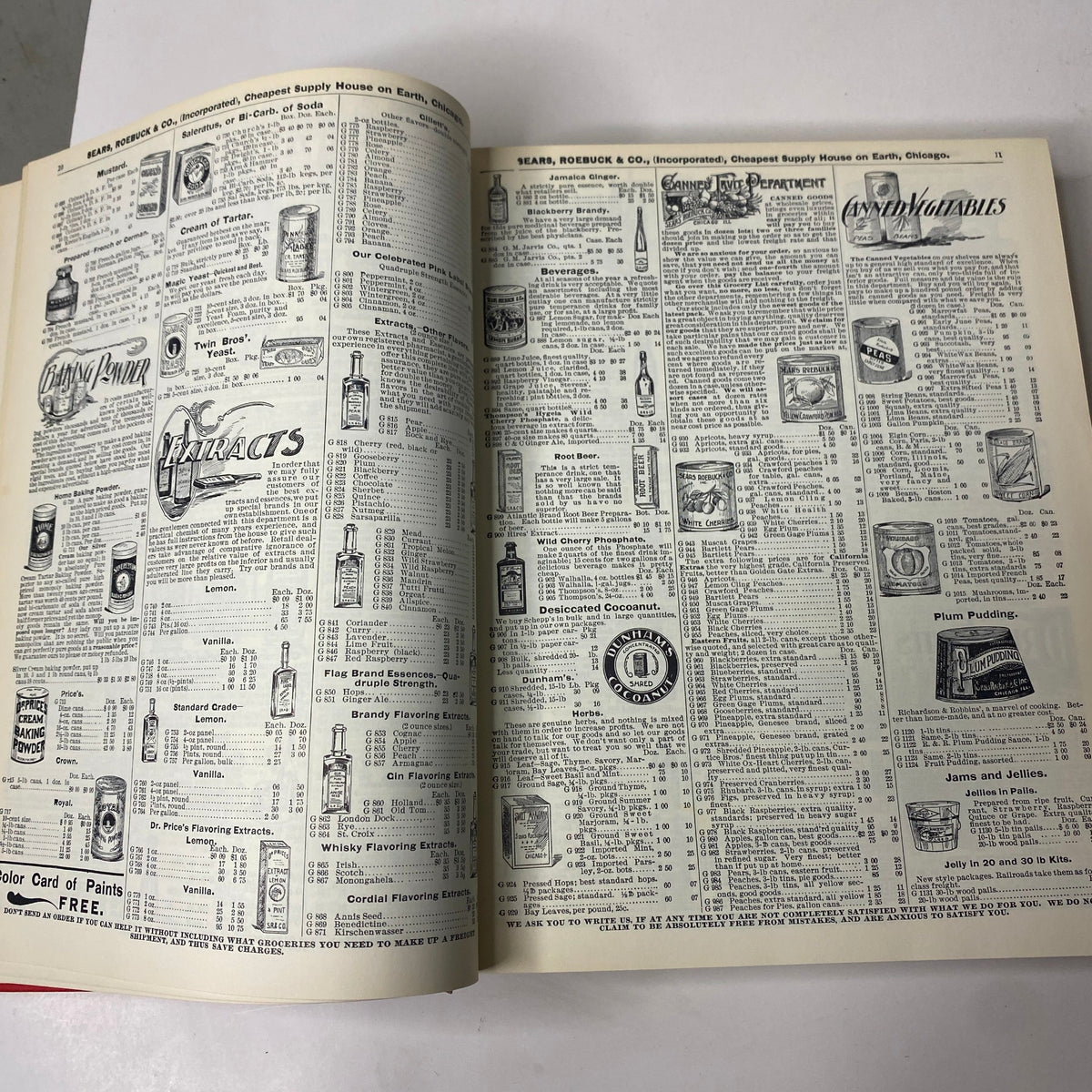
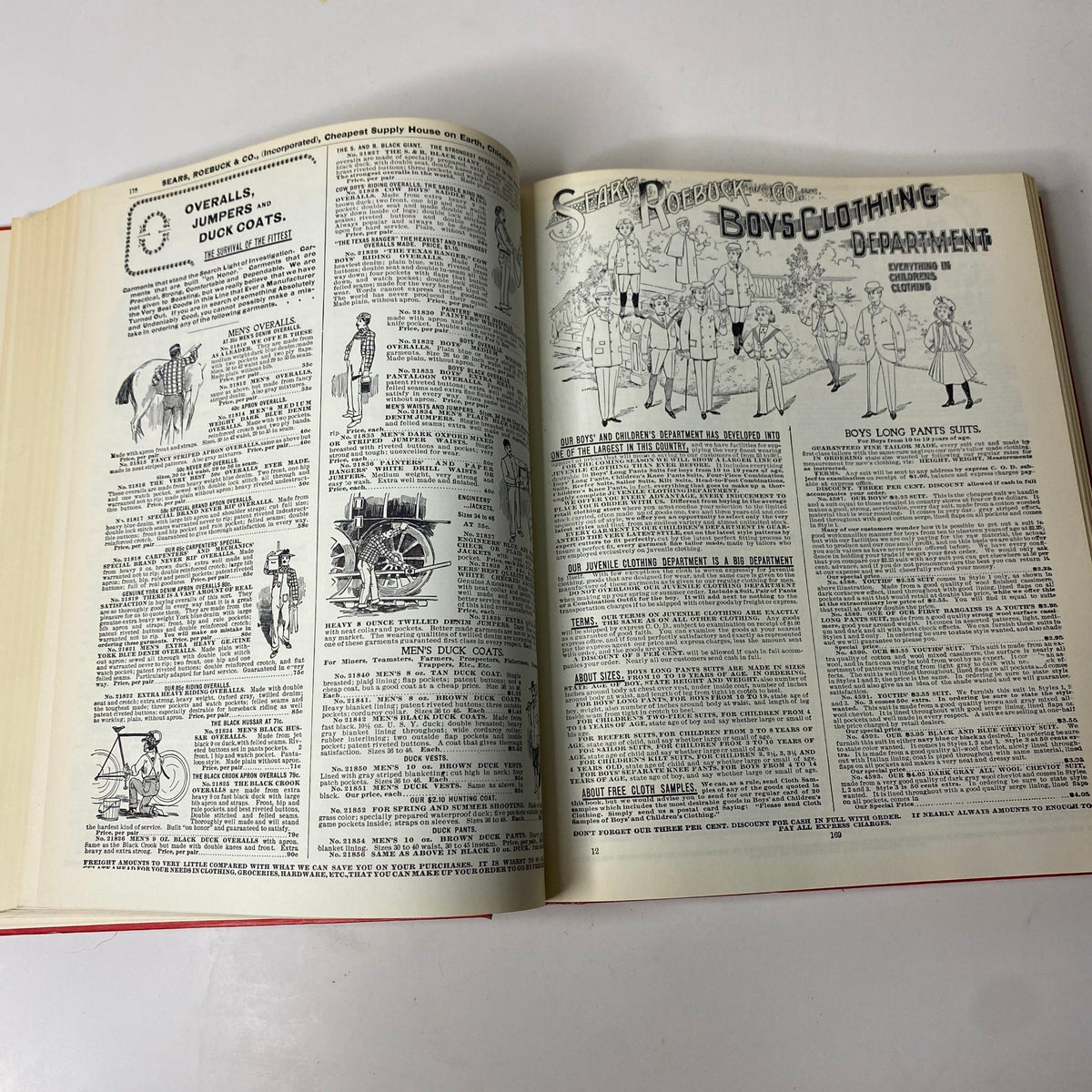
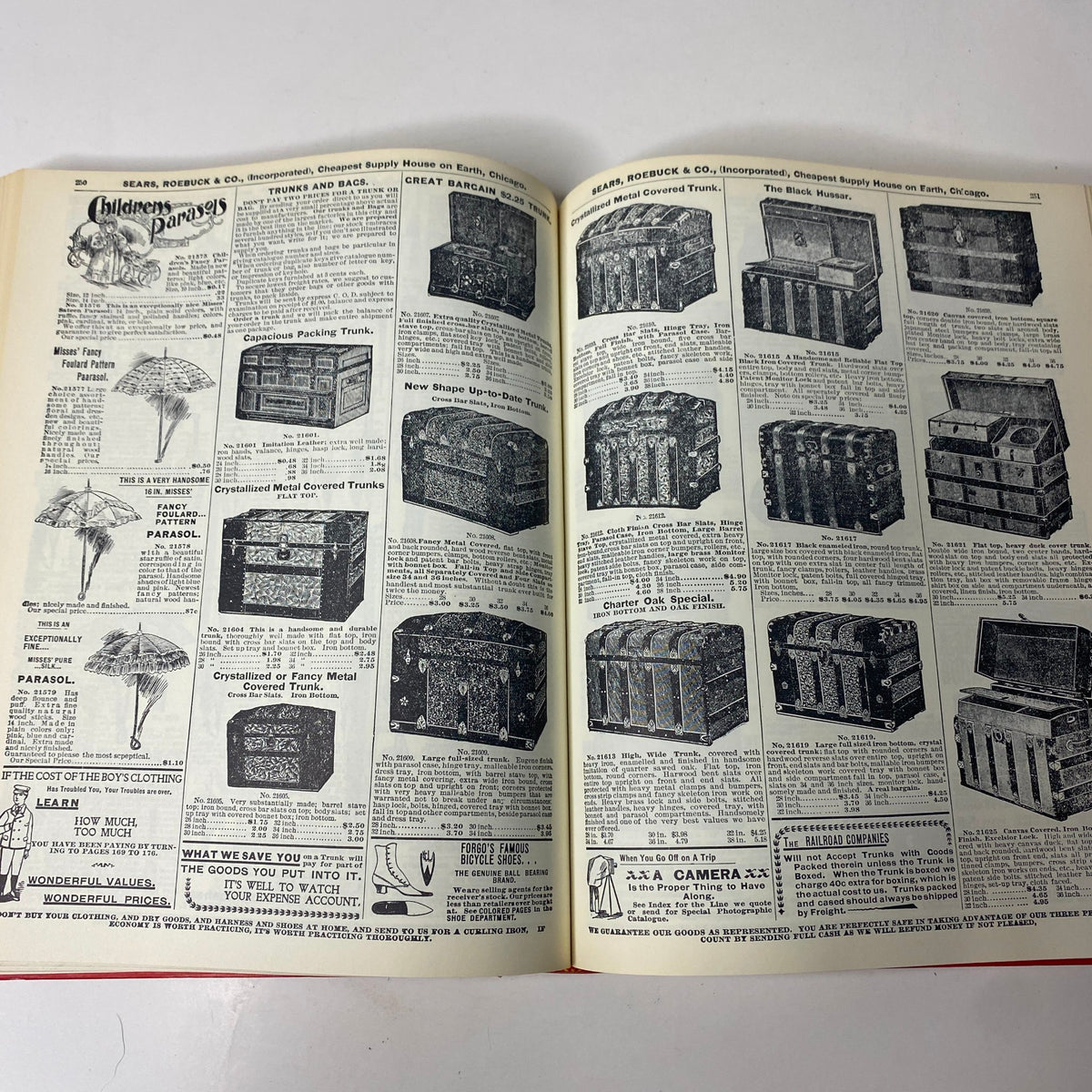
- Complete cross-section of 1897 American consumer goods: The full table of contents — from groceries and drugs through agricultural implements, electrical goods, furniture, and musical instruments — documents the complete material culture of Gilded Age America in a single comprehensive commercial source.
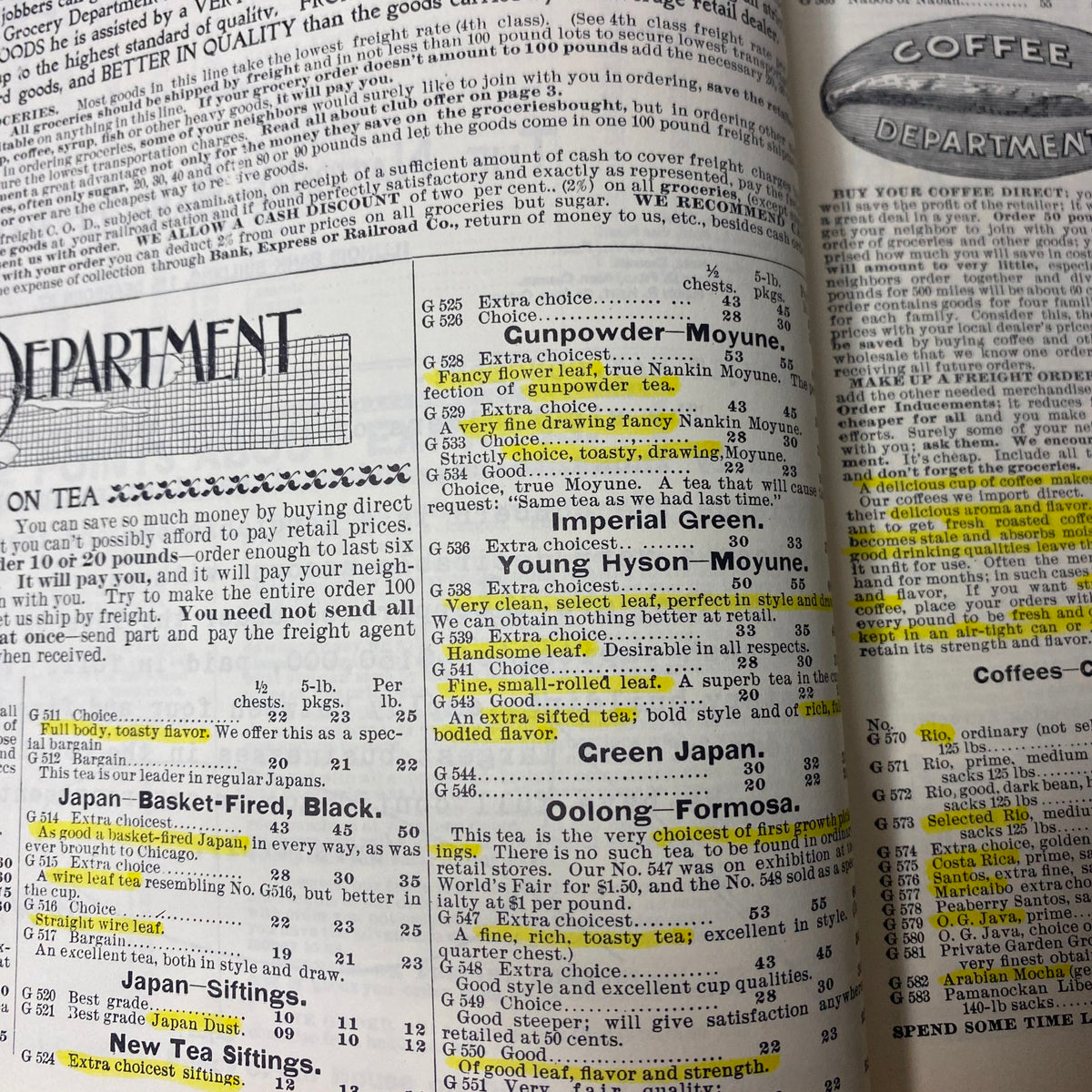
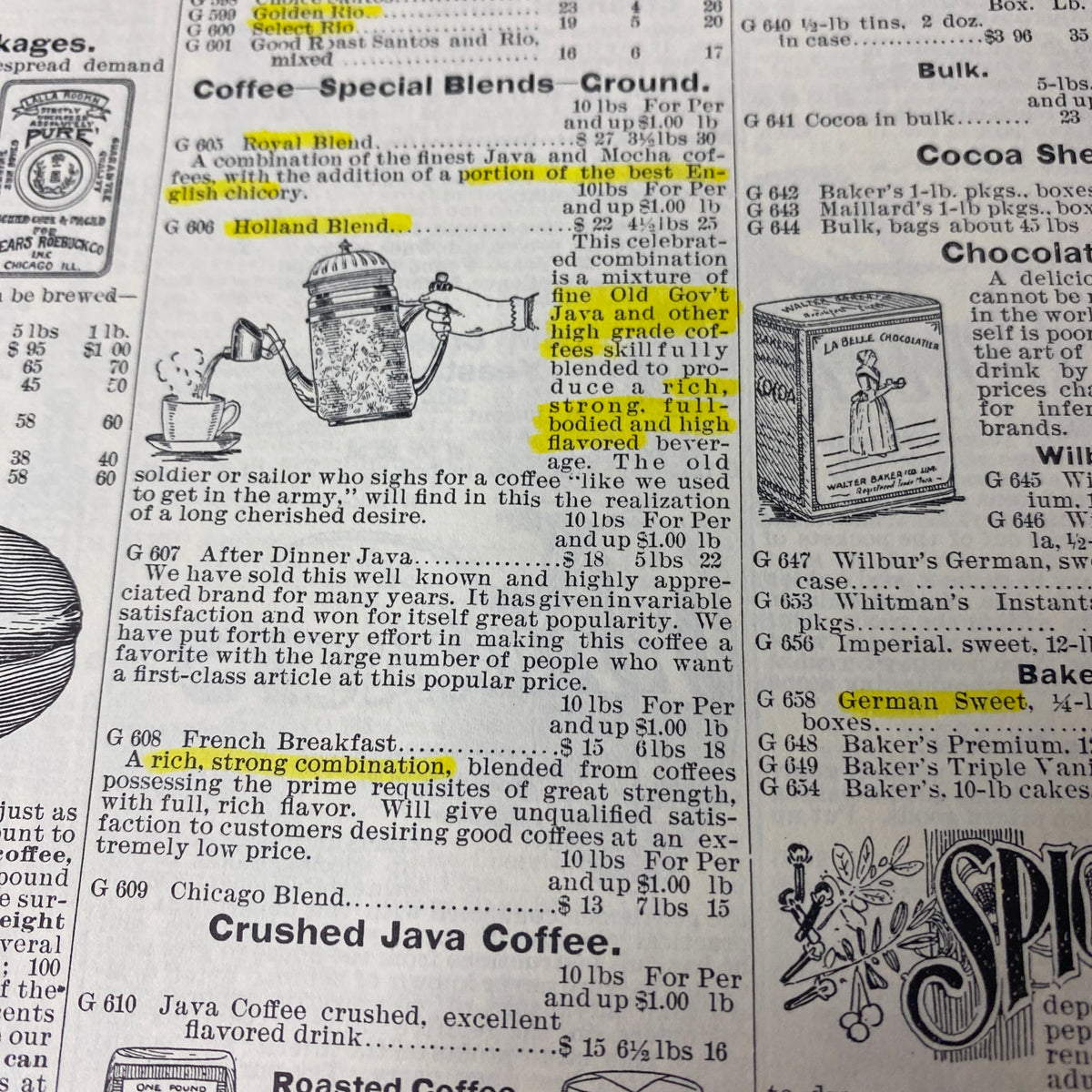
- Text highlighted throughout: The listing specifically notes that some text is highlighted — a condition factor worth assessing through the provided photographs, as highlighting can affect the scholarly and display utility of specific pages.
Condition & Rarity
The listing describes this hardcover edition as in good condition with no labels, some text highlighted throughout, and a plastic protective sleeve included, with photographs provided for detailed condition assessment. In collector-grade terms, good condition for a hardcover facsimile or reprint edition is an honest baseline — the hardcover format provides more structural durability than the original newsprint catalog would have, and good condition indicates honest use-consistent wear rather than damage. The specific notation of highlighted text is the most significant condition detail for collectors who prioritize the document's scholarly or display utility — highlighting is permanent and affects the reading experience of specific passages, though it does not typically compromise the overall integrity of the document. The absence of a label is a genuine positive. The applied protective sleeve indicates custodial awareness. When evaluating any surviving copy of this edition, the structural integrity of the hardcover binding, the completeness of all sections as listed in the table of contents, and the extent and location of the highlighted text are the primary criteria.
Looking for More Issues Like This?
An 1897 Sears Roebuck Consumers Guide in hardcover format — with introductory essays by S. J. Perelman and Richard Rovere, and the complete table of contents spanning the full range of Gilded Age American consumer goods — is a genuinely rich find for collectors of American commercial history, and editions in this format with this editorial apparatus are not ones that surface with any regularity. If this edition is no longer available, the Sears catalog collection at OriginalMagazines.com is worth exploring for other editions spanning the catalog's long and historically significant publishing history.