




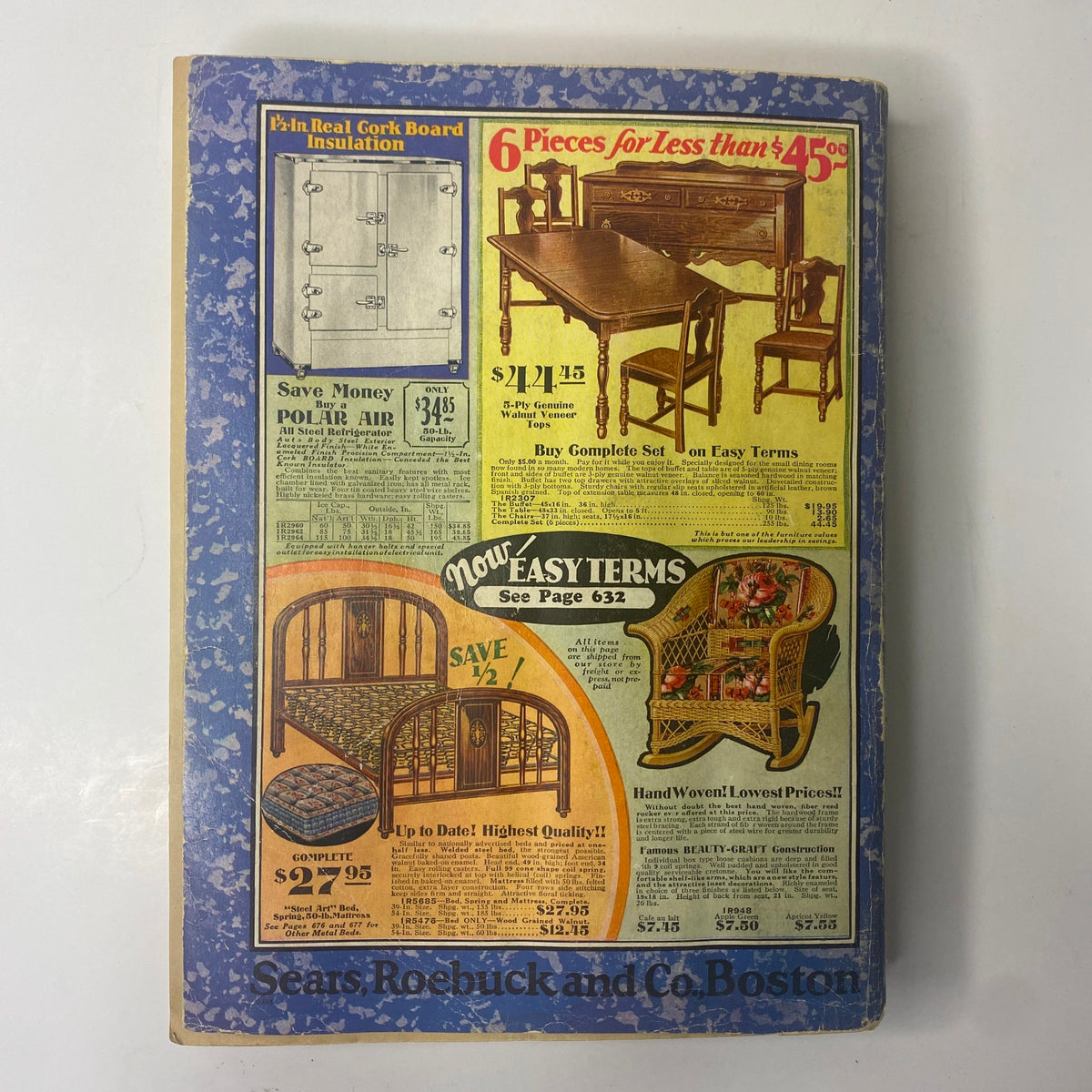


Description
Collector's Note – Why This Issue Matters
The 1929 Sears, Roebuck and Co. Spring and Summer Catalog is a primary document of American commercial and fashion culture at one of the most precisely defined moments in modern history — the final spring and summer before the stock market crash of October 1929 brought the Roaring Twenties to an abrupt and catastrophic end. The fashions, prices, household goods, and aspirational imagery contained in this catalog reflect a consumer economy operating at full confidence, entirely unaware of what the autumn would bring. That quality — the last expression of 1920s prosperity before the Depression — gives this catalog a particular historical poignancy that spring and summer editions from almost any other year cannot match. It is a snapshot of American commercial life at the precise moment before everything changed.
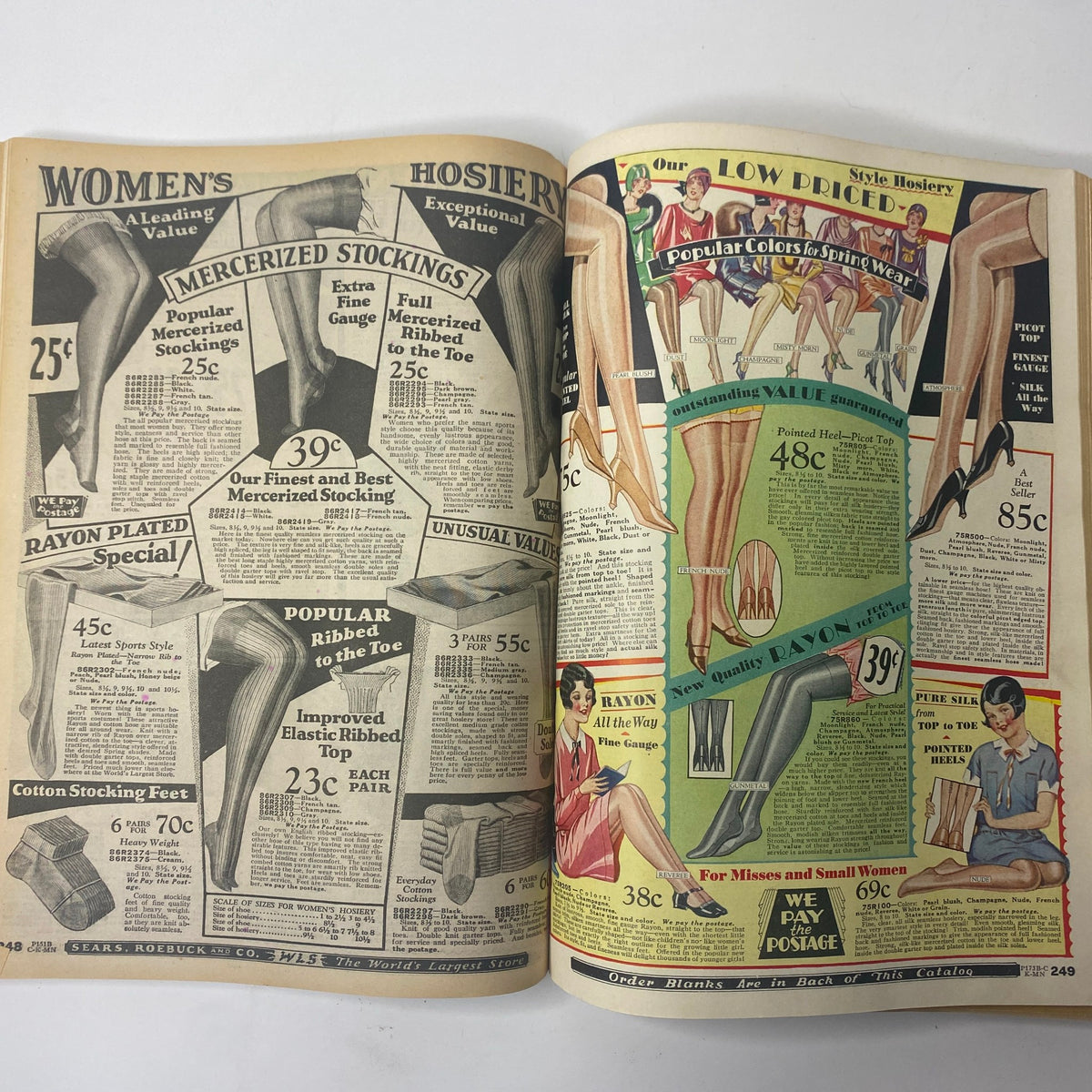
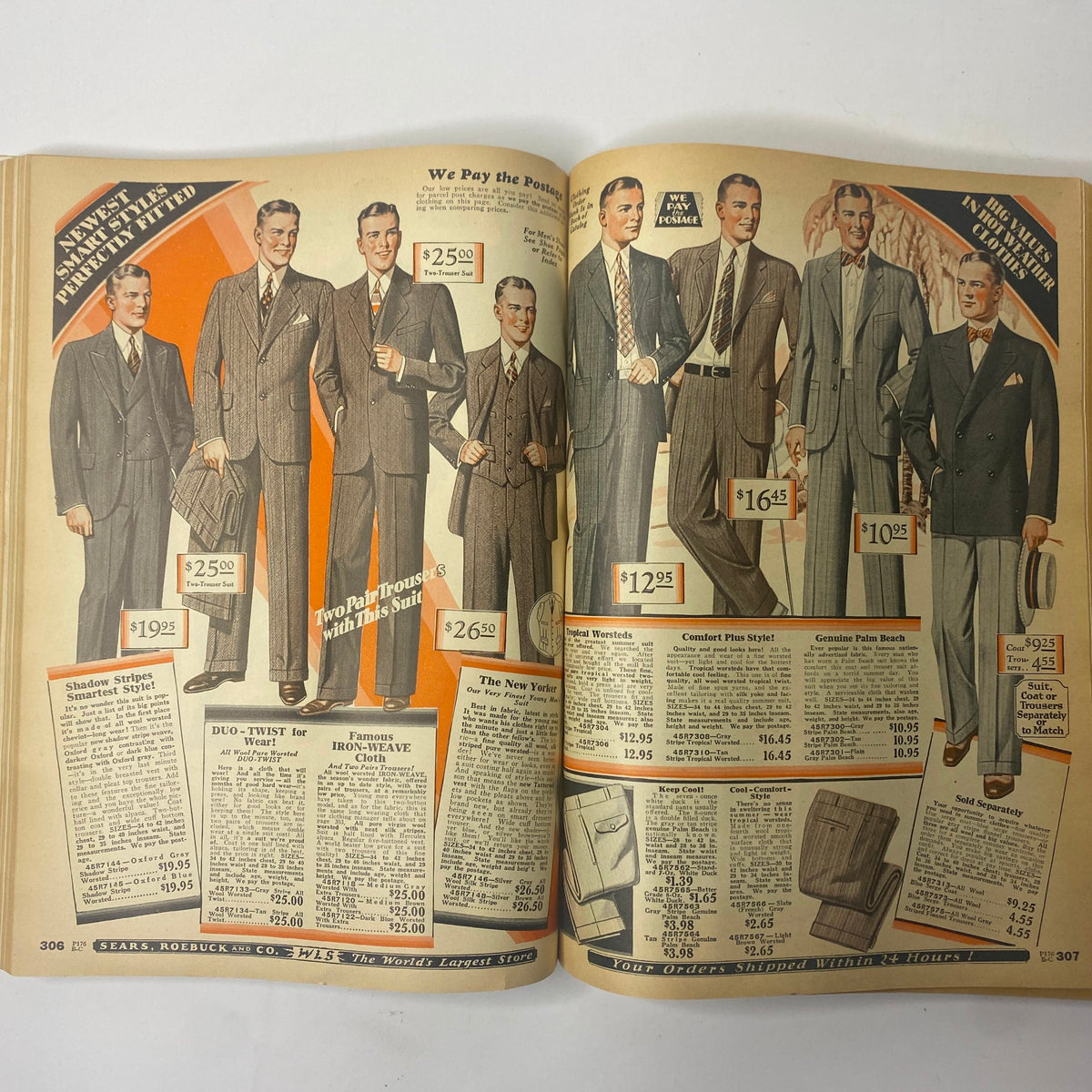
The catalog's fashion content reflects the late 1920s at a specific stylistic moment. By 1929 the extreme flapper silhouette of the mid-decade was beginning to soften — hemlines were dropping slightly from their 1927 peak, waistlines were returning toward their natural position, and the influence of Parisian haute couture was filtering into mass-market American retail with increasing speed and fidelity. Sears in 1929 was explicitly marketing its designs as inspired by or derived from Parisian fashion centers, a positioning that reflects both the genuine internationalization of American style in this period and the company's sophisticated understanding of what its aspirational middle-class readership wanted to believe about what they were buying. For collectors building archives of Sears catalog publishing history, the 1929 Spring and Summer edition occupies a singular position within that long run.
The Sears catalog in the late 1920s was one of the most widely distributed publications in American history — reaching rural and small-town households across the country that had limited or no access to department stores, and functioning as a primary vehicle for the democratization of fashion and consumer goods that defined the early twentieth century. A spring and summer catalog from 1929 is therefore not merely a fashion document but a social history artifact — evidence of what ordinary American families could aspire to own, at what prices, and through what commercial language. The 1929 magazine and catalog archive at OriginalMagazines.com offers broader context for the commercial and cultural landscape of this watershed year in American history.
About the Publication
Sears, Roebuck and Co. began publishing its mail-order catalog in 1888, and by the late 1920s it had grown into one of the largest and most sophisticated retail publications in the world, issued twice yearly in spring/summer and fall/winter editions with supplementary specialty catalogs throughout the year. The catalog served as the primary retail interface between Sears and the enormous population of Americans who lived beyond easy reach of urban retail centers, offering everything from clothing and jewelry to farm equipment and house kits. Its fashion sections in the late 1920s were produced with genuine editorial ambition — detailed illustration, aspirational copy, and explicit reference to Parisian design trends — reflecting Sears's understanding that its customers wanted both accessibility and style. The catalogs are now collected as primary documents of American consumer culture, retail history, fashion history, and the social history of ordinary American life across the twentieth century.
Key Highlights Inside
- "Newest Models Direct from the World's Fashion Centers" — Sears's explicit positioning of its 1929 spring and summer fashion line as derived from Parisian haute couture, reflecting the internationalization of American mass-market style at the decade's close.
- Silk dresses and luxury textile offerings reflecting the late 1920s silhouette at its transitional moment — the flapper aesthetic softening toward the more structured styles that would define the early 1930s.
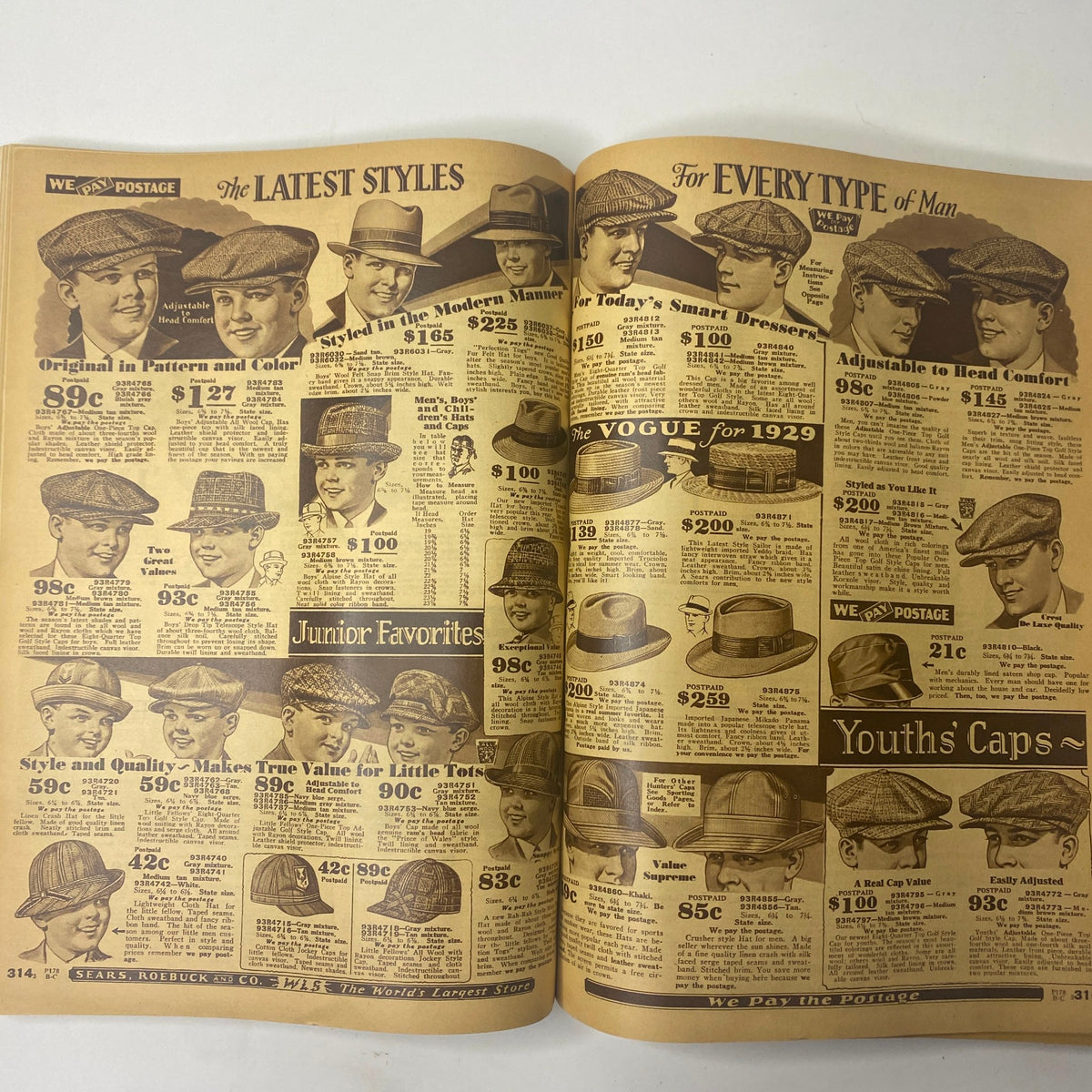
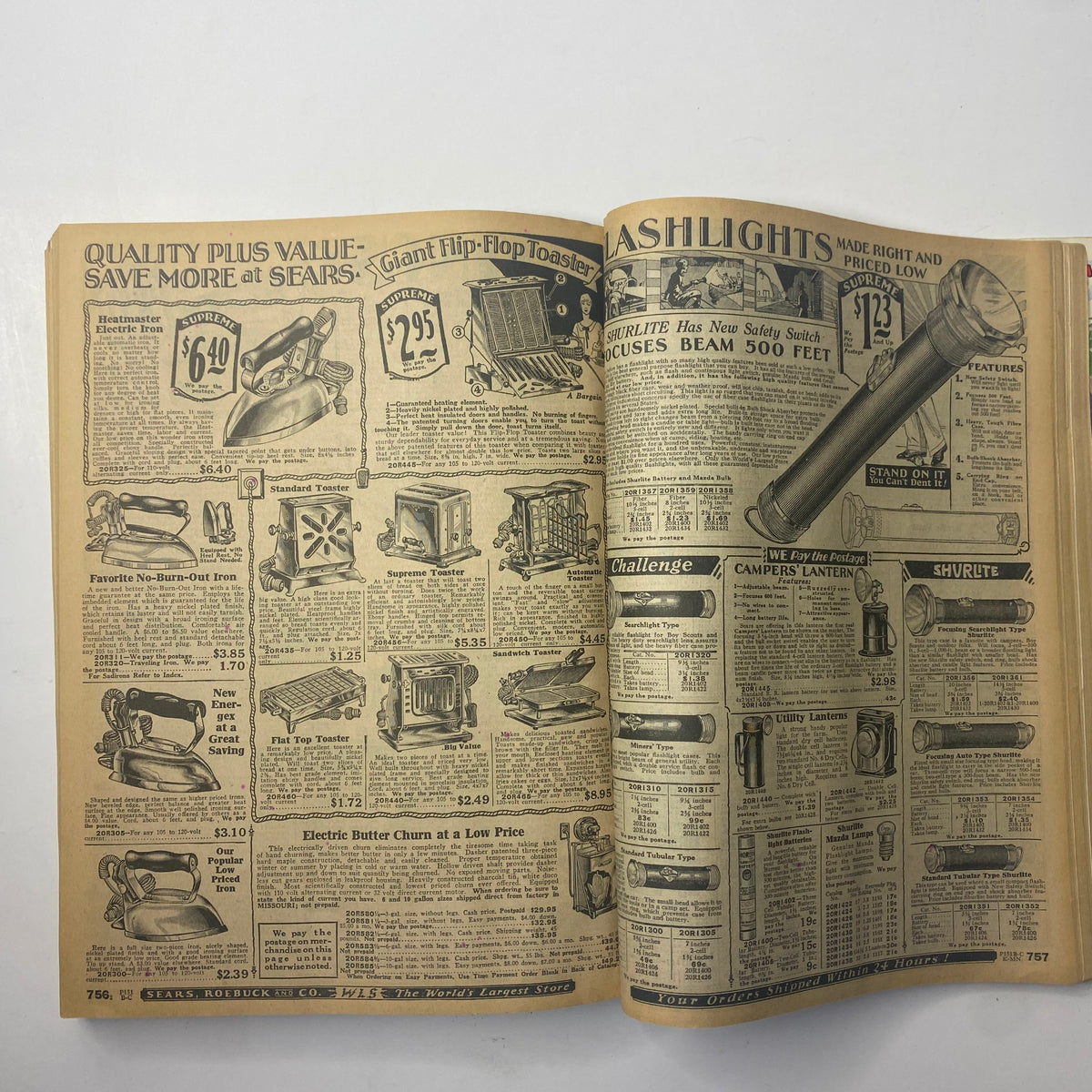
- Period pricing reflecting the consumer economy of the final pre-Depression spring, providing a precise economic document of what American families were paying for clothing and goods in early 1929.
- Detailed illustration and descriptive copy across the full range of Sears's spring and summer merchandise — a comprehensive visual and commercial record of American retail culture at the peak of 1920s prosperity.
Condition & Rarity
Graded Good — an honest and meaningful condition designation for a catalog now nearly a century old. Sears catalogs of this era were working documents in most households, consulted repeatedly for ordering, browsed for aspiration, and frequently repurposed after their seasonal utility had passed. Surviving copies in Good condition, with intact pages and a readable interior, represent a strong preservation outcome for a publication that was never intended for archival keeping. The plastic protective sleeve provides appropriate ongoing preservation for a publication of this age and paper stock. The 1929 Spring and Summer edition carries additional historical weight beyond most catalog years given its position at the very end of the decade — collectors of 1920s Americana, fashion history researchers, and Depression-era social historians all have distinct reasons to seek it out, which sustains broad and active interest across multiple collecting communities.
Looking for More Issues Like This?
Late 1920s Sears catalogs in Good or better condition are among the more historically charged finds in American ephemera collecting, and the 1929 Spring and Summer edition in particular occupies a unique position at the end of an era. The full Sears catalog collection at OriginalMagazines.com is the best place to explore available editions across the company's remarkable publishing history. For collectors building a broader documentary archive of this pivotal year in American life, the complete 1929 magazine and catalog archive offers a wide range of material from the last year of the Roaring Twenties.