
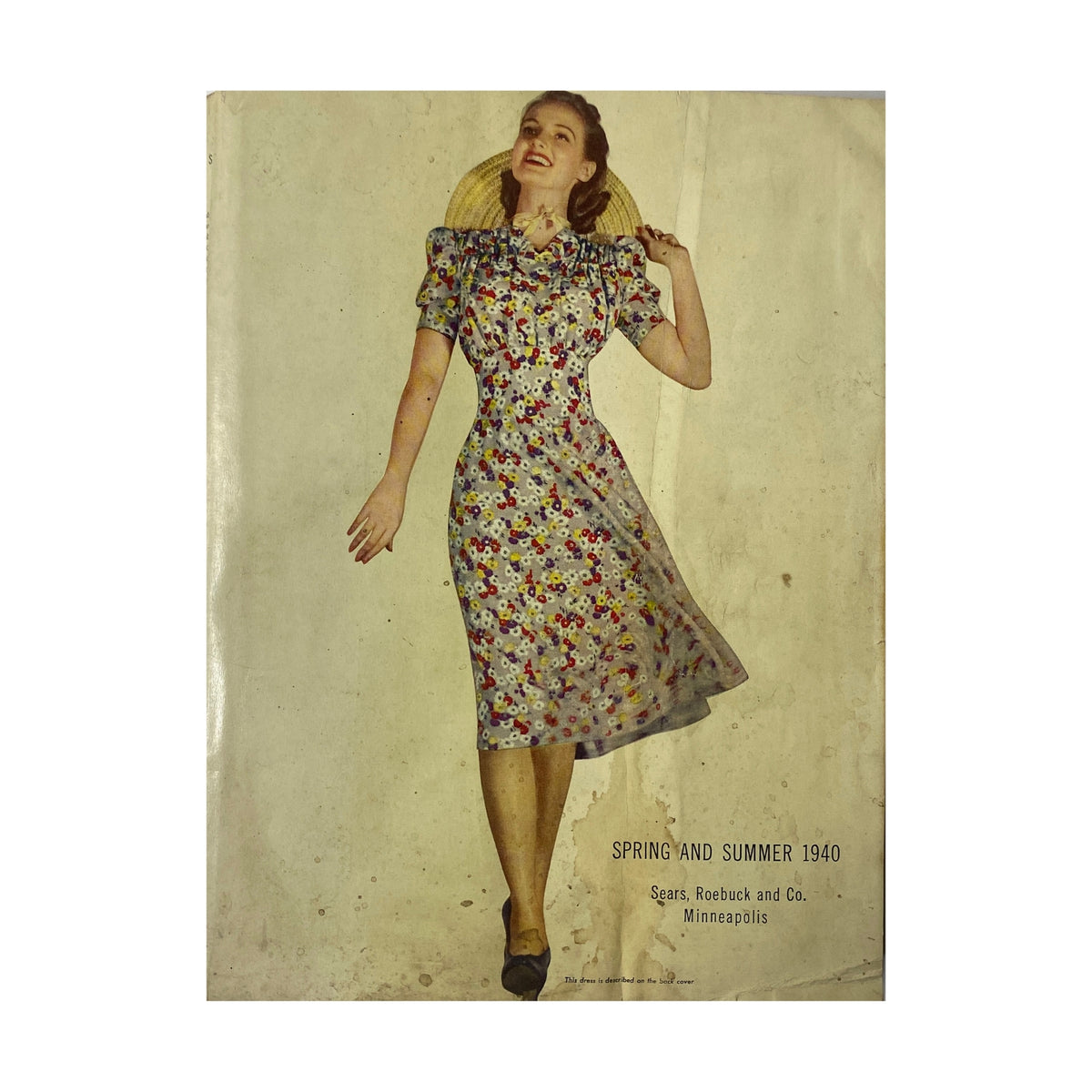
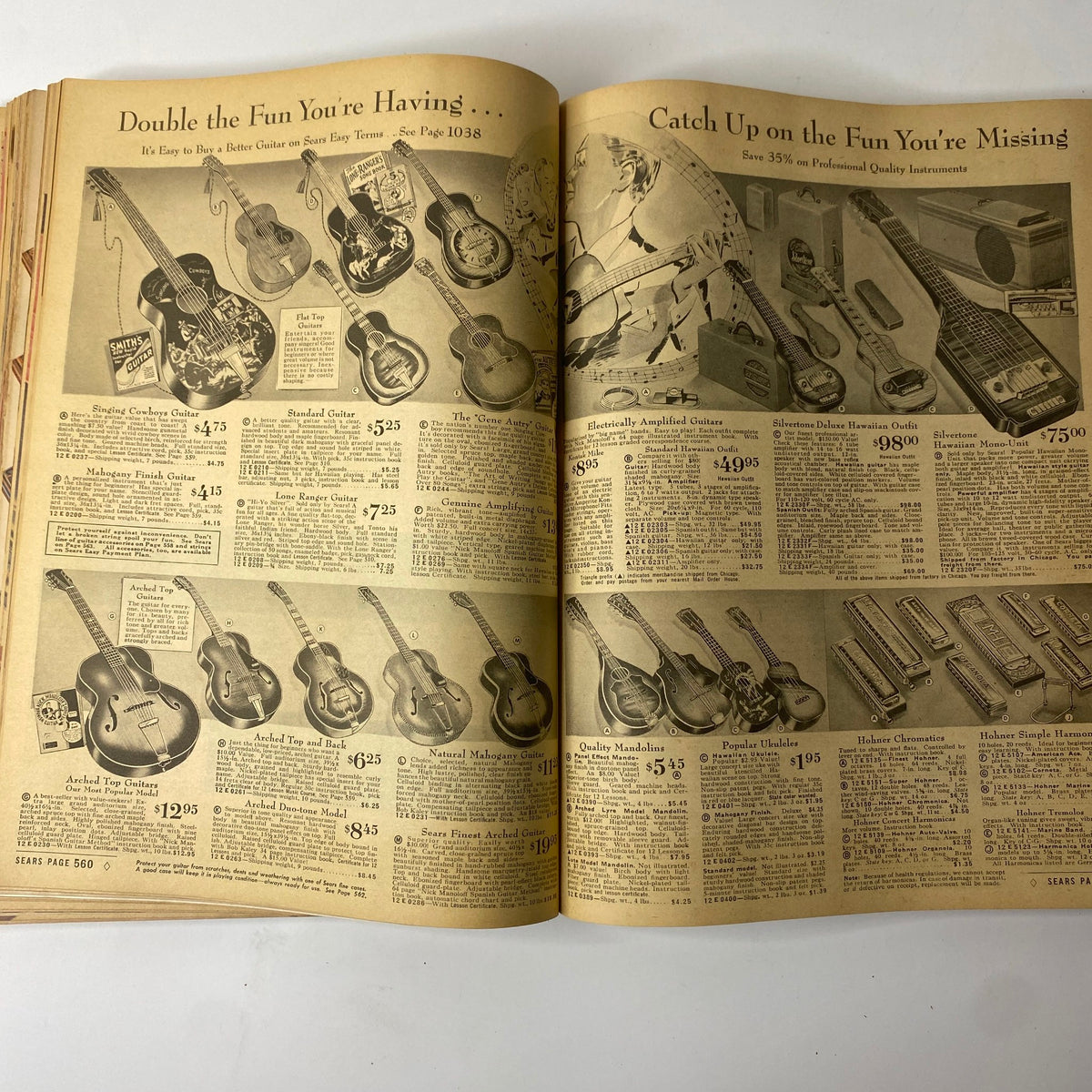
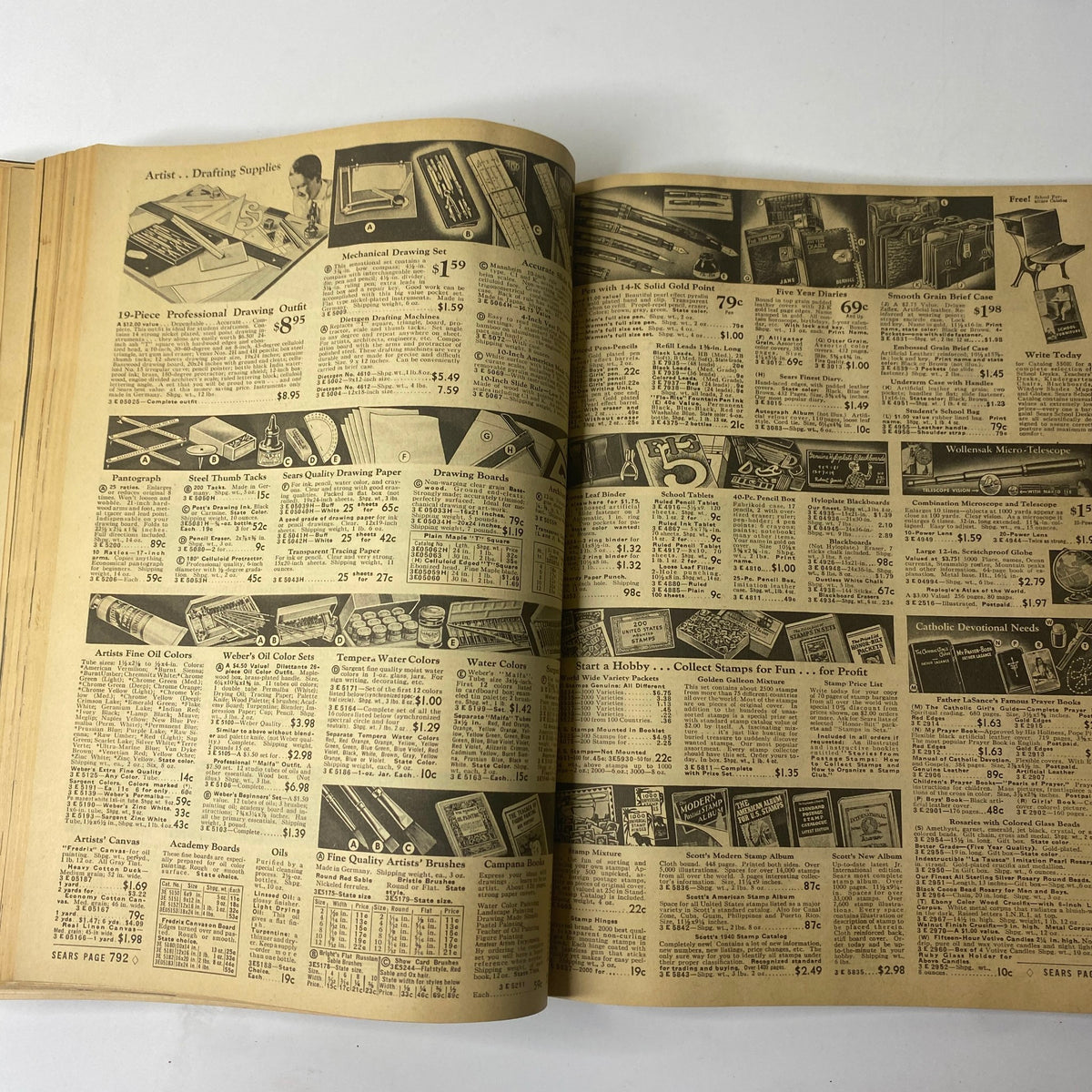
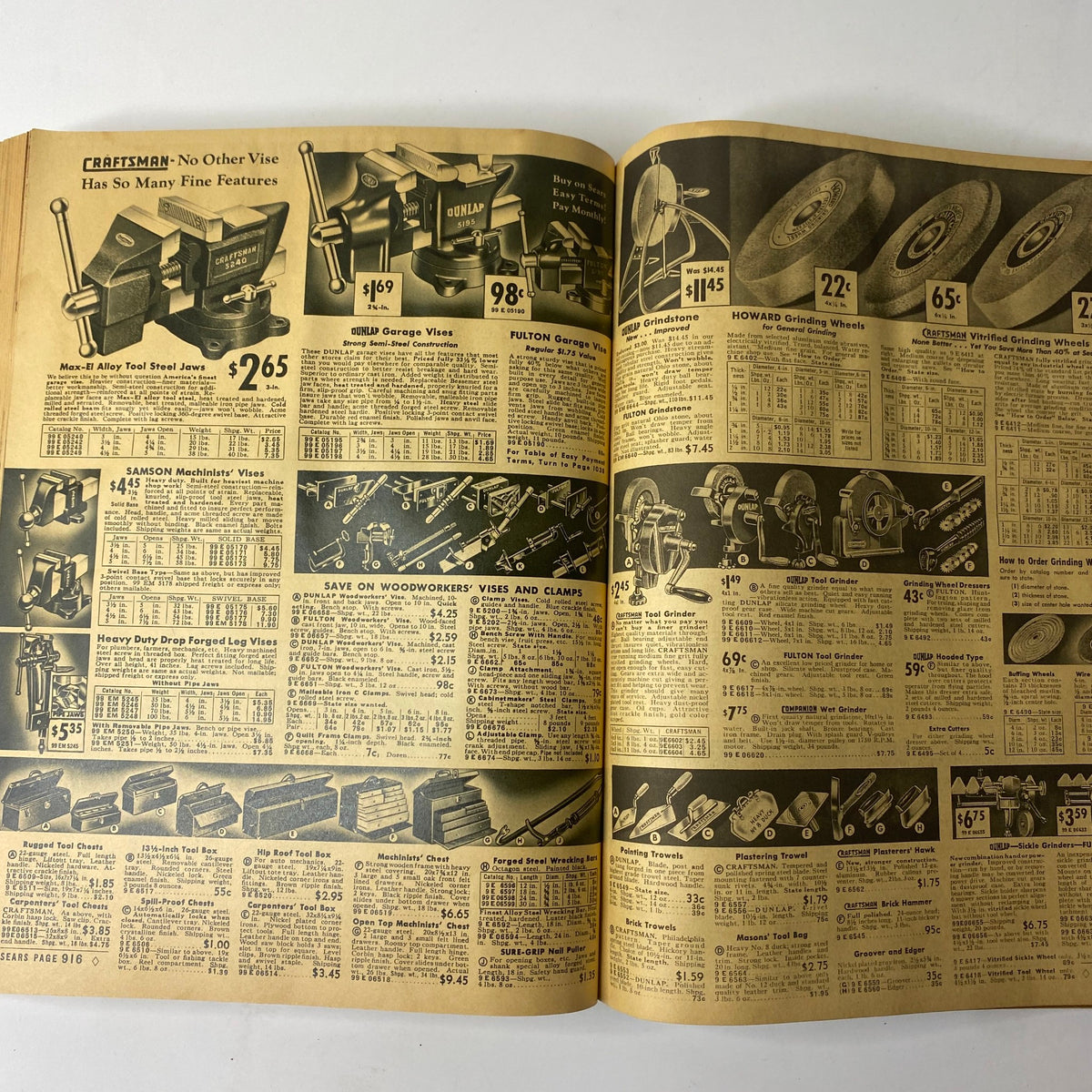
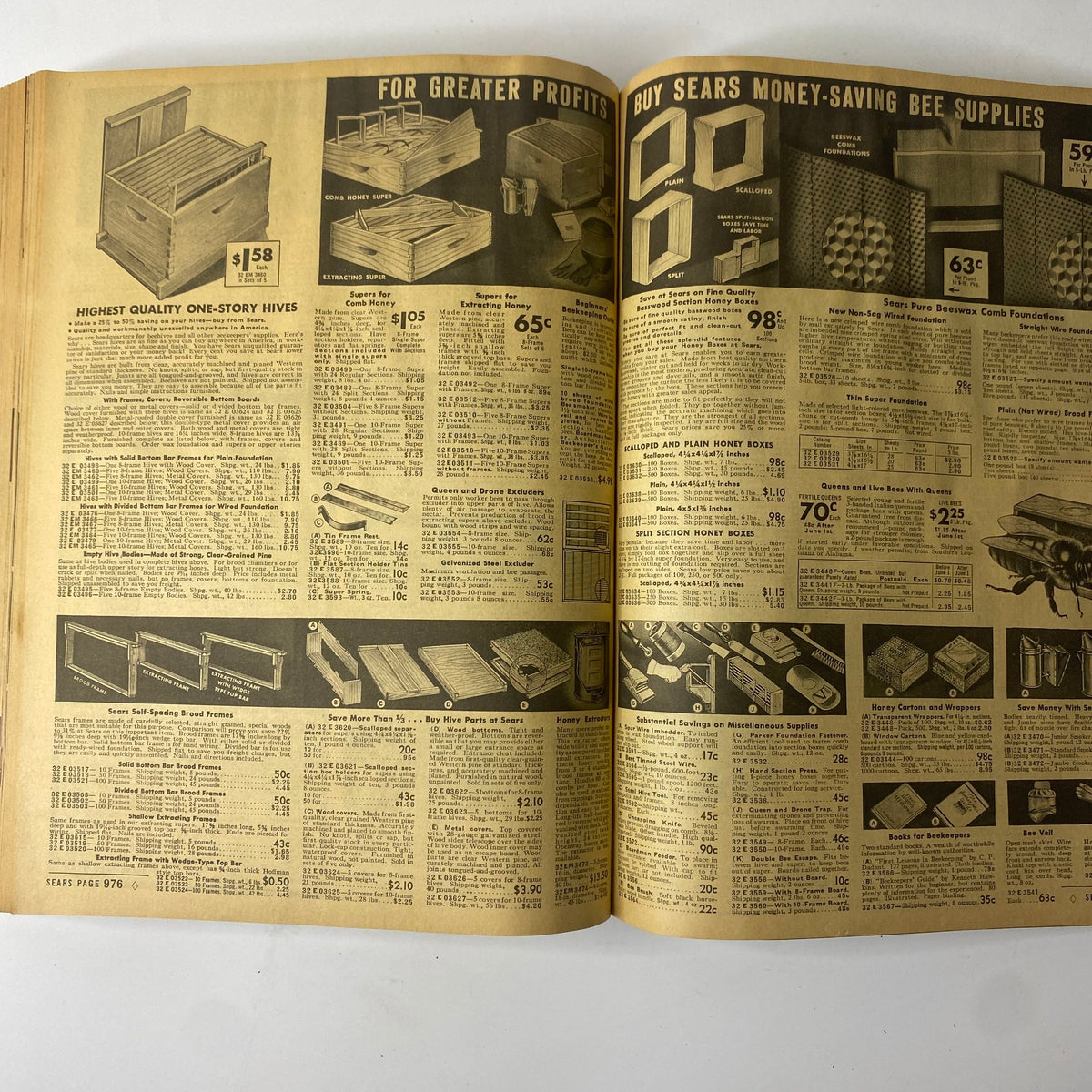


Description
Collector's Note – Why This Issue Matters
The 1940 Sears Spring and Summer Catalog is one of the most historically weighted editions in the entire Sears publishing archive. It was assembled and distributed in the early months of 1940, when the United States was still formally at peace but the world was already catastrophically at war — Germany had invaded Poland in September 1939, the Battle of France was about to begin in May 1940, and the question of American involvement was the dominant anxiety in national political life. The Spring/Summer catalog reached American households in this atmosphere of suspended normalcy, offering the full range of peacetime consumer goods to a country that was reading the newspapers with growing dread. It is, in the most precise sense, a document of the last American spring before the war's consequences became unavoidable.
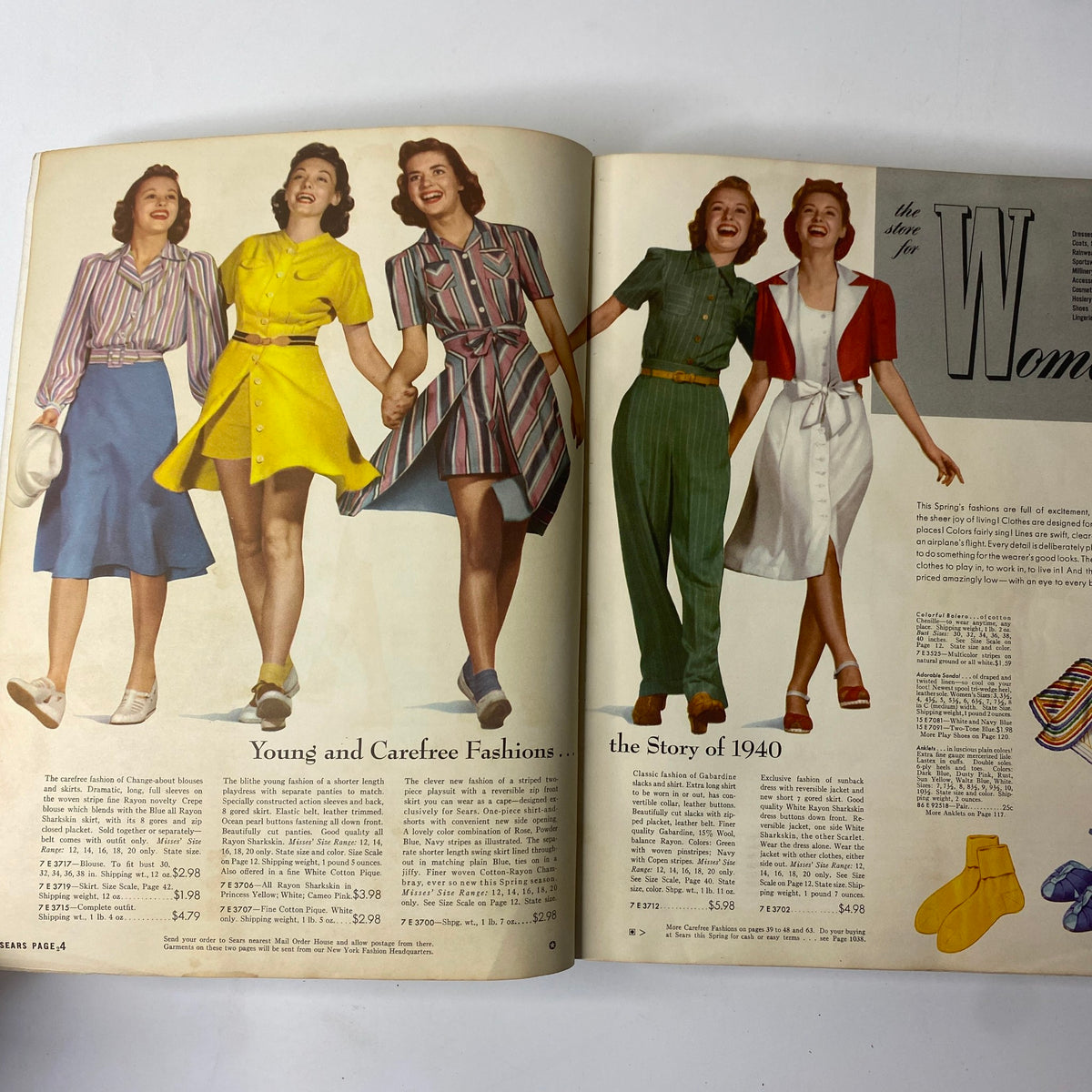
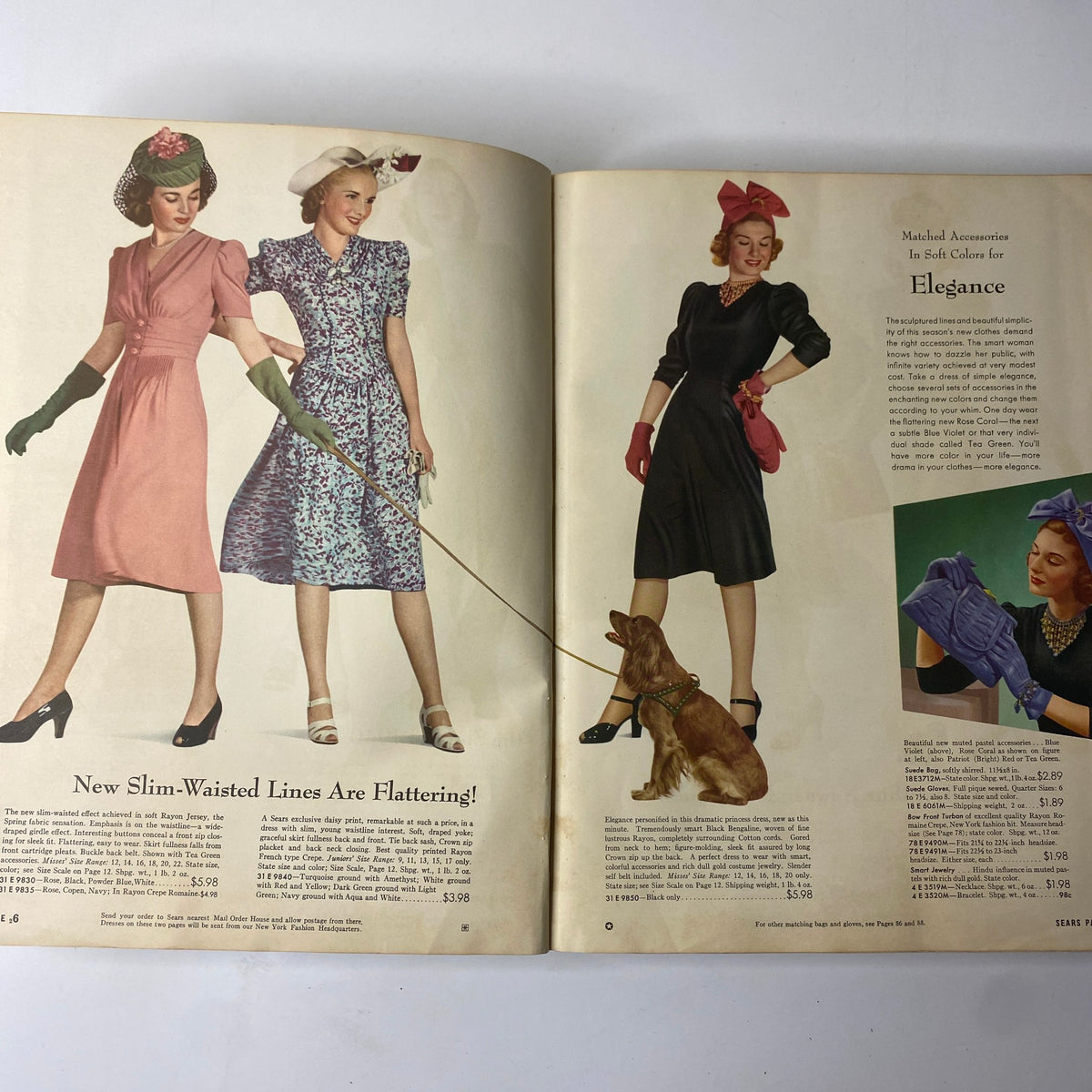
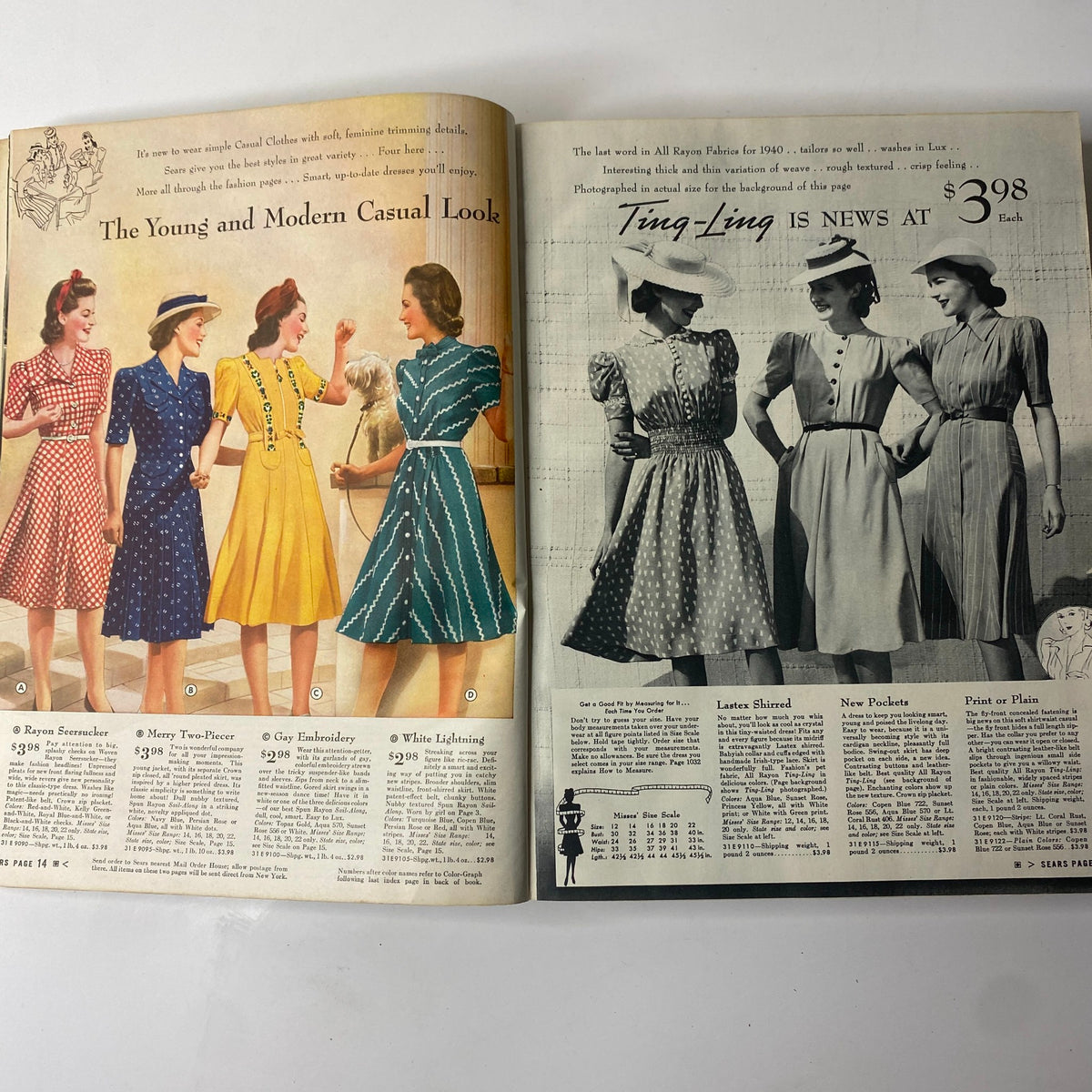
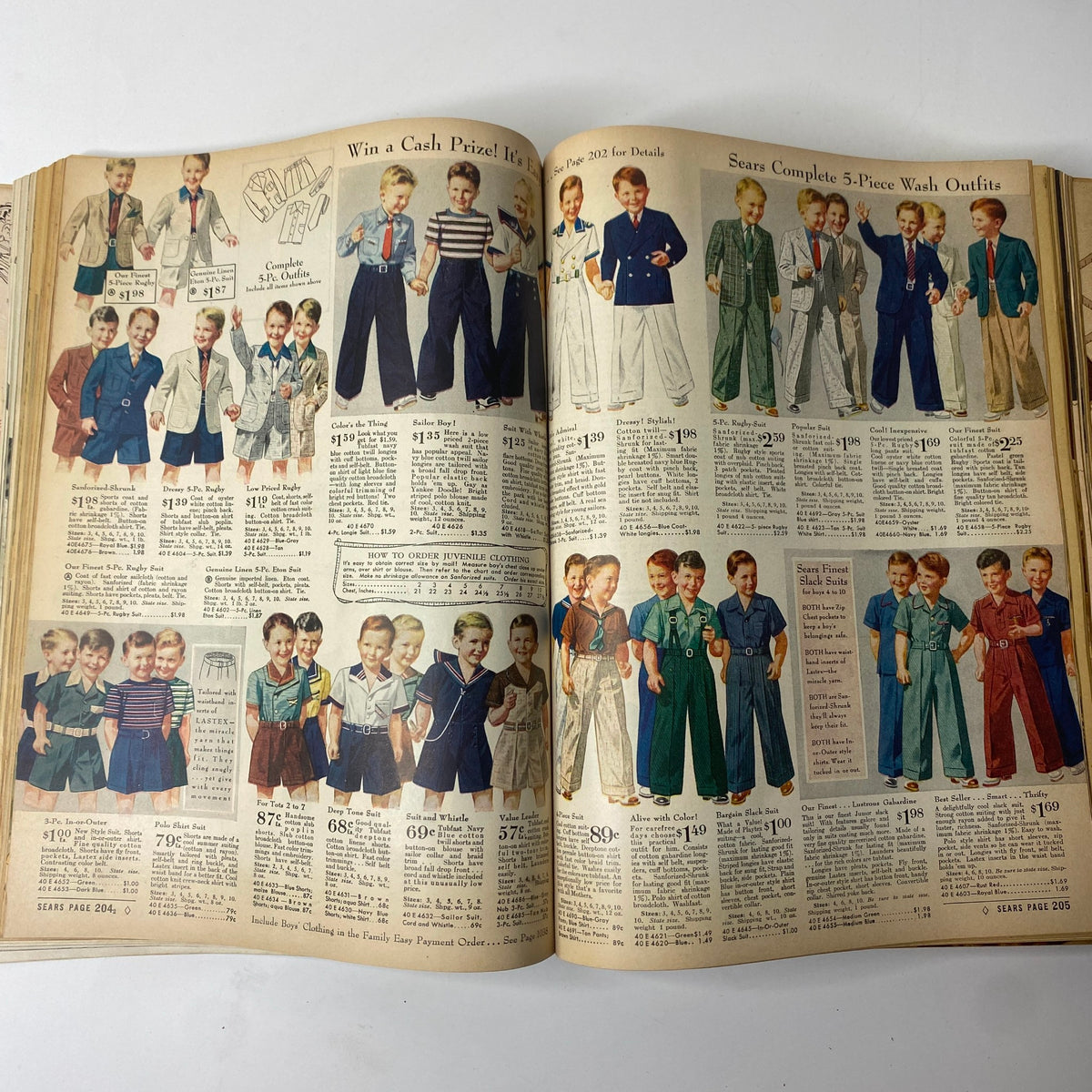
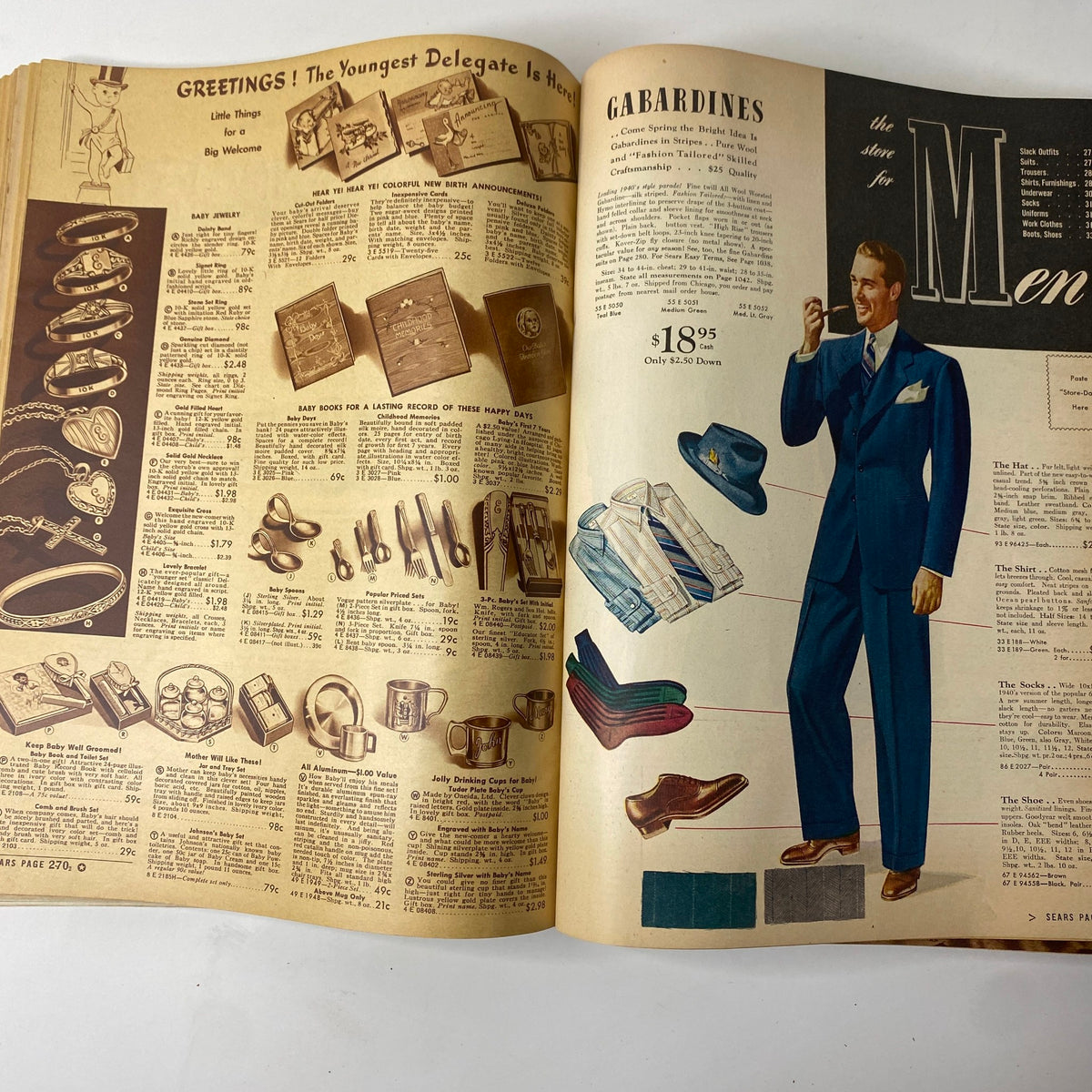
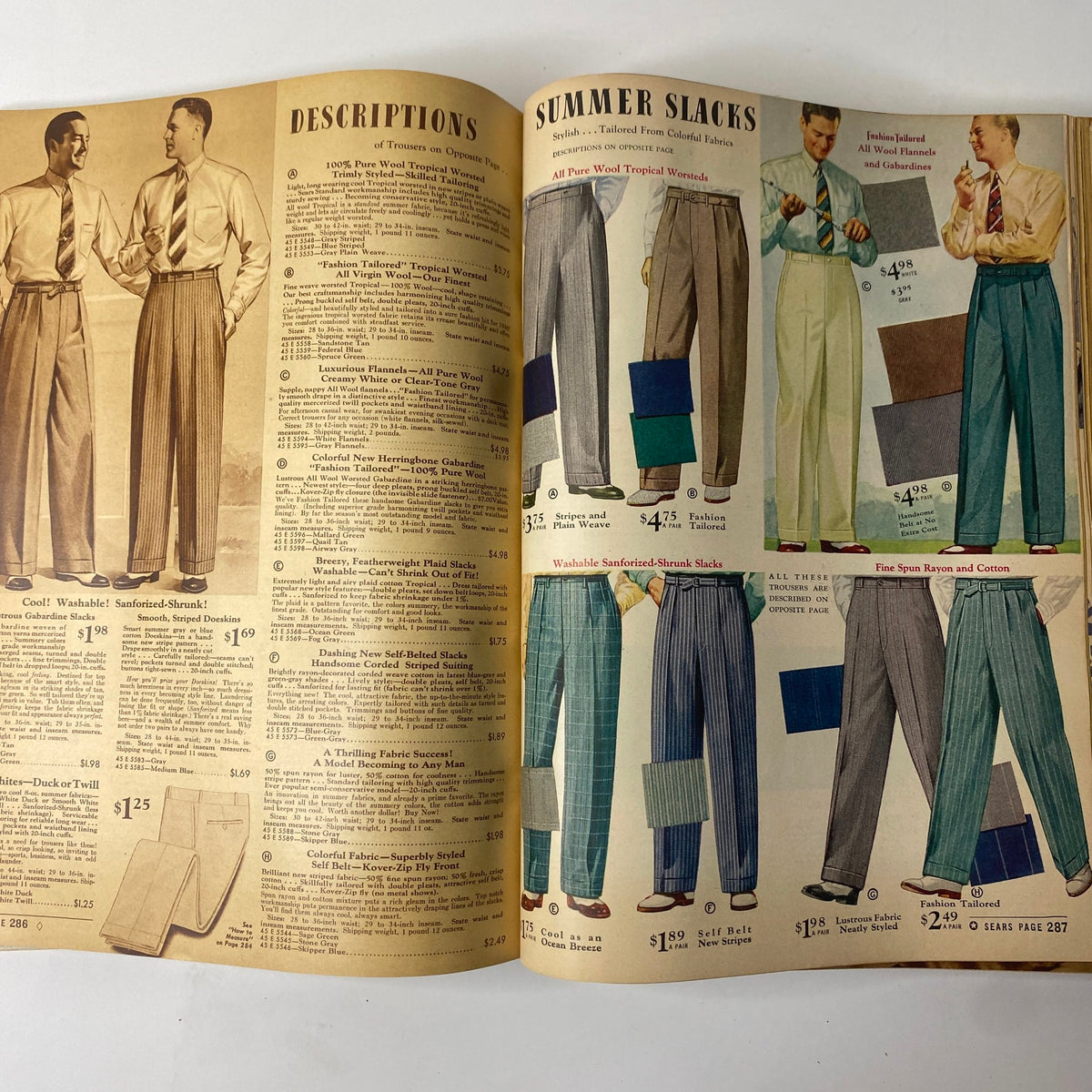
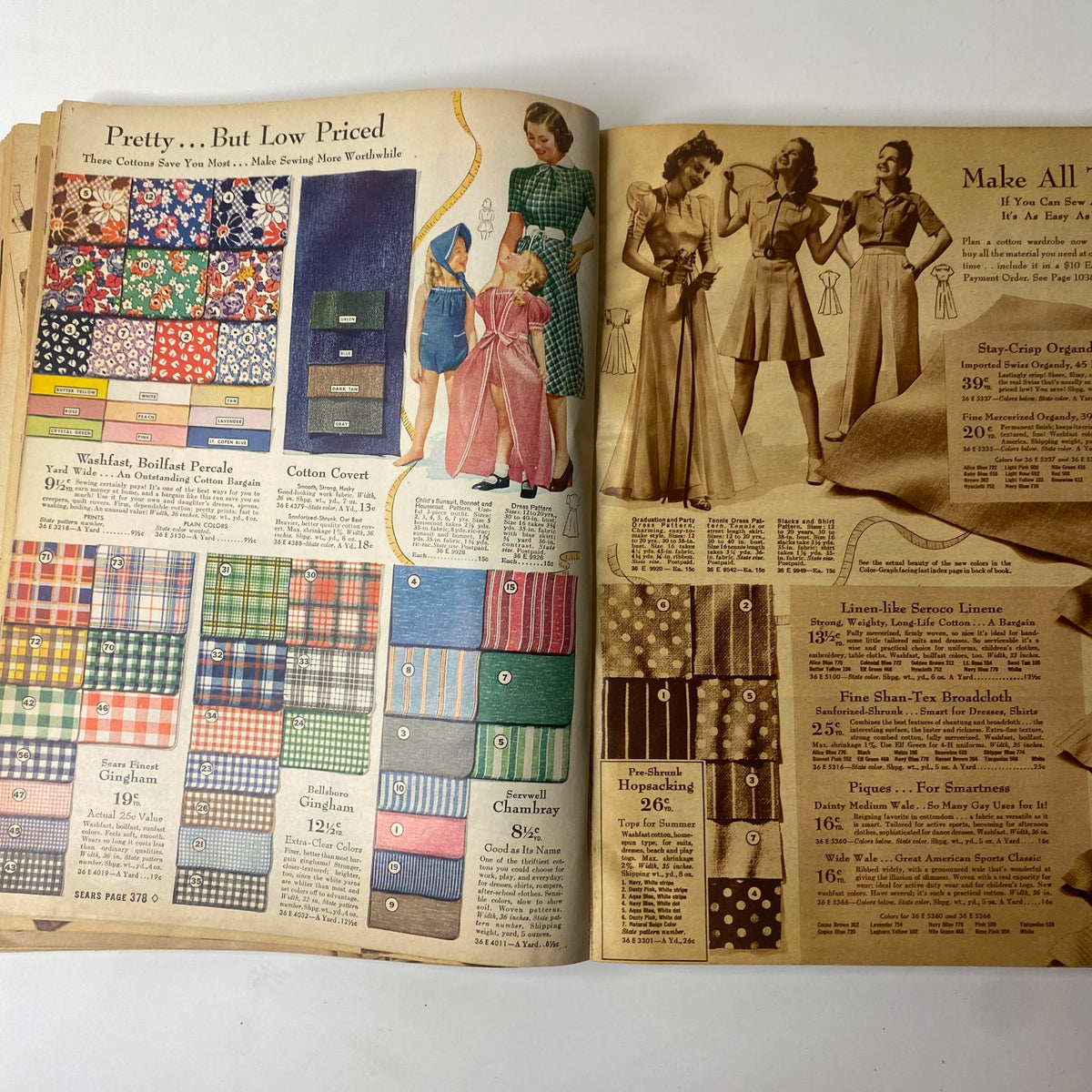
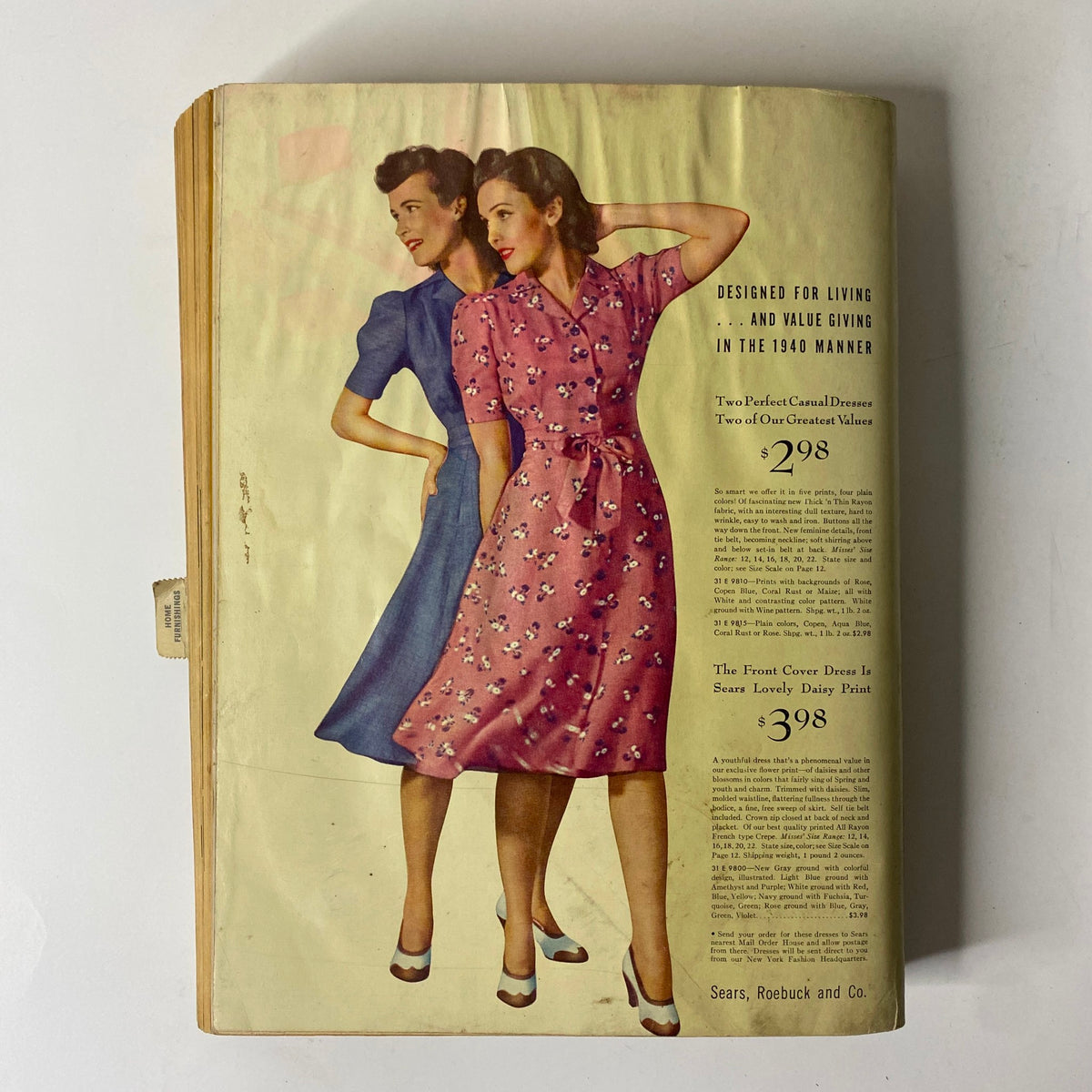
The fashion documentation in this catalog sits at a specific and underappreciated moment in American dress history. The late 1930s and very early 1940s produced a distinctive aesthetic — women's silhouettes with padded shoulders beginning to appear, men's suits with a structured formality that would be rationed away within two years, swimwear and leisure clothing that reflected a consumer culture still assuming peacetime abundance. The Sears catalog captured these styles in their mass-market expressions — not the couture versions documented by fashion magazines, but the accessible, practical adaptations that the majority of Americans actually wore. This makes the 1940 Spring/Summer edition a primary source for fashion and social historians that no glossy fashion magazine from the same year can replicate. For collectors who follow vintage Sears catalog archives, this pre-rationing Spring/Summer edition is among the most historically significant in the run.
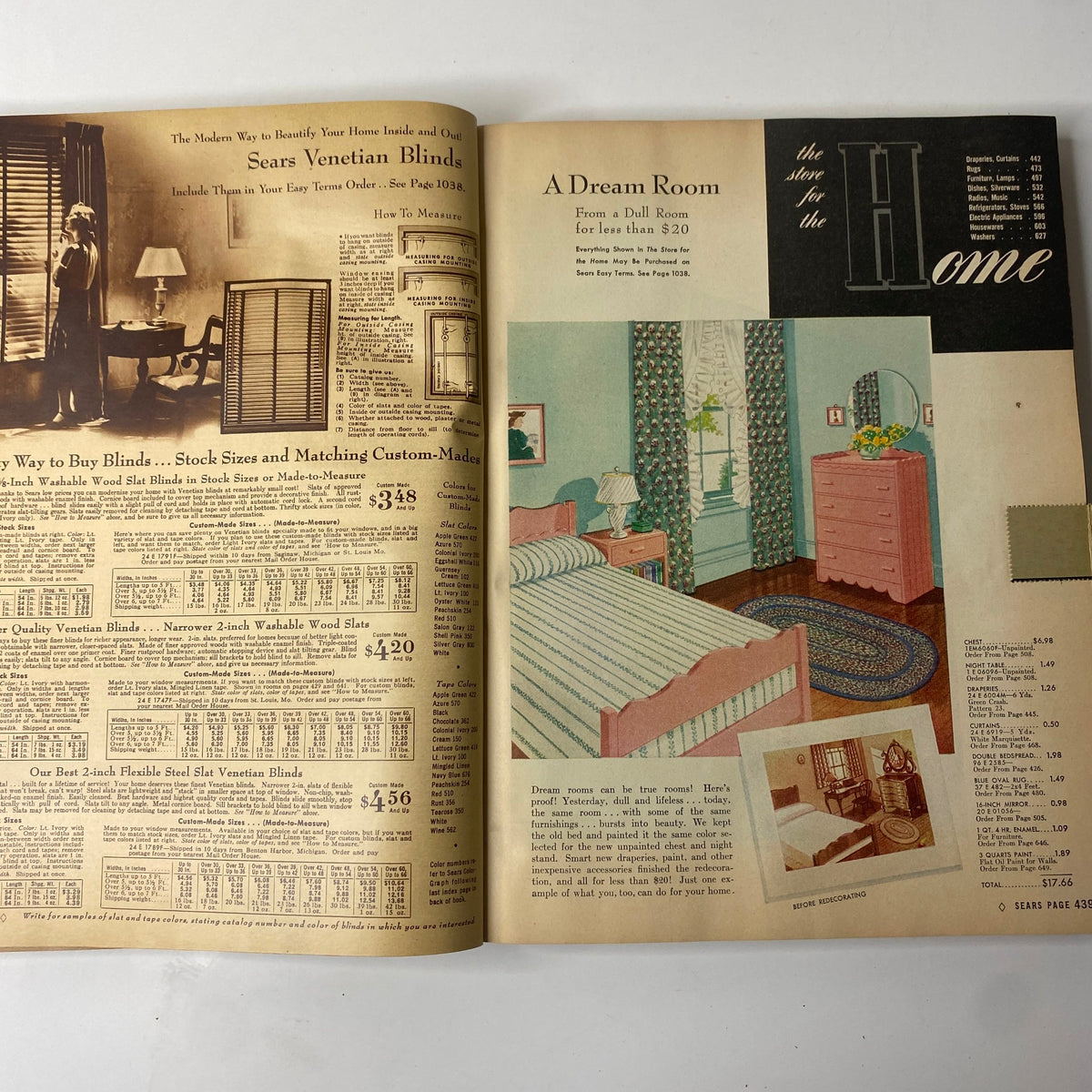
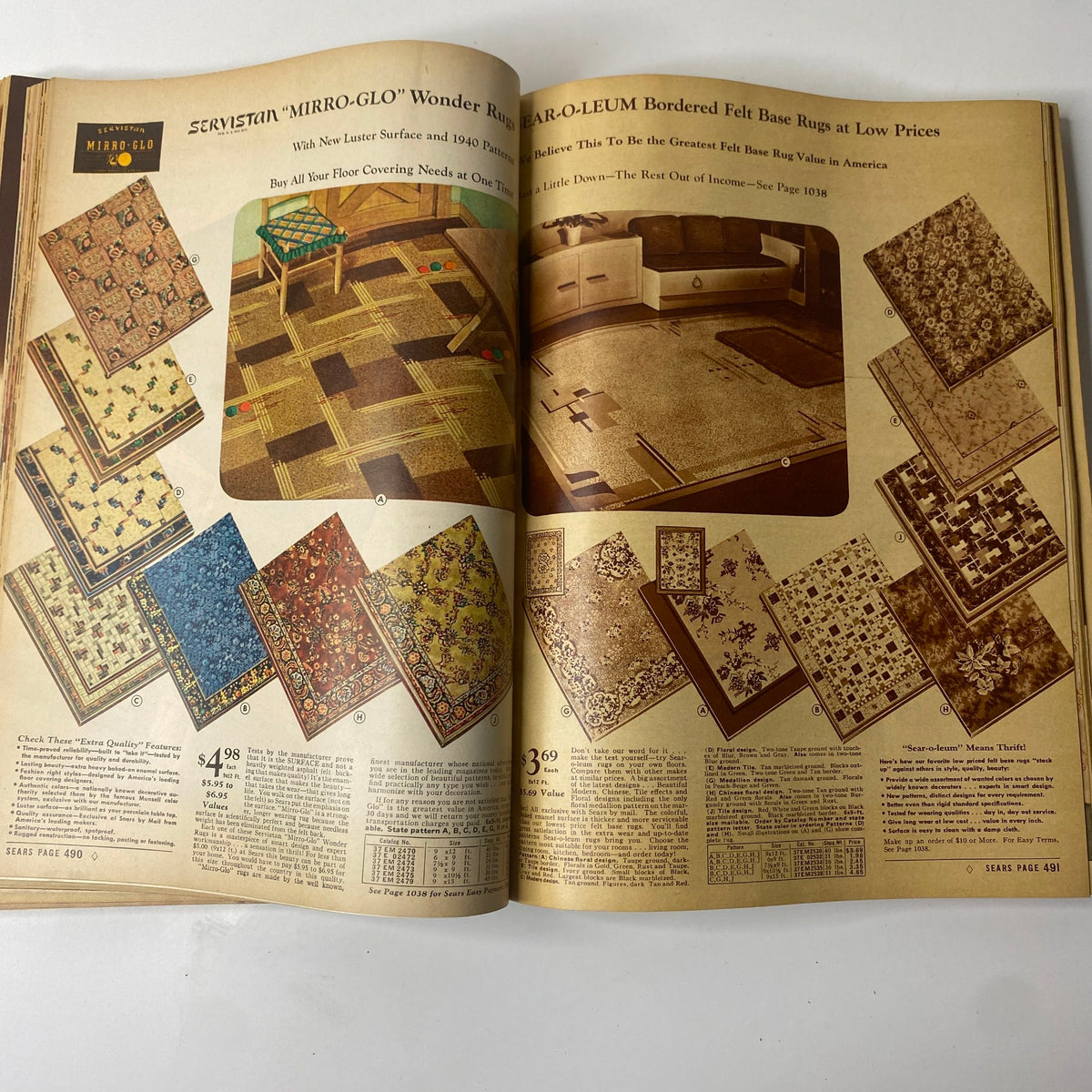
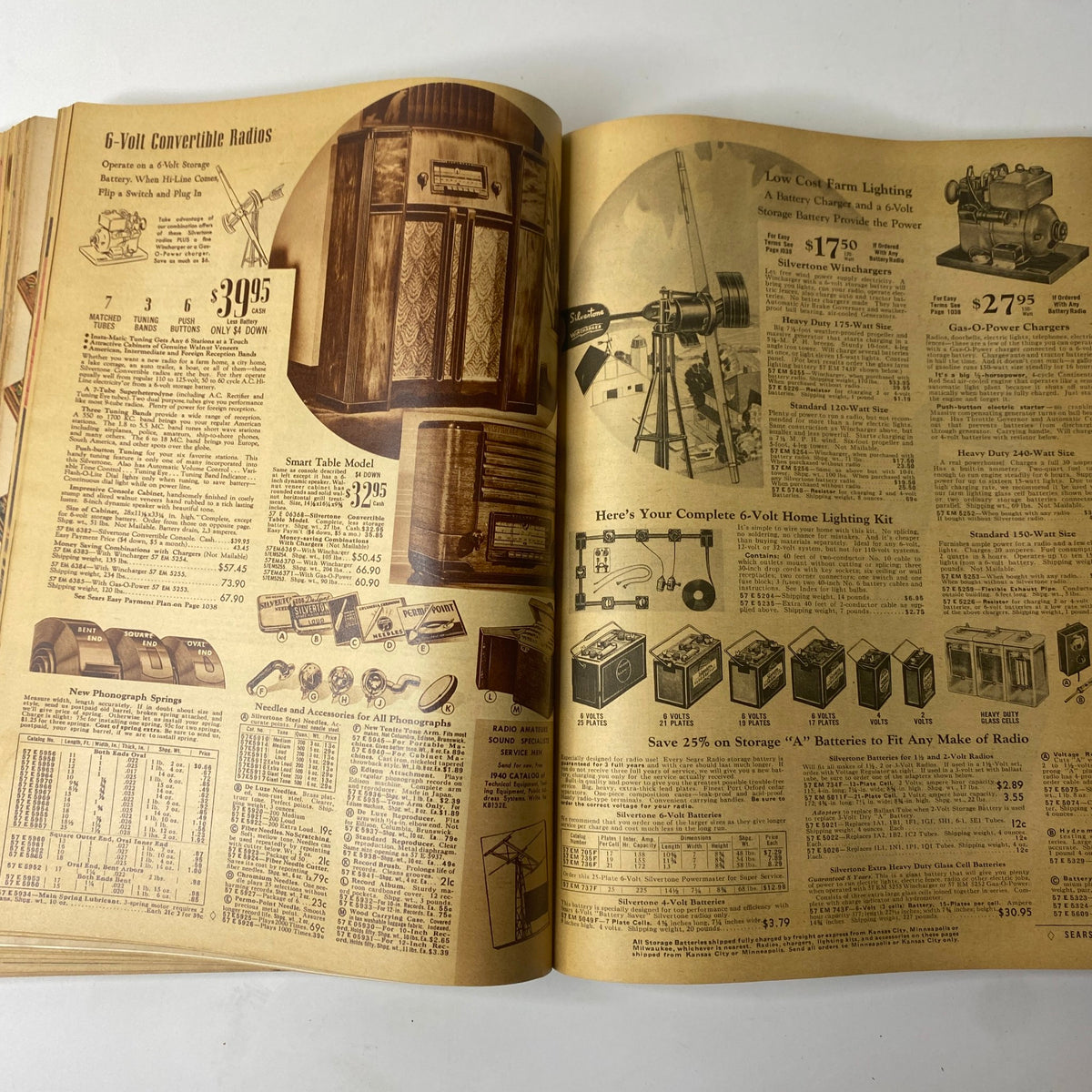
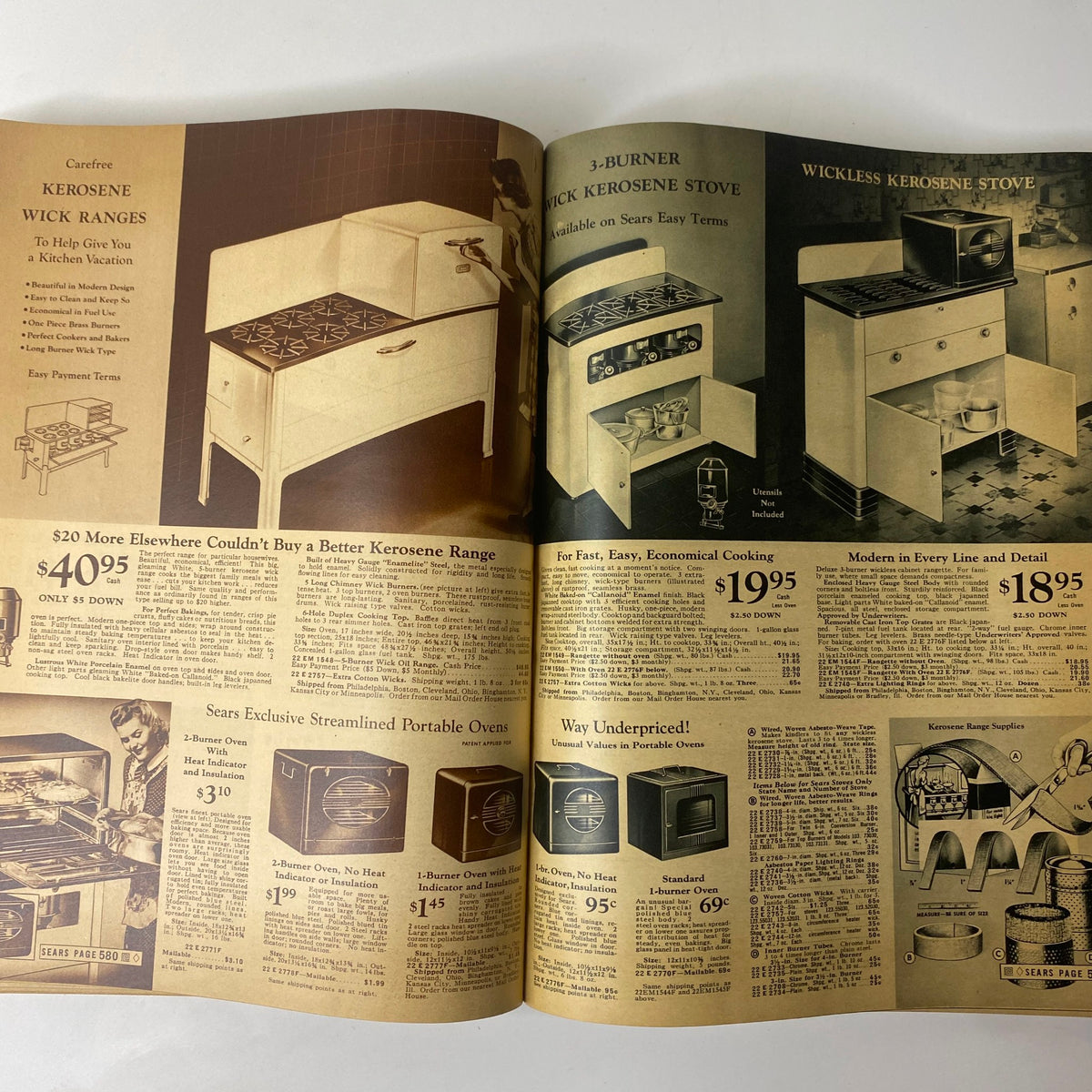
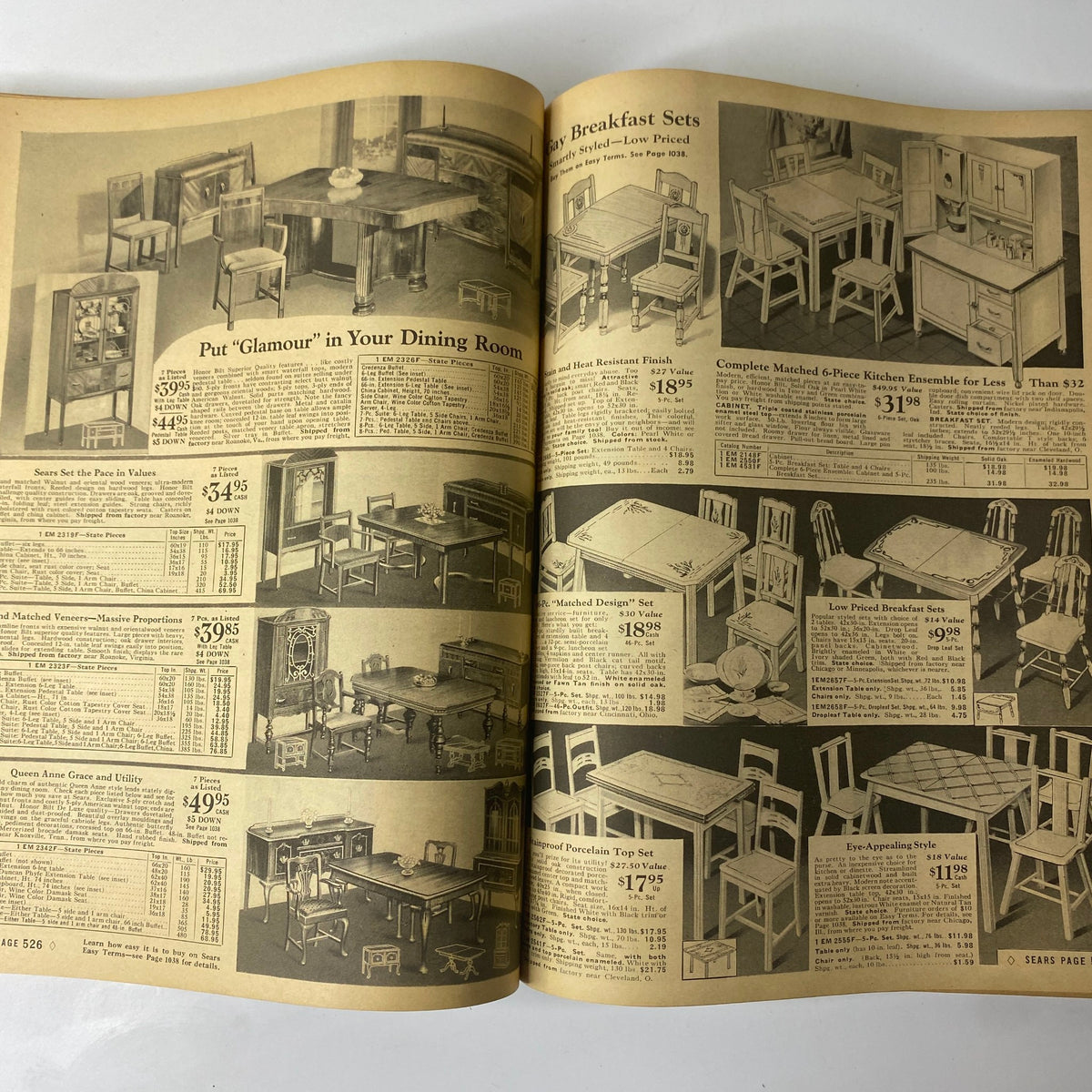
The home goods and furniture sections are equally valuable as historical documents. The domestic aesthetic of 1940 — wooden furniture, kitchen essentials, textiles — represents American home design at its last fully pre-war expression, before wartime material restrictions would begin constraining what manufacturers could produce and retailers could offer. The specific items documented in this catalog, their prices, their design language, and their marketing copy constitute a comprehensive record of what American domestic life looked like and aspired to in the spring of 1940. Collectors building focused archives around publications from 1940 will find this catalog one of the most complete documentary records of American consumer culture in the year before the war transformed everything.
About the Publication
Sears, Roebuck and Co. had been issuing semi-annual mail-order catalogs since 1888, and by 1940 the Spring/Summer and Fall/Winter editions were among the most widely distributed publications in the United States, reaching tens of millions of American households. The catalog's dual function — practical shopping guide and inadvertent documentary record — makes it a uniquely valuable historical artifact at any point in its publishing history, but the editions from 1939 through 1942 carry particular weight as documents of American consumer life during the transition from peace to war. The Spring/Summer format typically covered warm-weather apparel, outdoor goods, gardening supplies, and the domestic goods that American households refreshed in preparation for the warmer months, making it a specific and seasonally focused cross-section of the consumer landscape.
Key Highlights Inside
- Women's spring and summer apparel documenting the pre-rationing fashion silhouette of 1940 — the last full peacetime expression of 1930s-into-1940s American women's fashion before War Production Board fabric restrictions would begin altering garment construction.
- Men's tailored suits and clothing reflecting the structured masculine wardrobe of early 1940 — a style that would be significantly constrained by wartime material restrictions within two years of this catalog's distribution.
- Swimwear and leisure clothing documenting the consumer culture of peacetime abundance, assembled at a moment when American summer recreation was still operating without the shadow of domestic wartime restrictions.
- Classic wooden furniture and home goods sections providing a baseline record of American domestic design and pricing in the spring of 1940, immediately before wartime production priorities began redirecting manufacturing capacity.
- Kitchen essentials and domestic textile coverage reflecting the full range of home goods available to American consumers in the last pre-war Spring/Summer season.
Condition & Rarity
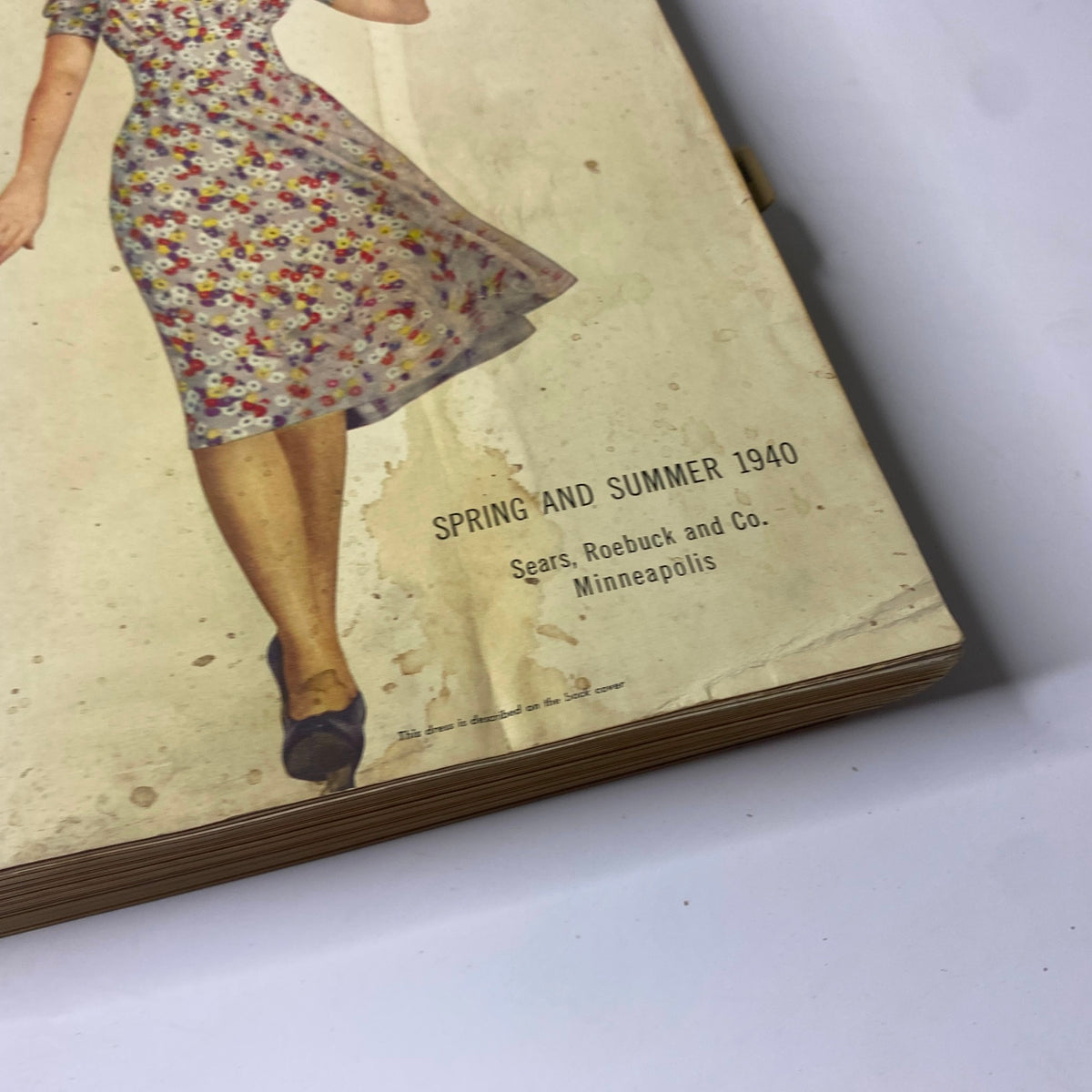
The listing grades this catalog as acceptable condition with some water damage throughout and confirms protective plastic sleeving. Acceptable condition with noted water damage is an honest assessment that places this example in the lower range of the collecting spectrum for its category — water damage on paper of this age typically manifests as tideline staining, warping, potential page adhesion, and accelerated toning that cannot be reversed. For collectors evaluating any surviving copy of this issue, the extent and distribution of the water damage is the primary condition factor; damage concentrated in margins or on non-illustrated listing pages has less impact on the catalog's documentary and display value than damage affecting the fashion illustration pages or the cover. The protective plastic sleeving reflects appropriate current preservation effort and limits further handling deterioration. The historical significance of the content — a complete 1940 pre-war Spring/Summer catalog — remains fully intact regardless of cosmetic condition, which is why even imperfect copies of editions from this period retain genuine collecting interest for researchers and historians working with primary source material.
Looking for More Issues Like This?
Pre-war Sears catalogs in any coherent condition are among the more sought-after items in the catalog collecting market, and the 1940 Spring/Summer edition — documenting American consumer life in the last peacetime spring before the war's full impact arrived — is particularly valued for its historical specificity. If this issue is no longer available, the full Sears catalog archive at OriginalMagazines.com is the best resource for other editions from across the catalog's long publishing history. The 1940 magazine archive covers the full year across multiple titles for collectors building a focused pre-war American culture library.