





Description
Collector's Note – Why This Issue Matters
The 1941 Macy's Youth Centre Spring and Summer Catalog is a primary document of American family consumer culture at its last pre-war moment of innocent domestic optimism — published and distributed in the spring and summer of 1941, when the United States was still technically at peace, when American families were still buying bicycles and radios and picnic sets without the shadow of wartime rationing, and when the specific material pleasures of civilian life that the following years of conflict would constrain were still available in their full peacetime abundance. The catalog's confirmed scope — from newborn layette items through nursery age and school-age clothing to high school fashions, household goods, outdoor equipment, and the full range of family consumer life — makes it one of the most comprehensive single-volume primary records of American domestic consumption in the months before Pearl Harbor permanently divided the 1940s into a before and after. The confirmed "Mother and Daughter Dress Alike" feature, with its "Two Fashions TOGETHER — Two Sizes — One Price" marketing language and its matching sets for church, neighborhood strolls, and summer picnics, documents a specific and historically resonant American fashion culture — the mother-daughter coordinating outfit tradition — at the precise moment before the war's material constraints and social disruptions would transform the domestic rhythms that made it possible. For collectors building a documentary archive of Macy's retail history and early-1940s American consumer culture, the Macy's catalog collection at OriginalMagazines.com provides essential depth across the retailer's historical publishing record, with the pre-war editions from 1941 representing a category of genuinely uncommon primary source documentation of American domestic life at its last pre-conflict moment.
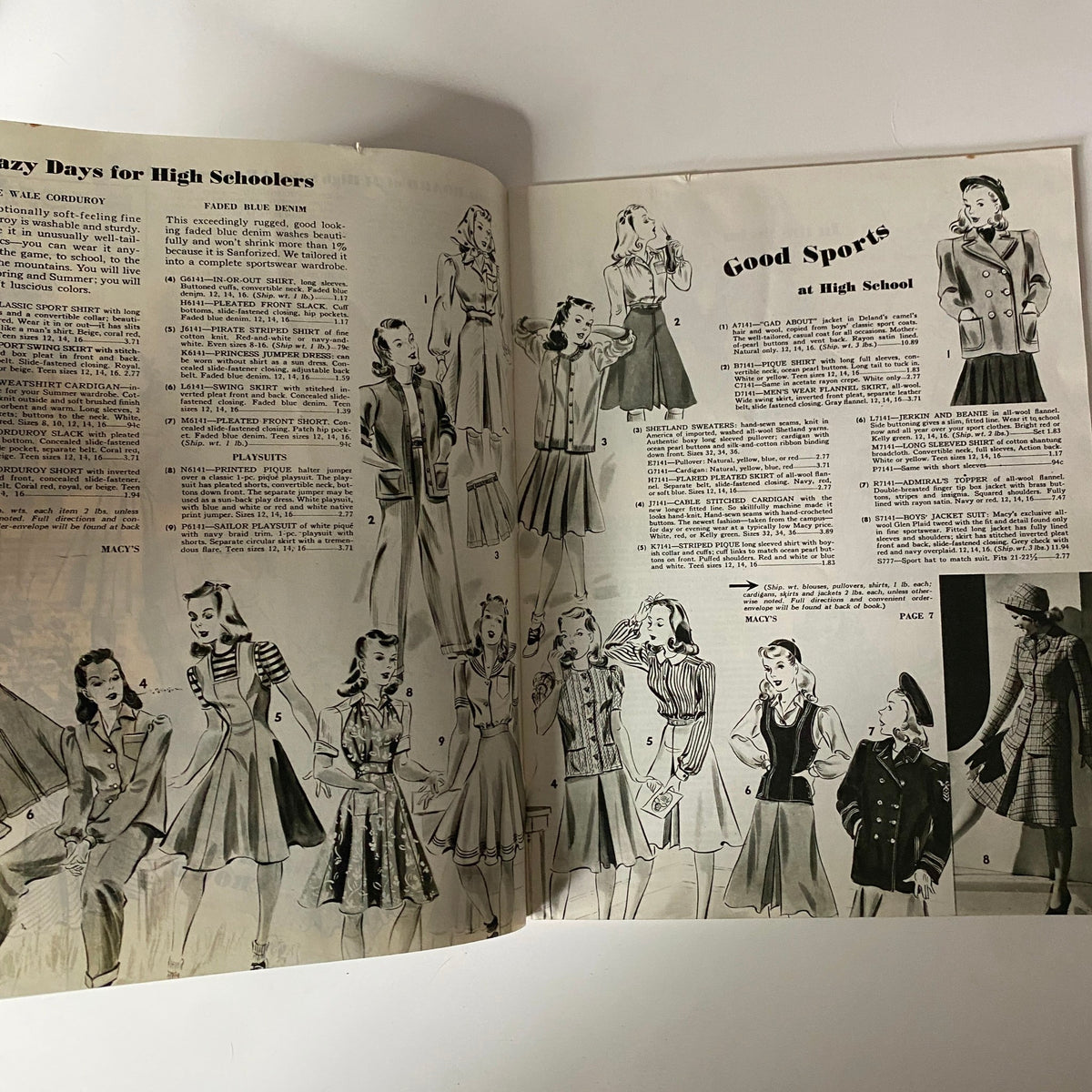
The specific categories of non-clothing merchandise confirmed in this catalog — bicycles, radios, electric irons, camp cots, luggage, folding chairs, picnic sets — are primary commercial documentation of the full breadth of American family consumer life in the spring and summer of 1941 that makes this catalog a multi-layered primary source for researchers approaching the period from multiple angles simultaneously. A Macy's Youth Centre catalog that includes radios and bicycles alongside children's clothing and mother-daughter matching sets is documenting the specific definition of family consumption that Macy's was presenting to its customer base in 1941 — a definition generous enough to encompass the full range of domestic and outdoor leisure equipment that an American family might need for the spring and summer season. The radio documentation is particularly resonant given what would occur later that year: a radio listed in a spring-summer 1941 Macy's catalog is the same category of domestic technology through which American families would hear news of the Pearl Harbor attack in December, and its presence in this catalog alongside picnic sets and camp cots documents the specific peacetime domestic life that the war would transform. The High School Crowd section's teen-focused fashions — coats, shoes, robes, gowns, formal suits — documents the specific consumer category of American adolescence at the pre-war moment, preserving primary evidence of how Macy's was defining and serving the teenage market in 1941 before the war's demographic and social disruptions had reshaped the American high school experience. The full range of 1941 magazines and publications from this year documents American life in the final months before Pearl Harbor, and this Macy's catalog sits within that body of material as one of its most comprehensive and most visually immediate primary sources.
The confirmed catalog index structure — organized from newborns through toddlers, nursery age, school-age children, high school teens, and family goods — is itself a primary document of how Macy's was conceptualizing and organizing the American family as a consumer unit in spring-summer 1941. The progression from "For Babies (Up to 2 Years)" through "For the Family" maps a specific understanding of family demographic structure and life-stage consumption patterns that reflects both the commercial intelligence Macy's had developed about its customer base and the specific social organization of the American middle-class family at the end of the Depression era and the opening of the war decade. The "sister sets" specified in the Mother and Daughter matching catalog numbers — sizes 3 through 16 paired with mother's sizes 12 through 18, across four confirmed style numbers — preserve the specific commercial implementation details of the coordinating fashion tradition in precisely the technical and commercial language that only primary retail sources preserve: the actual size ranges, the actual catalog reference numbers, the actual single-price bundling structure that made the matching sets commercially accessible.
About the Publication
The Macy's Youth Centre Spring and Summer Catalog was a specialized seasonal publication produced by R.H. Macy & Co. focused specifically on children's, family, and youth merchandise, distinct from the retailer's general seasonal catalogs and devoted to the demographic range from newborns through teenagers alongside family goods. Macy's had been a fundamental institution in American retail culture since its founding in 1858, and its Youth Centre catalog represented the company's dedicated marketing effort toward the family with children consumer segment — an effort that encompassed not simply clothing but the full range of domestic, outdoor, and leisure goods that defined American family consumer life in the spring and summer season. The 1941 edition's spring-summer timing made it the last such catalog to be produced in the full peacetime abundance of pre-war American consumer culture, giving it a historical poignancy and documentary value that wartime and postwar editions of comparable publications cannot match.
Key Highlights Inside
- "Mother and Daughter Dress Alike" — confirmed matching sets with catalog numbers and size ranges — The confirmed four-style matching sets (A111, A222, A333, A444) with specific size ranges and the "Two Fashions TOGETHER — Two Sizes — One Price" bundling documentation constitute primary commercial evidence of the mother-daughter coordinating fashion tradition's specific implementation at the last pre-war American retail moment, preserving the actual catalog reference numbers, size pairings, and pricing structure through which this cultural practice was commercially organized.
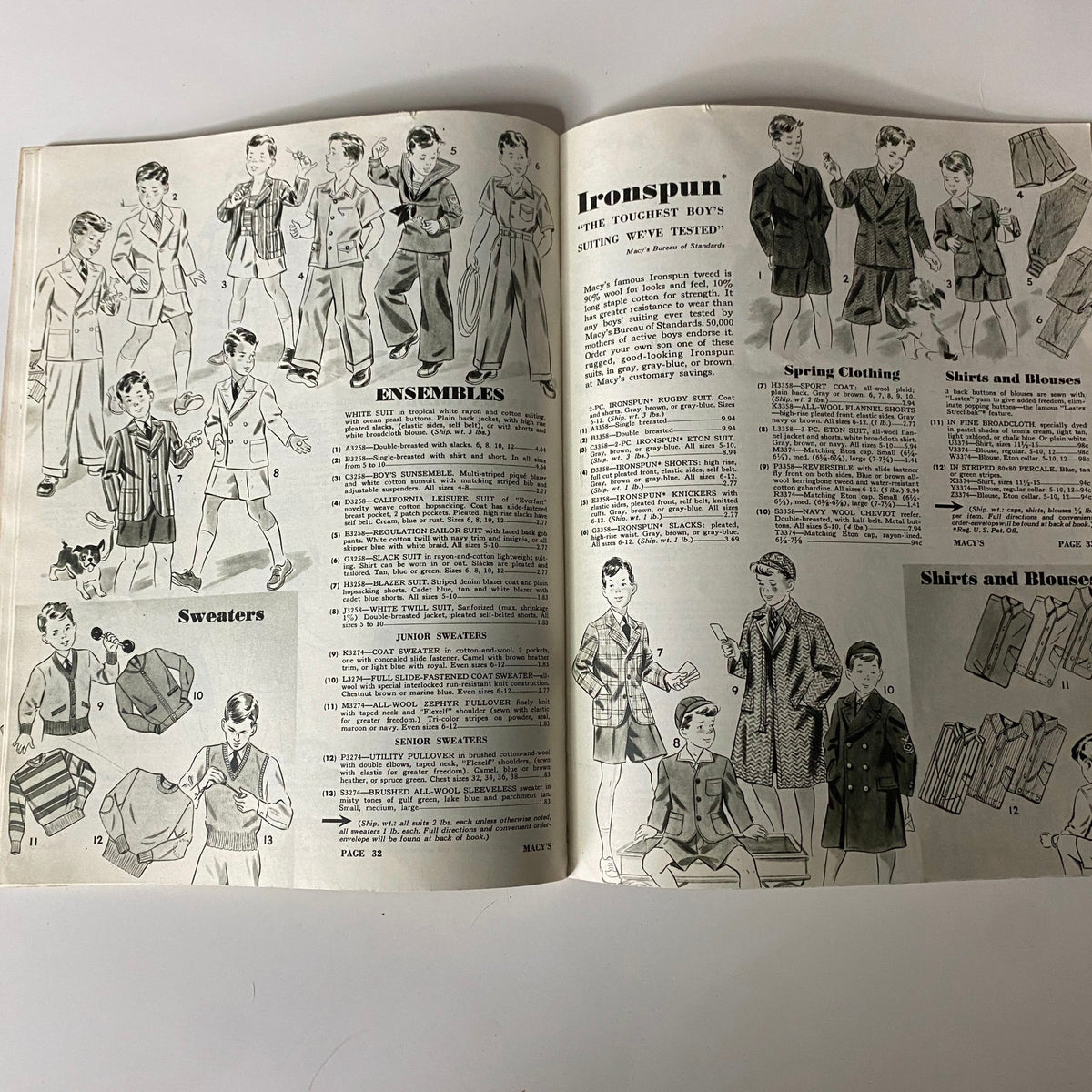
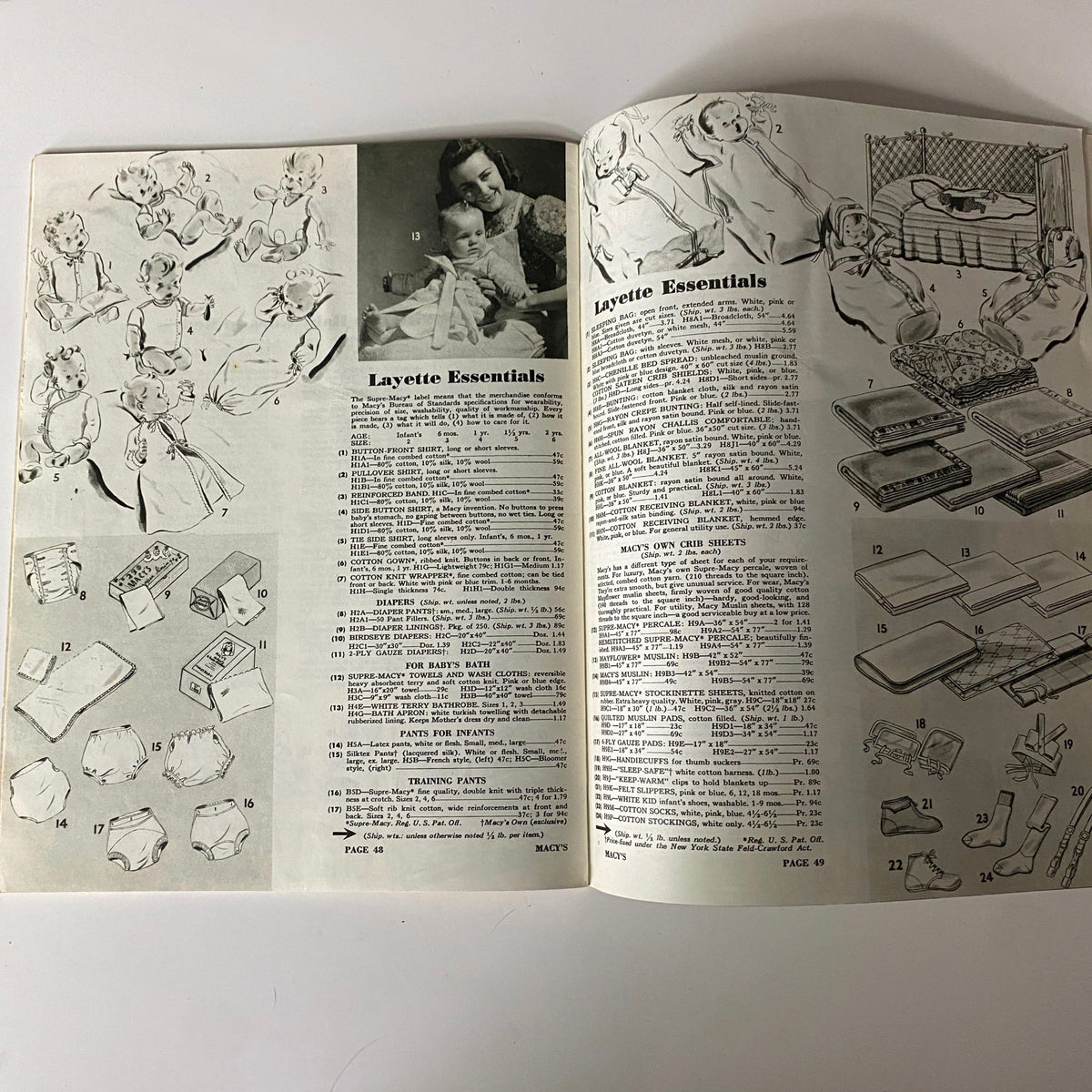
- Comprehensive family catalog from newborns through teens — complete pre-war family consumer documentation — The confirmed coverage from newborn layette items through high school teen fashions documents the complete American family consumer range in the spring-summer of 1941, providing primary evidence of how Macy's was defining and serving each life-stage demographic within its family customer base at the last pre-war retail moment.
- Bicycles, radios, picnic sets, camp cots — household and outdoor goods in pre-war abundance — The confirmed non-clothing merchandise documentation preserves primary evidence of the specific household and outdoor consumer goods available to American families in the spring-summer of 1941, before wartime rationing and production redirection had constrained the civilian consumer market, making this catalog primary documentation of pre-war American material abundance at its last full expression.
- High School Crowd teen fashions — adolescent consumer market in 1941 documented — The confirmed teen-focused section documents the specific fashion and lifestyle goods being offered to the American adolescent consumer in the spring-summer of 1941, preserving primary evidence of how Macy's was defining and targeting the teenage demographic at the moment before the war's demographic and social disruptions reshaped the American high school experience.
- Coordinated sister sets and toddler beachwear — early-1940s children's fashion preserved — The confirmed coordinated sister sets and toddler beach and play clothing preserve primary commercial evidence of early-1940s American children's fashion in Macy's specific institutional voice, documenting the design vocabulary, pricing, and marketing language through which the country's most prestigious department store was presenting children's clothing to its family customer base in spring-summer 1941.
Condition & Rarity
This catalog is described as being in good condition, protected by a plastic covering, with the listing confirming that the photographed item is exactly what will be received and directing condition assessment to the accompanying photographs — the appropriate approach for a publication now eighty-five years old. For a consumer catalog of this age that was produced for practical family use rather than archival preservation, good condition represents an unusually well-maintained survivor of a publication category that the passage of more than eight decades has treated with consistent attrition. The wartime paper quality considerations that would affect 1942 and later publications are not yet operative in a spring-summer 1941 catalog — this is a pre-war publication produced with full peacetime paper quality standards, giving it a structural durability advantage over its immediate successors that is itself historically significant. The plastic protective covering indicates intentional preservation care, correlating with better overall physical stability than unprotected copies stored under comparable conditions over eighty-five years. Macy's Youth Centre specialty catalogs from the pre-war era are specifically uncommon in the collector and research market, their survival rates limited by the combination of their active use as family shopping references, eight decades of storage attrition, and the absence of any systematic institutional preservation effort for consumer retail publications of this type.
Looking for More Issues Like This?
Macy's pre-war specialty catalogs — and particularly this spring-summer 1941 Youth Centre edition with its confirmed Mother and Daughter matching sets, comprehensive family merchandise range, and non-clothing household goods documentation — are sought by American retail historians, early-1940s consumer culture researchers, children's fashion collectors, and pre-war Americana enthusiasts who recognize these publications as irreplaceable primary documents of American family domestic life at its last fully peacetime expression. If this 1941 Youth Centre catalog is no longer available, the Macy's catalog collection at OriginalMagazines.com is the most focused resource for exploring what else has surfaced from the retailer's historical publishing record across its full span of catalog production. For collectors building a broader documentary record of American consumer life, family culture, and retail history in the final year before Pearl Harbor transformed everything, the 1941 magazines collection brings together a wide range of primary source material from that historically poignant and consequential year.