





Description
Collector's Note – Why This Issue Matters
The 1945–1946 Sears Supplemental Fall and Winter General Catalog arrived at one of the most consequential transitions in American consumer history. The Second World War had ended in August and September of 1945, and the American economy was beginning the complex process of converting from wartime production back to peacetime consumer goods manufacturing. For the millions of American families who depended on the Sears catalog as their primary access to clothing, household goods, and practical merchandise, a fall and winter catalog published at precisely this moment was a document of that transition in real time — showing what was available, what remained constrained by lingering wartime material limitations, and what the postwar consumer economy was beginning to look like. The "supplemental" designation indicates this was an additional catalog beyond the main seasonal editions, suggesting a postwar burst of new merchandise availability that warranted a standalone publication. Sears catalog archive across the mid-1940s is a primary source record of American material culture during one of its most historically significant transitions, and the 1945–1946 fall and winter supplement occupies a specific and unrepeatable position within that record.
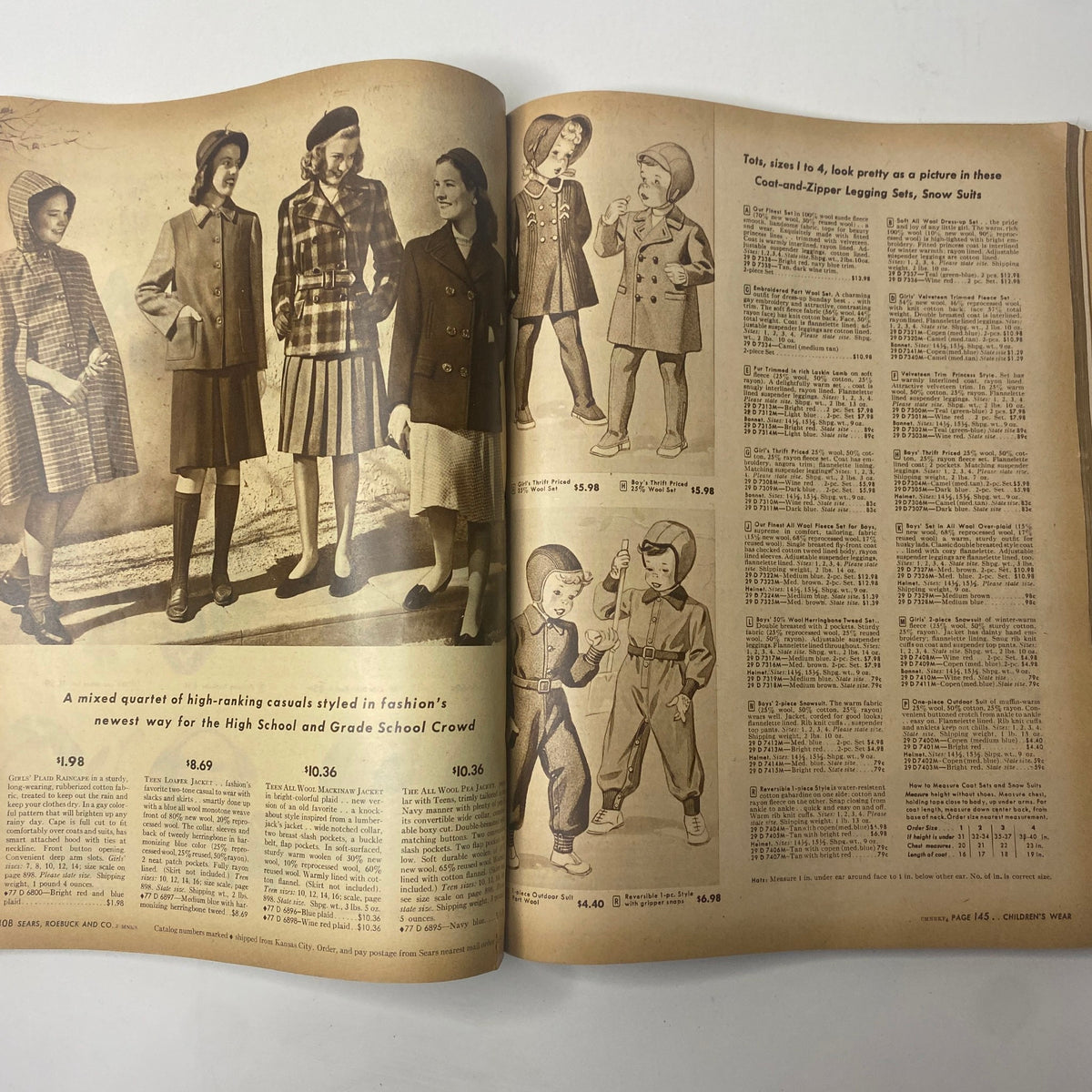
The catalog's emphasis on children's apparel — "long-wearing, hardy styles" for "active kids," jackets and overalls designed for durability and practicality — reflects the specific material culture of the immediate postwar period with precision. Wartime had imposed real constraints on American clothing production, with fabric allocations, simplified designs, and the elimination of decorative elements that were deemed non-essential to the war effort. The fall and winter of 1945–1946 was the first season when those constraints were beginning to lift, and the Sears catalog's offerings document exactly what "practical and durable" looked like in children's clothing at that specific moment — before the full flowering of postwar consumer abundance, but after the most severe wartime restrictions. For costume historians, textile researchers, and collectors of mid-century American material culture, this catalog is a primary source of unusual specificity. The broader publication landscape of 1945 captures the final year of the war and the beginning of its aftermath — one of the most historically charged transitions of the twentieth century — and the Sears supplemental catalog documents the consumer dimension of that transition with a directness that more editorial publications rarely achieve.
About the Publication
The Sears, Roebuck and Company general catalog was one of the most widely distributed publications in American history, circulated to millions of households across the country from its founding in 1888 through its discontinuation of the general catalog in 1993. Its fall and winter editions were among the most anticipated publications of the year, serving as the primary shopping reference for rural and working-class American families who lacked access to urban department stores. Supplemental catalogs, issued between the main seasonal editions, typically addressed specific merchandise categories or responded to new inventory availability. The mid-1940s catalogs occupy a specific position in the Sears archive as documents of wartime and immediate postwar consumer culture, showing the progression from wartime austerity to postwar abundance across multiple categories of American household goods and clothing.
Key Highlights Inside
- Children's clothing at the wartime-to-peacetime transition. "Long-wearing, hardy styles" in jackets, overalls, and practical children's apparel designed for durability — a precise document of how American children's clothing manufacturing was transitioning from wartime material constraints to postwar consumer production in the fall and winter of 1945–1946.
- Supplemental catalog format documenting postwar merchandise availability. The supplemental designation suggests new inventory availability warranting publication outside the standard seasonal schedule — making this catalog a document of the postwar production surge that followed the end of wartime manufacturing restrictions.
- Original period illustrations and advertisements. Sears catalog illustrations from this era are significant primary sources for the visual culture of mid-century American commercial art, documenting the specific aesthetic conventions of postwar retail imagery at a moment of genuine cultural transition.
- Consumer pricing and product specifications from 1945–1946. As a mail-order catalog, this publication documents the actual retail prices, available sizes, fabric specifications, and product descriptions of American children's clothing at a specific and historically bounded moment — primary source material for economic historians and costume researchers.
Condition & Rarity
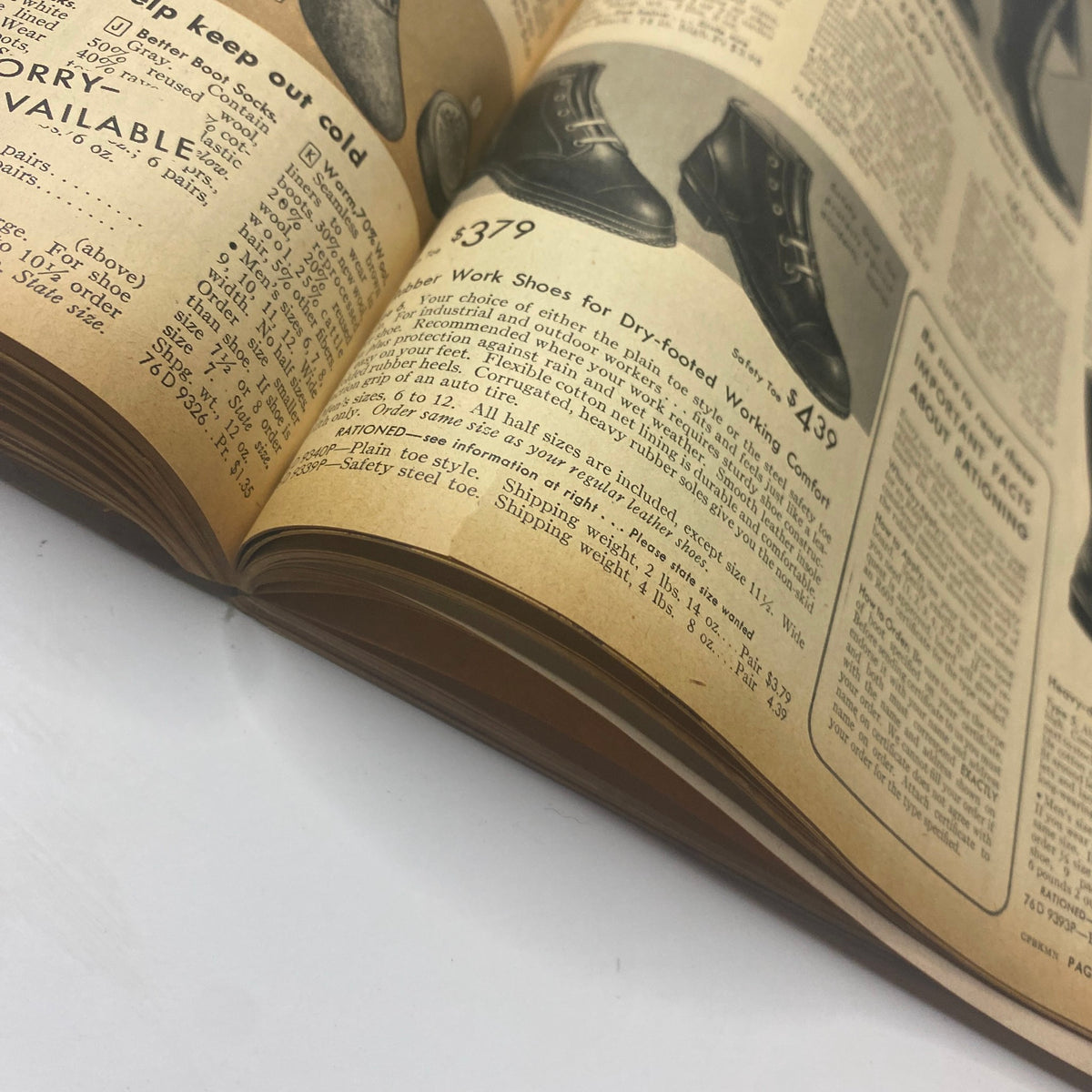
The listing describes this catalog as in acceptable condition with visible creases and wear on the cover and interior pages, while remaining intact and completely readable, with protective plastic covering. For a document now eighty years old, acceptable condition with complete readability is an honest and meaningful assessment — Sears catalogs from the mid-1940s were produced as working household reference documents rather than archival publications, printed on paper stock that prioritized cost over longevity. Creases and cover wear are expected and characteristic of catalogs that were actively used for their intended purpose of household shopping reference. The critical condition factor for research and collector purposes is page completeness and readability, which the listing confirms. Protective plastic covering indicates preservation intent. Supplemental catalogs were produced in smaller quantities than the main seasonal editions and distributed to a more limited audience, making specific supplemental numbers from this period less commonly encountered in the collector market than the main fall and winter general catalogs.
Looking for More Issues Like This?
A 1945–1946 Sears Supplemental Fall and Winter Catalog in readable condition is a specific and historically significant find for collectors of American material culture, costume historians, and researchers of the immediate postwar consumer economy. The Sears catalog collection at OriginalMagazines.com is the most comprehensive place to browse for other issues spanning the catalog's long publishing history, including additional mid-1940s editions from this remarkable transitional period. For collectors building a broader picture of the American publication landscape at the end of the war and the beginning of the postwar era, the 1945 magazine and catalog collection covers the full range of publications from that extraordinary year.