


Description
Collector's Note – Why This Issue Matters
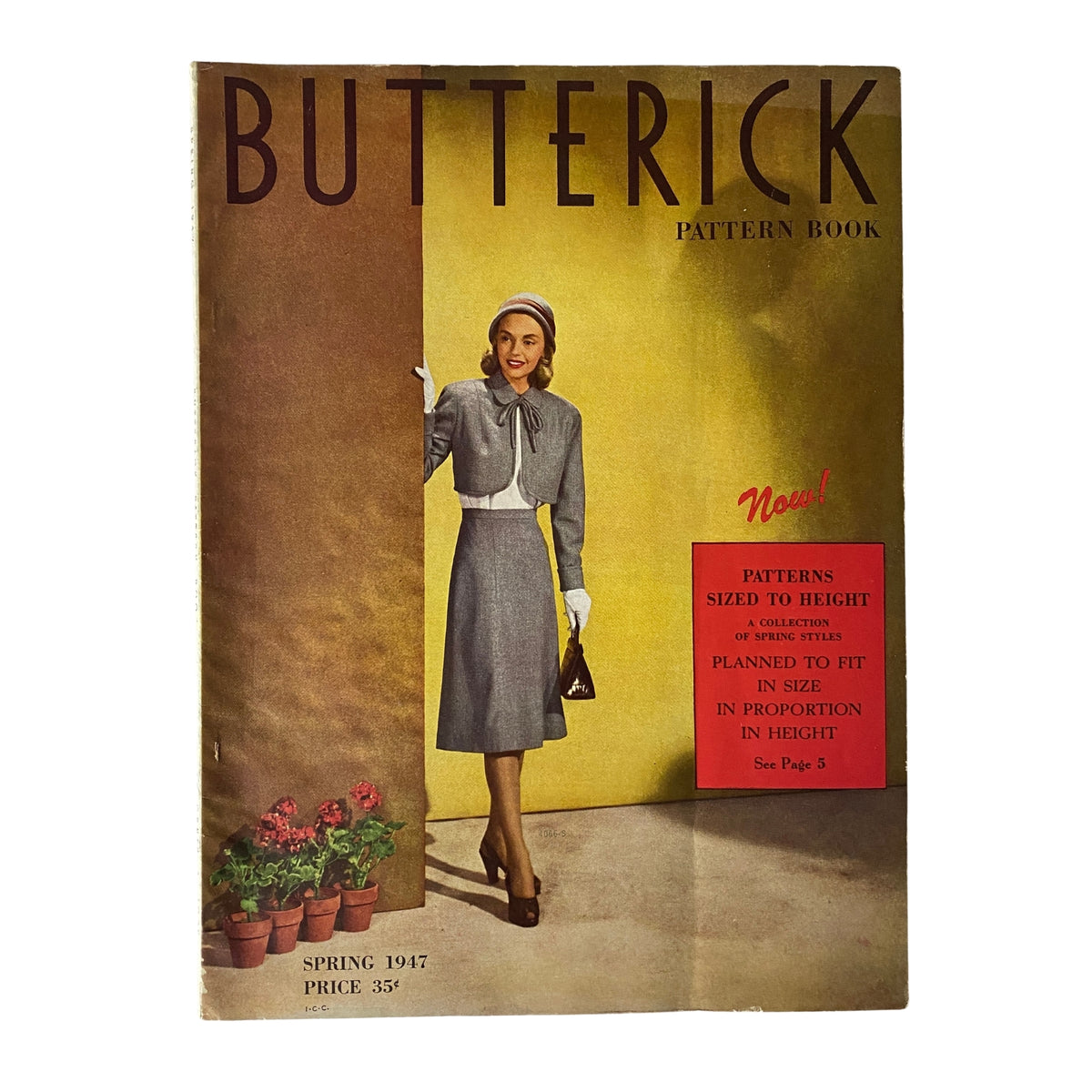
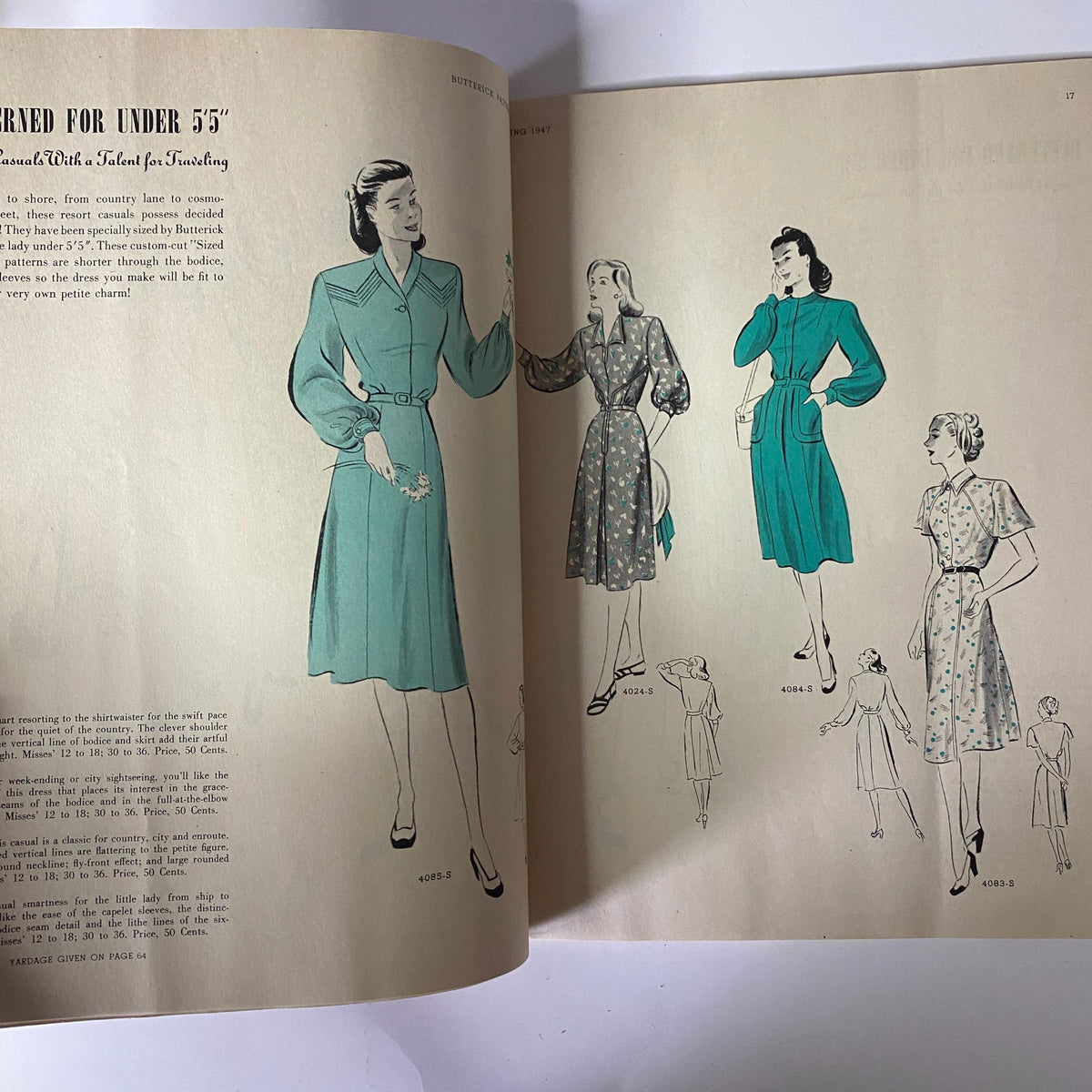
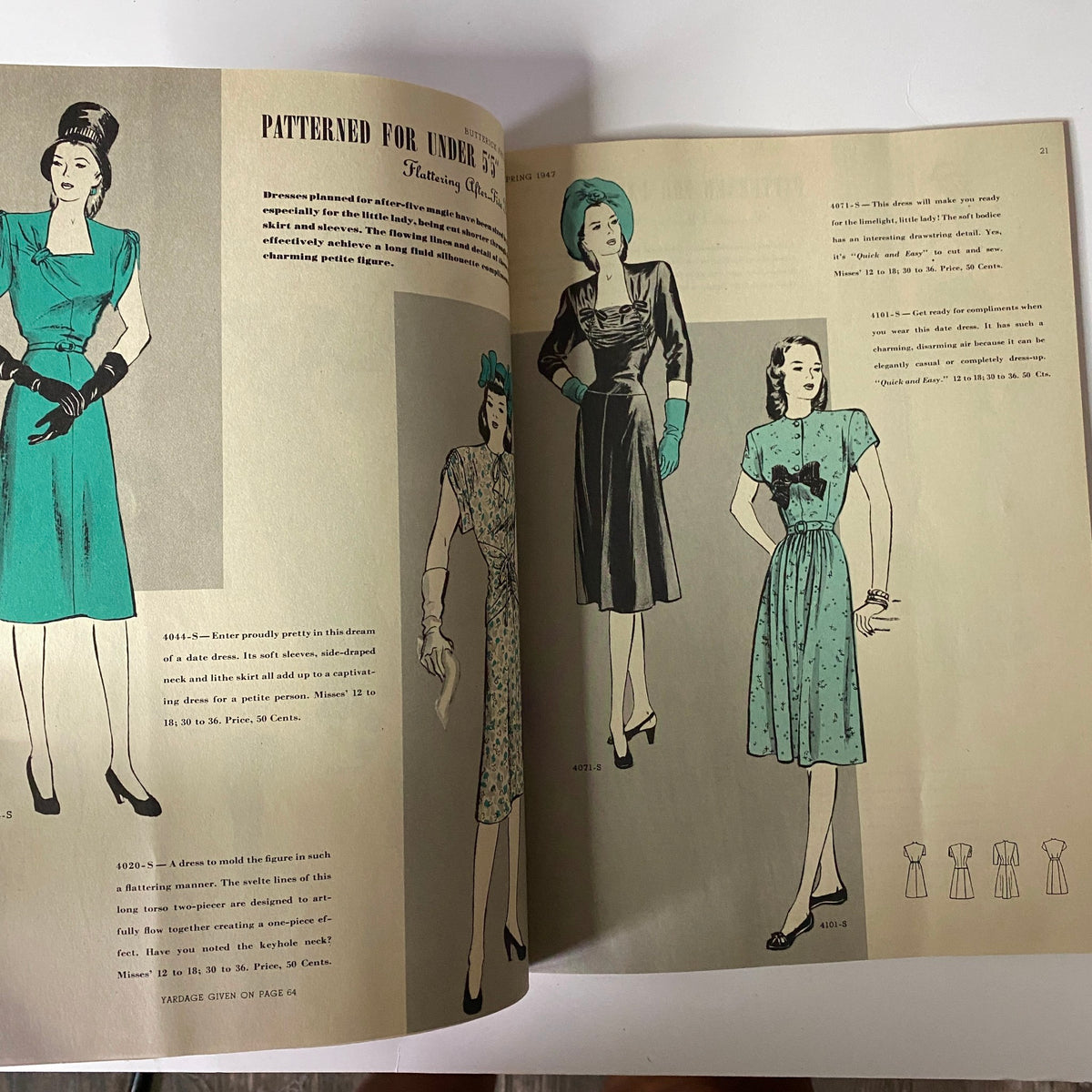
This 1947 Butterick Spring Pattern Book Catalog documents a specific and notable innovation within postwar home sewing pattern design: the "Sized to Height" casual line, developed specifically for women under 5'5" tall. This kind of height-specific sizing addressed a genuine and longstanding frustration within standard garment sizing systems, which historically assumed a single proportional relationship between bust, waist, and overall body length regardless of a woman's actual height. By offering patterns specifically proportioned for petite women, Butterick was addressing a real gap in the home sewing market, allowing shorter women to achieve better-fitting garments without the extensive alterations standard-sized patterns typically required. This catalog's three featured patterns, a sailor-collared casual dress, a bias-draped bodice design, and a form-fitting sheath dress with a wrap-peaked yoke, each priced at fifty cents, offer a specific and well-documented snapshot of how this petite-focused design innovation was being marketed to home sewers in the immediate postwar period.
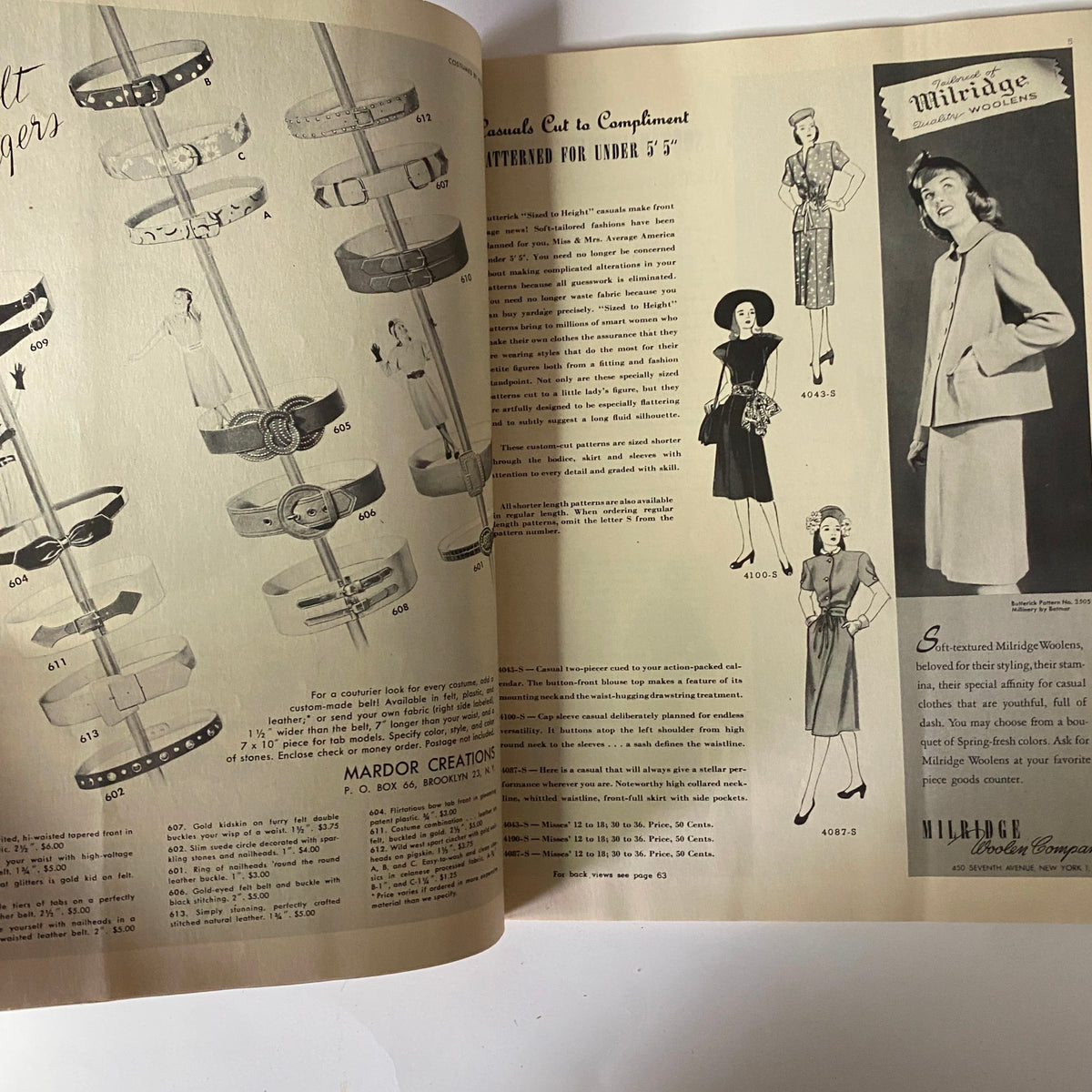
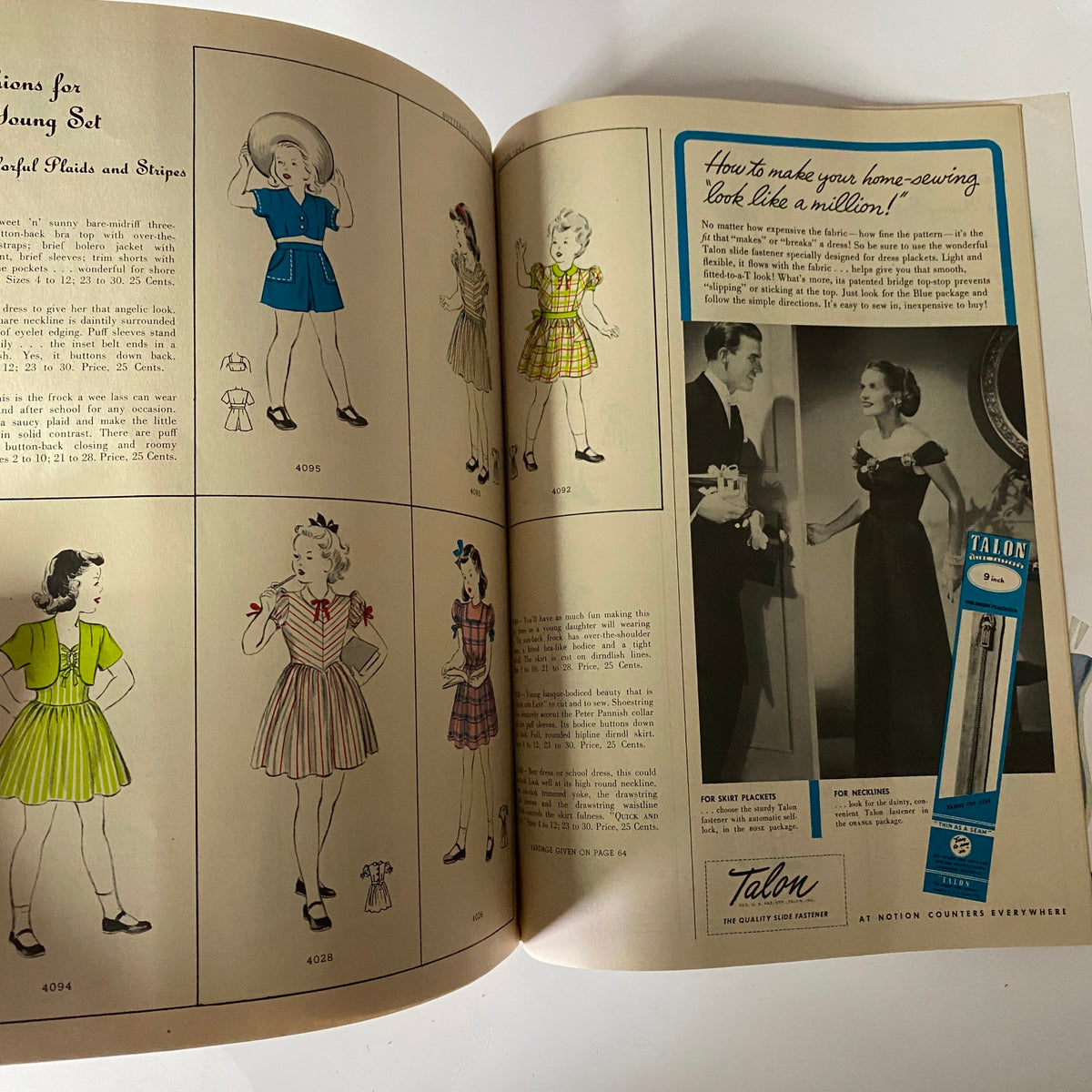
The catalog's inclusion of advertising from Mardor Creations, a Brooklyn-based custom leather belt maker, and the Milridge Woolen Company, a New York textile manufacturer, reflects the broader commercial ecosystem that supported home sewing as a significant category of American consumer activity during this period. Mardor Creations' offering of couture-style accessories specifically tailored for home sewers, including leaf-stitched belts, western-style hand-laced designs, and customizable options using a customer's own fabric, illustrates how smaller specialty manufacturers built businesses around supplying the home sewing market with professional-quality finishing details that complemented Butterick's pattern designs. The detailed pricing structure, ranging from one dollar to two dollars and fifty cents depending on materials and customization, alongside specific sizing from 22 to 36 inches, offers genuine documented insight into the period's accessory pricing and consumer options.
The postwar period represented a significant transitional moment for American home sewing more broadly, as fabric availability improved considerably following the end of wartime textile rationing, allowing pattern companies like Butterick to expand their seasonal offerings with greater design ambition than had been possible during the war years. The Milridge Woolens advertisement, promoting textured woolens specifically marketed for their durability and youthful appearance in fresh seasonal spring colors, reflects this broader postwar return to more varied and abundant textile options for home sewers, who could now access a wider range of fabric choices through local fabric counters than had been available just a few years earlier.
For collectors of vintage sewing patterns, postwar fashion design, or American home craft history, this catalog offers a richly detailed artifact documenting a specific design innovation alongside the broader commercial ecosystem supporting 1940s home sewing culture. It sits within the broader context of 1947 magazines and the documented history of Butterick pattern catalogs more generally.
About the Publication
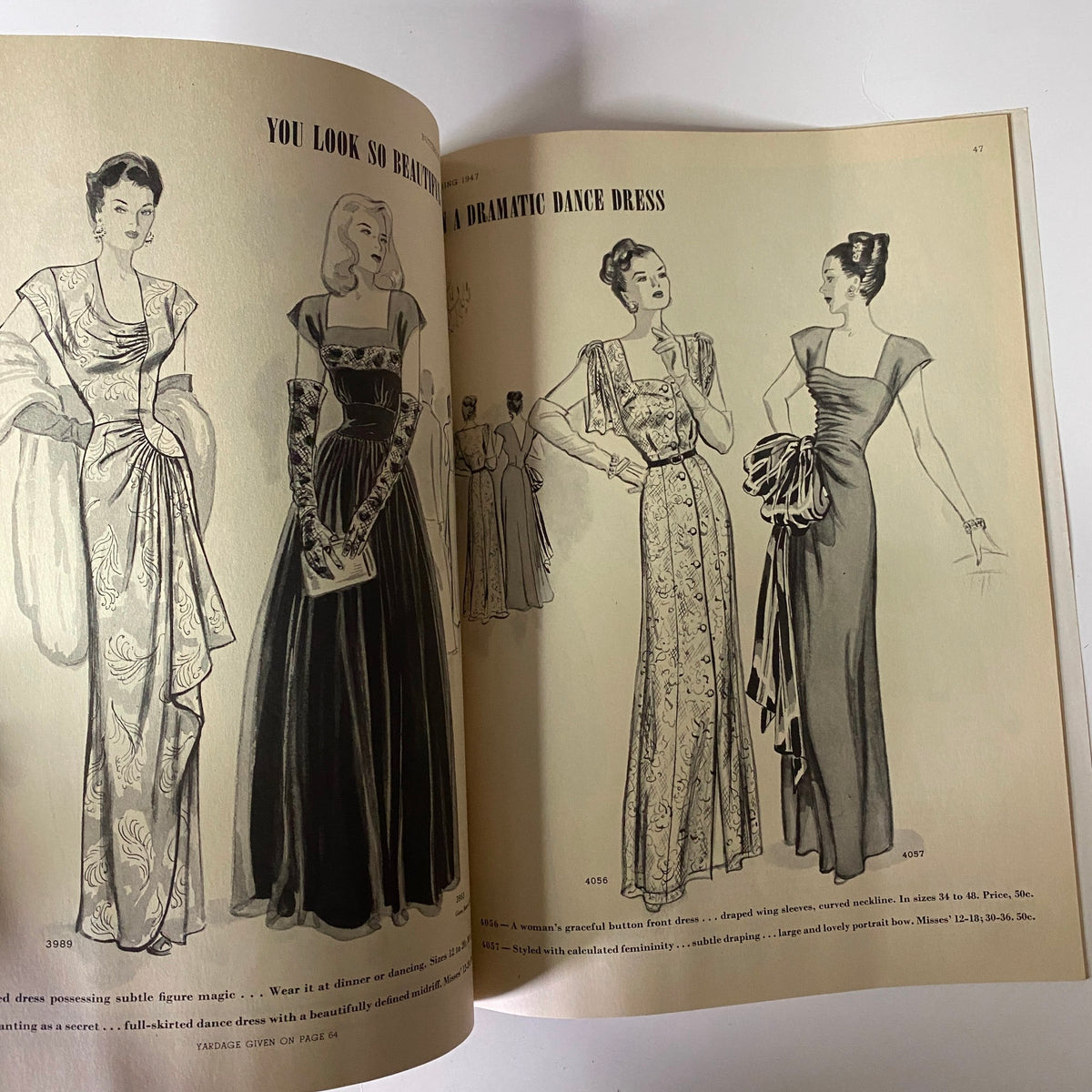
Butterick was one of the pioneering American home sewing pattern companies, having established itself decades before this catalog's publication as a major force in providing standardized, accessible garment patterns to home sewers across the country. The company's seasonal pattern books, including this 1947 Spring edition, presented illustrated pattern offerings alongside detailed sizing information, fabric requirements, and pricing, functioning as both a sales catalog and a design reference for home sewers planning their seasonal wardrobes. By the late 1940s, Butterick had begun addressing more specialized sizing needs within its pattern offerings, reflected directly in this catalog's "Sized to Height" line developed specifically for petite women under 5'5" tall. Pattern catalogs of this type typically included advertising from related accessory and textile businesses, as reflected in this issue's features on Mardor Creations and the Milridge Woolen Company, illustrating the broader commercial network supporting the home sewing industry during this period. The postwar improvement in fabric availability following the end of wartime textile rationing allowed pattern companies like Butterick to expand their seasonal design offerings with renewed ambition. This 1947 Spring catalog reflects that established format during a significant period of postwar growth and innovation within the American home sewing industry.
Key Highlights Inside
- Pattern 4043-S, a casual dress featuring a sailor collar and self-tabbed closure, offered in the "Sized to Height" petite line for Misses' Sizes 12 to 20, priced at fifty cents. This pattern reflects Butterick's specialized petite sizing innovation addressing a genuine gap in standard sizing systems. Its sailor collar detail reflects a popular casual styling element of the postwar period.
- Pattern 4100-S, featuring a bias-draped bodice with shirred shoulder detailing for soft, flattering lines, also offered in petite sizing for fifty cents. This design reflects more advanced draping and construction techniques being made accessible to home sewers. It represents one of three featured "Sized to Height" designs in this catalog edition.
- Pattern 4087-S, a form-fitting sheath dress with a distinctive wrap-peaked yoke, offered in petite sizing for Misses' Sizes 12 to 18 at fifty cents. This pattern reflects a more tailored, fitted silhouette option within the petite line's offerings. Together with the catalog's other two featured patterns, it offers a representative sample of the "Sized to Height" line's design range.
- Advertising from Mardor Creations, a Brooklyn-based maker of custom leather belts offered specifically to home sewers, with styles including leaf-stitched designs, western-style hand-lacing, and domed oval buckles. This advertisement reflects the broader specialty accessory market supporting home sewing during this period. Specific pricing from one dollar to two dollars and fifty cents offers genuine documented insight into period accessory costs.
- Advertising from the Milridge Woolen Company, promoting textured woolens marketed for durability and youthful appearance in fresh spring colors. This advertisement reflects the broader postwar improvement in fabric availability following the end of wartime textile rationing. It situates the catalog within the wider commercial ecosystem supporting home sewing fabric sourcing during this period.
Condition & Rarity
Condition for sewing pattern catalogs of this age and type is generally assessed through paper integrity, binding condition, and the overall legibility and visual clarity of illustrated pattern designs and advertising content. A copy described as good condition reflects a level of preservation that is genuinely solid for ephemera of this kind surviving from the late 1940s, given that pattern catalogs were typically produced as functional reference materials for active home sewing use rather than objects intended for long-term archival retention. Paper stock used for seasonal pattern catalogs of this period was generally not designed with long-term durability in mind, making the survival of any example from this category a fairly specific outcome among vintage sewing ephemera. A protective plastic covering plays a meaningful role in halting further deterioration, guarding against additional humidity exposure and handling wear going forward. Given that pattern catalogs of this kind were frequently used as active sewing references and were not generally retained with collecting in mind, surviving examples documenting specific design innovations like the "Sized to Height" line represent a genuinely specific category of vintage sewing and fashion ephemera. Collectors evaluating any surviving copy of this catalog should weigh overall structural completeness and the legibility of its illustrated pattern and advertising content as the primary indicators of long-term collectible and reference value.
Looking for More Issues Like This?
A Butterick Spring catalog from 1947 documenting the specialized "Sized to Height" petite pattern line represents a genuinely specific category of vintage sewing and fashion ephemera, given how few catalogs of this kind have survived in good condition compared to mainstream fashion magazines of the same period. If this exact catalog isn't what you're looking for, the broader Butterick collection spans material from across the company's long publishing history, offering a wider range of seasonal pattern catalogs and design eras for collectors interested in the brand's overall legacy. For those more focused on this specific year, the full range of 1947 magazines brings together material from across that year, spanning multiple publications beyond sewing pattern catalogs alone. Browsing the Butterick collection can be especially useful for collectors building a set around specific design innovations like petite sizing or specific decades of the company's pattern history. Browsing by year, on the other hand, suits collectors more interested in capturing a broader cultural snapshot of 1947 across different types of periodicals and ephemera. Either approach offers a practical way to continue exploring material connected to this catalog's particular combination of design and era. Both collections represent solid starting points for finding comparable items from this period in American home sewing history.