
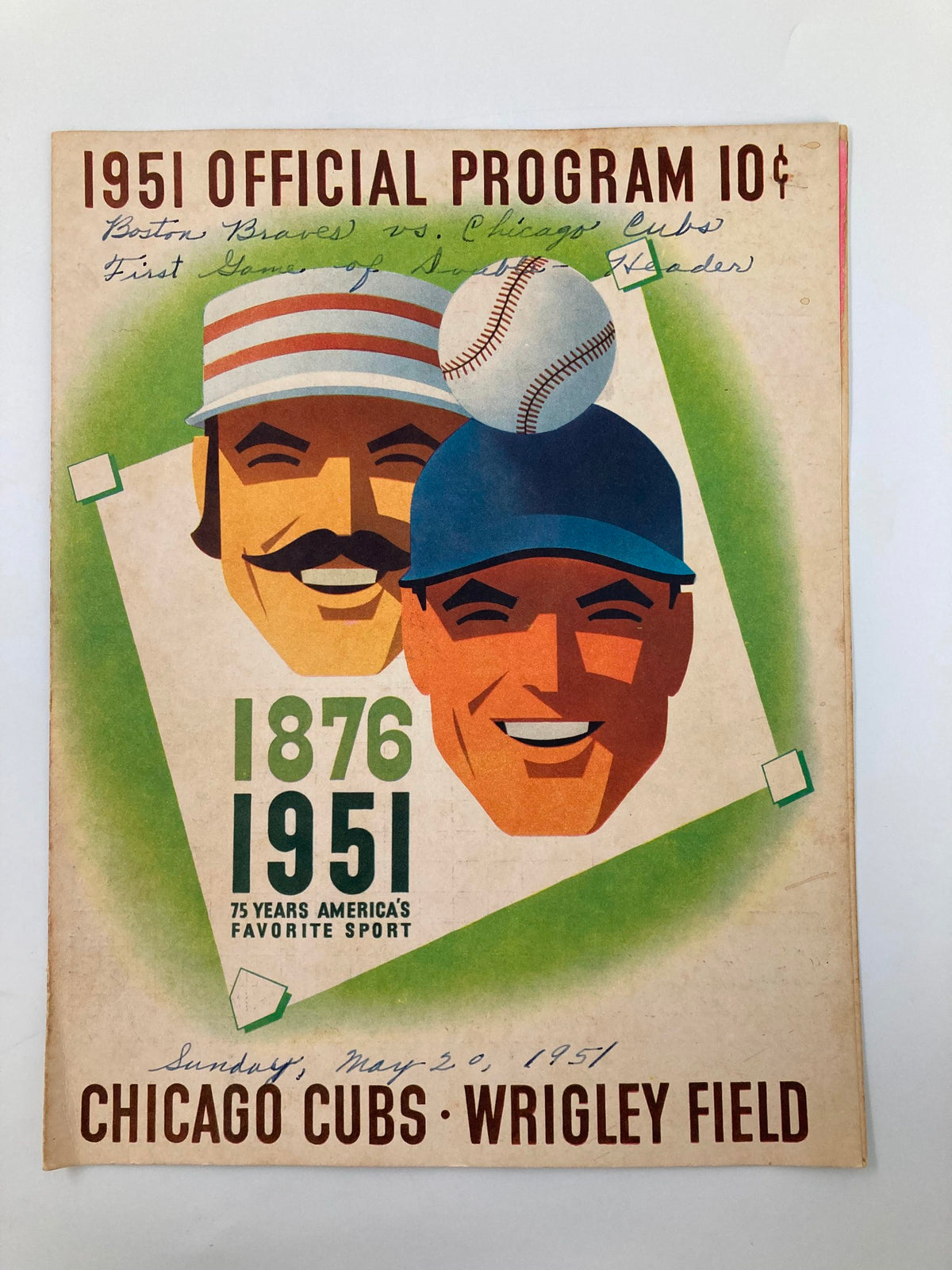


Description
Collector's Note – Why This Issue Matters
The 1951 official program for a Chicago Cubs versus Boston Red Sox game is a primary document of Major League Baseball at one of the most historically interesting moments in the sport's postwar development — a season when the game was undergoing fundamental transformations whose full implications were still working themselves out in real time. The 1951 season was Jackie Robinson's fifth year in the major leagues, and the integration of baseball that had begun with his 1947 debut was proceeding, however slowly and unevenly, across more franchises. The season produced one of the most dramatic finishes in baseball history: the Bobby Thomson "Shot Heard 'Round the World" on October 3, 1951, when the New York Giants' Thomson hit a walk-off three-run homer off the Brooklyn Dodgers' Ralph Branca to win the National League pennant in the third game of a three-game playoff — a moment that produced what is often called the most famous radio call in sports history. It was also the year that Willie Mays made his major league debut with the Giants, interrupting his rookie season for military service before returning to become the central figure in the game's next decade. Against this backdrop, a Cubs-Red Sox matchup was an interleague encounter between two of the sport's most storied and most persistently disappointing franchises — the Cubs had not won a World Series since 1908, the Red Sox since 1918 — but both teams had devoted, passionate fan bases and individual players whose careers are well documented in the primary sources that programs like this one provide. Collectors building an archive of early 1950s Major League Baseball documentation will find the 1951 magazines collection at OriginalMagazines.com a valuable resource for exploring the broader publishing and cultural landscape of this consequential year in American sports history.
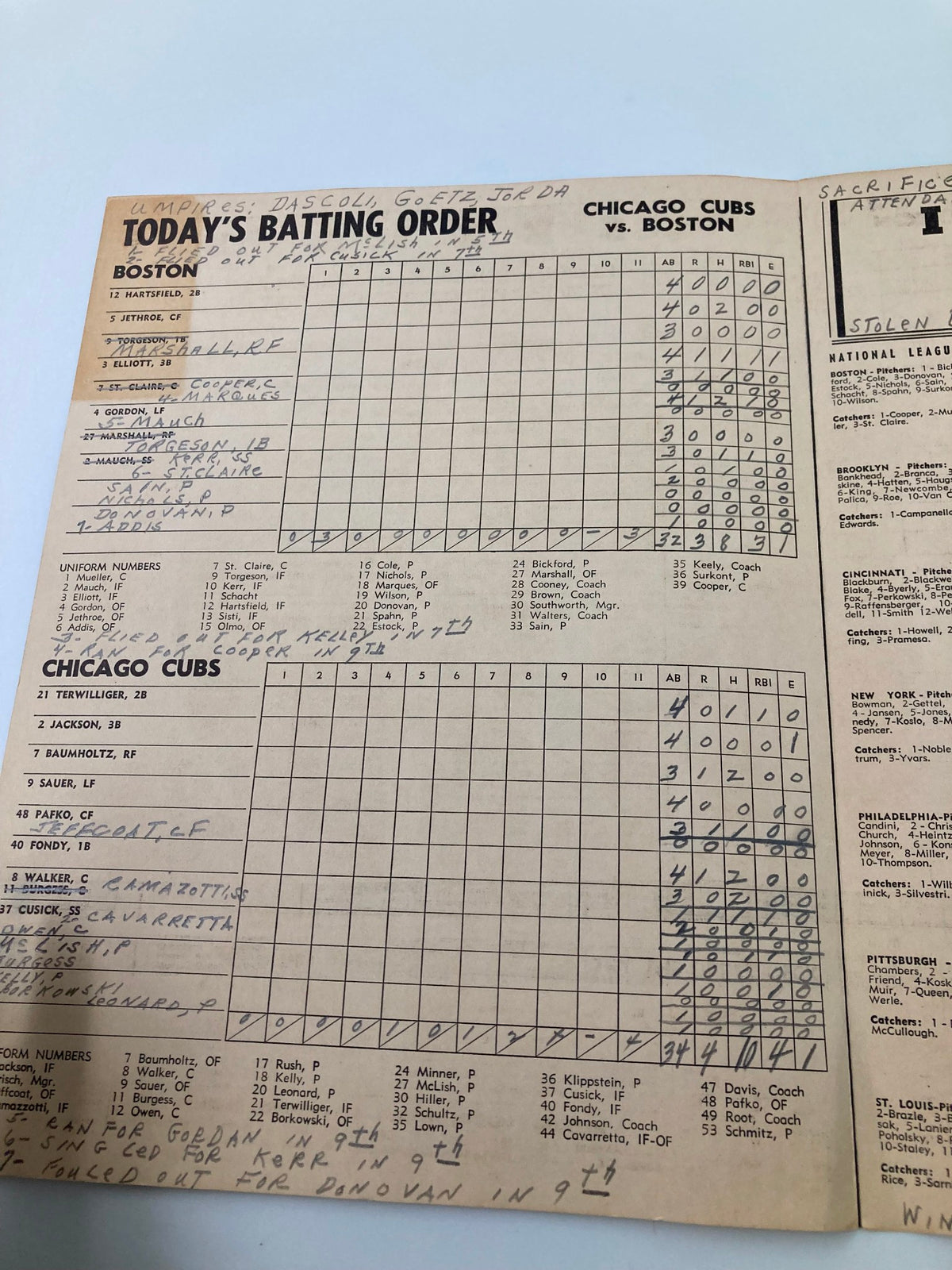
The specific collecting significance of a 1951 Cubs-Red Sox official program is partly a function of what the format itself preserves. Official game programs from this era recorded the active rosters, lineup cards, and jersey numbers of the players who appeared in each game — primary source information that is often unavailable in any other surviving document at this level of specificity. For historians and collectors tracking the careers of the hundreds of players who passed through major league rosters in the early 1950s — many of them Korean War-era veterans whose playing careers were interrupted or foreshortened by military service, others who were at the beginning or end of careers whose full significance only emerges in retrospect — the roster pages of official programs like this one are irreplaceable documentary resources. The Cubs roster in 1951 included several players of genuine historical interest: Hank Sauer, who would win the National League MVP Award in 1952, was in his first full season with the team. The Red Sox roster featured Ted Williams, who was in the process of leaving for Korea as a Marine aviator — his military service interrupted what would have been the peak years of one of the greatest hitting careers in the sport's history. Whether Williams appears in the lineup of this specific game is a function of its date and his availability, but his presence on the Red Sox roster that season gives any 1951 Red Sox program an automatic connection to one of baseball's most significant figures.
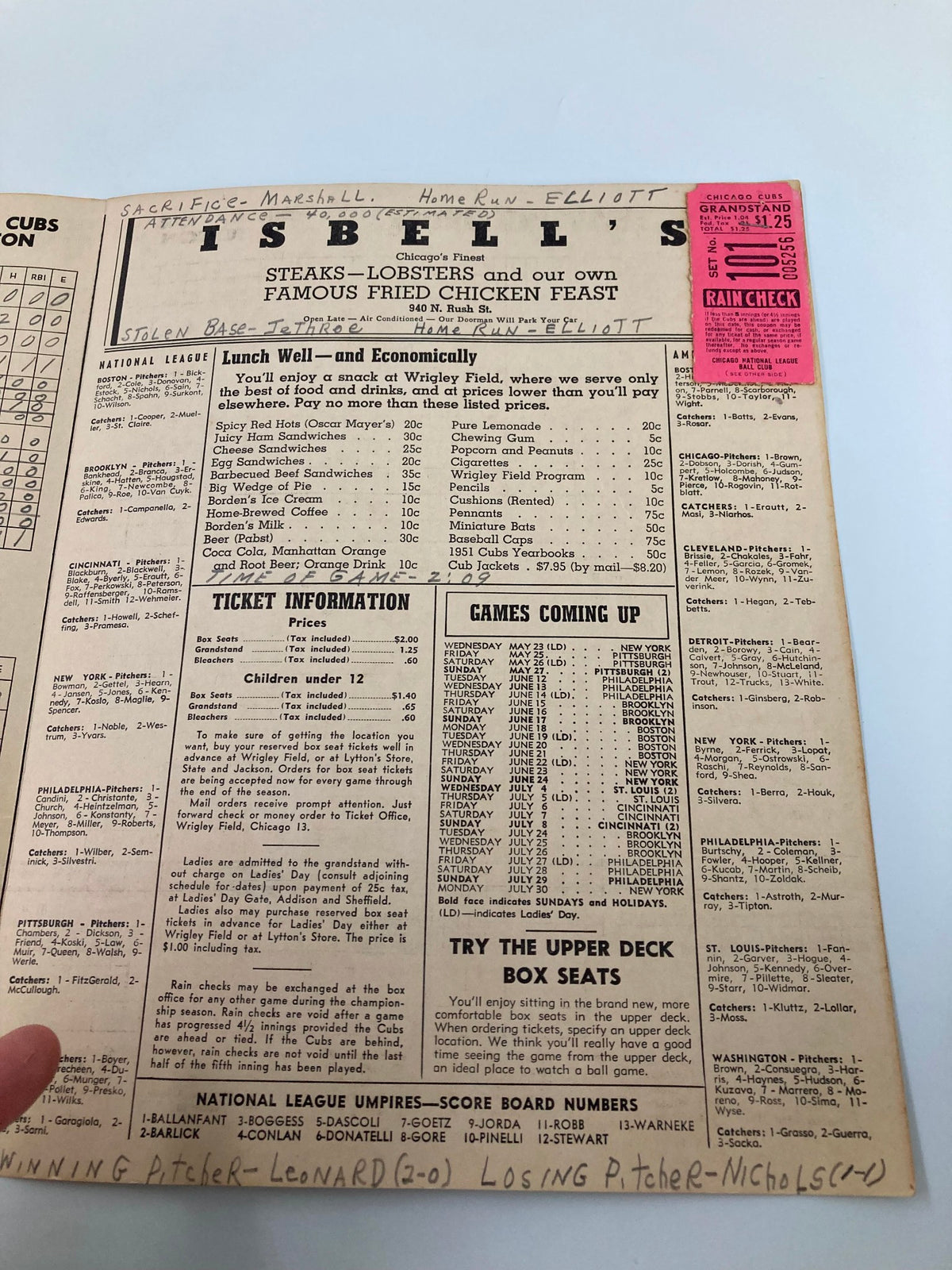
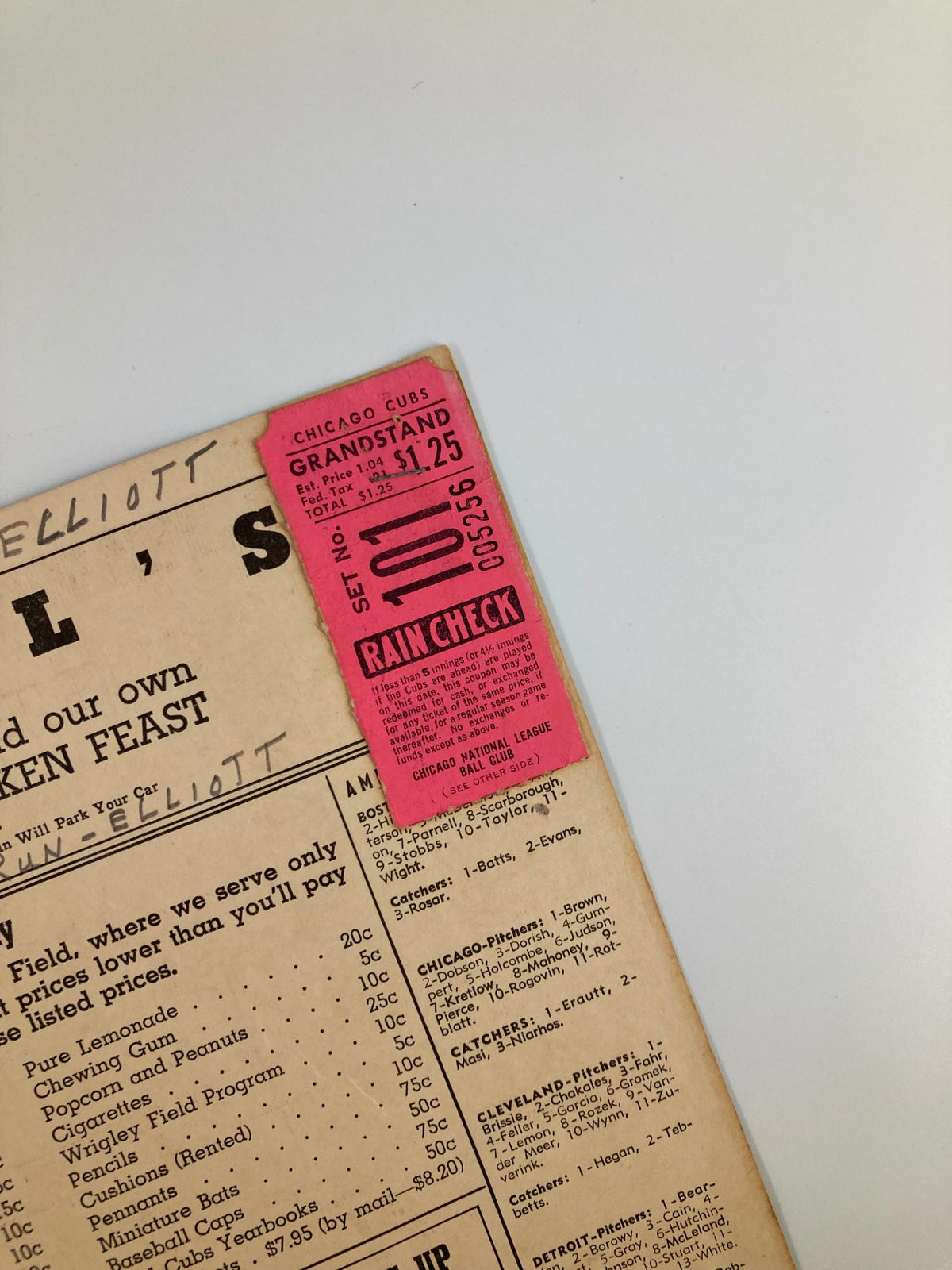
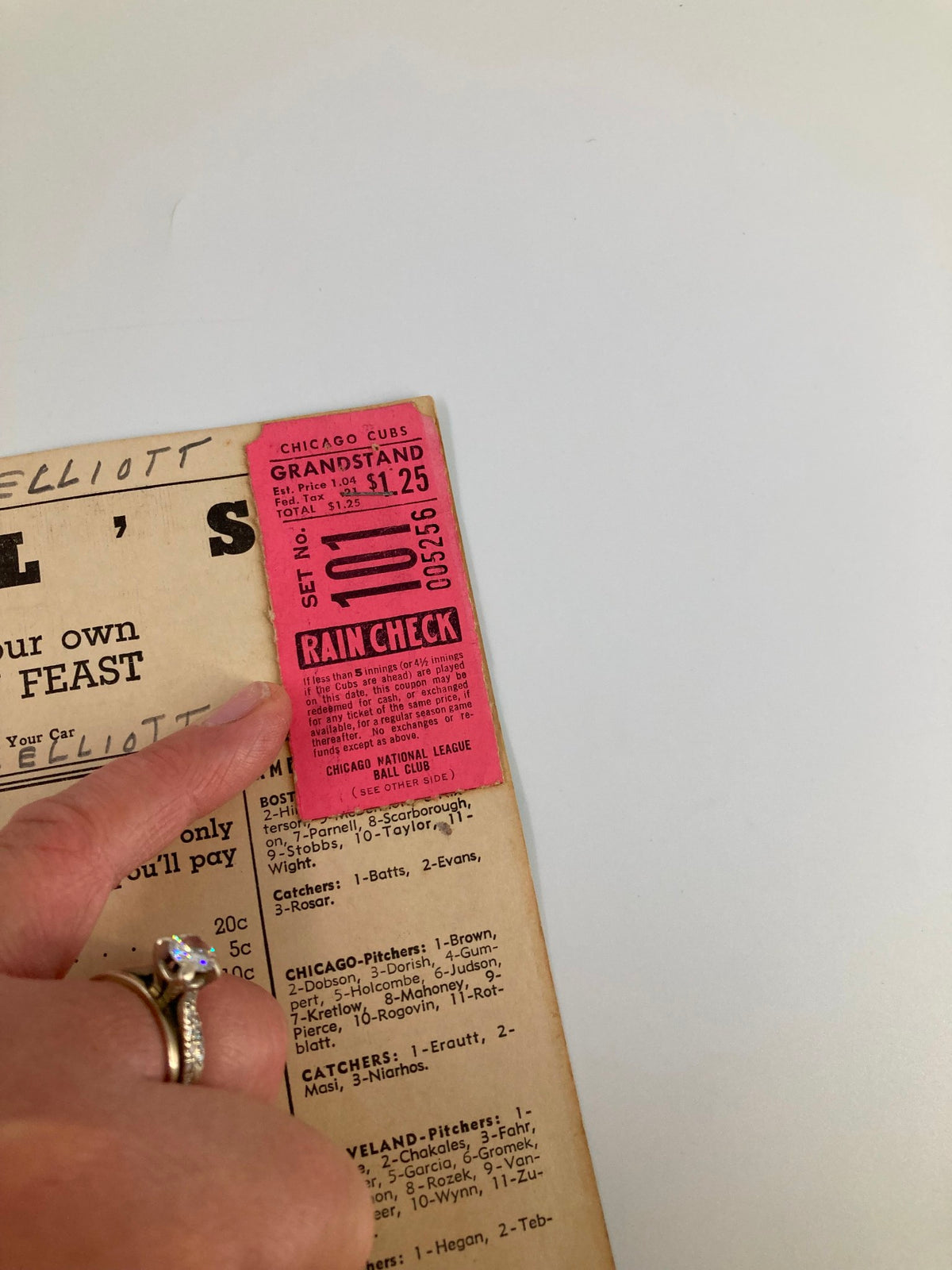
The original ticket stapled to this program is a particularly significant condition and provenance attribute that deserves careful attention from collectors. Surviving original tickets from 1951 Major League Baseball games are themselves collectible objects with their own market, and a ticket still attached to the program with which it was originally distributed represents an extraordinary preservation of the complete game-day experience as a unified artifact. The ticket documents the specific date, seat location, and price of admission for the game this program accompanied — information that anchors the program to a specific moment in a way that undated or undocumented programs cannot claim. For collectors who value provenance and documentary completeness alongside the intrinsic interest of the program's content, the intact original ticket transforms this from a good program into an exceptional one.
About the Publication
Official Major League Baseball game programs of the early 1950s were produced by individual clubs as the primary printed record of each home game, serving simultaneously as souvenirs, lineup references for scorecard-keeping fans, and vehicles for the advertising of local and regional businesses. Their format typically combined roster and lineup information for both teams — the primary research value for later collectors — with historical notes, advertising, and whatever photographic and illustrative content the production budget supported. They were printed in quantities proportional to expected attendance and sold at the ballpark, with no secondary distribution, which means that surviving examples represent a small fraction of the original print run and that their survival is entirely a function of the individual preservation decisions of the fans who bought them on the day of the game.
Key Highlights Inside
- Chicago Cubs vs. Boston Red Sox — 1951 season roster documentation — the primary historical value of this program is its roster and lineup information for both clubs, preserving the names and jersey numbers of the players who participated in this specific game in a primary source format that may not be available in any other surviving document at this level of specificity.
- Original ticket stapled intact — the survival of the original game-day ticket still attached to the program represents an extraordinary preservation of the complete attendee experience as a unified artifact, with the ticket documenting the specific date, price, and seat location for the game and anchoring the program to a verifiable moment in the 1951 season.
- Ted Williams on the 1951 Red Sox roster — the Red Sox roster in 1951 included Ted Williams, whose military service as a Marine aviator interrupted his playing career during this season, giving any 1951 Red Sox program an automatic documentary connection to one of the most significant figures in the history of American baseball.
- Postwar baseball integration era documentation — produced in the fifth year of the post-integration era, this program documents a moment when the racial transformation of the sport was still actively unfolding, making its roster pages a primary source for the demographic composition of both clubs at this specific historical moment.
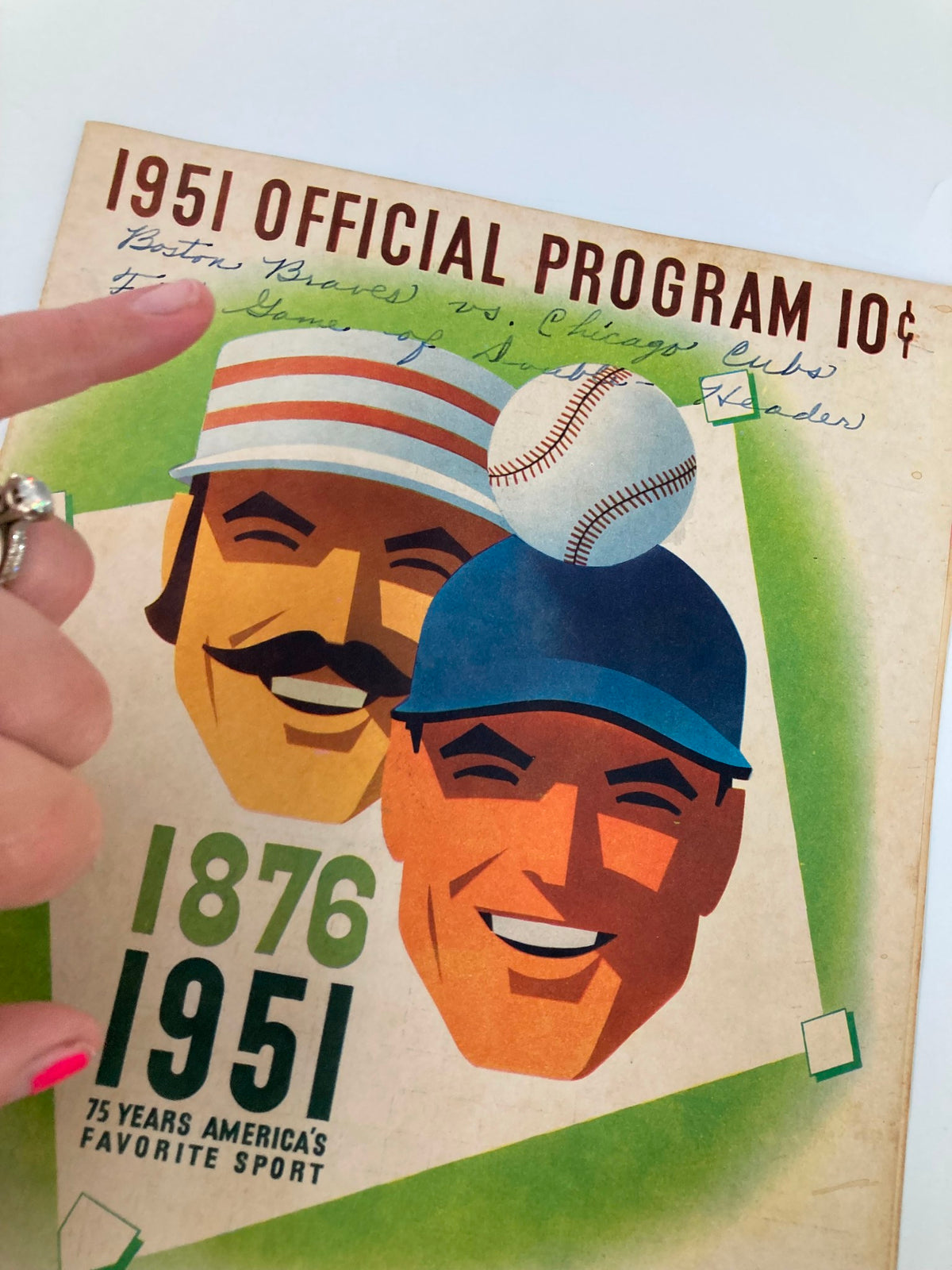
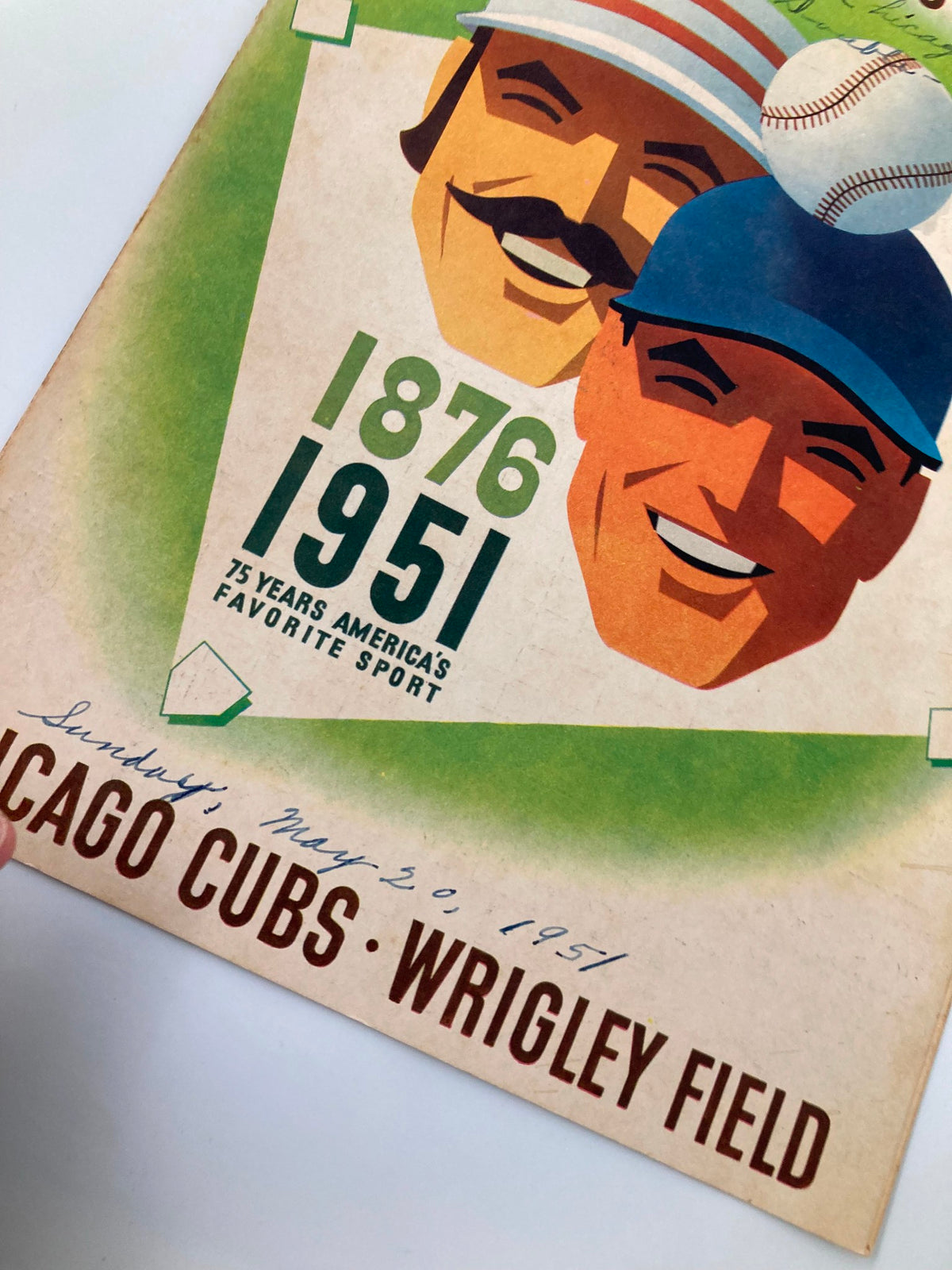
- Writing noted in listing — the presence of some writing, as noted in the listing and visible in the accompanying photographs, may represent original scoring or notations from the game's attendee — context that adds historical interest as documentation of contemporary engagement with the game's events, though the writing's nature and location should be assessed against the photographs.
Condition & Rarity
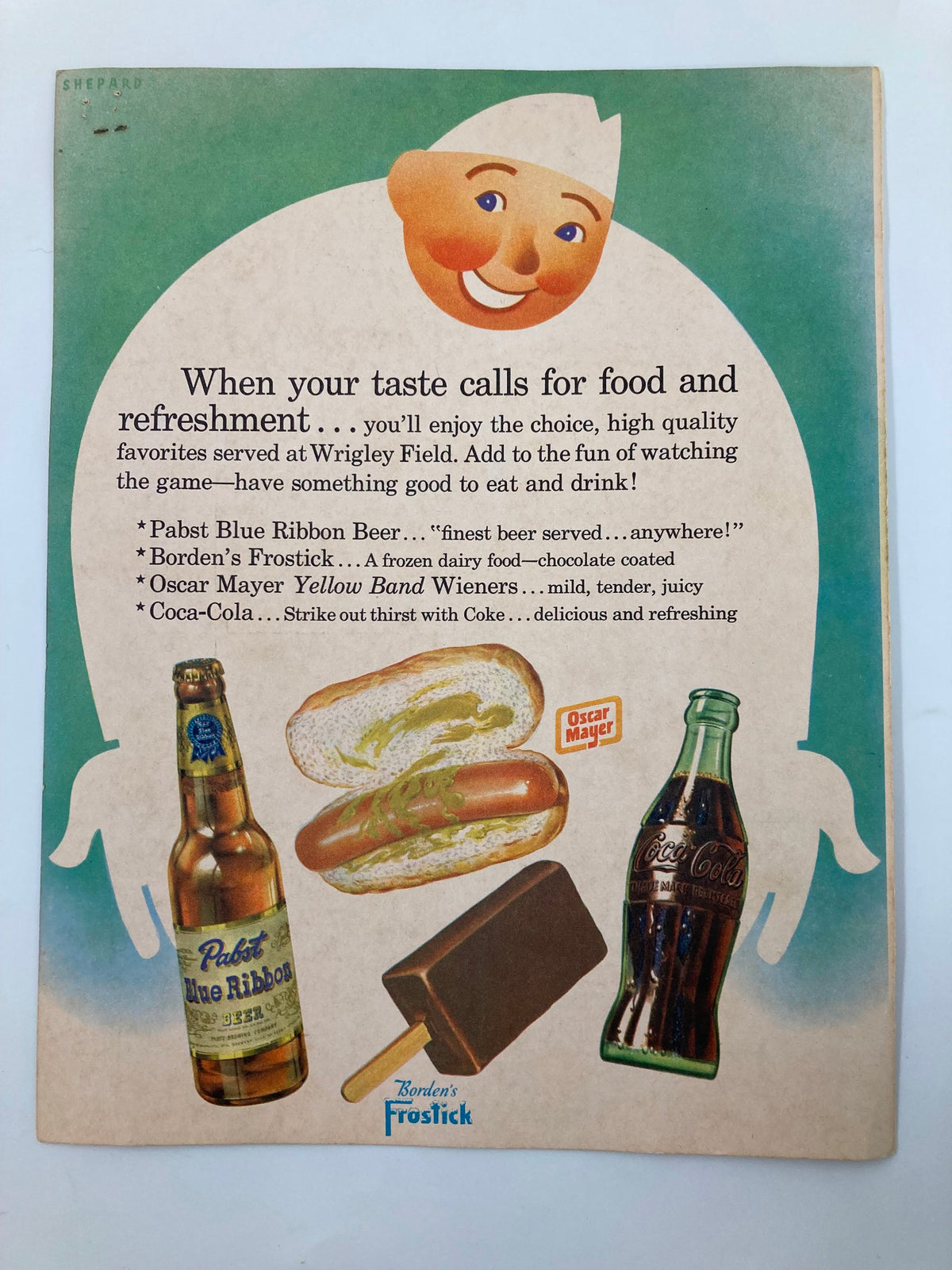
A good condition grade for a seventy-five-year-old single-event baseball program represents a meaningful and honest collector-grade assessment, and the specific condition attributes disclosed in this listing require careful individual evaluation. Minor wear consistent with the program's age is entirely expected — paper stock from early 1950s sports publications has been accumulating the effects of humidity, light, and handling for three-quarters of a century, and light toning, edge wear, and surface marks are the norm rather than the exception for programs that have been in private storage rather than archival conditions. The writing noted in the listing should be assessed against the photographs for its location and extent: handwritten scoring or notes on a game program are historically interesting, while writing that intersects primary content or cover imagery has greater visual and condition consequence. The original ticket still attached by staple is a remarkable provenance attribute that elevates this program's documentary significance considerably — the staple's condition should be assessed for rust or paper damage at the attachment point, but the survival of the ticket itself as an intact unit with the program is far more significant than whatever minor damage the attachment mechanism may have caused. The plastic protective covering indicates deliberate preservation effort.
Looking for More Issues Like This?
Official MLB game programs from the early 1950s — particularly those preserving their original tickets and documenting rosters that include historically significant players — are among the more compelling finds for serious collectors of mid-century American baseball history, and a 1951 Cubs-Red Sox program with an intact original ticket is a particularly complete and documentary example. If you're exploring the full cultural and historical landscape of 1951 — a year that was consequential across American sports, politics, and society — the 1951 magazines collection at OriginalMagazines.com brings together a wide range of publications from this significant year, well worth browsing for any serious collector of the period.