






Description
Collector's Note – Why This Issue Matters
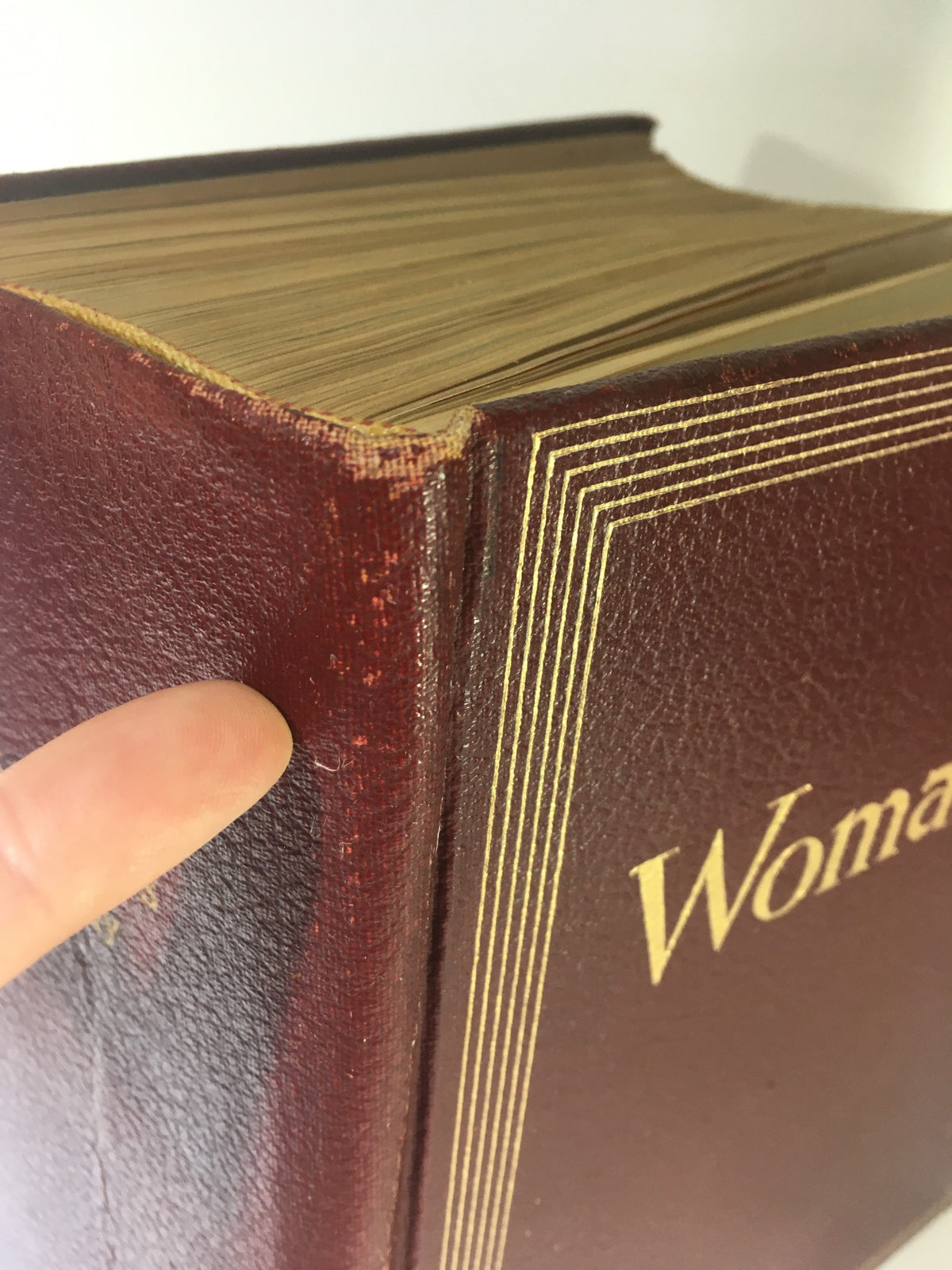
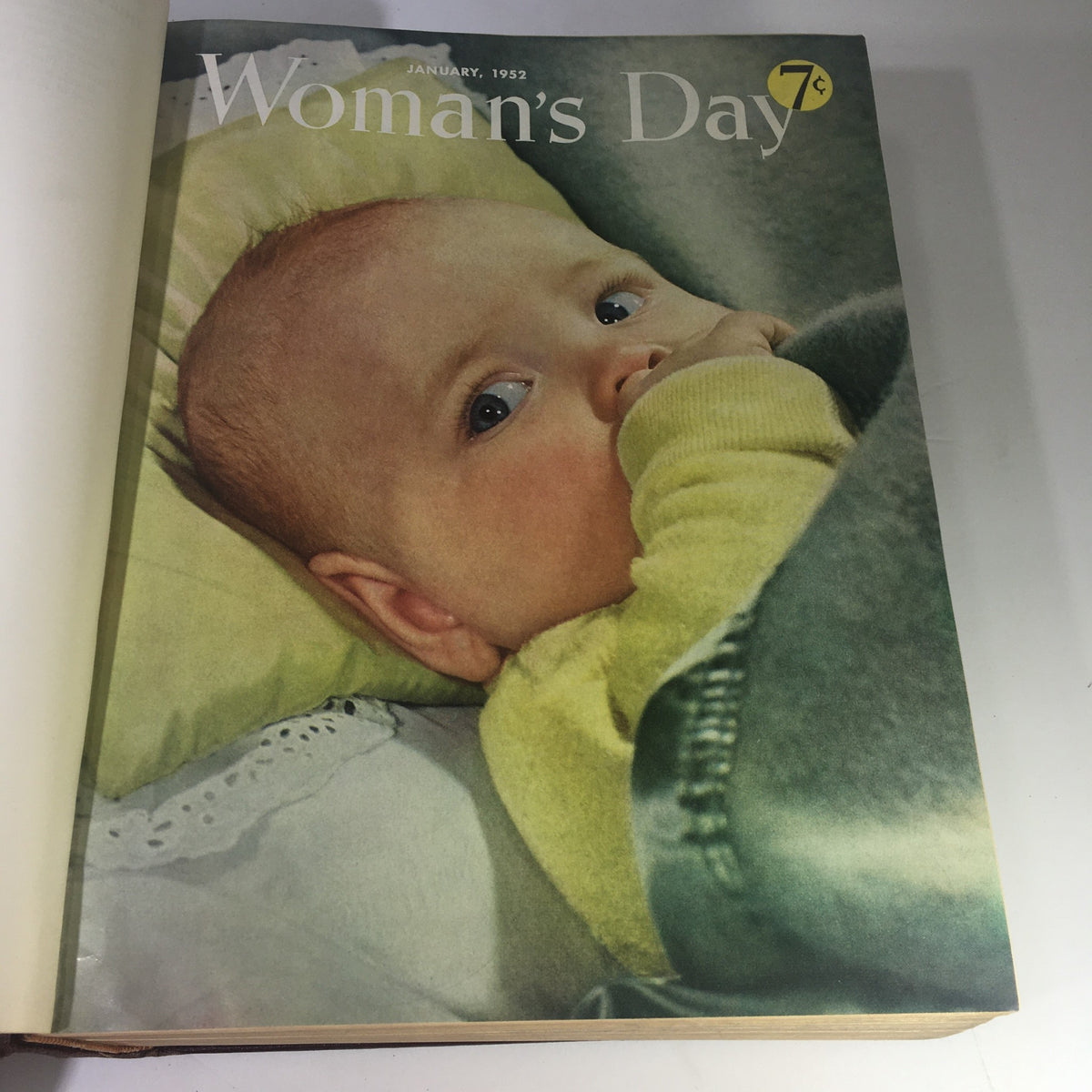
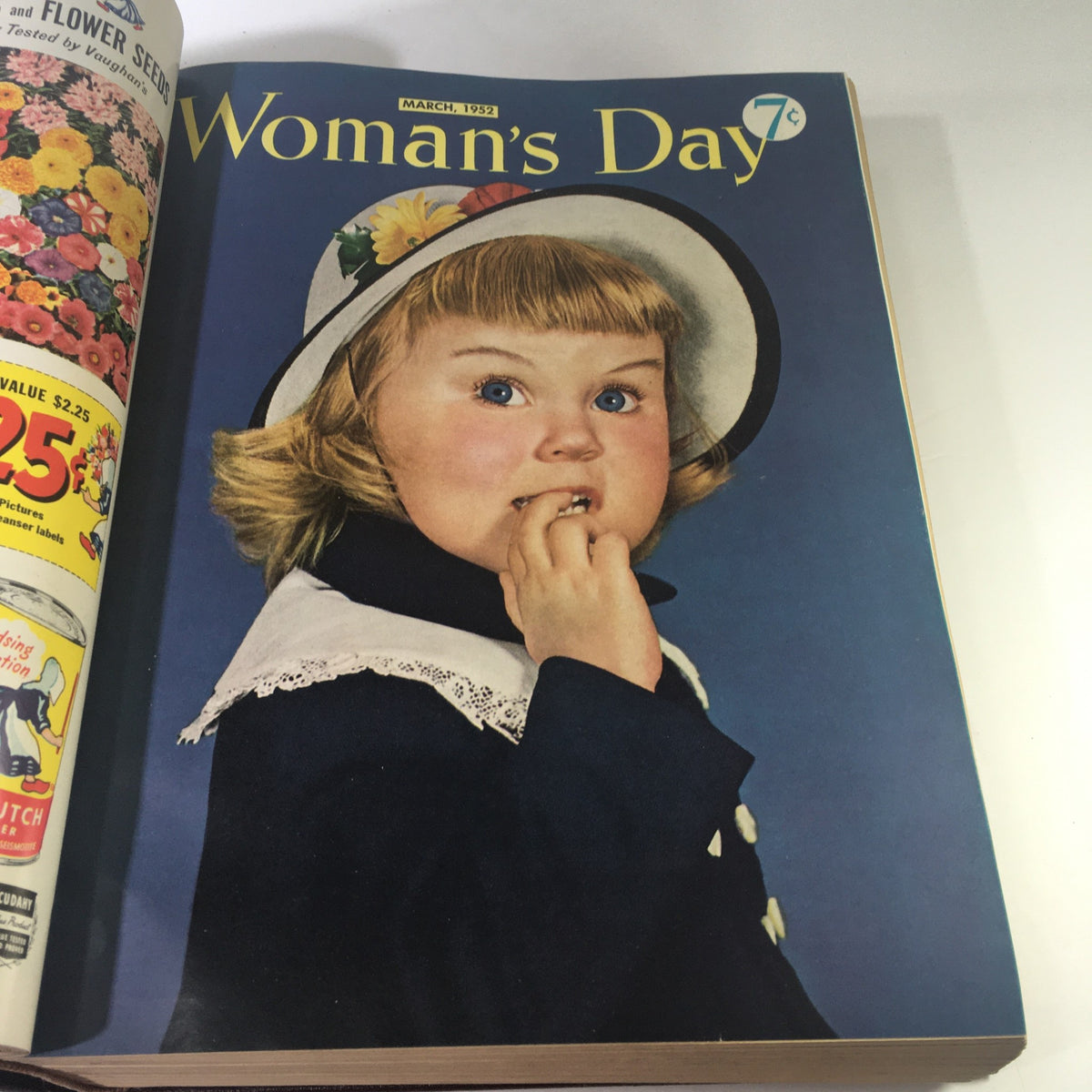
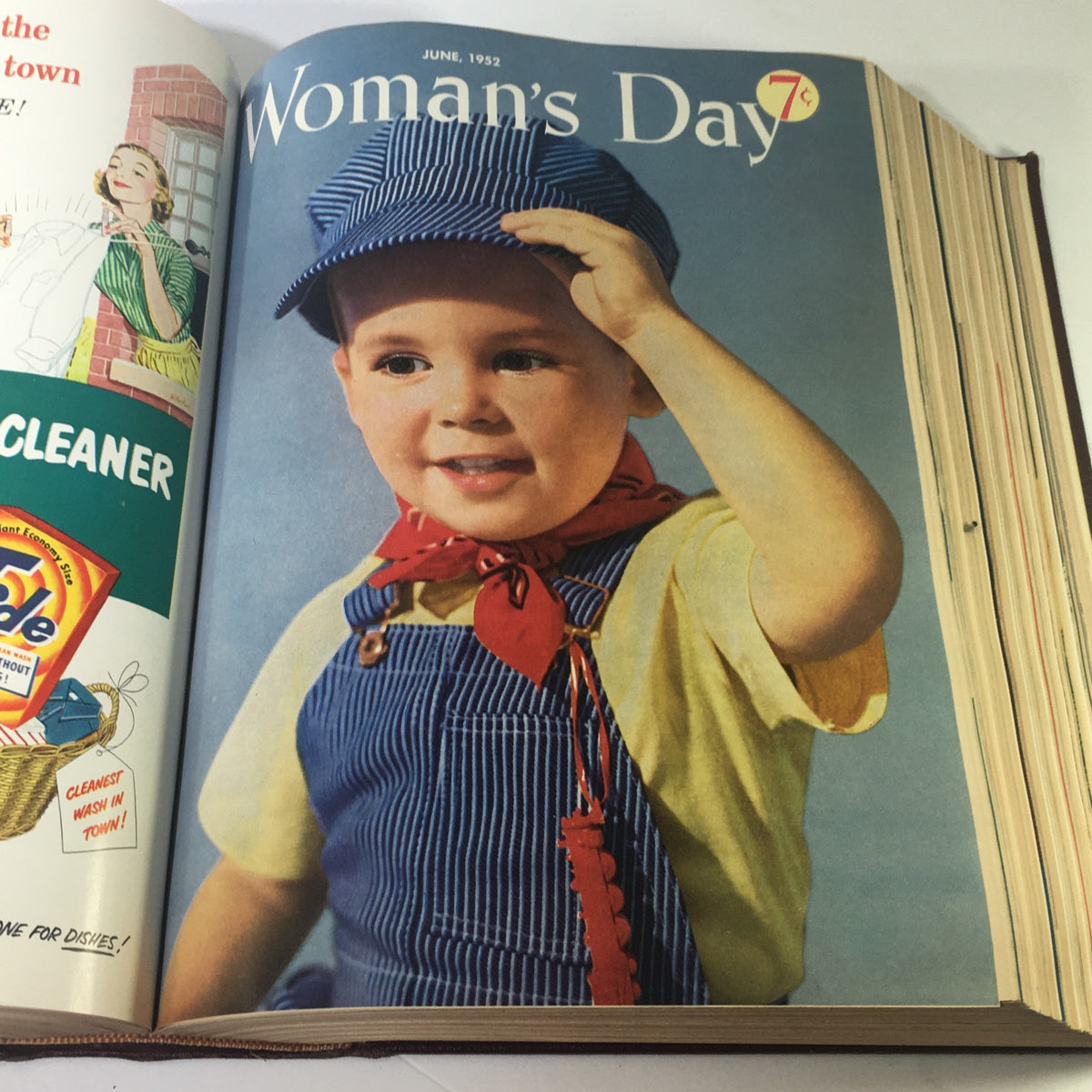
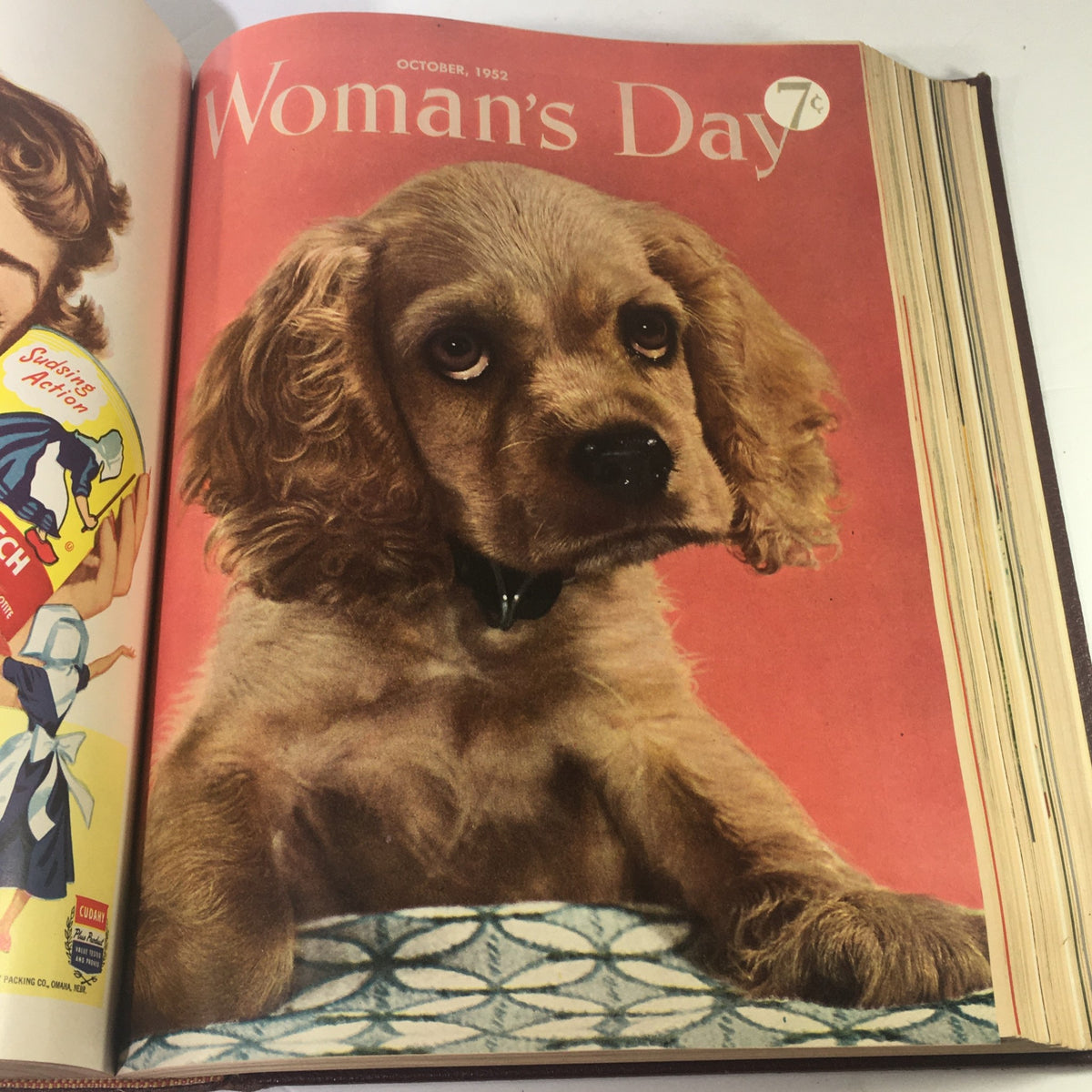
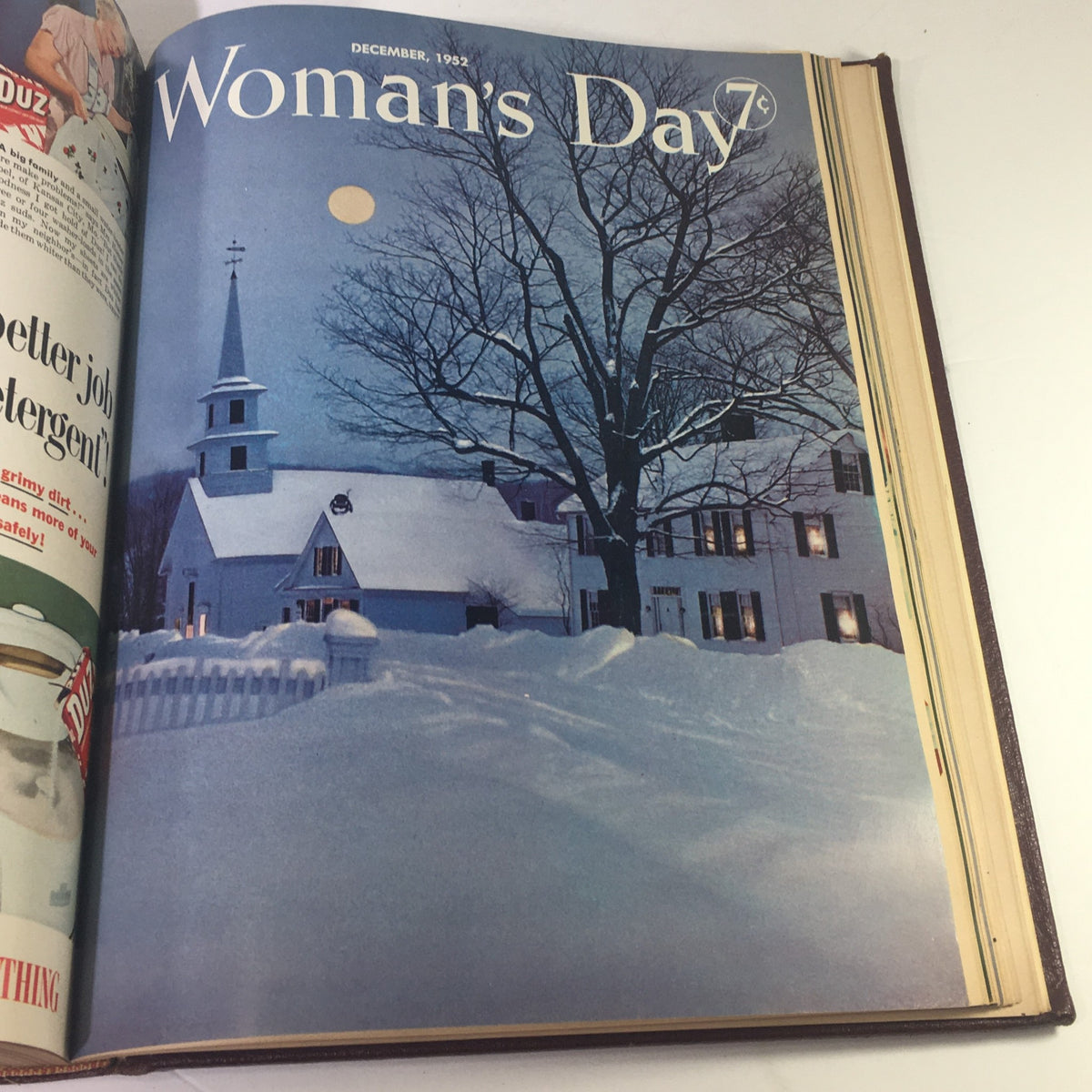
The 1952 Woman's Day Complete Year compilation — all twelve monthly issues from January through December bound together in a single volume — documents American domestic life at a moment of particular cultural consolidation. The year 1952 sits at the heart of what historians of mid-century America have identified as the postwar domestic ideal's most fully expressed phase: suburban expansion was accelerating, household appliance ownership was becoming a standard measure of middle-class stability, and the editorial universe of women's service magazines was operating at the peak of its cultural influence. Woman's Day in 1952 was among the highest-circulation publications in the country, reaching millions of American homemakers with a monthly mix of recipes, decorating guidance, fashion, childcare, and human interest features that both reflected and actively shaped the domestic aspirations of its readership. A complete twelve-month compilation provides what no individual issue can — a full seasonal document of how the magazine addressed its readers across an entire year, tracking the rhythms of the domestic calendar from winter meal planning through spring cleaning, summer cooking, and holiday preparation. For collectors building a research archive around vintage Woman's Day issues, an annual bound compilation offers the most comprehensive single-object primary source available for any given year.
The year 1952 carries specific historical weight that gives this compilation additional documentary significance. Dwight Eisenhower won the presidential election in November 1952, ending twenty years of Democratic administration and marking a transition whose cultural implications — toward a more explicitly conservative domestic ideal — would become increasingly visible throughout the decade. The Korean War was still ongoing through most of 1952, creating the same tension between promoted domestic security and underlying military anxiety that had characterized 1951, and the advertising content of women's service magazines in this period documents the consumer economy's extraordinary expansion against that backdrop. Television was accelerating its penetration of American households, changing how families spent their evenings and how advertisers reached consumers, and the 1952 issues of Woman's Day would reflect that transition in both their editorial content and their advertising pages. The vintage advertisements alone — spanning processed foods, kitchen appliances, beauty products, household goods, and clothing — constitute a primary economic document of the postwar consumer boom at a specific moment in its development. Anyone building a collection around magazines from 1952 as documents of mid-century American domestic culture will find a complete Woman's Day annual compilation one of the most comprehensive and practically useful objects available for that research.
About the Publication
Woman's Day, launched in 1931 as a house publication for the A&P supermarket chain before developing into an independent newsstand publication, was by 1952 one of the most widely read women's service magazines in the United States, competing with Good Housekeeping, Ladies' Home Journal, and McCall's for the enormous readership of American homemakers. Its editorial format combined recipes and cooking features, home decorating and crafts, fashion and beauty, health and childcare, and human interest stories in a monthly package priced accessibly for the mass market. Sold primarily through grocery stores and newsstands rather than subscription, it reached a particularly broad cross-section of the American female consumer market, and its advertising content documented the full range of consumer goods available to that market with unusual comprehensiveness.
Key Highlights Inside
- Complete year compilation — all twelve monthly issues from January through December 1952 bound in a single volume, providing a full-calendar primary document of Woman's Day's editorial content across the entire year of the Eisenhower election and the final phase of the Korean War.
- Recipes and cooking features across twelve months — documenting the expanding range of convenience and processed foods, supermarket culture, and domestic cooking ideals of early-1950s America across the full seasonal cycle from winter entertaining through summer cookery.
- Fashion, home decorating, childcare, and lifestyle features spanning the year — a comprehensive record of how the magazine constructed and promoted the postwar American domestic ideal for its mass readership across all twelve months of 1952.
- Vintage advertising content across all twelve issues — documenting the full range of consumer goods, food products, appliances, and household items marketed to American homemakers during the postwar consumer boom, constituting a primary economic and material culture document independent of the editorial content.
- Note: Specific article titles and additional features beyond the general editorial categories described in the listing are unconfirmed for this compilation. The above reflects what is verifiable from the listing description and the publication's documented editorial format for this period.
Condition & Rarity
A complete bound annual compilation of twelve Woman's Day issues from 1952 is a more unusual collector object than individual monthly copies, as annual binding was a preservation practice undertaken primarily by libraries, institutions, and dedicated private collectors rather than typical households — making surviving complete compilations a more selective subset of available material than the magazine's large original circulation might suggest. Good condition with minor age-consistent wear is an honest and representative grade for a bound volume now more than seventy years old. The bound format provides structural protection for the individual issues contained within it that unbound loose copies lack, and a compilation in good condition with all twelve months intact and readable represents a meaningful and practical primary source for any research or collection purpose. Minor wear consistent with age across a bound volume of this size and age is expected and does not diminish the compilation's documentary completeness or historical value.
Looking for More Issues Like This?
Complete annual compilations of mid-century Woman's Day are among the more useful and comprehensive primary source objects for researchers and collectors of postwar American domestic history, and a full 1952 bound year — covering the Eisenhower election, the final Korean War months, and the postwar consumer boom at full force — is a particularly rich document of that specific moment. If this compilation is no longer available, the broader vintage Woman's Day archive at OriginalMagazines.com offers individual issues across multiple decades for collectors building issue by issue. The complete 1952 magazine collection is also worth exploring for collectors documenting the full range of American publishing that year across multiple titles and editorial perspectives.