



Description
Collector's Note – Why This Issue Matters
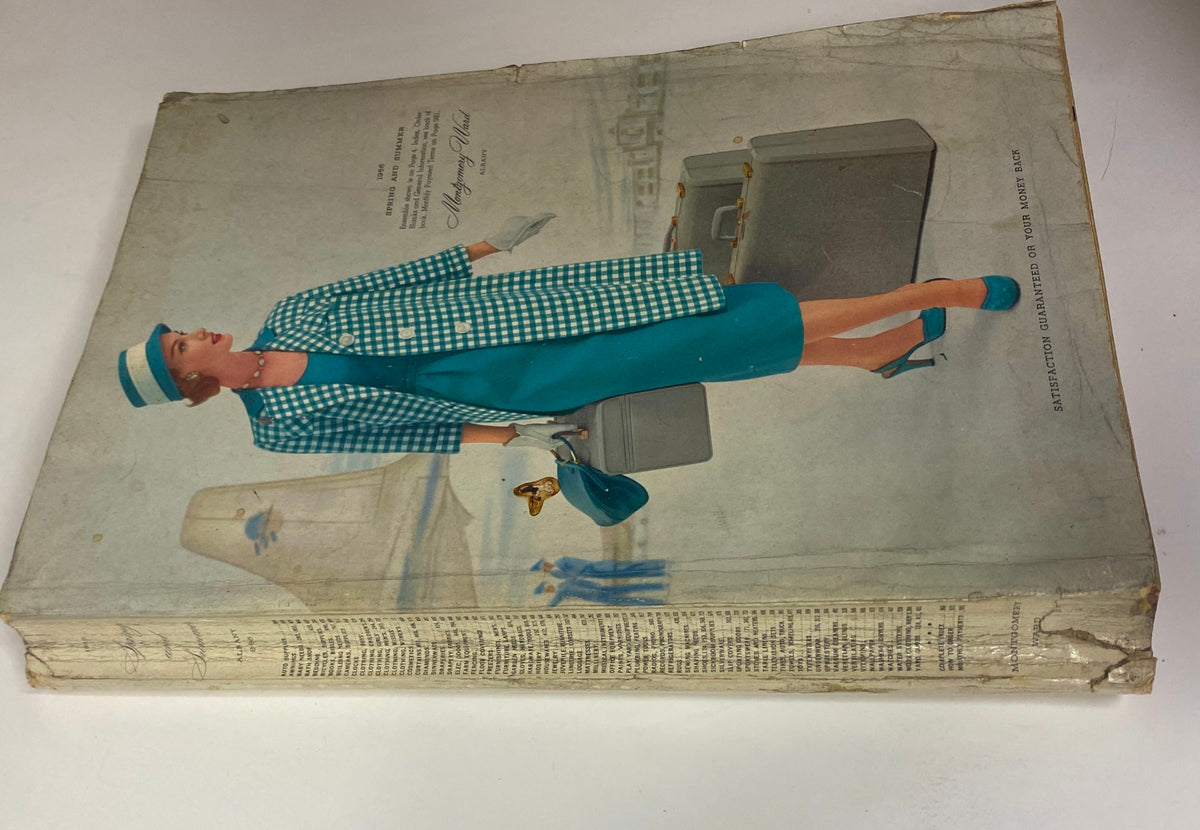
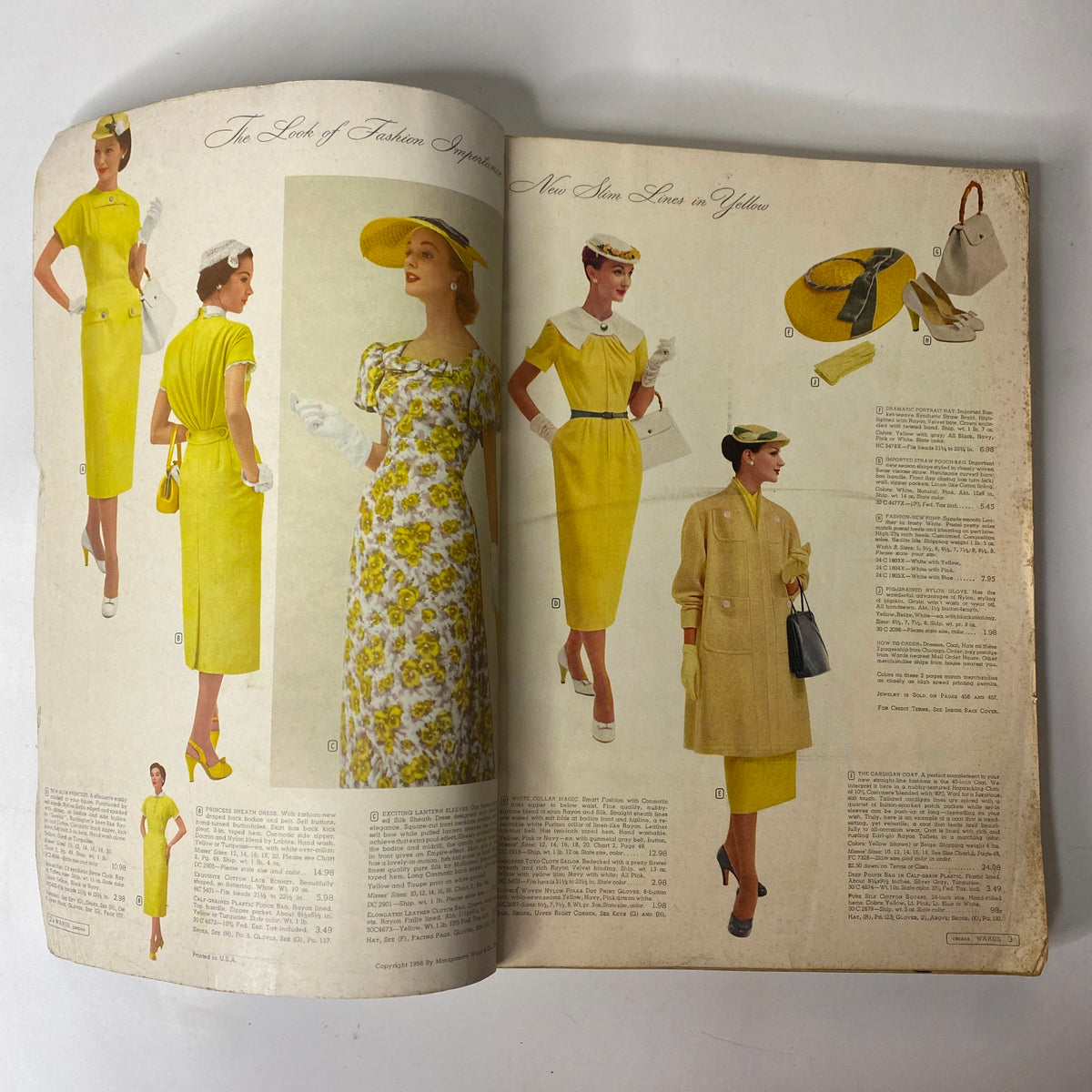
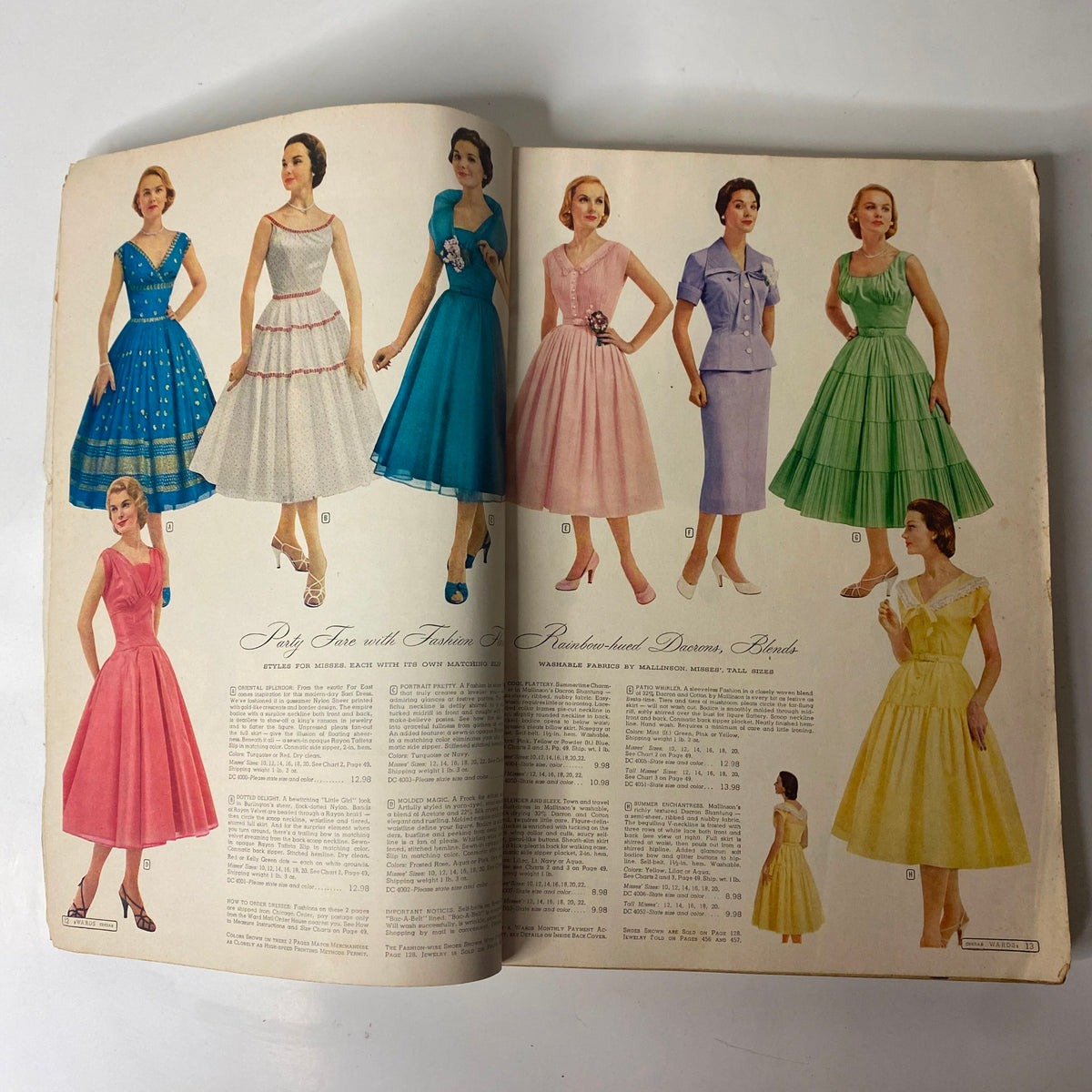
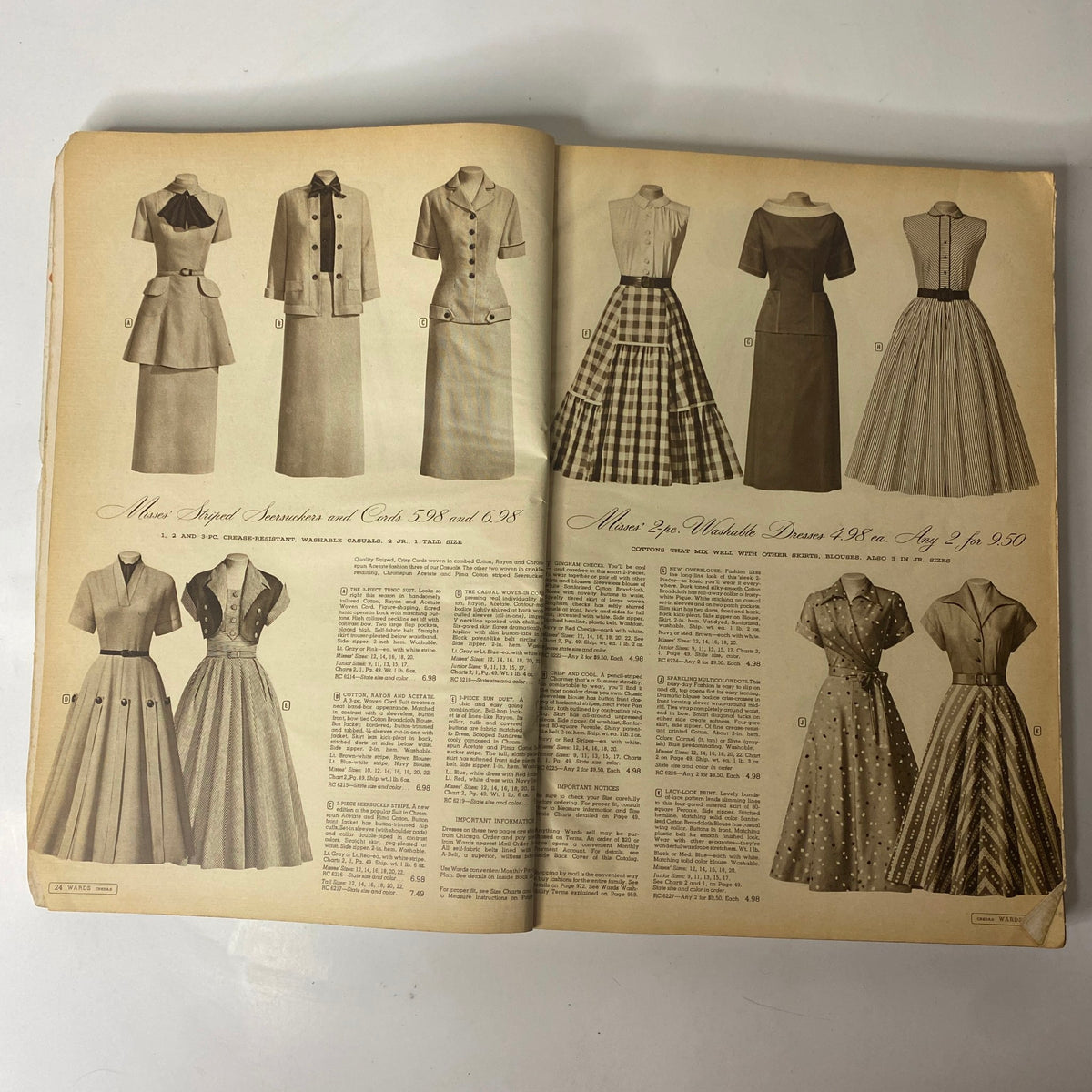
The 1956 Montgomery Ward Spring and Summer Catalog is a primary document of American consumer fashion at one of the most visually distinctive seasons of the mid-century decade — the spring and summer of 1956, when the postwar women's silhouette was in full and confident expression and the specific color optimism of mid-decade America was at its most commercially concentrated. The confirmed fashion content — slim-line dresses, stylish coats, and coordinated accessories in vibrant yellow hues — captures a precise and well-documented moment in 1950s fashion history. The slim-line or sheath silhouette was one of the two dominant dress shapes of the mid-1950s, offering a streamlined counterpoint to the full-skirted New Look silhouette that had defined the early part of the decade, and its confirmed presence in a 1956 Ward's spring catalog documents the style at the specific moment of its broad mid-market commercial establishment. The emphasis on vibrant yellow is equally specific: the spring palette of the mid-1950s was characterized by saturated, optimistic color — chartreuse, coral, turquoise, and yellow — that reflected the consumer confidence of the Eisenhower prosperity years, and yellow in particular carried strong associations with spring freshness and femininity in the retail fashion language of the period. For collectors focused on 1956 publications as documents of American material culture, this catalog provides primary evidence of the specific aesthetic vocabulary of the season at the mass-market level.
The 1956 Montgomery Ward Spring and Summer Catalog also occupies a specific position in the broader history of American retail. By 1956, Montgomery Ward — founded in 1872 as the first American mail-order company — was in the midst of a significant strategic transition, having been surpassed by Sears as the dominant catalog retailer and beginning to invest more heavily in physical store expansion. A 1956 Ward's spring catalog therefore documents the publication in a period of institutional change, when the mail-order catalog format that the company had pioneered was no longer its sole or even primary competitive strategy. The spring and summer edition addressed the Easter, graduation, and warm-weather consumer seasons — the catalog period most heavily weighted toward women's and girls' fashion — and the slim-line dresses and coordinated coats and accessories documented here reflect Ward's mid-market positioning in the competitive landscape of mid-1950s American women's ready-to-wear. The specific fashion content, with its confirmed tailored designs and vibrant color schemes, represents the company's editorial and commercial judgment about what its national customer base was seeking in the spring of 1956 — primary evidence of mid-market consumer fashion aspiration at a very specific moment in the decade.
About the Publication
Montgomery Ward's seasonal mail-order catalogs were large-format illustrated publications issued in Spring/Summer and Fall/Winter editions and distributed to millions of American households, functioning as the primary retail interface between the company and its mail-order customer base from the company's founding in 1872 through the mid-twentieth century. By 1956, the Spring and Summer catalog addressed the warm-weather consumer season in a comprehensive volume covering women's, men's, and children's fashion alongside housewares, appliances, and seasonal merchandise. Its audience was the broad American household market, with particular strength in smaller cities and rural communities where department store access was limited. The catalog's combination of fashion illustration, fabric descriptions, coordinated ensemble presentations, and retail pricing provides a level of consumer documentation that editorial fashion sources of the era do not offer, making it primary material for researchers studying the actual consumer landscape of mid-1950s American fashion.
Key Highlights Inside
- Slim-line dresses — confirmed fashion content — Primary retail documentation of the sheath silhouette at the specific moment of its mid-market commercial establishment in 1956, capturing the streamlined alternative to the full-skirted New Look as it was being presented to Ward's national spring consumer base.
- Stylish coats — confirmed fashion content — Spring outerwear documentation reflecting the tailored coat conventions of mid-1950s American women's fashion, presented in coordinated ensemble logic alongside the dress and accessory content.
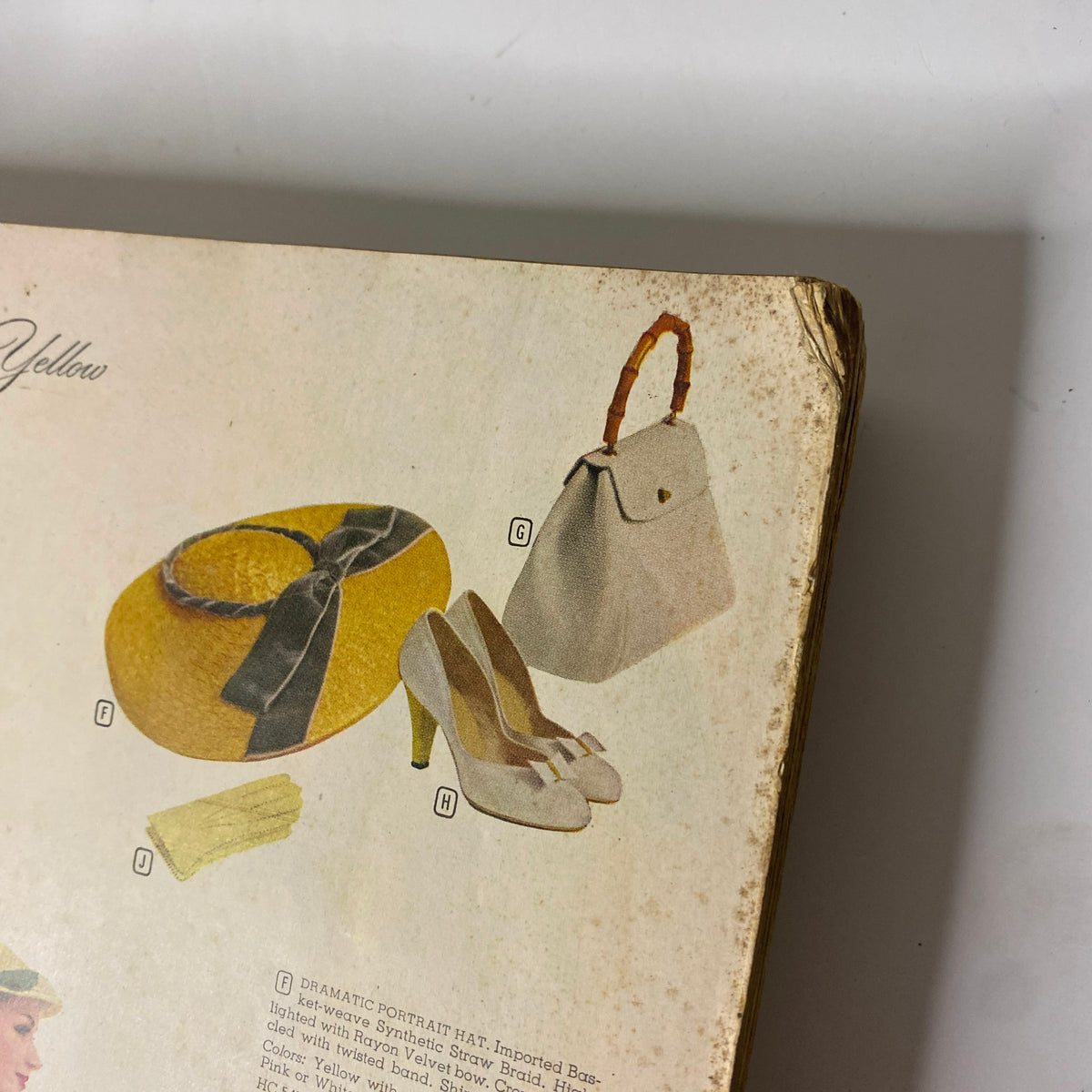
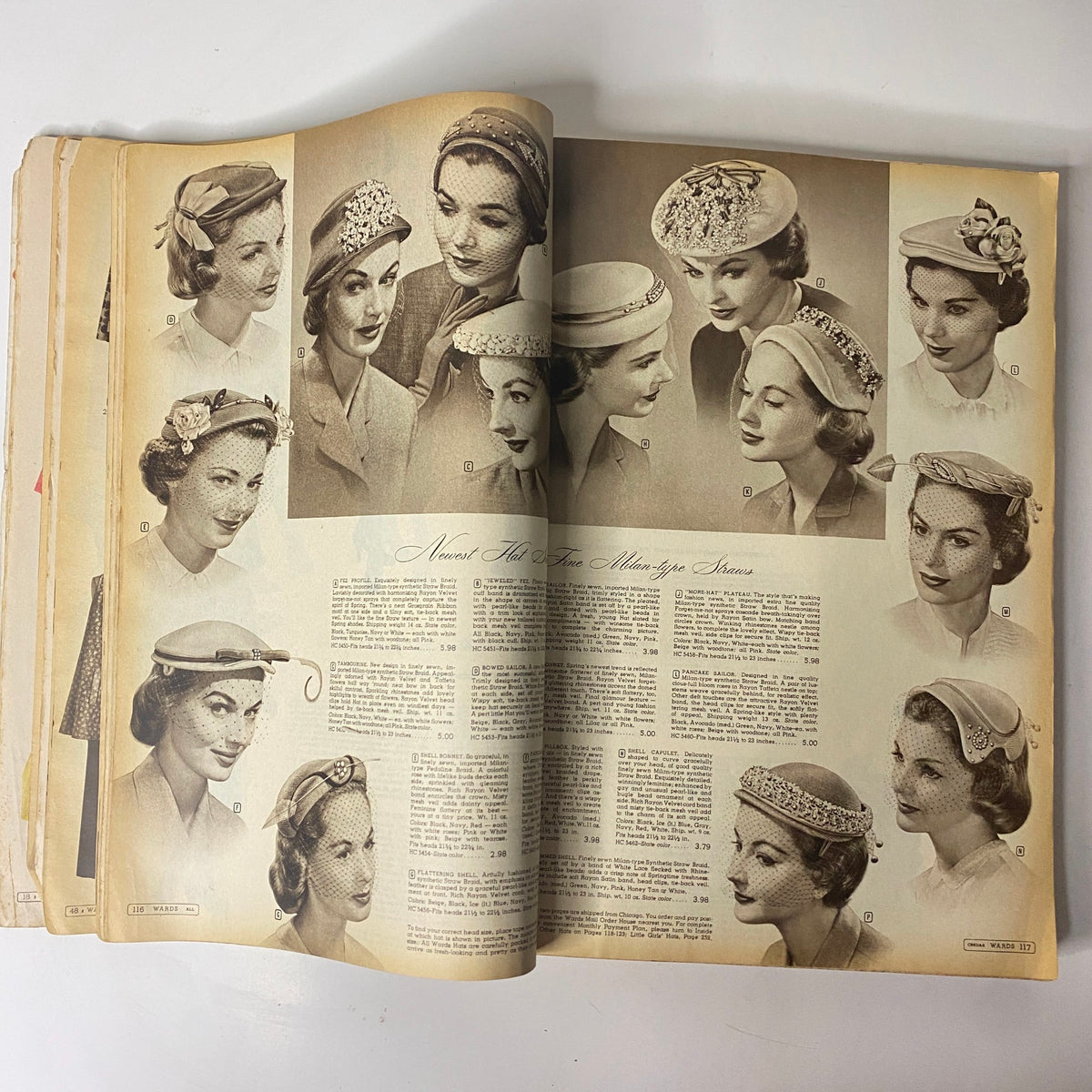
- Coordinated accessories in vibrant yellow — confirmed content — Primary evidence of the mid-1950s spring color palette at the mass-market level, documenting the saturated, optimistic yellow colorway that characterized the retail fashion language of Eisenhower-era spring dressing.
- Tailored designs with emphasis on coordination — confirmed styling approach — Documentation of the ensemble-dressing logic that defined how American women were expected to assemble a complete spring wardrobe in 1956, reflected in Ward's editorial presentation of coordinated dress, coat, and accessory combinations.
Note: Specific garment prices, style numbers, and additional confirmed content categories beyond the fashion highlights noted above have not been provided in the available listing. The highlights above reflect only what is verifiable from the listing and well-documented public knowledge about the publication, its format, and the fashion conventions of the 1956 spring season.
Condition & Rarity
Acceptable condition with confirmed visible creases, marks, minor rips, and a good interior represents an honest lower-mid-grade assessment for a nearly 70-year-old large-format retail catalog designed for sustained household consultation across an entire selling season. The confirmation that the interior remains good despite cover and page surface wear is the most practically significant condition attribute for research-oriented collectors: the fashion illustrations, fabric descriptions, color presentations, and ensemble styling that make this catalog valuable as primary source material remain accessible and usable despite the exterior wear characteristics. The minor rips noted should be assessed from available photographs for their location and extent relative to key fashion pages and the cover imagery. The plastic protective sleeve indicates deliberate preservation at some point in the catalog's history. The listing does not specify label status; the photographs are the authoritative reference for whether an address label is present on the cover. For costume historians, fashion researchers, and collectors prioritizing documentary content over display condition, acceptable condition with a confirmed good interior in a publication of this age represents a functionally complete research document of the 1956 spring consumer market.
Looking for More Issues Like This?
Mid-1950s Montgomery Ward Spring and Summer catalogs with confirmed fashion content documenting the slim-line silhouette and spring color conventions of the Eisenhower era are a specific and historically grounded collecting category, and the 1956 edition's position at the precise mid-decade moment of that aesthetic's fullest expression gives it documentary value that adjacent years approach but do not duplicate in the same combination of silhouette, color, and coordinated ensemble emphasis. For collectors building a broader picture of American consumer culture and material life at the mid-point of the 1950s, the complete 1956 publications collection at OriginalMagazines.com covers magazines, catalogs, and periodicals from the specific year that sat at the confident center of the decade, and regularly surfaces material that serious researchers of mid-century American fashion and consumer culture will find directly relevant to the world this catalog documents.