
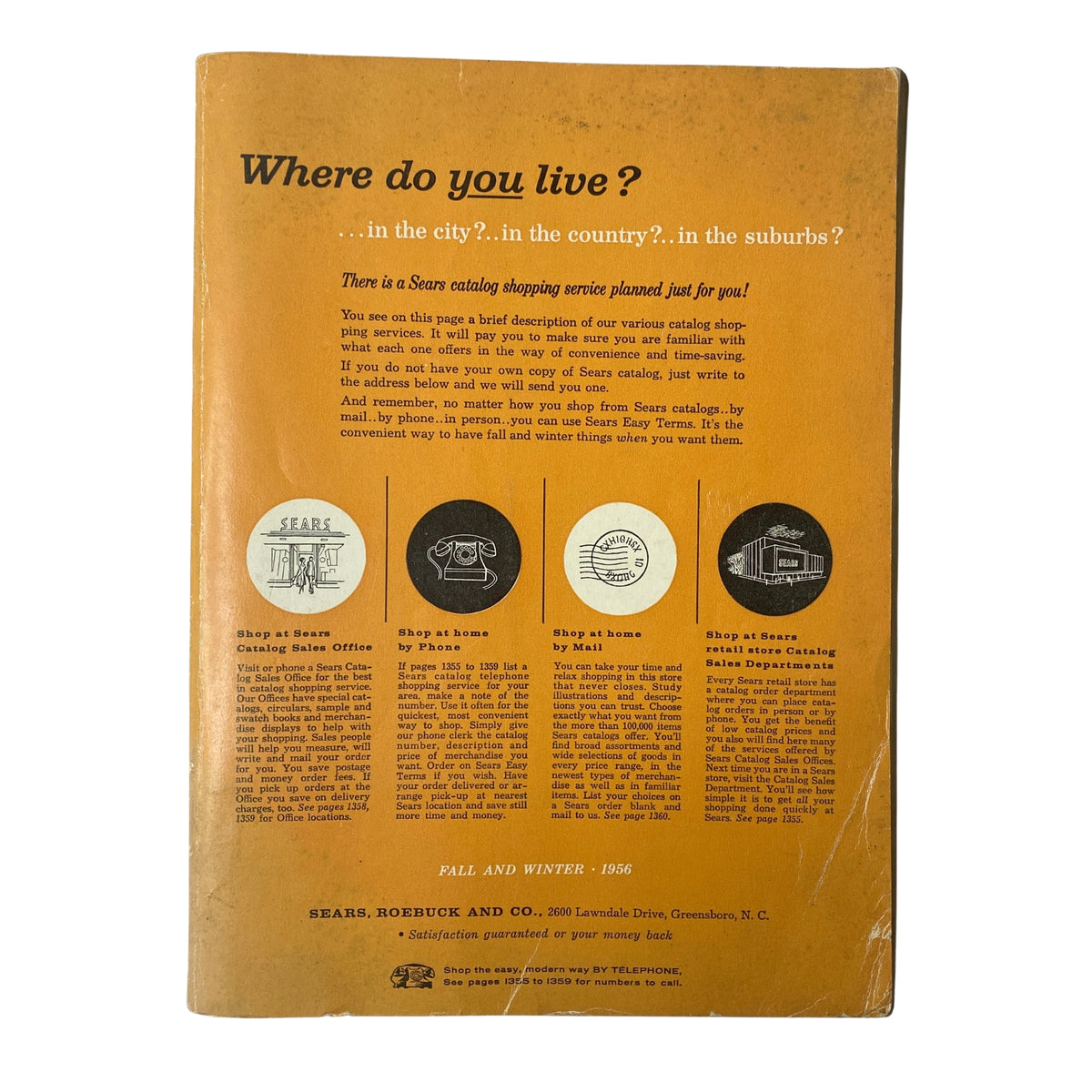
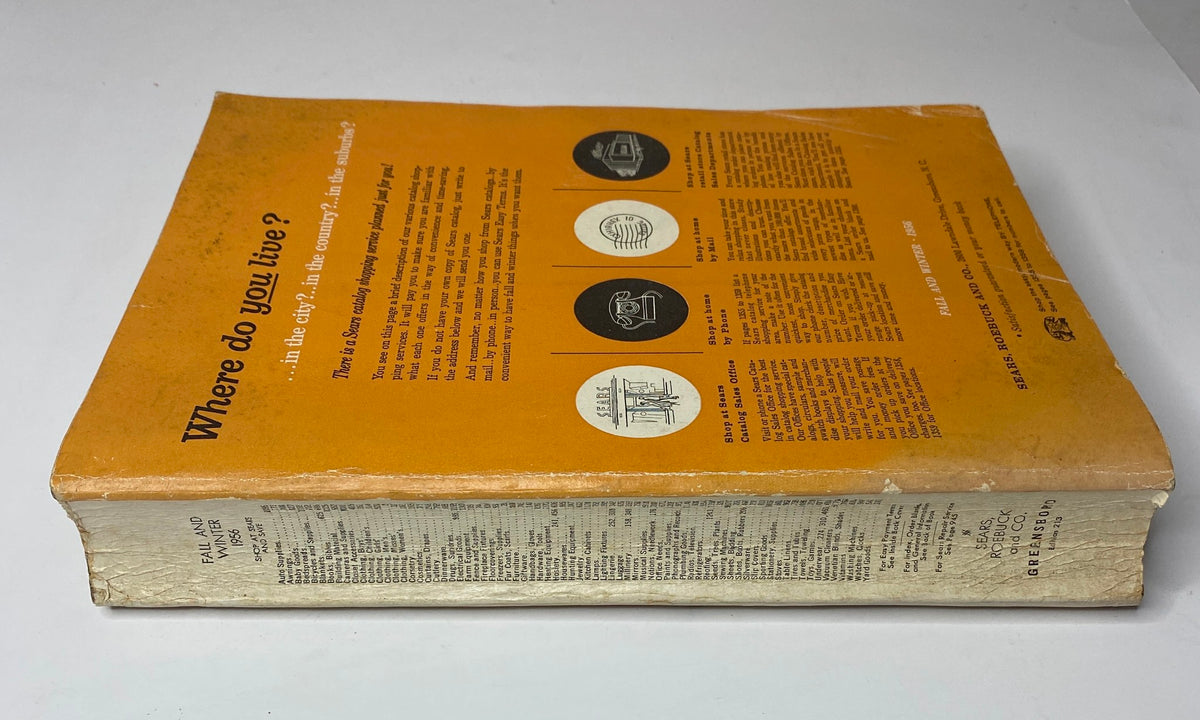


Description
Collector's Note – Why This Issue Matters
The 1956 Sears Roebuck and Co. Fall and Winter Catalog is a primary document of American consumer aspiration at its most confident and most visually opulent mid-century expression. The fall-winter season of 1956 was occurring at the absolute peak of Eisenhower-era postwar prosperity — a moment when rising real wages, suburban expansion, television-driven consumer culture, and the genuine sense that American material life was improving continuously and without limit were producing a consumer confidence that found its most direct expression in the specific fashion choices of the mid-decade. The catalog's featured content — high-end cashmere coats, mink accents, and the timeless silhouettes that the listing describes — documents this confidence at its most materially ambitious. Cashmere and mink in a mass-market catalog in 1956 were not ironic or aspirational in a distant sense; they were genuinely attainable luxury items being offered to the broad middle-class readership that Sears served, products that reflected the decade's specific belief that the full range of good living was available to the American family that worked hard and spent wisely. The fall-winter catalog was the most important edition Sears produced each year, its arrival marking the beginning of the holiday shopping season and carrying the full weight of the company's fashion and merchandise ambition for the most commercially significant months of the retail year. For collectors building a serious archive of Sears catalog history and mid-century American fashion documentation, the Sears catalog collection at OriginalMagazines.com provides essential depth across the company's full publishing history, with the mid-1950s fall-winter editions representing the catalog's aesthetic and commercial peak.
The specific fashion vocabulary documented in this catalog — cashmere, mink accents, structured silhouettes — is the vocabulary of a specific and historically precise aesthetic moment. The mid-1950s American fashion ideal for women was defined by a specific set of values: refinement, structure, femininity expressed through tailoring and luxurious materials, and the specific look that Christian Dior's New Look of 1947 had imposed on postwar fashion and that had fully penetrated the American mass market by the mid-decade. A Sears fall-winter catalog featuring cashmere and mink in 1956 was translating that high-fashion ideal into the specific commercial terms of the country's largest retailer — packaging the decade's luxury aspiration as something achievable through catalog shopping, with the Sears guarantee of quality behind every purchase. That specific commercial translation, documented in the original primary source with its specific pricing, styling, and marketing language intact, is exactly the kind of evidence that fashion historians find most valuable in surviving catalog material. The 1956 date also places this catalog in the fall and winter of one of the most culturally charged years of the decade: the year of the Hungarian Revolution and the Suez Crisis internationally, the year of Elvis Presley's initial television appearances domestically, and the year in which the specific tensions of postwar American culture — prosperity and anxiety, confidence and conformity — were most visibly present in the everyday objects that American consumers were buying and displaying. The full range of 1956 magazines and publications from this year documents that cultural moment from multiple angles, and the Sears fall-winter catalog sits within that body of material as one of its most comprehensive and most visually immediate primary sources.
The condition note about pages with cutouts adds a specific provenance dimension to this catalog that deserves direct acknowledgment rather than avoidance. Cut pages in a mid-century Sears catalog are most commonly associated with a practice that was widespread among the publication's original readership: using the catalog's fashion and home goods photography as reference material for sewing, home decoration, and aspiration-board purposes, cutting specific images or patterns from the pages and incorporating them into personal collections or practical projects. This use pattern — the catalog as a source of visual material to be cut, arranged, and used — was built into the publication's relationship with its audience, and the cuts that resulted are themselves historical evidence of how the catalog functioned in domestic life rather than simply as a retail guide. A catalog with selective cutouts is a catalog that was actively used by a real household in 1956, and that use history is part of its authenticity as a primary source rather than a simple deduction from its value. Collectors and researchers should examine the specific pages affected before making acquisition decisions based on their particular research needs.
About the Publication
The Sears Roebuck and Co. Fall and Winter Catalog was the flagship annual publication of Sears, Roebuck and Company, distributed to millions of American households through the direct-mail program that had been central to the company's retail dominance since its founding in 1886 as the first major mail-order catalog retailer in the United States. The fall-winter edition was the most commercially important catalog the company produced each year, its pages carrying the full weight of Sears' holiday-season fashion and merchandise offering to the broadest possible American consumer audience. By 1956, the fall-winter catalog had been a fundamental institution in American domestic life for seven decades, its arrival marking the beginning of the holiday shopping cycle for millions of households — particularly in rural and small-town America — that depended on catalog retail for access to the full range of consumer goods that urban department store shoppers took for granted. The 1956 edition's featured cashmere and mink luxury fashion content reflects the mid-decade strategy of positioning Sears as a source of genuine quality and aspirational luxury rather than simply functional value, a competitive positioning that the postwar prosperity of the 1950s made both plausible and commercially effective.
Key Highlights Inside
- High-end cashmere coats — luxury fashion documentation — The confirmed feature of cashmere coats in the fall-winter 1956 catalog documents the specific positioning of luxury natural fiber outerwear in a mass-market catalog context at mid-decade, preserving primary commercial evidence of how cashmere was being priced, described, and marketed to the broad American middle-class consumer in the fall and winter of 1956's peak-prosperity year.
- Mink accents — luxury trim documentation at the mass-market level — The mink accent content documents the specific moment when real fur trim was being offered as an accessible luxury in mainstream catalog retail, reflecting the mid-1950s consumer market's genuine appetite for materials that communicated refinement and prosperity within the visual language of the period's dominant fashion ideal.
- Mid-1950s silhouette documentation — structured feminine elegance — The timeless silhouettes featured in this fall-winter catalog document the specific form vocabulary of mid-decade American women's fashion: the structured shoulders, nipped waists, and full skirts that the Dior New Look's influence had made universal in the American mass market by 1956, preserved in the primary commercial terms of the most widely distributed fashion publication in the country.
- Pages with cutouts — authentic domestic use history documented — The presence of cutouts in specific pages adds a provenance dimension that documents how this catalog functioned in an actual 1956 American household, preserving evidence of the specific use patterns — reference cutting for sewing, decoration, and aspiration purposes — that were a standard feature of mid-century catalog culture and that are themselves historically interesting evidence of how these publications functioned beyond their commercial purpose.
- Fall-winter 1956 consumer pricing across the luxury fashion range — Retail pricing for cashmere coats, mink-trimmed garments, and luxury accessories from the fall-winter 1956 Sears catalog provides primary economic data for historians researching consumer goods pricing at the absolute peak of Eisenhower-era postwar prosperity, documenting what the country's largest mass-market retailer was charging for its most aspirational fashion offerings in the decade's most commercially confident year.
- Note: Specific additional product categories, the complete range of merchandise beyond the confirmed luxury fashion content, which pages have cutouts, and the complete catalog contents have not been independently verified beyond the listing description. The highlights above reflect what is documentable from the listing and the well-established historical context of Sears' 1956 fall-winter catalog format.
Condition & Rarity
This catalog is described as being in good condition with some pages featuring cutouts, protected by a plastic covering, with the listing directing detailed condition assessment to the accompanying photographs. The cutout pages are the most significant condition variable requiring specific assessment for any intended collecting purpose: their number, placement, and which specific product categories or fashion content they affect determine whether the catalog's primary documentary value — its fashion photography and pricing documentation — remains substantially intact. In a large fall-winter Sears catalog of this era, fashion content was distributed across multiple sections rather than concentrated in a single block, meaning that selective cutouts in some sections may leave other fashion documentation fully intact and available for research or display purposes. Collectors evaluating surviving copies of this catalog should examine the photographs carefully to identify which pages are affected before making acquisition decisions based on specific research needs. The good overall condition designation alongside the plastic protective covering suggests that the catalog retains its structural integrity — binding, spine, and unaffected pages — in a state that supports both research use and display despite the acknowledged cutout condition. The no-label status is not confirmed in this listing and should be verified from the accompanying photographs, as it represents an additional condition variable of significance for display purposes.
Looking for More Issues Like This?
Sears fall-winter catalogs from the mid-1950s — particularly those featuring confirmed luxury fashion content like cashmere and mink that documents the decade's peak-prosperity consumer aspirations — are actively sought by fashion historians, consumer culture scholars, and retail ephemera collectors who recognize these publications as irreplaceable primary documents of American mass-market fashion at its most materially ambitious and most historically distinctive moment. If this 1956 fall-winter edition is no longer available, the Sears catalog collection at OriginalMagazines.com is the most comprehensive resource for exploring what else has surfaced from this foundational American retail publishing tradition across its full span of production years. For collectors building a broader documentary picture of American consumer life and fashion culture during the Eisenhower era's most prosperous and culturally confident year, the 1956 magazines collection brings together a wide range of primary source material from that landmark year in American popular and consumer culture history.