



Description
Collector's Note – Why This Issue Matters
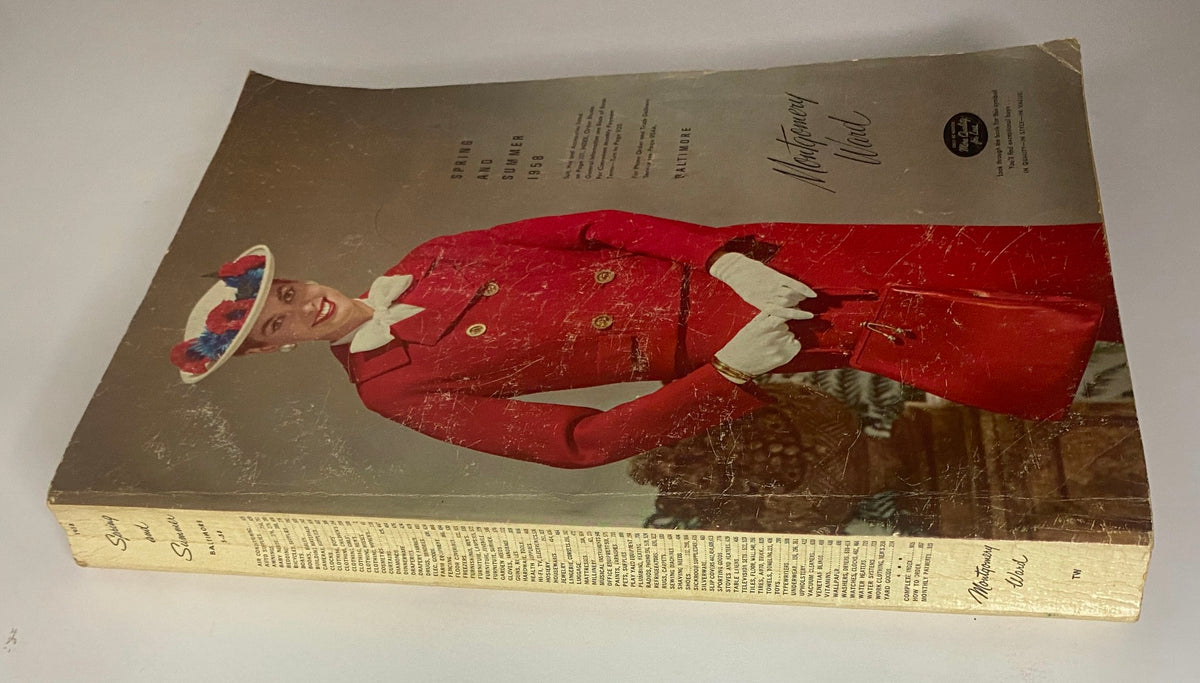
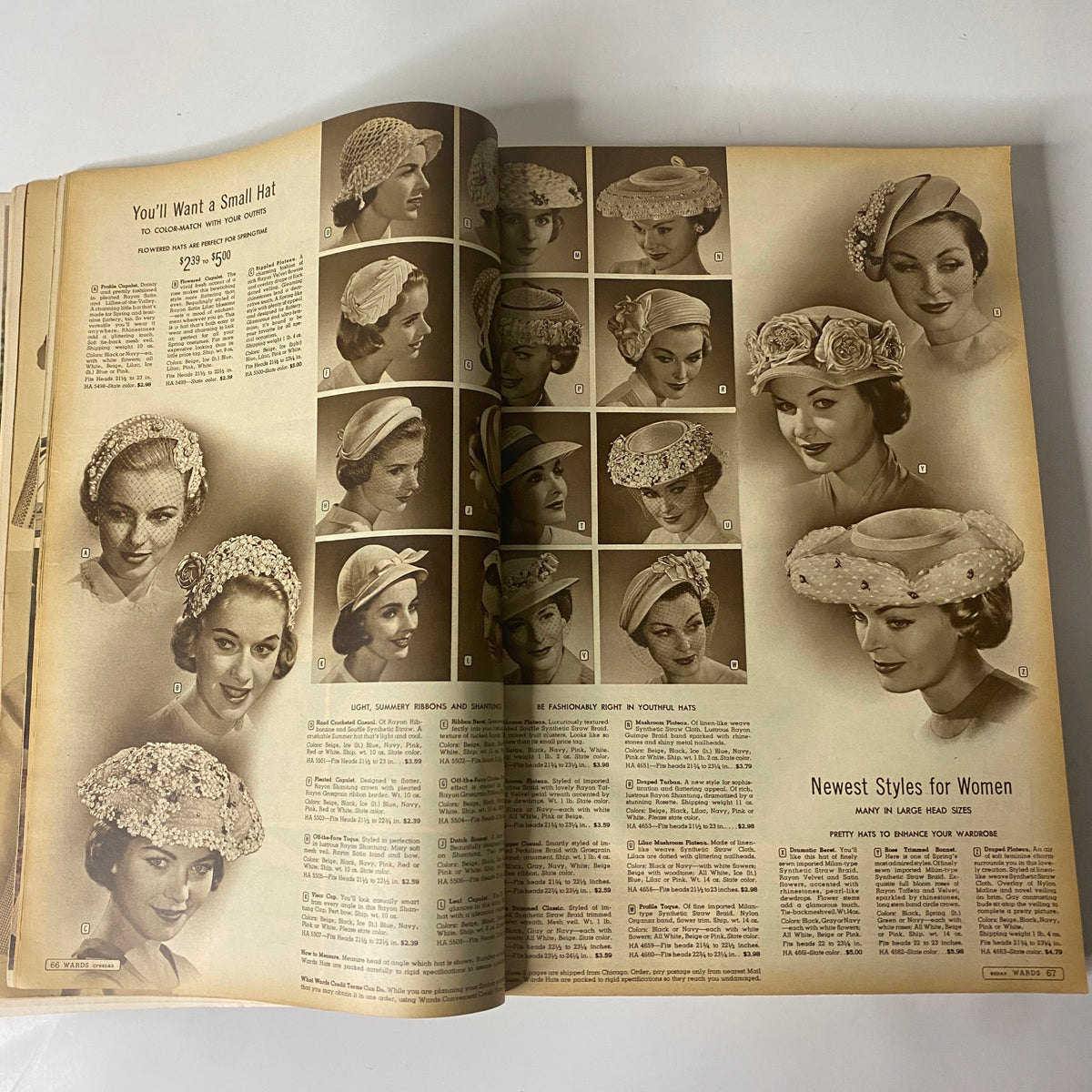
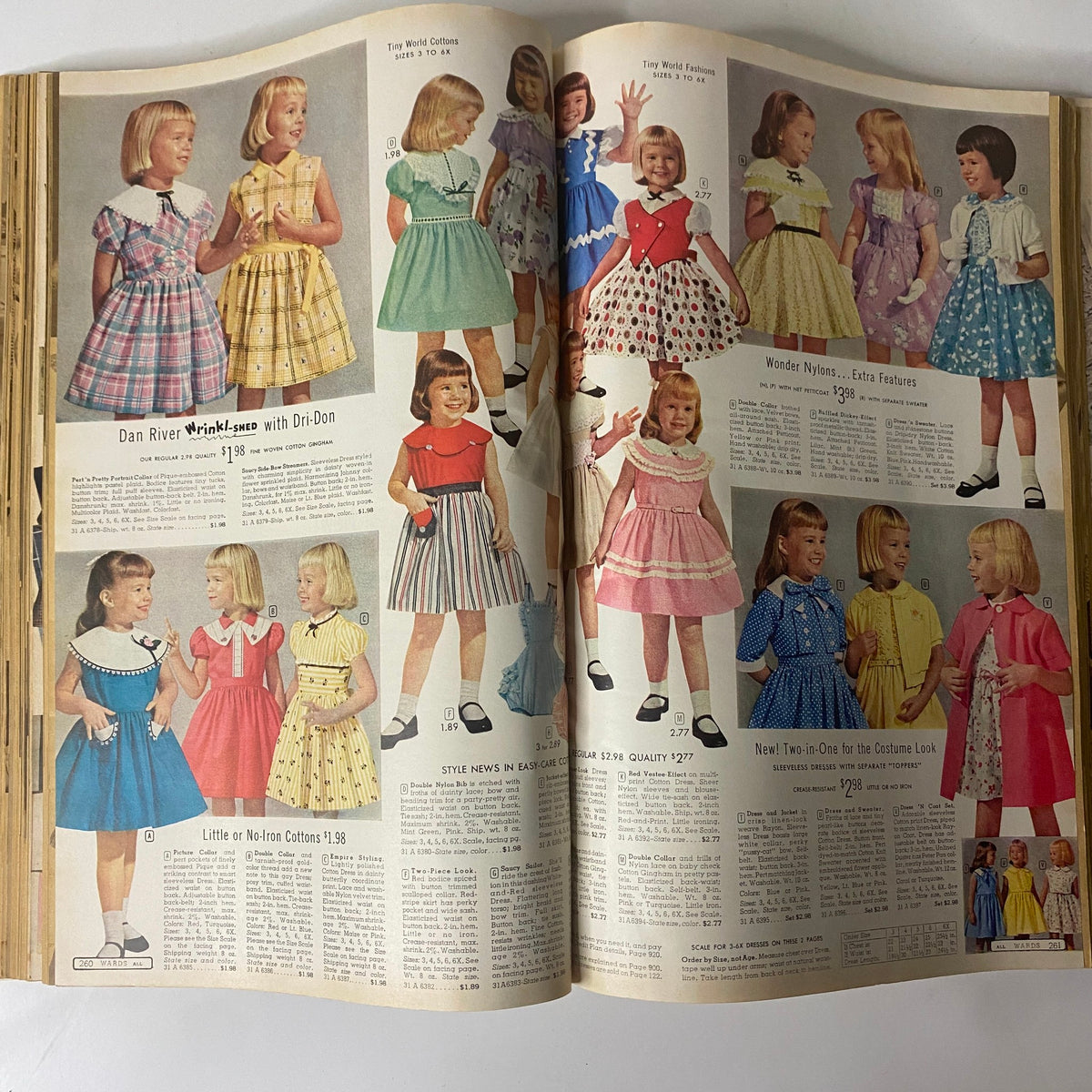
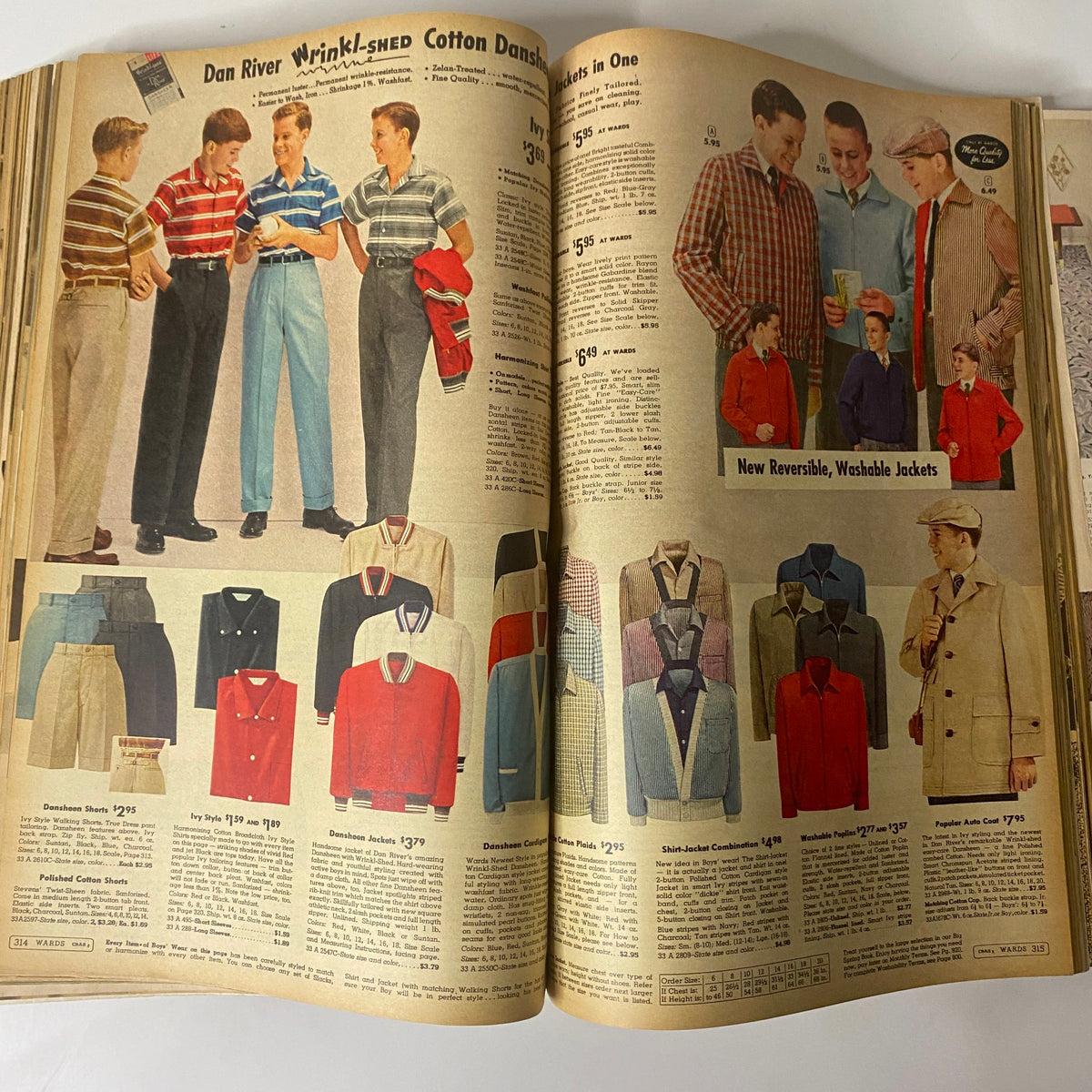
The 1958 Montgomery Ward Spring and Summer Catalog stands as a detailed record of American consumer life at the height of the postwar mail-order era, a period when catalogs like this one served as the primary shopping resource for millions of households across the country. By 1958, Montgomery Ward had been operating as a mail-order retailer for well over eighty years, and its seasonal catalogs had become deeply embedded in American domestic life, particularly for families living outside major urban centers with limited access to department stores. A spring and summer edition specifically captured the season's fashion offerings, giving readers a comprehensive look at the clothing, accessories, and styles the company believed would define the coming months. For collectors and historians of American fashion, a catalog from this exact period offers something museum garments alone cannot: actual retail pricing, styling context, and the specific language retailers used to market clothing to everyday consumers. That combination of commercial and cultural documentation is part of what makes mid-century mail-order catalogs such valuable historical sources. Unlike fashion magazines of the era, which often featured aspirational or editorial styling, catalogs like this one reflect what real consumers were actually purchasing and wearing. This 1958 edition, with its featured rose-print and floral ensembles, offers a specific and dated window into that broader consumer landscape.
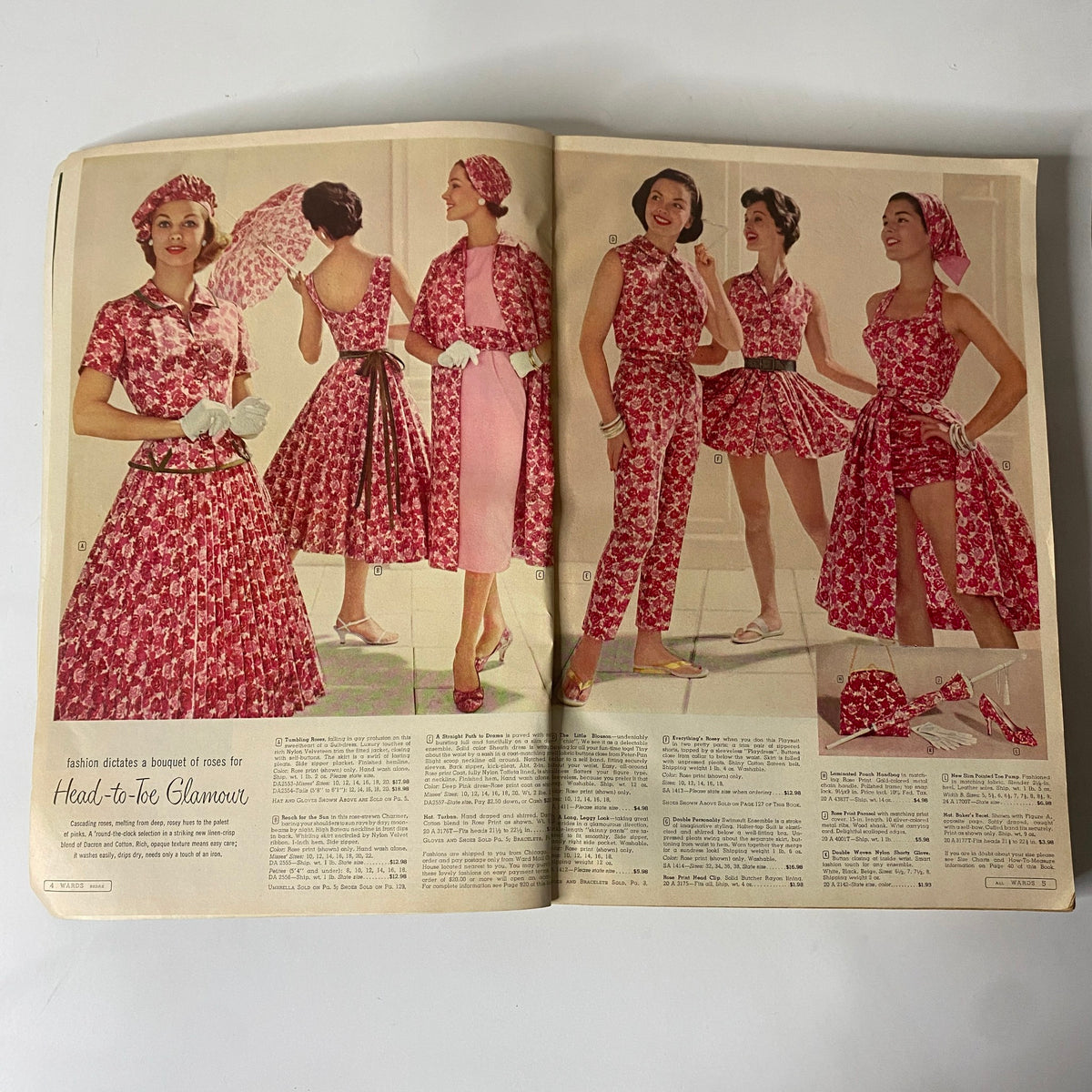
The featured "Head-to-Toe Glamour – A Bouquet of Roses" collection within this catalog reflects a defining trend of late-1950s women's fashion: coordinated ensembles built around a single print or theme, designed to carry a woman from daytime activities into more formal evening settings. Floral prints, and rose motifs in particular, were a recurring feature of mid-century American fashion, reflecting the era's broader emphasis on femininity, softness, and coordinated dressing. The shirtwaist dress featured here, with its classic button-up bodice and pleated full skirt, exemplifies one of the defining silhouettes of the decade, a style that dominated American women's daywear throughout the 1950s and remained a wardrobe staple for its versatility and flattering structure. The inclusion of a matching bolero paired with a fitted sundress speaks to the period's popularity of coordinated separates, a practical approach to wardrobe building well suited to the mail-order format, allowing a single print or theme to transition seamlessly between daytime and evening occasions. A halter swimsuit paired with a coordinating cover-up reflects the era's growing embrace of more tailored, fashion-forward swimwear, moving beyond purely functional beachwear into genuine style statements. Collectors and costume historians researching the practical, everyday side of 1950s fashion, as opposed to its high-fashion runway counterpart, will find this kind of catalog especially useful for understanding how these silhouettes were actually marketed to mainstream consumers.
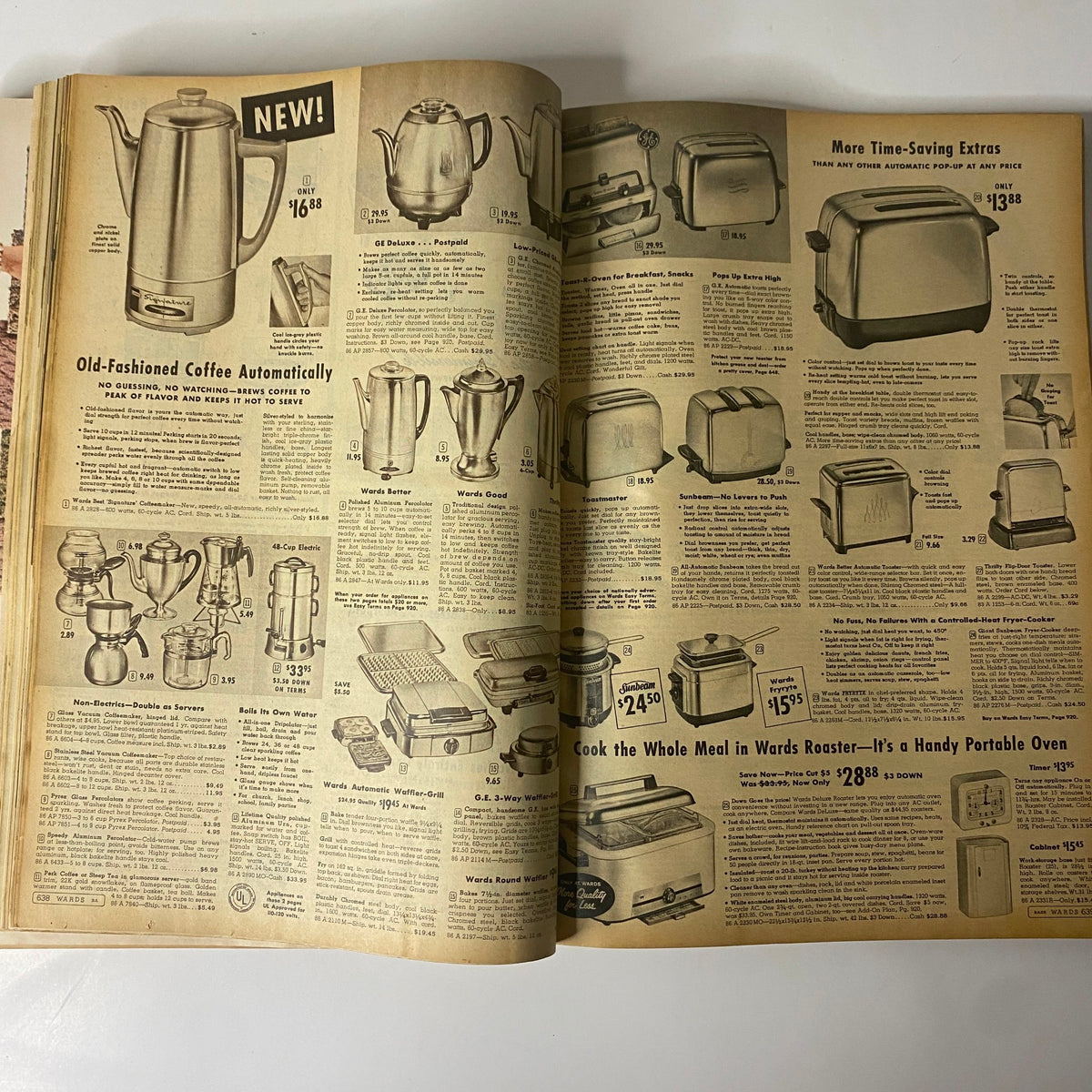
Montgomery Ward's catalog business itself occupies a significant place in American retail history, having pioneered the mail-order model that would come to define much of American consumer commerce through the late 19th and 20th centuries. Founded in 1872, the company built its early reputation on offering rural Americans access to goods that were otherwise difficult to obtain outside major cities, a model that Sears, Roebuck and Company would later adopt and expand upon as a close competitor. By the late 1950s, Montgomery Ward's catalogs had evolved into comprehensive seasonal publications covering everything from clothing to household goods, appliances, and hardware, making them broad snapshots of American consumer culture rather than narrowly focused fashion documents. A spring and summer edition specifically would have been timed to capture seasonal shopping habits, with clothing sections like the one described here representing just one part of a much larger publication. That comprehensive scope is part of what makes surviving catalog issues valuable beyond their fashion content alone, offering researchers insight into pricing, product availability, and consumer priorities across an entire season. This particular issue's spring and summer timing situates it within Montgomery Ward's established seasonal publishing rhythm during a period when the company remained one of the dominant forces in American mail-order retail.
For collectors of vintage fashion ephemera, catalogs like this one offer a different but equally valuable kind of historical documentation compared to magazines, photographs, or surviving garments. Where a magazine might present fashion in an aspirational editorial context, a catalog presents it as a direct commercial transaction, complete with real pricing and the specific language retailers used to sell to everyday households. That distinction makes catalogs particularly useful for understanding not just what 1950s fashion looked like, but how it was actually marketed and sold to the broad American consumer base of the period. A catalog from a company as historically significant as Montgomery Ward, timed to a specific season and featuring named, described ensembles, offers exactly that kind of grounded commercial documentation. Fashion historians and vintage clothing enthusiasts alike often turn to sources like this precisely because they capture retail reality rather than editorial aspiration. This issue's detailed featured collection, with its specific garment descriptions, exemplifies that documentary value clearly. It stands as a tangible record of how mid-century American retailers packaged and sold the era's feminine ideal directly to consumers.
About the Publication
Montgomery Ward was one of the pioneering mail-order retailers in American commercial history, founded in 1872 by Aaron Montgomery Ward as the first general merchandise mail-order business in the United States. The company's catalogs became a household fixture for generations of American consumers, particularly those in rural areas with limited access to physical retail stores. Seasonal editions, such as this spring and summer catalog, were a core part of the company's publishing rhythm, offering readers a comprehensive look at clothing, accessories, and household goods timed to the coming months. These catalogs served an extremely broad audience, spanning income levels and geographic regions across the country, making them one of the most widely circulated commercial publications of their era. Editorially, catalogs of this type combined product photography or illustration with detailed descriptions, sizing information, and pricing, organized by category and season. Montgomery Ward competed directly with Sears, Roebuck and Company throughout much of the 20th century, with both companies producing similarly structured seasonal catalogs for a comparable national customer base. The scale of these publications, often running to hundreds of pages, reflected the company's position as a comprehensive one-stop retailer serving nearly every household need. Because these catalogs were treated as practical shopping tools rather than material meant for long-term keeping, complete and well-preserved surviving editions have become increasingly scarce over time. That combination of broad historical reach and practical, disposable original use makes surviving Montgomery Ward catalogs valuable resources for researchers studying mid-century American retail and consumer culture.
Key Highlights Inside
- The "Head-to-Toe Glamour – A Bouquet of Roses" collection, featuring coordinated floral and rose-print ensembles. This themed collection reflects the era's emphasis on coordinated, mix-and-match dressing. It represents a distinctly late-1950s approach to seasonal wardrobe marketing.
- A Rose-Print Shirtwaist Dress, featuring a classic button-up bodice and pleated full skirt. The shirtwaist silhouette was one of the defining dress styles of 1950s American fashion. Its inclusion here reflects the style's mainstream retail popularity during this period.
- A Floral Sundress & Matching Bolero Set, featuring a fitted waist and cropped jacket. Bolero-paired ensembles were a common styling approach for transitioning daywear into more formal settings. This set exemplifies that coordinated, multi-piece retail approach.
- A Floral Halter Swimsuit with coordinating cover-up. Swimwear paired with matching cover-ups was a popular format in 1950s summer fashion marketing. This piece reflects the catalog's broader seasonal, warm-weather focus.
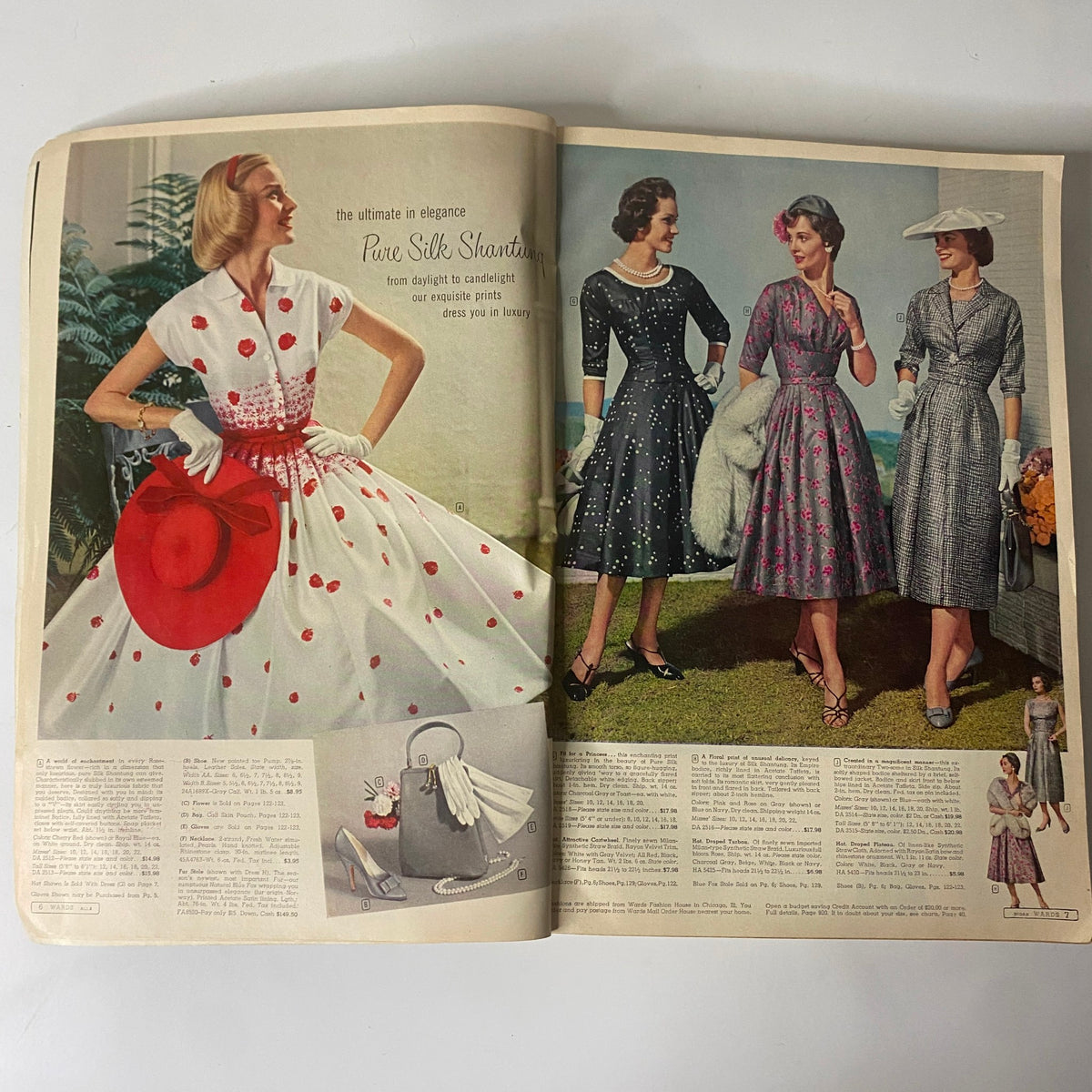
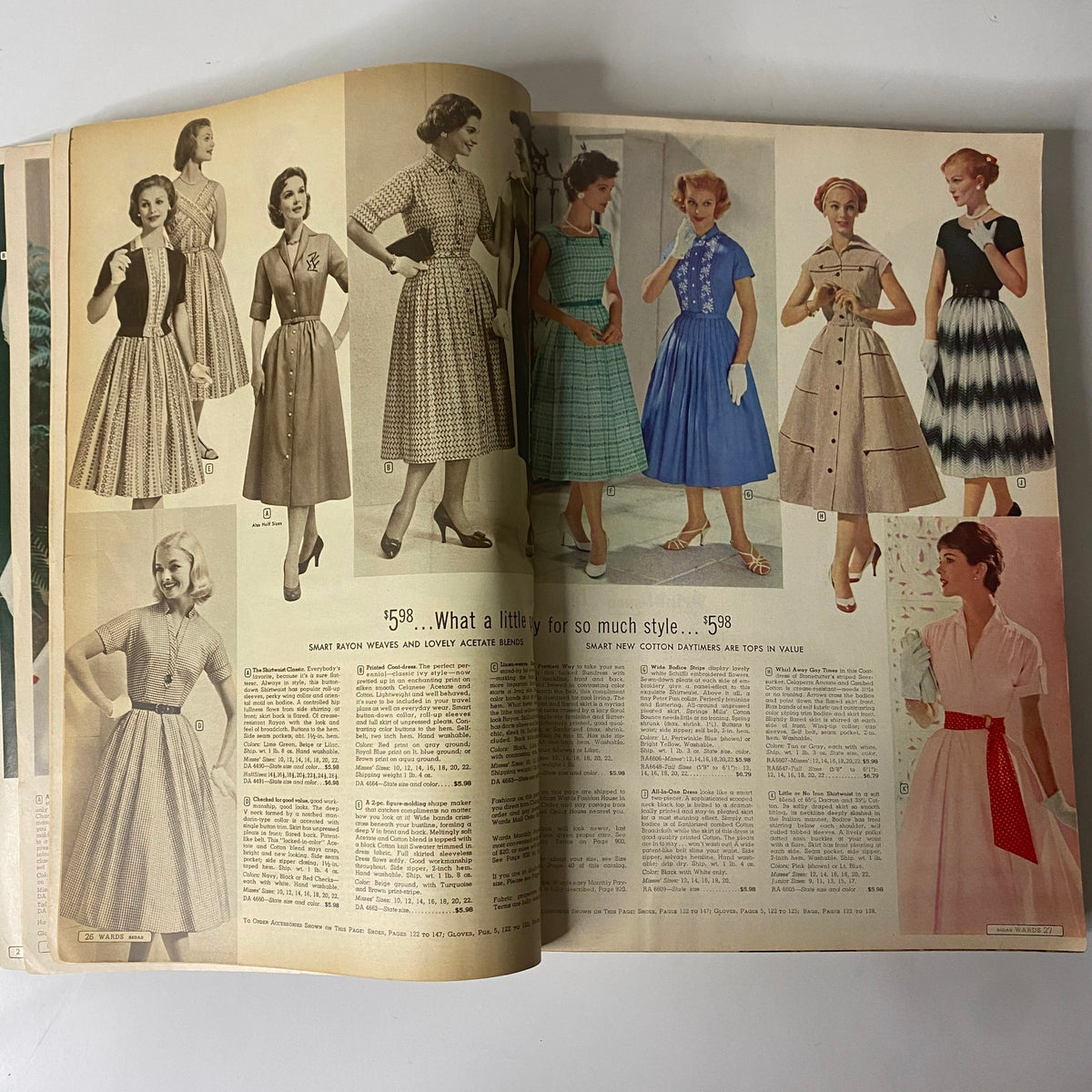
- Broader spring and summer fashion offerings beyond the featured rose collection, consistent with a full seasonal catalog format. Additional categories of clothing and goods were typical in catalogs of this scale. Specific additional sections beyond the featured collection are not detailed in available records.
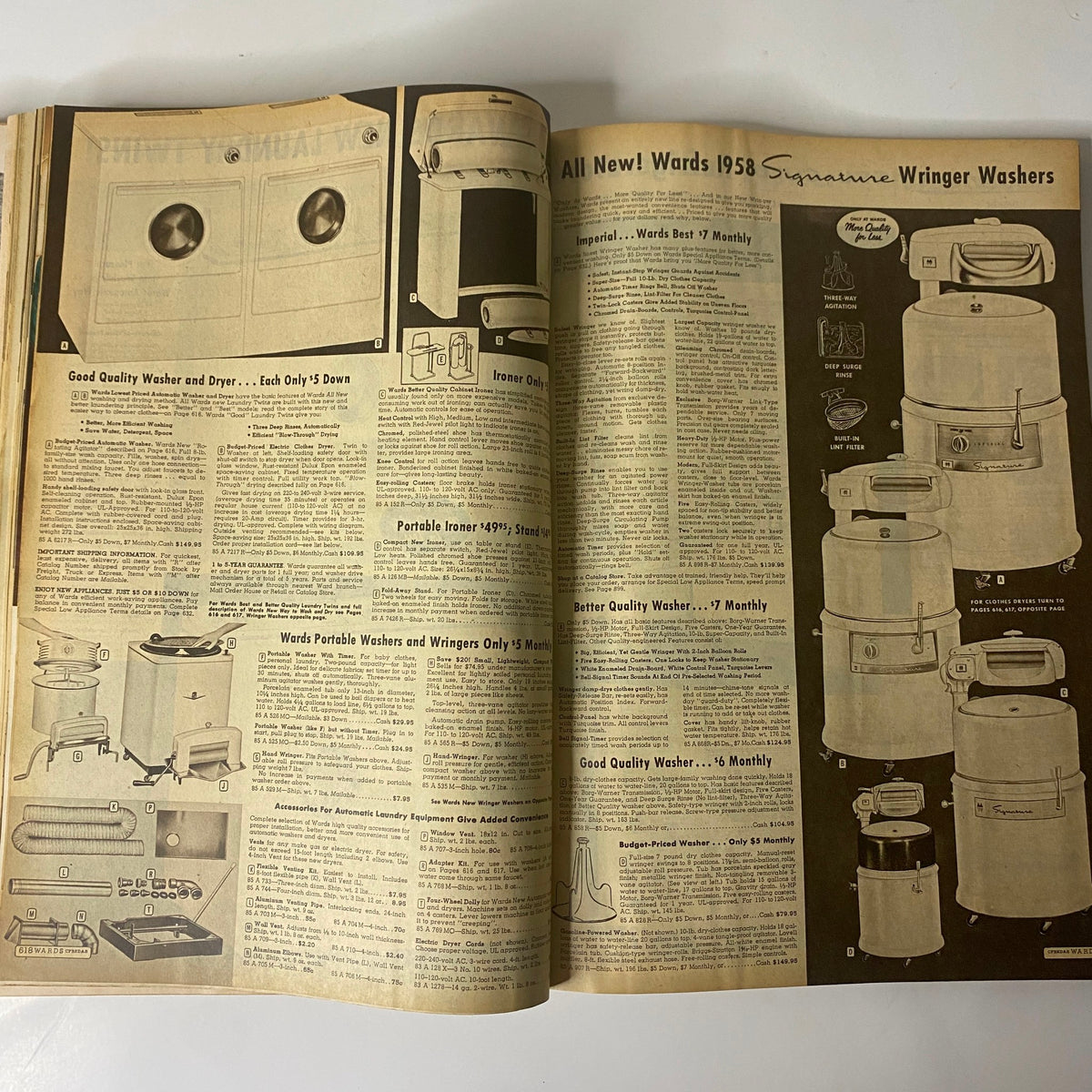
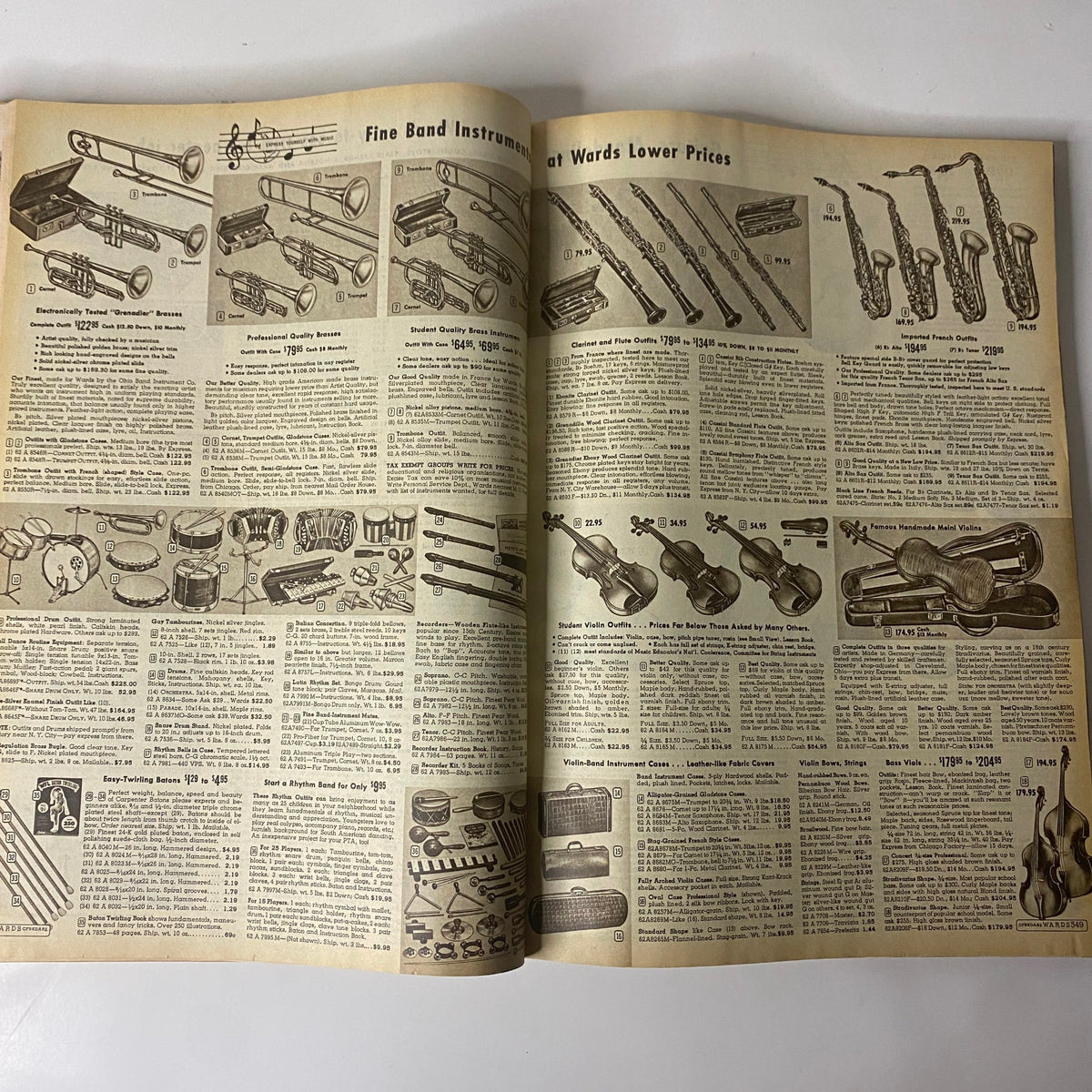
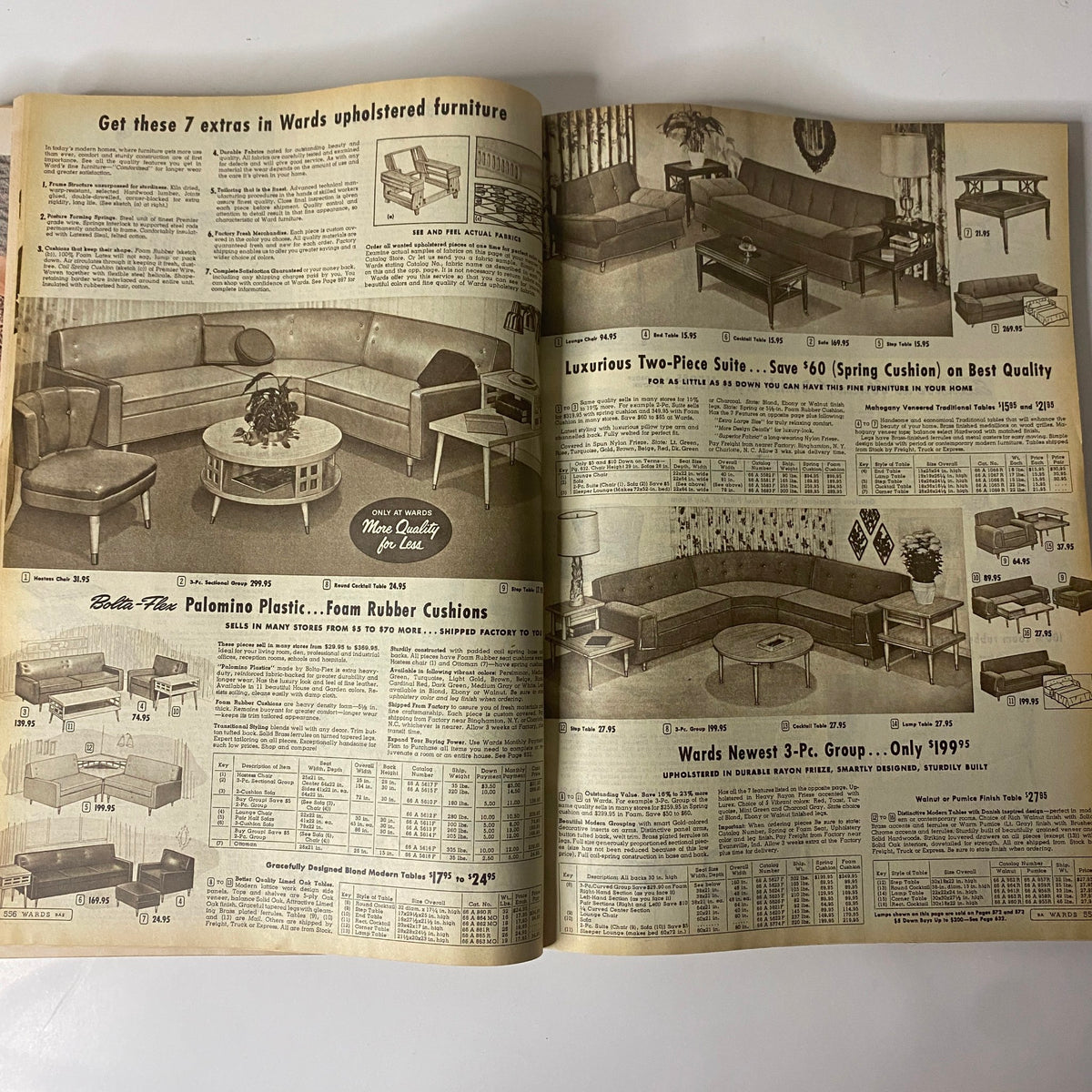
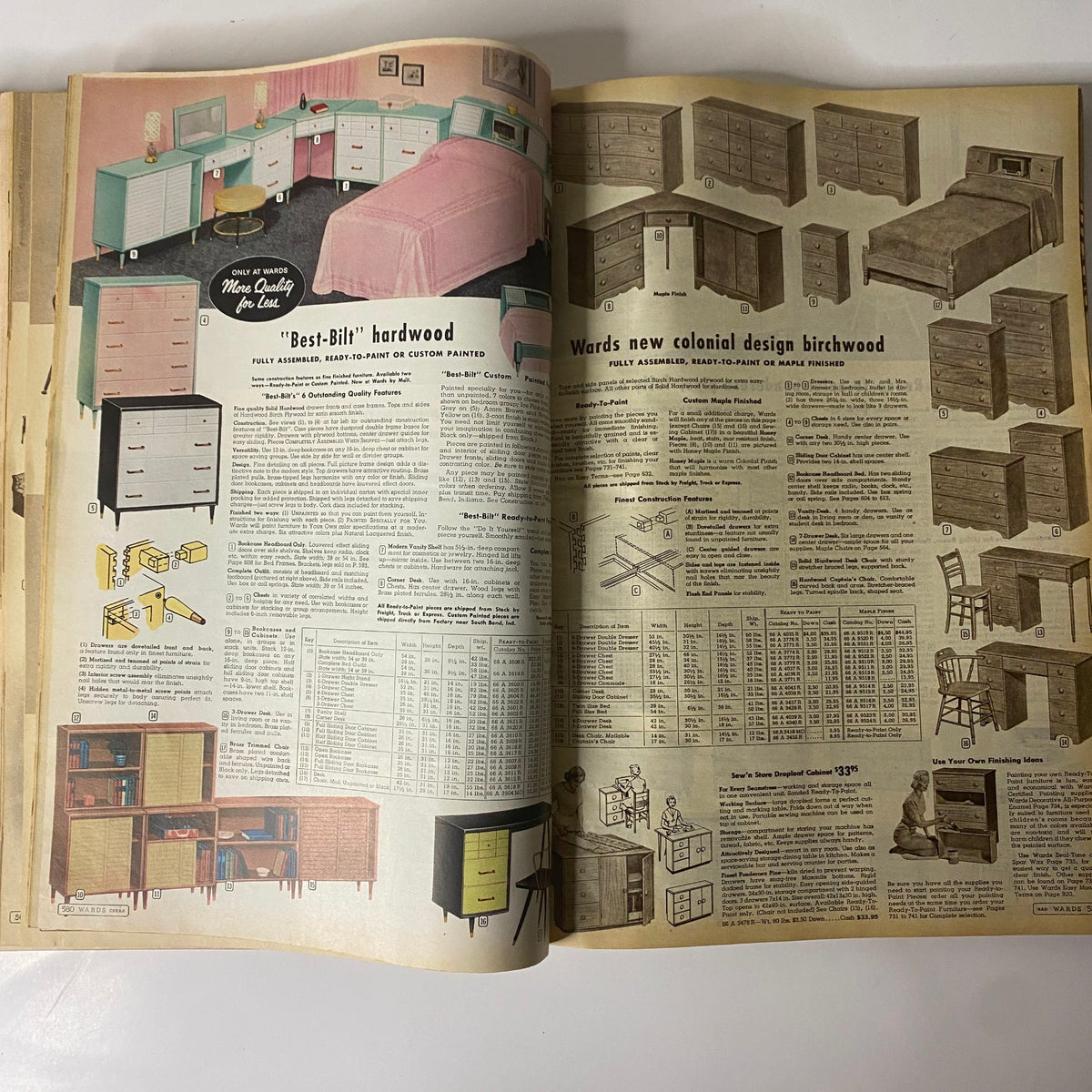
- Detailed retail descriptions and vintage pricing throughout, characteristic of Montgomery Ward's catalog format. These details offer valuable data points for researchers studying period retail economics. Such specificity is a key reason catalogs remain useful primary sources for fashion historians.
Condition & Rarity
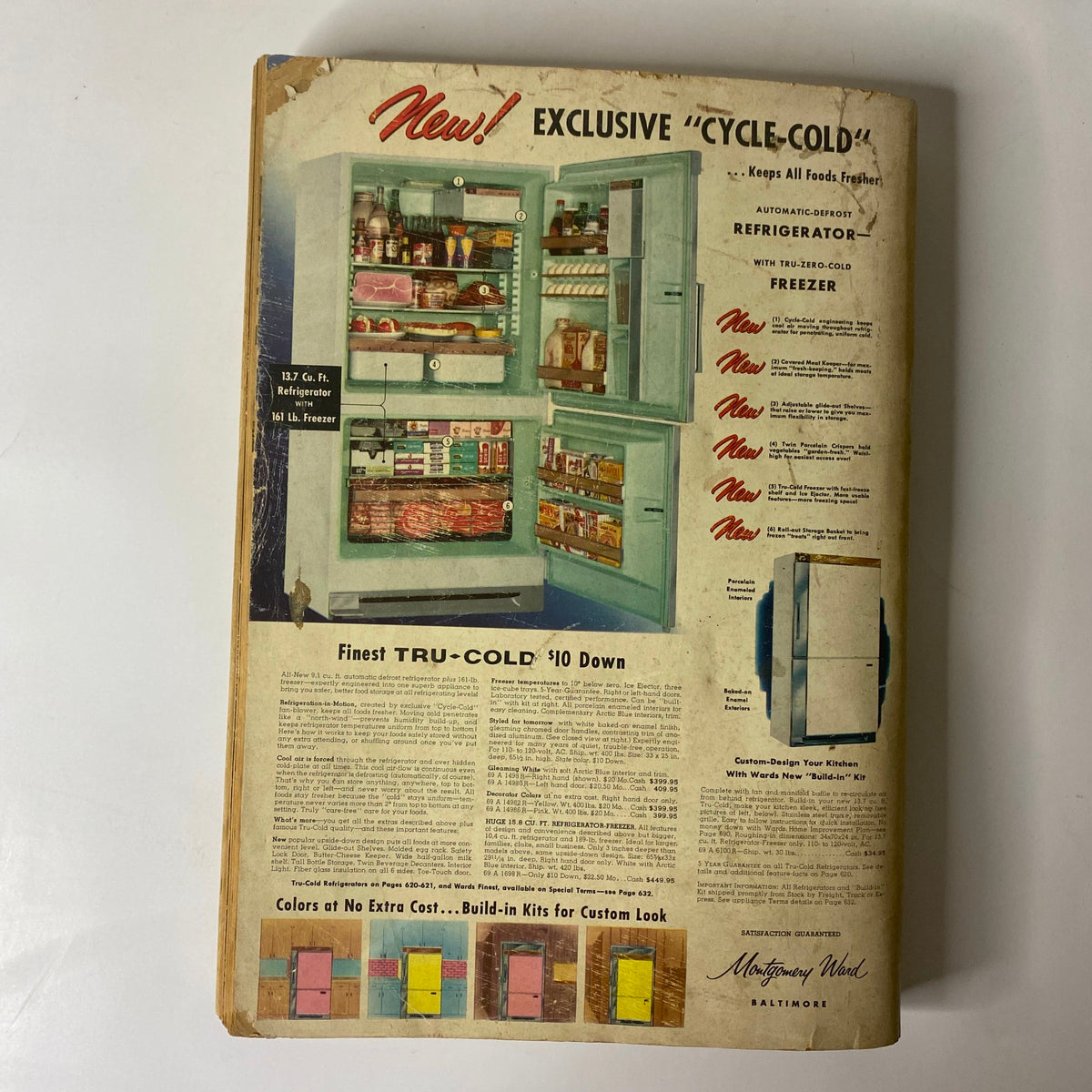
This catalog is described as being in good condition, maintaining overall integrity with light wear typical for its age. At this grade, collectors can typically expect some cover wear, minor page softening, and handling marks consistent with a mail-order publication that has survived over six decades. None of these characteristics are unusual for a catalog of this vintage, since these publications were designed as practical, disposable shopping tools rather than material intended for long-term preservation. Surviving Montgomery Ward catalogs from the 1950s are generally scarce in well-preserved condition, as their large page counts and everyday household use made them particularly prone to wear, water damage, and eventual disposal once a new seasonal edition arrived. Complete catalogs surviving with their full original page count intact are especially valued by collectors, since many surviving examples are missing sections or have suffered significant deterioration. A plastic protective covering, when present, functions as a stabilizing measure intended to preserve a copy's current condition rather than a factor that changes its underlying grade. Collectors evaluating any surviving copy of this catalog should check binding integrity and page completeness closely, since large seasonal catalogs are particularly susceptible to loose or missing pages over time. Given the practical, everyday nature of these publications during their original circulation, a good-grade, largely complete copy represents a meaningful find for collectors of vintage fashion and retail ephemera. Overall, this issue offers a realistic and honestly-described example of what collectors can expect to find for a mail-order catalog of this age and category.
Looking for More Issues Like This?
Complete, well-preserved mail-order catalogs from the 1950s are genuinely difficult to find today, given how thoroughly these large, practical publications were used and eventually discarded by their original owners. Montgomery Ward catalogs in particular saw heavy household use throughout their original circulation, further reducing the number of intact copies that have survived into the present. For collectors and fashion historians drawn to this particular issue, our 1958 magazines collection is a great place to continue exploring, since it gathers a wide range of publications from the same year across multiple categories and genres. Browsing by year often surfaces material well beyond a single publication type, offering useful context for the broader print and consumer culture surrounding any specific catalog or magazine. That kind of cross-category browsing can be especially valuable for researchers interested in how mid-century American consumer life was documented across different kinds of publications. Readers with a particular interest in vintage fashion, retail history, or mid-century domestic life may find related material scattered throughout that same collection. Given how scarce complete, well-preserved catalogs from this era tend to be once found, we'd encourage anyone interested in this period to browse broadly rather than searching for a single specific title. The 1958 collection offers a useful starting point for that kind of exploration. There is always more of this history available than a single catalog can represent on its own. We hope the broader collection helps round out whatever corner of mid-century American consumer and fashion history you're most drawn to.