



Description
Collector's Note – Why This Issue Matters
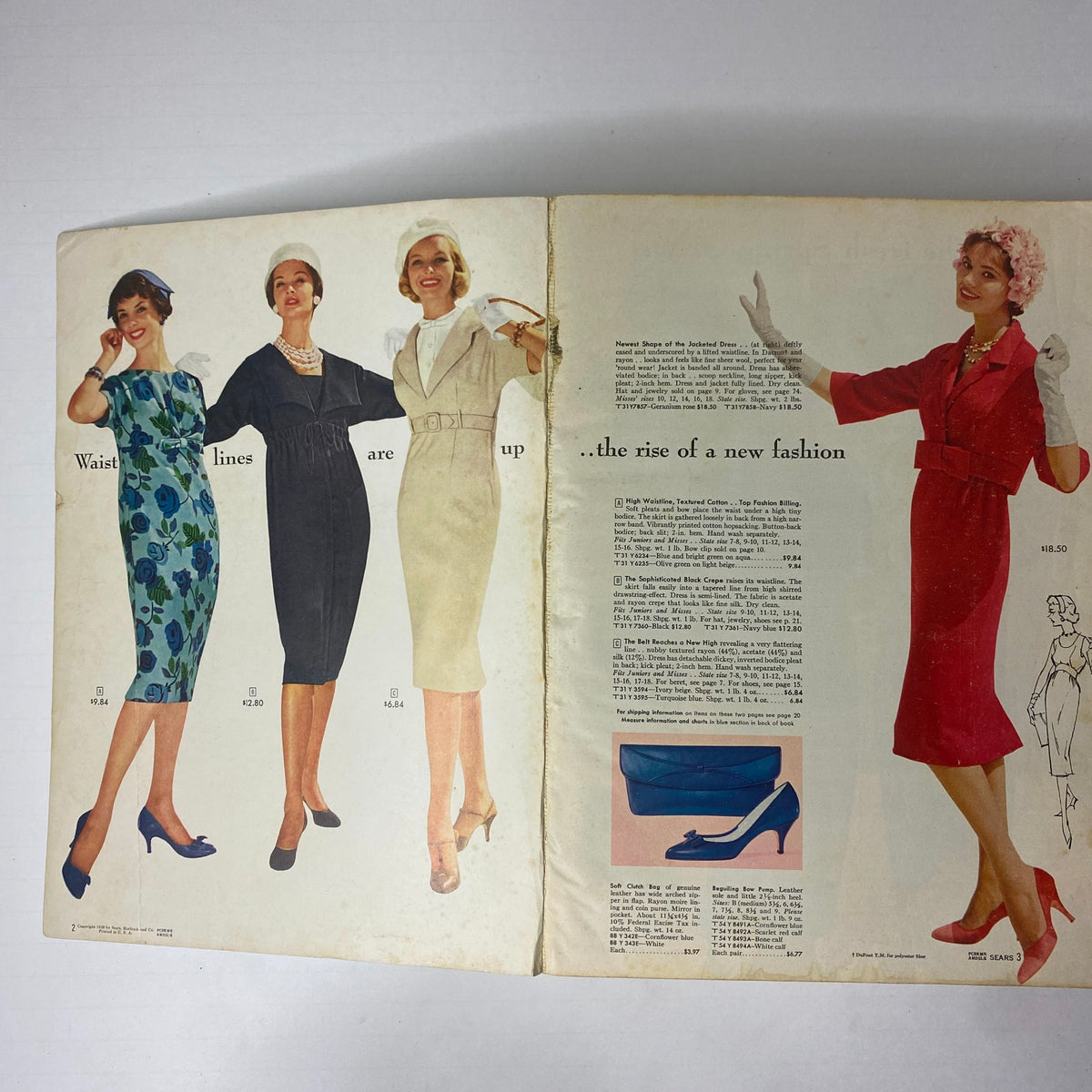
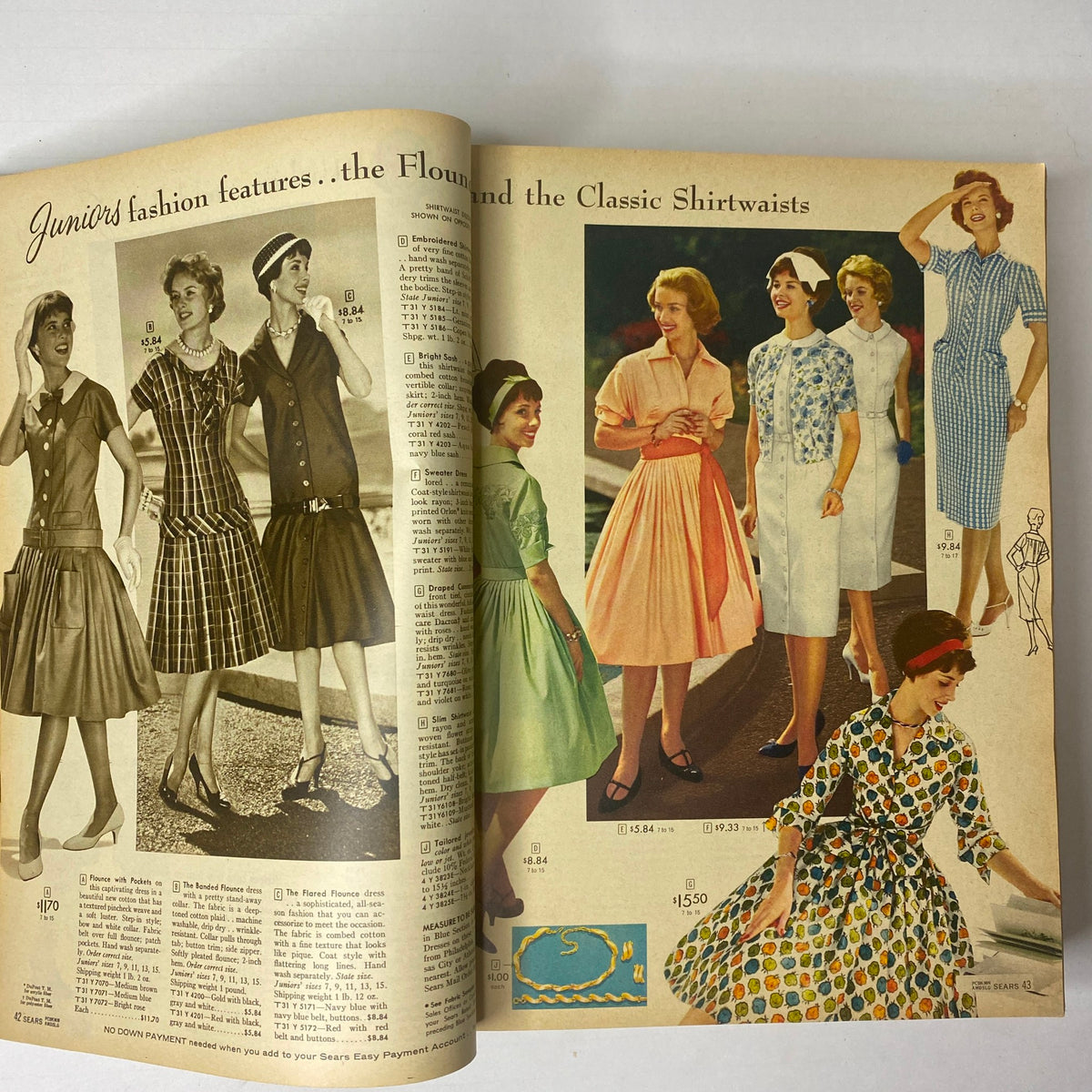
The 1959 Sears Spring and Summer Catalog is a primary document of American consumer fashion at one of the most visually distinctive and culturally specific moments of the twentieth century — the final spring of the 1950s, when the silhouettes, fabrics, and styling conventions that define mid-century fashion in the popular imagination were fully codified and at peak commercial expression. The confirmed focus on shirtwaist dresses for junior sizing captures the defining garment of the era with particular precision: the shirtwaist dress — fitted bodice, cinched waist, full or A-line skirt — was the single most ubiquitous silhouette in American women's and girls' fashion between approximately 1947 and 1962, and a Spring and Summer catalog from 1959 documents it at the absolute height of its cultural dominance, one year before the shift toward more relaxed and eventually more mod silhouettes that would begin to displace it in the early 1960s. For collectors building archives of vintage Sears catalogs, the 1959 Spring and Summer edition represents the foundational era of postwar American retail fashion documented with the completeness and specificity that only a mass-market catalog can provide.
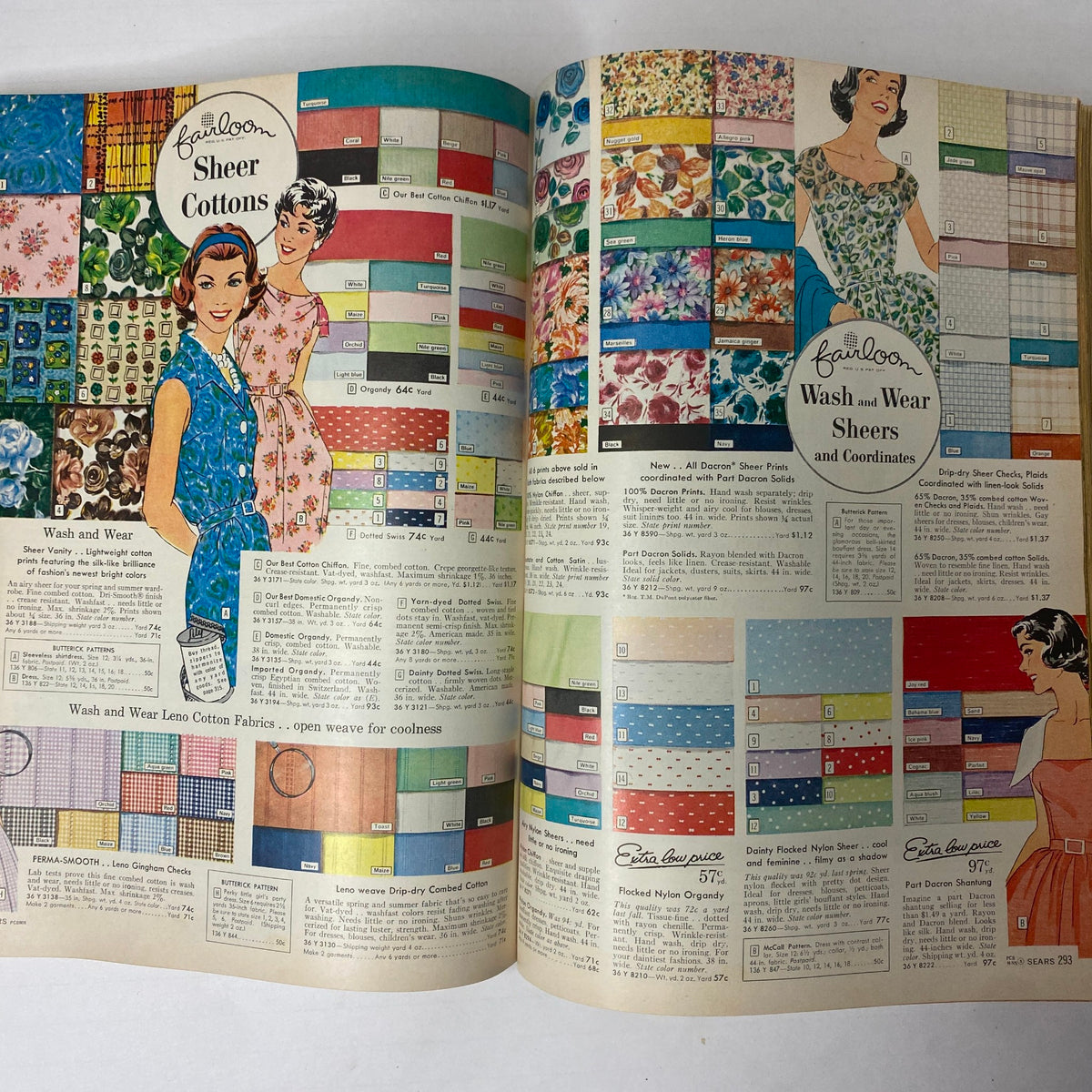
The confirmed detail of pastel color palettes and lightweight fabrics situates this catalog within the specific seasonal and stylistic conventions of late-1950s American fashion with documentary precision. Pastel colorways — the powder blues, mint greens, soft yellows, and blush pinks that characterized spring and summer ready-to-wear at the close of the decade — were not merely aesthetic choices but deliberate commercial signals connecting clothing to the optimistic consumer mood of Eisenhower-era America. The junior sizing focus adds a further dimension: by 1959, junior sizing had developed into a sophisticated retail category with its own proportioning standards and styling conventions, and the shirtwaist designs documented in this catalog for that market represent the specific translation of adult fashion trends into the teenage and young women's consumer segment that Sears was addressing with a national reach no department store or boutique could match. Collectors focused on 1959 publications as documents of American material culture will find this catalog providing a level of pricing, sizing, fabric, and style-number specificity that editorial fashion magazines of the era simply do not offer.
The 1959 Spring and Summer Sears catalog also occupies a specific position in the broader history of American retail. By 1959, Sears was the largest retailer in the United States, and its seasonal catalogs — distributed to millions of households — functioned as the primary fashion reference for American consumers in regions where department store access was limited. The Spring and Summer edition covered the Easter, graduation, and summer vacation seasons in a single comprehensive volume, making it the catalog that most directly addressed the aspirational spring wardrobe moment that defined the year's fashion narrative for a vast segment of the American market.
About the Publication
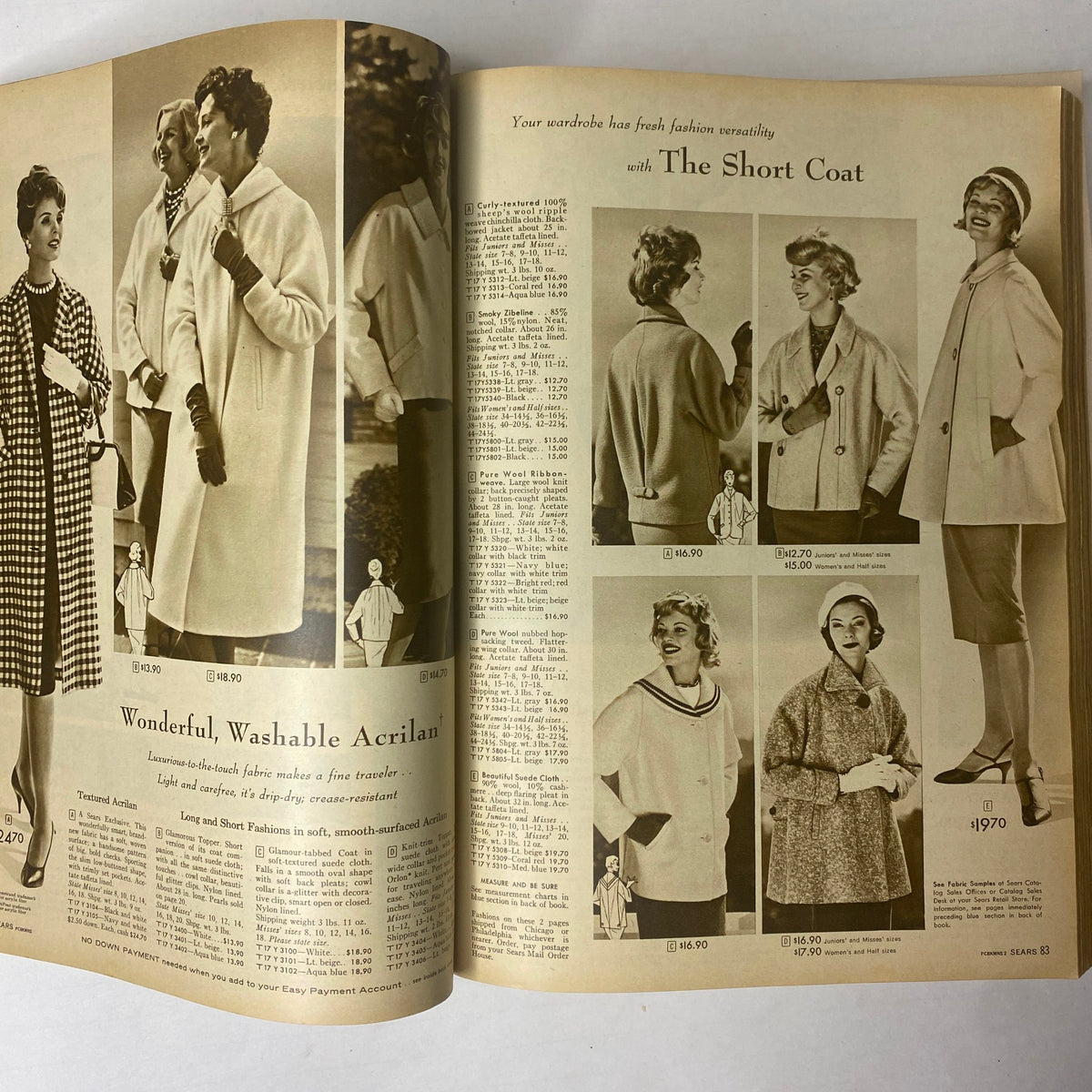
Sears, Roebuck and Co. seasonal mail-order catalogs were large-format illustrated publications issued twice yearly in Spring/Summer and Fall/Winter editions, supplemented by specialty holiday catalogs, and distributed to millions of American households through the mid-twentieth century. By 1959, Sears was the dominant American retailer and its catalogs were among the most widely distributed publications in the country — comprehensive merchandise references covering clothing, footwear, appliances, tools, toys, and household goods across every demographic category the company served. The Spring and Summer catalog addressed the fashion and household needs of the warmer half of the year and was designed to be consulted across multiple months rather than read and discarded, which accounts for the survival of copies in usable condition more than six decades after distribution. Its audience was the entire American household market, with particular authority in smaller cities and rural communities where Sears catalog shopping was the primary access point for branded consumer goods.
Key Highlights Inside
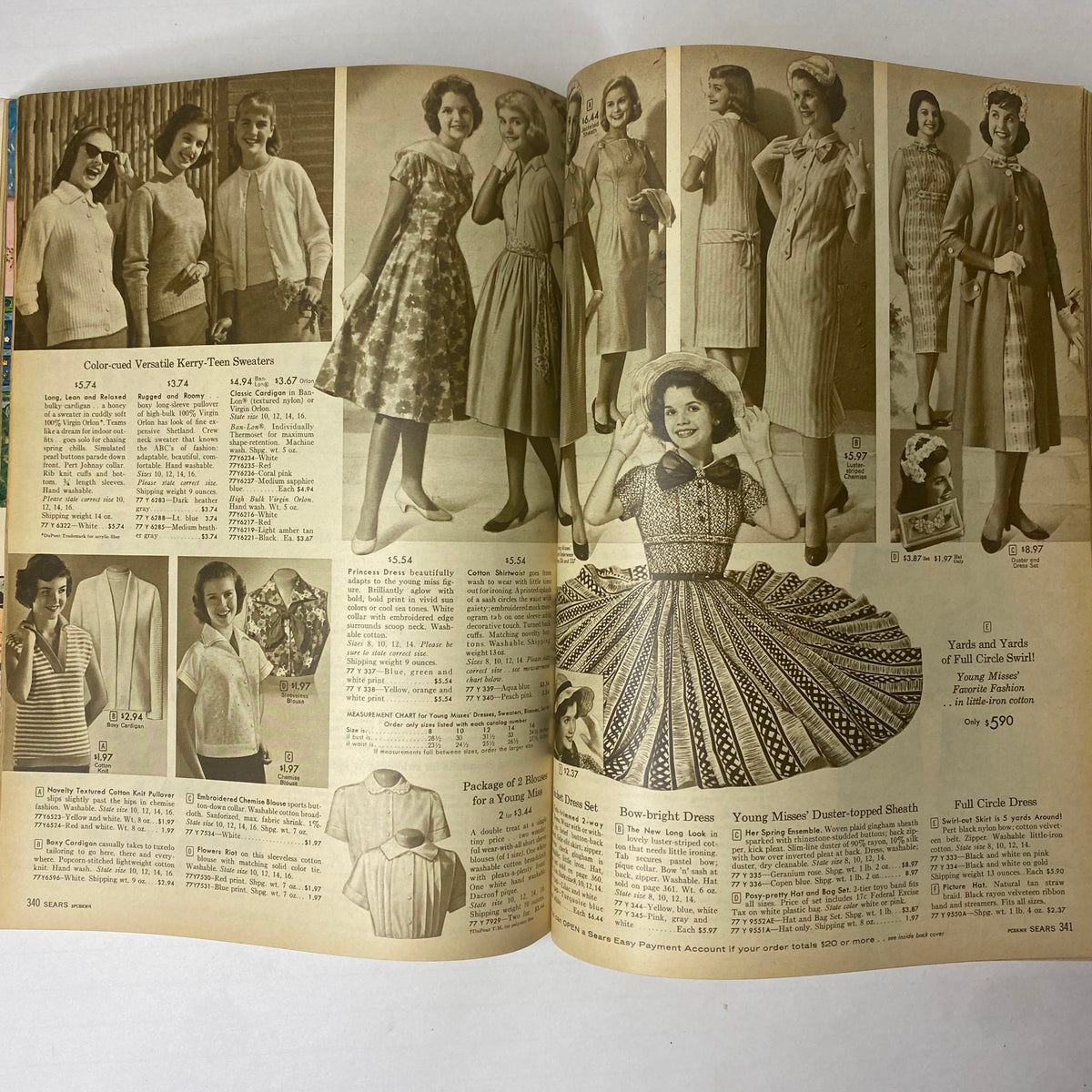
- Shirtwaist dress collection for junior sizing — confirmed featured content — Primary retail documentation of the defining American fashion silhouette of the late 1950s, captured at the year of its peak commercial dominance and documented with the style numbers, fabric descriptions, color names, and pricing that editorial fashion sources do not provide.
- Pastel color palettes and lightweight fabrics — confirmed styling details — Specific documentation of the seasonal colorway conventions of 1959 American spring fashion, providing primary reference material for costume historians, vintage sewing researchers, and fashion scholars studying the late-1950s aesthetic.
- Belted and floral pattern designs — confirmed range — Documentation spanning the breadth of the shirtwaist silhouette from tailored belted versions to printed floral variants, reflecting the full commercial range of the style as Sears was presenting it to its national junior customer base in the spring of 1959.
- 1959 Spring and Summer — final season of peak 1950s silhouette dominance — Published in the last spring before the gradual early-1960s shift toward more relaxed proportions began to displace the fitted-bodice, cinched-waist silhouette, making this catalog a document of the style at its commercial apex rather than its decline.
Condition & Rarity
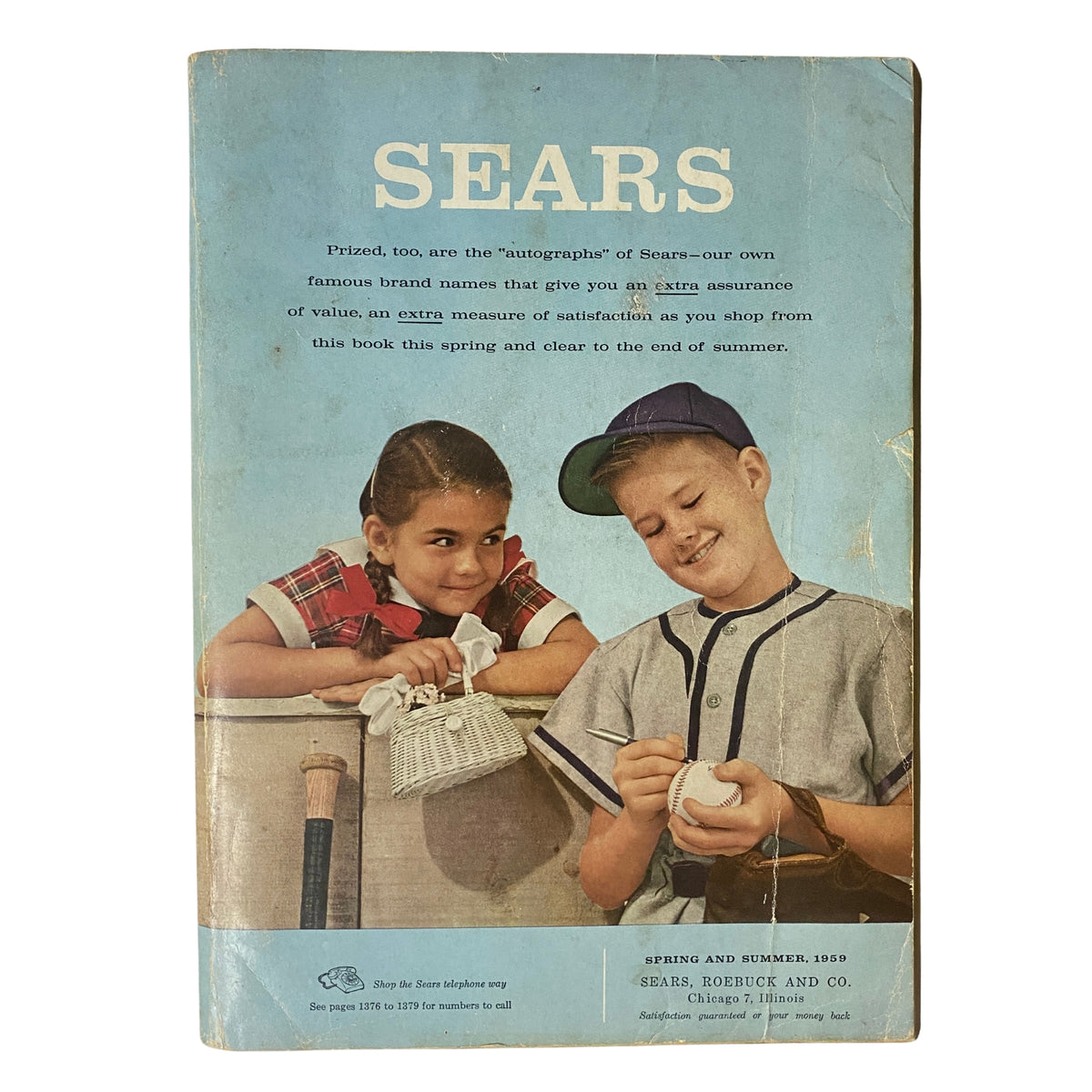
Good condition with no address label and plastic protective covering represents a solid assessment for a 66-year-old large-format retail catalog designed for sustained household use across an entire season. The no-label status is a meaningful positive attribute: Sears catalogs were mailed directly to customer households with address labels on the cover, and surviving copies without labels preserve the full cover illustration — in this case the shirtwaist dress imagery that is the primary visual document of the catalog's content — without obstruction. The plastic protective covering indicates deliberate preservation. Good condition in a publication of this age and format means the cover retains its primary imagery and color, the spine is intact across what would have been a substantial page count, and interior pages are readable and structurally sound. Typical signs of wear for a catalog of this era include spine stress from repeated consultation, light tanning of interior pages from six decades of storage, and minor corner wear — characteristics that represent honest age rather than damage and that are consistent with a copy that has been preserved rather than used until deterioration. The specific condition details should be confirmed from available photographs for any surviving copy being considered for research, display, or pattern reference purposes.
Looking for More Issues Like This?
Late-1950s Sears Spring and Summer catalogs with confirmed junior fashion content and intact covers are considerably less common than their original distribution numbers suggest — these were working household references that most families used until they fell apart, and the small fraction that survived in presentable condition did so through deliberate preservation rather than neglect. The Sears catalog archive at OriginalMagazines.com is the most direct resource for collectors researching other seasonal editions across the mid-century decades, spanning the full range of Sears catalog publishing from the postwar years through the late twentieth century. For collectors building a broader picture of American consumer culture in 1959 specifically, the complete 1959 publications collection covers magazines, catalogs, and periodicals from the final year of the decade that defined mid-century American material life.