

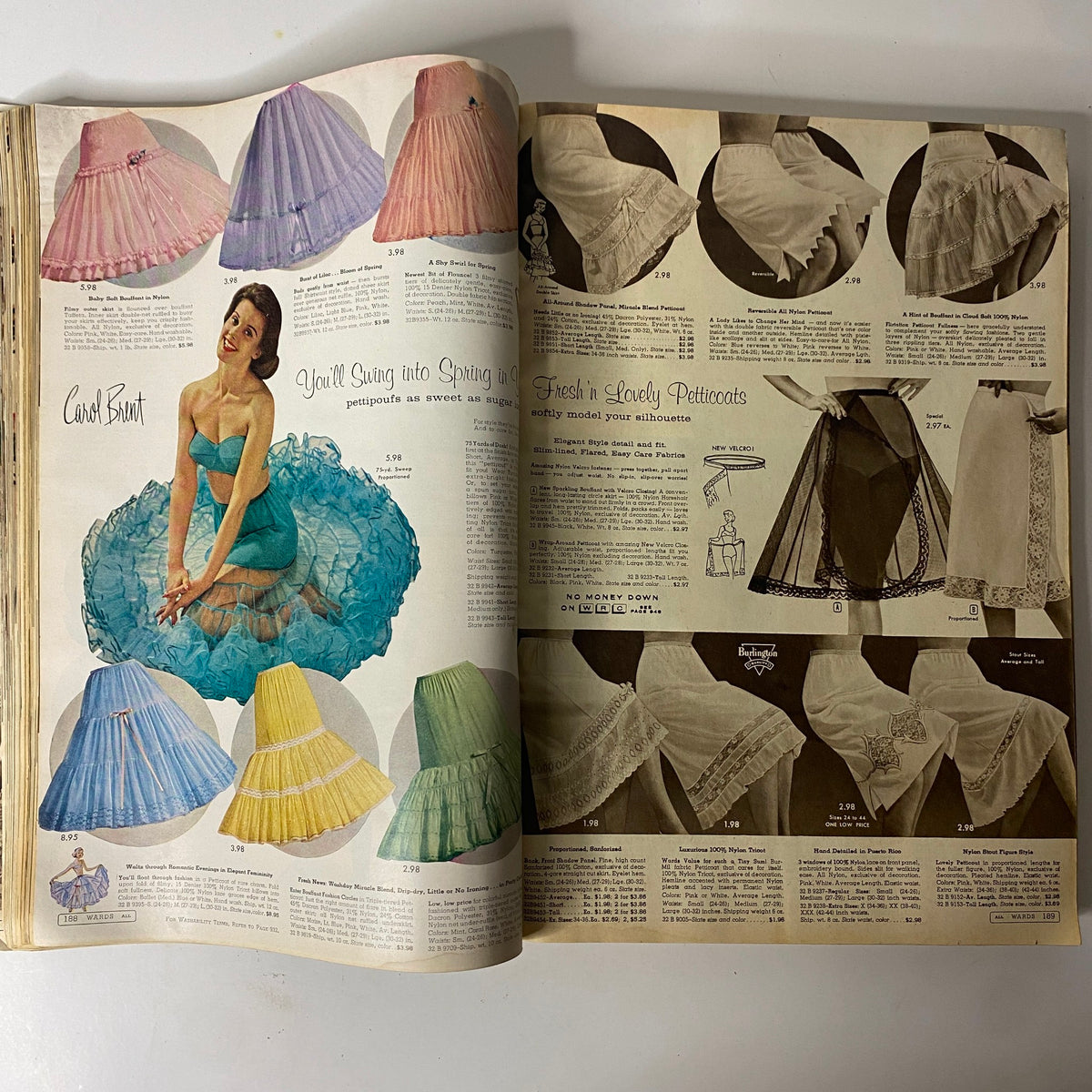
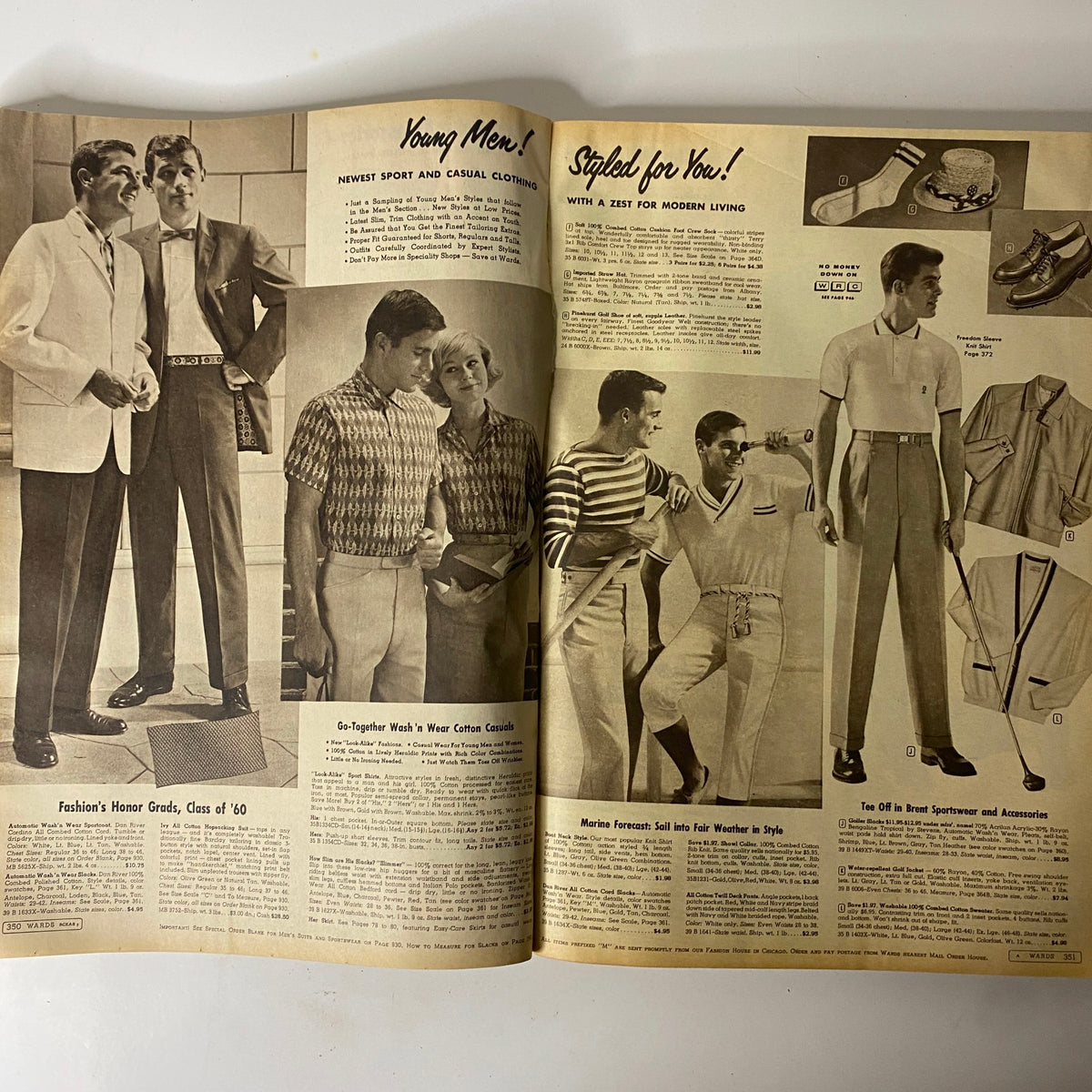
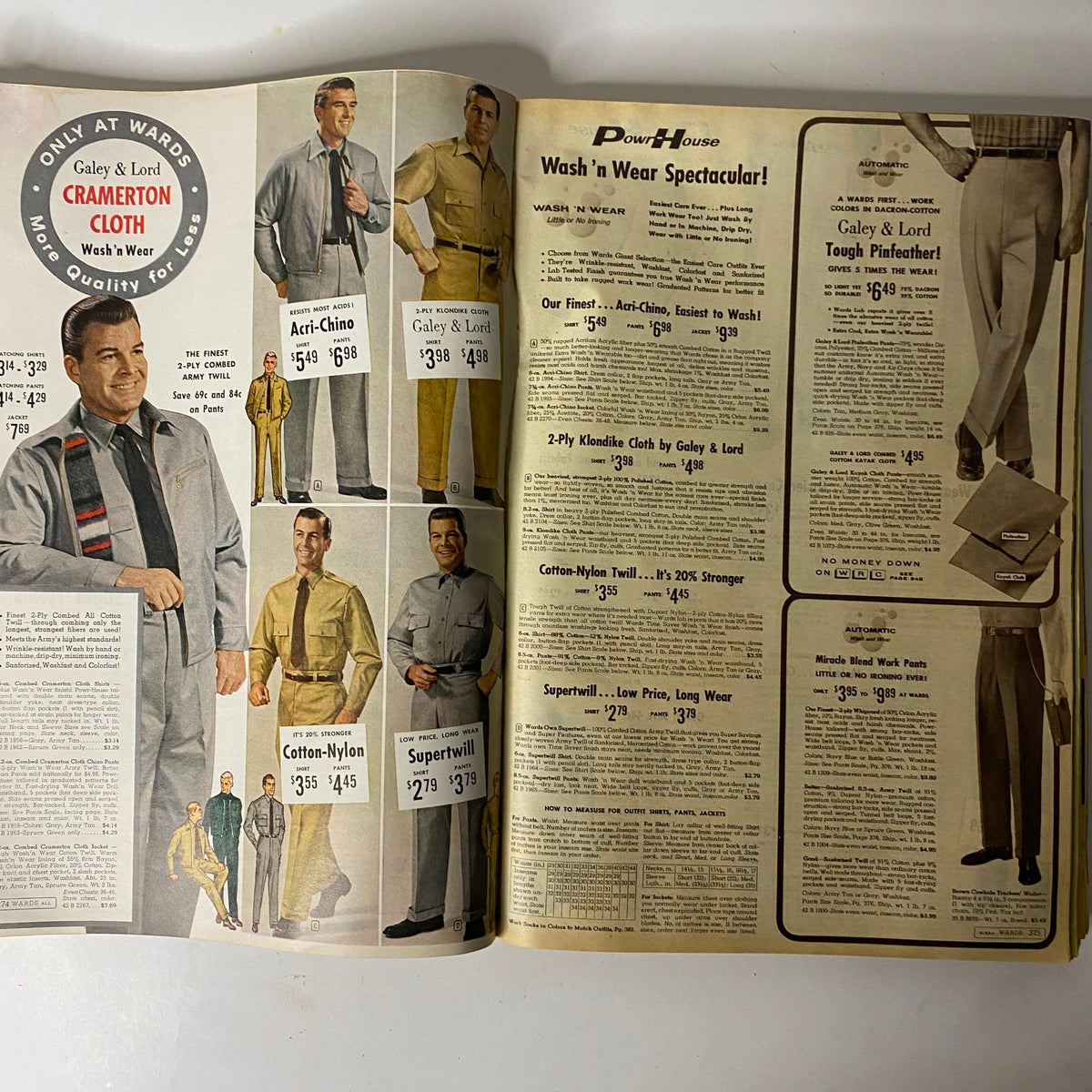
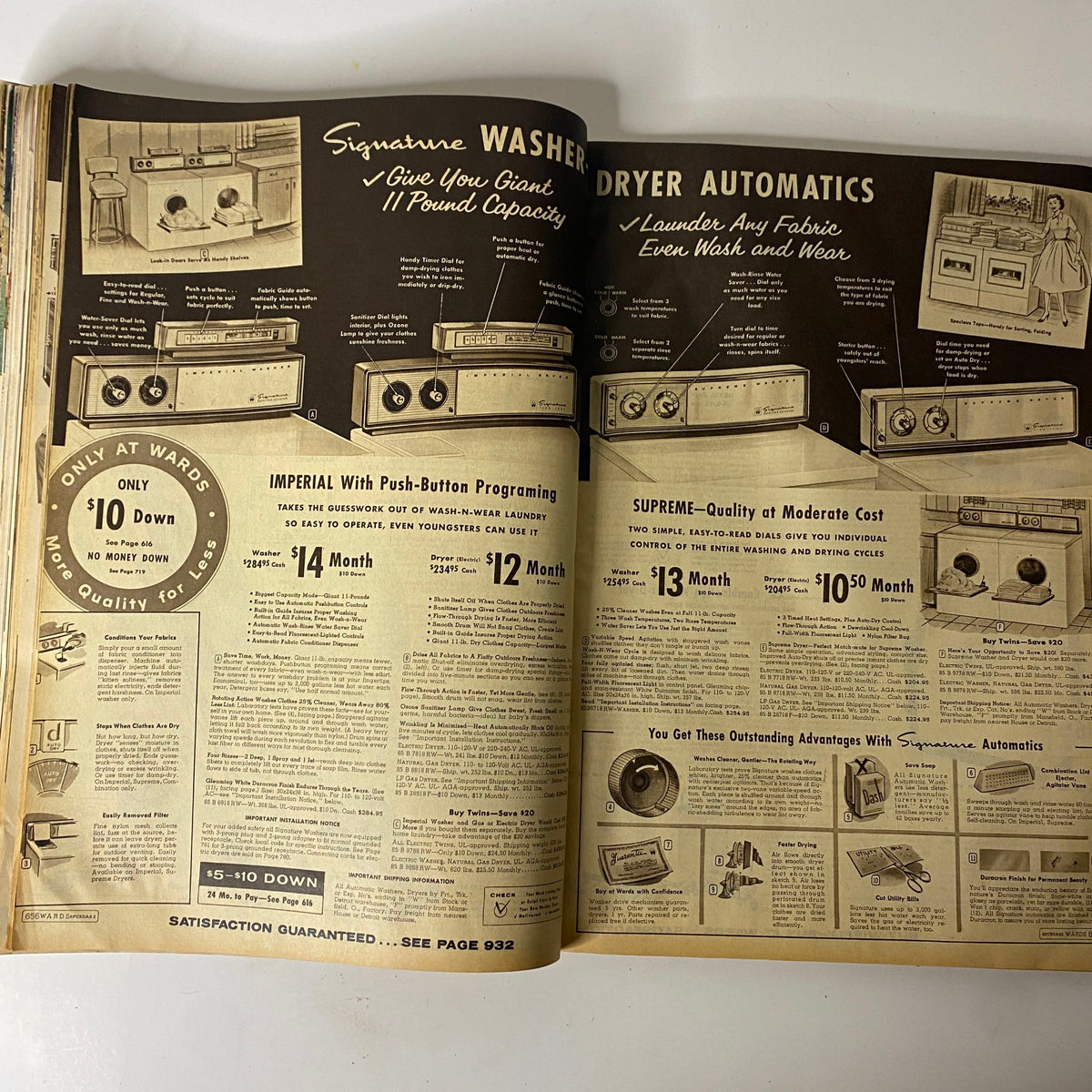
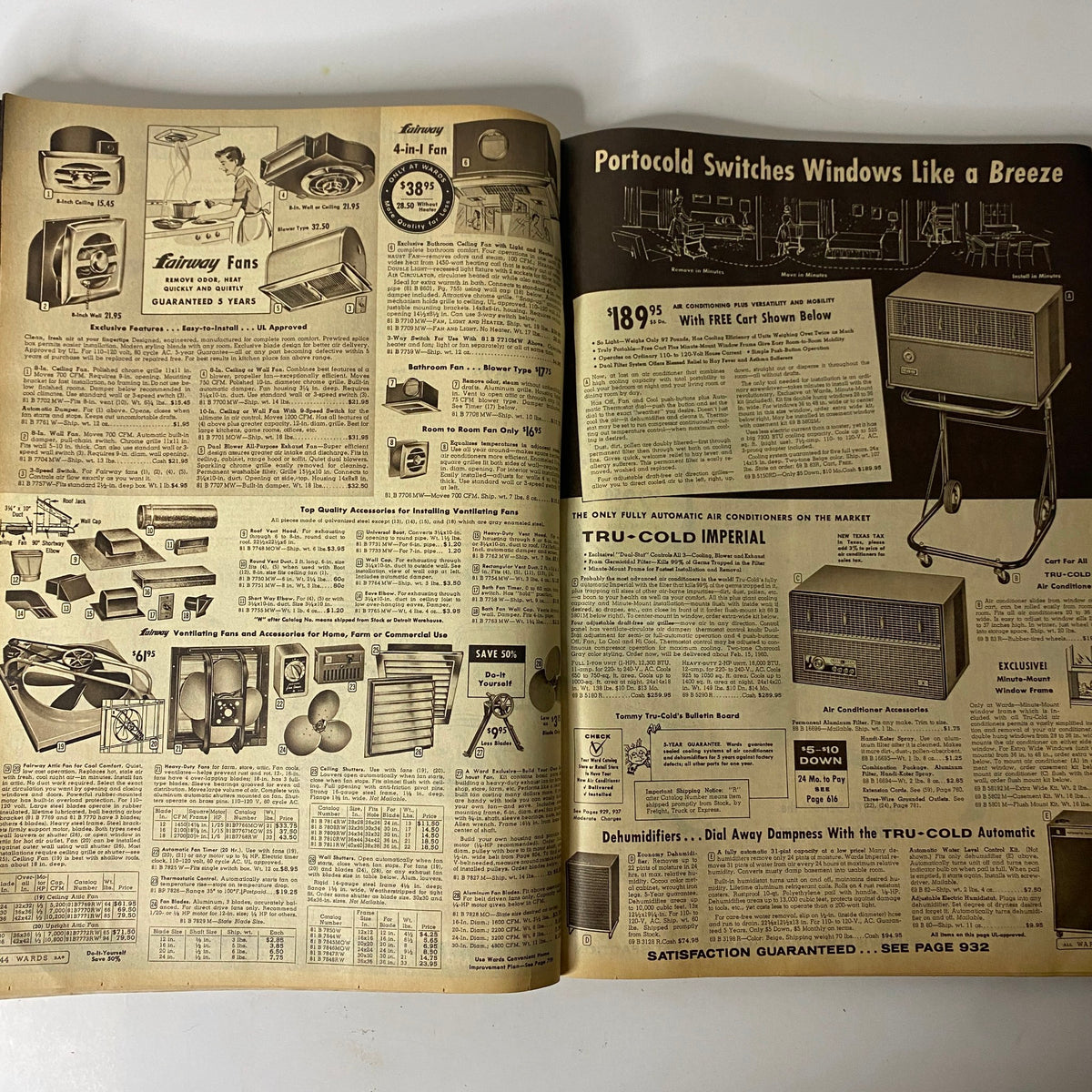
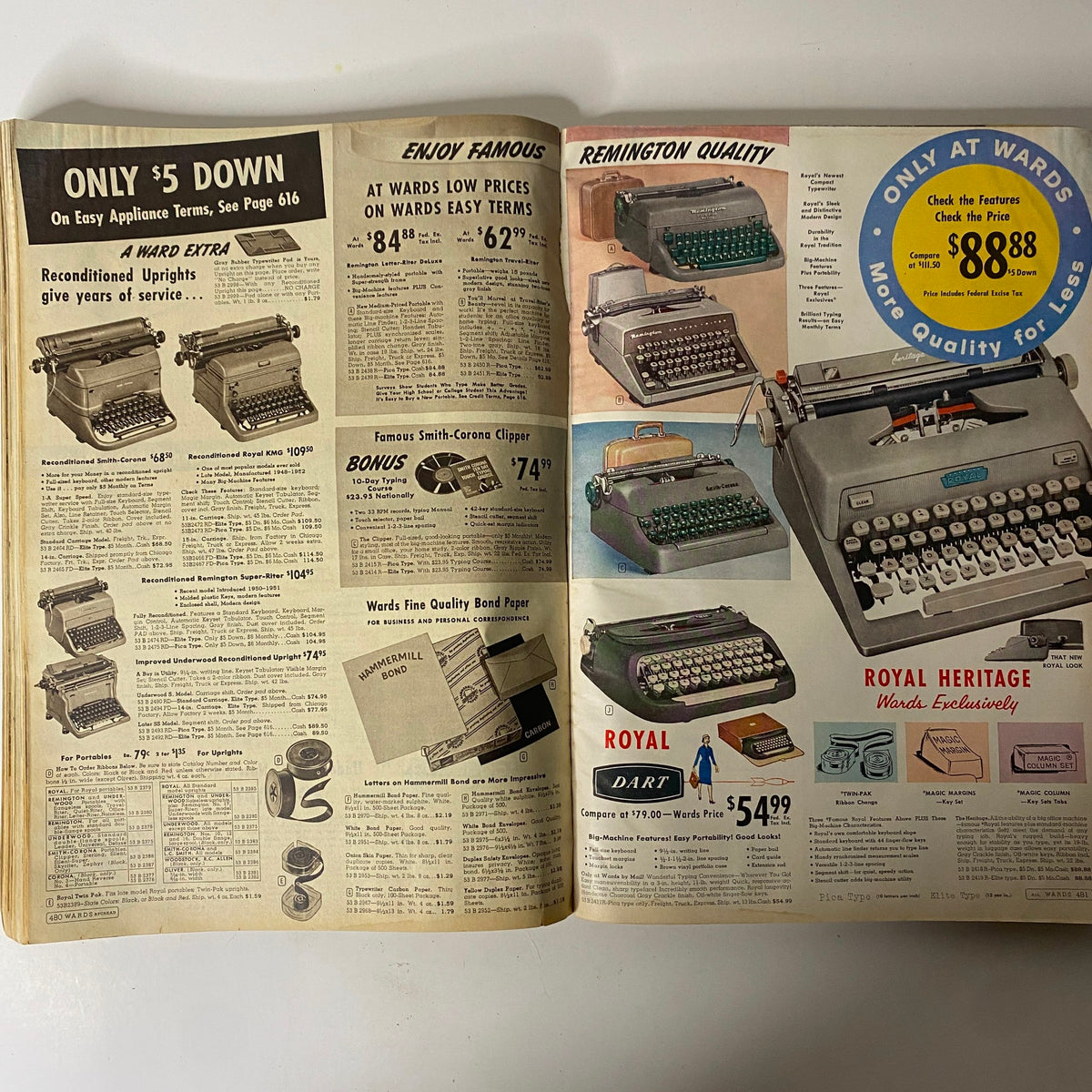
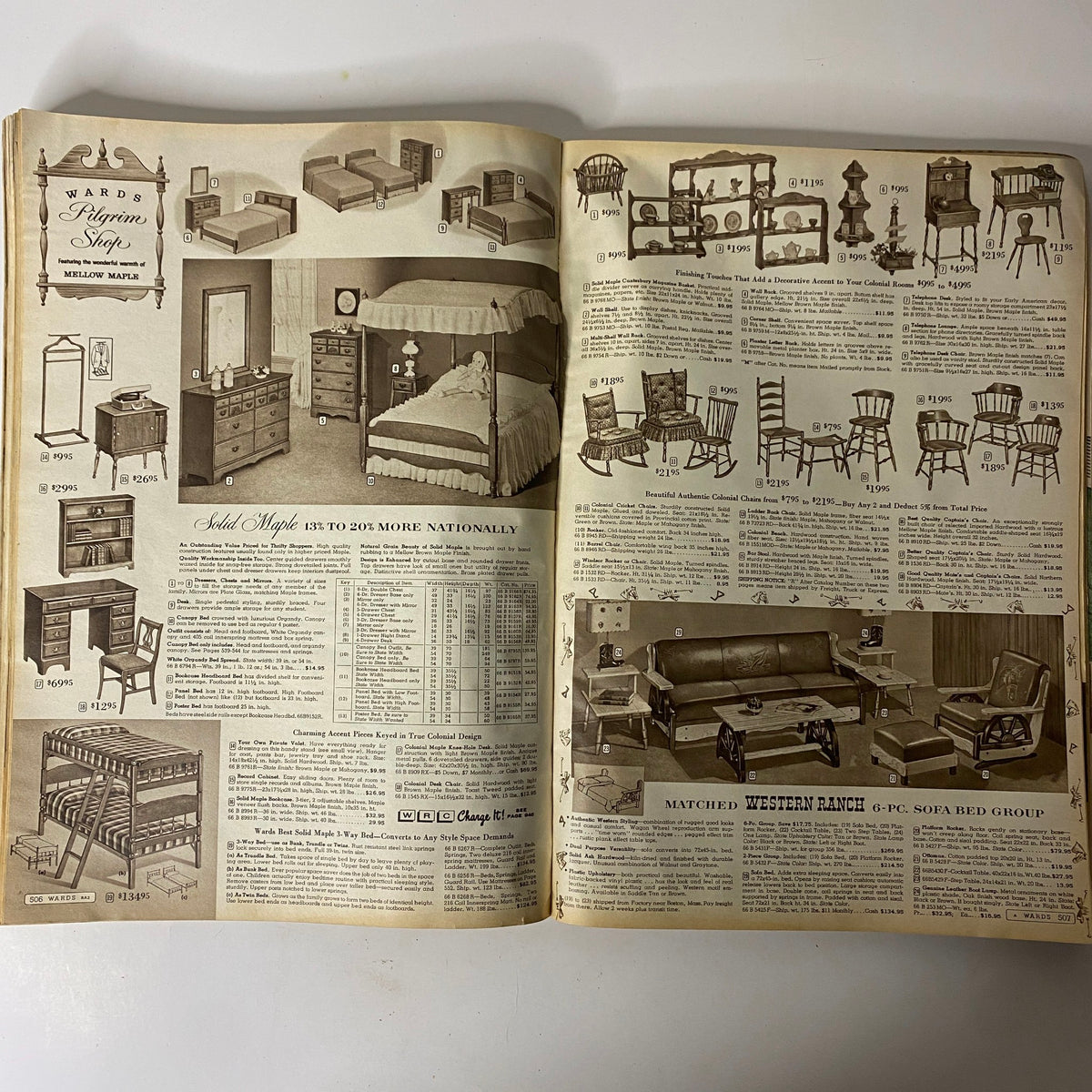
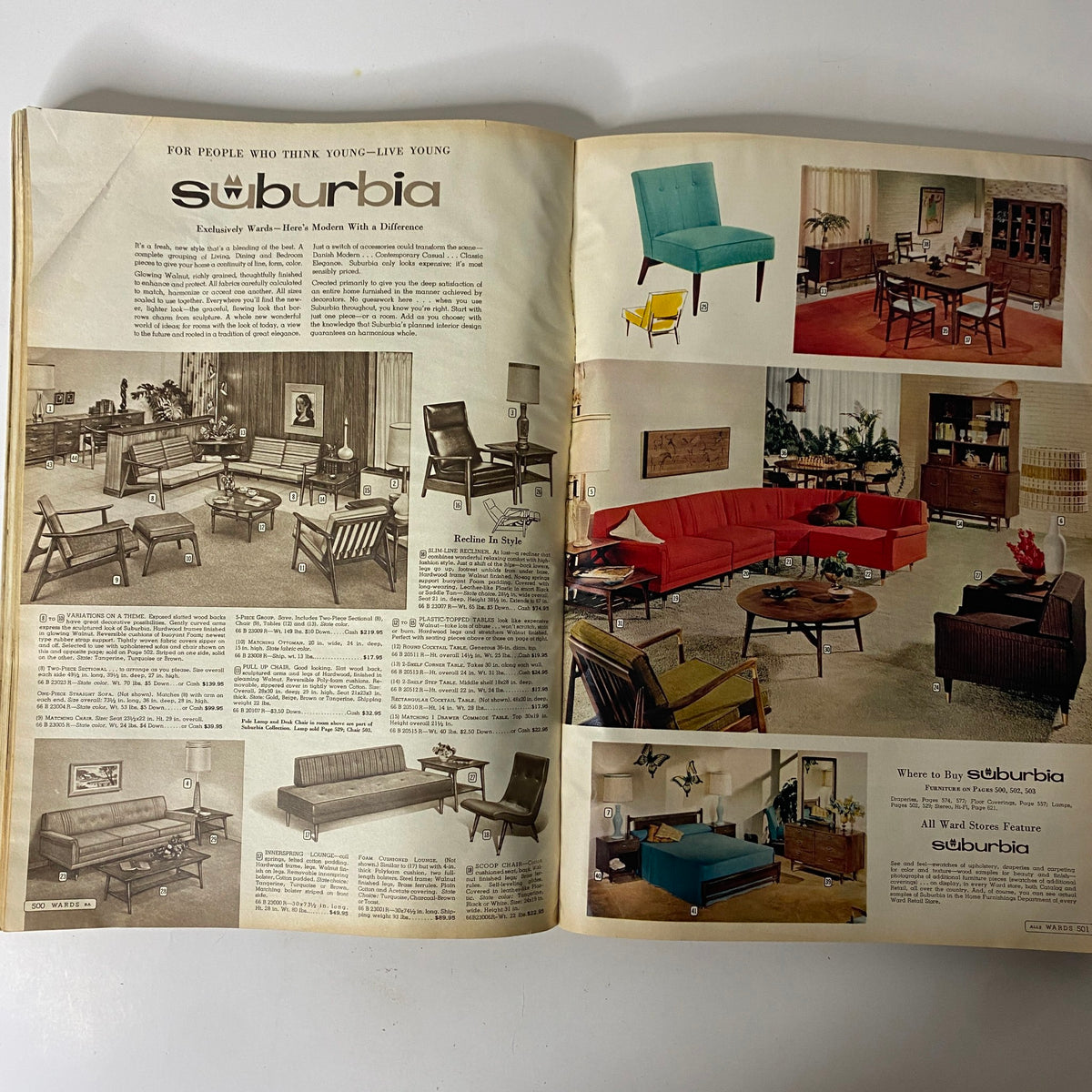
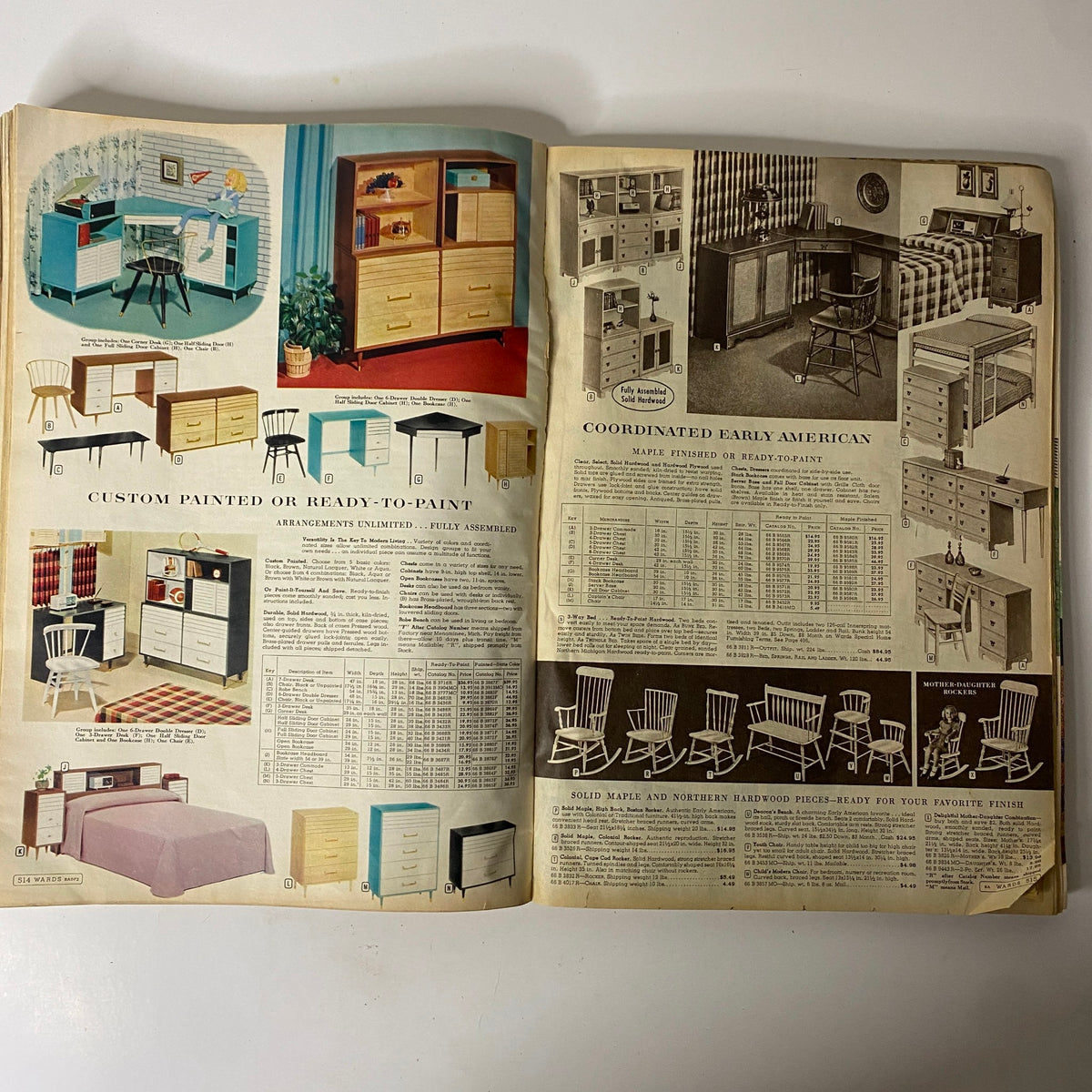
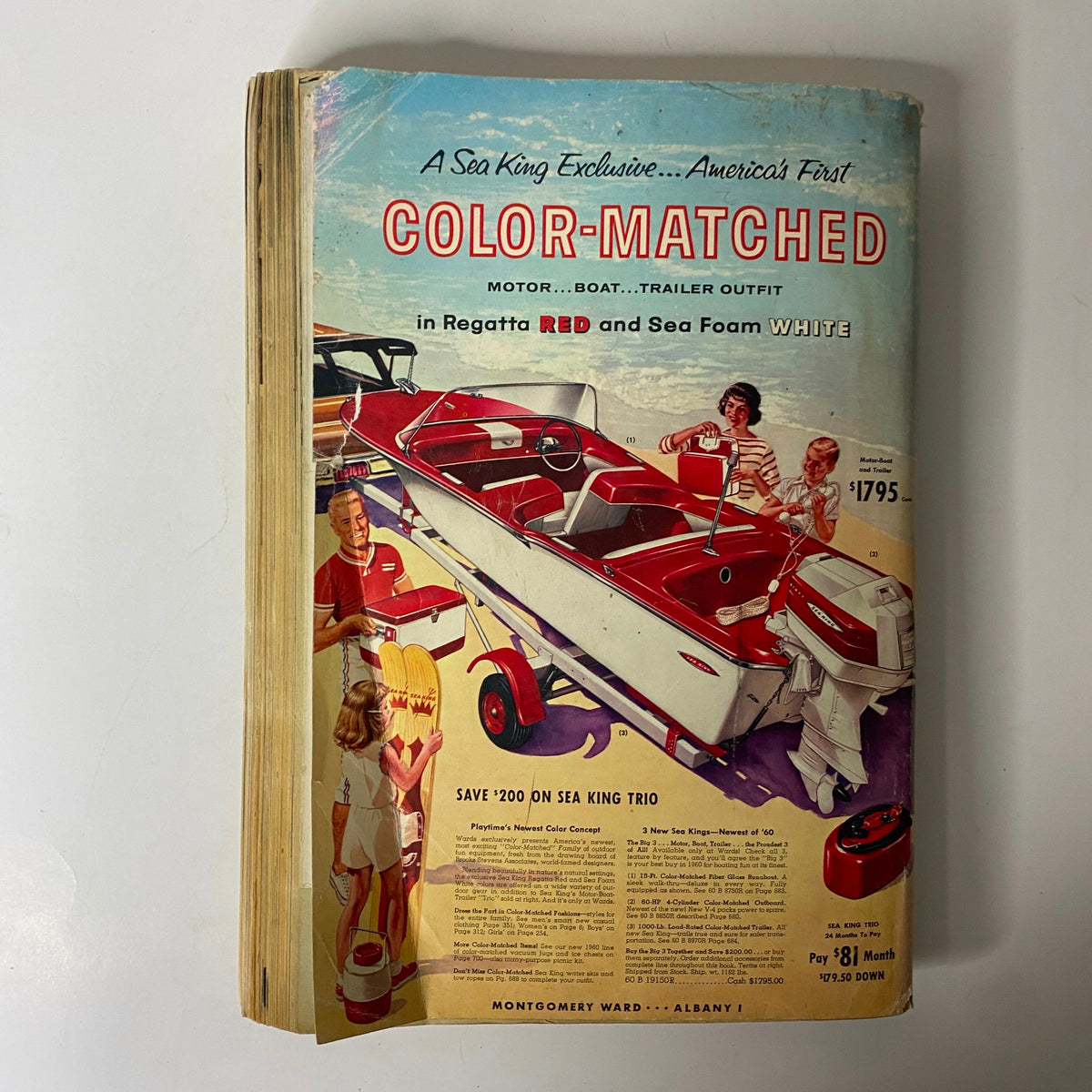


Description
Collector's Note – Why This Issue Matters
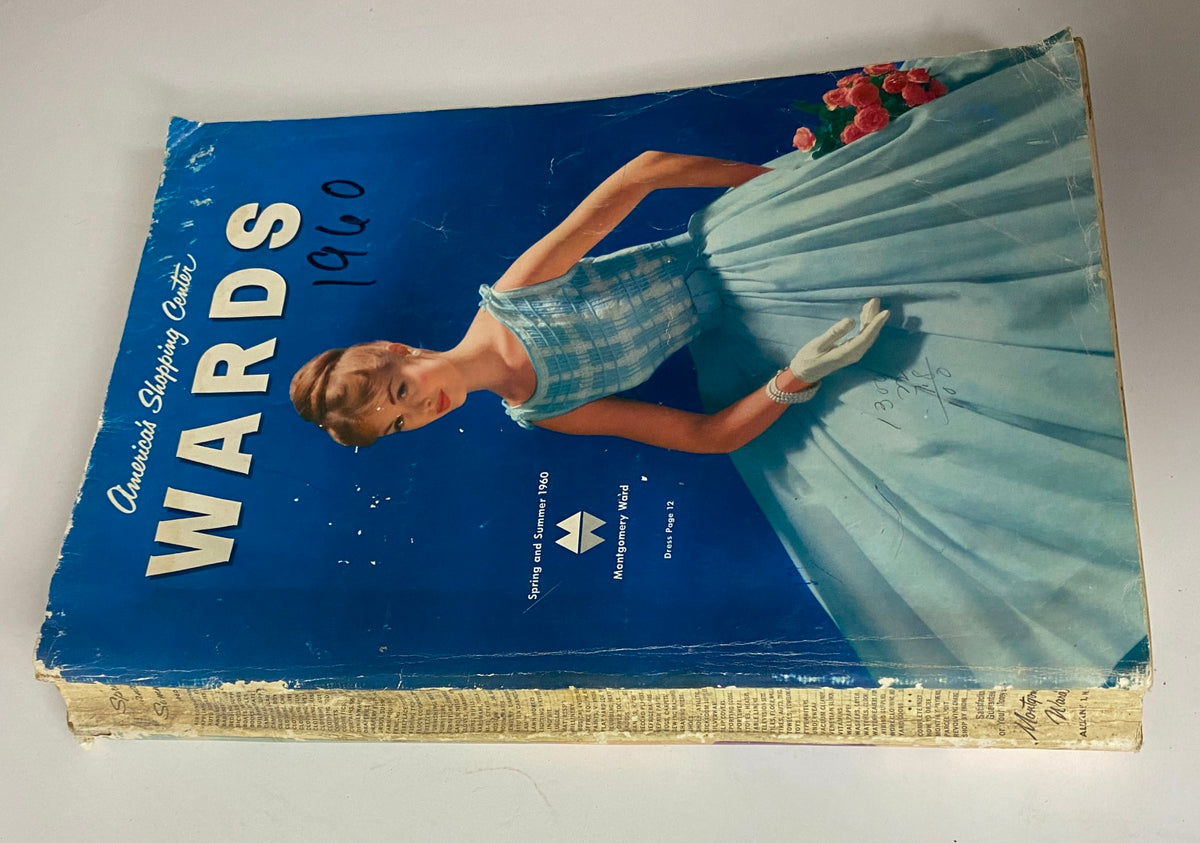
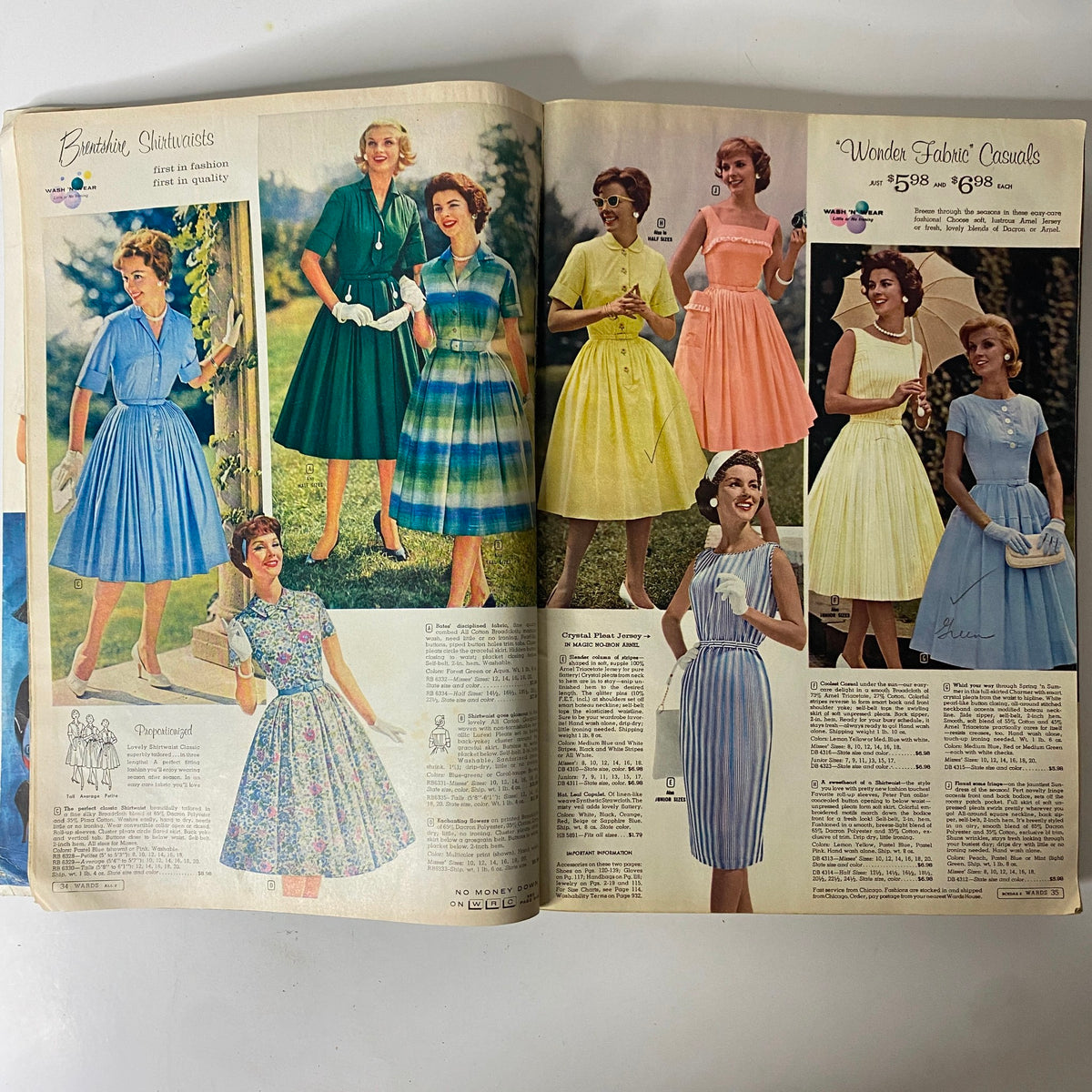
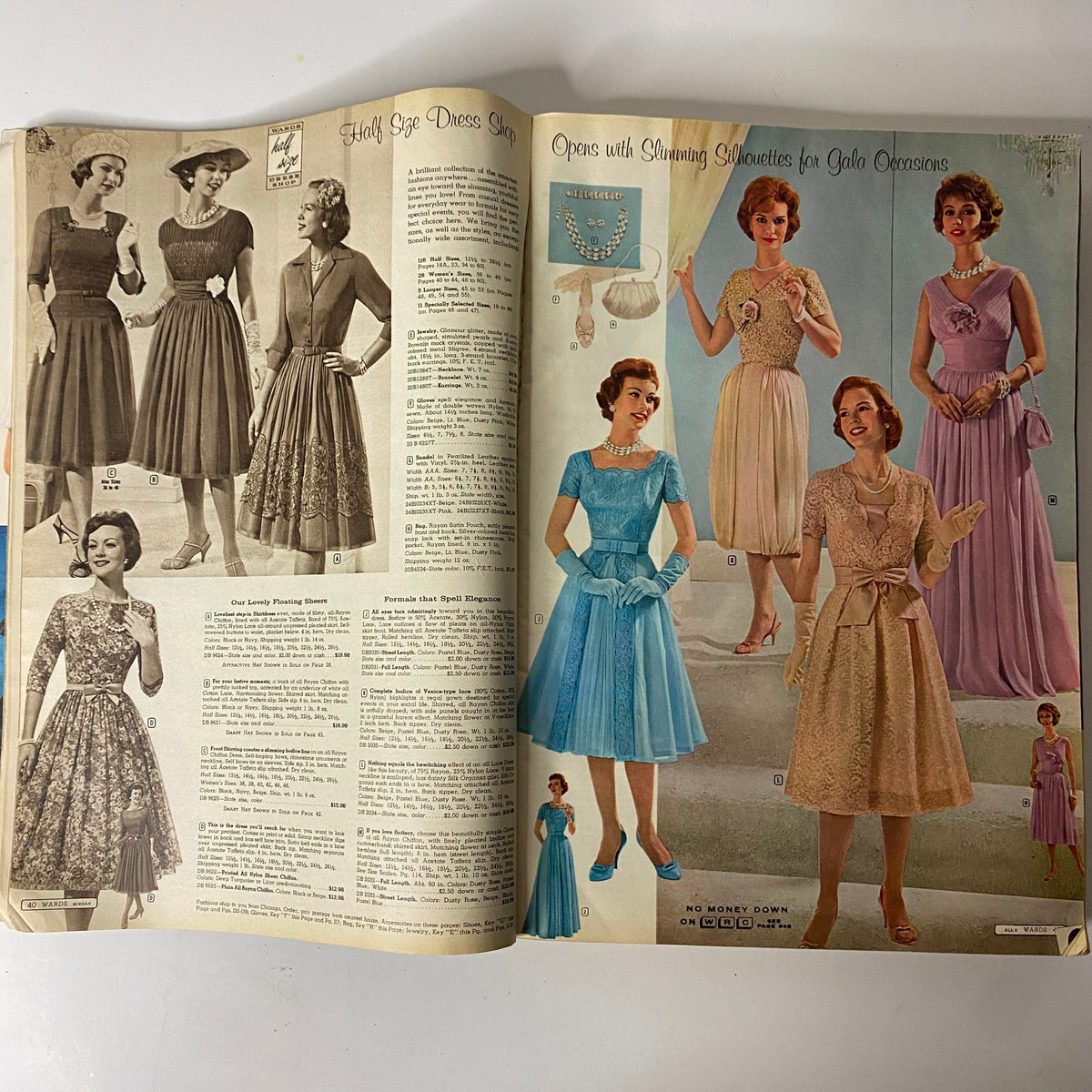
The 1960 Montgomery Ward Spring and Summer Catalog is a primary document of American consumer fashion at the precise opening moment of the decade that would transform it most dramatically. The spring-summer season of 1960 is the first seasonal catalog edition of a decade that would end with fashion almost unrecognizable from its starting point, and the specific content highlighted here — structured handbags, silk scarves, delicate jewelry, and fashionable hats — is the vocabulary of the last fully intact expression of the mid-century aesthetic before the forces that would dismantle it had yet made themselves fully felt in the mainstream market. The year 1960 is a genuinely significant one for American fashion history: it was the year John F. Kennedy and Jacqueline Bouvier Kennedy entered the White House, bringing with them the specific aesthetic sensibility — the structured elegance, the silk scarves, the pillbox hats, the pearl jewelry — that would define the early-decade fashion ideal and that was already present in embryonic form in the spring and summer fashion vocabulary of that year's major catalog retailers. A 1960 Montgomery Ward accessories-focused spring-summer catalog is not merely fashion documentation; it is a primary commercial record of the specific material aesthetic that the Kennedy era would elevate to cultural authority, captured in the mass-market retail terms through which most American women actually encountered and participated in it. For collectors building a documentary archive of American fashion's mid-century transition, the full range of 1960 magazines and publications from this year provides essential primary source context for understanding the specific aesthetic baseline from which the decade's radical transformations would depart.
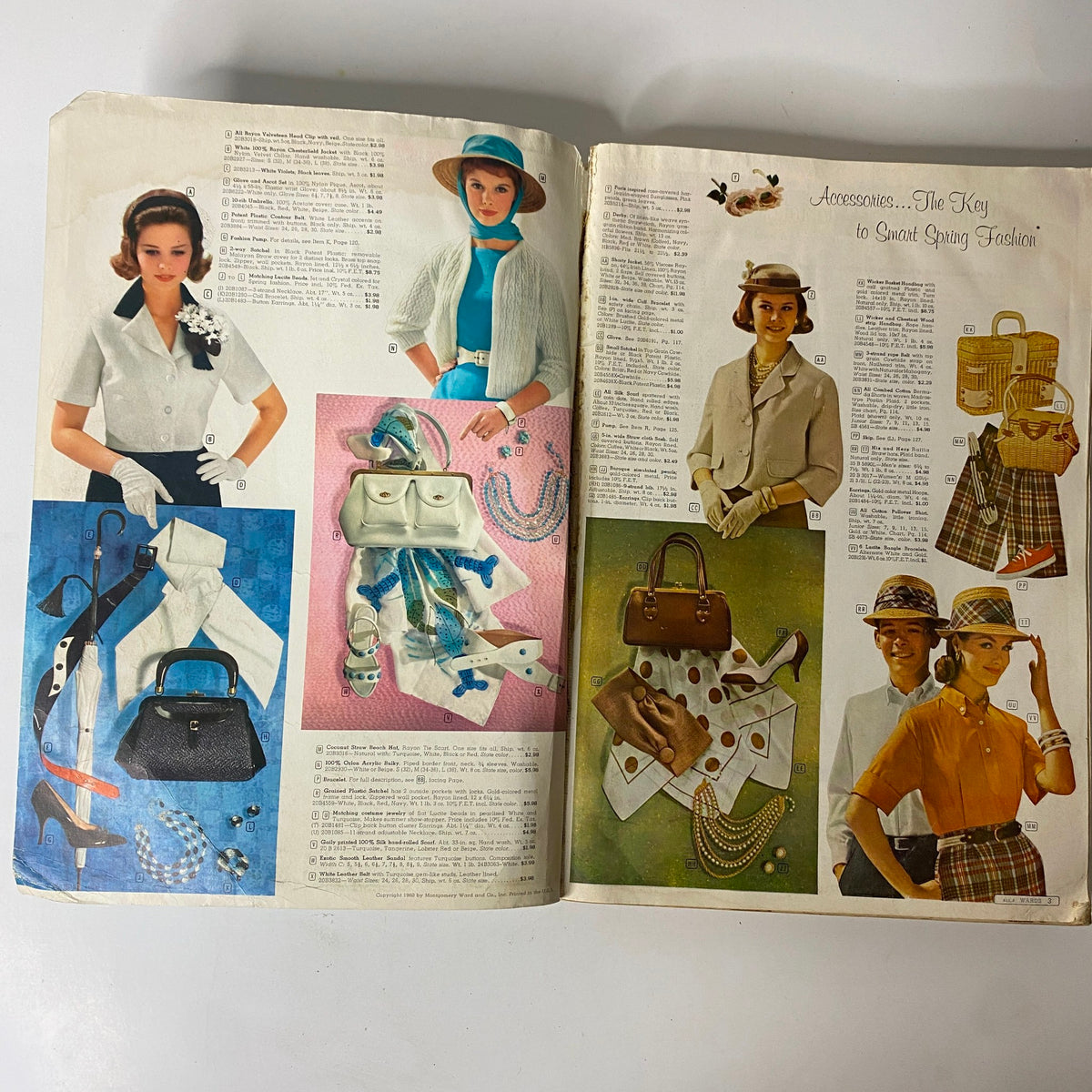
The accessories focus of this catalog's highlighted content — structured handbags, silk scarves, jewelry, and hats — documents a specific and historically significant dimension of mid-century American fashion culture that comprehensive catalog editions often cover less thoroughly than clothing. Accessories in the spring-summer 1960 fashion vocabulary were not optional additions to an outfit but structural elements of a complete look, their coordinated selection an expression of the specific sartorial discipline that mid-century fashion culture demanded and rewarded. The silk scarf, the structured handbag, the appropriate hat, and the coordinated jewelry were the components through which a woman signaled her fashion literacy and social polish, and their documentation in a major catalog retailer's spring-summer edition preserves primary commercial evidence of how this vocabulary was being packaged and priced for the broad middle-class market at the decade's opening moment. The no-label condition confirmed in this listing is a meaningful collector attribute, as Ward's distributed the vast majority of its catalogs through direct mail with address labels applied to the cover — labels that after sixty-five years have bonded permanently to the cover stock of most surviving copies, making label-free examples meaningfully cleaner in visual presentation and correspondingly less common in the surviving pool. A clean, label-free 1960 spring-summer catalog with its accessories-focused cover content fully intact is a more specific and more display-ready primary source than the labeled majority of survivors from this distribution channel.
The year 1960 was also, independently of its fashion significance, a genuinely consequential moment in American history that enriches the catalog's documentary character. The presidential election of November 1960 — the Kennedy-Nixon contest that would produce the youngest elected president in American history — was being anticipated as this spring-summer catalog was being consulted in American households across the country. The Cold War was at one of its most anxious junctures, with the U-2 spy plane incident in May 1960 collapsing the Paris Summit and intensifying the superpower competition that defined the decade's geopolitical atmosphere. And domestically, the early stirrings of the civil rights movement's direct-action phase — the Greensboro lunch counter sit-ins occurred in February 1960 — were beginning to reshape the country's social landscape in ways that would accelerate dramatically through the decade. A Montgomery Ward spring-summer catalog from this specific year is a catalog being used in households that were simultaneously living through all of these historical forces, and the specific aspirations and aesthetic values it documents carry the imprint of that context whether or not its pages engage with it directly.
About the Publication
The Montgomery Ward Spring and Summer Catalog was the warm-weather companion to the company's flagship fall-winter edition, distributed annually to millions of American households through the direct-mail program that had been central to Ward's retail dominance since the company's founding in 1872 as the first major mail-order catalog retailer in the United States. By 1960, the spring-summer catalog had been a fundamental institution in American consumer culture for nearly ninety years, its arrival marking the seasonal transition and providing a comprehensive guide to the clothing, accessories, home goods, and consumer products that Ward's was offering for the coming months. The catalog's format combined comprehensive merchandise coverage across all product categories with the visual production values that the company's scale enabled, producing a publication that simultaneously served as practical shopping guide, comprehensive fashion reference, and visual projection of the aspirational domestic and personal life that Ward's merchandise was positioned to enable. The 1960 edition's position at the opening moment of the decade's most dramatic fashion transition gives it a documentary significance that goes well beyond any individual catalog's typical seasonal content.
Key Highlights Inside
- Structured handbags — the architectural accessory of the era documented — The confirmed structured handbag content documents one of the most visually characteristic accessories of the early-1960s fashion vocabulary in its commercial, mass-market retail form, preserving primary evidence of how the decade's dominant accessory type was being priced, styled, and offered to mainstream American consumers in the first spring-summer season of the 1960s.
- Silk scarves — versatile elegance at the mass-market level — Silk scarves as a confirmed accessory category in a 1960 Ward's spring-summer catalog document the specific fashion culture in which the silk scarf functioned as a multi-purpose elegance signifier — worn at the neck, tied to a handbag, wrapped as a headscarf — at the moment when this use vocabulary was fully established in the mainstream American market.
- Hats — a fashion category at its last mainstream peak — The confirmed hat content documents millinery fashion in the spring-summer of 1960, one of the final seasons in which hat wearing remained a broadly maintained practice among American middle-class women before the cultural shift toward hatlessness that would accelerate through the decade. A catalog with confirmed hat content from this specific year is primary documentation of the tradition near its mainstream commercial endpoint.
- Delicate jewelry — accessories coordination at the mass-market level — The confirmed jewelry content preserves primary commercial documentation of how jewelry was being offered and positioned as an accessories-coordination element in mainstream catalog retail in 1960 — the specific pieces, price points, and styling context that document the jewelry vocabulary of the early-1960s fashion ideal at the level of broad consumer accessibility.
- No-label cover — clean newsstand or display copy — The confirmed no-label presentation preserves the full visual integrity of the 1960 catalog's cover design and fashion photography without address block disruption, representing a meaningful presentation advantage for display and cover documentation purposes over the labeled majority of surviving direct-mail copies from this era.
- Note: Specific clothing categories beyond the confirmed accessories content, pricing details, the full range of merchandise, and the complete catalog contents have not been independently verified beyond the listing description. The highlights above reflect what is documentable from the listing and the well-established historical context of Montgomery Ward's 1960 spring-summer catalog format and the specific fashion moment it documented.
Condition & Rarity
This catalog is described as being in good condition with no label, protected by a plastic covering, with the listing confirming that the pictured item is exactly what will be received and directing detailed condition assessment to the accompanying photographs — a standard and honest approach for vintage retail ephemera where the visual record provides precision that verbal description cannot fully replicate. The good condition and no-label combination represent the most positive condition profile that a surviving Montgomery Ward catalog from this distribution era is likely to present: the absence of a direct-mail address label preserves the cover surface without the bonded-label disruption that characterizes the majority of surviving copies from Ward's direct-mail distribution program, and the good overall condition suggests a publication that has avoided the more severe deterioration — significant binding failure, water damage, extensive page brittleness — that affects the lower end of the surviving pool for catalogs of this age. The plastic protective covering indicates intentional preservation care, correlating with better overall physical stability than unprotected copies stored under comparable conditions over the same sixty-five-year period. Collectors evaluating surviving copies of this catalog should examine the cover fashion photography for color vibrancy and surface condition — as the accessories-focused cover content is the primary visual asset — and assess the interior accessories pages for the completeness and legibility of the product photography that constitutes the catalog's primary research and display value.
Looking for More Issues Like This?
Montgomery Ward spring and summer catalogs from the opening year of the 1960s — particularly label-free copies that preserve the full cover presentation — are actively sought by fashion historians, accessories collectors, retail ephemera specialists, and consumer culture researchers who recognize these publications as irreplaceable primary documents of the mid-century fashion aesthetic at its last fully intact mainstream expression before the decade's radical transformation began. If this 1960 spring-summer edition is no longer available, the 1960 magazines collection at OriginalMagazines.com brings together a wide range of primary source material from that pivotal opening year of the decade, collectively documenting the full texture of American popular culture, consumer life, and social change at the moment when the 1950s were ending and the 1960s were truly beginning.