
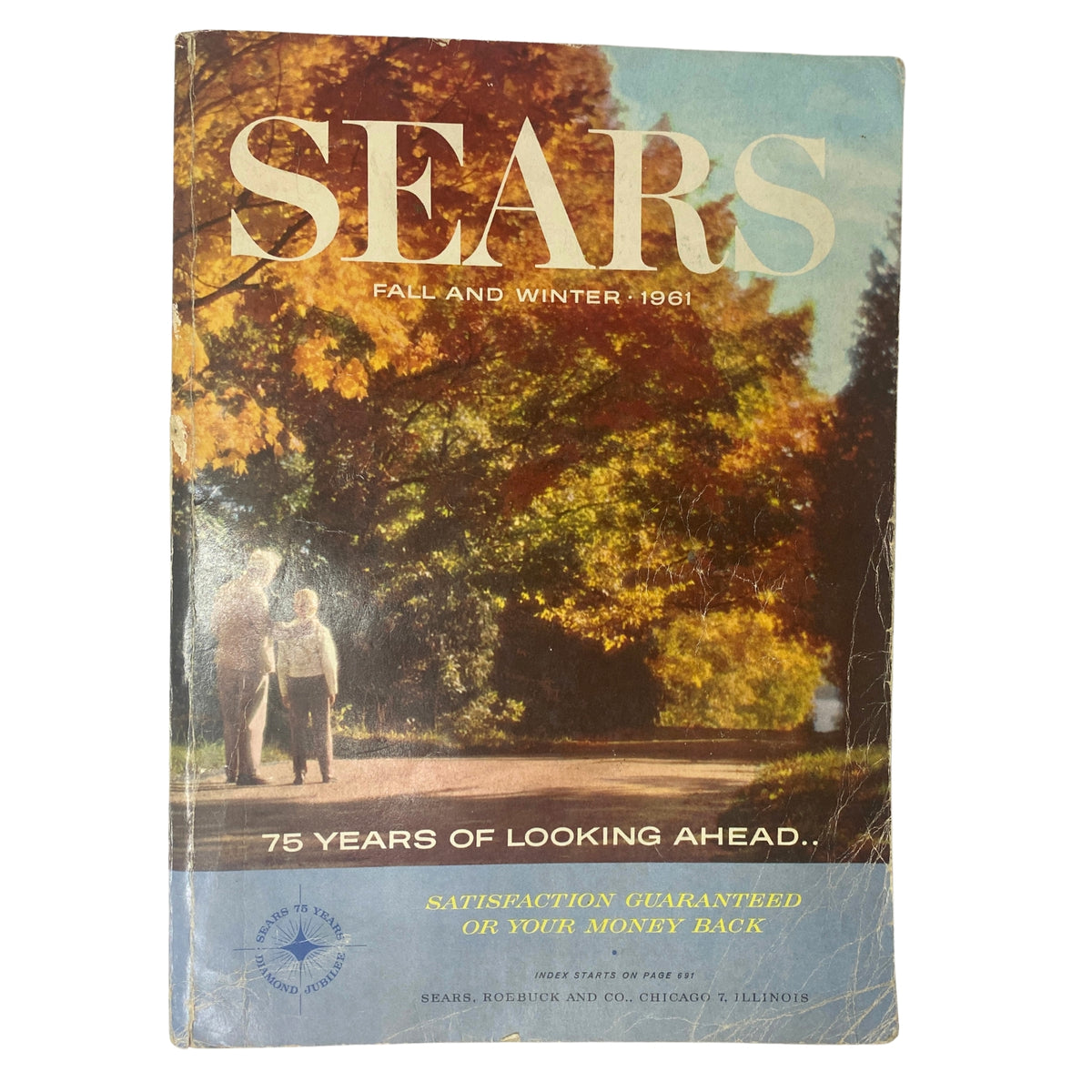
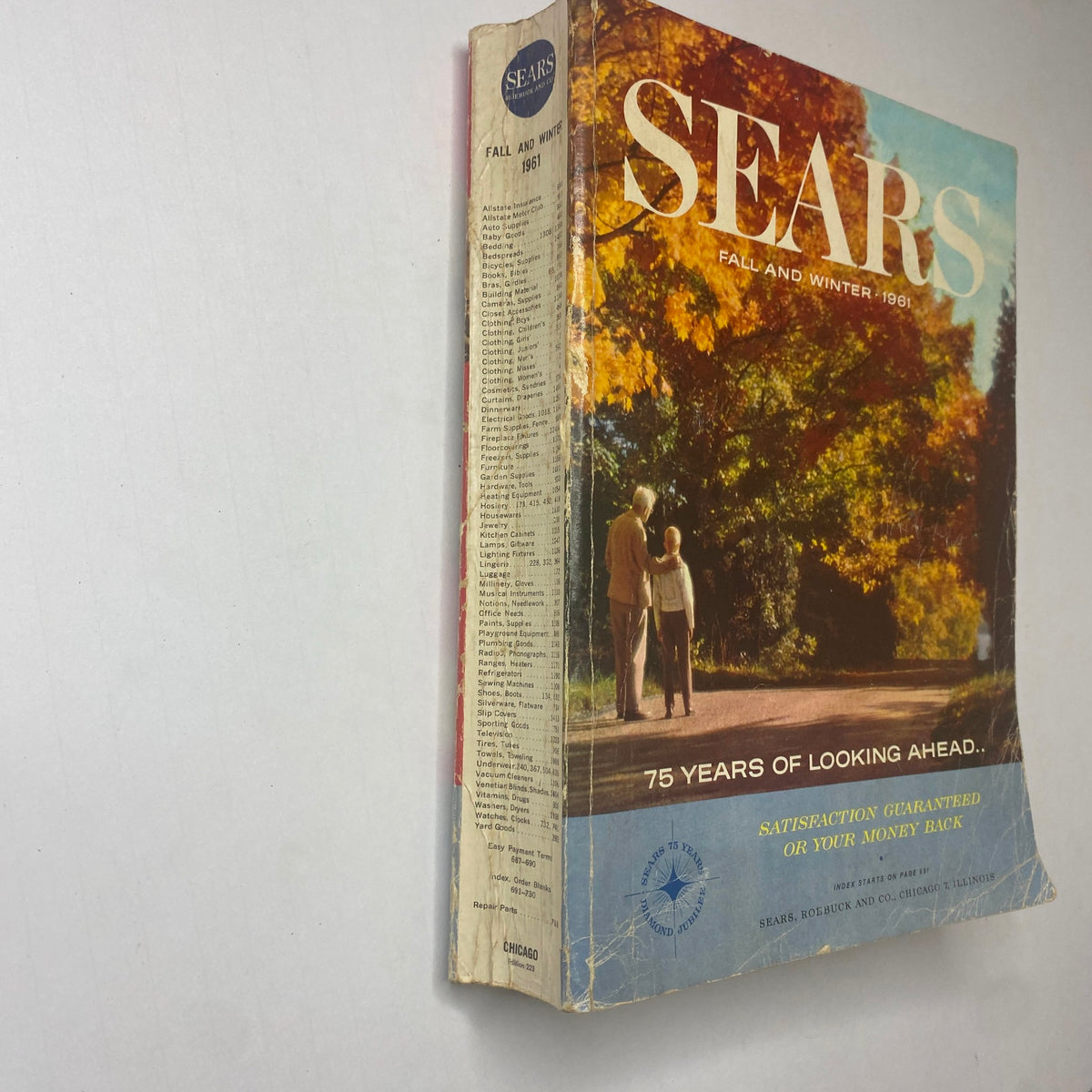
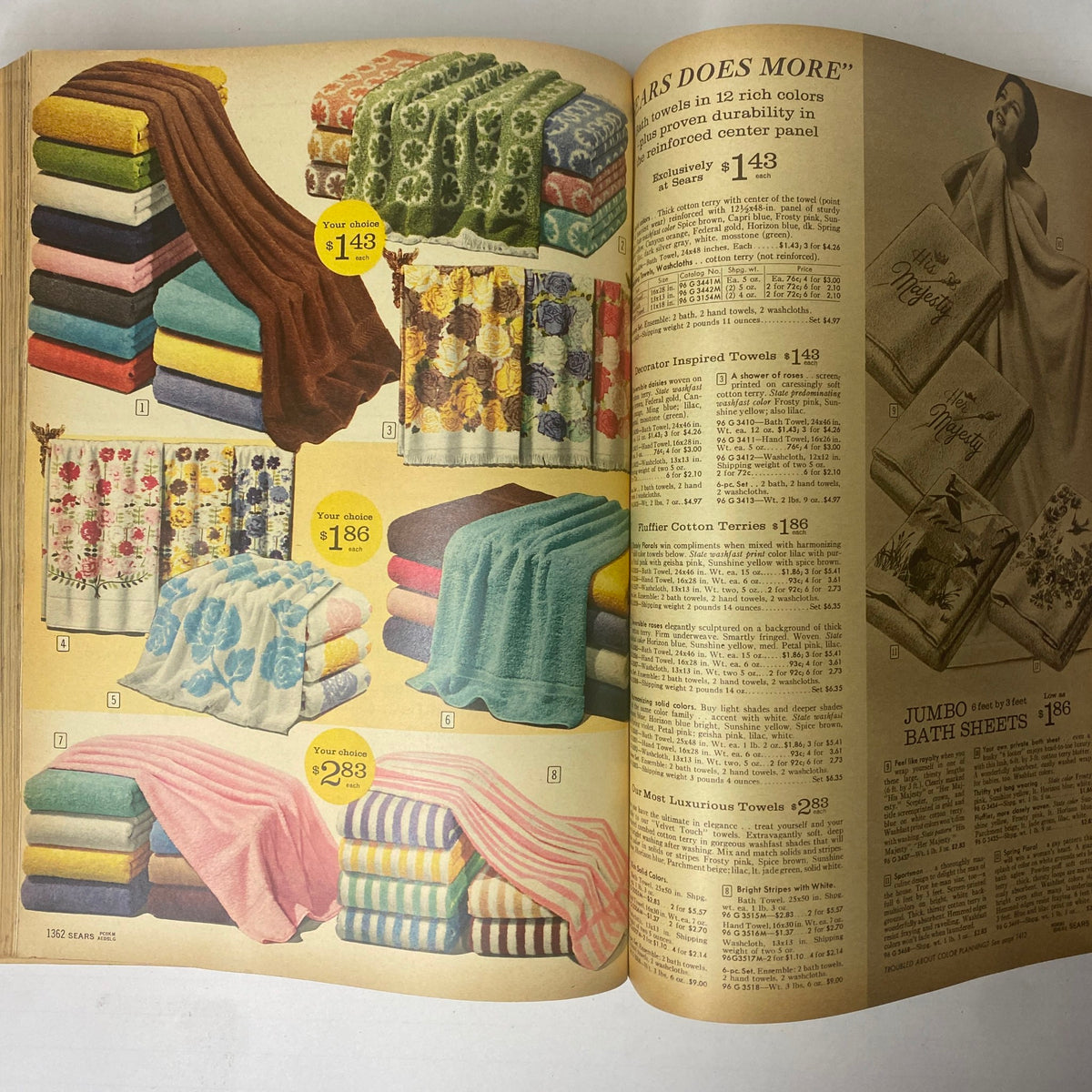
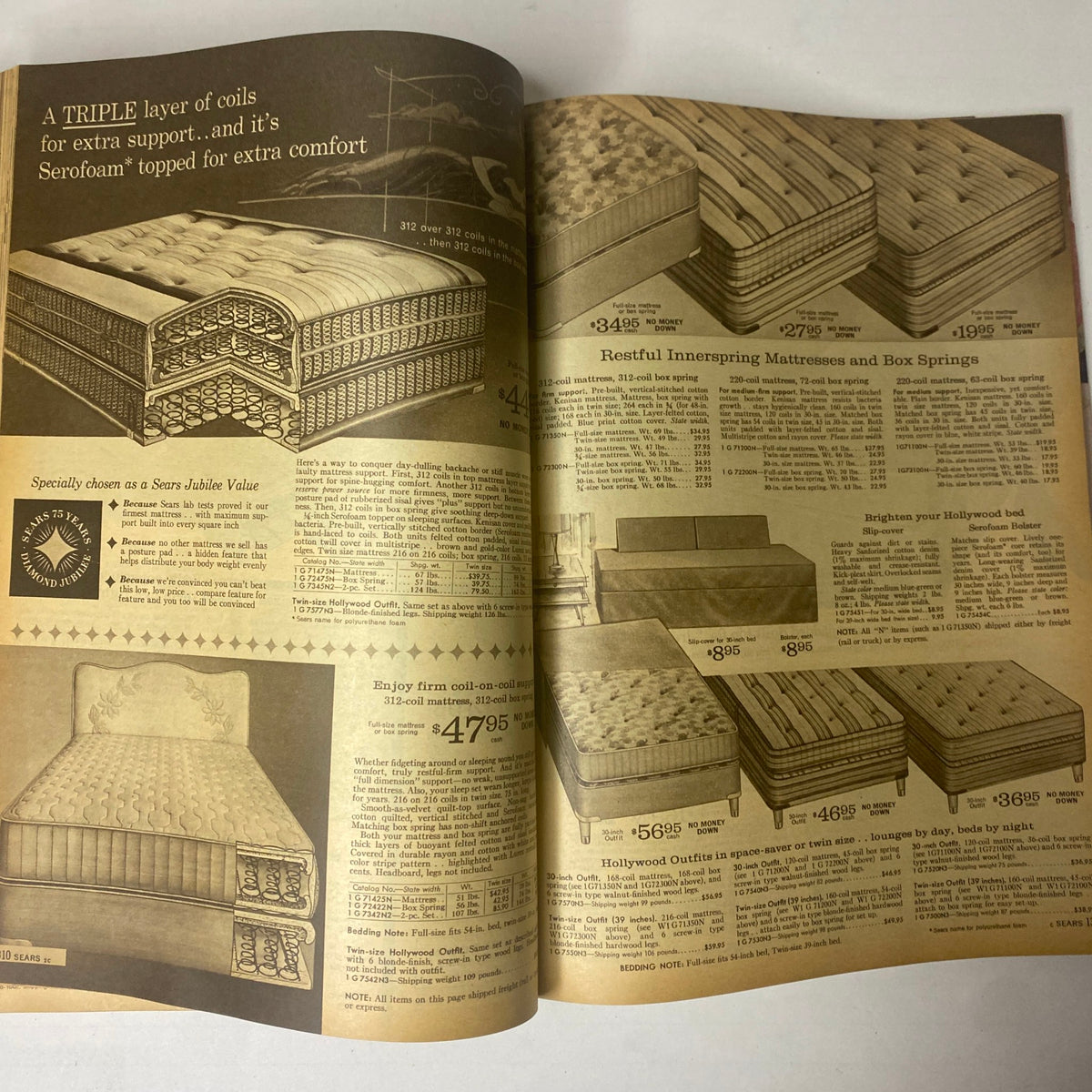
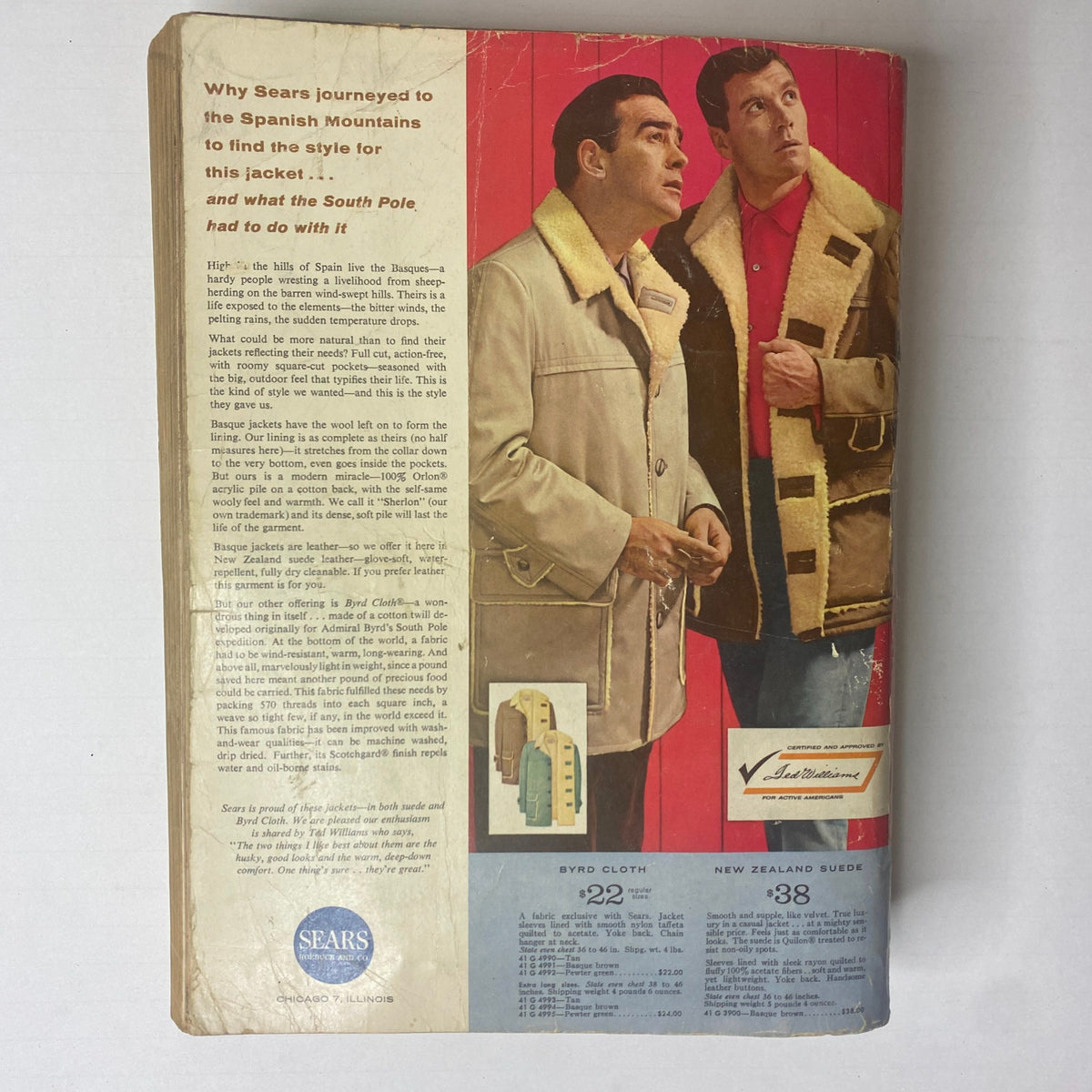
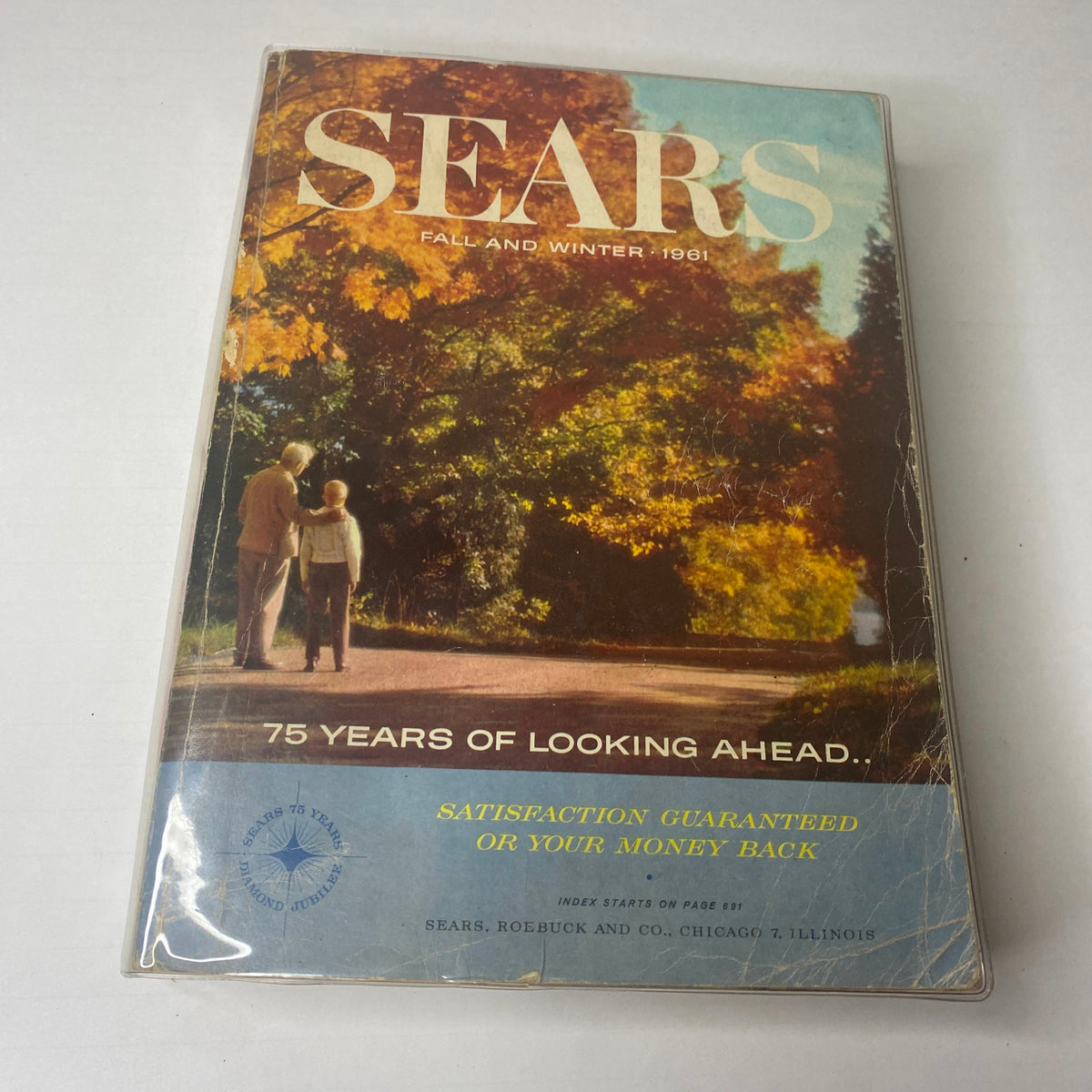


Description
Collector's Note – Why This Issue Matters
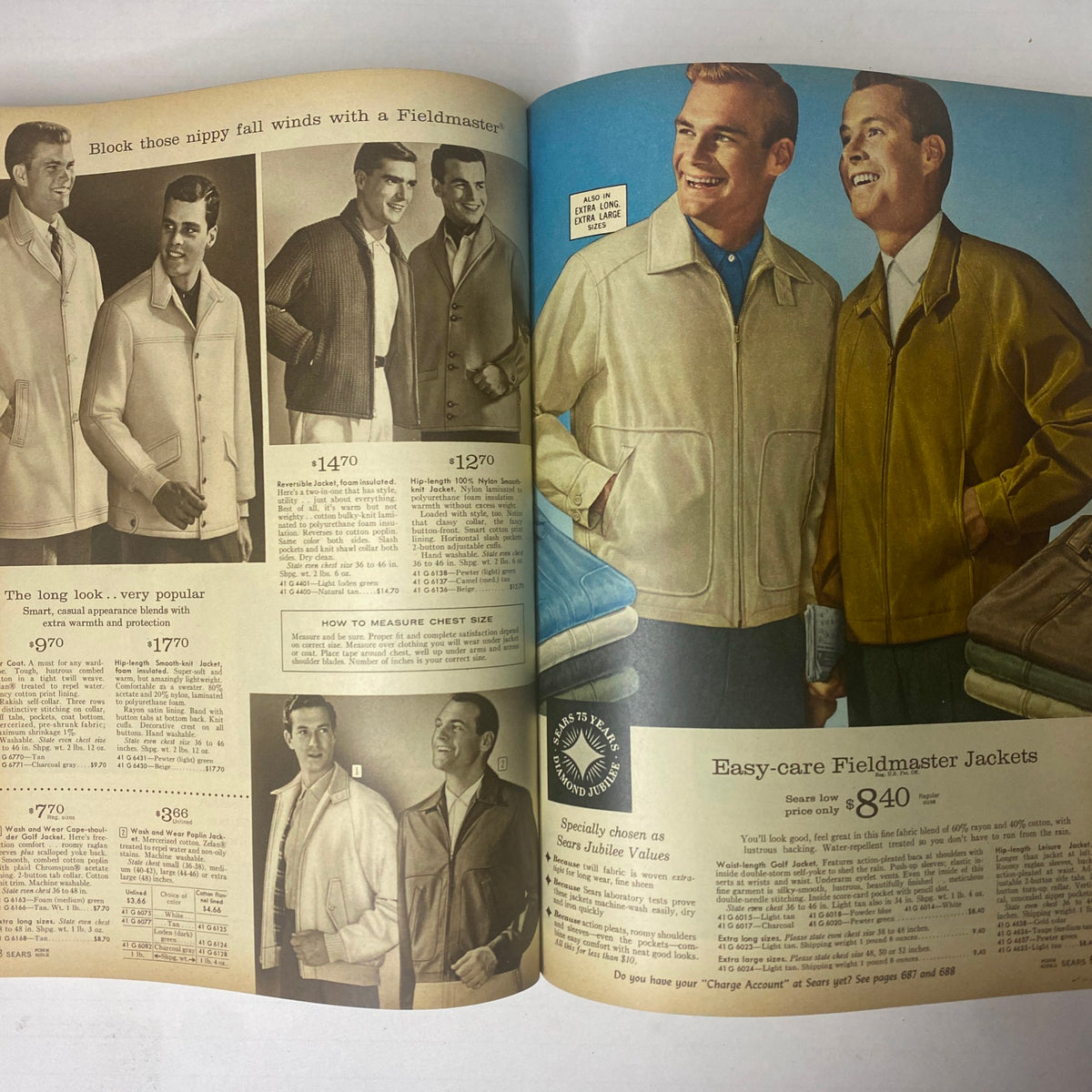
The 1961 Sears Fall and Winter Catalog is a primary document of American consumer culture at one of the most historically rich and visually distinctive moments in the twentieth century's retail history. The fall-winter season of 1961 sits at a specific and consequential point in the cultural timeline — the first year of the Kennedy presidency, a period of genuine optimism about American modernity and its material expressions, and a moment when the aesthetic language of American consumer goods was undergoing a transition from the late-1950s suburban comfort aesthetic toward the cleaner, more architectural sensibility that would define mid-decade style. The specific content highlighted in this catalog — the Weather-Wise Storm-Wear Collection, featuring waterproof fabrics, wind-resistant materials, insulated parkas, rain jackets, and winter outerwear for the full family — documents the specific intersection of functional innovation and mid-century style aspiration that characterized the best American mass-market design of the early 1960s. The materials described — waterproof fabrics, wind-resistant construction — reflect the period's genuine enthusiasm for synthetic and engineered materials as expressions of American technological progress, the same cultural attitude that was producing the space program and the consumer electronics boom simultaneously. For collectors building a serious archive of American retail history, fashion documentation, and mid-century consumer culture, the Sears catalog collection at OriginalMagazines.com provides essential depth across the full span of one of the most important publishing traditions in American retail history, with the early 1960s editions representing the catalog at its mid-century aesthetic and commercial peak.
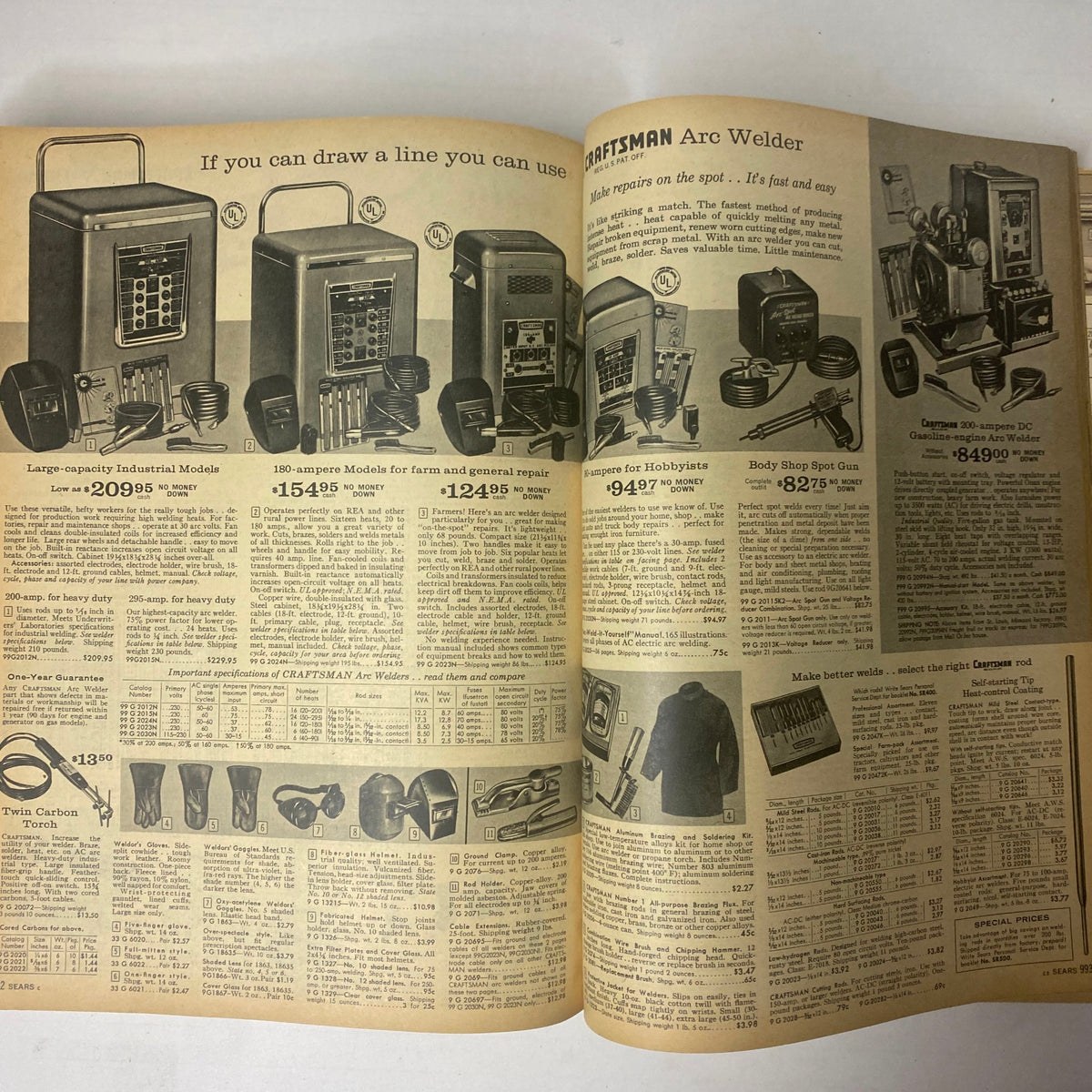
The Sears Fall and Winter Catalog in 1961 was not simply a shopping guide — it was one of the most important cultural documents in American domestic life. Founded in 1886, Sears had by the early 1960s spent seventy-five years as the dominant force in American mass-market retail, and its annual fall-winter catalog was the single most widely distributed commercial publication in the country, reaching millions of American households — particularly in small towns and rural areas where its presence as a retail option was literally irreplaceable — with a comprehensive picture of what American consumer life could look like at a given moment. The catalog's influence on American material culture, fashion, and domestic aspiration across the twentieth century is impossible to overstate: it was the primary vehicle through which the visual language of American consumer goods reached the broadest possible audience, and its editorial and design choices at any given moment were themselves acts of cultural authority, defining what was available, desirable, and appropriate for the American middle class. The 1961 edition's no-label condition noted in the listing is a meaningful positive attribute — Sears catalogs were distributed directly to registered customer households by address, and label-free copies are less common than labeled survivors. The full range of 1961 magazines and publications documents the Kennedy era's opening year from multiple angles, and the Sears fall-winter catalog sits within that body of material as one of the most comprehensive single-volume records of what American consumer life looked like at that specific seasonal moment.
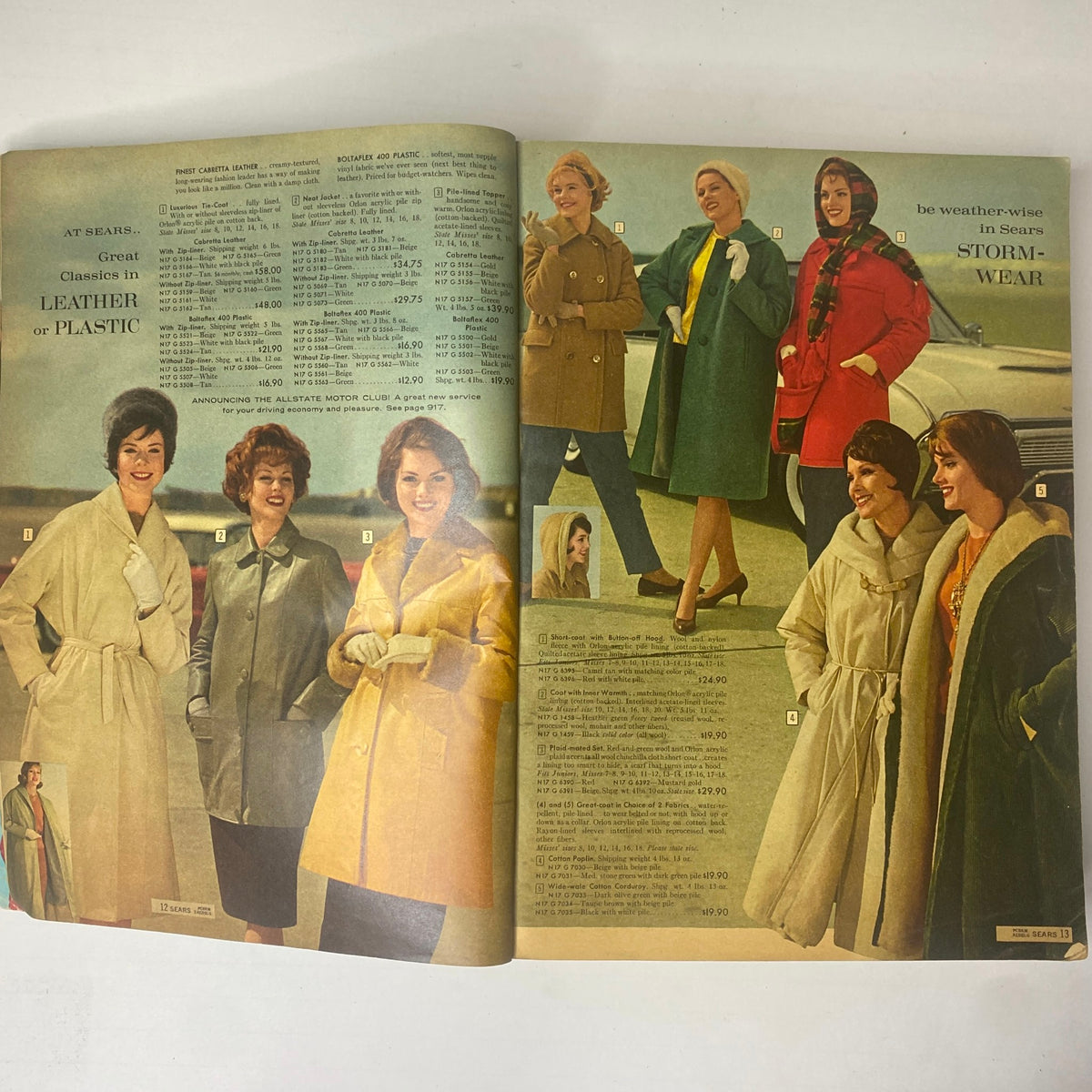
The Weather-Wise Storm-Wear Collection specifically referenced in this catalog's description is a historically interesting product category that reflects the early 1960s confluence of functional engineering and consumer aspiration. The development of synthetic and engineered fabrics for outerwear — waterproof coatings, wind-resistant constructions, insulated linings — was a genuinely significant area of materials innovation in the postwar period, and the mainstream consumer market's adoption of these innovations through mass-market retail channels like Sears represents an important chapter in the history of both American materials technology and American fashion. A catalog collection specifically organized around weather performance outerwear for the whole family documents not only what these garments looked like and cost, but how they were marketed — the specific language used to convey technical performance benefits to a mass audience, the visual presentation choices that made functional outerwear aspirational, and the family-centered domestic framing that connected individual purchase decisions to the collective project of household wellbeing that mid-century American consumer culture consistently foregrounded. These details, preserved in a primary commercial document from 1961, are the kinds of specifics that fashion historians, consumer culture researchers, and costume designers consistently find most valuable in surviving catalog material.
About the Publication
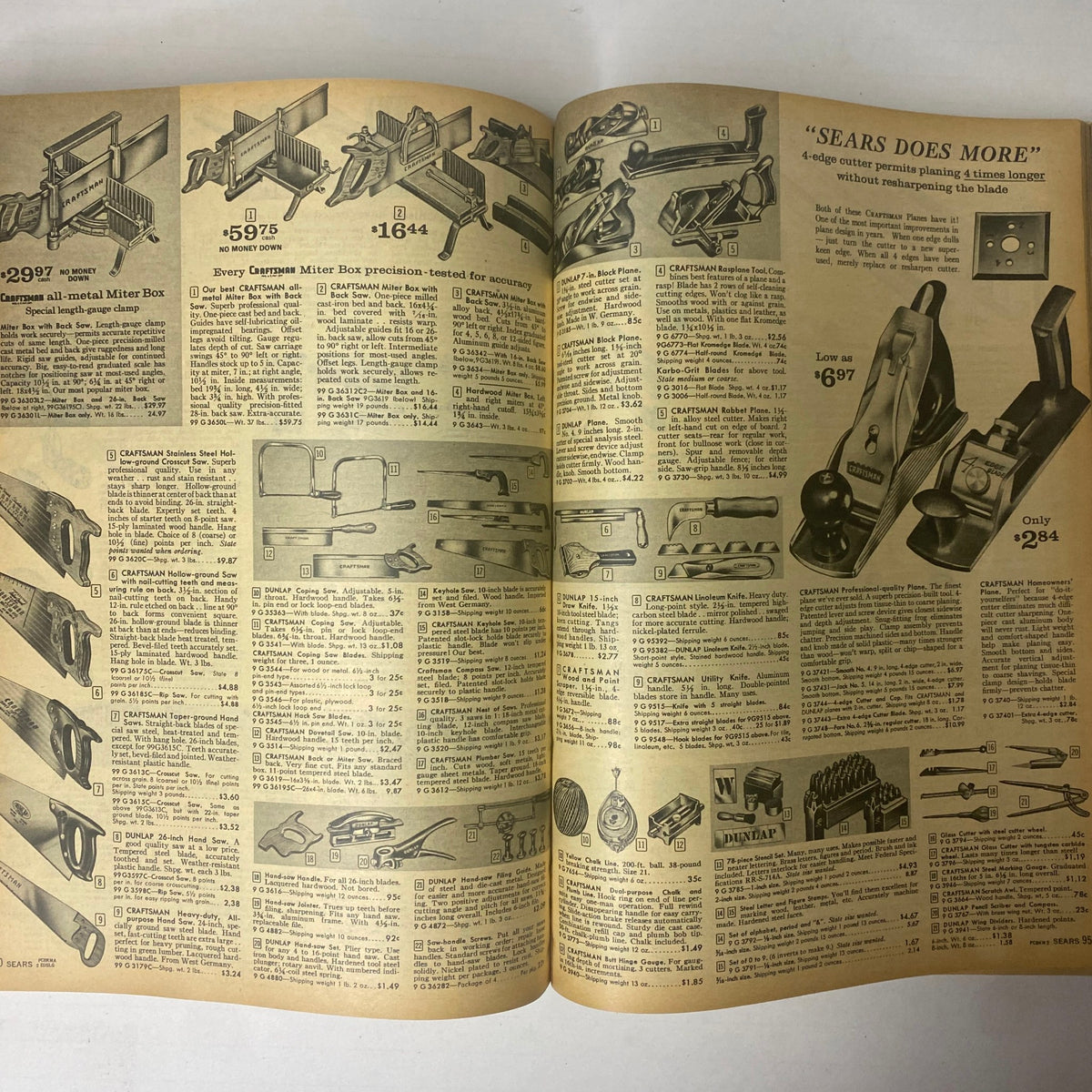
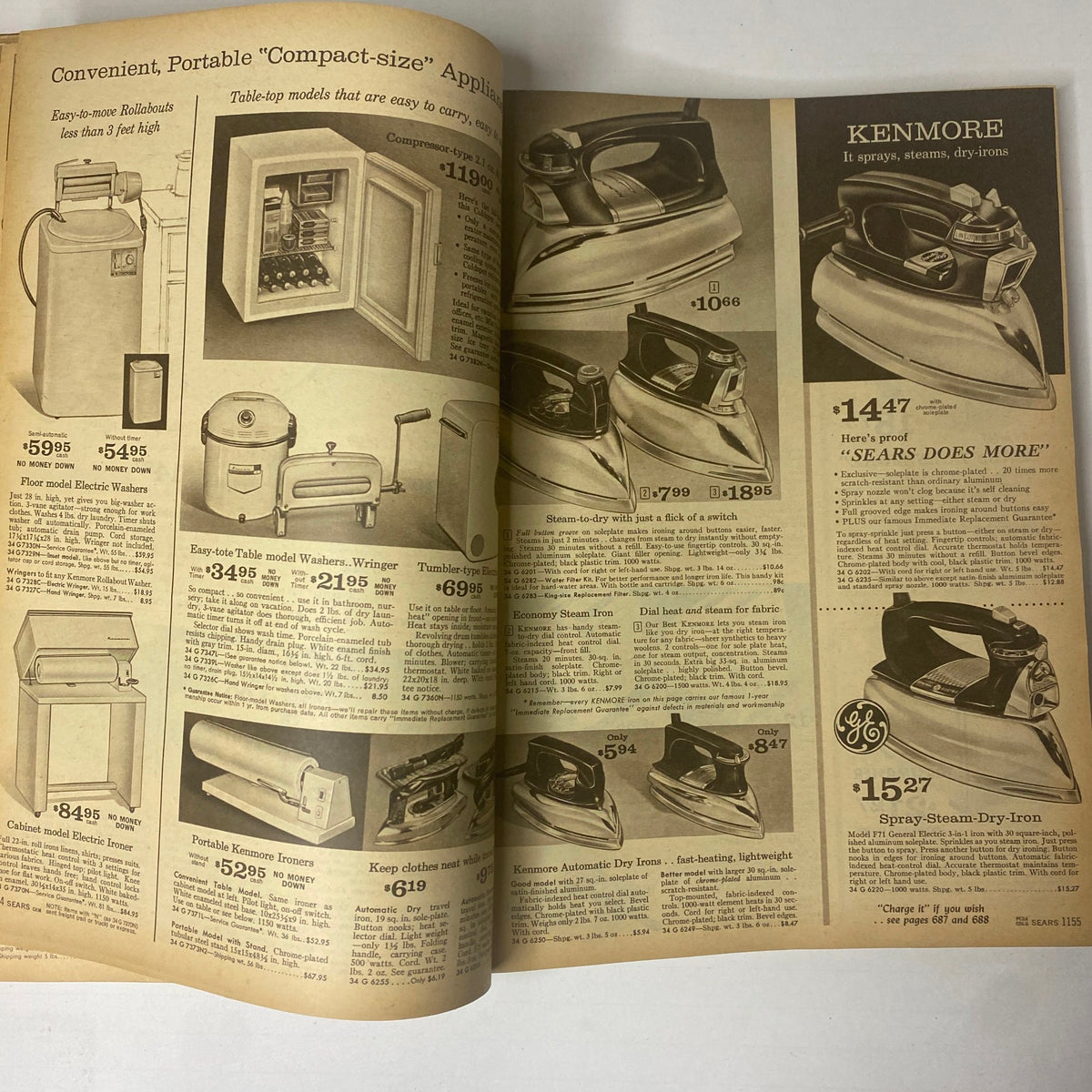
The Sears Fall and Winter Catalog was the flagship annual publication of Sears, Roebuck and Company, one of the most consequential retail enterprises in American history and the company whose mail-order and catalog business had been reshaping American consumer culture since the late nineteenth century. By 1961, the fall-winter catalog had been a fundamental institution in American domestic life for generations, its annual arrival in millions of mailboxes marking the beginning of the holiday shopping season and serving as the primary retail reference for a vast segment of the American population that lacked convenient access to urban department stores. The catalog's format combined comprehensive merchandise coverage — clothing for all ages, home goods, appliances, sporting equipment, tools, and the full range of consumer goods the company carried — with the visual production values that Sears' scale and resources made possible, producing a publication that was simultaneously a practical shopping guide, a comprehensive price reference, and a visual projection of the aspirational American domestic life that Sears' merchandise was positioned to enable. Its audience was literally the American public in its broadest possible definition — rural, suburban, and urban households across every region and every income stratum within the middle class — making it one of the most consequential cultural documents of the era in which it operated.
Key Highlights Inside
- Weather-Wise Storm-Wear Collection — functional outerwear documentation — The confirmed collection featuring waterproof fabrics, wind-resistant construction, insulated parkas, rain jackets, and winter accessories for men, women, and children documents the early 1960s mass-market outerwear market at a specific moment of materials innovation and aesthetic evolution. The specific garments, fabrics, construction methods, and price points documented in this collection are primary research material for fashion historians studying the development of performance outerwear in the American consumer market.
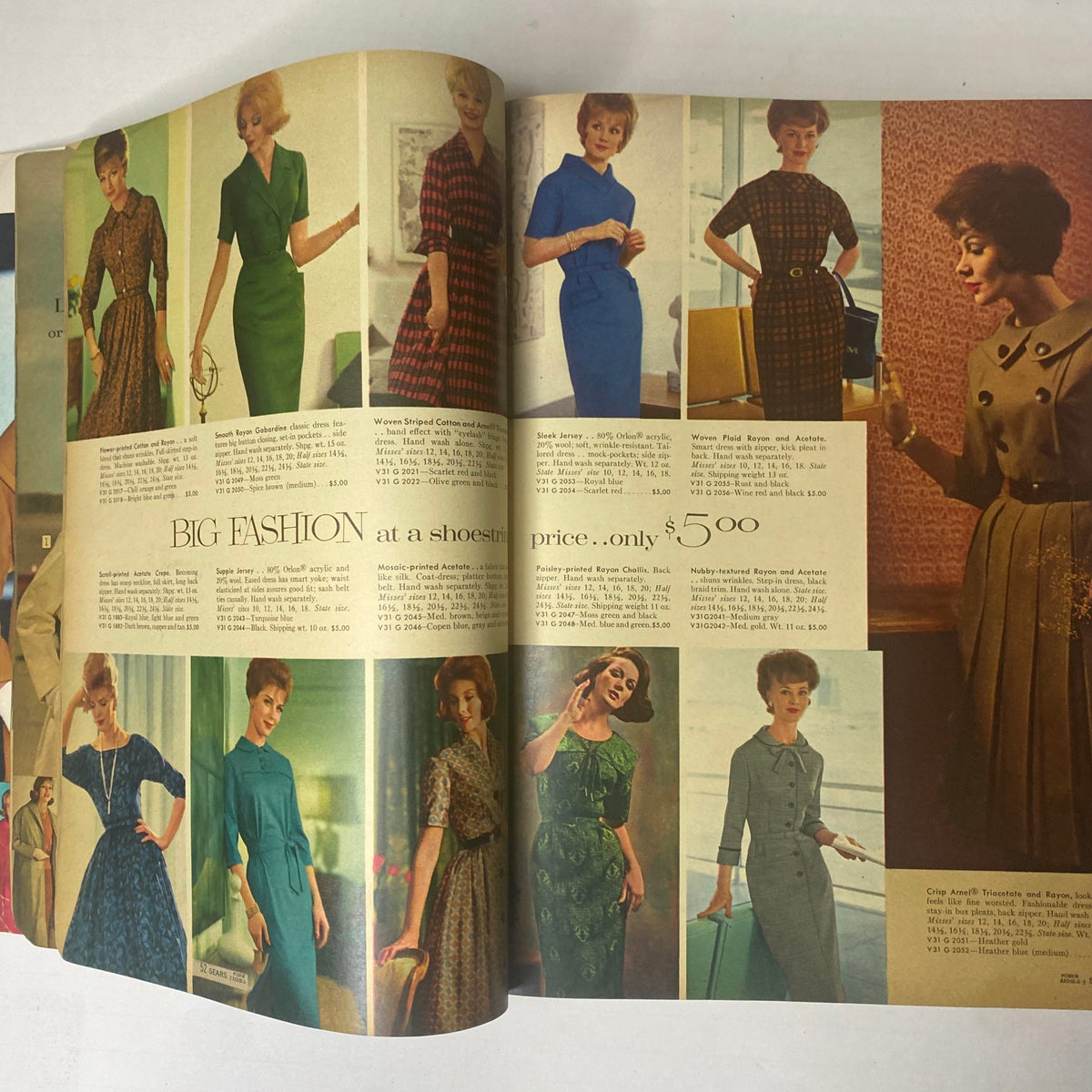
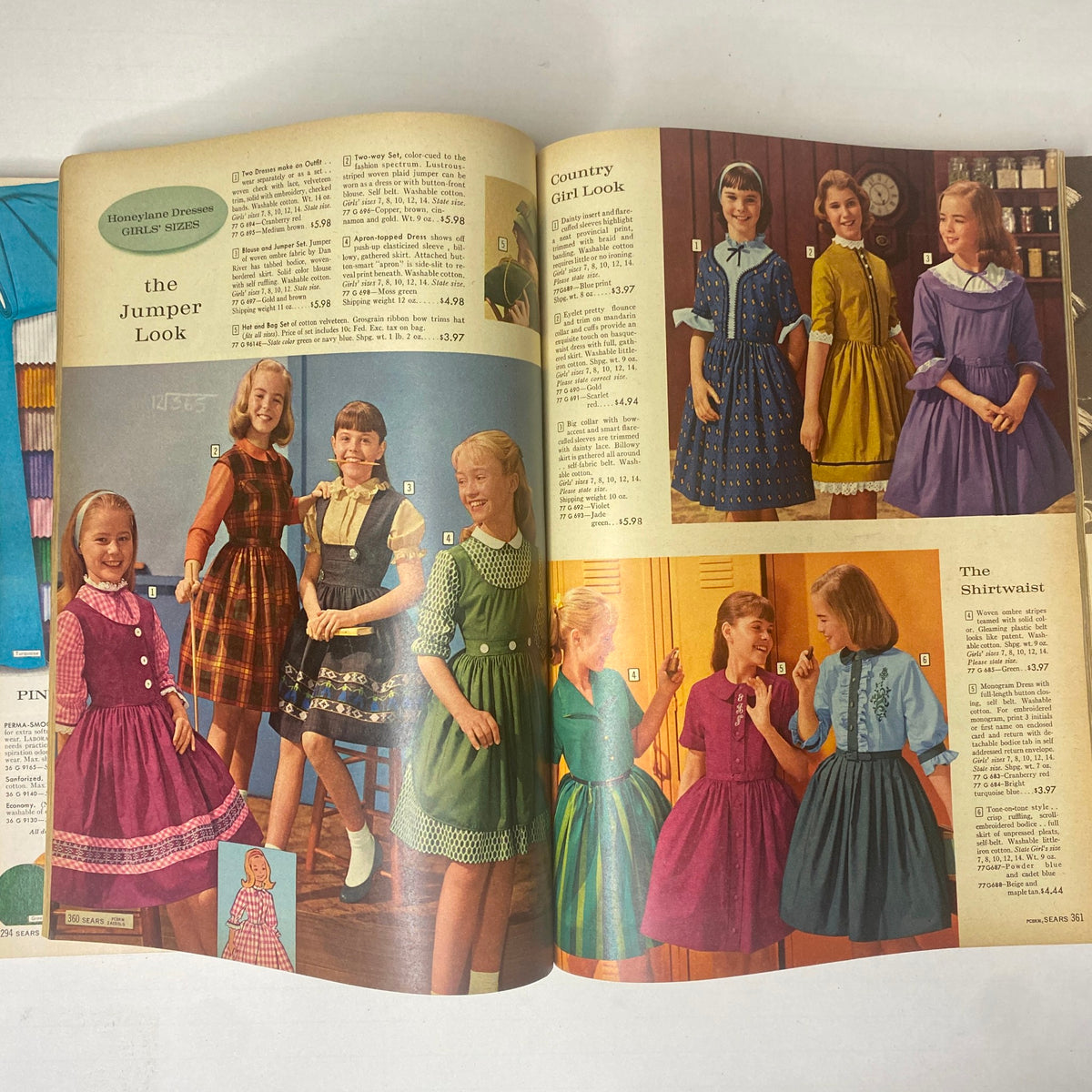
- Early 1960s American fashion aesthetic documented at its mainstream peak — A 1961 Sears fall-winter catalog documents what American fashion looked like at the broadest possible level of consumer accessibility — not the high fashion of Manhattan or Paris, but the specific styles, silhouettes, colors, and materials that the country's largest mass-market retailer judged most appropriate and most desirable for its enormous and geographically diverse customer base. This is primary documentation of early 1960s American fashion from the inside of its most influential retail channel.
- No address label — clean cover presentation — The confirmed absence of a mailing label is a meaningful collector attribute for a Sears catalog from this era, as direct-mail distribution typically resulted in labeled copies being the norm among survivors. A label-free copy preserves the full visual integrity of the catalog's cover design and any cover photography or illustration without address block disruption.
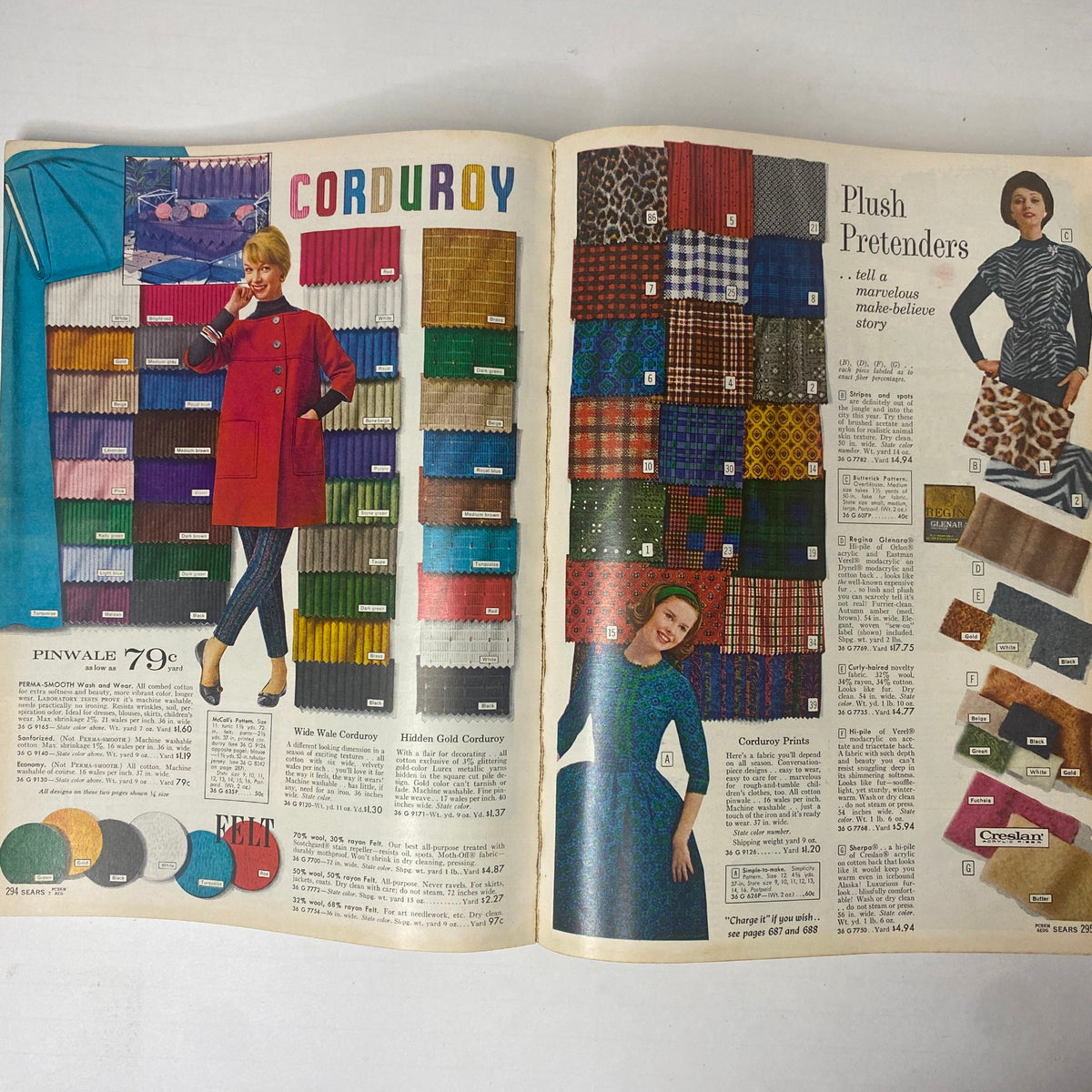
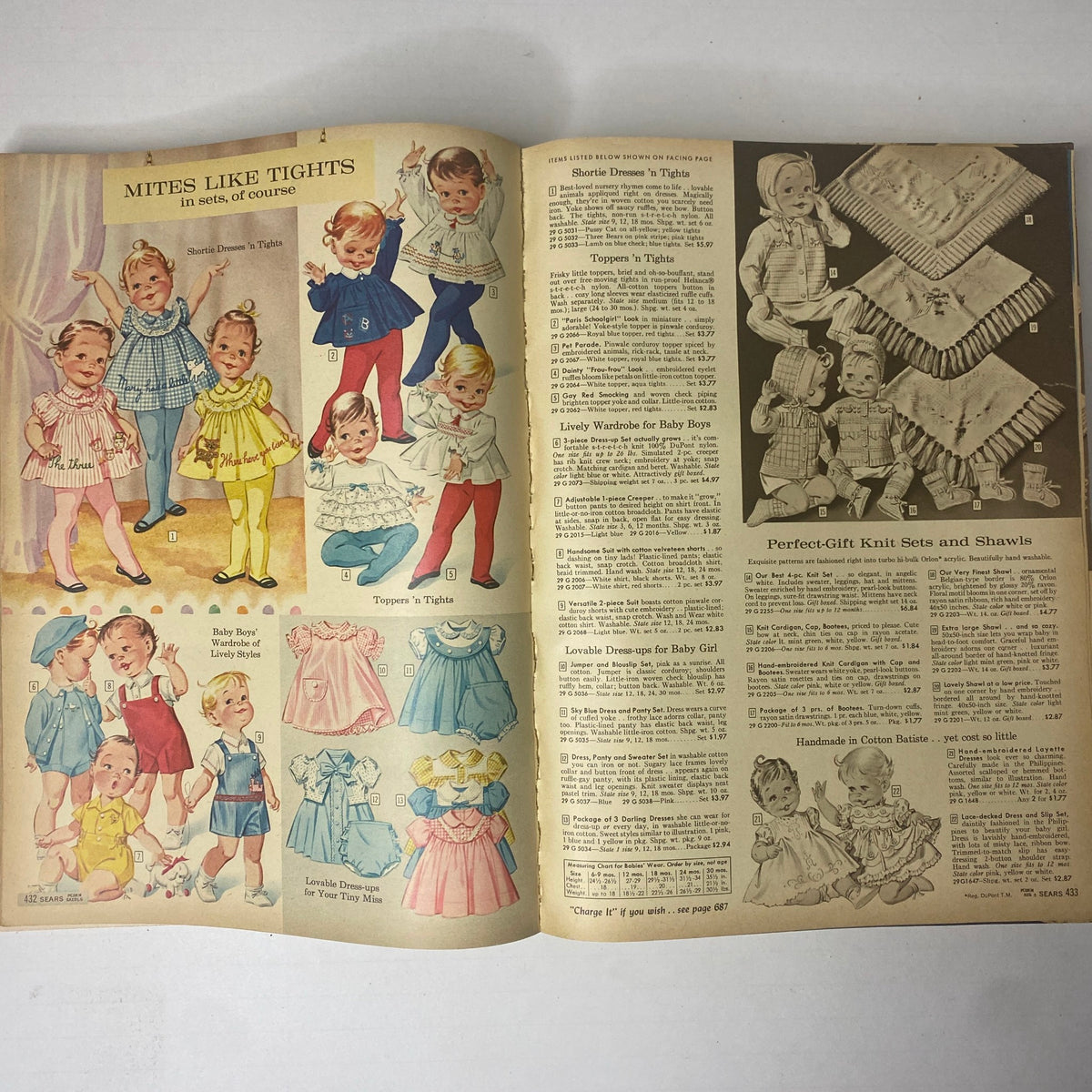
- Comprehensive 1961 consumer pricing documentation — Retail pricing across the full range of a Sears fall-winter catalog's offerings from 1961 provides primary research material for economic historians tracking consumer prices, purchasing power, and the retail economics of the Kennedy-era American economy. The specific price points for outerwear and winter goods documented here are data points that no other type of primary source from the period provides with equivalent specificity and comprehensiveness.
- Mid-century American domestic and family consumer culture documented — The family-oriented framing of the Weather-Wise Storm-Wear Collection — clothing for men, women, and children presented as a coordinated household purchasing decision — reflects the specific cultural assumptions about family structure, domestic management, and consumer aspiration that characterized mid-century American retail. These framing choices are themselves historically significant documents of the cultural values embedded in early 1960s mass-market commerce.
- Note: Specific additional product categories, the full range of merchandise beyond the confirmed Storm-Wear Collection, and the complete catalog contents beyond what the listing description confirms have not been independently verified. The highlights above reflect what is documentable from the listing and the well-established historical context of Sears' 1961 catalog format and the specific cultural moment it documents.
Condition & Rarity
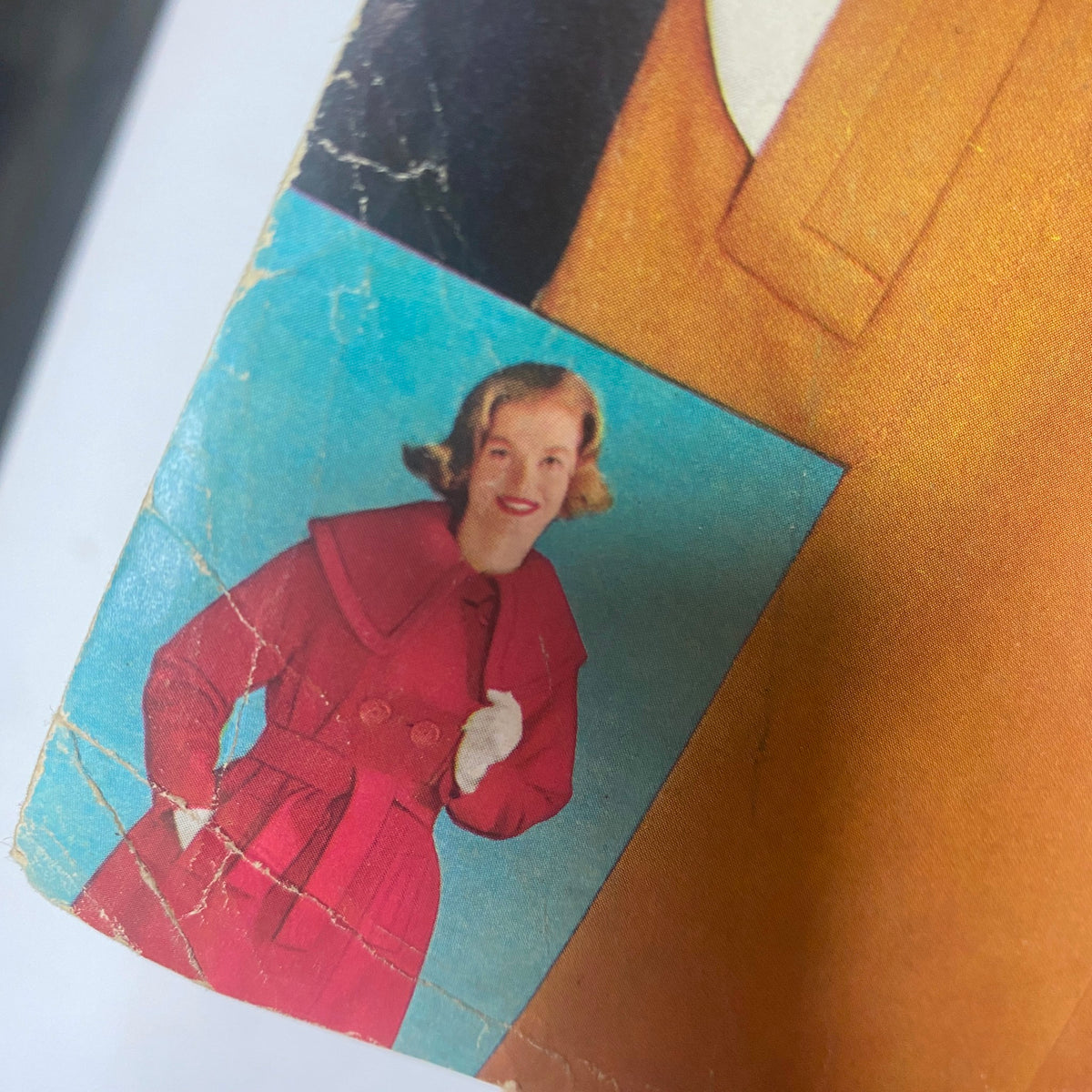
This catalog is described as being in good condition without an address label, with typical wear for its age, protected by a plastic covering — a condition profile that represents a well-preserved and notably clean surviving example of a publication category that most original recipients handled extensively and eventually discarded. The absence of a mailing label is the most significant positive condition attribute noted: Sears catalogs were distributed by direct mail to registered customer households, and address labels applied to the cover are the norm for surviving copies, having bonded to the cover stock after six decades in ways that make removal without surface disruption essentially impossible. A label-free copy indicates either a display copy, a newsstand or retail purchase rather than a direct-mail delivery, or a copy that was carefully maintained from original receipt — any of which results in a cover that presents the full visual integrity of the catalog's design without address block disruption. The typical wear noted is honest and expected for a publication of this size, weight, and original use context — Sears fall-winter catalogs were large, heavily-paged publications that were actively consulted throughout the shopping season, and copies that survive in good overall condition after sixty years represent a meaningful preservation achievement for a publication that was designed for active use rather than archival longevity. The plastic protective covering indicates intentional preservation care, correlating with better overall physical stability than unprotected copies stored under comparable conditions over the same period.
Looking for More Issues Like This?
Sears Fall and Winter Catalogs from the early 1960s — particularly label-free copies that preserve the full cover presentation — are actively sought by fashion historians, retail ephemera collectors, costume designers, and consumer culture researchers who recognize these catalogs as irreplaceable primary documents of American mass-market retail and fashion at its mid-century peak. If this 1961 edition is no longer available, the Sears catalog collection at OriginalMagazines.com is the most comprehensive resource for exploring what else has surfaced from this foundational American retail publishing tradition across its full span of production years. For collectors building a broader documentary record of American consumer culture and fashion during the Kennedy era's opening year, the 1961 magazines collection brings together a wide range of primary source material from that pivotal year in American cultural and social history.