


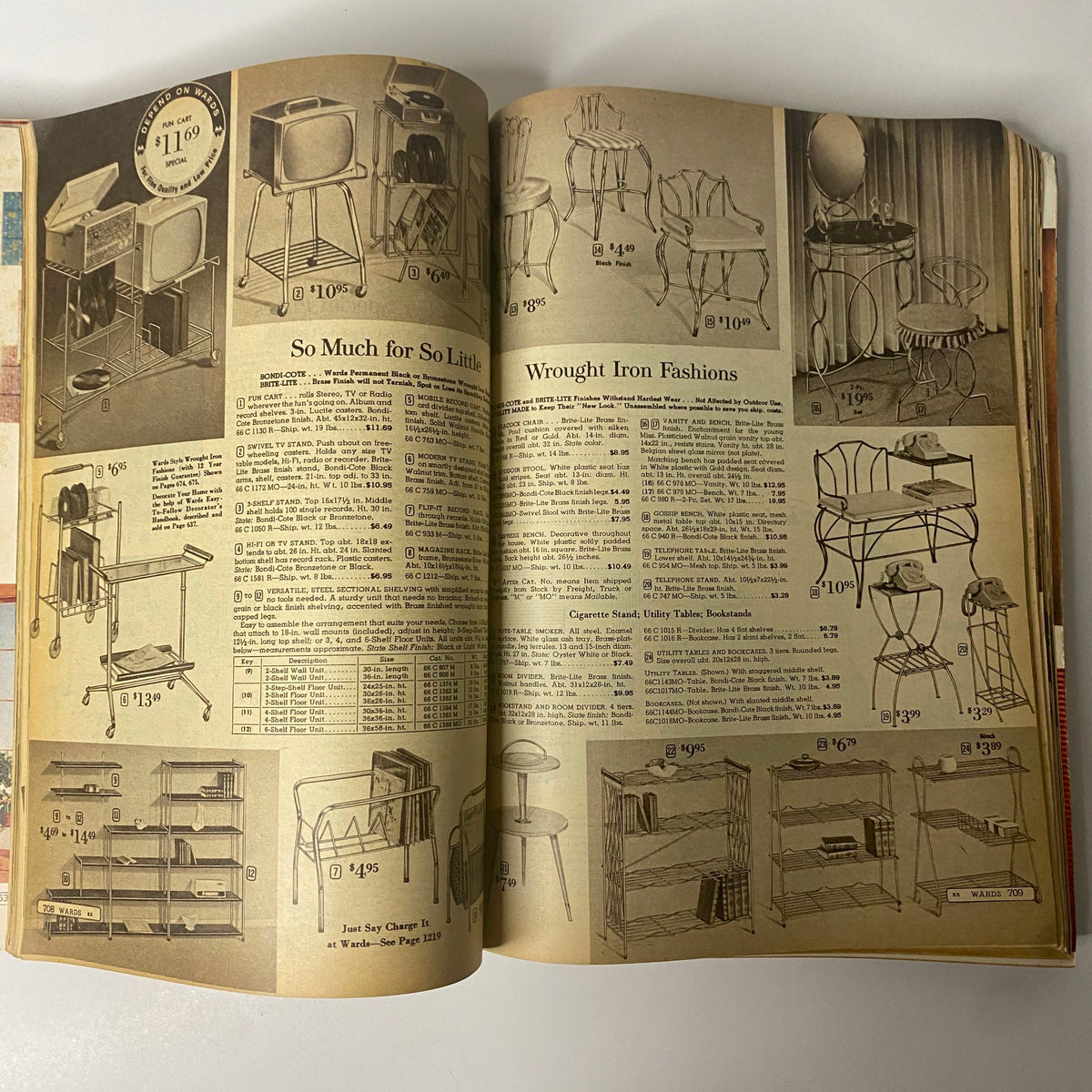


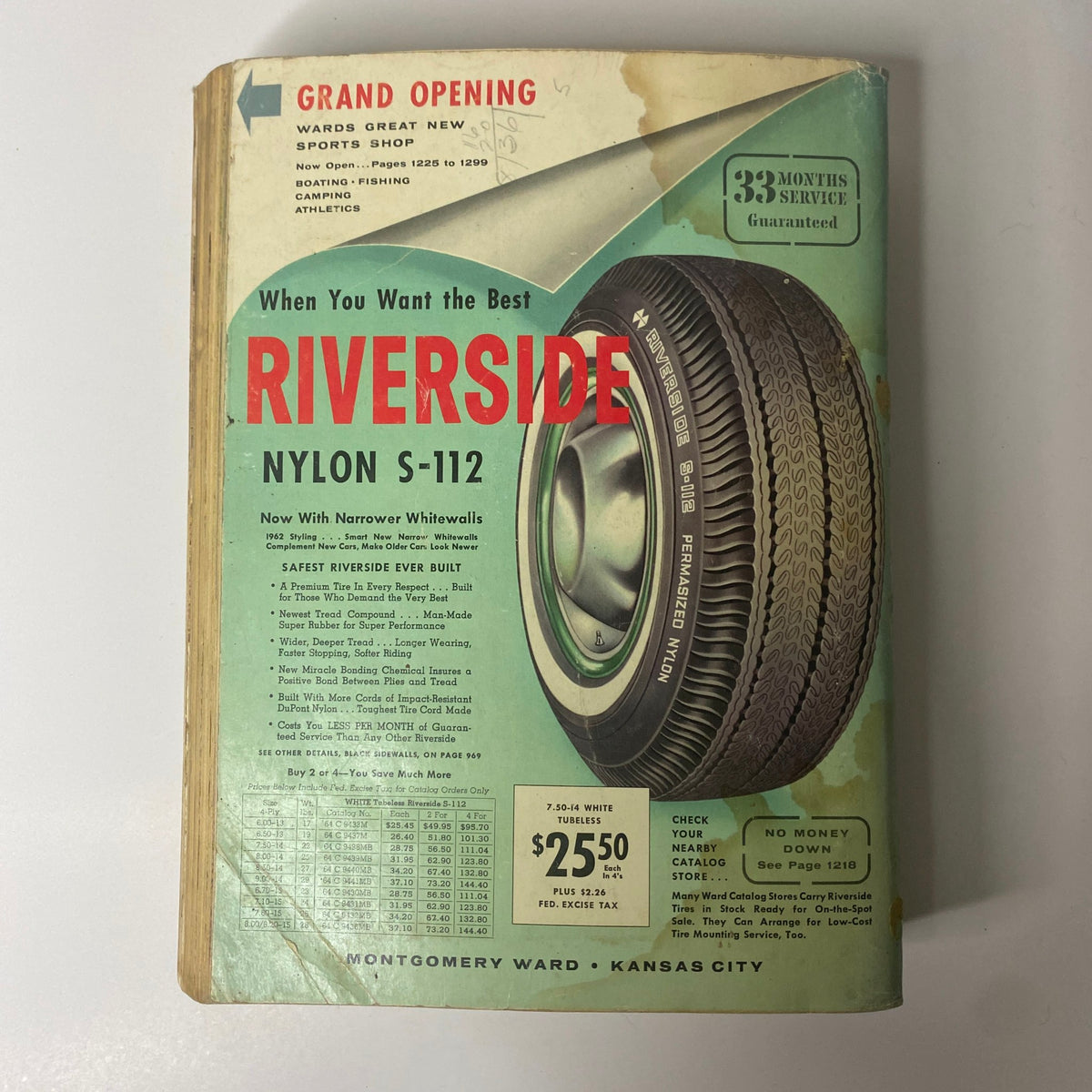


Description
Collector's Note – Why This Issue Matters
The 1962 Montgomery Ward Spring and Summer Catalog is a primary document of American mass-market retail culture at one of its most historically specific and most visually distinctive moments — the precise phase of the early Kennedy era when the American commercial fashion industry was translating the decade's aspirational aesthetic into the accessible price points and practical formats that made it available to the broadest possible consumer market. The catalog format is a primary source of a specific and irreplaceable kind: unlike the editorial fashion magazine, which addressed aspirational readers who might never purchase the clothes being shown, the Montgomery Ward catalog addressed actual buyers, with actual prices, ordering information, and the specific product descriptions that reveal what real American consumers of modest and middle incomes were actually able to purchase in 1962. The "Brentshire Designer Collection" mentioned in the listing — a house brand positioned as designer-inspired — is a characteristic example of this translation process: the design aesthetic filtering down from the runway and the fashion press into the mail-order format that served the millions of American households outside major cities who had no direct access to department stores or boutiques. For collectors who engage with fashion and retail history as social history rather than purely aesthetic history, the 1962 Montgomery Ward Spring and Summer Catalog is a primary document of how the Kennedy era's visual culture actually reached the American middle and working classes. Collectors interested in the full landscape of American popular culture publishing from this period will find the 1962 magazines collection at OriginalMagazines.com a valuable resource for exploring the broader publishing context this catalog inhabited.
The Spring and Summer 1962 date gives this catalog a specific and historically interesting position in the arc of early-1960s American fashion culture. The Kennedy administration had been inaugurated in January 1961, and Jacqueline Kennedy's influence on American fashion — her preference for Oleg Cassini, her cultivation of a specific kind of clean-lined, architecturally precise elegance that drew on French couture while asserting an American identity — was in 1962 at its most actively influential phase, filtering through every level of American fashion production from the most expensive couture adaptations down to the mass-market mail-order catalogs. The "designer-inspired coordinated separates" and "sleek dresses" that the listing describes were characteristic products of exactly this filtering process, and the specific emphasis on "travel-friendly outfits ideal for city wear, vacations, and polished day-to-evening looks" reflects the specific lifestyle aspirations of the early-1960s American middle class with a precision that subsequent retrospective accounts of the period can describe but cannot demonstrate as directly as a primary commercial document. The catalog also shipped from Chicago — Montgomery Ward's headquarters city — placing it within the specific geographic and commercial history of the American mail-order retail industry whose Chicago operations had defined middle-American consumer culture since the late nineteenth century.
Montgomery Ward's specific institutional history gives this 1962 catalog an additional layer of significance for collectors of American retail history. Ward's was one of the two great American mail-order giants — alongside Sears, Roebuck and Company — that had transformed the consumer landscape of rural and small-town America since the 1870s. By 1962, the company was navigating the specific challenges of the postwar retail transformation: the suburban shopping mall was beginning to provide middle-class consumers with direct retail access that had previously required the catalog, and the competitive pressures from both Sears and the emerging department store chains were intensifying. The 1962 Spring and Summer Catalog is therefore a primary document of the mail-order format at a historically significant transitional phase — its cultural and commercial reach still enormous, but the forces that would eventually diminish it already building. For collectors who engage with American commercial history as well as fashion history, this catalog documents one of the most significant retail institutions of the twentieth century at a specific and revealing moment in its institutional trajectory.
About the Publication
Montgomery Ward's mail-order catalogs were published twice annually — Spring/Summer and Fall/Winter — beginning in the 1870s and continuing through the mid-twentieth century, serving as the primary retail access point for millions of American households outside major urban centers who could not reach department stores or specialty retailers. By 1962, the catalog combined clothing, household goods, appliances, tools, and a full range of consumer products in a comprehensive format that functioned as both a shopping resource and a primary document of American consumer culture. The Spring and Summer 1962 edition's emphasis on fashion — coordinated separates, designer-inspired collections, travel wear — reflects the specific editorial evolution of the catalog format in response to the growing consumer sophistication and fashion consciousness of the postwar middle class, making it as much a fashion document as a retail one.
Key Highlights Inside
- Brentshire Designer Collection — Kennedy-era designer democratization documented — a house brand collection positioned as designer-inspired, representing the specific commercial mechanism by which the clean-lined, architecturally precise aesthetic of early-1960s American fashion was being translated into the price points accessible to the mass-market mail-order consumer, with the Jacqueline Kennedy influence on American fashion at its most actively filtering phase.
- Coordinated separates and travel-friendly fashion — 1962 lifestyle aspirations — the specific emphasis on city wear, vacation outfits, and day-to-evening versatility reflects the precise lifestyle aspirations of the early-Kennedy-era American middle class, documented at the consumer purchasing level rather than the aspirational editorial level that fashion magazines served.
- Vintage pricing and ordering information — primary commercial history — the specific prices, product descriptions, and ordering information that define the catalog format provide primary documentary evidence of what American mass-market consumers were paying for fashion in 1962, evidence that no fashion magazine or editorial retrospective can supply.
- Chicago-shipped mail-order retail — institutional history documented — the catalog's Chicago shipping origin places it within the specific institutional history of Montgomery Ward's mail-order operation, one of the two great American retail giants whose Chicago logistics infrastructure had defined middle-American consumer culture since the 1870s and whose 1962 catalog documents a historically significant transitional phase in that infrastructure's commercial trajectory.
- Spring/Summer 1962 — early Kennedy era fashion at mass-market level — a fashion document from the eighteen-month period when the Kennedy aesthetic's influence on American popular fashion was at its most actively formative, captured at the consumer purchasing level where actual buying decisions were being made rather than at the aspirational editorial level of the major fashion magazines.
Condition & Rarity
Good condition with light wear typical for its age represents an honest and favorable condition profile for a sixty-four-year-old mass-market retail catalog produced for active commercial use rather than preservation. Montgomery Ward catalogs were working documents — they were consulted, dog-eared, passed among family members, and used for the practical purpose of ordering goods — and the majority did not survive their useful life intact. Good condition with only light wear therefore places this example in the more carefully preserved subset of the surviving pool, and the plastic protective sleeve indicates that deliberate archival effort has been applied to maintaining its condition. The most consequential condition factors for collector and research purposes are the completeness of the fashion and product pages — whether the full range of coordinated separates, the Brentshire Designer Collection, and the pricing and ordering information are intact and legible — since the catalog's primary value as a historical document depends on the completeness of its commercial content. For a 1962 Spring/Summer mail-order catalog in good preserved condition, this represents a meaningful and collector-relevant physical profile.
Looking for More Issues Like This?
Vintage mail-order catalogs from the early 1960s — and the 1962 Montgomery Ward Spring and Summer edition, with its Kennedy-era designer collections and its primary documentation of mass-market American fashion at the consumer purchasing level, is a particularly historically instructive example — are sought by fashion historians, American retail history researchers, and collectors of mid-century material culture who understand the specific and irreplaceable documentary value of the commercial format over the editorial one. If you're building a collection of American popular culture documents from the Kennedy era or exploring what's available from this consequential period in American commercial and social history, the 1962 magazines collection at OriginalMagazines.com offers a wide range of publications from one of the most culturally rich years of the entire postwar decade.