
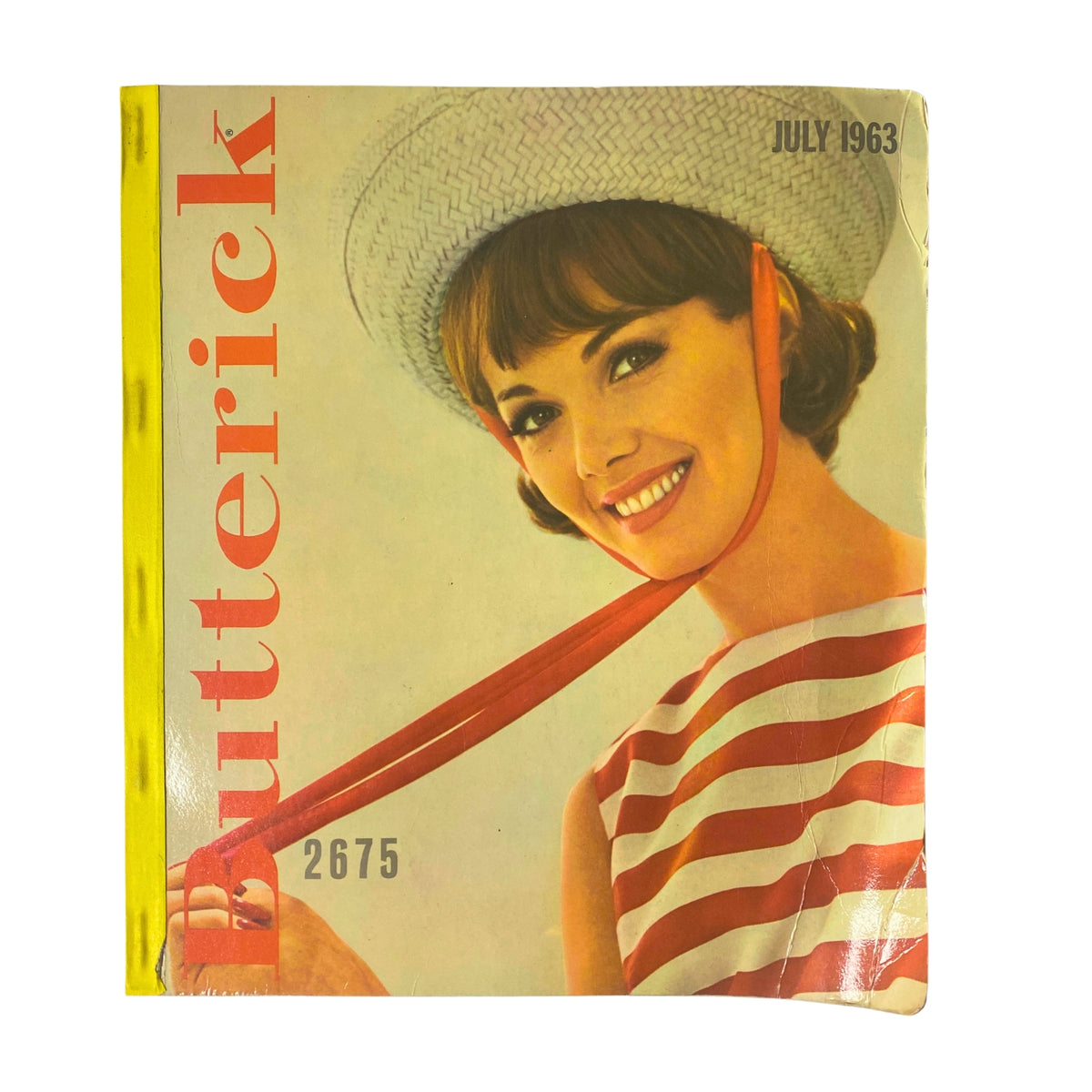
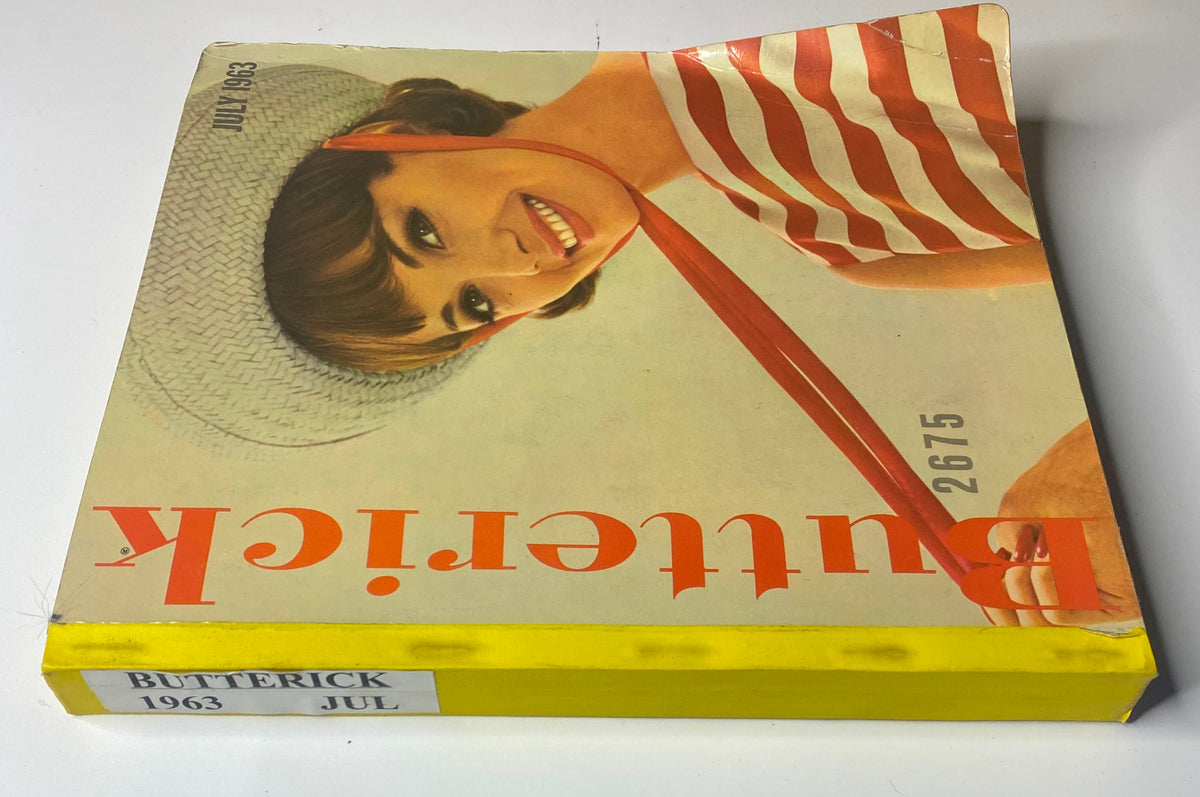
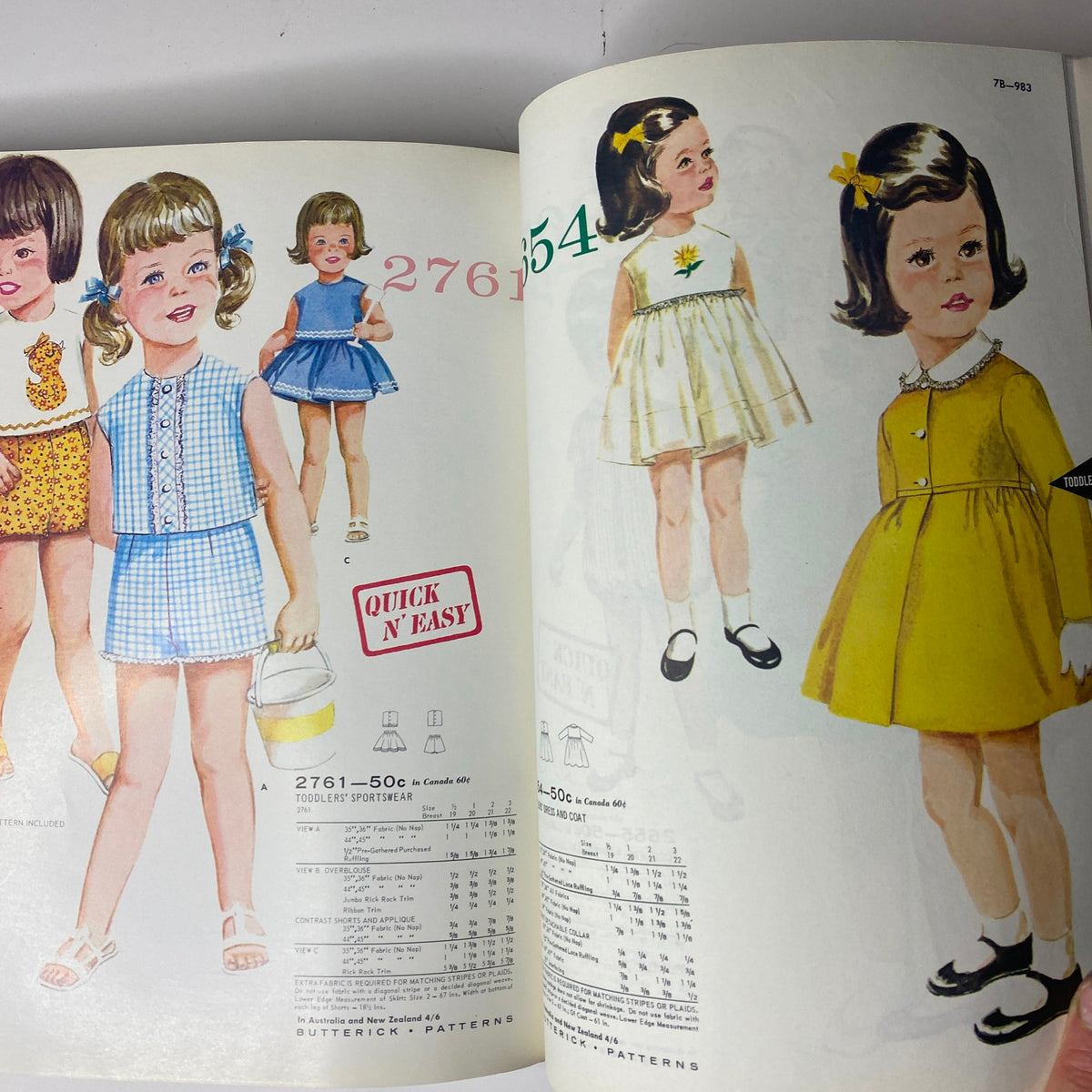
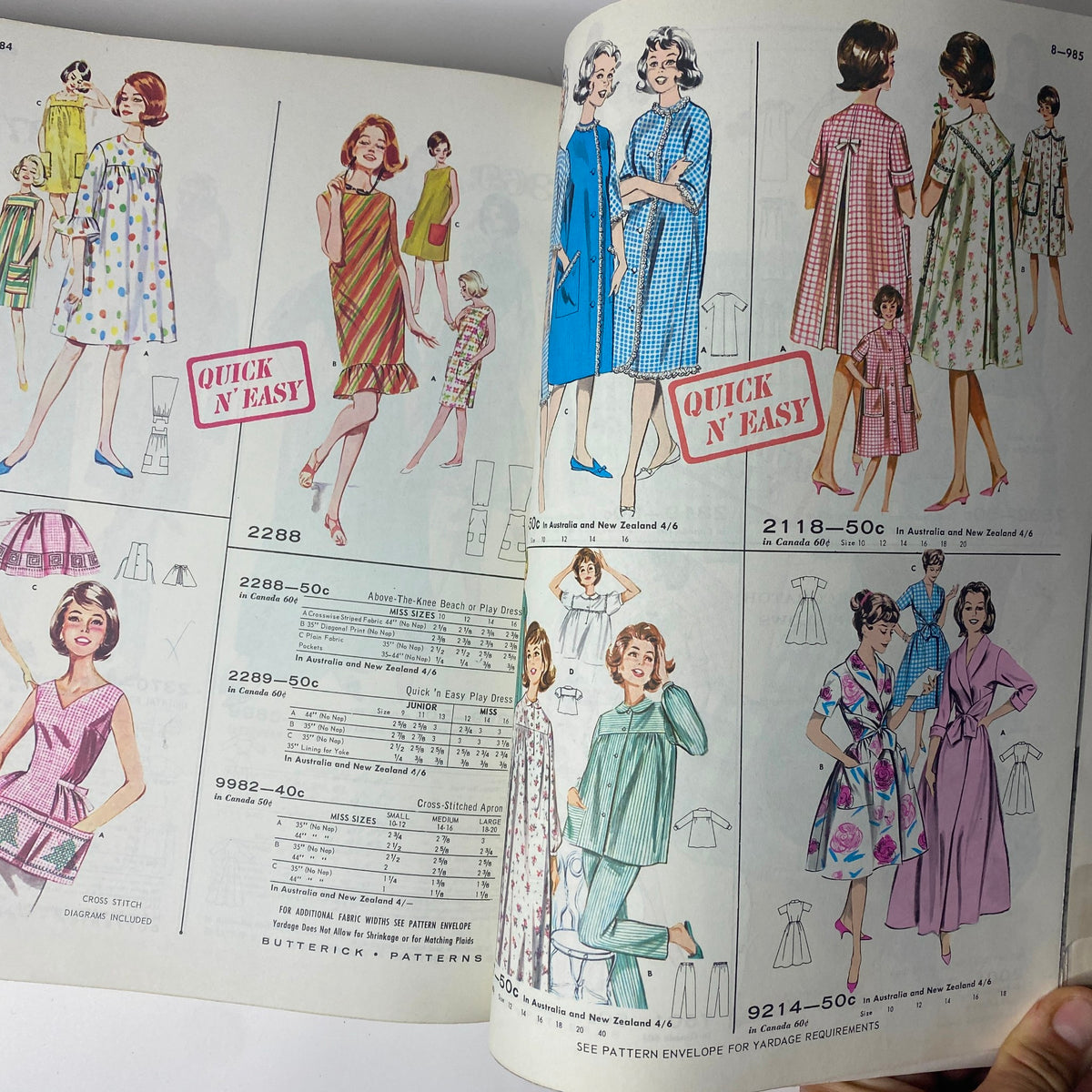
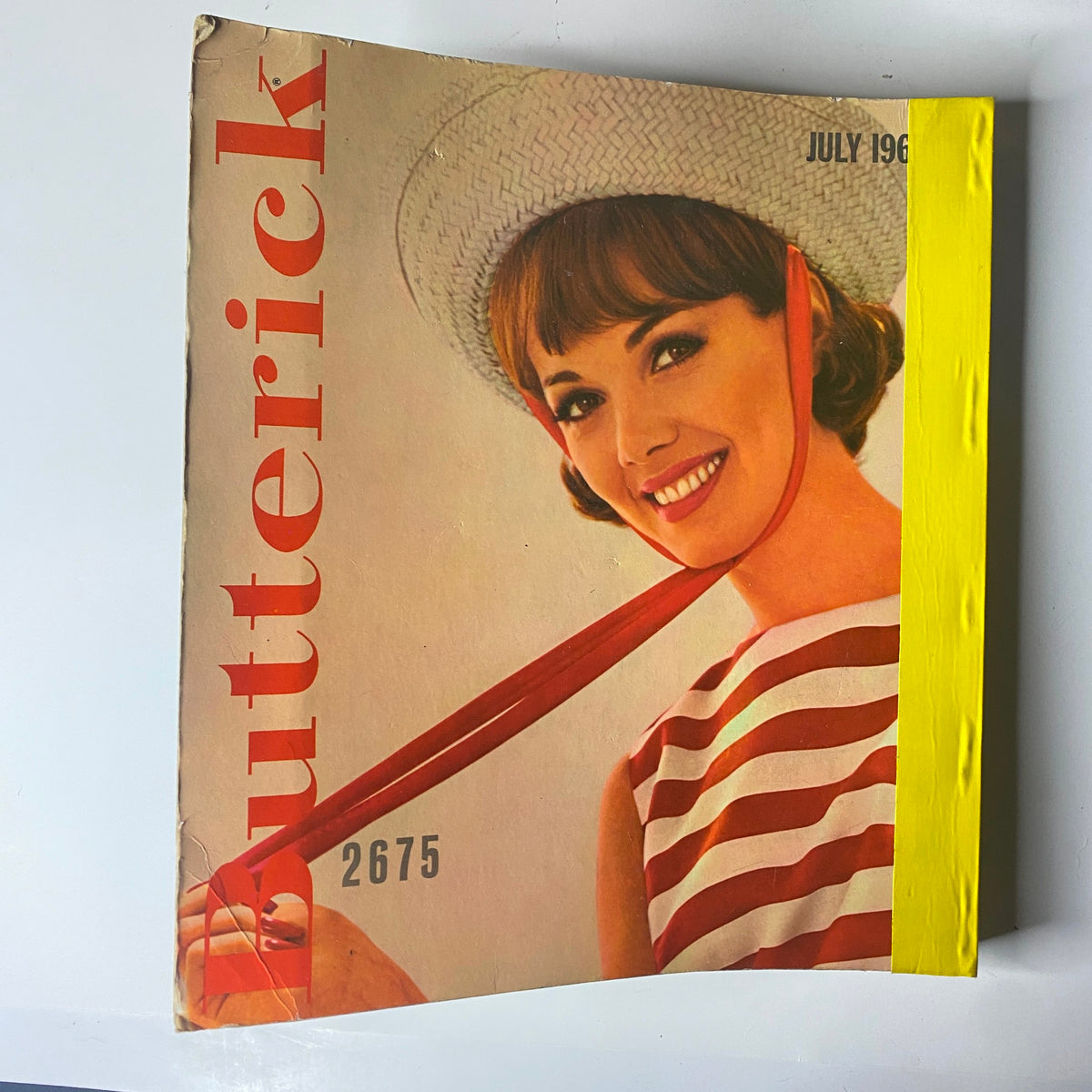


Description
Collector's Note – Why This Issue Matters
The June 1963 Butterick Pattern Catalog is a primary document of how American women actually dressed in the early 1960s — not as filtered through the aspirational lens of Vogue or Harper's Bazaar, but as realized in fabric at kitchen tables and sewing rooms across the country. There is an important distinction between fashion as it was photographed and fashion as it was made and worn, and the Butterick catalog sits firmly in the latter category. In 1963, home sewing was not a niche hobby but a mainstream domestic practice. A significant proportion of American women — particularly outside major metropolitan areas — made a substantial portion of their own wardrobes and their children's clothing. The Butterick catalog was the interface between professional fashion design and the home dressmaker, translating the silhouettes and details of the season into patterns an average sewer could execute. Collectors and fashion historians building archives of Butterick pattern catalogs across the decades understand that these publications are among the most direct records of what was actually being worn — not merely shown.
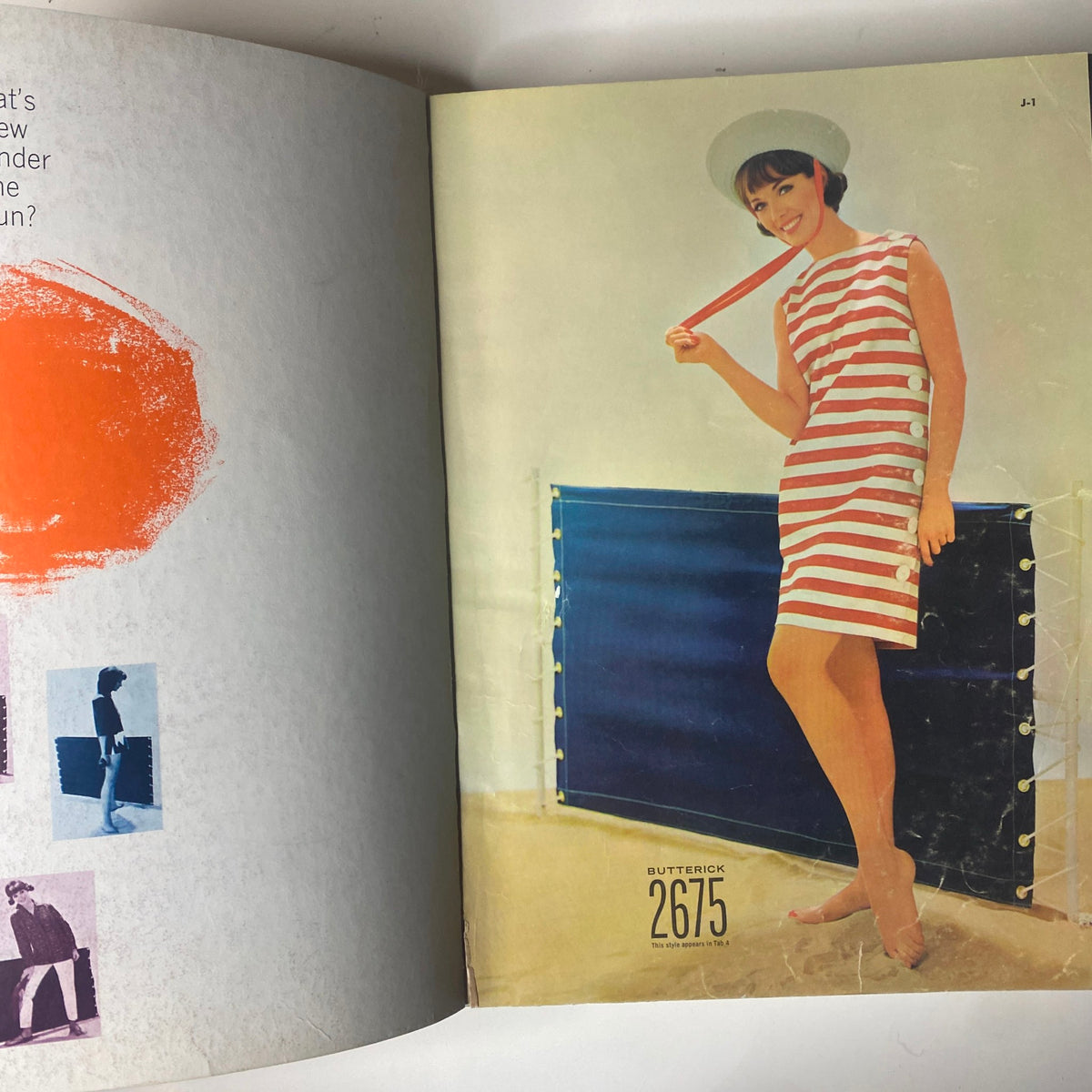
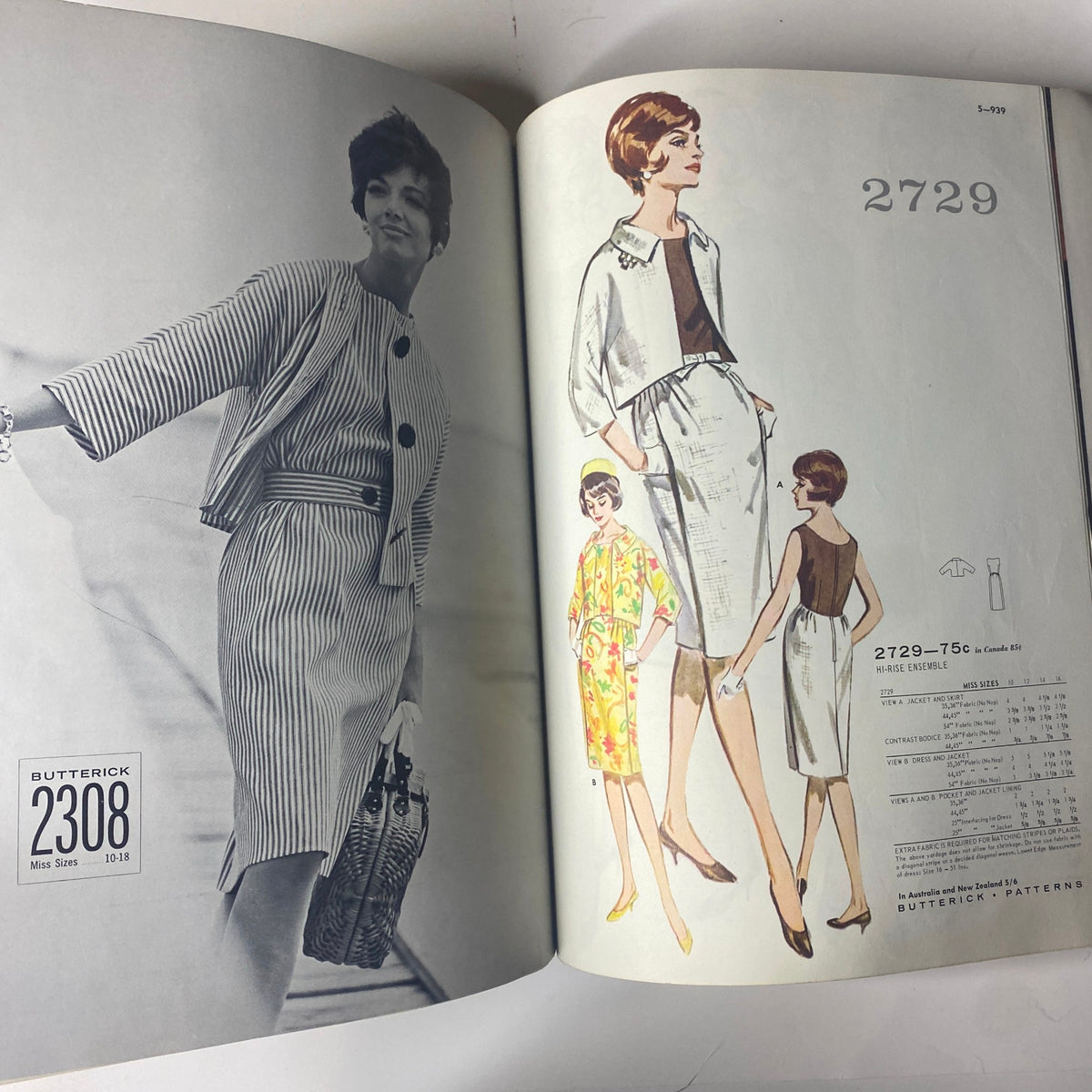
June 1963 is a particularly instructive moment in fashion history to examine through this lens. The early 1960s represented a transitional period in women's fashion: the structured, corseted silhouette of the late 1950s was giving way to something cleaner, more linear, and ultimately more youthful. The shift dress, the A-line, the Empire waist — the shapes that would define the decade — were already appearing in accessible pattern form by mid-1963, alongside the more conservative tailored suits and lady-like ensembles that still dominated professional and formal dressing. The catalog's inclusion of specific sections for Junior Petites, Sub-Teens, and Young Juniors reflects the growing commercial recognition of youth as a distinct market with its own aesthetic preferences — a shift that would accelerate dramatically as the decade progressed. For anyone documenting the material culture of 1963 through its printed ephemera, a Butterick catalog offers a cross-section of that transition that no fashion magazine can quite replicate, because it shows what people were actually choosing to sew and wear rather than what editors were choosing to photograph.
About the Publication
Butterick Publishing Company, founded in 1863 by Ebenezer Butterick, holds the distinction of being the originator of the standardized tissue paper sewing pattern — an innovation that democratized fashion by making it possible for home sewers to reproduce professionally designed garments in their own sizes without requiring a dressmaker. By the mid-twentieth century, Butterick was one of the dominant forces in the American pattern industry alongside McCall's and Simplicity, distributing seasonal catalogs to fabric stores and notions departments nationwide. These large-format counter catalogs served as the primary browsing tool for retail customers: heavy, oversized books designed to lie flat on store counters and withstand continuous handling by shoppers. The June edition represented summer offerings, with an emphasis on lighter fabrics, casual separates, and warm-weather occasion wear. Butterick's editorial positioning leaned toward accessible sophistication — patterns that reflected current fashion trends while remaining achievable for home sewers of intermediate skill.
Key Highlights Inside
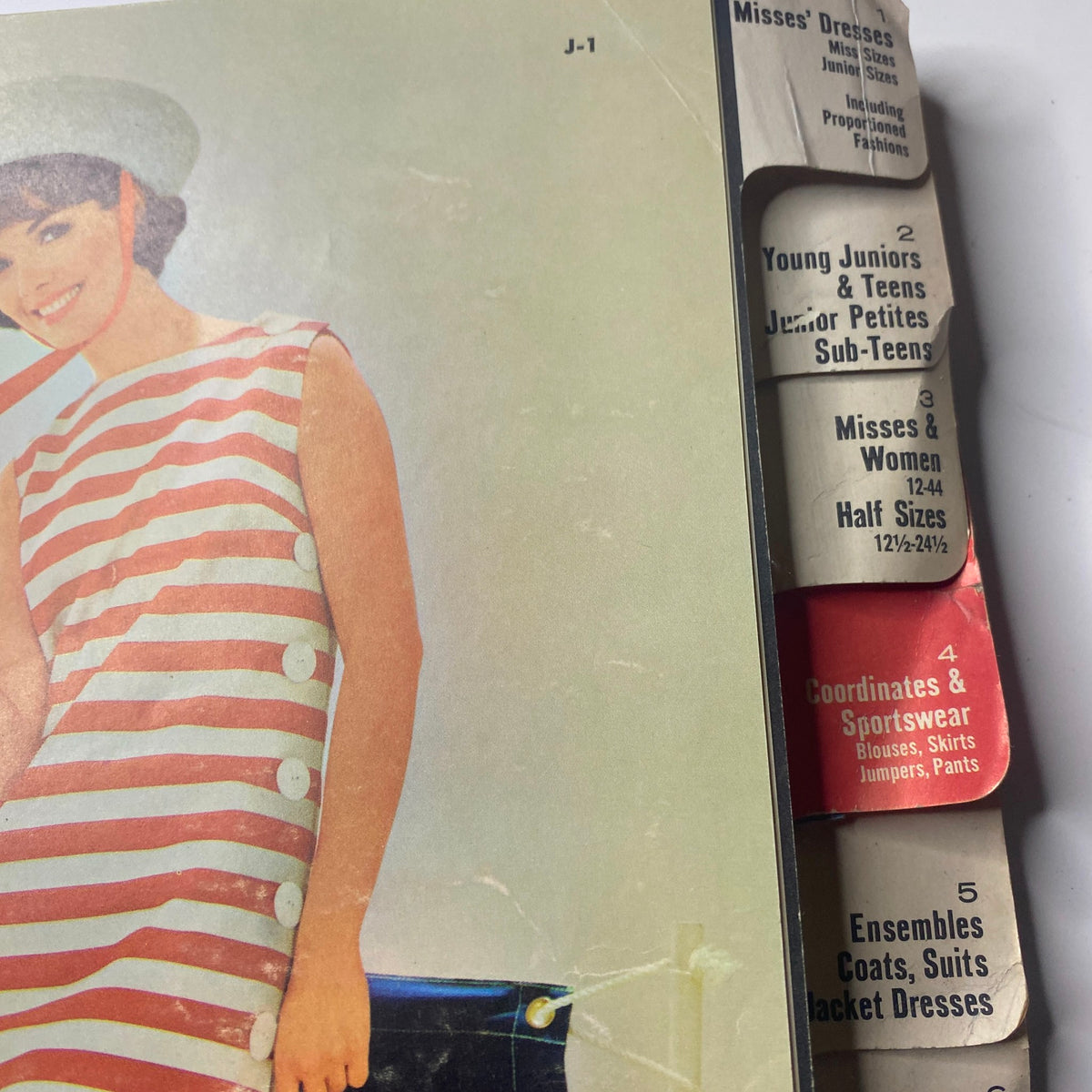
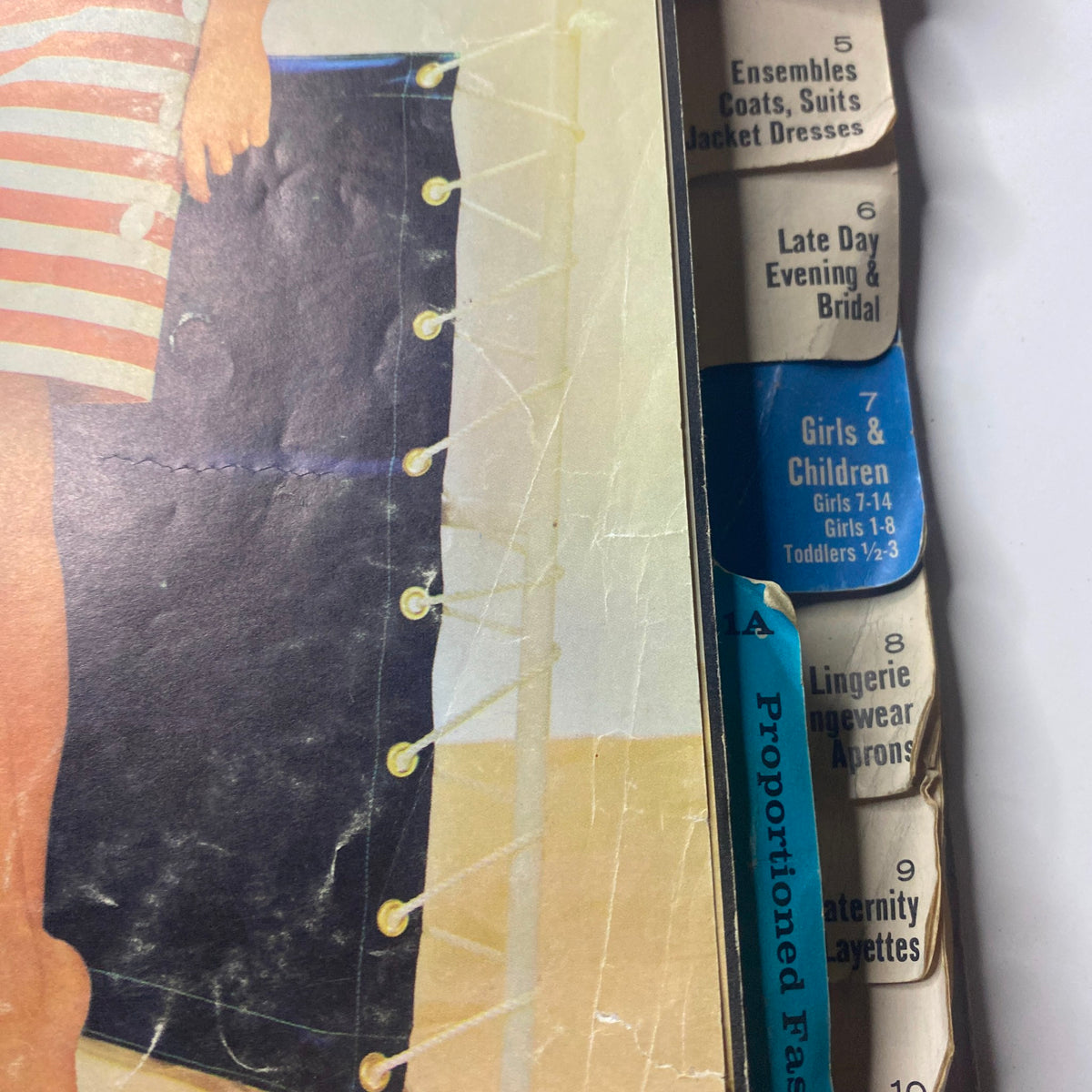
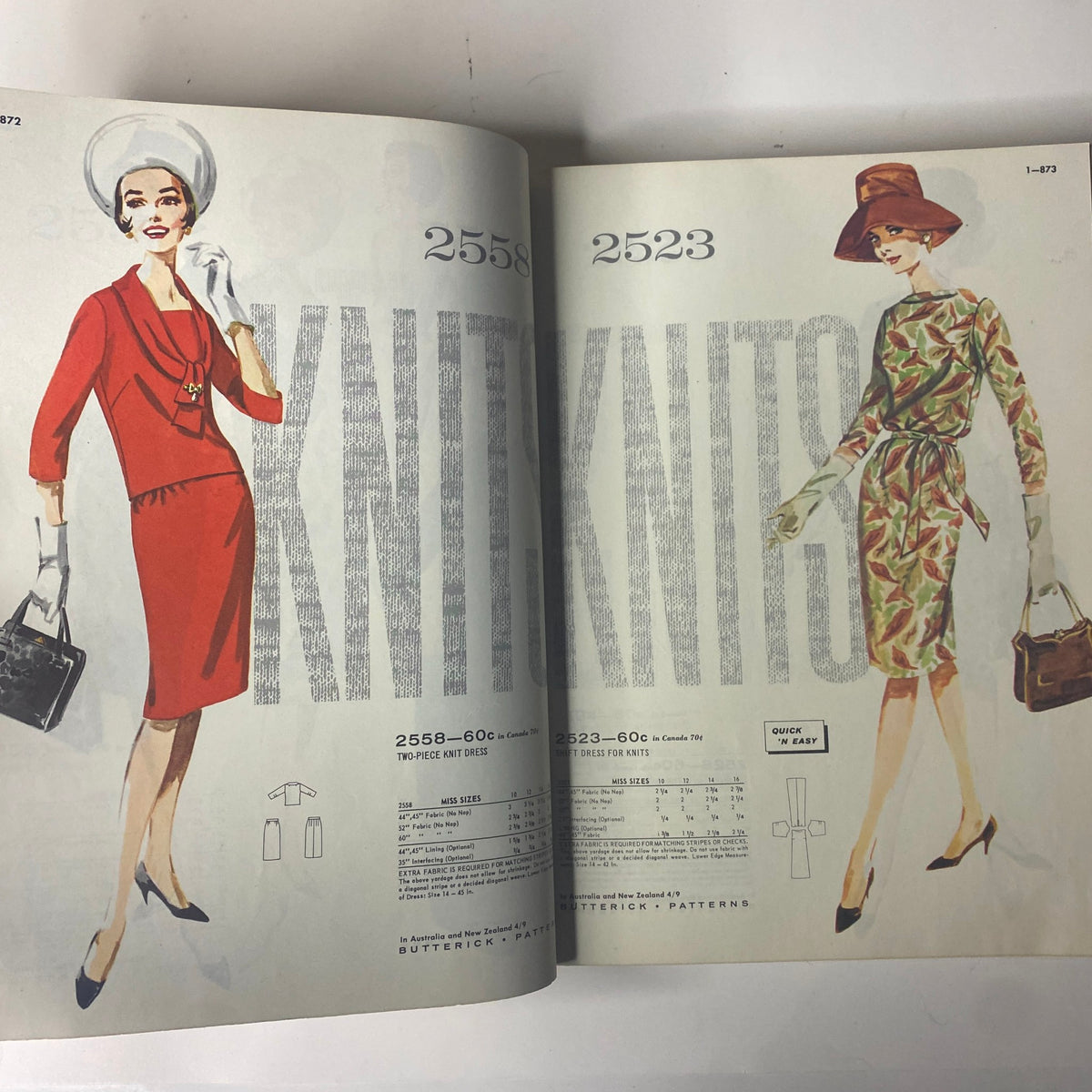
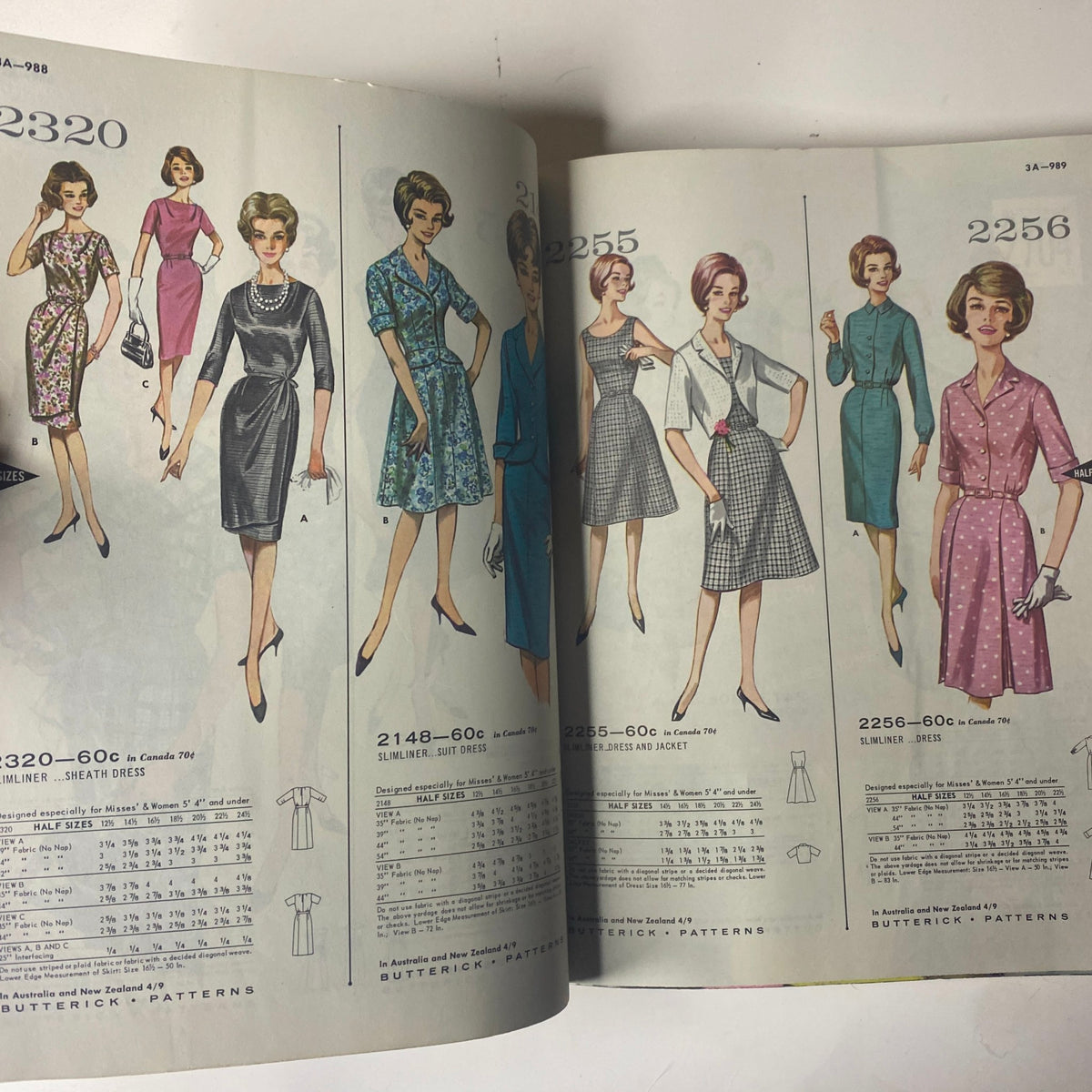
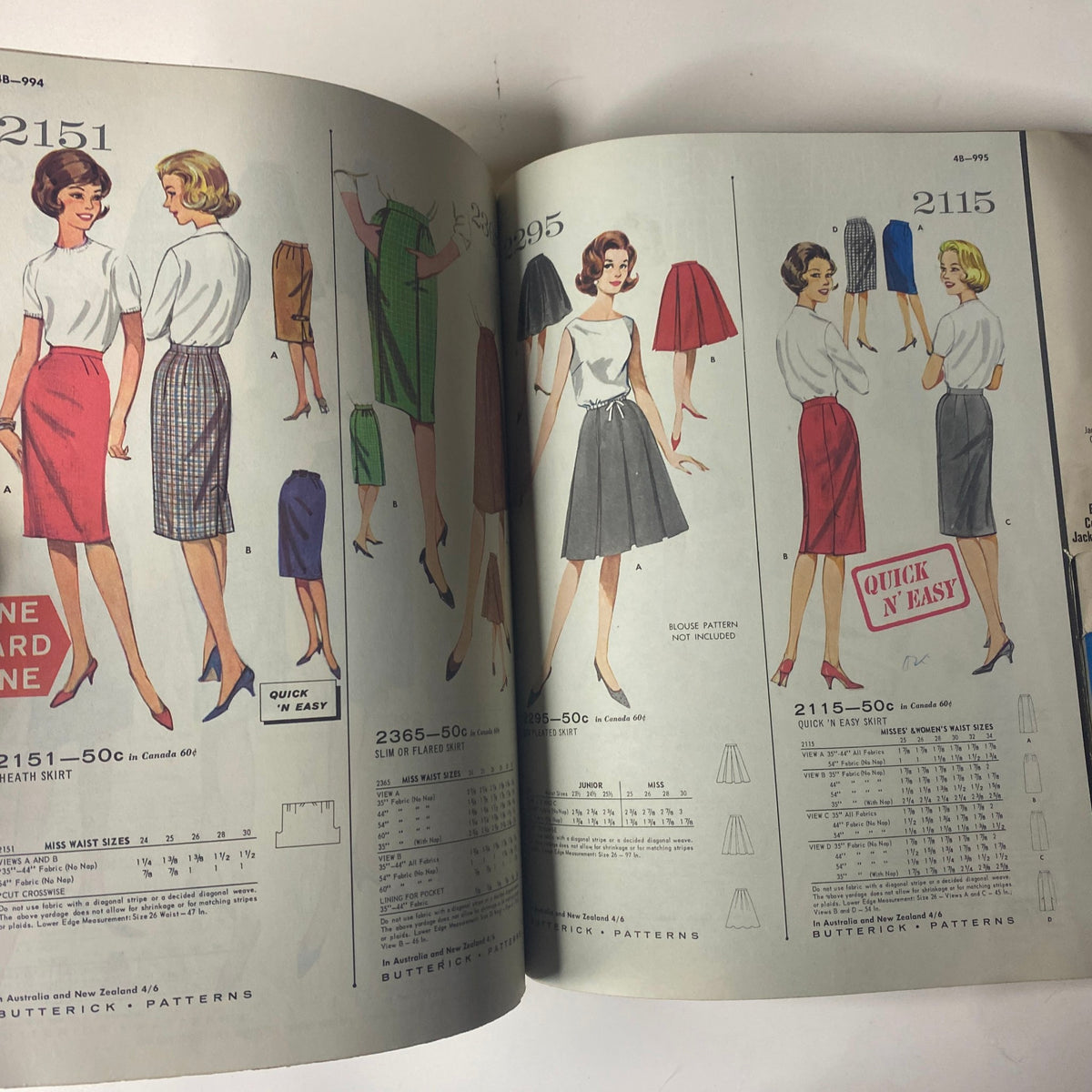
- Misses' Dresses including Proportioned Fashions: The catalog's opening section features dresses in Misses' and Junior sizes with proportioned fit options — a practical accommodation for the reality that women's bodies do not conform to a single standard, and a reflection of Butterick's positioning as a practical rather than purely aspirational resource.
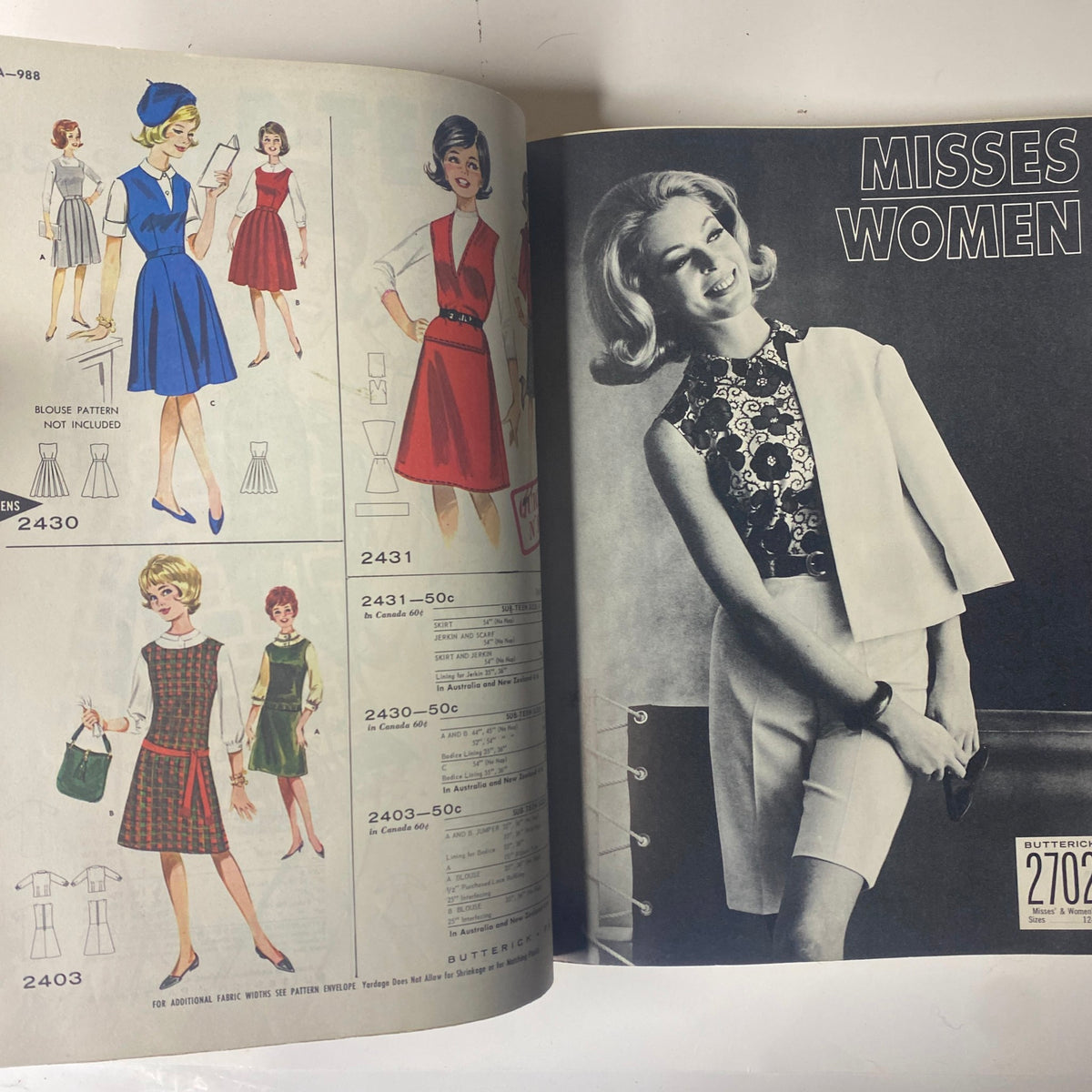
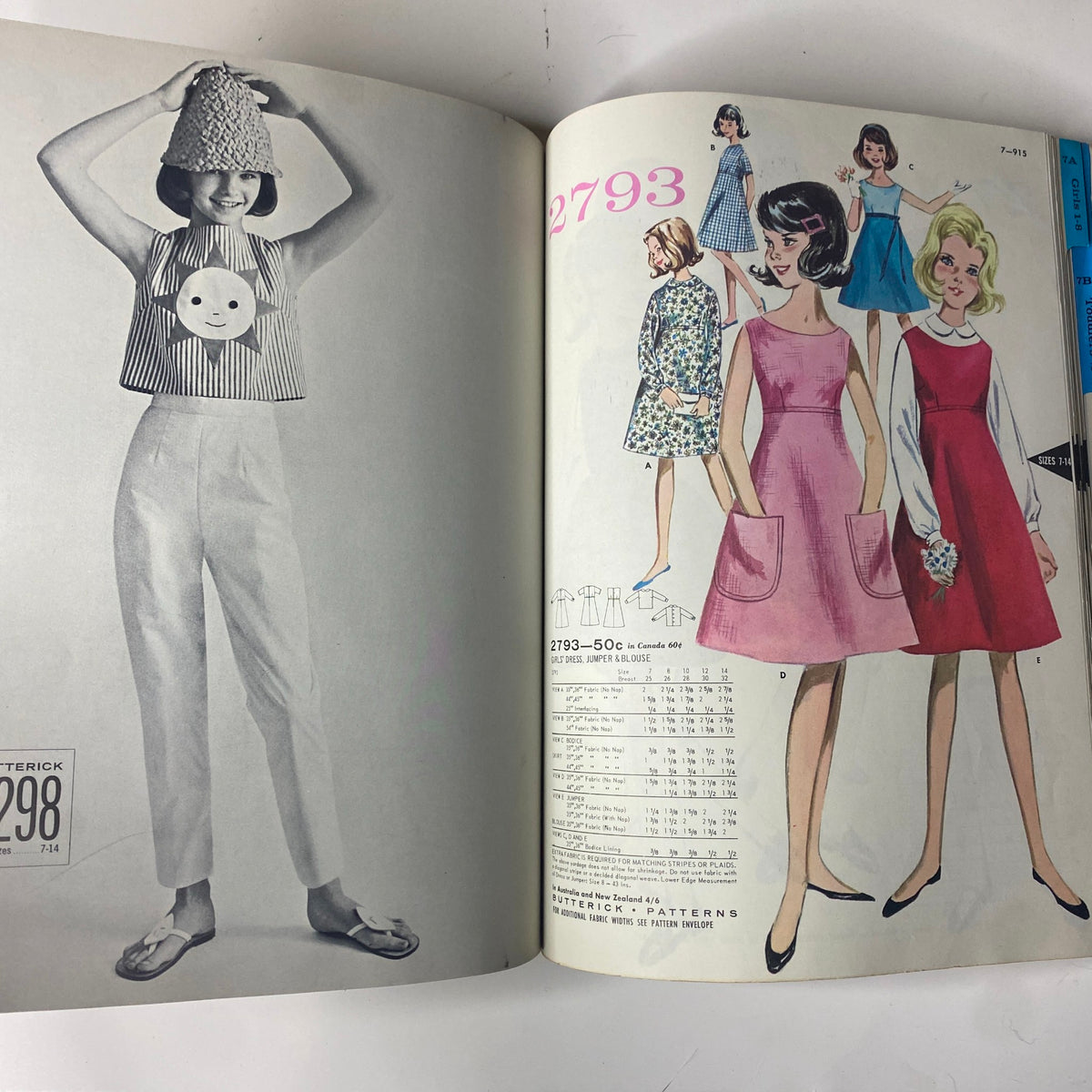
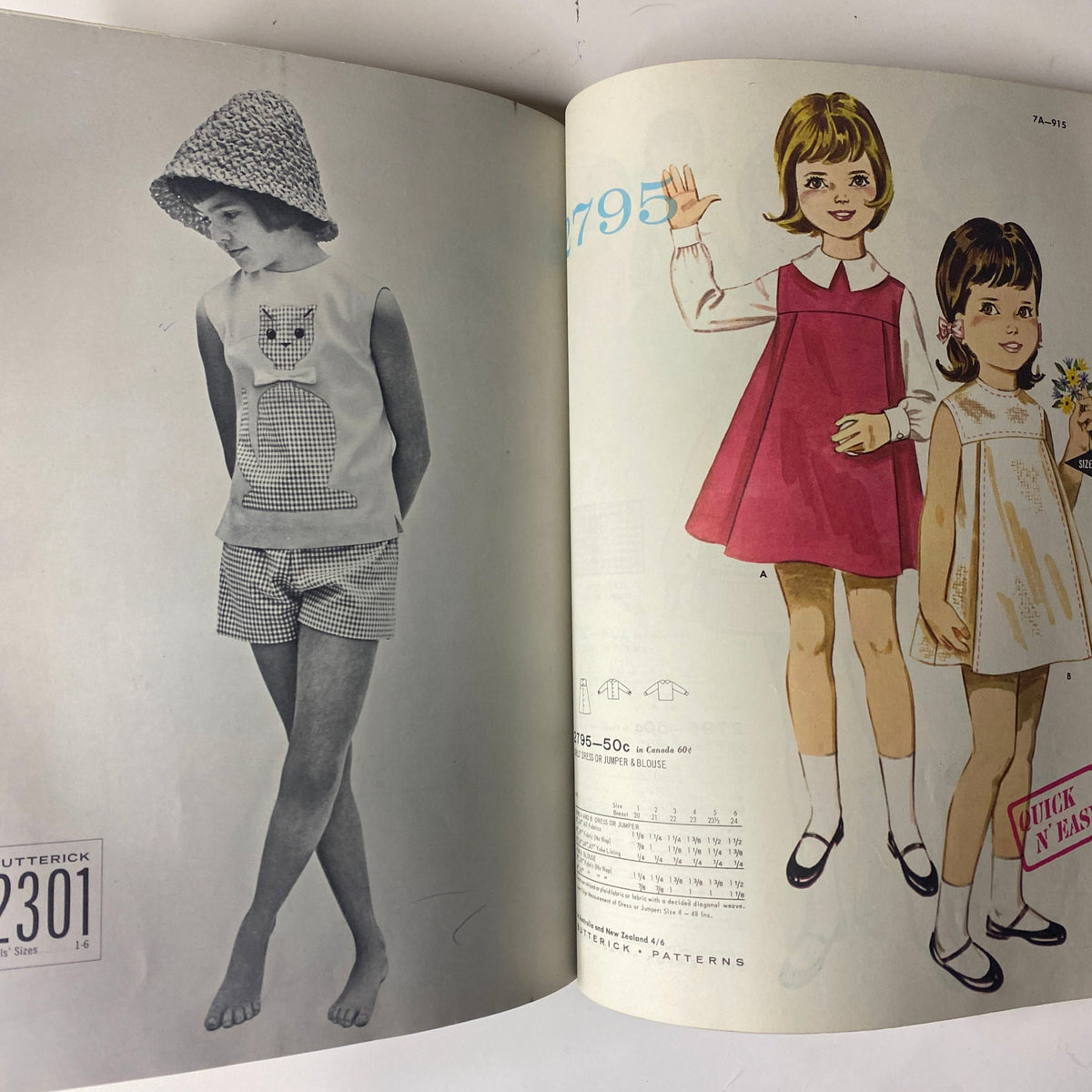
- Young Juniors & Teens section: Dedicated patterns for Junior Petites and Sub-Teens document the early commercial recognition of a distinct youth fashion market in 1963 — shorter hemlines, mod-influenced cuts, and summer aesthetics that anticipate the more radical youth fashion shifts of the mid-decade.
- Extended size range: The inclusion of sizes through 44 and Half Sizes through 24½ is historically notable. Fashion media of the era largely ignored women outside a narrow size range; the Butterick catalog's inclusive sizing reflects the actual diversity of its customer base.
- Red Tab Coordinates & Sportswear: The mix-and-match separates section — blouses, skirts, jumpers, and pants designed to be combined into seasonal wardrobes — documents the growing popularity of separates dressing as an alternative to matched ensembles, a shift in how American women organized their wardrobes.
- Ensembles section: Coats, suits, and jacket dresses for professional and formal occasions reflect the enduring influence of the tailored, ladylike aesthetic associated with early 1960s fashion — a sensibility still dominant in 1963 before the more dramatic shifts of the mid-decade.
- Large store counter format: The oversized counter-catalog format itself is a collectible attribute. These books were designed for heavy retail use, and surviving examples in good condition are rarer than standard magazine-format publications of the same period.
Condition & Rarity
Large-format Butterick counter catalogs present specific condition considerations that differ from standard periodicals. These were working retail tools, handled continuously by store customers over the course of an entire season, which means the average surviving example shows significant wear — split spines, torn pages, cover soiling, and missing pattern reference pages are common. A copy in good condition with intact pages represents a meaningfully better survival rate than the typical example. The protective plastic covering indicates deliberate preservation. The large physical format also creates storage challenges that have led many copies to suffer spine stress and corner damage simply from being stacked or shelved incorrectly over the past sixty years. When evaluating any surviving copy of this catalog, page completeness — particularly the interior pattern reference pages, which were sometimes removed by customers or staff — and spine integrity are the primary grading considerations. Cover presentation matters secondarily given the working nature of these publications.
Looking for More Issues Like This?
Counter-format Butterick catalogs from the early 1960s in good condition are genuinely uncommon survivors — they were made to be used, not saved, and most copies from this era did not outlast the decade in collectible shape. If this one has already found a home, the full archive of Butterick pattern catalogs is the best place to browse for other seasonal editions across the decades. The 1963 publication collection is also worth exploring for anyone building a broader picture of that year's material and print culture.