
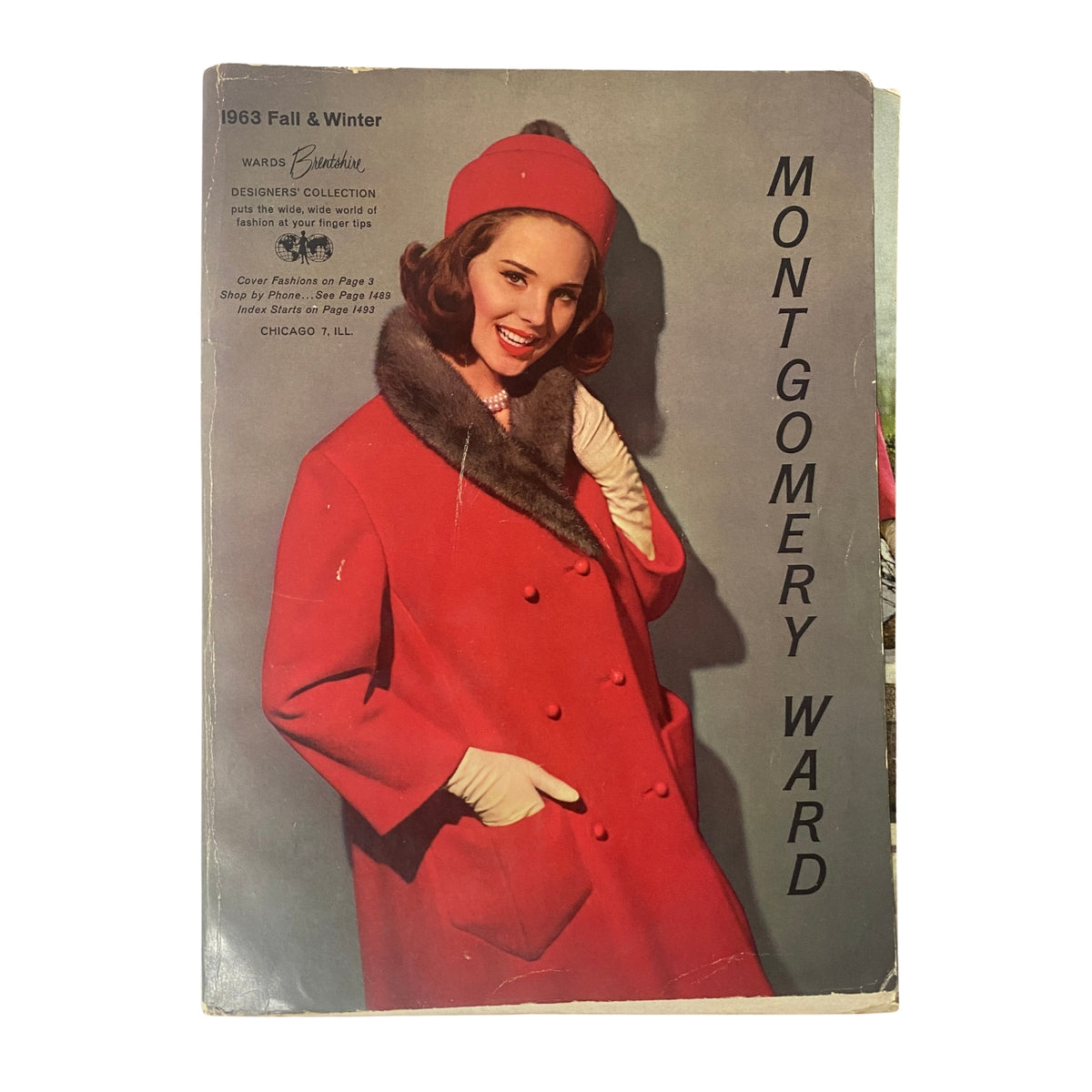
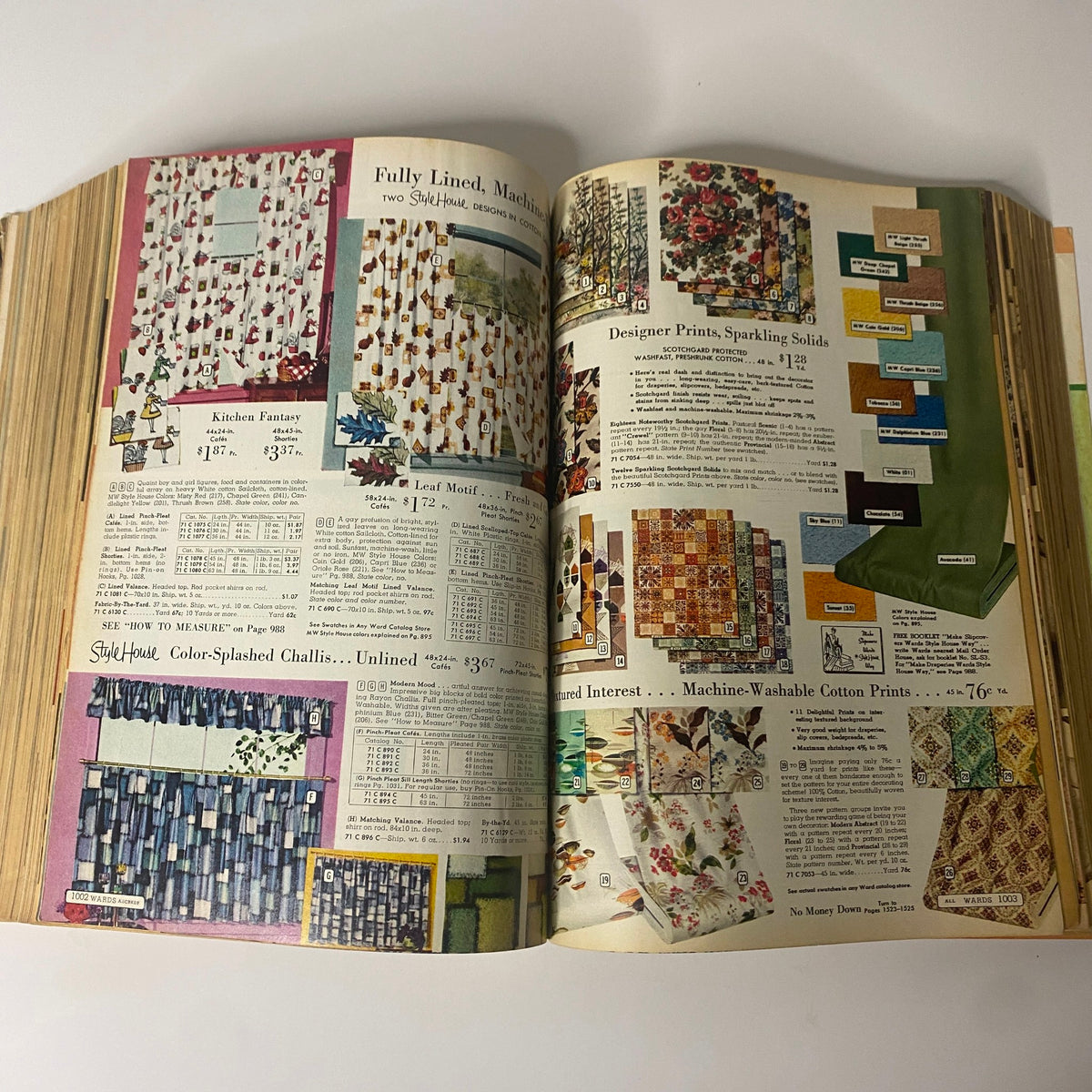
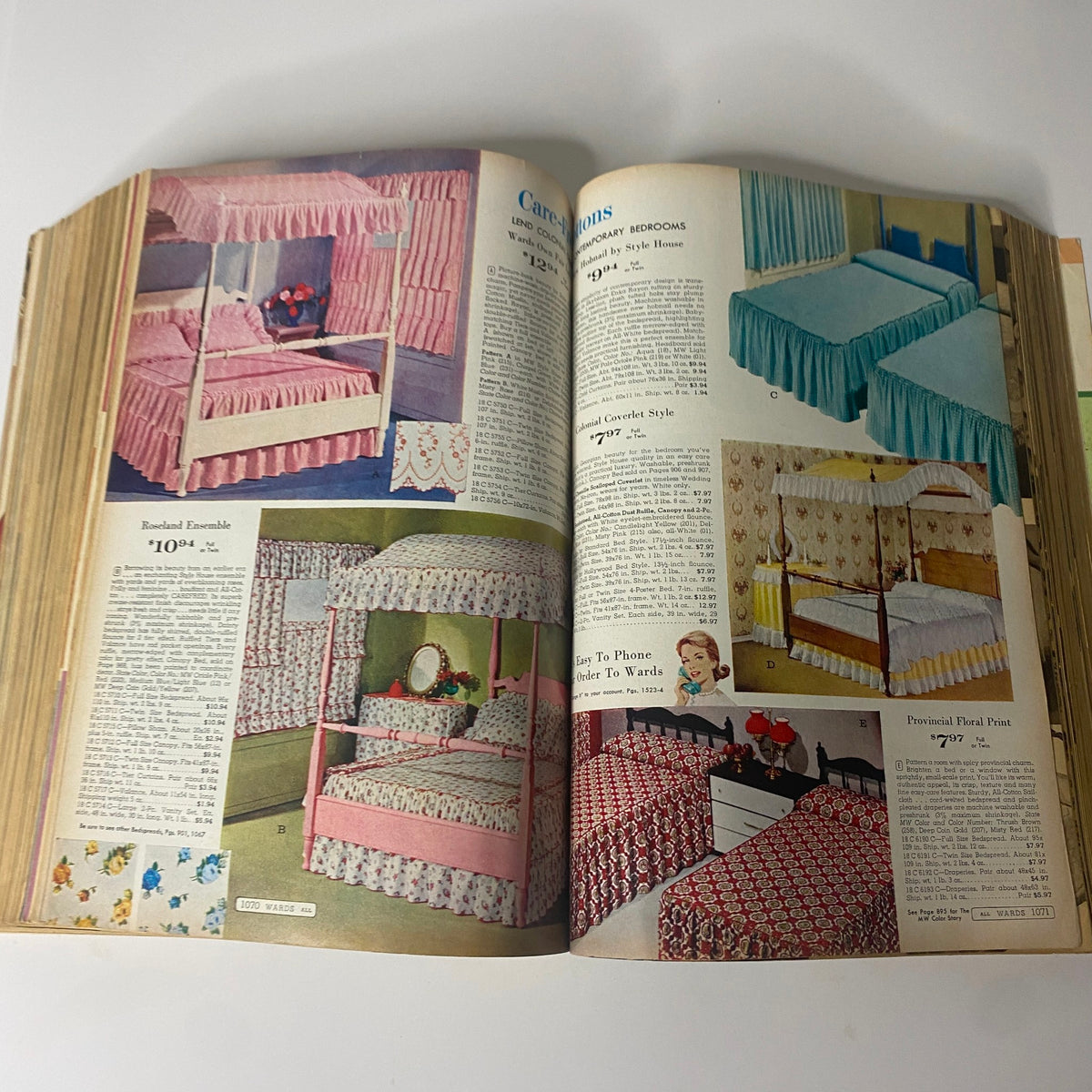
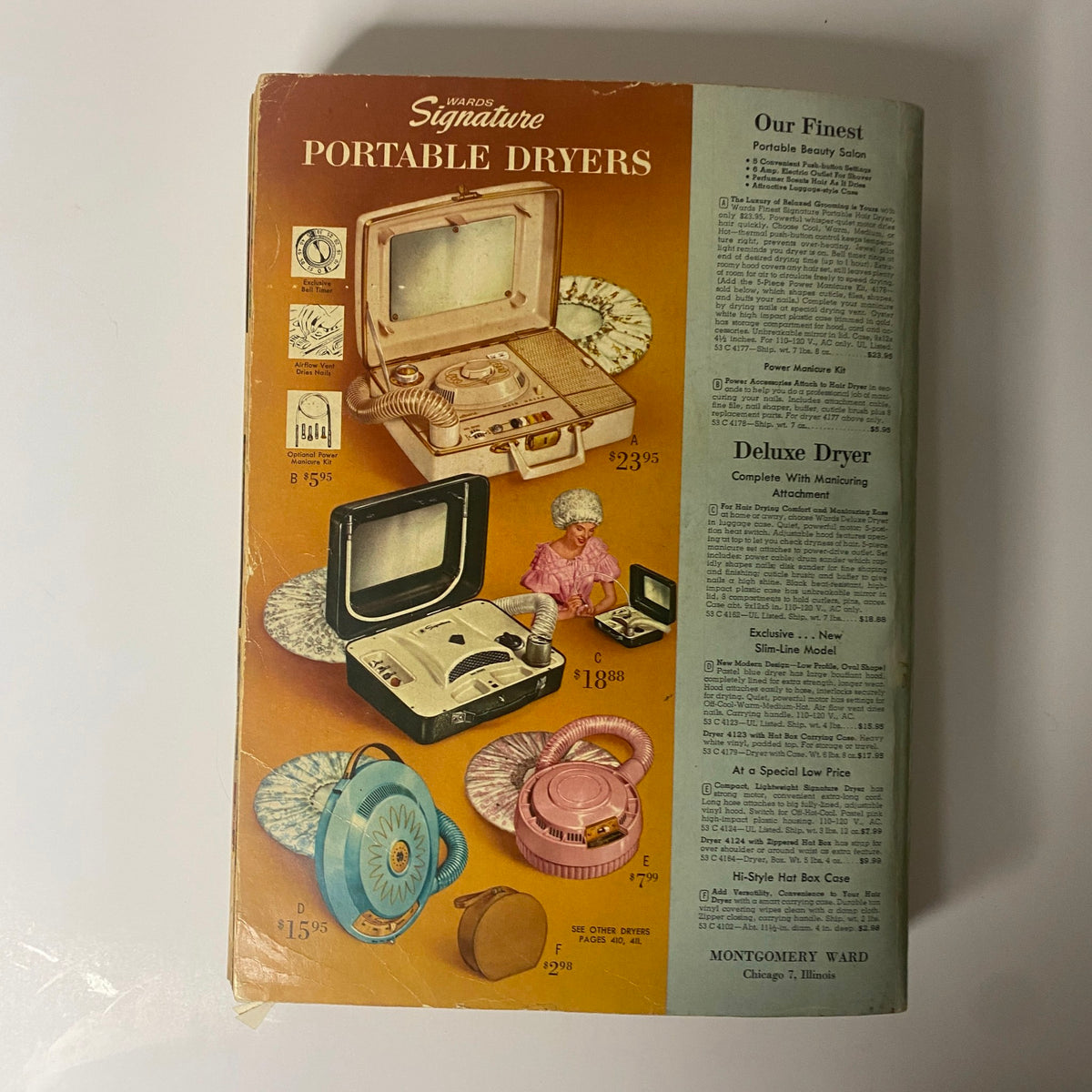


Description
Collector's Note – Why This Issue Matters
The 1963 Montgomery Ward Fall and Winter Catalog is a primary document of American retail culture at one of the most distinctive and historically rich moments in the twentieth century's consumer history. The fall-winter season of 1963 encompasses one of the most abruptly defined before-and-after moments in modern American life — the catalog would have been in American homes and mailboxes in the weeks surrounding November 22, 1963, the date of President Kennedy's assassination in Dallas. That proximity to national trauma gives this catalog an inadvertent documentary quality: it is a record of what American retail was offering, what American families were being encouraged to want, and what the visual language of middle-class aspiration looked like in the final weeks of what is now understood as the end of the Kennedy era's particular cultural mood. The Montgomery Ward Fall and Winter catalog was one of the most anticipated publications in millions of American households each year, its arrival marking the beginning of the Christmas shopping season and serving as both a practical purchasing guide and a projection of aspirational domestic life. For collectors building a serious archive of mid-century American consumer culture, retail history, and the specific visual language of early 1960s fashion and domestic aspiration, the 1963 magazines collection at OriginalMagazines.com brings together a wide range of primary source material from that pivotal and historically freighted year.
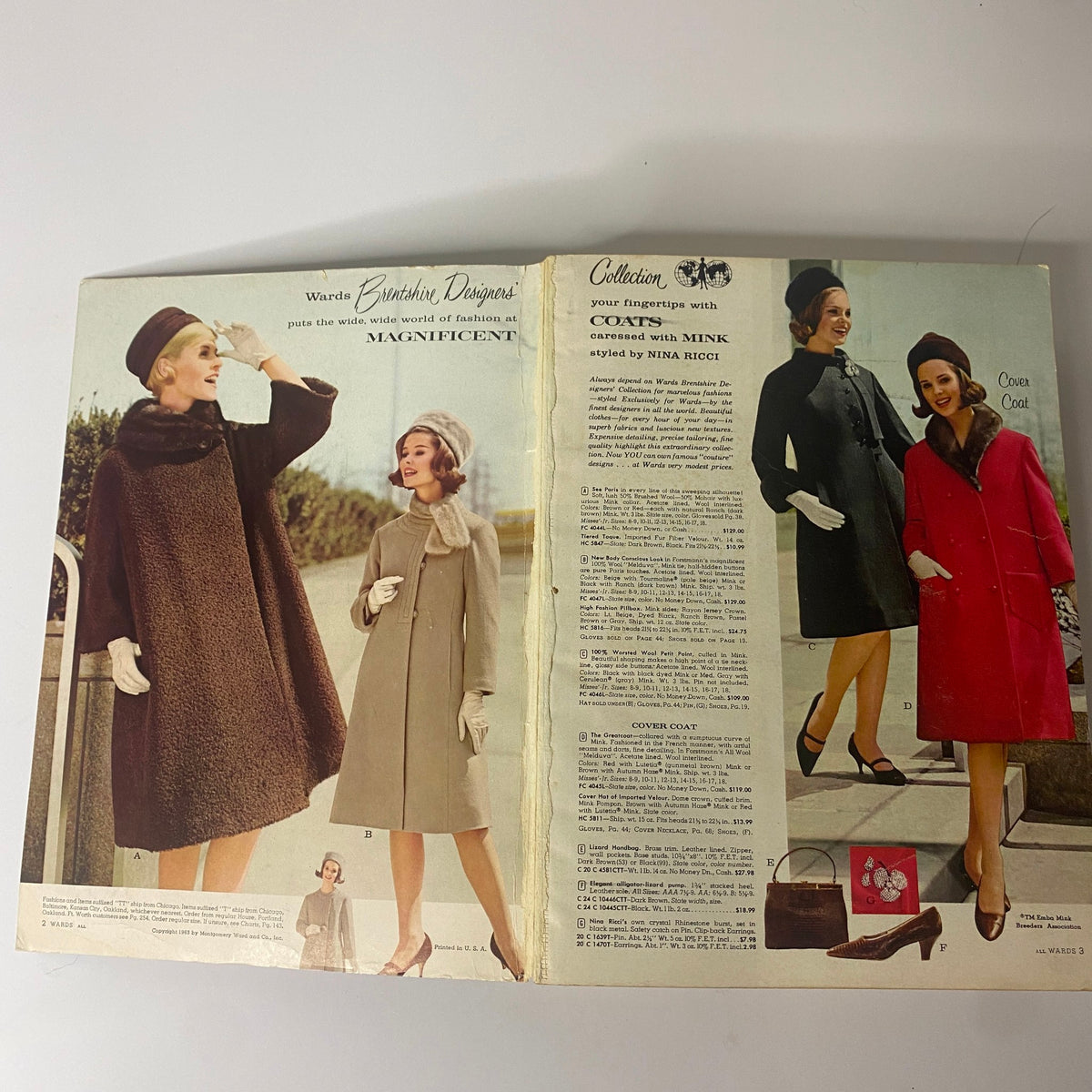
The specific content highlighted in this catalog — the Wards Brentshire Designers' Collection featuring high-fashion coats styled by Nina Ricci with mink accents — is a historically significant detail that rewards close attention. Nina Ricci was one of the most established and respected names in French haute couture, her house founded in Paris in 1932 and known throughout the postwar period for an elegant femininity that was sophisticated without being aggressively avant-garde. The fact that Montgomery Ward — a mass-market American catalog retailer whose primary audience was middle-class families across small towns and suburbs — was licensing the Nina Ricci name for a designer collection in 1963 speaks directly to the specific cultural aspirations of that consumer moment. The early 1960s was the period when Jackie Kennedy had made French couture the reference point for American female elegance, when the appetite for European design cachet in middle-class American consumption was at a post-war peak, and when catalog retailers were actively competing to offer their customers the cultural validation of designer associations alongside the price advantages of catalog retail. A Montgomery Ward coat collection styled by Nina Ricci with mink accents, offered to the catalog's mass readership in fall 1963, is a precise artifact of that cultural aspiration — the translation of haute couture prestige into accessible retail terms that defined one of the most interesting tensions in early 1960s American consumer culture.
Montgomery Ward's place in American retail history gives this catalog additional significance beyond its specific 1963 content. Founded in 1872 as the first mail-order catalog retailer in the United States, Ward's had spent ninety years as one of the most important commercial institutions in American domestic life, its catalogs reaching rural and small-town households that had no access to department store retail and serving as primary conduits for the visual culture of American consumer aspiration from the Gilded Age through the mid-twentieth century. By 1963, the company was navigating the competitive pressure of suburban shopping mall retail and the continued strength of its chief rival Sears, but its fall-winter catalog remained one of the most significant annual publications in American consumer culture, its arrival in millions of mailboxes marking the beginning of the holiday shopping cycle with a regularity that had persisted for nearly a century. A surviving 1963 fall-winter catalog in any condition is a primary source for the history of American retail, American fashion culture, and the specific aesthetic and commercial language of early 1960s consumer life — material that professional historians, fashion scholars, and serious collectors of American commercial ephemera all pursue with genuine intent.
About the Publication
Montgomery Ward's annual fall and winter catalog was one of the most widely distributed publications in the United States throughout the company's active retail history, reaching millions of American households each year through direct mail and serving simultaneously as a practical shopping reference, a visual guide to current fashion and home goods trends, and a projection of the aspirational domestic life that the company's merchandise was positioned to enable. Unlike editorial magazines, the catalog's primary function was commercial — every page was selling something — but that commercial function also made it one of the most accurate and comprehensive primary sources available for understanding what American retail was offering, what designers and manufacturers were producing, and what middle-class American households were being encouraged to aspire to at any given moment. The 1963 edition's inclusion of a Nina Ricci-associated designer collection reflects the early 1960s catalog retail industry's active engagement with fashion credentialing, a strategy that was both a response to consumer demand for European design association and a competitive positioning decision in a marketplace where catalog retailers were fighting to retain customers against the expanding suburban mall economy.
Key Highlights Inside
- Wards Brentshire Designers' Collection featuring Nina Ricci-styled coats — The confirmed inclusion of a high-fashion coat collection associated with Nina Ricci and featuring mink accents documents the specific consumer aspiration that Montgomery Ward was targeting in fall 1963 — the appetite for European couture prestige translated into accessible catalog pricing. This collection is a primary artifact of the early 1960s cultural moment when Jackie Kennedy's influence had made French fashion the reference point for American female elegance across every price point and every retail channel.
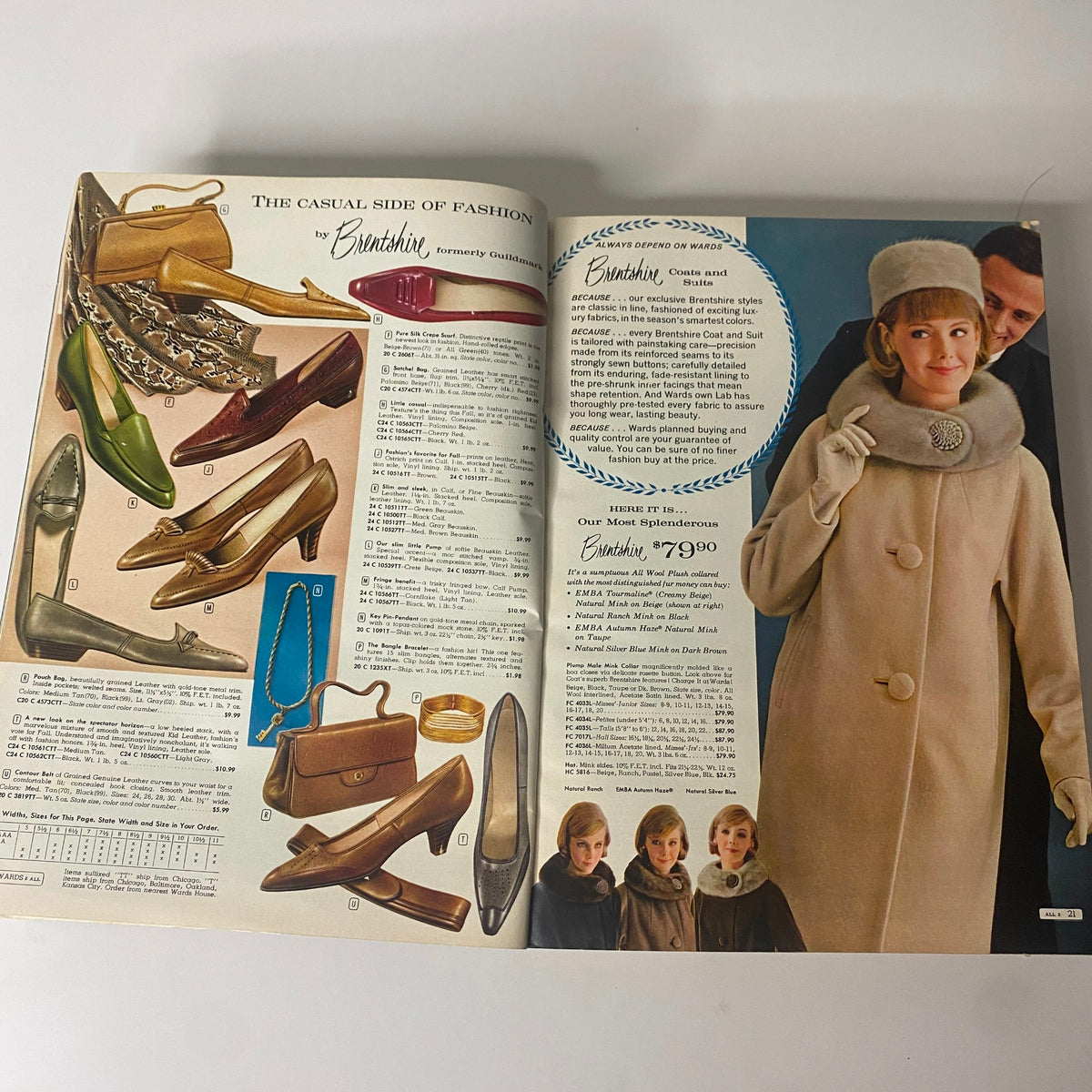
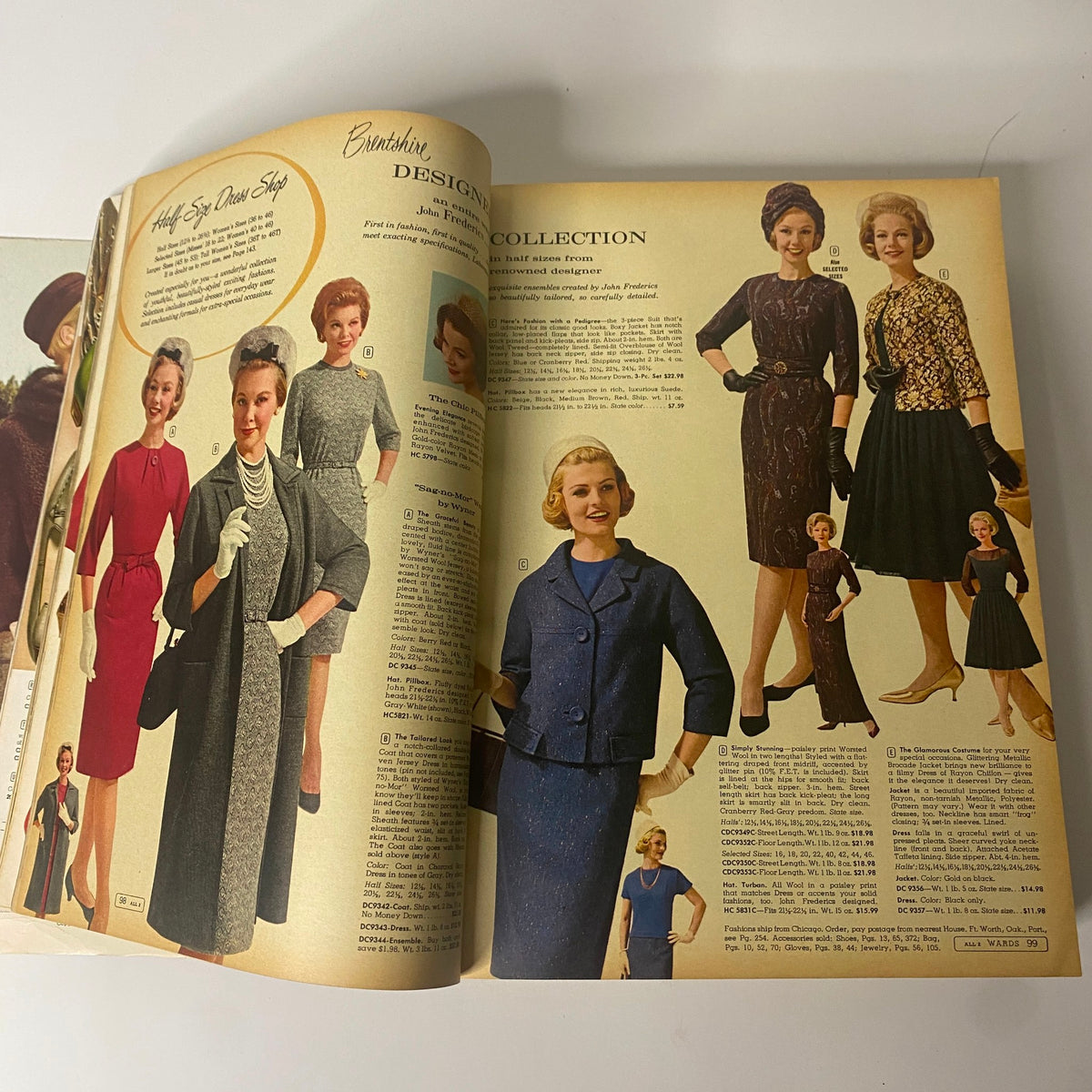
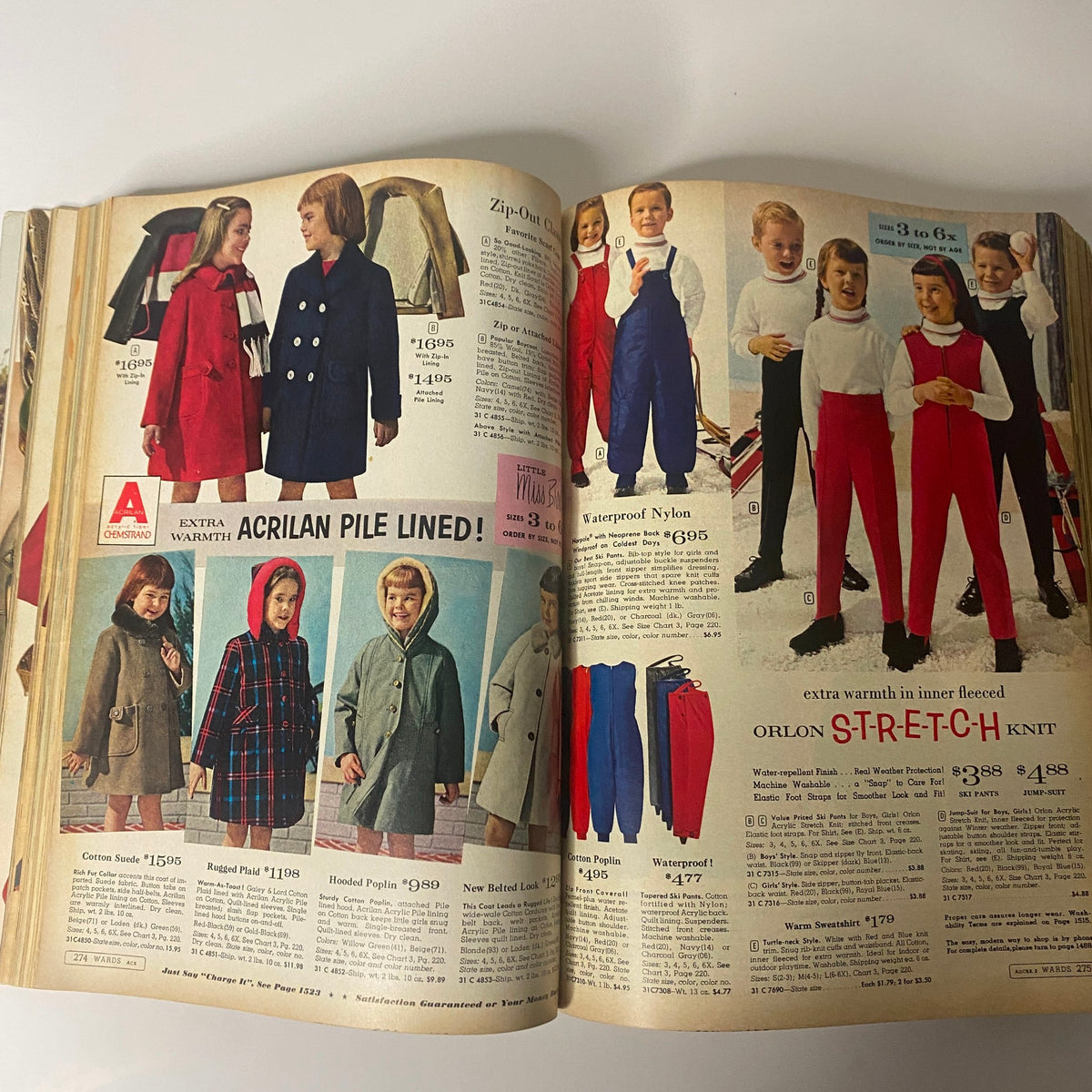
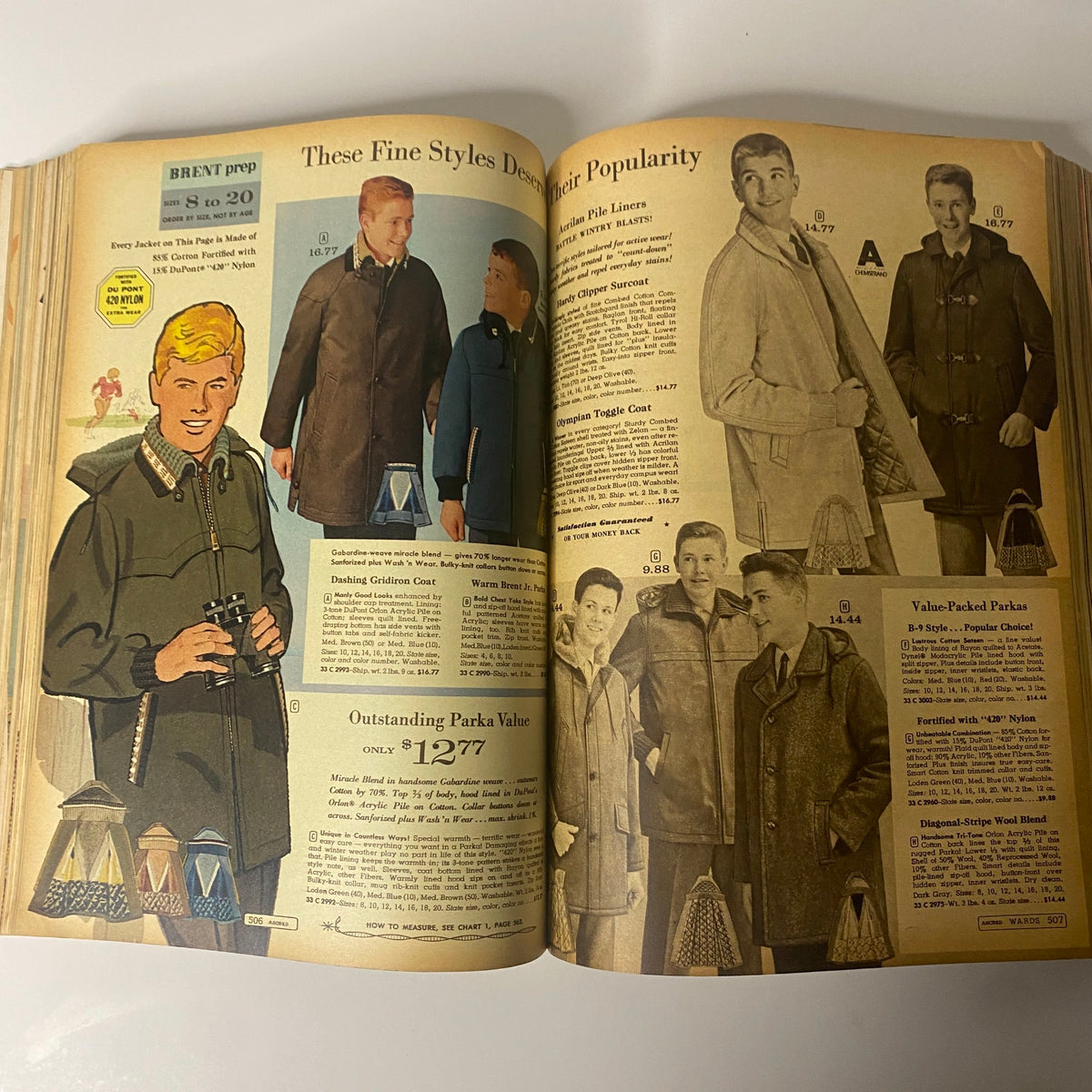
- Fall and winter 1963 American fashion documented comprehensively — A Montgomery Ward fall-winter catalog represents one of the most comprehensive single-volume records of what American retail fashion looked like at a specific seasonal moment, covering women's, men's, and children's clothing across the full range of styles, price points, and occasions that the catalog's mass-market audience required. Fashion historians use catalog documentation from this period as primary evidence for the specific styles, silhouettes, fabrics, and color palettes that characterized early 1960s American ready-to-wear at its most broadly distributed level.
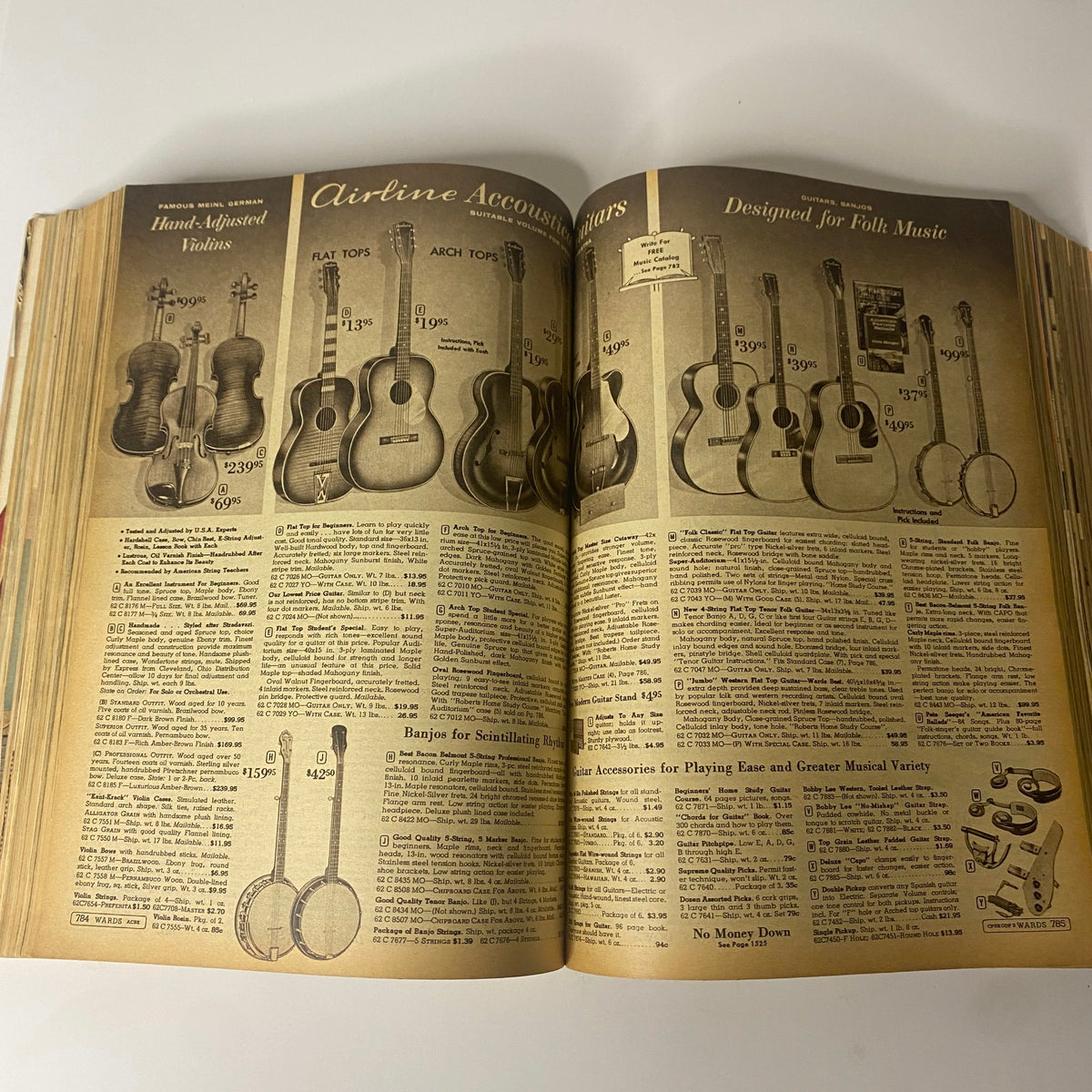
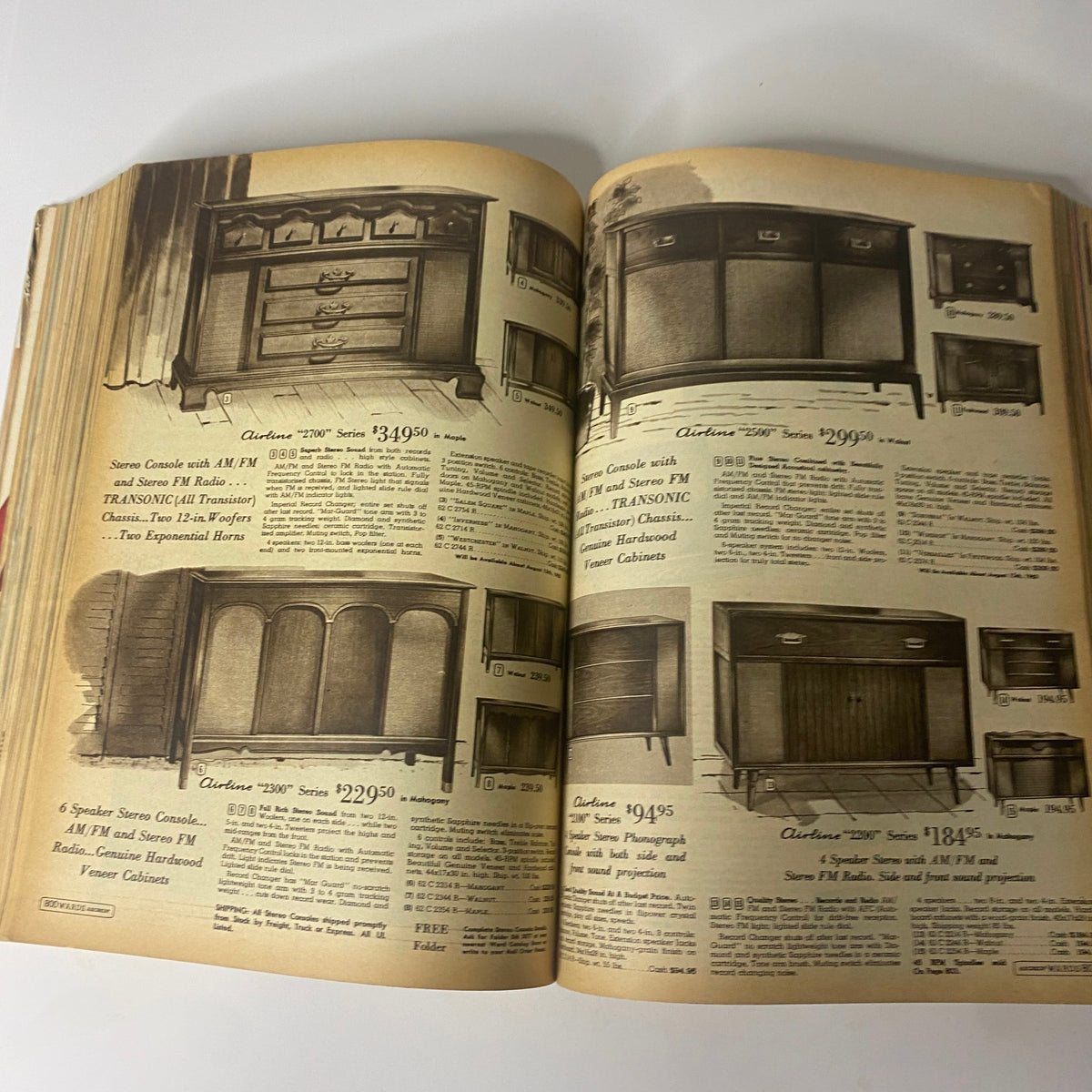
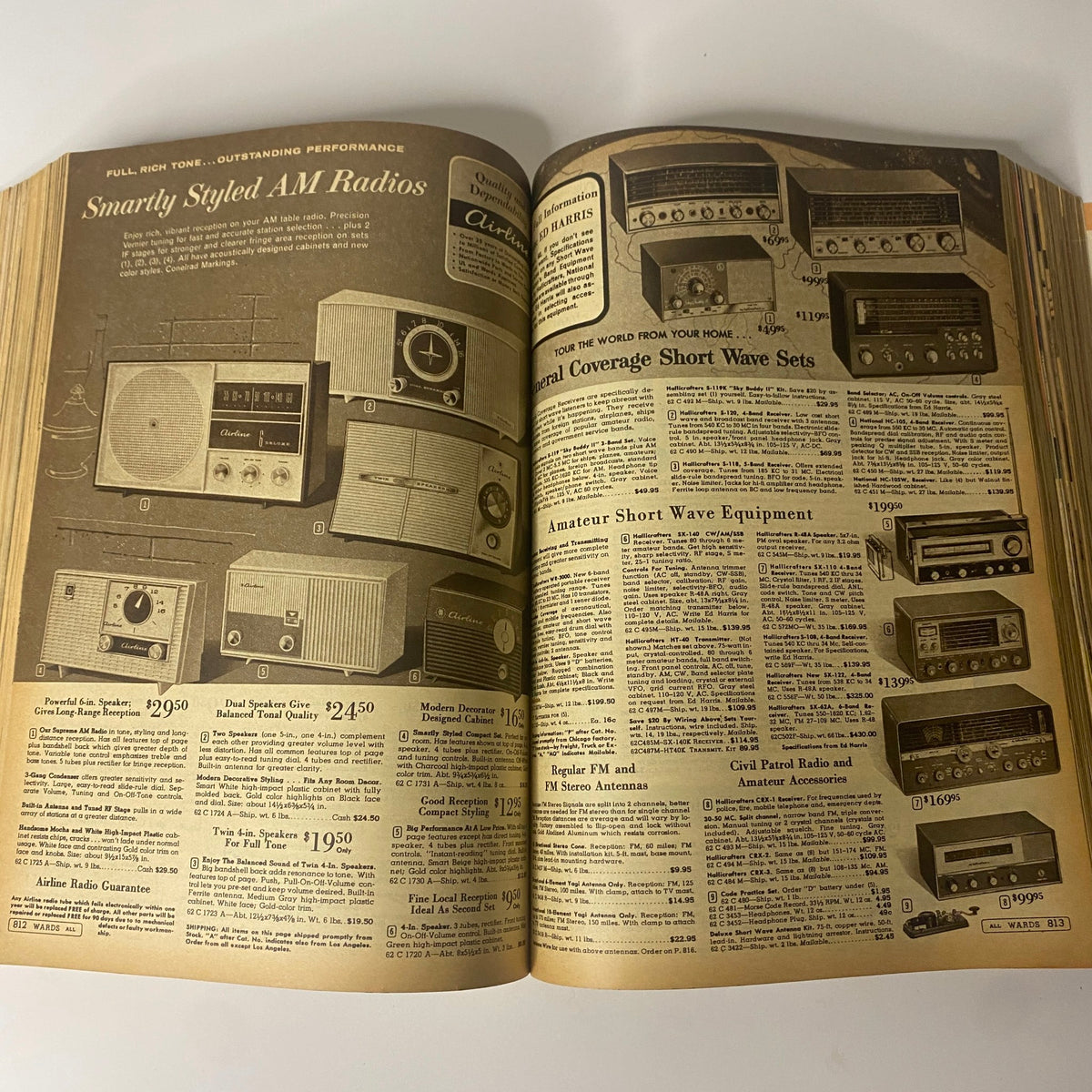
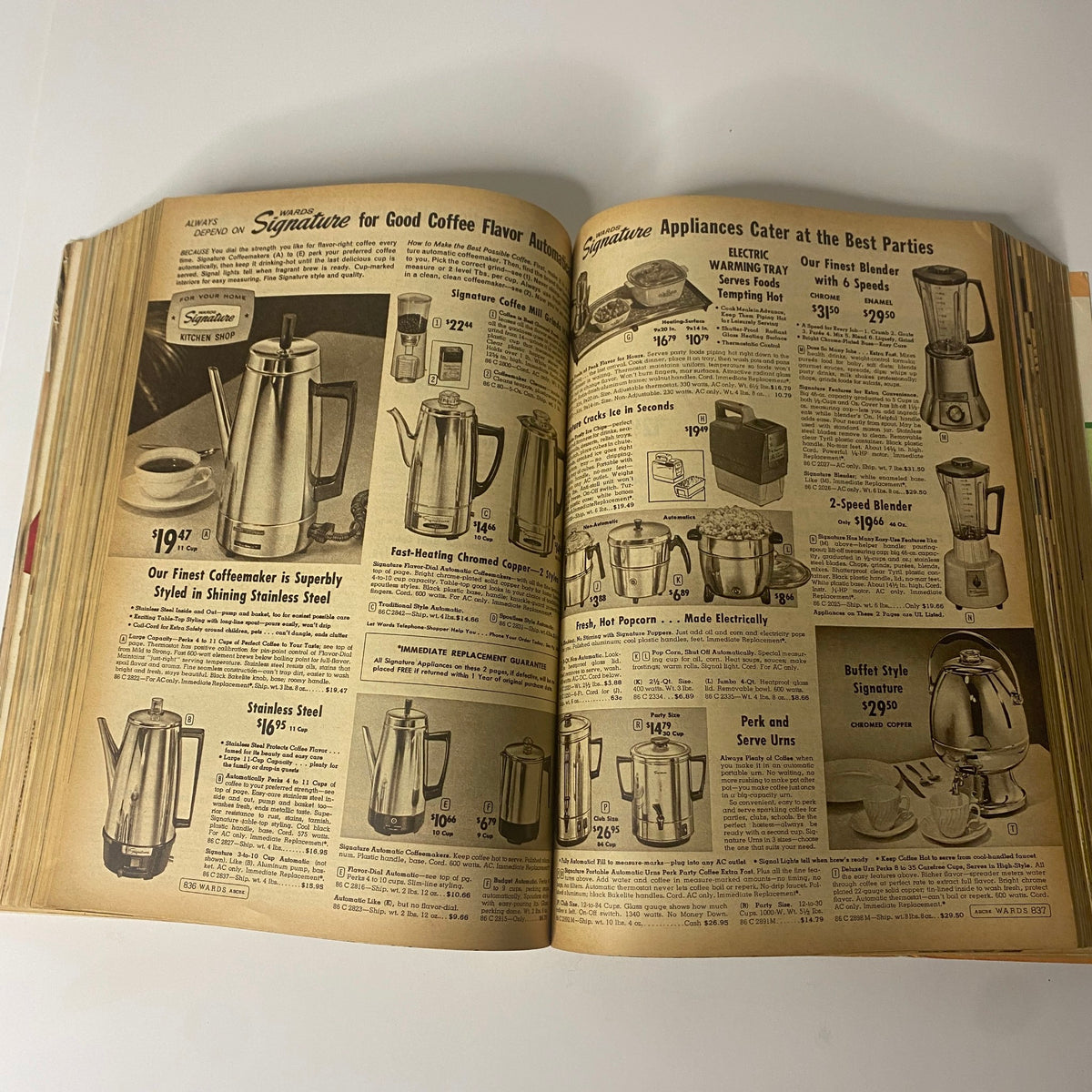
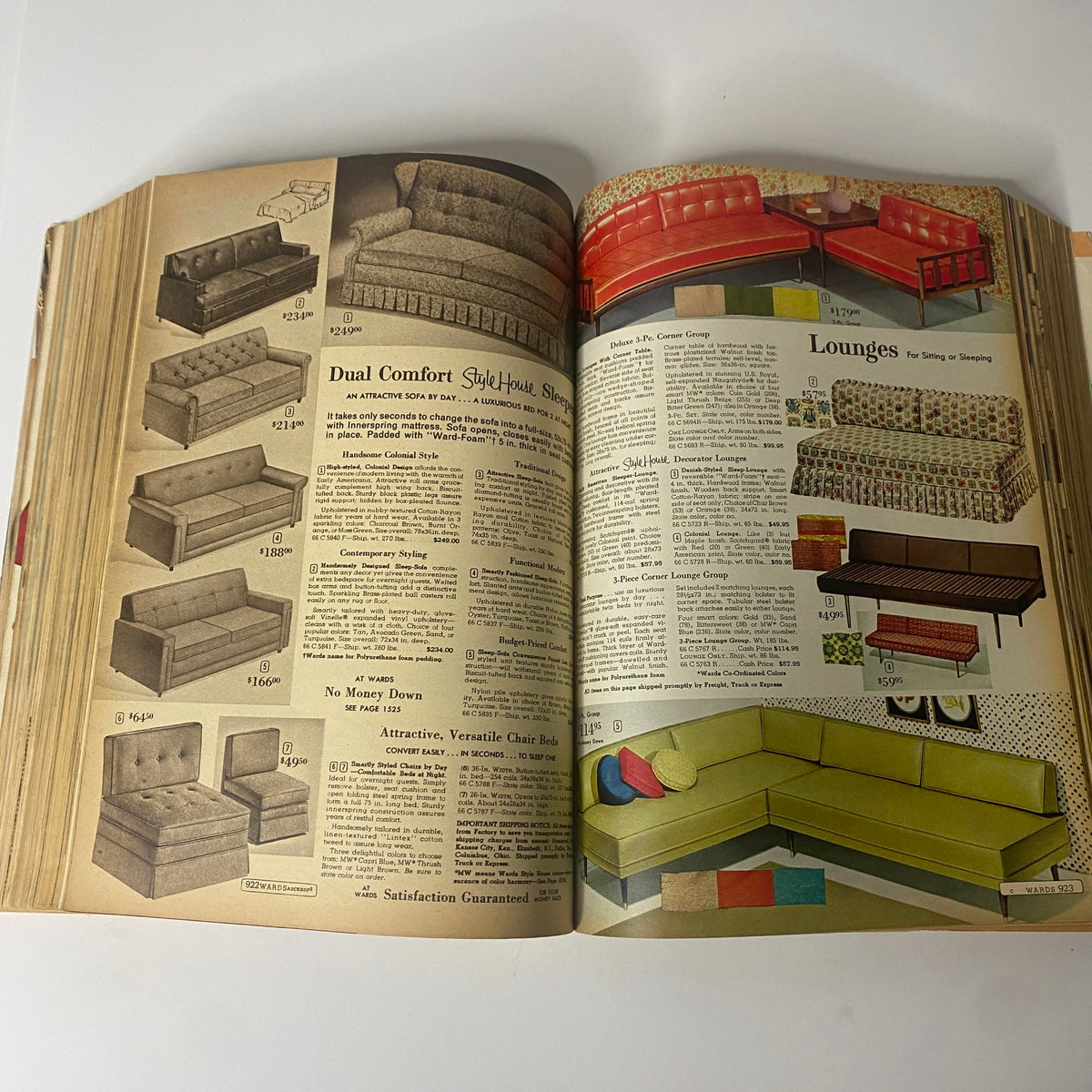
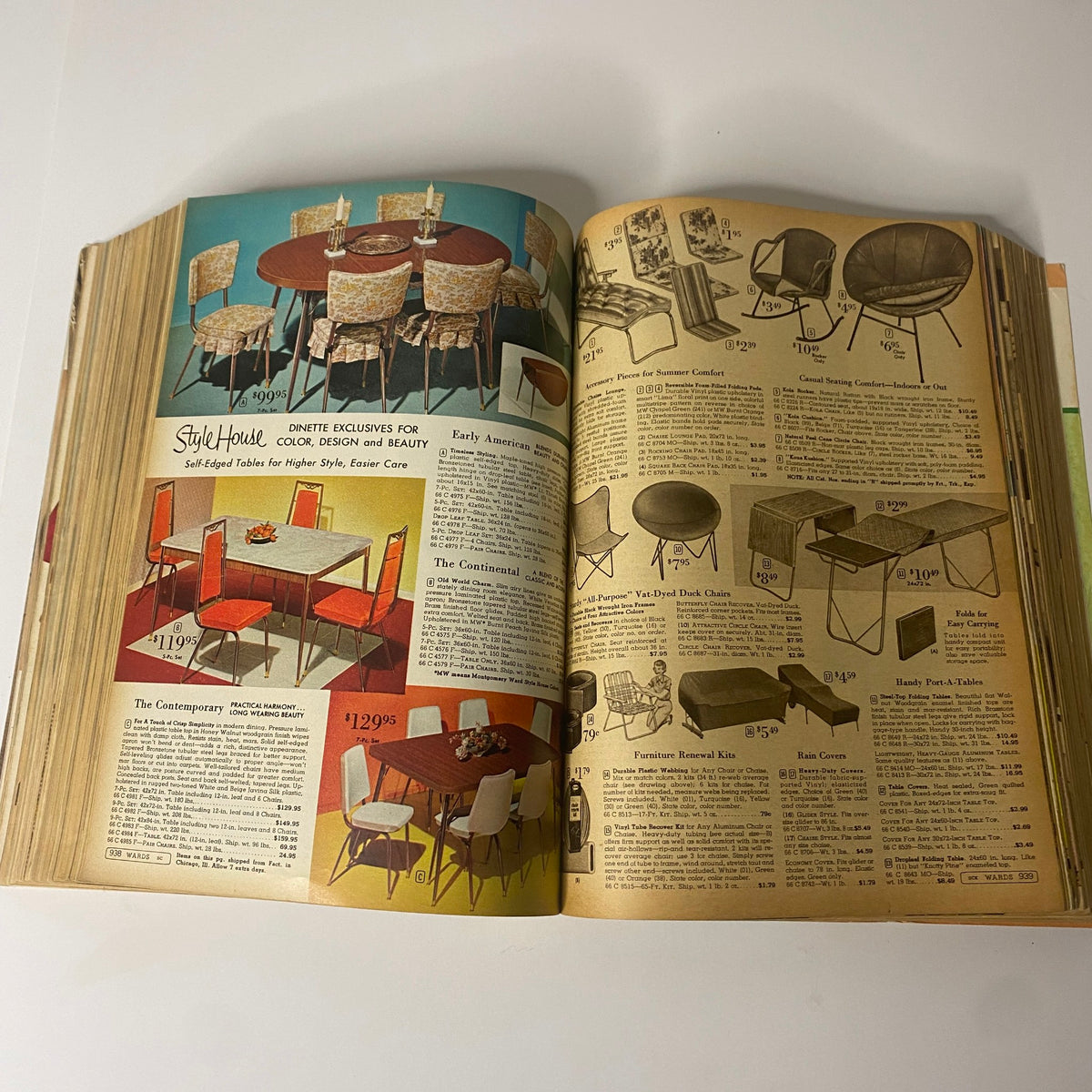
- Home goods, appliances, and gift merchandise from fall 1963 — Montgomery Ward fall-winter catalogs were comprehensive retail documents covering the full range of the company's merchandise beyond clothing — appliances, home furnishings, sporting goods, toys, and the full range of Christmas gift merchandise that made the fall-winter edition the most important catalog the company produced each year. This merchandise documentation is primary source material for consumer goods historians, advertising researchers, and anyone studying the specific material culture of early 1960s American domestic life.
- Consumer pricing from the pre-assassination 1963 economy — Retail pricing across the full range of a major catalog's offerings from fall 1963 documents the American consumer economy at a specific and historically defined moment — the final months of the Kennedy era's economic expansion, before the assassination transformed the political and psychological context within which consumer spending was occurring. Pricing documentation of this kind from a mass-market catalog has genuine research value for economic historians tracking retail price levels and consumer purchasing power in the early 1960s.
- Early 1960s visual and design language at its mid-century peak — The photography, layout, typography, and illustration style of a 1963 Montgomery Ward catalog document the specific visual culture of American commercial design at one of its most historically distinctive moments — the early Kennedy-era aesthetic, before the design revolution of the mid-to-late 1960s had begun to reshape the visual language of American retail and advertising. This period's commercial design is collected and studied by graphic design historians as a primary expression of mid-century American visual culture at its most confident and most coherent.
- Note: Specific additional product categories, the full range of merchandise beyond the confirmed Brentshire Designers' Collection, and the complete catalog contents beyond what the listing description confirms have not been independently verified. The highlights above reflect what is documentable from the listing description and the well-established historical context of Montgomery Ward's 1963 fall-winter catalog format and the specific cultural moment it documents.
Condition & Rarity
This catalog is described as being in good condition with light wear typical for its age, protected by a plastic covering, with the listing confirming that the pictured item is exactly what will be received — a standard and honest disclosure for vintage retail ephemera where condition varies meaningfully between surviving copies. For a publication now over sixty years old that was produced as a practical consumer reference rather than as a collectible, good condition with light wear represents a genuinely well-preserved survivor of its category. Montgomery Ward fall-winter catalogs were typically bound in a perfect-bound or saddle-stitched format of substantial page count, and the specific condition variables most relevant for evaluation include spine integrity — the binding's ability to hold pages securely after six decades — the condition of the cover, which carries the catalog's primary visual and dating information, and the state of the interior photography pages, which are the primary documentary and aesthetic asset for fashion historians and consumer culture researchers. The plastic protective covering indicates intentional preservation care, correlating with better overall physical stability and reduced environmental deterioration compared to unprotected copies stored under comparable conditions over the same period. The listing does not specify whether an address label is present on the cover, which is worth examining in any surviving copy — mail-order catalogs were distributed directly to households by address, and label-free examples are less common than labeled survivors. A copy in good condition with light wear and protective covering represents a well-preserved example of a publication that the vast majority of its original recipients discarded within a season or two of receipt, and whose survival in any condition requires either deliberate preservation or fortuitous storage circumstances across six decades.
Looking for More Issues Like This?
Surviving Montgomery Ward fall-winter catalogs from the early 1960s — particularly those featuring designer collection content like the Nina Ricci-associated Brentshire collection — are actively pursued by fashion historians, retail ephemera collectors, mid-century design researchers, and consumer culture scholars who recognize these catalogs as irreplaceable primary documents of American commercial and aesthetic life at one of its most historically distinctive moments. If this 1963 fall-winter catalog is no longer available, the 1963 magazines collection at OriginalMagazines.com brings together a wide range of primary source material from that pivotal year in American history — publications that collectively document the full texture of American life in the months surrounding the Kennedy assassination, from consumer aspiration and fashion culture to the political and social forces that were reshaping the country from every direction simultaneously.