
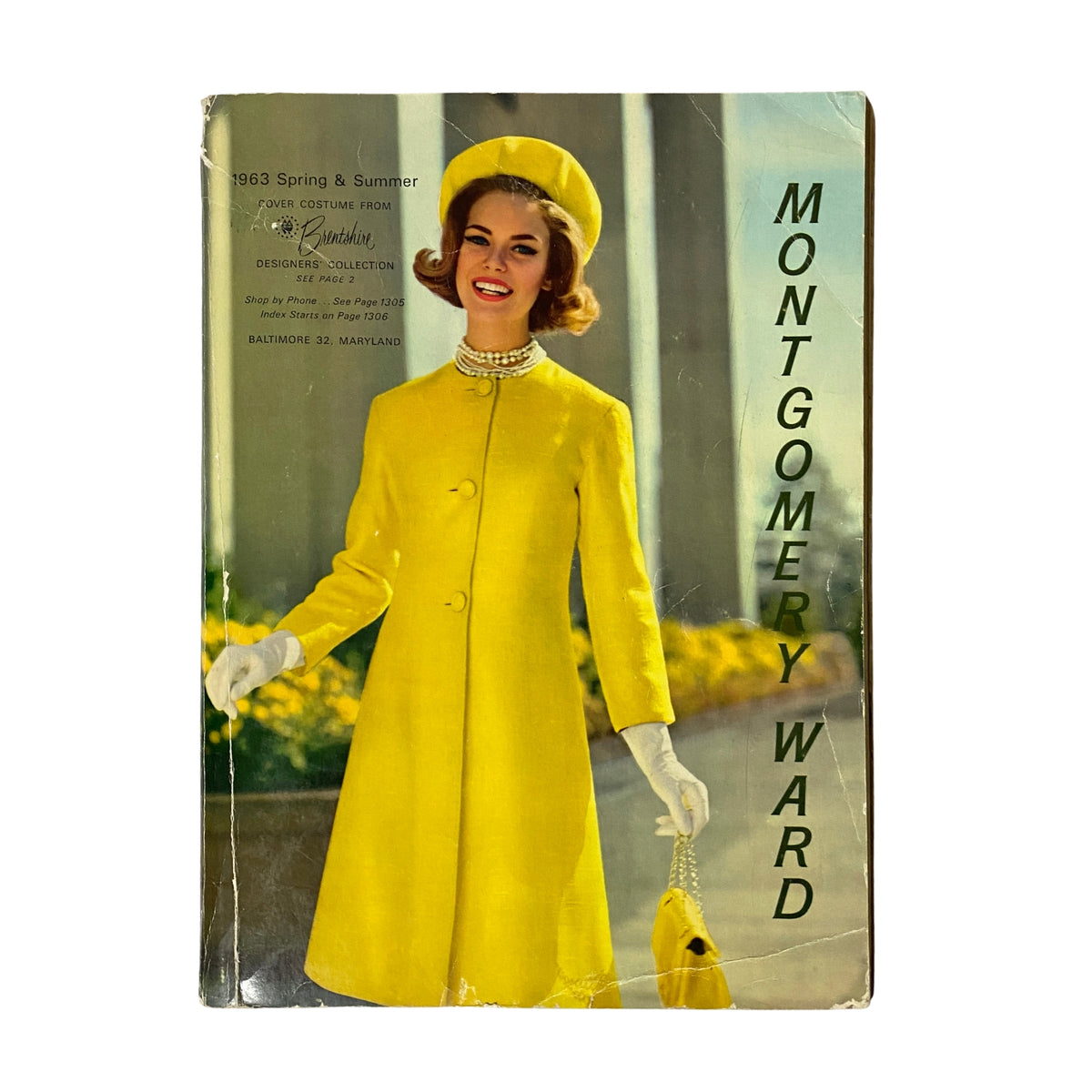
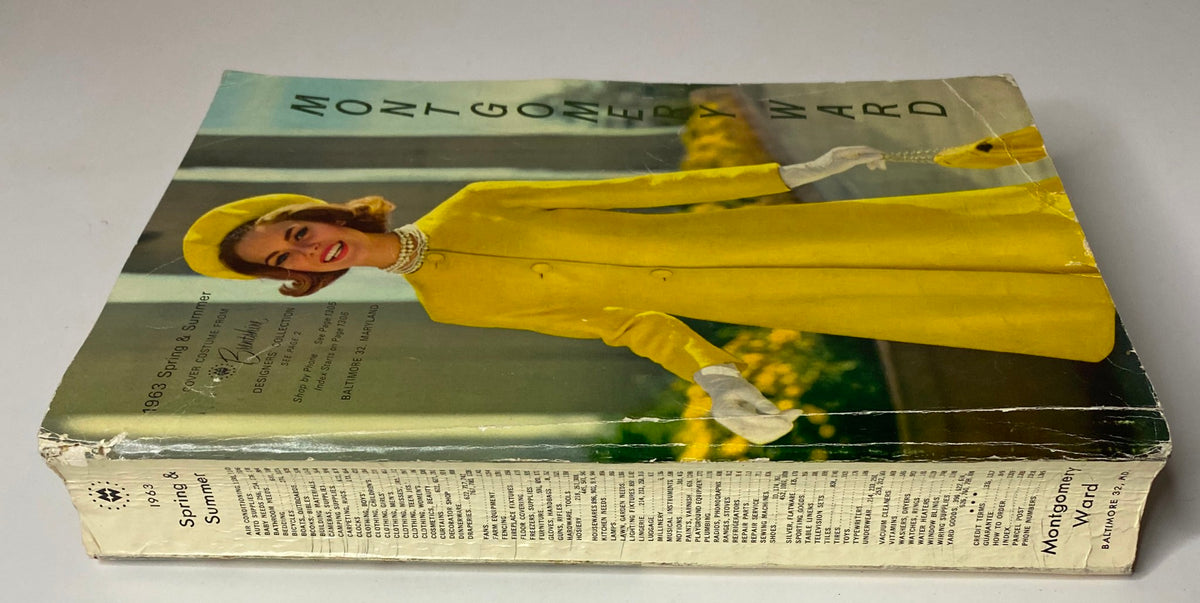
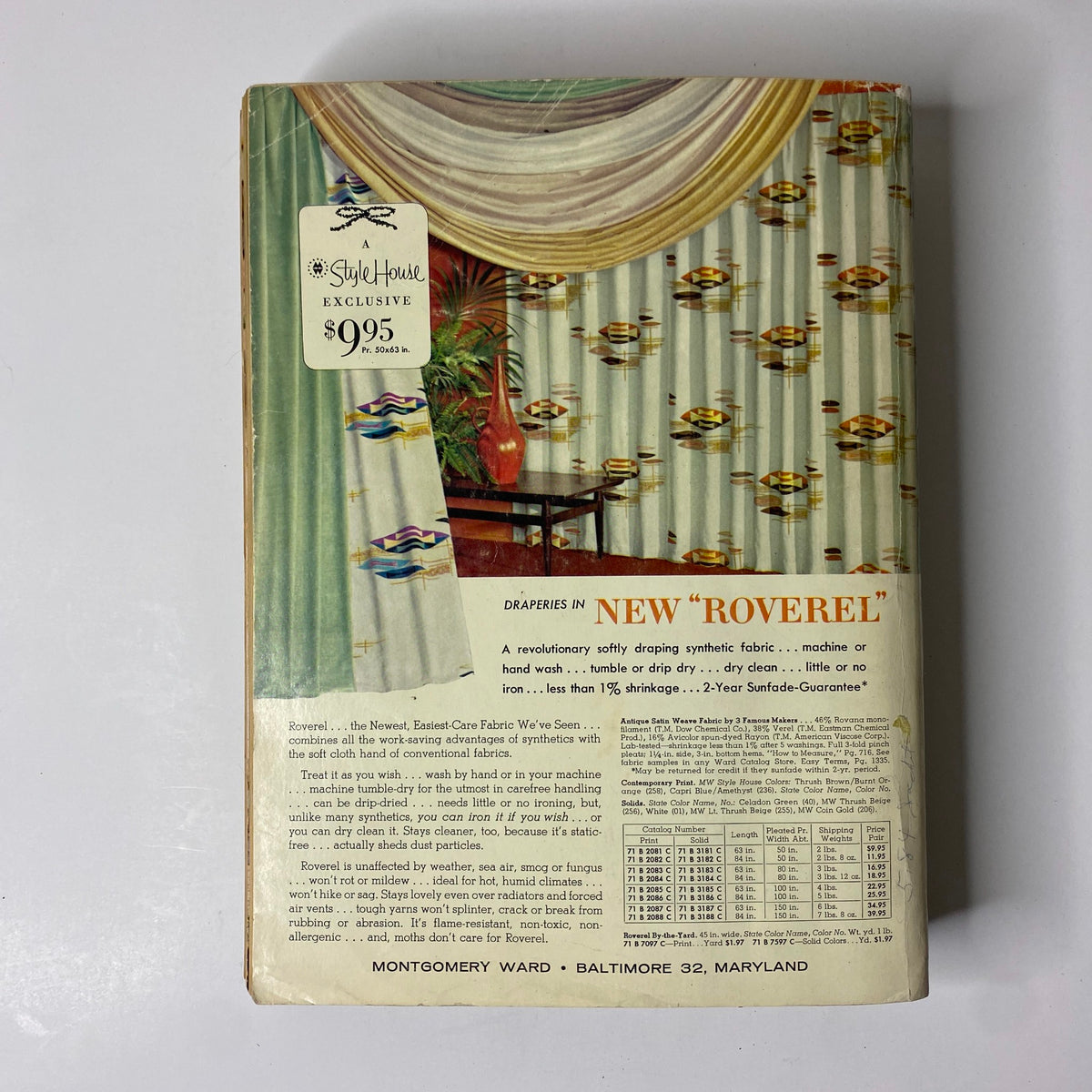


Description
Collector's Note – Why This Issue Matters
The 1963 Montgomery Ward Spring and Summer Catalog is a primary document of American consumer fashion at one of the most historically charged and culturally consequential moments of the entire twentieth century. The spring-summer season of 1963 was the last such season before the Kennedy assassination of November 22 that year — the event that would permanently divide the decade into a before and after, and that transformed the specific aesthetic of the early 1960s into something that retrospective history would invest with enormous nostalgic and historical weight. The career fashion, accessories, and junior and misses designs featured in this catalog are primary documentation of the early-Kennedy-era fashion ideal at the height of its mainstream commercial expression — the structured, tailored, femininely elegant aesthetic that Jackie Kennedy had elevated to cultural authority and that had by 1963 fully penetrated the mass-market retail catalog in the form visible in Ward's spring-summer offering. A catalog featuring career-driven outfits and elegant accessories from the spring and summer of 1963 is documenting a fashion vocabulary that was literally in its final months of innocent pre-assassination expression, and that quality — the specific aesthetic captured at its fullest development just before the event that would transform its cultural meaning — is precisely what gives this catalog its particular historical weight as a primary source. For collectors building a documentary archive of early-1960s American fashion and consumer culture, the full range of 1963 magazines and publications from this pivotal year provides essential primary source context, and the Montgomery Ward spring-summer catalog is among the most comprehensive single-volume records of the period's mainstream fashion at its pre-transformation moment.
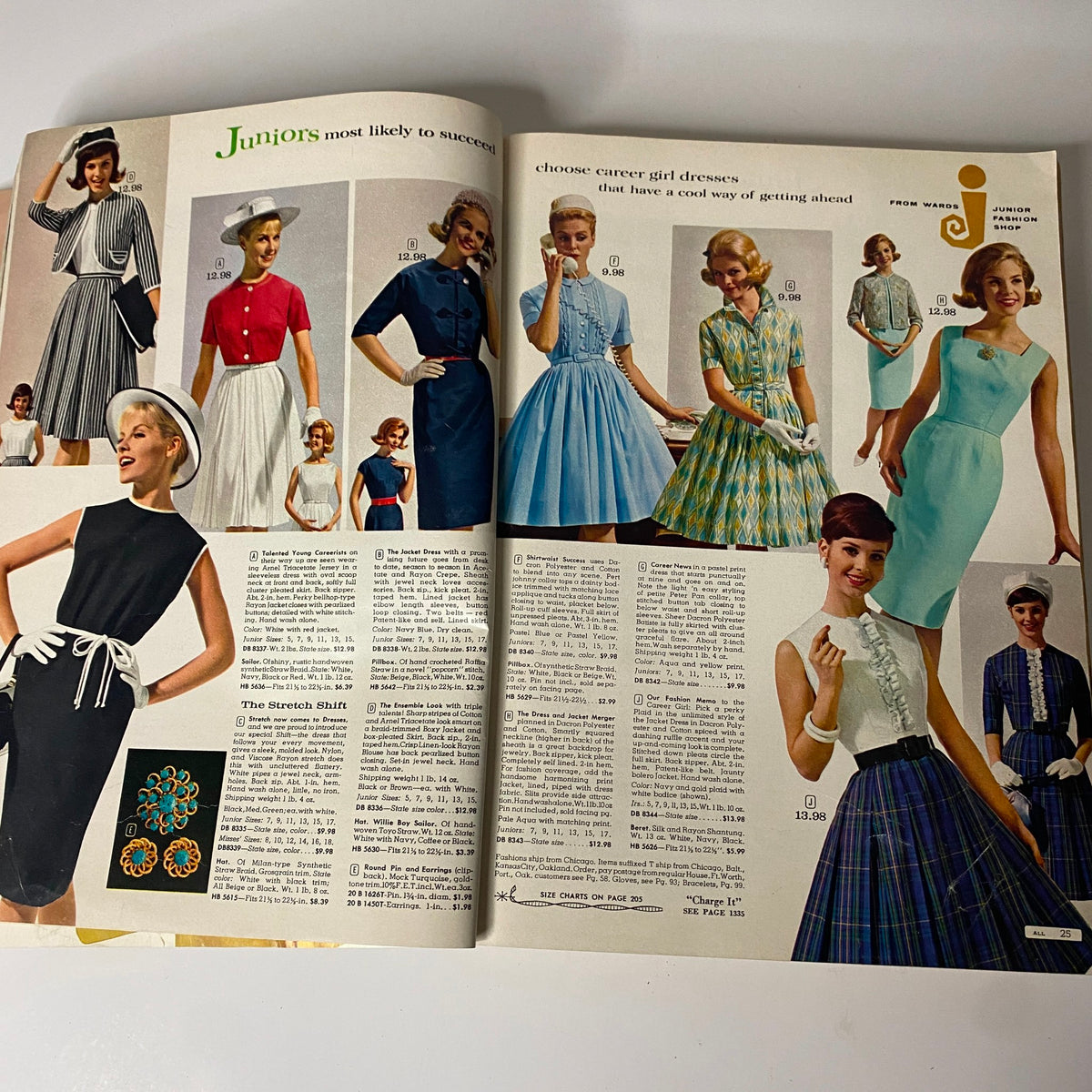
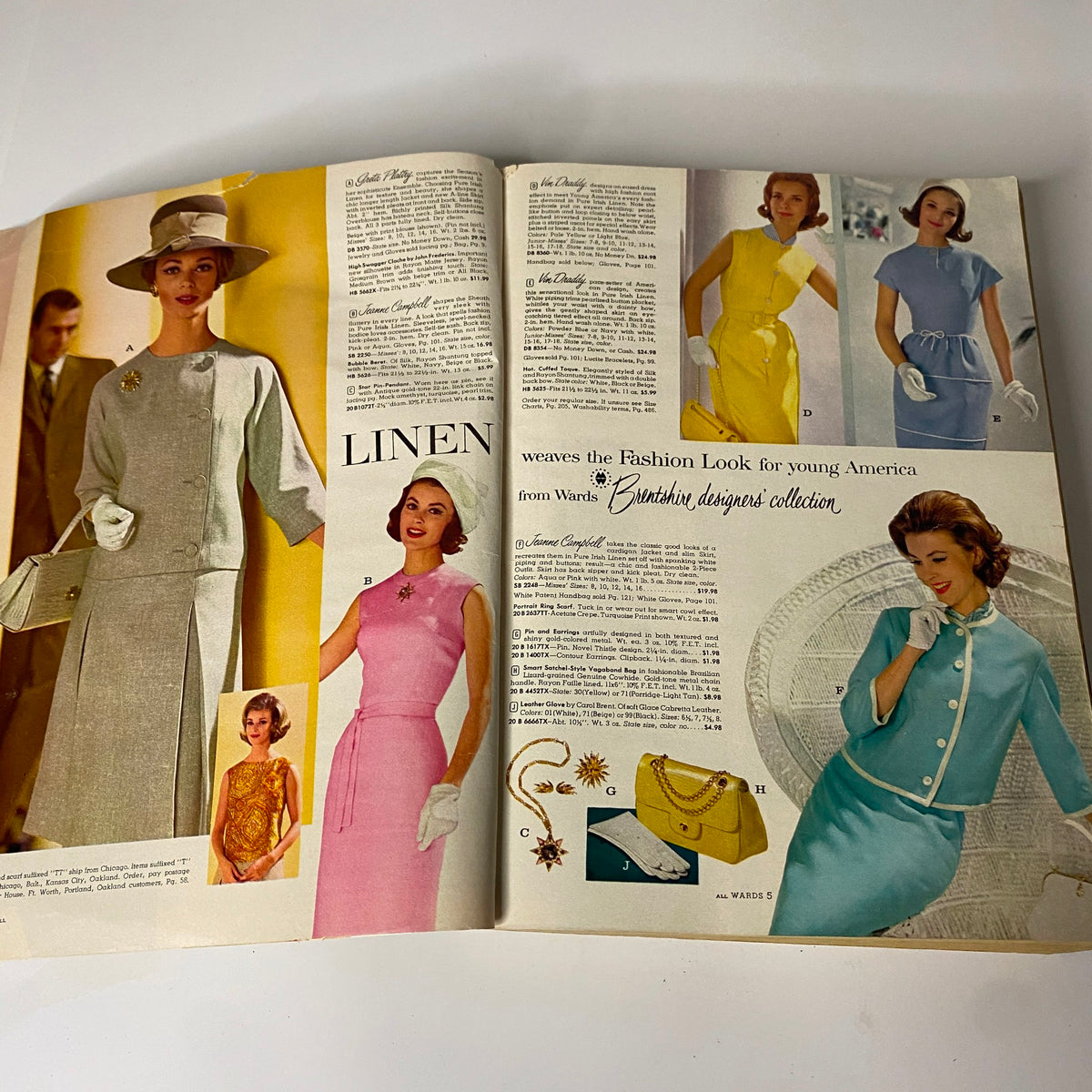
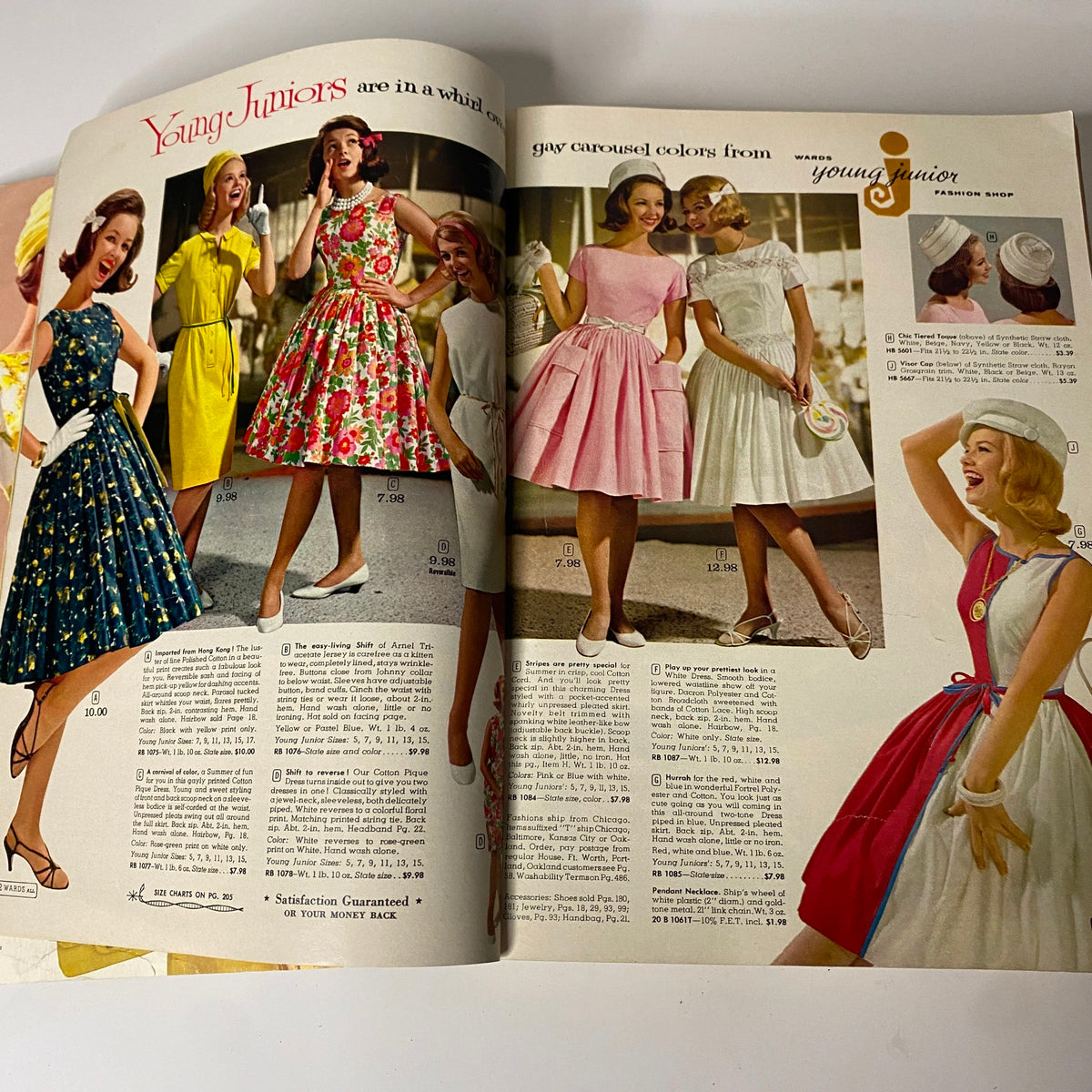
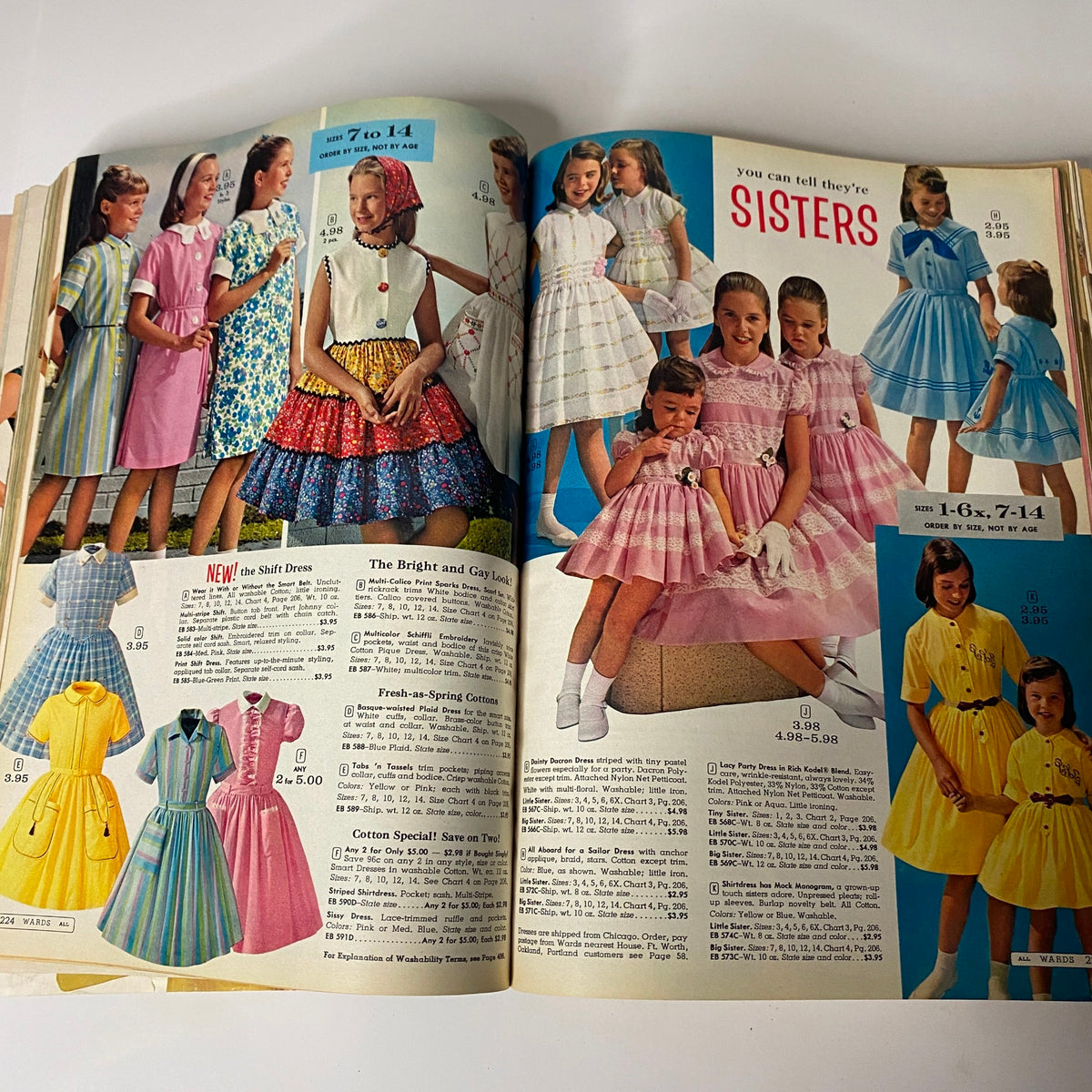
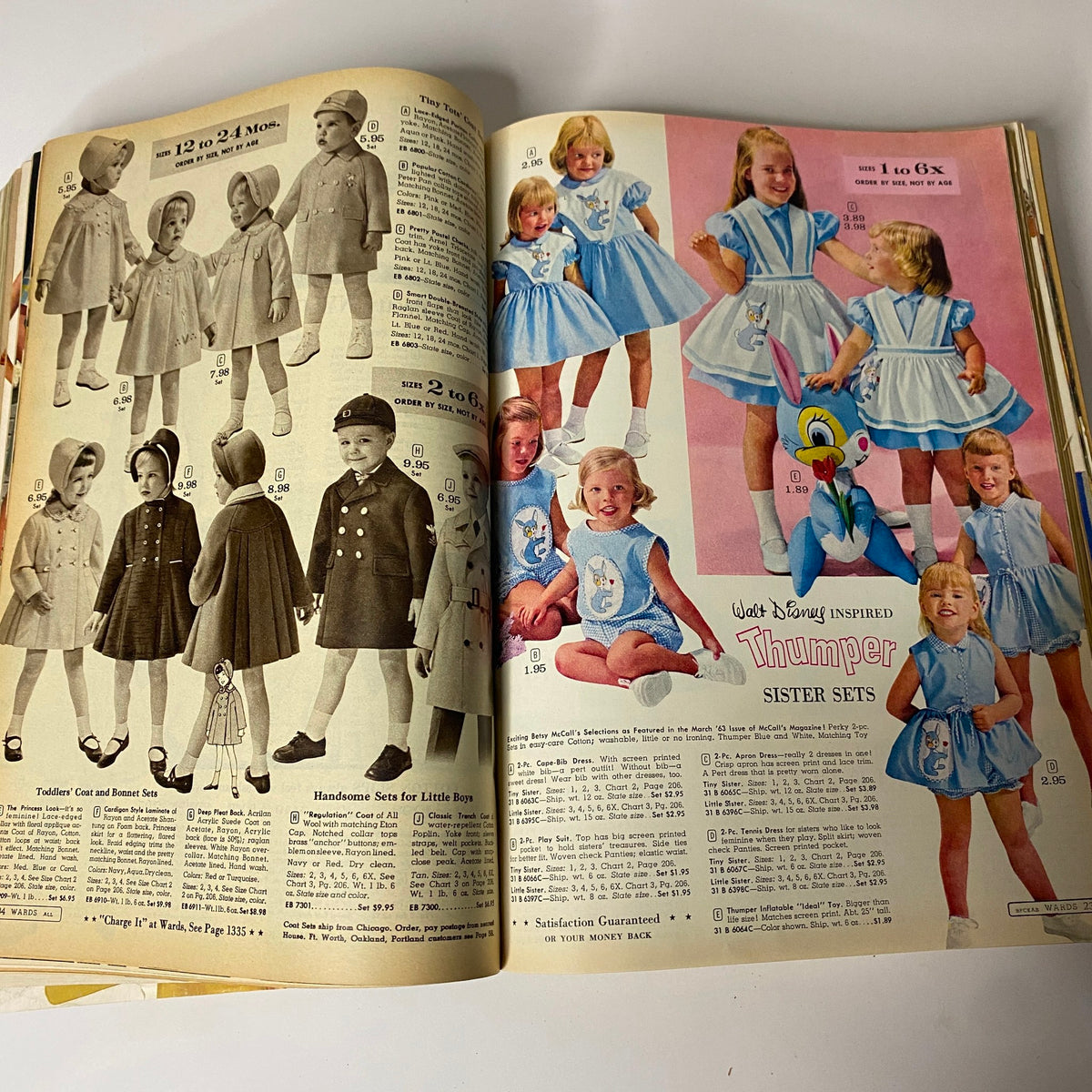
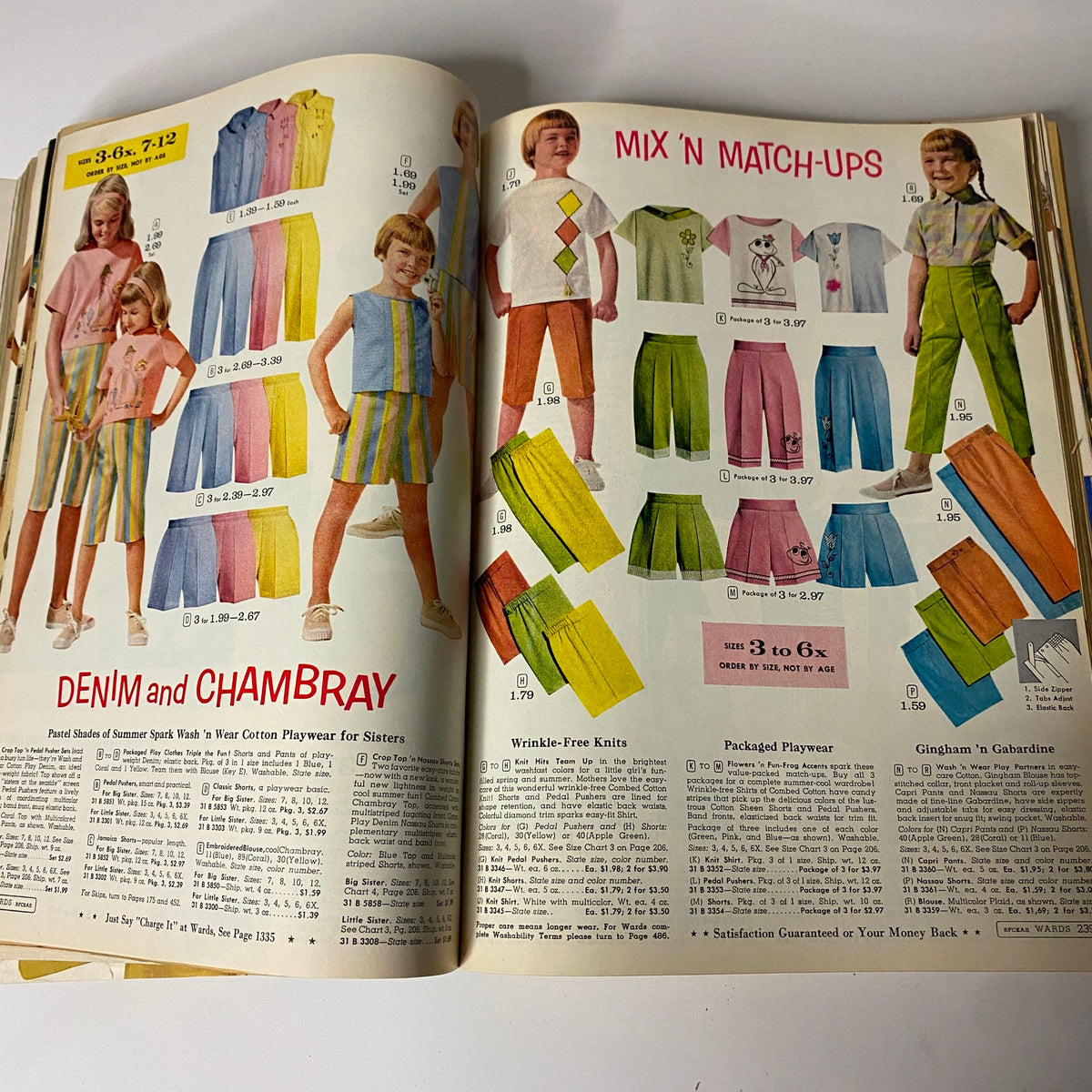
The catalog's confirmed content — career fashion, accessories, and clothing for juniors and misses — maps precisely onto the specific social and economic forces that were shaping American women's consumer culture in the spring and summer of 1963. Career fashion as a documented catalog category reflects the continuing and accelerating entry of American women into the professional workforce that had been reshaping the labor market throughout the postwar period, and the existence of a dedicated career fashion section in a mass-market catalog of this era is primary commercial evidence of how mainstream retail was responding to and accommodating that demographic shift. The junior and misses categories reflect the dual audience of early-1960s American women's fashion: the young women who were beginning to develop their own fashion identity as a market segment, and the slightly older working and social women for whom career and occasion dressing were primary purchasing concerns. The accessories category — consistent with the mid-century fashion culture's treatment of coordinated accessories as structural elements of a complete look rather than optional additions — documents the specific vocabulary of scarves, jewelry, handbags, and hats that the early-1960s aesthetic demanded and that major catalog retailers were supplying in comprehensive, coordinated offerings. Together, these confirmed content categories make the 1963 Ward's spring-summer catalog a multi-layered primary source for understanding both the fashion culture and the social realities of early-Kennedy-era American women's consumer life.
The broader cultural context of 1963 gives this spring-summer catalog an additional layer of historical significance that extends well beyond its fashion content. This was the year of the March on Washington and Martin Luther King Jr.'s "I Have a Dream" speech, the year of Betty Friedan's The Feminine Mystique, the year when the cultural and social transformations that would define the decade's second half were already clearly underway even as the specific aesthetic of the first half remained fully operational in the mainstream consumer market. The catalog's career fashion content is particularly resonant in this context: it was produced in the same year that Friedan's landmark book argued that American women were being systematically excluded from meaningful professional and intellectual life — an argument that the existence of a dedicated career fashion category in the country's largest catalog retailer simultaneously confirmed and complicated. That kind of specific historical resonance, available only to primary sources from within the moment they document rather than from retrospective accounts, is what makes the 1963 Ward's spring-summer catalog an unusually rich object for serious collectors and historians approaching the period from multiple research directions simultaneously.
About the Publication
The Montgomery Ward Spring and Summer Catalog was the warm-weather companion to the company's flagship fall-winter edition, distributed annually to millions of American households through the direct-mail program that had been central to Ward's retail dominance since the company's founding in 1872 as the first major mail-order catalog retailer in the United States. By 1963, the spring-summer catalog had been a fundamental institution in American consumer culture for ninety years, its arrival marking the seasonal transition and providing a comprehensive guide to the clothing, accessories, and consumer products that Ward's was offering for the coming months. The catalog's format combined comprehensive merchandise coverage across all product categories with the visual production values that the company's market position enabled, producing a publication that served simultaneously as a practical shopping guide, a comprehensive fashion reference, and a visual document of the aspirational domestic and personal life that Ward's merchandise was positioned to enable. The 1963 edition's career fashion and accessories content reflects both the specific aesthetic priorities of early-Kennedy-era American women's fashion and the company's accurate reading of the demographic and social trends reshaping its core consumer audience.
Key Highlights Inside
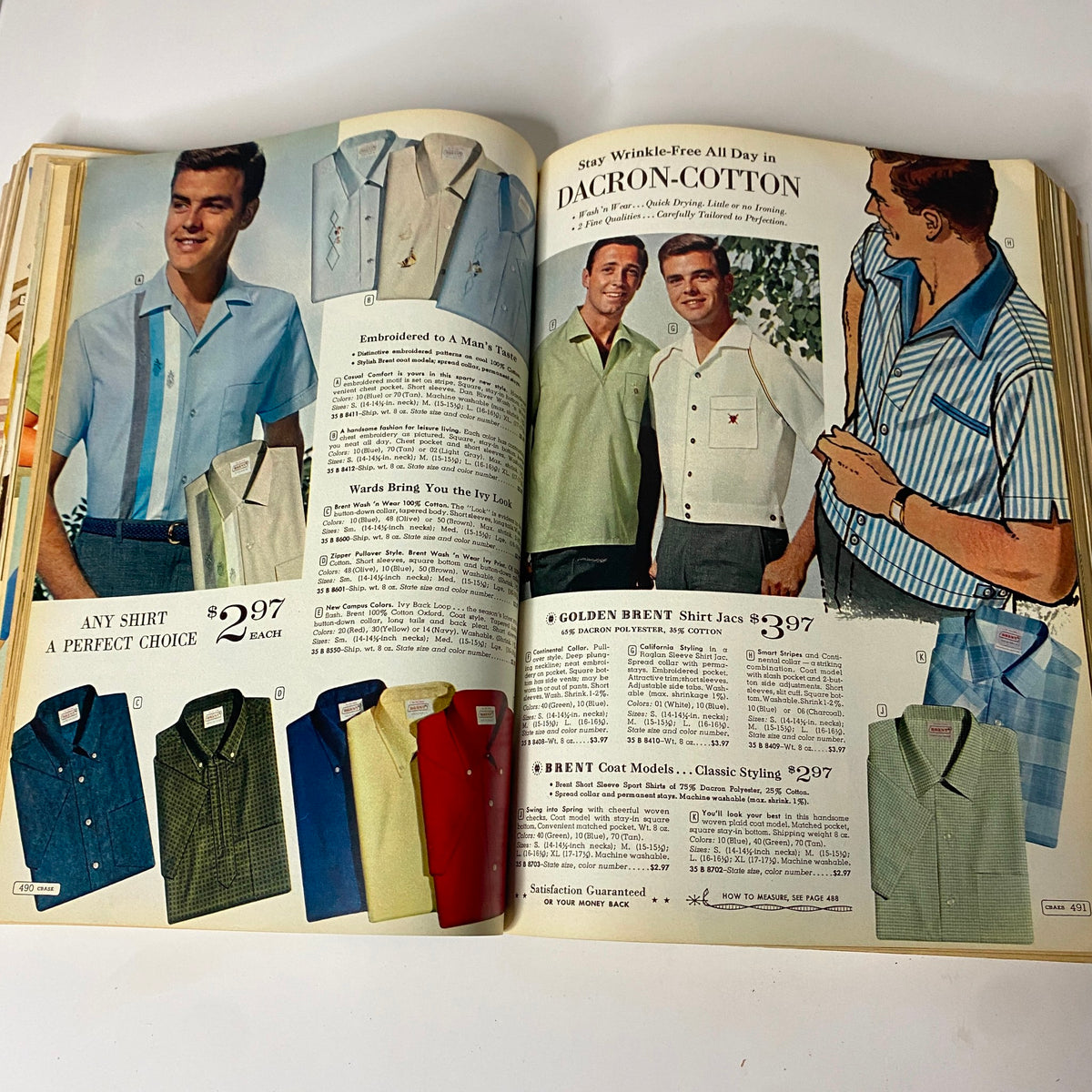
- Career fashion collection — professional women's dressing documented — The confirmed career fashion content documents the specific visual vocabulary of professional women's clothing in the spring-summer of 1963 — the suits, separates, and office-appropriate dresses that the early-1960s career woman's wardrobe required — at the precise moment when women's workforce participation was accelerating and when mainstream retail's response to that demographic shift was most clearly visible in the dedicated catalog categories it was developing and expanding.
- Accessories — coordinated elegance at the mass-market level — The confirmed accessories content documents the specific mid-century fashion culture in which coordinated accessories were structural elements of a complete look, preserving primary commercial evidence of how scarves, jewelry, handbags, and other accessories were being offered and styled for mainstream American consumers in the spring and summer of the last year before the Kennedy assassination transformed the decade's aesthetic character.
- Junior and misses fashion — the two-audience early-1960s market documented — The confirmed junior and misses categories reflect the specific demographic segmentation of early-1960s American women's fashion, with junior sizing and styling addressing the growing youth fashion market and misses addressing the adult working and social woman. Their presence as distinct catalog sections is primary commercial documentation of how the mass-market retail industry was beginning to recognize and serve the emerging generational division in women's fashion that would become the decade's defining demographic dynamic.
- Excellent condition with light wear — well-preserved primary source — The confirmed excellent condition with light wear represents an unusually well-preserved surviving example of a publication category that most original recipients actively used and eventually discarded, making this catalog a particularly accessible and readable primary source for the fashion and consumer culture it documents.
- Spring-summer 1963 consumer pricing and merchandise documentation — Retail pricing across the spring-summer 1963 merchandise range provides primary economic data for historians researching consumer goods pricing and purchasing patterns in the final months before the Kennedy assassination reshaped the American consumer mood — documenting the specific commercial terms of a market operating at the height of early-1960s economic confidence.
- Note: Specific design details, individual garment descriptions, price points, and the complete catalog contents beyond the confirmed career fashion, accessories, and junior/misses categories have not been independently verified beyond the listing description. The highlights above reflect what is documentable from the listing and the well-established historical context of Montgomery Ward's 1963 spring-summer catalog format.
Condition & Rarity
This catalog is described as being in excellent condition with light wear typical for its age, protected by a plastic covering — a condition profile that represents one of the stronger surviving examples of a publication category that most original recipients actively used and eventually discarded without preservation intent. For a mass-market consumer catalog now over sixty years old, excellent condition with only light wear indicates a publication that has been stored with consistent care, avoiding the more severe deterioration — significant binding failure, water damage, extensive page brittleness, cover delamination — that affects the lower end of the surviving pool for catalogs of this age and original distribution model. The plastic protective covering indicates intentional preservation care that has further stabilized the catalog against the environmental deterioration that accumulates on unprotected paper over extended storage periods. The listing does not specify whether an address label is present on the cover, which is worth examining carefully from the accompanying photographs — Ward's distributed this catalog by direct mail to registered customer households, and labeled copies are the norm among survivors, with label-free examples presenting with cleaner cover surfaces. A catalog in excellent condition with light wear and protective covering from the spring-summer of 1963 represents a well-preserved and immediately usable primary source from a publication category that most of the collecting market encounters in significantly worse preservation states.
Looking for More Issues Like This?
Montgomery Ward spring and summer catalogs from the early 1960s — and particularly well-preserved examples from 1963, the last spring-summer season before the Kennedy assassination permanently transformed the decade's cultural character — are actively sought by fashion historians, consumer culture scholars, and retail ephemera collectors who recognize these publications as irreplaceable primary documents of American mass-market fashion and domestic aspiration at the early-1960s aesthetic's fullest mainstream expression. If this 1963 spring-summer edition is no longer available, the 1963 magazines collection at OriginalMagazines.com brings together a wide range of primary source material from that pivotal and historically freighted year in American cultural, political, and consumer life — publications that collectively document the full texture of American life in the months before and after the event that changed everything.