



Description
Collector's Note – Why This Issue Matters
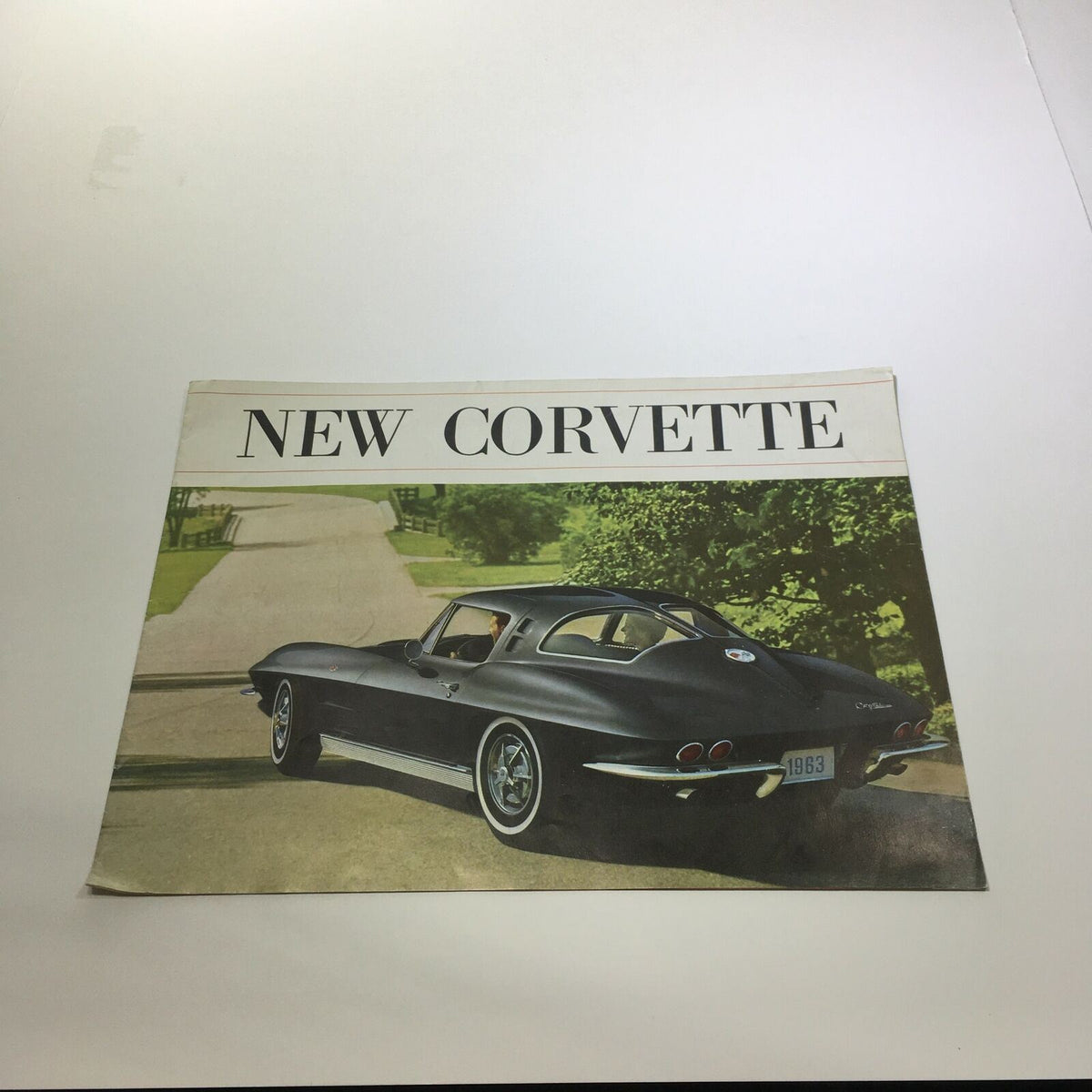
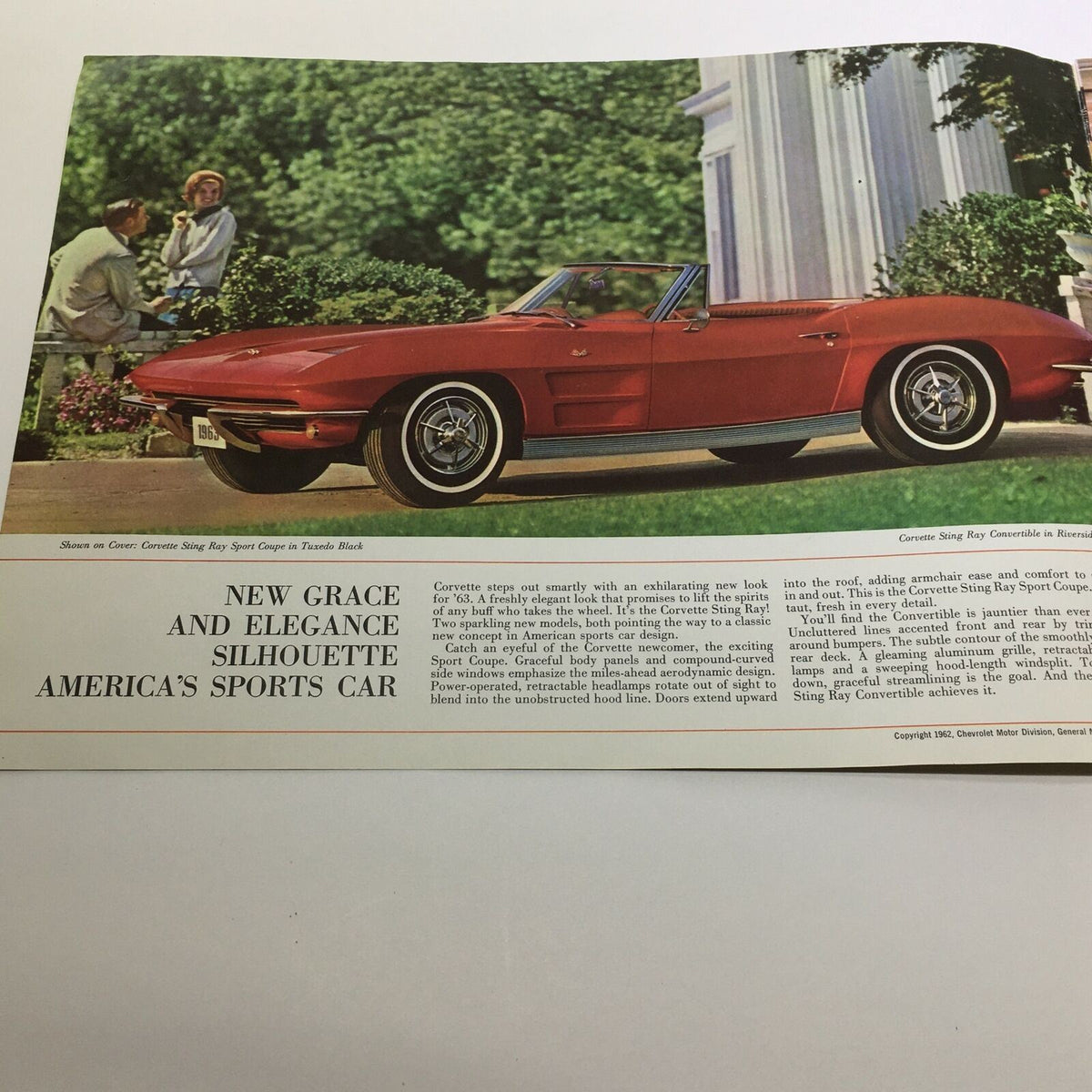
This 1963 Chevrolet sales brochure documents the single most consequential design year in Corvette history: the introduction of the second-generation Sting Ray and, within it, a styling feature that would exist for exactly one model year before being permanently discontinued. The 1963 Corvette Sting Ray was designed by Bill Mitchell and Larry Shinoda and rode on a revamped chassis featuring groundbreaking four-wheel independent suspension, the work of engineer Zora Arkus-Duntov, while also introducing the first-ever production Corvette coupe, instantly recognizable by its distinctive split rear window. That split window, a vertical bar dividing the rear glass into two panes, became the car's signature visual element and remains the detail most associated with the 1963 model specifically, since Chevrolet replaced it with a single-pane rear window in 1964 following customer complaints and the strong objections of chief engineer Zora Arkus-Duntov, who argued the split dangerously compromised rear visibility. Collectors building an archive of magazines from 1963 will find this brochure a genuinely significant primary-source document of a Corvette design choice that has since become one of the most celebrated and sought-after details in the entire history of the model.
The split window's brief existence was the direct product of a documented creative conflict between two of General Motors' most important figures. Chief Designer Bill Mitchell and Chief Engineer Zora Arkus-Duntov clashed repeatedly over the rear window, with Mitchell digging in to preserve the styling, which he felt gave the car a muscular, almost marine-animal look tying back to his earlier Stingray Racer concept work, while Duntov pushed for better rearward vision and practicality. The split-window design ultimately represented a compromise between the two men, and widespread customer complaints about obstructed rear visibility confirmed Duntov's concerns, leading to the feature's removal after just a single production year. Chevrolet built exactly 10,594 coupes featuring the split rear window before the factory switched to a single piece of glass, a precise, finite production number that has made surviving examples of the actual car a particularly prized category among Corvette collectors today. For collectors researching the broader history of Chevrolet sales literature and Corvette marketing, this brochure captures the model at the exact moment Chevrolet was introducing this short-lived feature to the buying public, unaware that it would become one of the most celebrated one-year-only design details in American automotive history.
Beyond the split window, the 1963 Sting Ray represented a genuine technical leap for the Corvette line as a whole. The 1963 model year was the first to offer a Corvette coupe body style at all, since earlier Corvettes had been exclusively two-seat convertibles, and it was also the first Corvette to feature independent rear suspension and the first to offer the race-ready Z06 package developed by Duntov, who was known among enthusiasts as the "Father of the Corvette". This brochure's documented horsepower range of 340 to 360 reflects the top-tier engine options available within Chevrolet's 327-cubic-inch V8 lineup for the year, with the highest-output 360-horsepower L84 engine equipped with Rochester Ramjet mechanical fuel injection representing the most performance-oriented choice available to buyers browsing this exact piece of sales literature in dealership showrooms.
About the Publication
This item is a manufacturer sales brochure rather than a consumer magazine, produced by Chevrolet specifically to introduce the redesigned 1963 Corvette Sting Ray to potential buyers through dealership showrooms. Brochures of this kind were a standard promotional format throughout the American automotive industry during the postwar decades, combining detailed specifications, persuasive descriptive copy, and color photography or illustration to showcase a model's design and engineering advantages ahead of a model-year launch. Unlike independent automotive magazines, which offered editorial road tests and comparative reviews from outside the manufacturer, brochures like this one were produced entirely by or for Chevrolet itself, making them valuable primary-source documents for understanding precisely how the company chose to introduce and market a genuinely transformative new Corvette generation to the buying public in 1963.
Key Highlights Inside
- Introduction of the second-generation Corvette Sting Ray, the first major redesign in the model's history, featuring an entirely new chassis with independent rear suspension and styling led by GM design chief Bill Mitchell. This brochure documents the model at the exact moment of its market debut.
- The first-ever Corvette coupe body style, distinguished by its now-famous split rear window, a feature that would exist for this single model year only before being permanently discontinued in 1964. The brochure's coverage of this detail predates the feature's later status as one of the most celebrated one-year-only design elements in American car history.
- Documented horsepower specifications of 340 to 360, reflecting the top-tier 327-cubic-inch V8 engine options available for the model year, including the fuel-injected L84 variant that represented the most performance-focused choice within the lineup.
- Marketing materials produced during a documented internal conflict at General Motors between styling and engineering priorities, specifically the well-known creative tension between Bill Mitchell and Zora Arkus-Duntov over the split window's practicality versus its visual impact.
- Note: Specific page-by-page layout and additional trim or color options beyond the documented horsepower range and split-window coupe have not been independently confirmed for this particular brochure. The highlights above reflect verified information about the 1963 Corvette Sting Ray's design and engineering during this pivotal model year.
Condition & Rarity
Surviving copies of early-1960s manufacturer sales brochures are evaluated using criteria suited to their format as dealership-distributed promotional literature rather than standard consumer magazines, with completeness of pages, cover condition, and overall structural integrity standing as the primary factors collectors weigh. This brochure is described as being in good condition with minor wear on the edges and throughout, measuring 9 by 12 inches, a size consistent with the larger-format sales literature manufacturers commonly produced for significant model launches during this period. Because brochures of this kind were produced as promotional material intended for distribution rather than long-term preservation, surviving copies in good condition reflect a level of care that distinguishes them from the substantial majority that were discarded once a model year concluded or a particular vehicle was purchased or passed over.
Sales brochures documenting the 1963 Corvette Sting Ray's launch draw particularly strong and sustained interest from collectors, given the model's documented status as one of the most significant and celebrated single model years in Corvette history. Collectors evaluating any surviving copy of this brochure should prioritize completeness of pages and the legibility of imagery depicting the split-window coupe specifically, since this detail represents the brochure's most historically significant subject matter. Given the genuinely strong collector demand for anything connected to the 1963 split-window Corvette, a good-condition brochure documenting the model's original launch marketing represents a meaningful piece of automotive history for collectors and Corvette enthusiasts alike, independent of any individual vehicle.
Looking for More Issues Like This?
Manufacturer sales brochures documenting the 1963 Corvette Sting Ray's launch, particularly those covering the celebrated and short-lived split-window coupe, are a consistently sought-after category for collectors of automotive history and Corvette memorabilia specifically. Since this particular brochure does not have a dedicated Corvette or Chevrolet collection link available, the broader 1963 magazine archive at OriginalMagazines.com is the best starting point for collectors looking to explore other publications from that pivotal year in American automotive history. It offers a practical way to continue building a collection centered on one of the most celebrated design eras in American car manufacturing.