
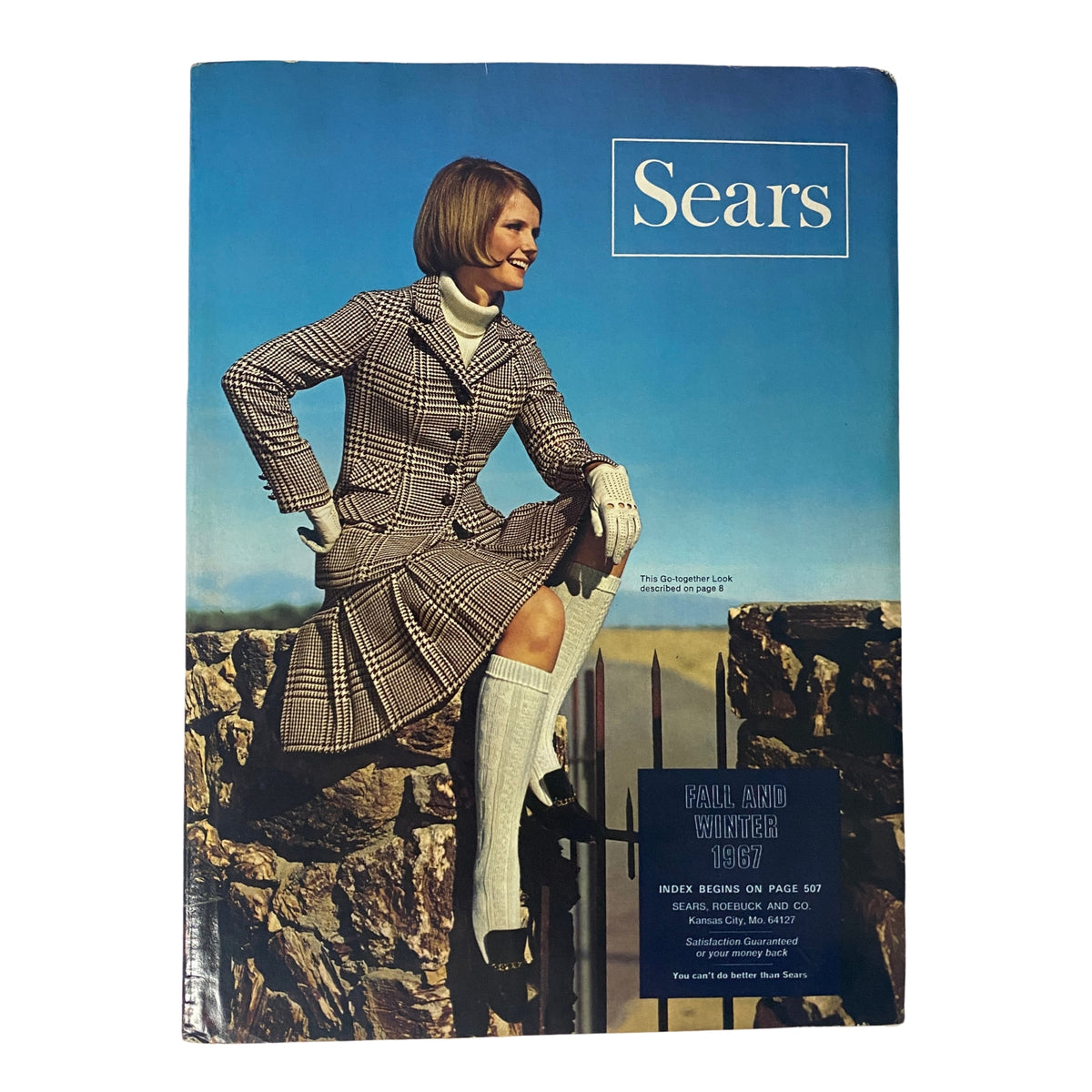
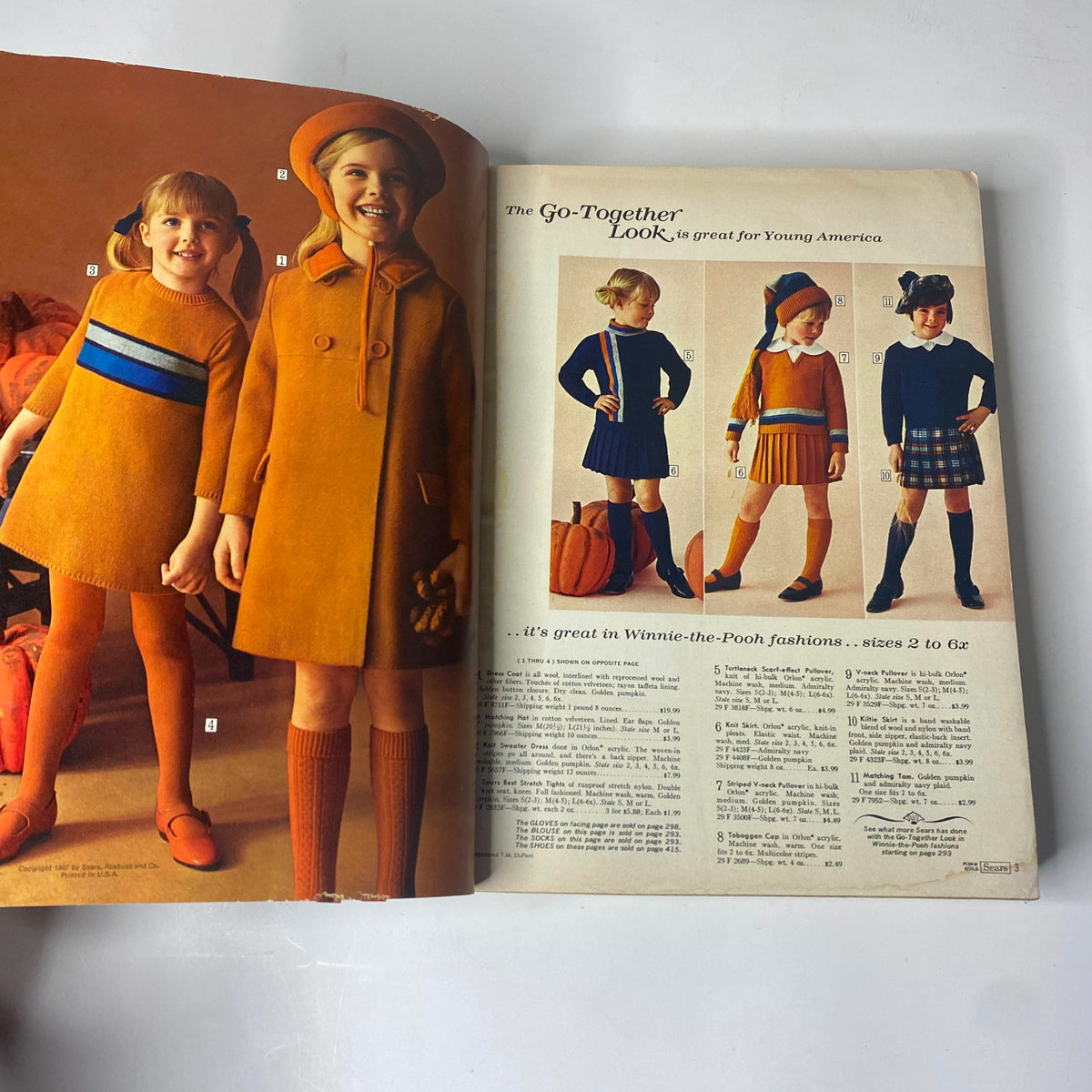
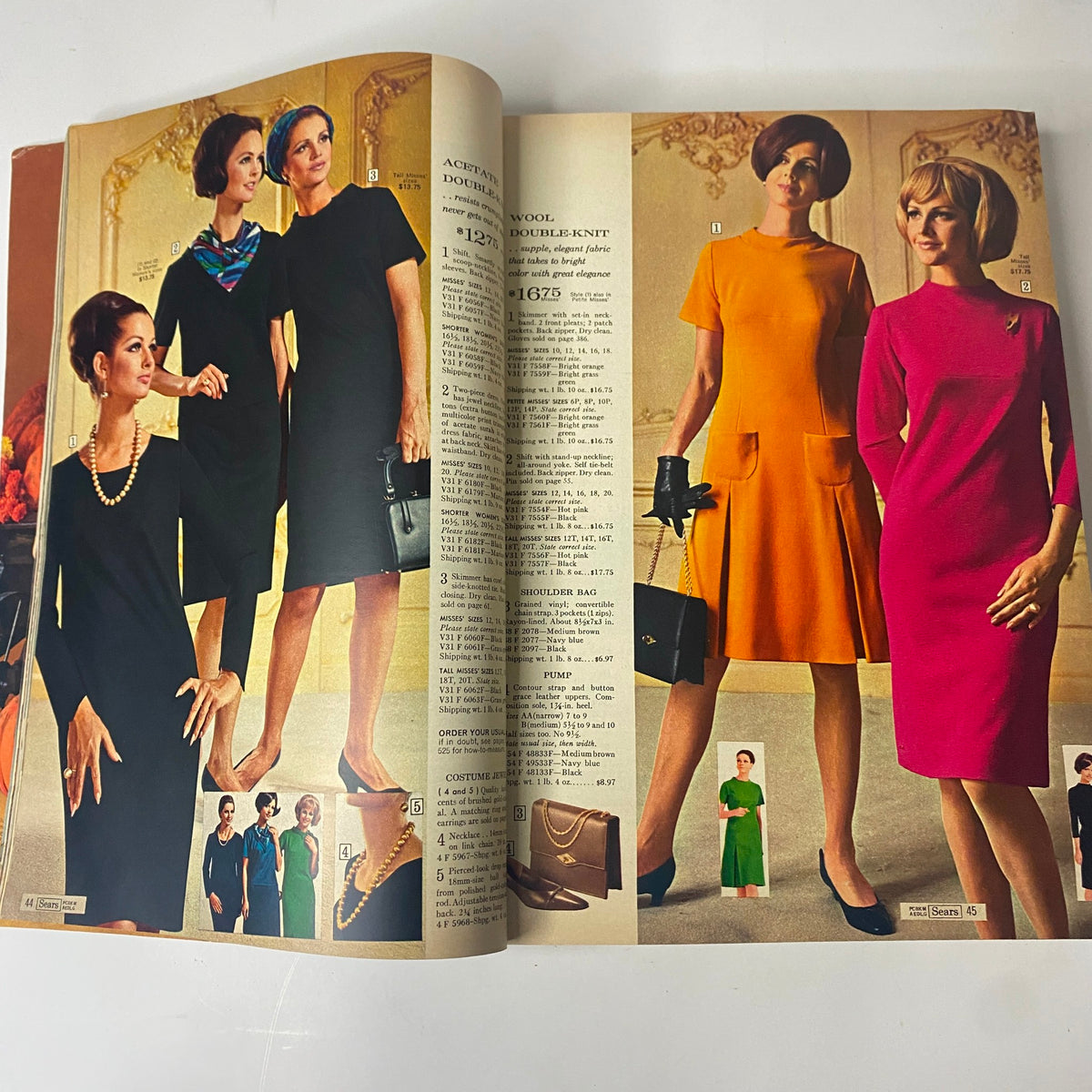
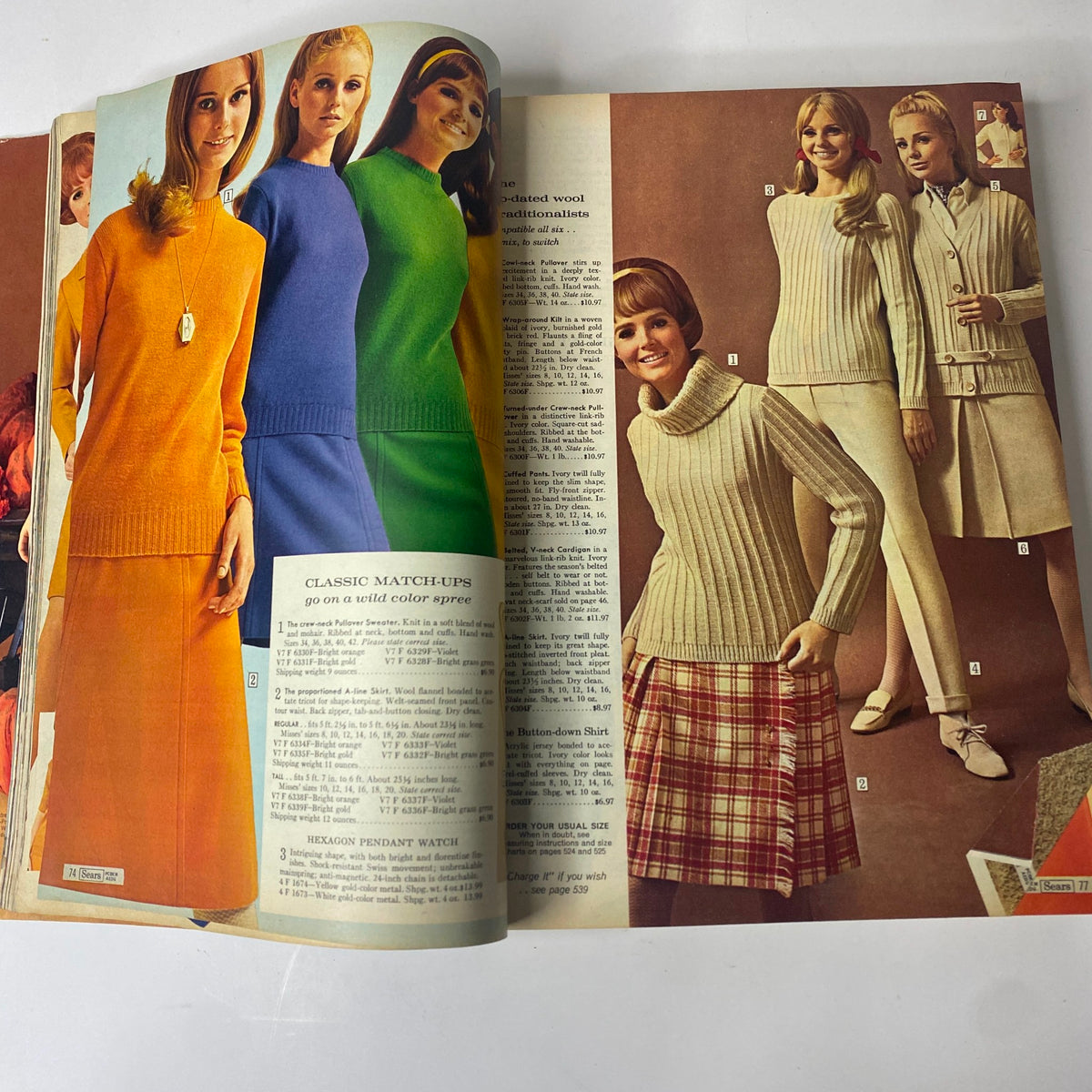
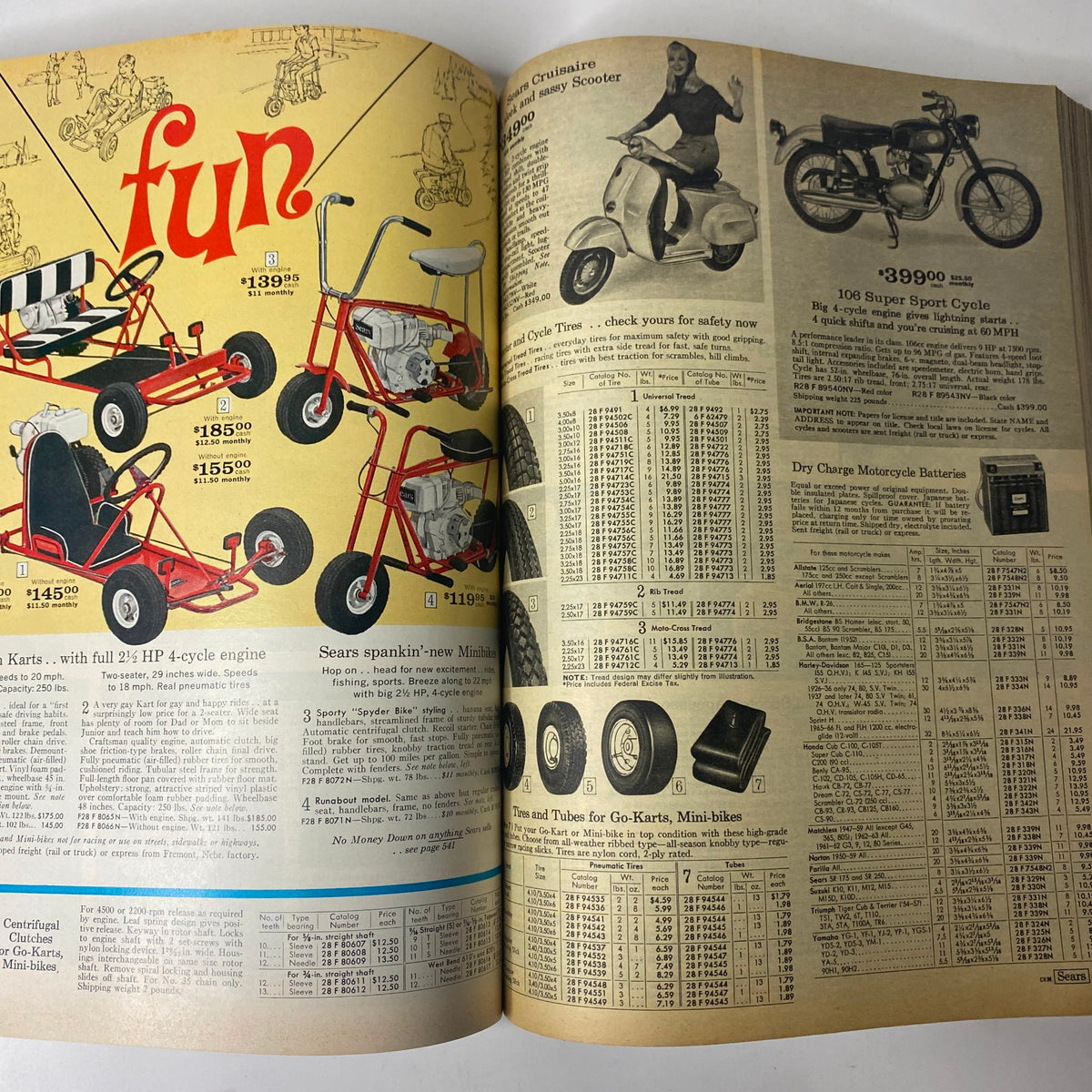
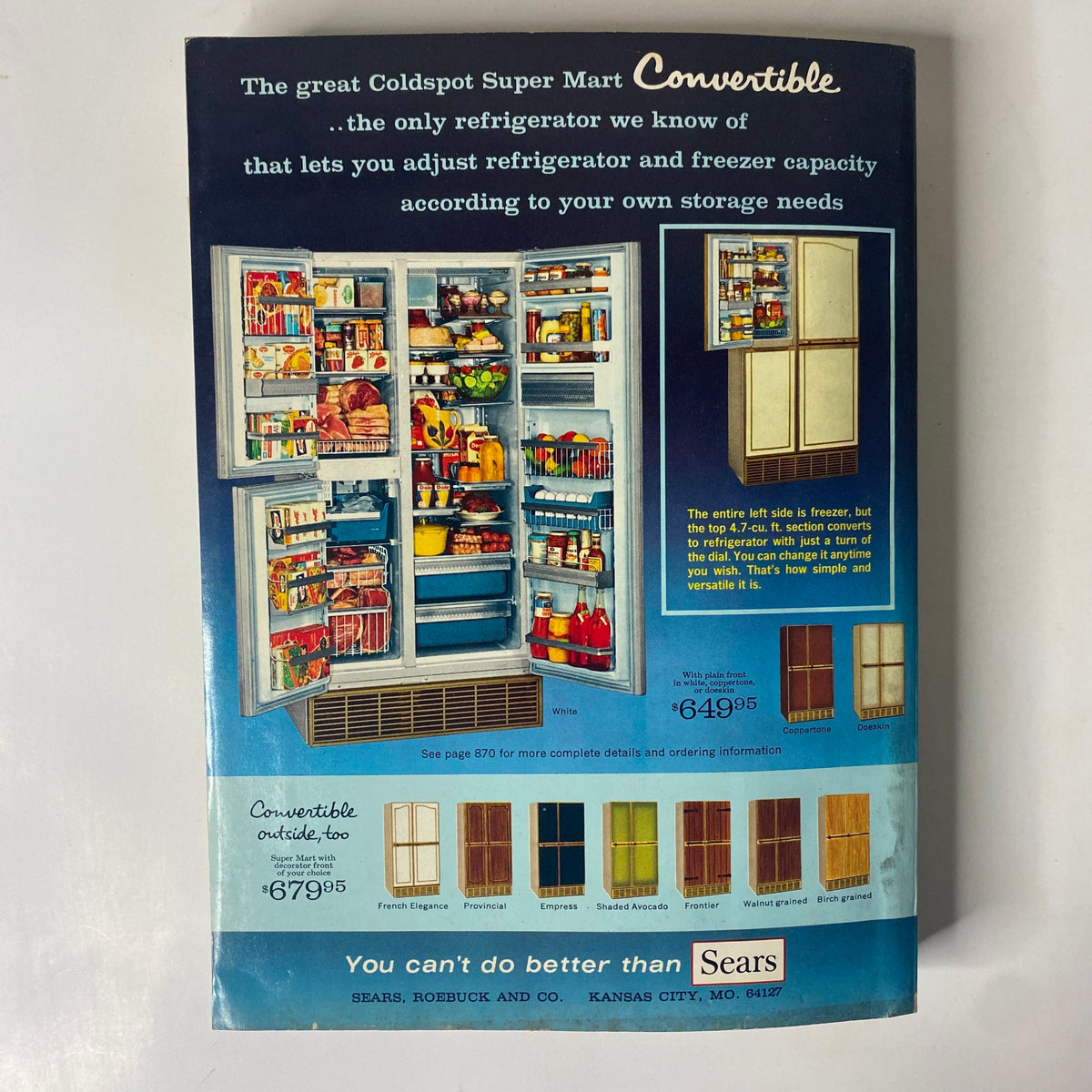


Description
Collector's Note – Why This Issue Matters
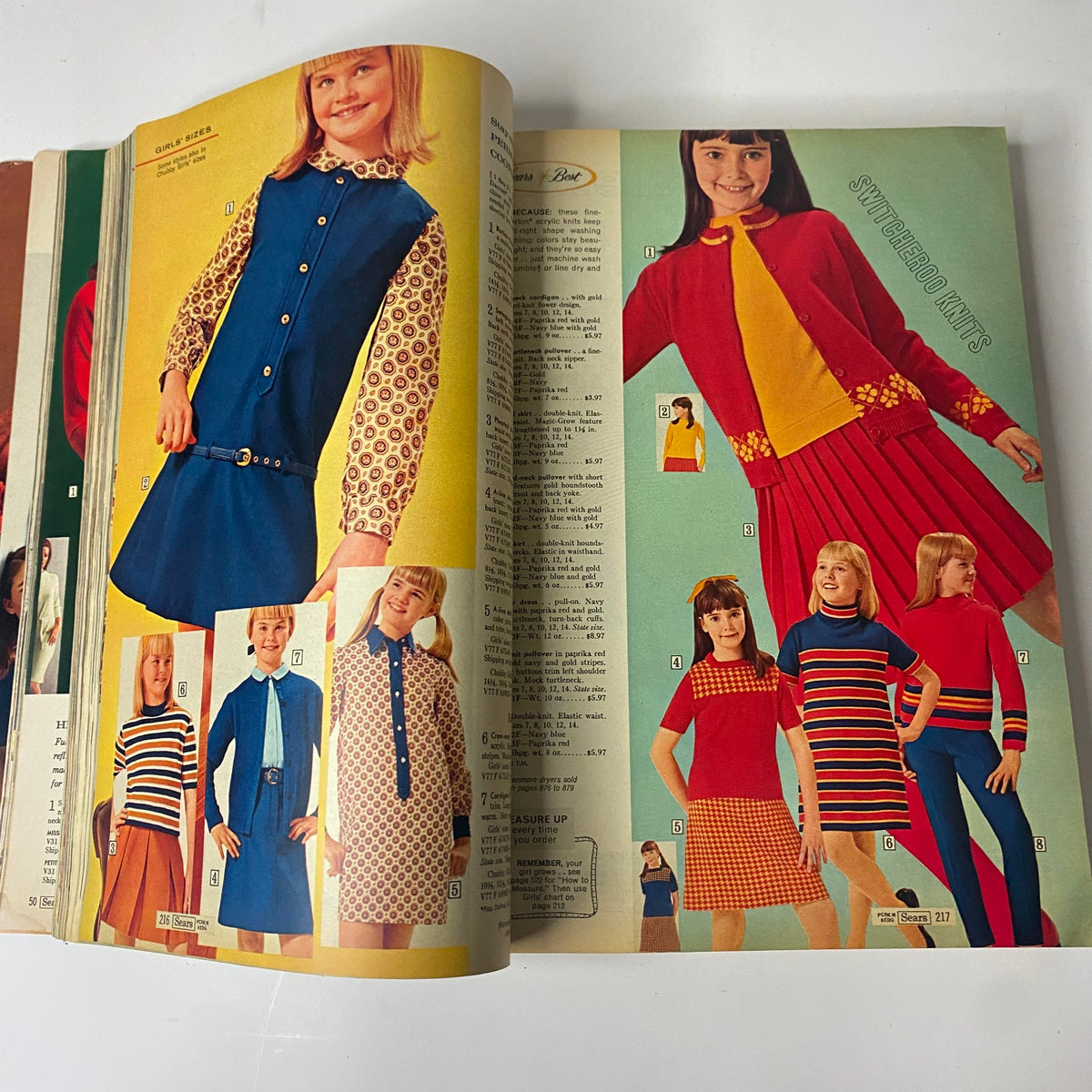
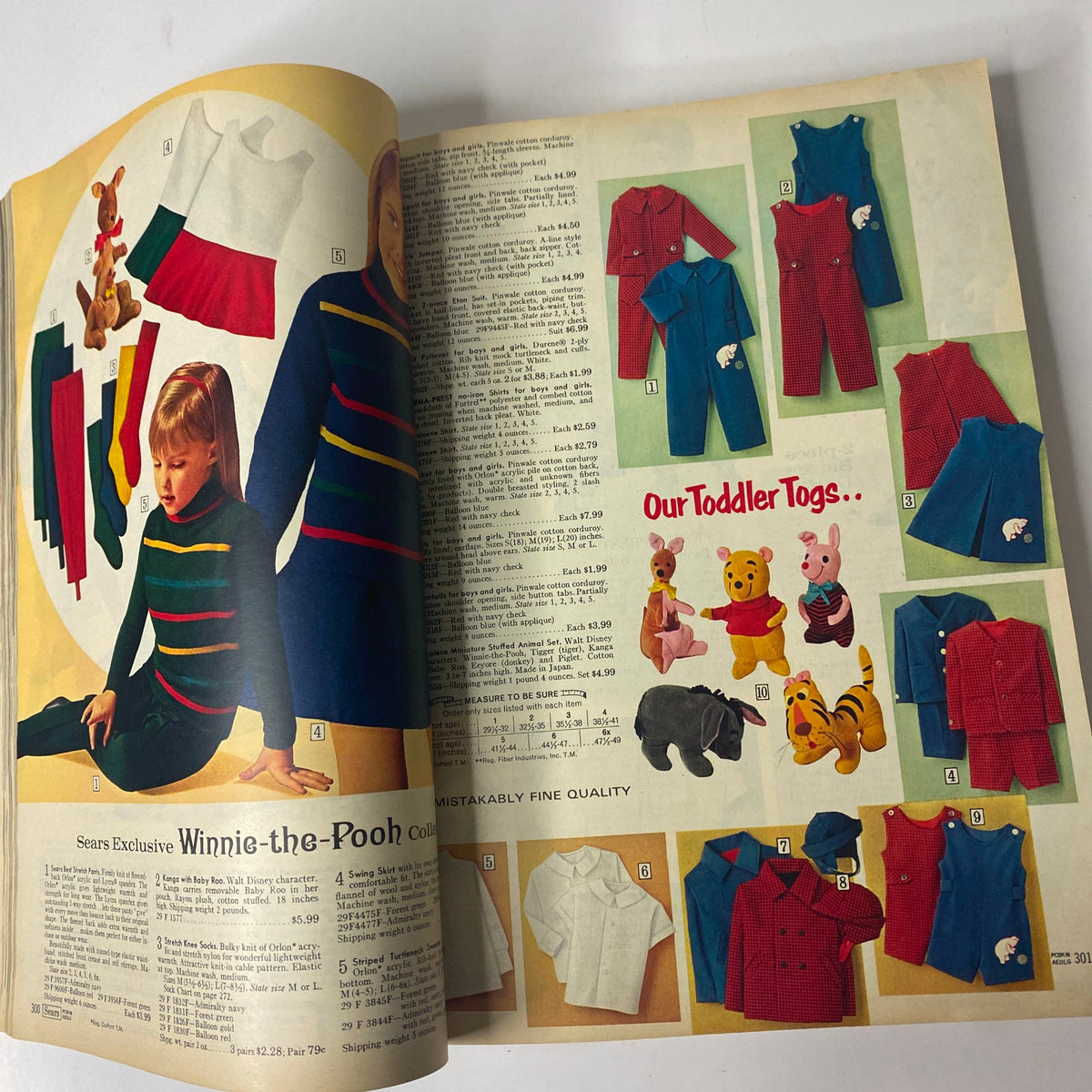
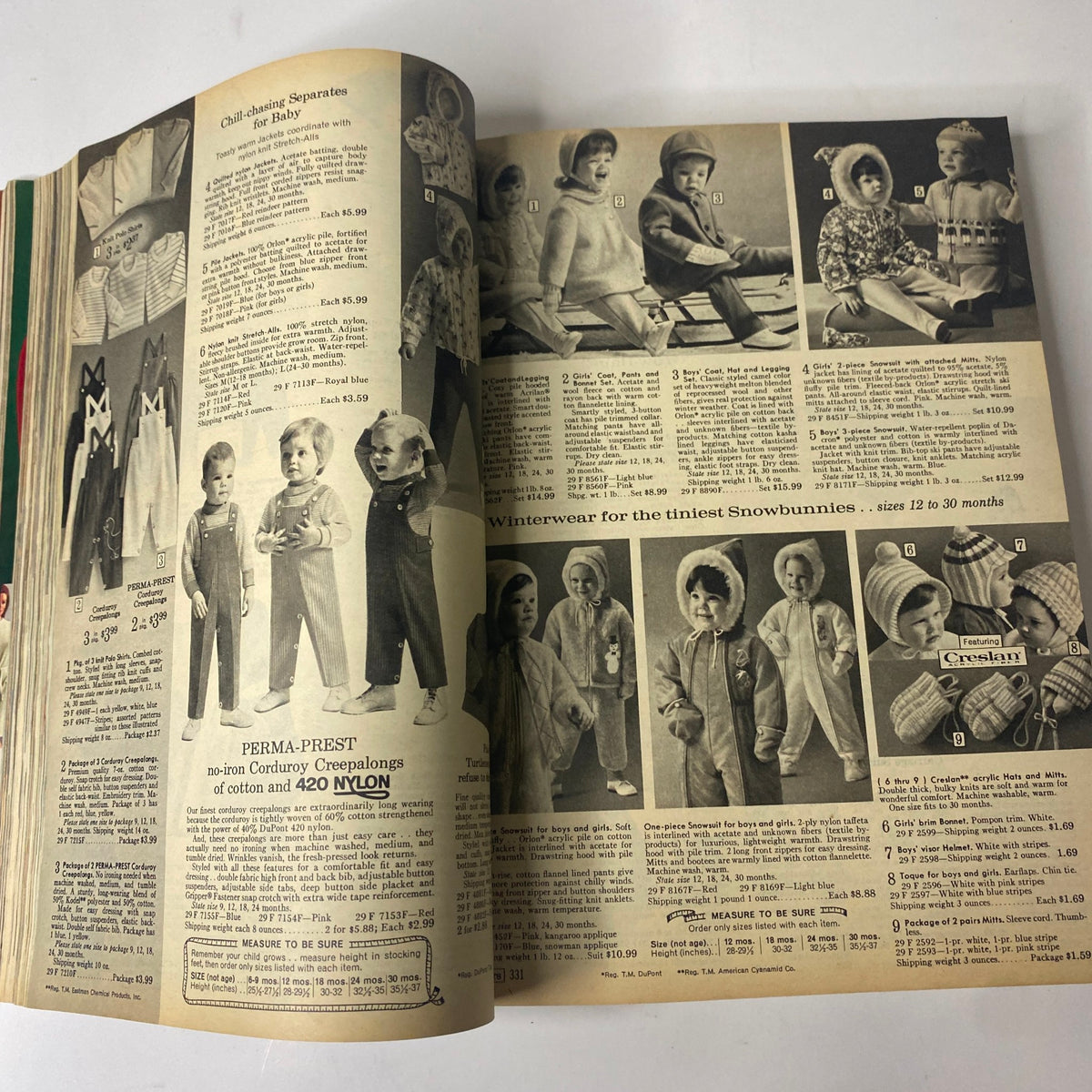
The 1967 Sears Roebuck and Co. Fall and Winter Catalog is a primary document of American consumer culture at the exact midpoint of the decade's most dramatic aesthetic revolution, and its specific content — women's bold mini dresses, A-line skirts, men's casual wear, mid-century modern furniture, Kenmore appliances, and the latest television models — maps the full breadth of that revolution across every category of domestic and personal consumption simultaneously. The fall-winter season of 1967 was occurring at the precise moment when the mod aesthetic had achieved its maximum penetration of the American mass market: the miniskirt had crossed the Atlantic and become a mainstream rather than a subcultural fashion choice, the bold geometric prints and synthetic fabrics of mid-decade British design had been absorbed into the American catalog vocabulary, and the specific visual language of late-1960s fashion was being offered to the broadest possible consumer audience in exactly the comprehensive format that a Sears fall-winter catalog provided. To find women's bold mini dresses and A-line skirts in a Sears catalog in 1967 is to find primary commercial confirmation that the aesthetic revolution of the decade had fully arrived at the level of mass-market American retail — that the styles that had originated in the boutiques of Carnaby Street and the runways of Paris were now being manufactured, priced, and offered to middle-class American households across the country through the nation's largest retailer. For collectors building a serious archive of Sears catalog history and late-1960s American fashion documentation, the Sears catalog collection at OriginalMagazines.com provides essential depth across the company's full publishing history, with the late-1960s fall-winter editions representing the catalog at its most aesthetically charged and culturally significant moment.
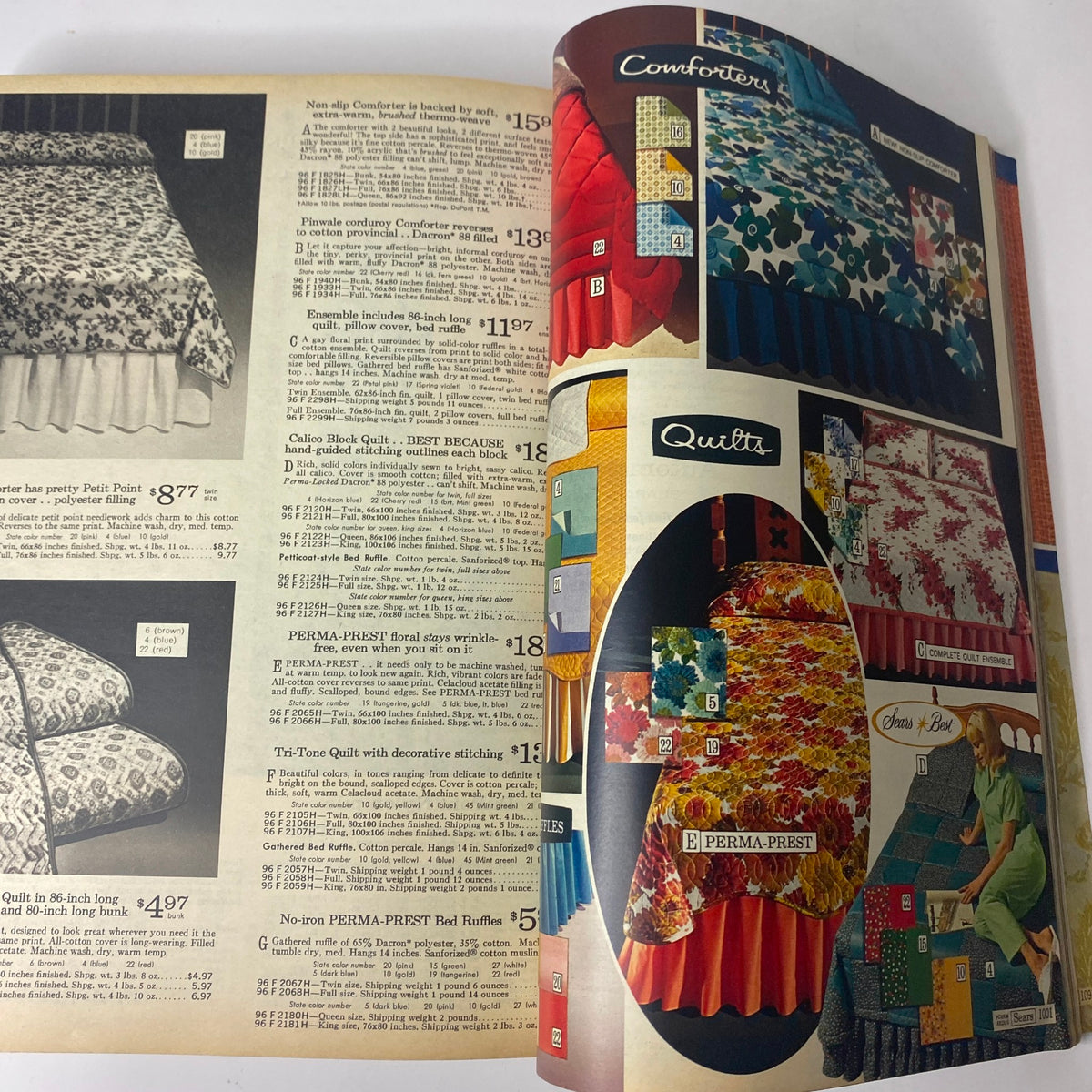
The home goods and furniture content confirmed in this catalog — mid-century modern designs, Kenmore appliances, vibrant textiles — documents the simultaneous revolution in American domestic aesthetics that was occurring alongside the fashion transformation. Mid-century modern furniture design had by 1967 achieved the kind of mainstream retail penetration that made it available through catalog purchase rather than requiring specialist sources, and the specific furniture, appliance, and textile vocabulary of a 1967 Sears fall-winter catalog preserves primary commercial documentation of what American domestic design looked like at the moment of its broadest popular accessibility. The Kenmore appliance line — Sears' private-label kitchen and home appliances brand — is itself historically significant as a primary record of the specific consumer technology being offered to American households in 1967, the year before significant changes in the consumer electronics market would begin transforming what was available and at what price points. The electronics and television section confirmed in the listing adds a third layer of primary documentation, preserving the specific models and prices of television and electronic equipment that were defining American domestic entertainment in the fall and winter of 1967 — a year when television was the dominant medium of American cultural life and when the sets being offered in catalogs were the primary access point for most American families. The full range of 1967 magazines and publications from this year documents one of the most culturally and socially charged twelve months of the decade, and the Sears fall-winter catalog sits within that body of material as the single most comprehensive primary source of what mainstream American consumer life looked like across every product category simultaneously.
The broader cultural context of the fall and winter of 1967 gives this catalog's documentation an additional dimension of historical significance that extends well beyond its specific product content. 1967 was the "Summer of Love" — Haight-Ashbury, the anti-Vietnam War movement's escalation, and the first widespread public engagement with psychedelic culture had all defined the preceding months — and the fall and winter that followed were the season in which the mainstream American consumer culture represented by Sears was navigating its own complex relationship with the cultural revolution that had just peaked. The mini dresses and bold mod fashion in this fall-winter catalog are simultaneously evidence of the counterculture's commercial absorption into mainstream retail and of the specific aesthetic distance between the Sears catalog's version of "bold" and the full counterculture expression of that same year. That negotiation — visible in the specific garment choices, the styling photography, and the marketing language of the catalog's fashion sections — is itself a primary historical document of how American mass-market retail was processing the decade's most radical cultural energies through the filter of commercial accessibility and middle-class aspiration.
About the Publication
The Sears Roebuck and Co. Fall and Winter Catalog was the flagship annual publication of Sears, Roebuck and Company, distributed to millions of American households through the direct-mail program that had been central to the company's retail dominance since its founding in 1886. The fall-winter edition was the most commercially important catalog Sears produced each year, its pages carrying the full weight of the company's holiday-season fashion and merchandise offering to the broadest possible American consumer audience. By 1967, this catalog had been a fundamental institution in American domestic life for over eighty years, and its comprehensive scope — covering clothing, home goods, furniture, appliances, and electronics in a single publication — made it one of the most complete single-volume records of American consumer culture available for any given year. The 1967 edition's position at the exact midpoint of the late-1960s aesthetic revolution gives it a documentary significance that routine seasonal catalogs do not possess, making it a primary source of the first order for anyone researching the specific moment when the decade's transformative cultural forces achieved their fullest mainstream commercial expression.
Key Highlights Inside
- Women's mini dresses and A-line skirts — the mod aesthetic at its mass-market peak — The confirmed bold mini dresses and A-line skirts document the specific commercial translation of the mid-decade British fashion revolution into mainstream American catalog retail, preserving primary evidence of the exact silhouettes, fabric choices, and styling vocabulary that the late-1960s fashion aesthetic had produced at its broadest point of popular accessibility in the fall and winter of 1967.
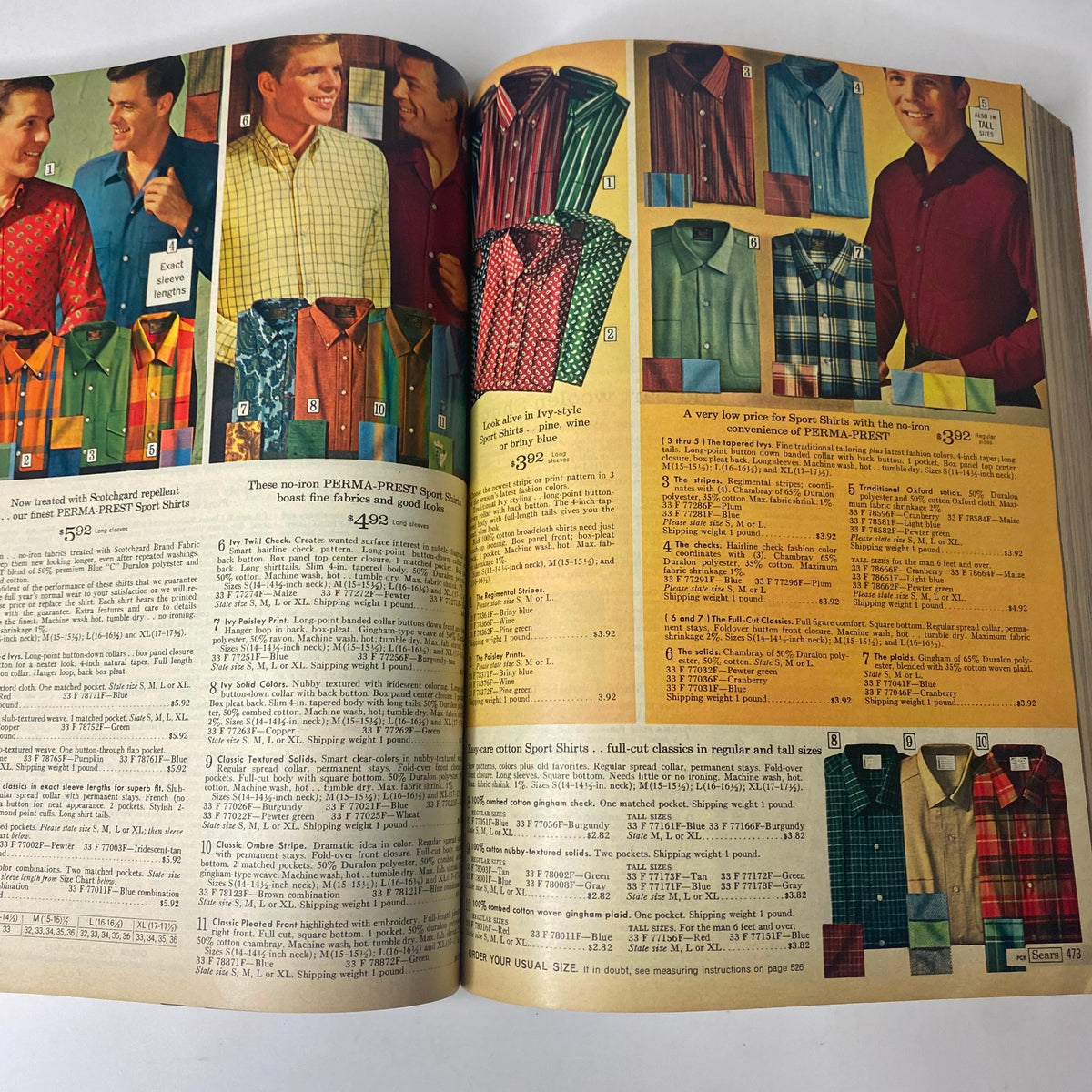
- Men's casual wear — the masculinity of late-1960s fashion documented — The confirmed men's casual wear reflects the specific evolution of American men's fashion in the late 1960s, a period when the conventional suit-and-tie formality of the mid-century was being challenged by a more casual, colorful, and stylistically adventurous approach to male dressing that catalogs of this era document with unusual commercial specificity.
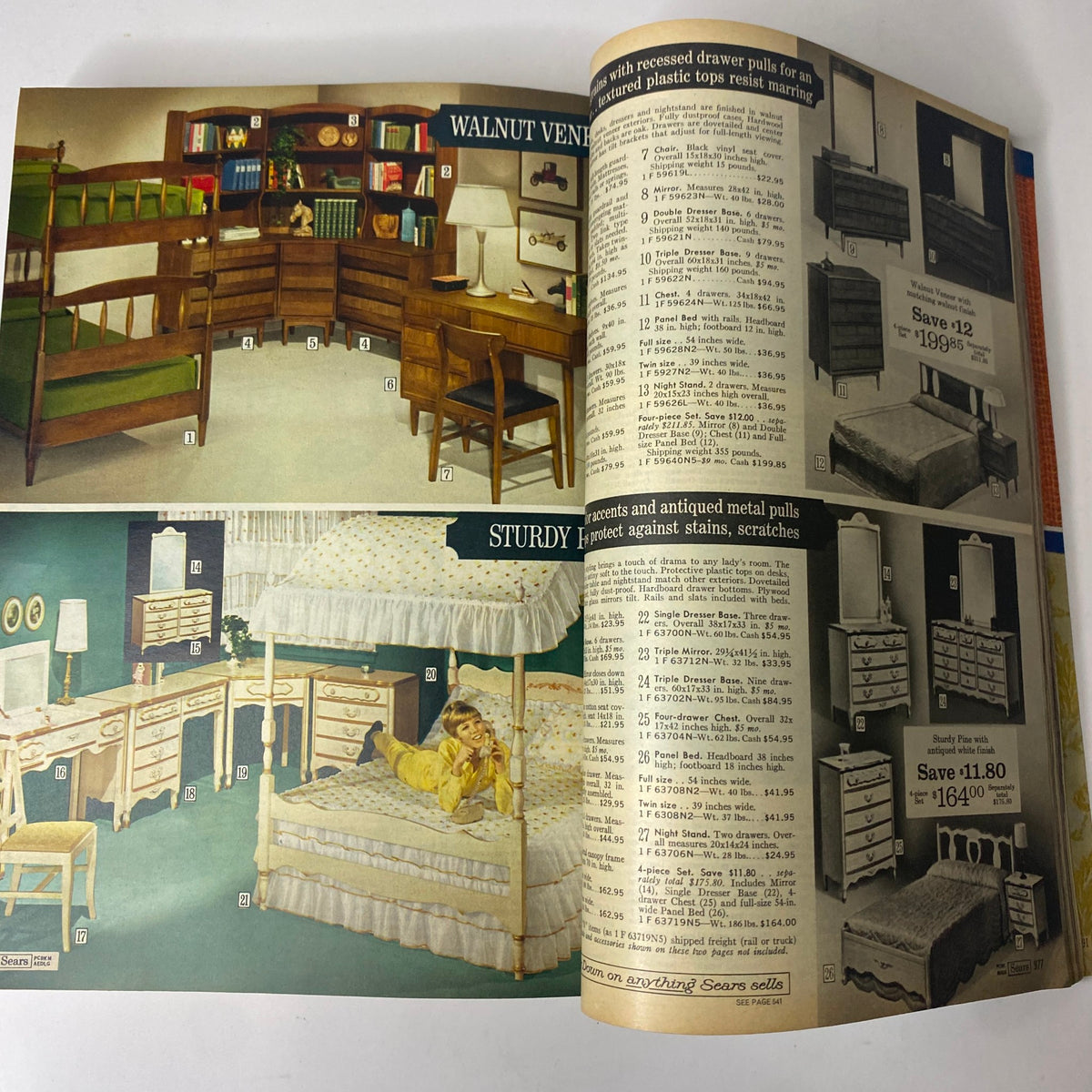
- Mid-century modern furniture — domestic design at its mass-market peak — The confirmed mid-century modern furniture content documents the mainstream retail availability of the design vocabulary that had defined American domestic aspiration throughout the decade, preserving primary commercial evidence of specific furniture designs, price points, and styling at the moment of their broadest catalog distribution.
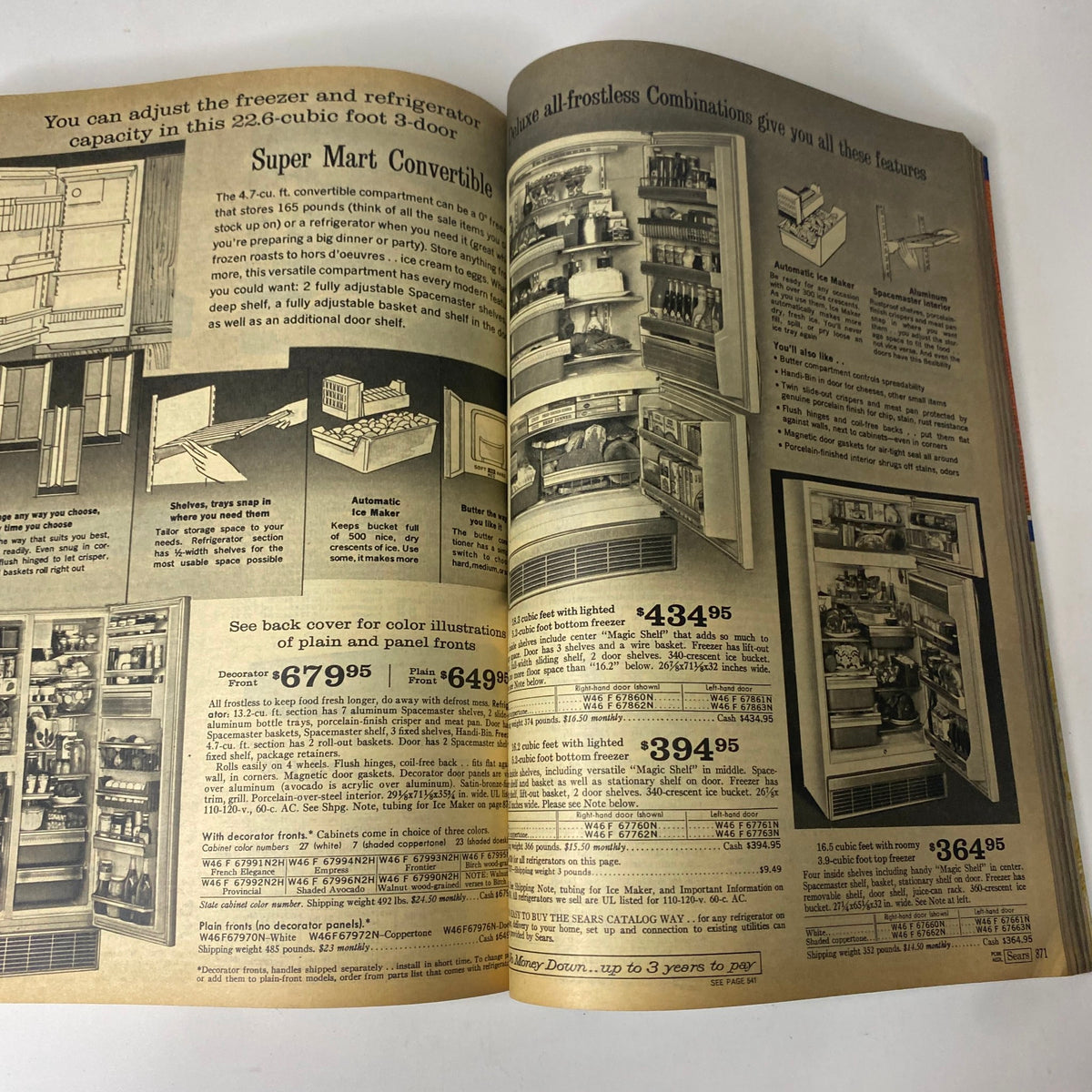
- Sears Kenmore appliances — American consumer technology in 1967 documented — The confirmed Kenmore appliance content provides primary documentation of Sears' flagship private-label kitchen and home technology offering in the fall and winter of 1967, preserving specific model documentation and pricing from a year in which the American consumer appliance market was operating at a specific and historically well-defined technological moment.
- Television and electronics — late-1960s American home entertainment documented — The confirmed electronics and television content preserves primary commercial documentation of the specific models, screen sizes, and prices of consumer television equipment available to mainstream American households in the fall and winter of 1967, providing primary evidence for historians of consumer electronics, television technology, and American domestic entertainment culture.
- Note: Specific brand names, individual model numbers, detailed garment descriptions, and the complete product and pricing documentation across all catalog categories have not been independently verified beyond the listing description. The highlights above reflect what is documentable from the listing and the well-established historical context of Sears' 1967 fall-winter catalog format and the specific cultural moment it documented.
Condition & Rarity
This catalog is described as being in good condition with minor wear typical for its age, protected by a plastic covering — a condition profile that represents a well-maintained surviving example of a publication category that most original recipients actively used as a practical shopping reference and eventually discarded. For a large-format fall-winter catalog now approaching sixty years old, good condition with only minor wear indicates consistent storage care that has avoided the more severe deterioration — significant binding failure, water or moisture damage, extensive page brittleness — that affects the lower end of the surviving pool for publications of this age and original use context. The plastic protective covering indicates intentional preservation care, correlating with better overall physical stability than unprotected copies stored under comparable conditions. The listing does not specify whether an address label is present on the cover, which is worth verifying from accompanying photographs — Sears distributed this catalog by direct mail to registered customer households, and labeled copies are the norm among survivors, with label-free examples presenting with cleaner cover surfaces and commanding a modest premium in the retail ephemera collector market. Collectors evaluating surviving copies of this catalog for specific research purposes should examine the fashion photography sections for color vibrancy, the furniture and appliance sections for completeness and legibility, and the electronics section for intact page content — these are the primary documentary assets whose condition determines the catalog's usefulness for the specific research and collecting communities that most actively pursue this edition.
Looking for More Issues Like This?
Sears fall-winter catalogs from 1967 — documenting the late-1960s fashion revolution, mid-century modern design, and the consumer electronics market at a historically specific and visually distinctive moment — are actively sought by fashion historians, furniture design researchers, consumer electronics historians, and retail ephemera collectors who recognize these publications as among the most comprehensive single-volume primary sources available for the specific consumer culture of the American late-1960s. If this 1967 fall-winter edition is no longer available, the Sears catalog collection at OriginalMagazines.com is the most comprehensive resource for exploring what else has surfaced from this foundational American retail publishing tradition across its full span of production years. For collectors building a broader documentary record of American consumer culture, fashion, and popular life during one of the most aesthetically and socially charged years of the late 1960s, the 1967 magazines collection brings together a wide range of primary source material from that extraordinary year, collectively documenting the full sweep of American life at the decade's most turbulent and transformative midpoint.