

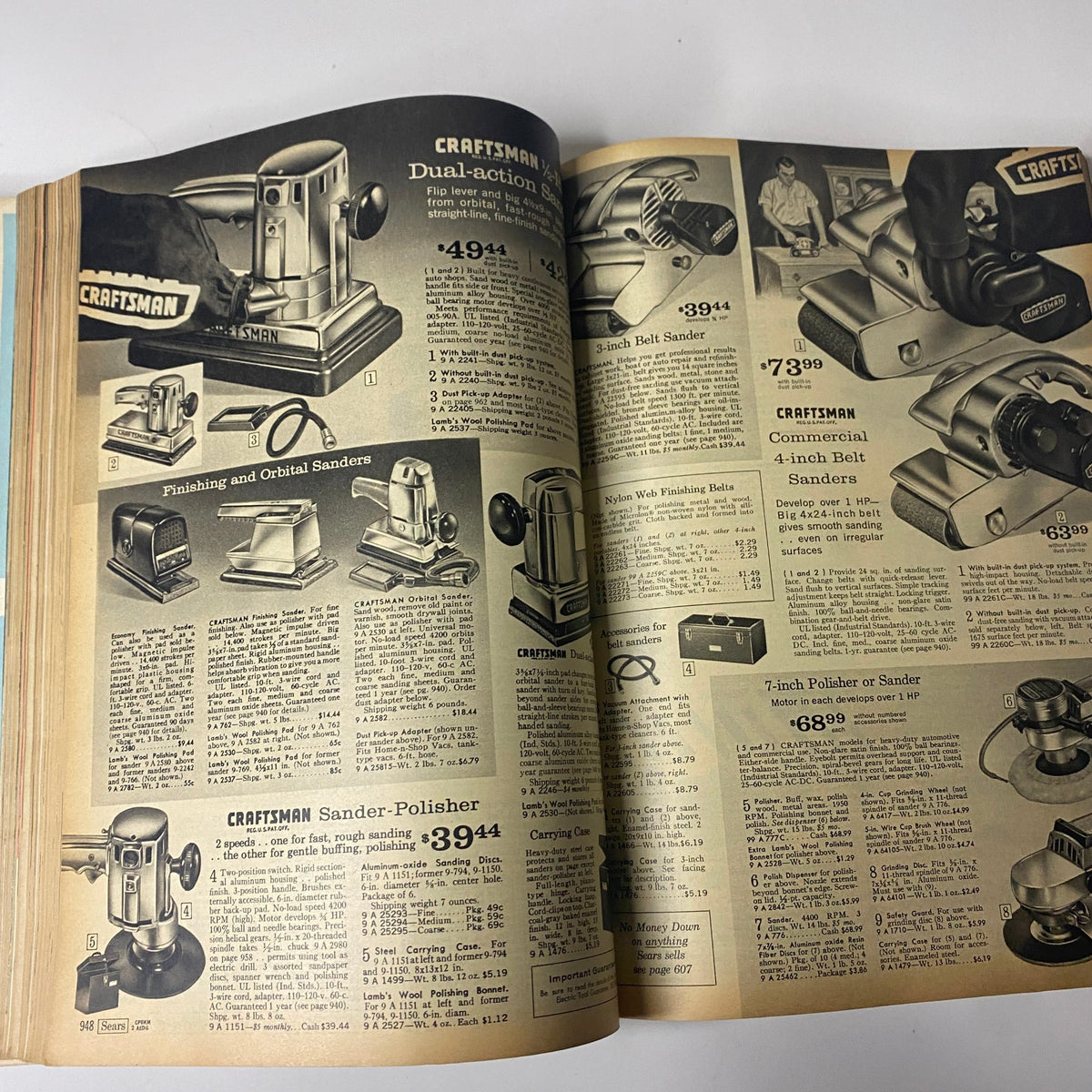


Description
Collector's Note – Why This Issue Matters
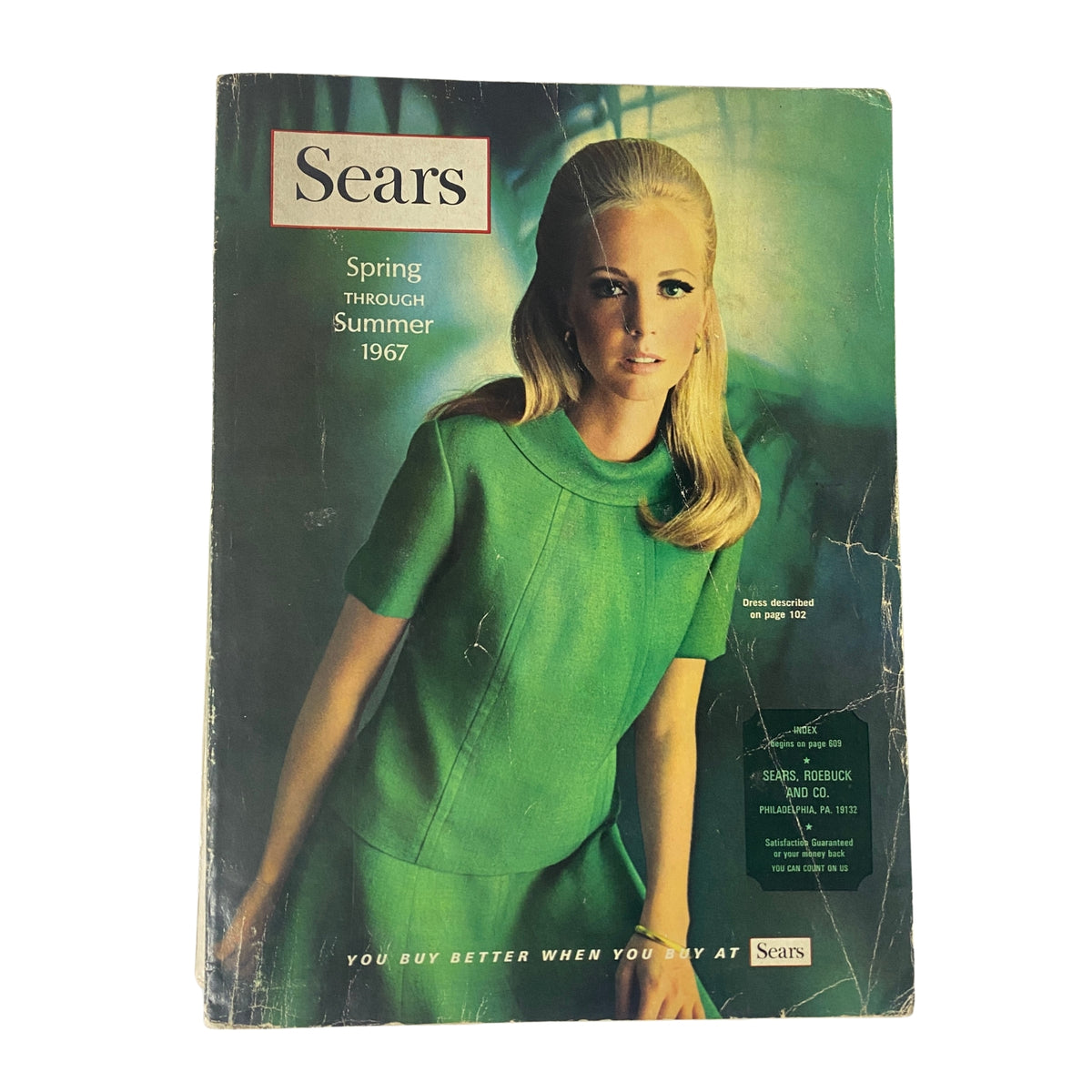
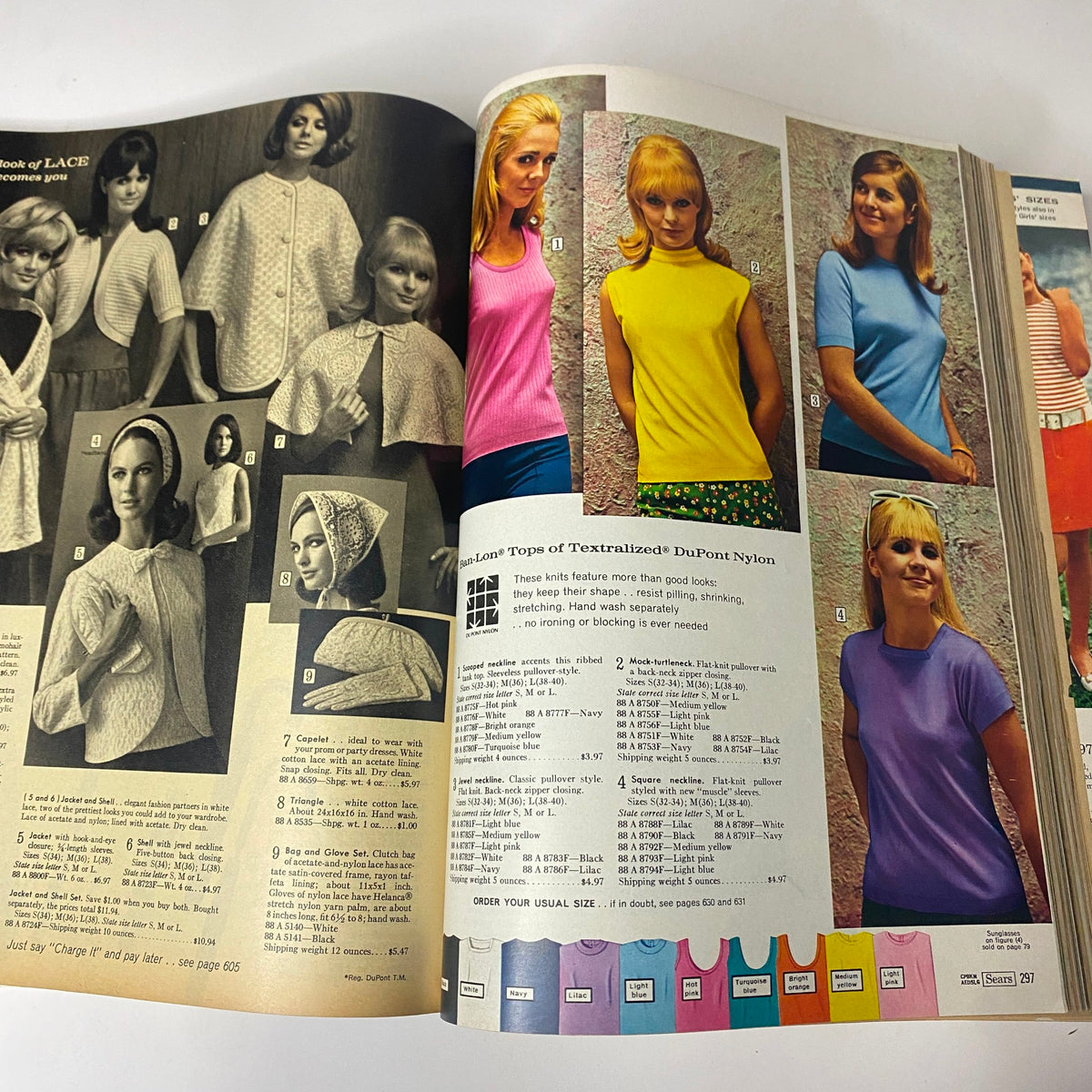
The 1967 Sears Spring Through Summer Catalog is a primary document of one of the most visually and culturally distinctive moments in twentieth-century American consumer fashion — the specific season in which the mod aesthetic achieved its fullest mass-market expression in the United States. By the spring of 1967, the British mod influence that had been building since the early 1960s had completed its translation from London boutique culture into the American ready-to-wear mainstream, and the confirmed presence of mod mini dresses in a Sears Spring and Summer catalog is the definitive evidence of that translation: when a style reaches the Sears catalog, it has not merely entered the American market but saturated it to the point of mass-market commercial viability for the broadest possible consumer base. The 1967 spring and summer season was also the immediate pre-Summer of Love moment — the catalog would have been distributed in early 1967, months before the Haight-Ashbury summer that is conventionally dated to June–August 1967 — capturing the mod consumer aesthetic at its commercial peak just before the psychedelic counterculture began displacing it as the dominant visual language of youth culture. For collectors building archives of vintage Sears catalogs documenting the arc of American consumer fashion, the 1967 Spring Through Summer edition represents the mid-decade pop fashion moment at its most fully realized mass-market expression.
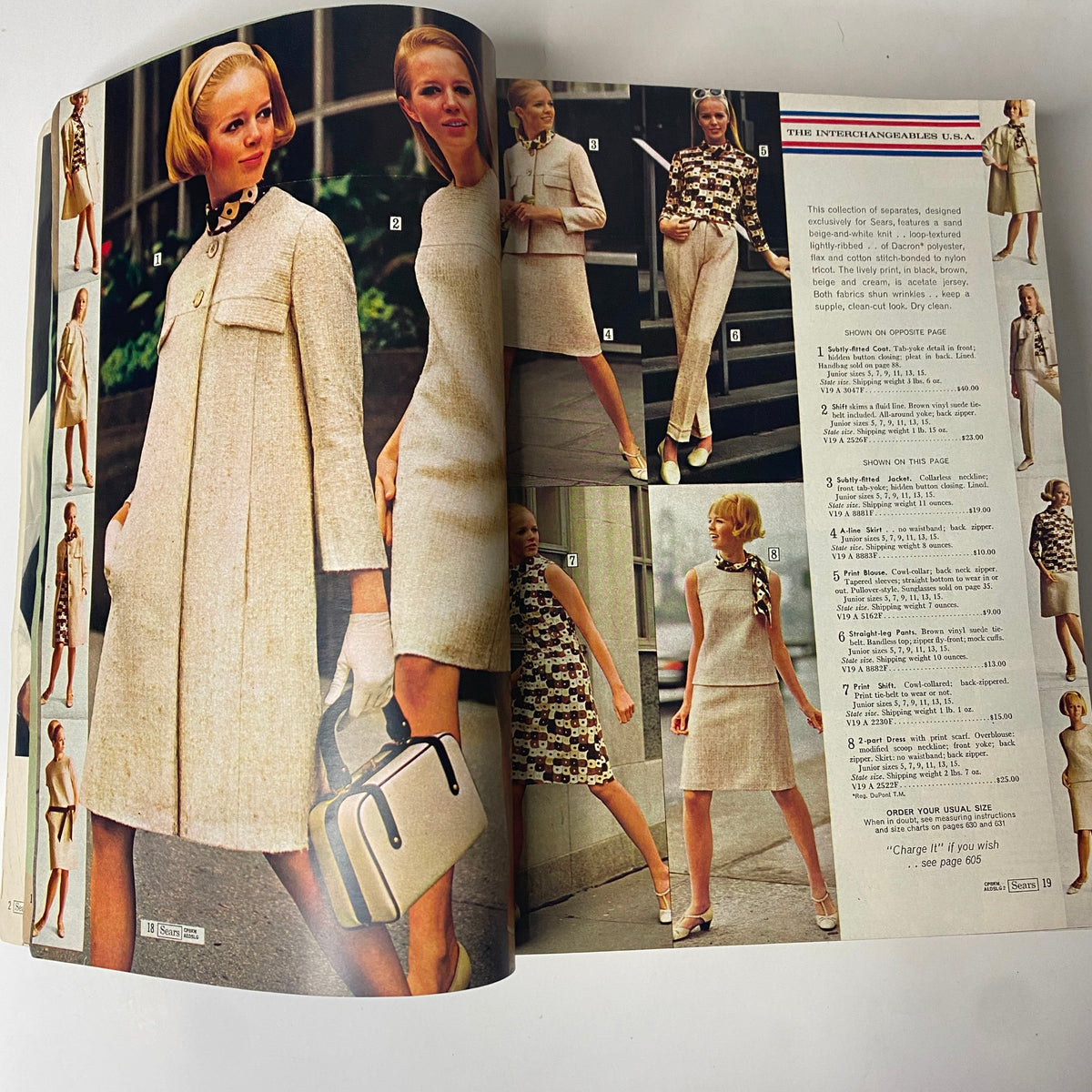
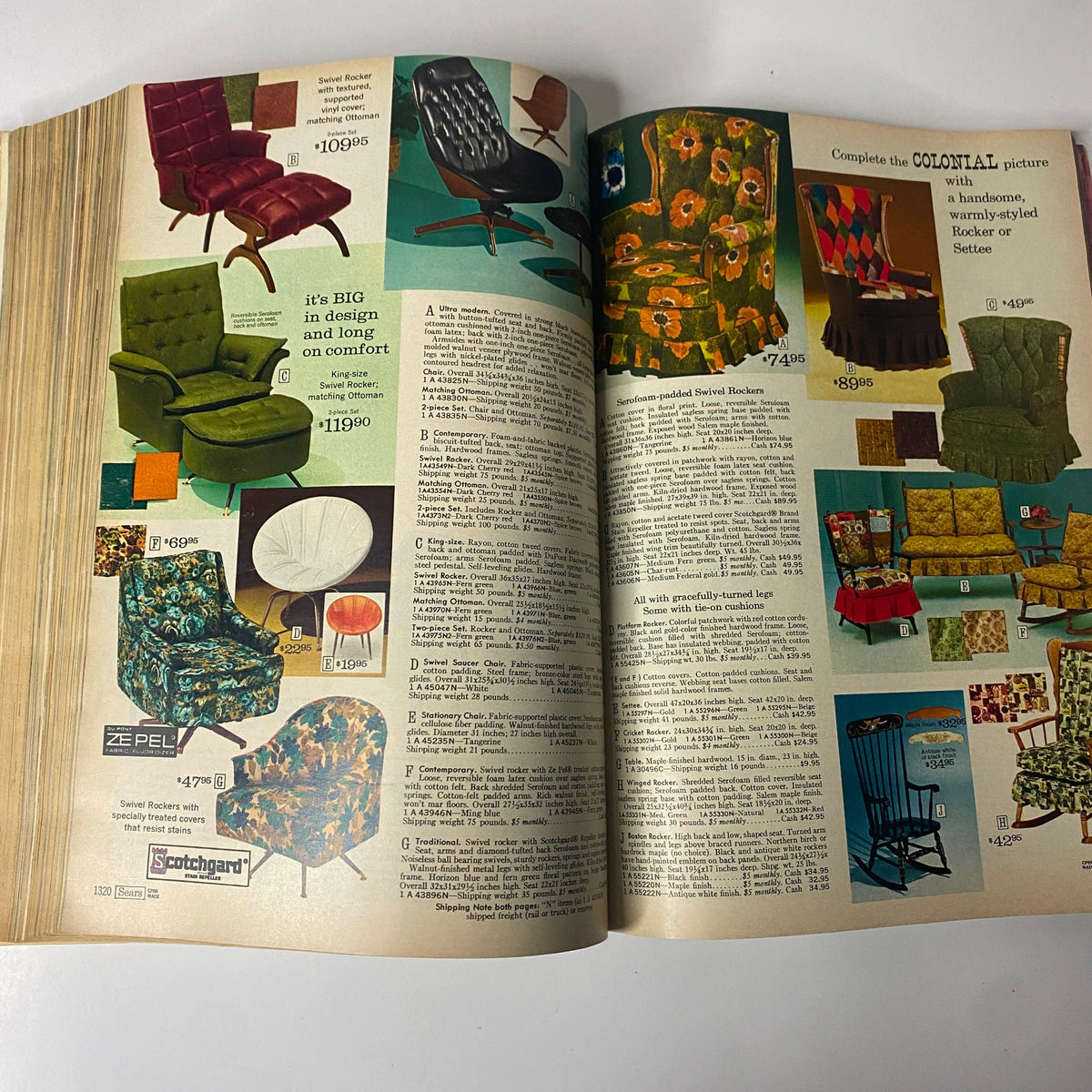
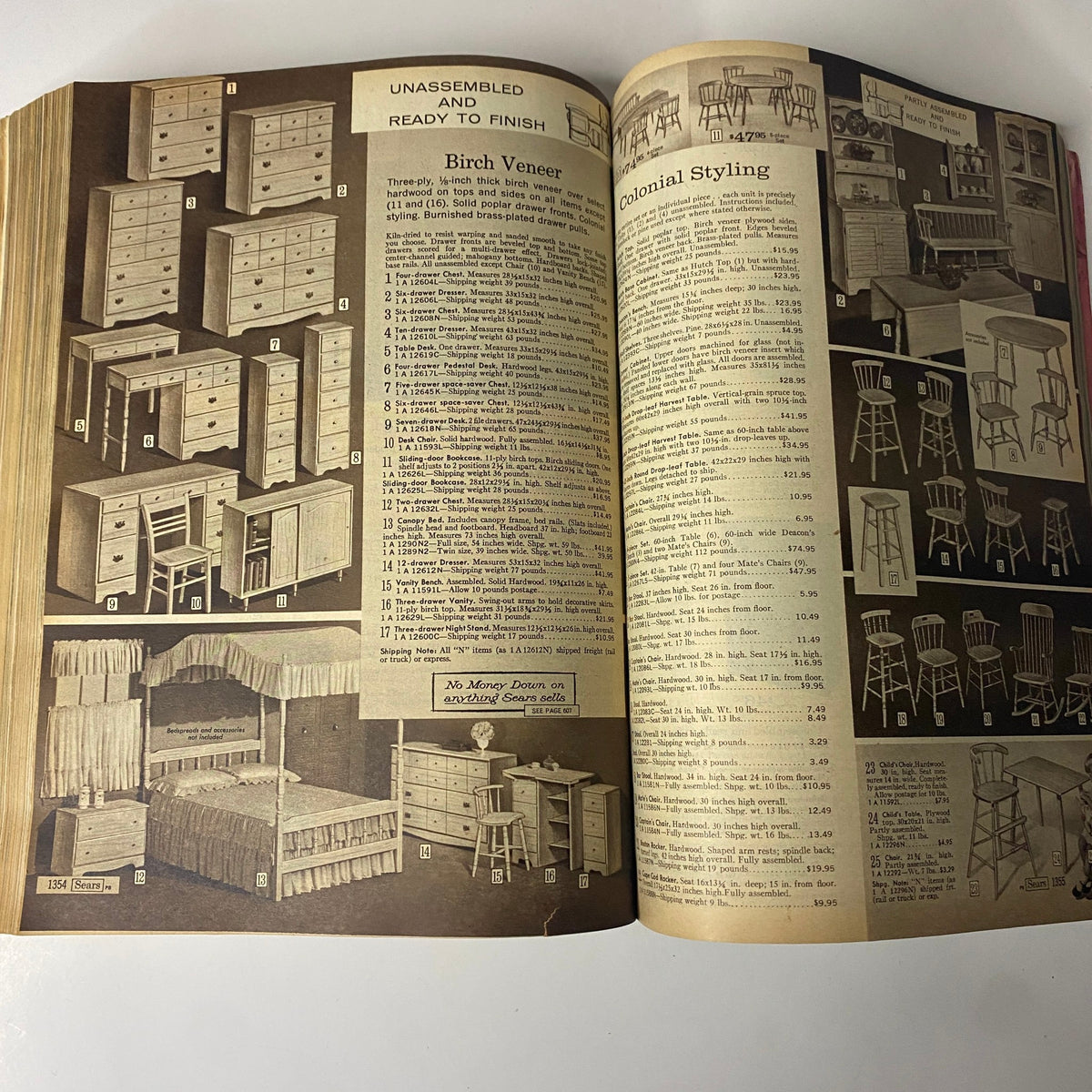
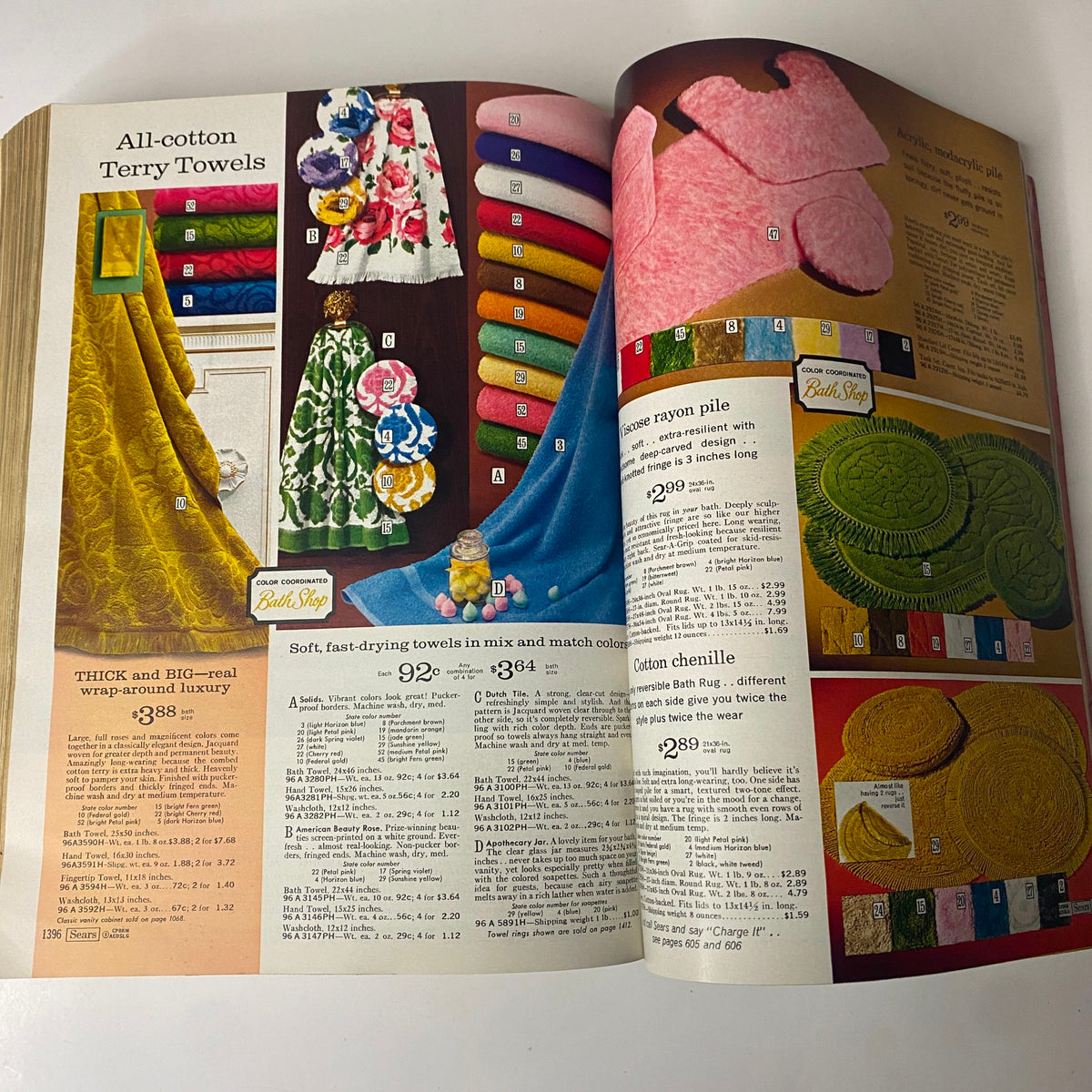
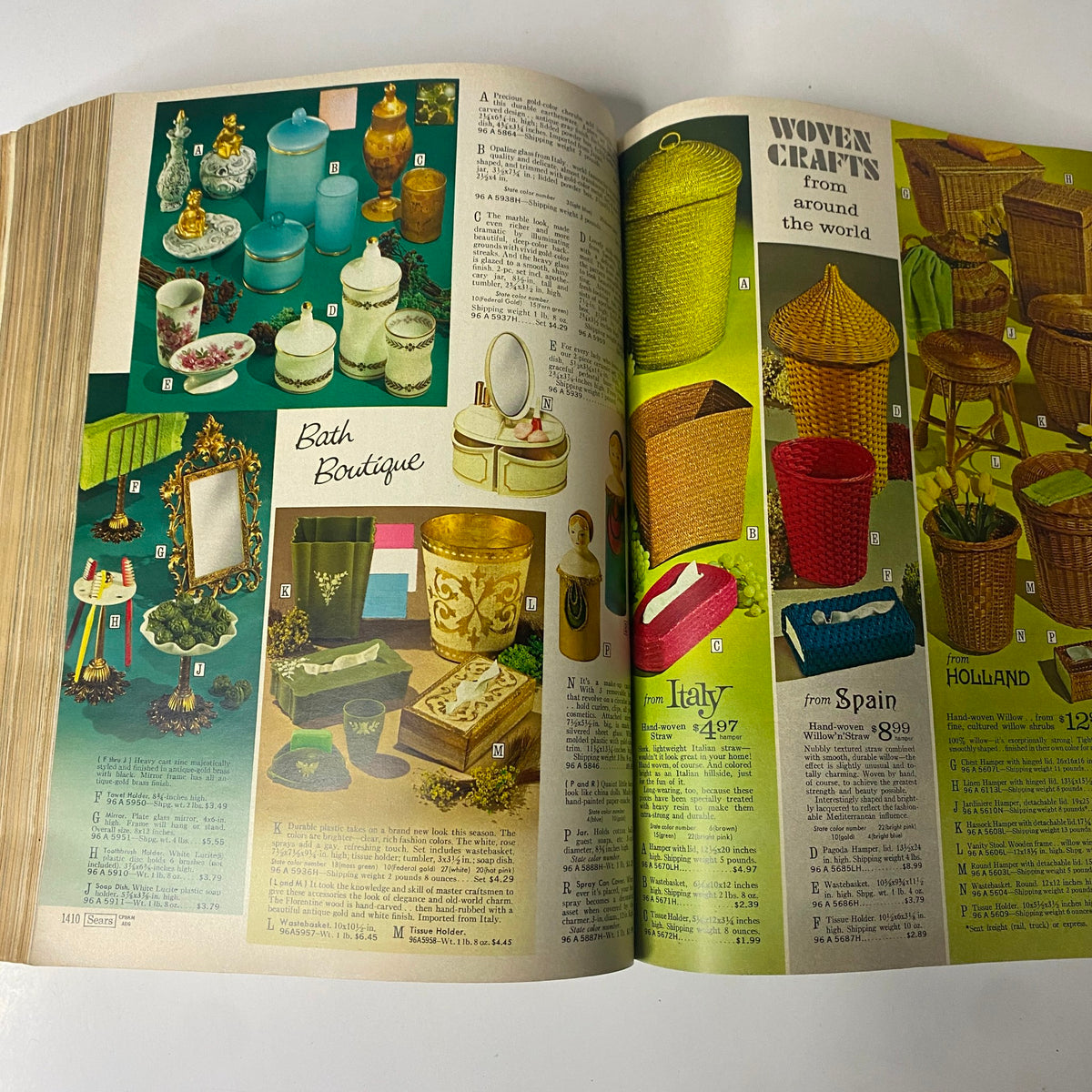
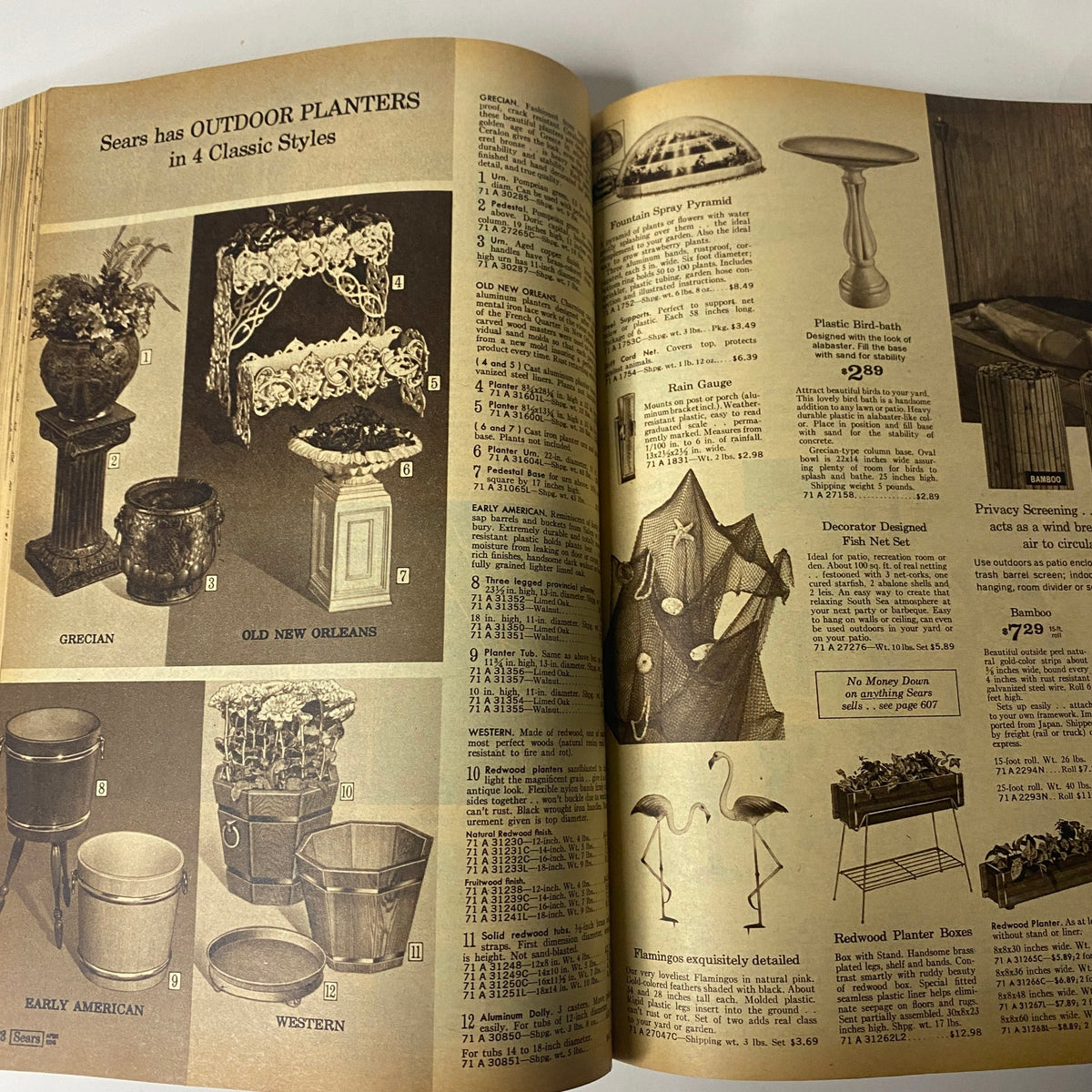
The confirmed content categories give this catalog a specific and layered documentary value. The mod mini dresses, casual resort wear, and classic shoes documented here reflect the specific silhouette and styling conventions of 1967 American ready-to-wear at the precise moment of its most concentrated cultural confidence — the A-line and shift silhouettes, the bold geometric and floral prints, the above-the-knee hemlines that had been controversial in 1965 and were mainstream by 1967. The confirmed mid-century modern furniture and kitchen appliance content adds a parallel dimension of historical interest: 1967 sits at the late peak of the mid-century modern design aesthetic in American domestic goods, the moment just before the early-1970s shift toward earth tones, natural materials, and the Colonial Revival that would displace the clean lines and optimistic modernism of postwar American home design. A Sears catalog documenting both the fashion and the domestic design of this specific season provides a comprehensive cross-section of American consumer aspiration at a moment of unusual cultural confidence and visual coherence. Collectors focused on 1967 publications as documents of American material culture will find this catalog situating the consumer aesthetic of the Summer of Love year with the pricing, sizing, and style-number specificity that editorial sources do not provide.
The Spring Through Summer designation is worth noting as a structural detail: Sears issued its primary seasonal catalogs in Spring/Summer and Fall/Winter editions, and the spring catalog's coverage of Easter, graduation, and summer vacation seasons made it the edition most directly focused on the aspirational youth fashion and leisure consumer categories that were driving American retail growth in the mid-1960s. A 1967 spring catalog therefore captures the consumer expressions of the year's most culturally active season — the months in which mod fashion, resort wear, and the outdoor leisure lifestyle that defined mid-decade American aspiration were at their most commercially visible.
About the Publication
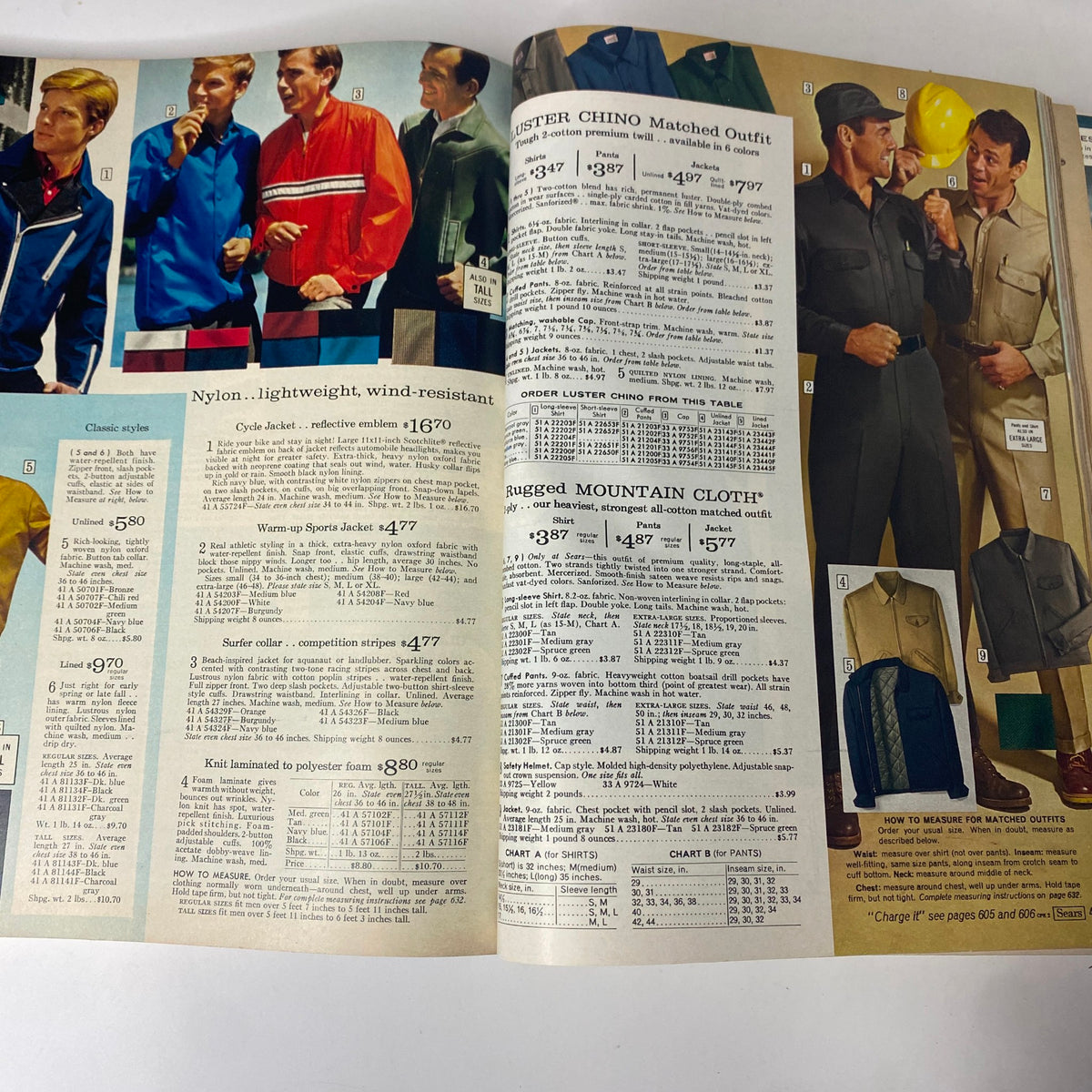
Sears, Roebuck and Co. seasonal mail-order catalogs were large-format illustrated publications issued twice yearly and distributed to tens of millions of American households, making them among the most widely circulated publications in the country across the mid-twentieth century. By 1967, Sears remained the largest American retailer, and its catalogs functioned as the primary retail reference for consumers in smaller cities, towns, and rural communities where department store access to contemporary fashion and household goods was limited. The catalog's format combined fashion illustration and photography with detailed merchandise descriptions, fabric specifications, sizing information, and pricing — providing a level of consumer documentation that fashion magazines and general-interest publications did not attempt, and making it an invaluable primary source for researchers studying what Americans were actually buying and wearing in any given season.
Key Highlights Inside
- Mod mini dresses — confirmed fashion content — Primary retail documentation of the mod aesthetic at its American mass-market peak, capturing the A-line and shift silhouettes, bold prints, and above-the-knee hemlines of 1967 ready-to-wear at the specific moment of their fullest commercial saturation in the Sears customer base.
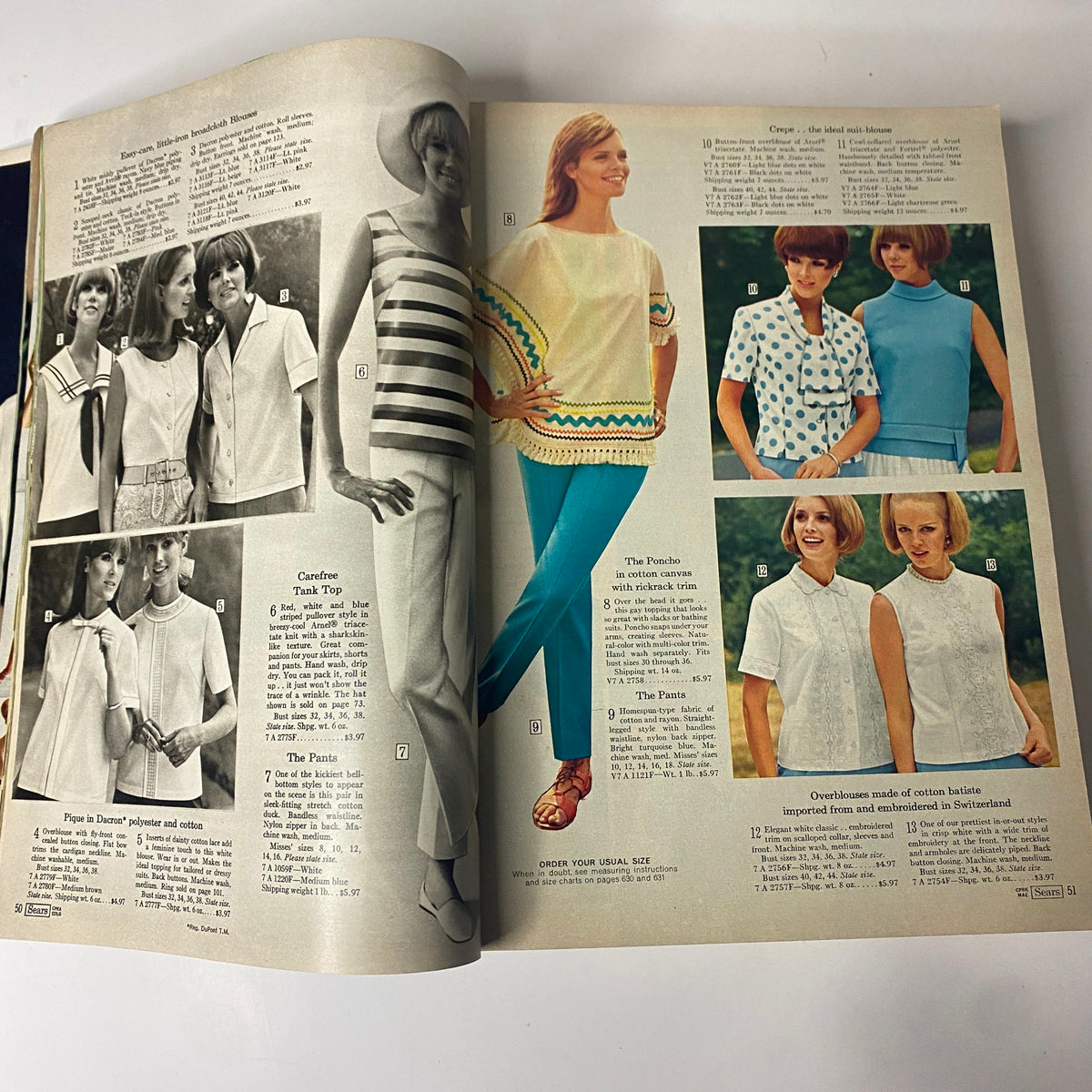
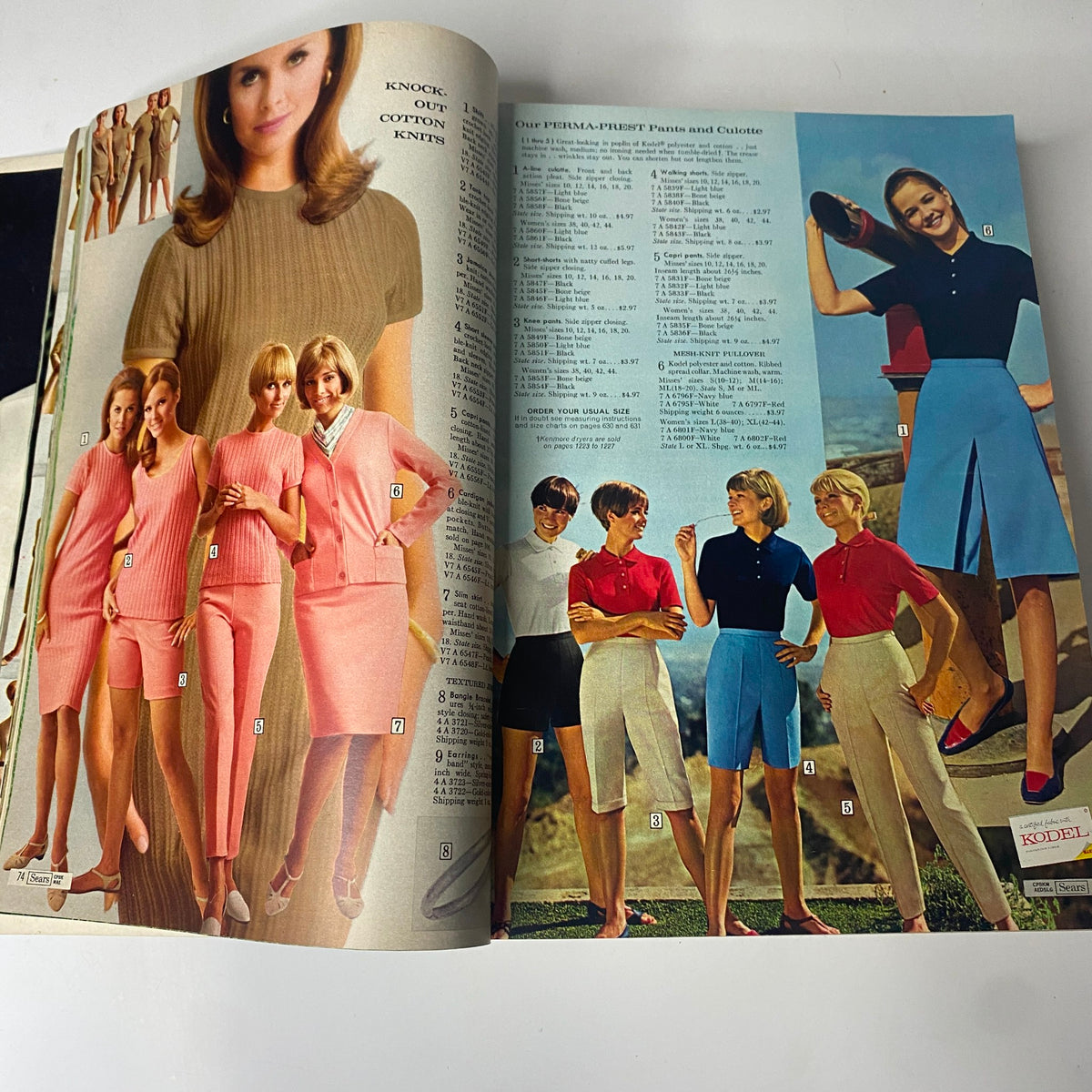
- Casual resort wear — confirmed fashion content — Documentation of the mid-1960s American leisure fashion category at its most developed expression, reflecting the postwar expansion of vacation culture and the consumer aspiration toward outdoor and resort lifestyle that characterized the decade's approach to summer dressing.
- Mid-century modern furniture — confirmed home goods content — Late-peak documentation of the clean-lined, optimistic domestic design aesthetic that had defined American home furnishing since the late 1940s, captured at the specific moment just before early-1970s design trends began displacing it.
- Kitchen appliances — confirmed content — Consumer documentation of the American kitchen appliance market at mid-decade, reflecting the full maturation of the postwar domestic technology boom that had been building since the late 1940s reconversion.
- 1967 Spring Through Summer — pre-Summer of Love consumer document — Distributed in early 1967, months before the Haight-Ashbury summer that has become the decade's defining cultural marker, this catalog captures the mod consumer aesthetic at its commercial apex just before the psychedelic counterculture began reshaping American youth culture's visual language.
Condition & Rarity
Good condition with minor signs of wear and plastic protective covering represents a standard assessment for a 58-year-old large-format retail catalog designed for sustained household consultation across an entire selling season. Minor wear on a publication of this age reflects the honest characteristics of survival rather than deficiency — the relevant attributes for a 1967 Sears catalog are cover integrity and color retention, spine condition across a substantial page count, and interior page legibility and structural soundness, all of which good condition implies. The plastic protective covering indicates deliberate preservation at some point in the catalog's post-use history. The listing does not specify label status; the photographs are the authoritative reference for whether the cover carries an original address label and whether the full cover imagery is unobstructed — a meaningful distinction for display-oriented collectors. Spring Through Summer Sears catalogs from the mid-1960s survive in smaller numbers than their original distribution volume suggests: these were working household documents that the vast majority of recipients used until deterioration, and the fraction that survived in good condition did so through deliberate preservation across nearly six decades rather than casual storage.
Looking for More Issues Like This?
Mid-1960s Sears Spring and Summer catalogs in good condition that document the mod fashion moment at its American mass-market peak are among the most visually distinctive and culturally specific editions in the entire Sears catalog archive, and the 1967 edition's position at the precise pre-Summer of Love threshold gives it a documentary resonance that adjacent years do not carry in quite the same way. The Sears catalog archive at OriginalMagazines.com is the most direct resource for collectors researching other seasonal editions from the 1960s decade, spanning the full arc from the early-decade mod transition through the late-decade shift toward counterculture-influenced consumer aesthetics. For collectors building a broader picture of American material and popular culture in 1967 specifically, the complete 1967 publications collection covers magazines and periodicals from one of the most culturally concentrated years of the twentieth century.