
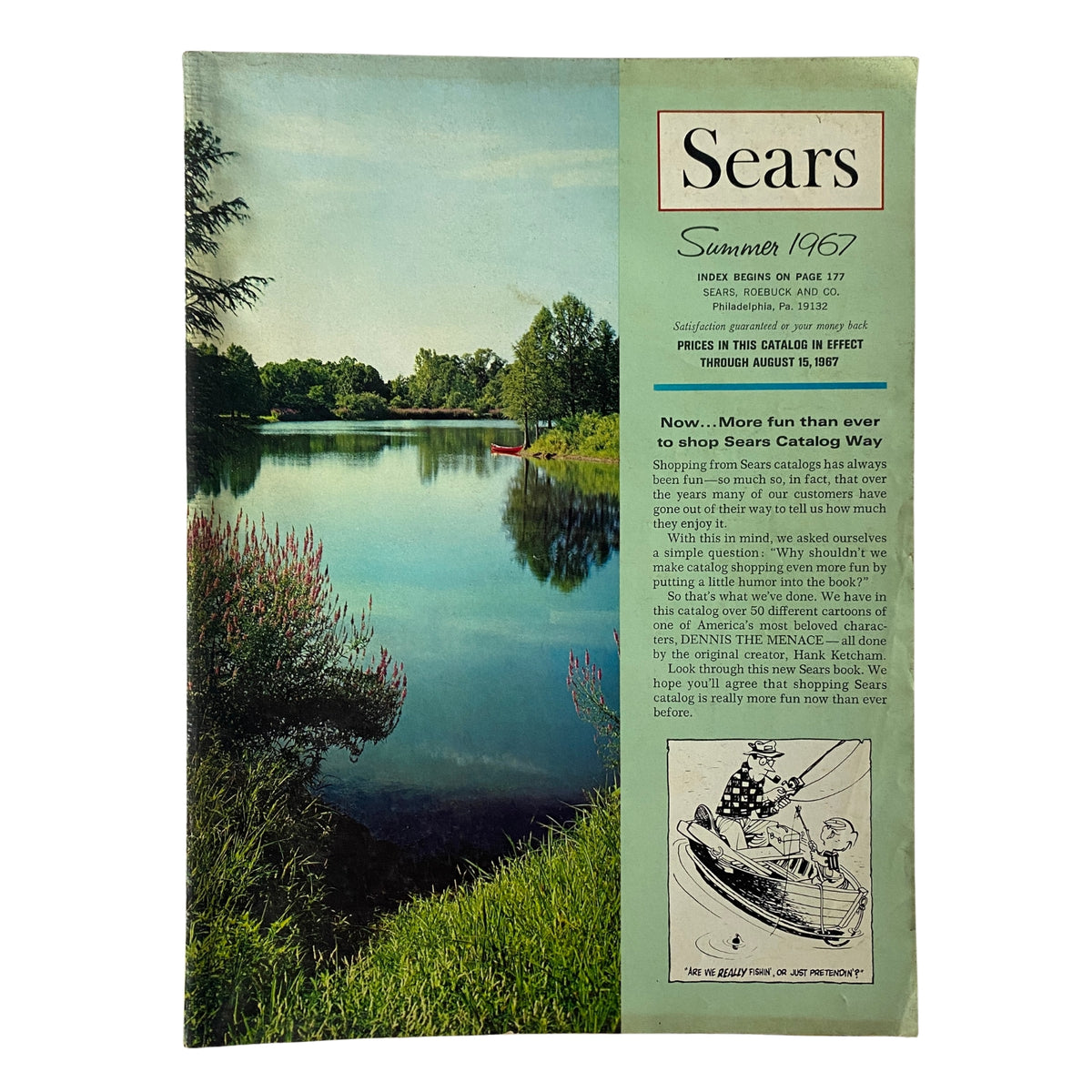
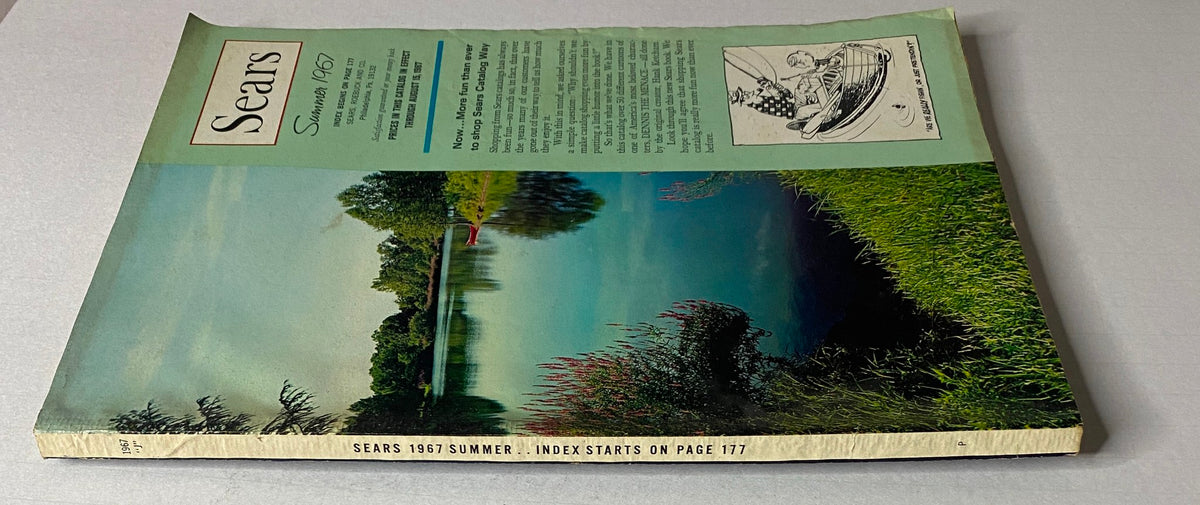
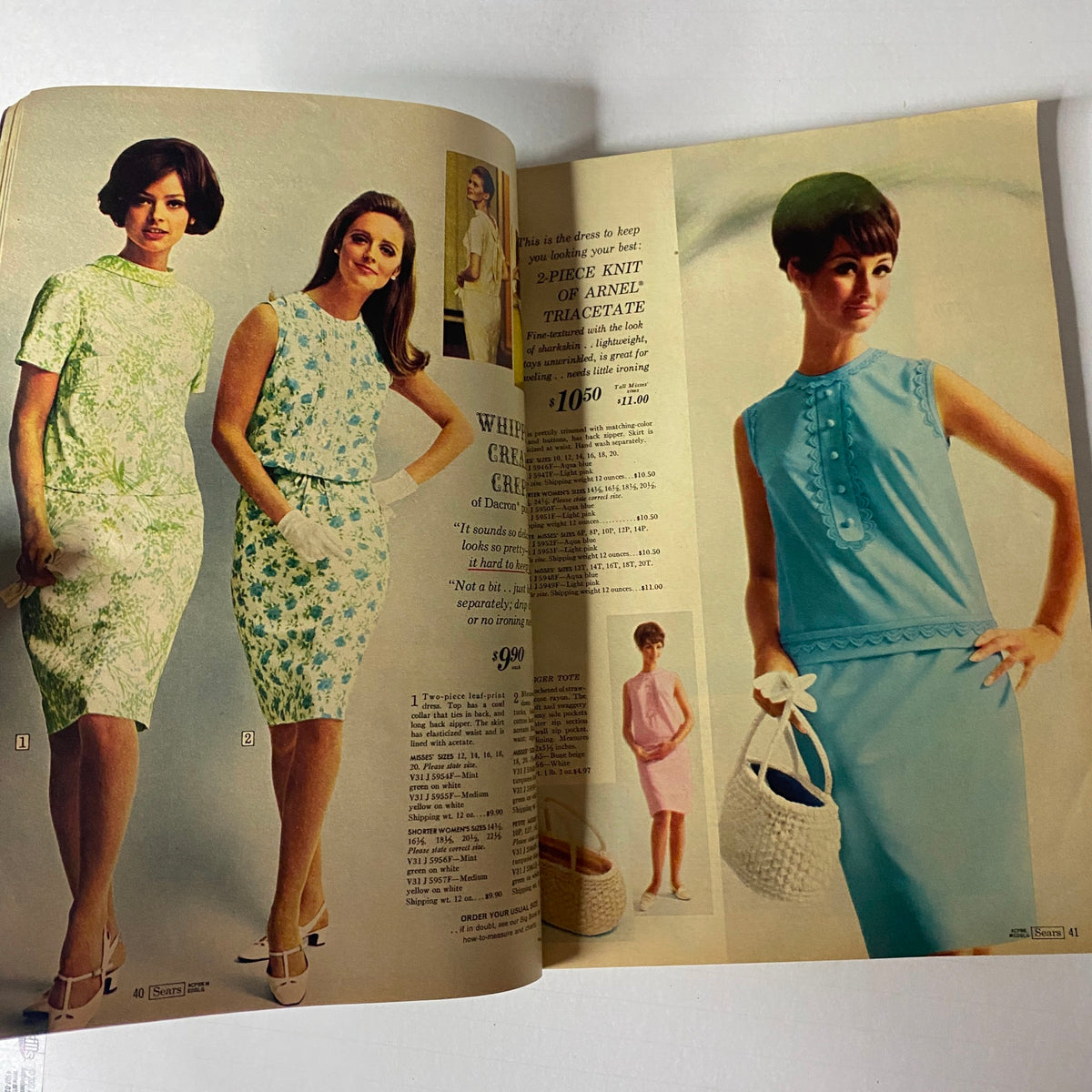



Description
Collector's Note – Why This Issue Matters
The 1967 Sears Summer Catalog — specifically the confirmed "The Electric Effect of Primitive Prints" fashion spread — is a primary document of one of the most precisely datable moments in the history of American mass-market fashion: the specific season in which tribal-inspired, ethnically referenced print aesthetics moved from the avant-garde margins of 1960s fashion into the pages of the most widely distributed retail catalog in the United States. The summer of 1967 was the Summer of Love, and the bohemian, globally-inflected aesthetic that characterized that cultural moment — the interest in non-Western textiles, the saturated colors, the relaxed coastal styling, the coordinated couples ensembles — is documented here not as editorial aspiration but as retail reality, priced between $3.97 and $8.94 and available to the full breadth of the Sears national customer base. The price points are themselves primary historical documentation: a halter neck mini dress in a tribal-inspired print at the lower end of that range in the summer of 1967 places the fashion accessibility of this aesthetic precisely within the consumer economy of a decade that is often discussed in terms of its elite cultural expressions rather than its mass-market translations. For collectors building archives of vintage Sears catalogs, the 1967 Summer edition's confirmed fashion spread is among the most specifically documented and visually distinctive pieces of evidence of the decade's aesthetic at its most concentrated seasonal moment.
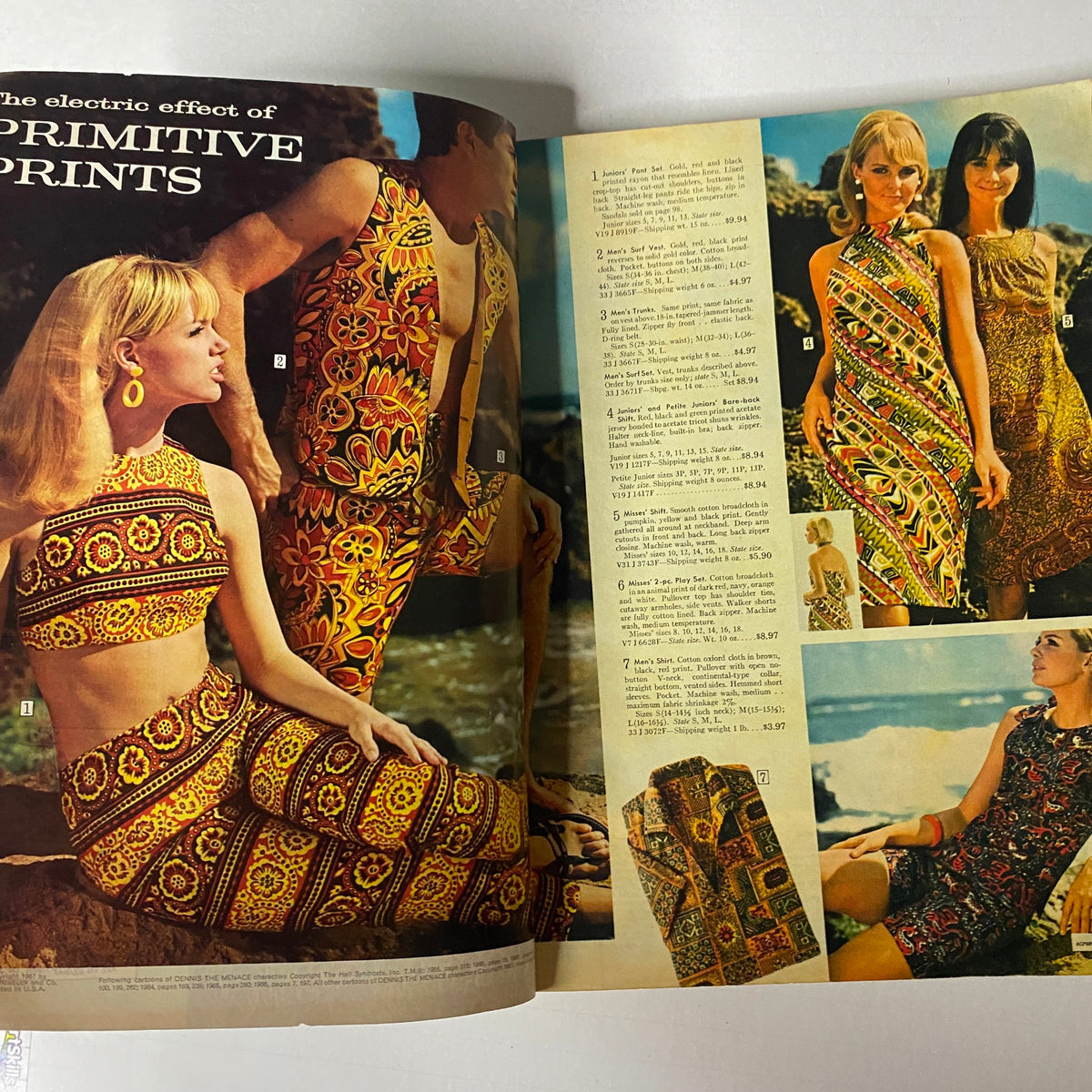
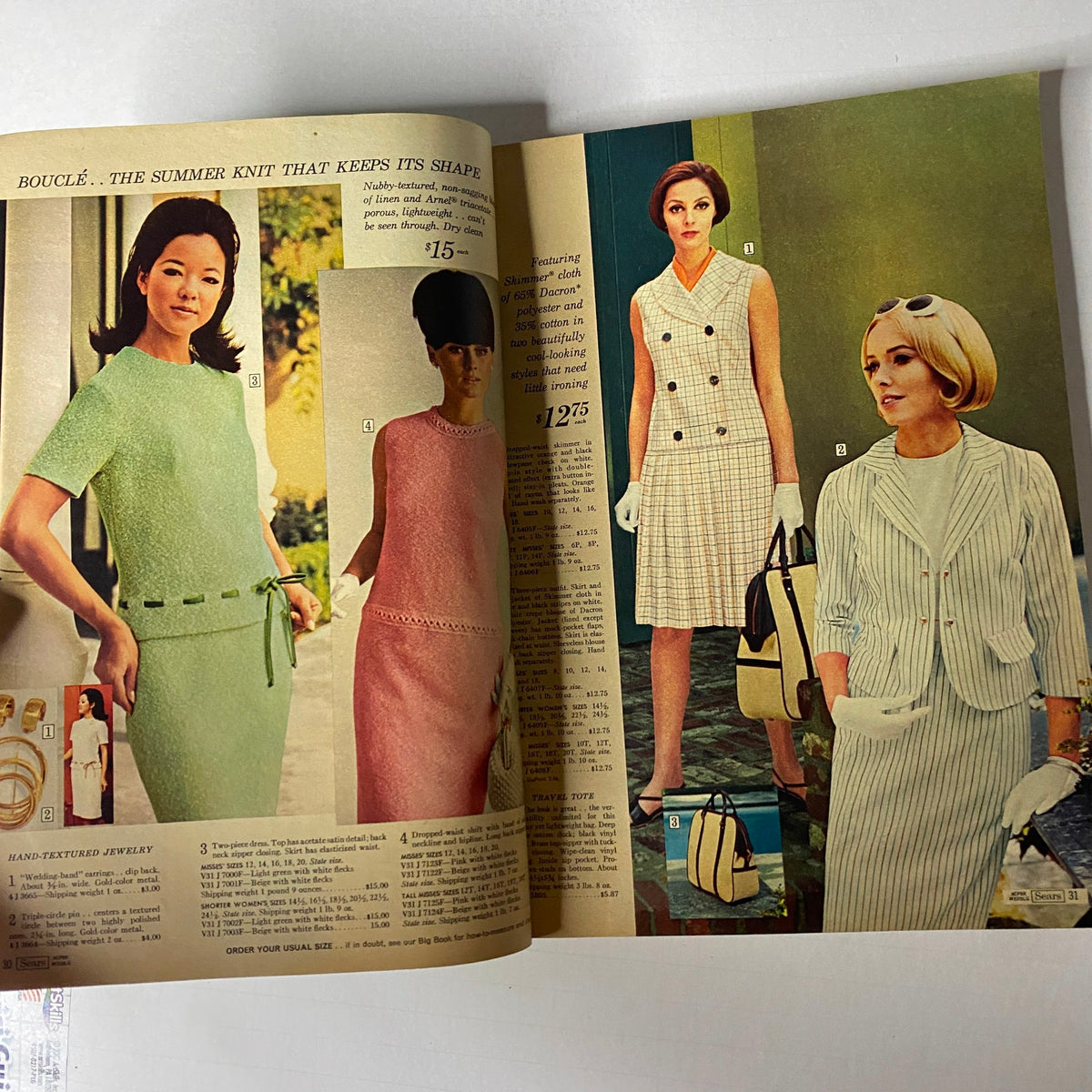
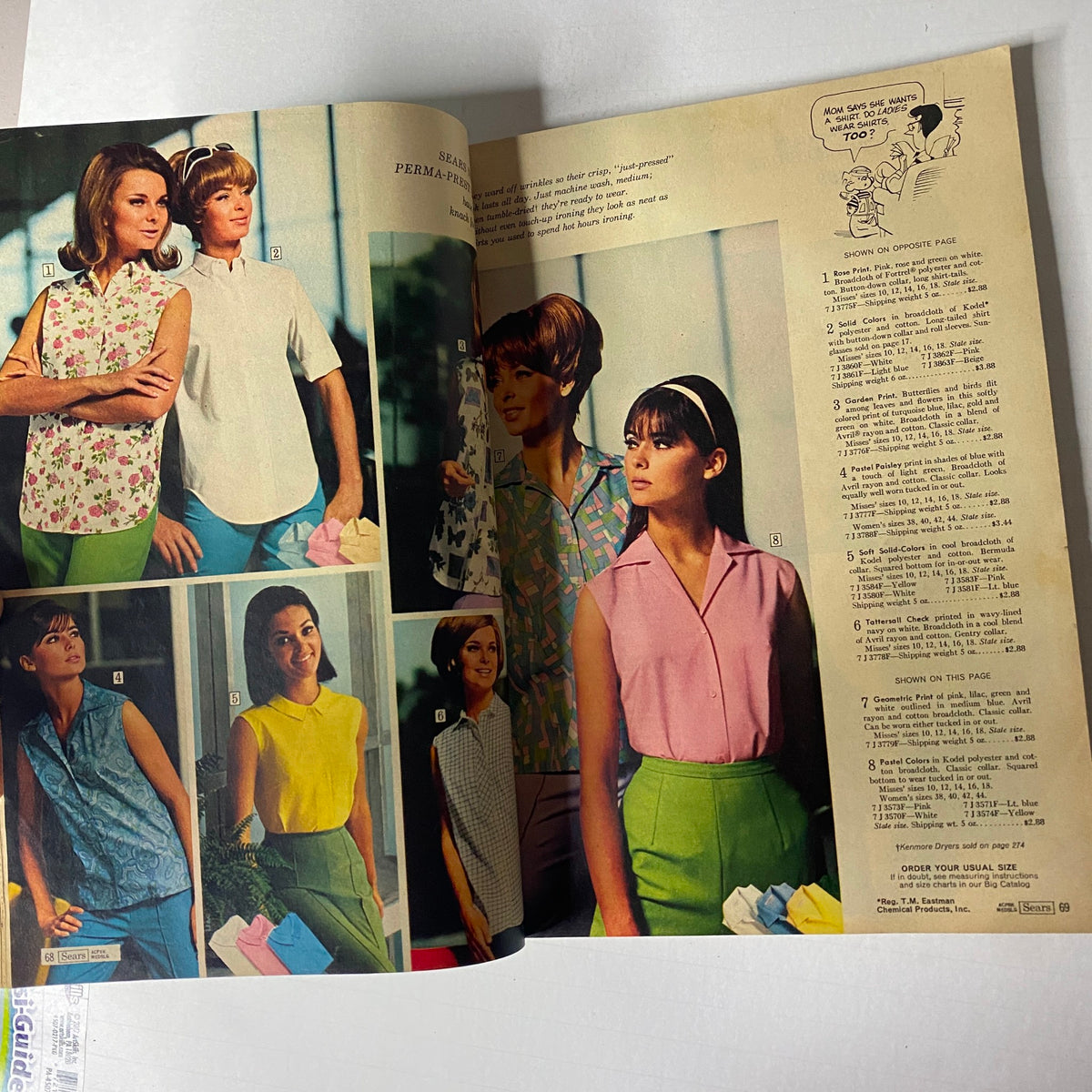
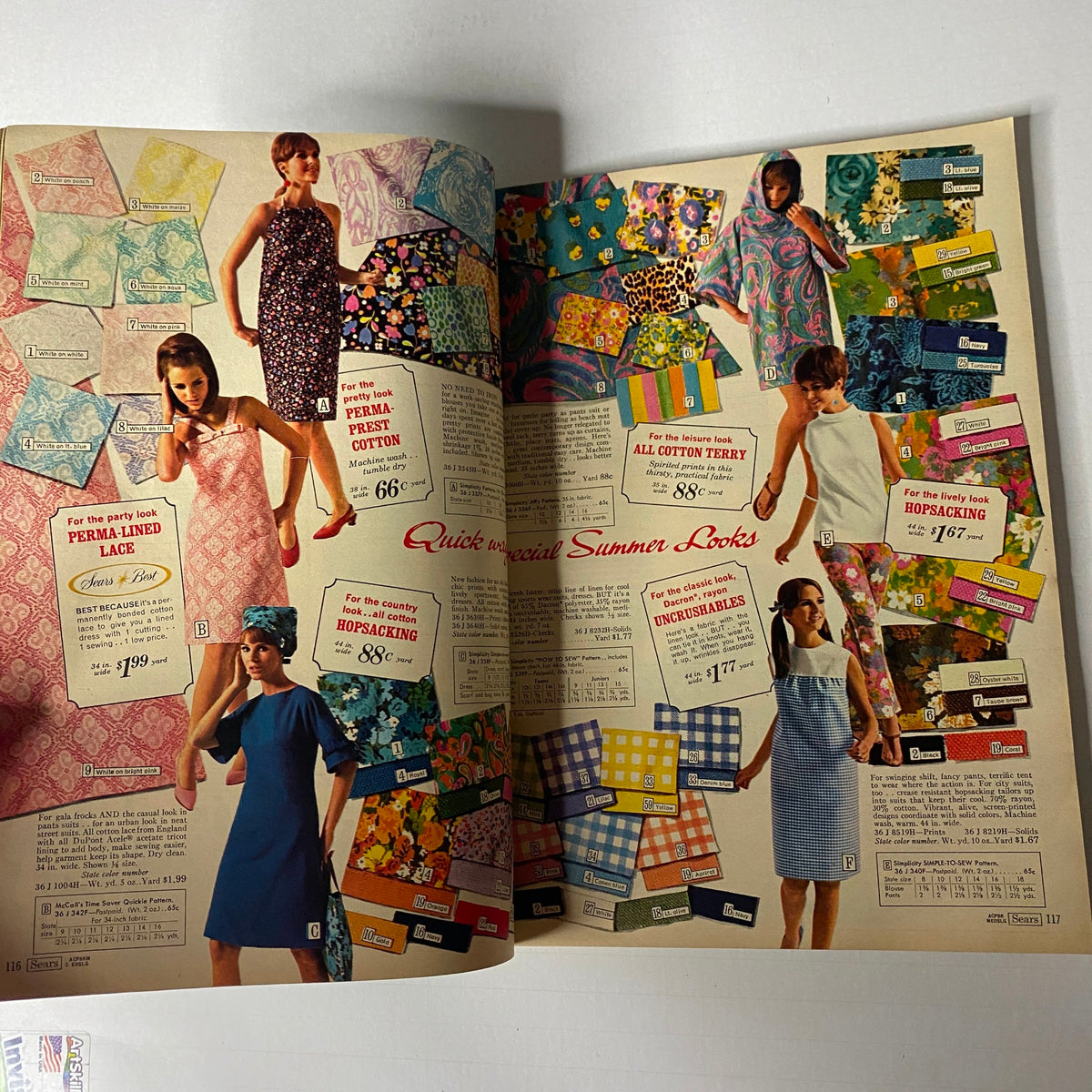
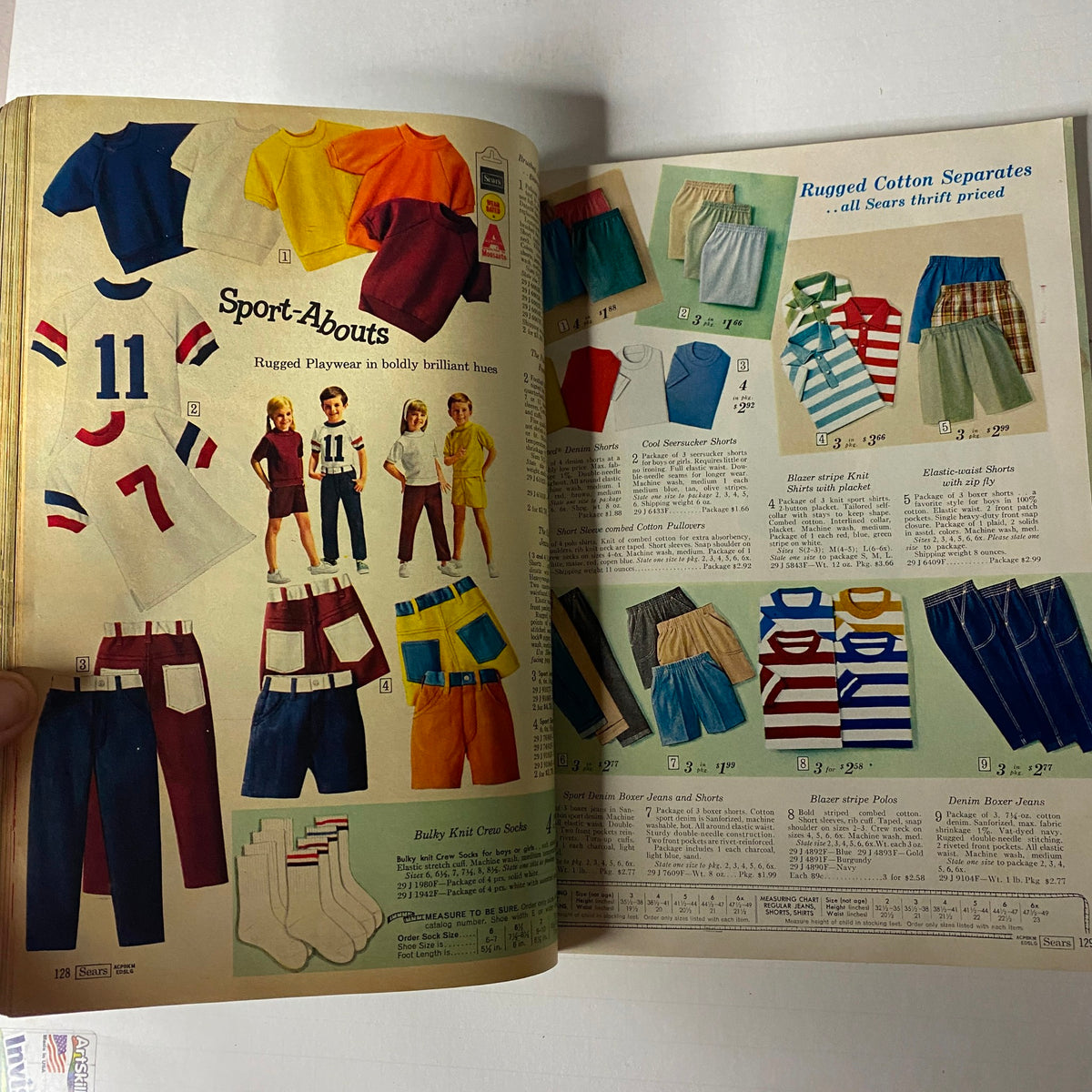
The specific fashion items confirmed in this catalog's "Electric Effect" spread provide primary source documentation at a level of precision rarely available outside original retail publications. The crop top and pants set with bright yellow, red, and black geometric floral motifs; the men's matching vest and pants in coordinated ultra-saturated sunburst patterns; the halter neck mini dresses in earthy tribal-inspired prints; the one-piece tank dress in red-and-black jungle print — these are not editorial descriptions of what fashion journalists thought consumers should want, but retail documentation of what Sears determined its national customer base would actually purchase in the summer of 1967. The confirmed men's coordinated ensemble is a particularly specific document: the matched couples dressing trend of 1967, with men's and women's fashion presented as coordinated sets in complementary or identical prints, was one of the most visually distinctive and briefly-lived phenomena of late-1960s fashion, and its confirmed presence in a Sears summer catalog is evidence of how quickly that trend reached mass-market commercial expression. The confirmed item number format (VI 3155), size availability, fabric content, and pricing structure add a layer of consumer specificity that fashion editorial sources of the period do not provide. Collectors focused on 1967 publications as documents of American fashion and cultural history will find this spread providing primary retail evidence of the Summer of Love aesthetic at its most commercially and geographically expansive moment.
The confirmed photographic setting and styling of the spread adds a further dimension of documentary specificity. The beach or rocky shoreline location shoot, the voluminous hair, the bold accessories, the wind-swept editorial posing — these are the visual conventions of 1967 fashion photography at its most characteristic, and their presence in a Sears mass-market catalog rather than a fashion magazine is itself historically significant: by summer 1967, the aesthetic vocabulary of editorial fashion photography had been fully absorbed into the commercial language of the nation's largest retailer, completing a translation from fashion press to consumer catalog that defines the specific cultural moment this spread documents. The inset fabric swatch (Swatch 7) is a detail that speaks to the practical consumer orientation of the catalog format — tactile engagement with the textile before ordering — and its confirmed presence provides one more layer of specificity for researchers studying the retail conventions of the period.
About the Publication
Sears, Roebuck and Co. seasonal mail-order catalogs were large-format illustrated publications distributed to tens of millions of American households, and by 1967 the Summer catalog — a supplement to the main Spring Through Summer edition — addressed the peak warm-weather consumer season with a concentrated focus on seasonal fashion, outdoor goods, and summer lifestyle merchandise. The Summer edition's fashion content was among its most editorially ambitious, reflecting the accelerating pace of late-1960s trend cycles that made a dedicated summer fashion publication commercially viable alongside the main spring catalog. Its audience was the broad American household market, and its editorial approach — location photography, fashion-forward styling within affordable price points, the kind of spread documentation confirmed in this issue — reflected Sears's sustained effort to position itself as a fashion-credible retailer for consumers who aspired to the aesthetic of the decade's most influential cultural moment.
Key Highlights Inside
- "The Electric Effect of Primitive Prints" — confirmed feature spread — A fully documented fashion editorial featuring tribal-inspired and ethnically-referenced prints shot on location at a coastal setting, representing the Summer of Love aesthetic at its mass-market commercial translation point in the summer of 1967.
- Crop top and pants set — confirmed, geometric floral in yellow, red, and black — Primary retail documentation of the coordinated separates trend at its 1967 peak, with confirmed colorway and motif providing specific primary source evidence of the season's print vocabulary at the Sears mass-market price point.
- Men's matching vest and pants in coordinated sunburst print — confirmed — Documentation of the briefly-lived matched couples dressing trend at its mass-market moment, with a confirmed coordinated men's ensemble representing primary evidence of how quickly this distinctly 1967 fashion phenomenon reached Sears's national customer base.
- Halter neck mini dresses in tribal-inspired prints — confirmed, multiple models — Primary retail documentation of the halter silhouette and ethnic print aesthetic at the specific summer season of their maximum mass-market commercial saturation.
- Pricing range $3.97–$8.94 with confirmed item numbers, sizes, and fabric content — Specific consumer retail documentation providing the price, sizing, and fabric context that fashion editorial sources of the period do not offer, placing the Summer of Love aesthetic precisely within the accessible consumer economy of 1967 American retail.
- Inset fabric swatch (Swatch 7) — confirmed — Documentation of the tactile retail convention that characterized mid-century catalog fashion presentation, preserving the specific textile evidence of the print's color and texture as Sears was presenting it to customers in the summer of 1967.
Condition & Rarity
Good condition with typical wear for age and plastic protective covering represents a standard mid-grade assessment for a 58-year-old large-format retail catalog. Typical wear for age on a publication of this vintage implies minor spine stress, light corner softening, and possible surface handling marks on the cover — characteristics consistent with a copy that has been stored rather than actively consulted across nearly six decades. The plastic protective covering indicates deliberate preservation. The listing does not specify label status; the photographs are the authoritative reference for whether an address label is present on the cover and what portion of the cover imagery it may affect. Good condition in a 1967 Sears Summer catalog means the "Electric Effect of Primitive Prints" spread and the fashion content throughout remain intact, legible, and visually coherent — the attributes that define its value as both a research document and a display piece for collectors of late-1960s American fashion and retail history.
Looking for More Issues Like This?
The 1967 Sears Summer Catalog with its confirmed "Electric Effect of Primitive Prints" spread is among the most specifically documented and visually distinctive fashion issues in the mid-century Sears catalog archive — a piece of retail evidence that places the Summer of Love aesthetic in its most commercially specific and geographically expansive context, complete with item numbers, prices, and fabric swatches that fashion editorial sources of the period simply do not provide. The Sears catalog archive at OriginalMagazines.com is the most direct resource for collectors researching other seasonal editions from the 1960s decade, spanning the full arc of the decade's extraordinary fashion transformation from early-1960s mod through the late-1960s bohemian turn. For collectors building a broader picture of American fashion and cultural life in the specific summer of 1967, the complete 1967 publications collection covers magazines and periodicals from the year whose summer has become the defining cultural reference point of the entire decade.