
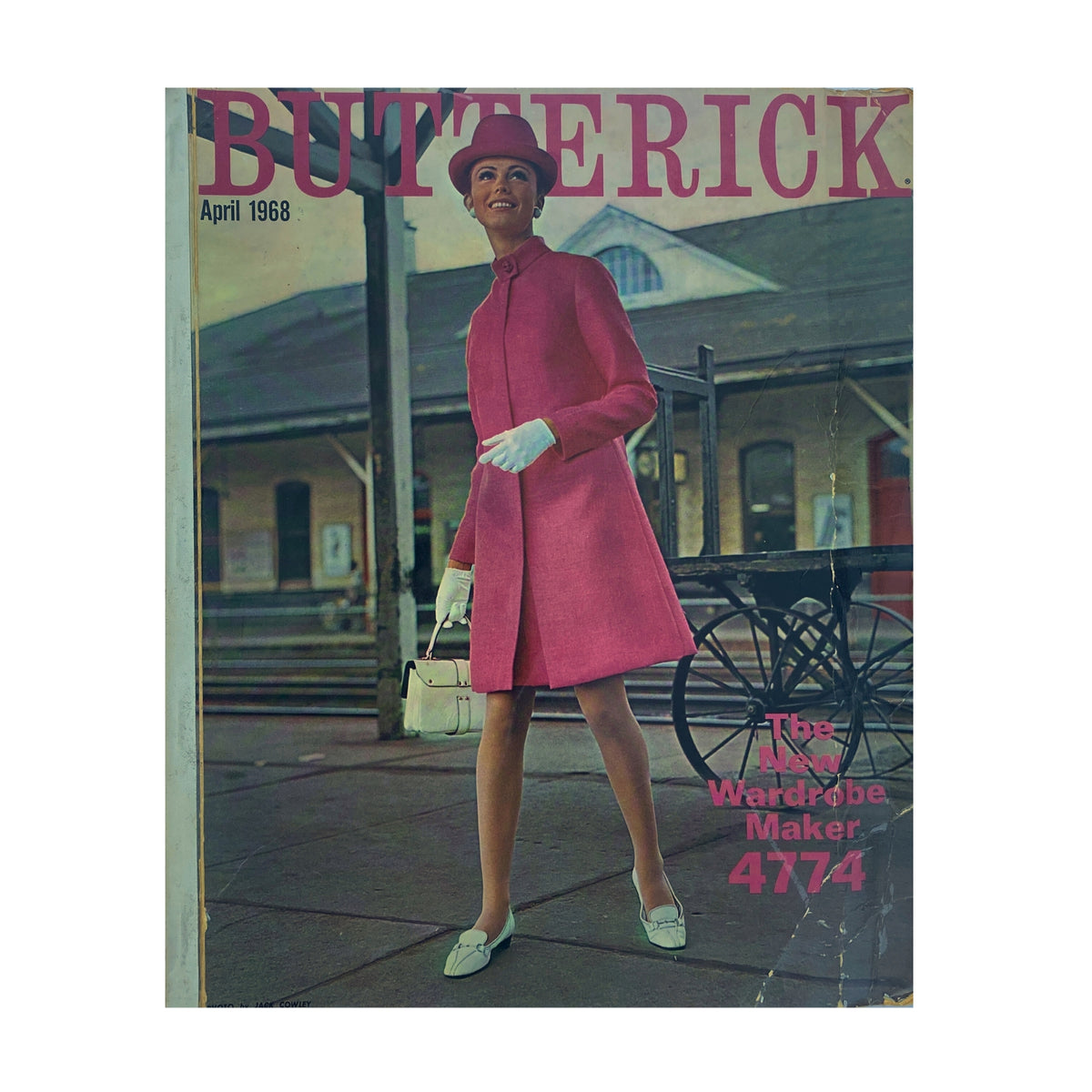
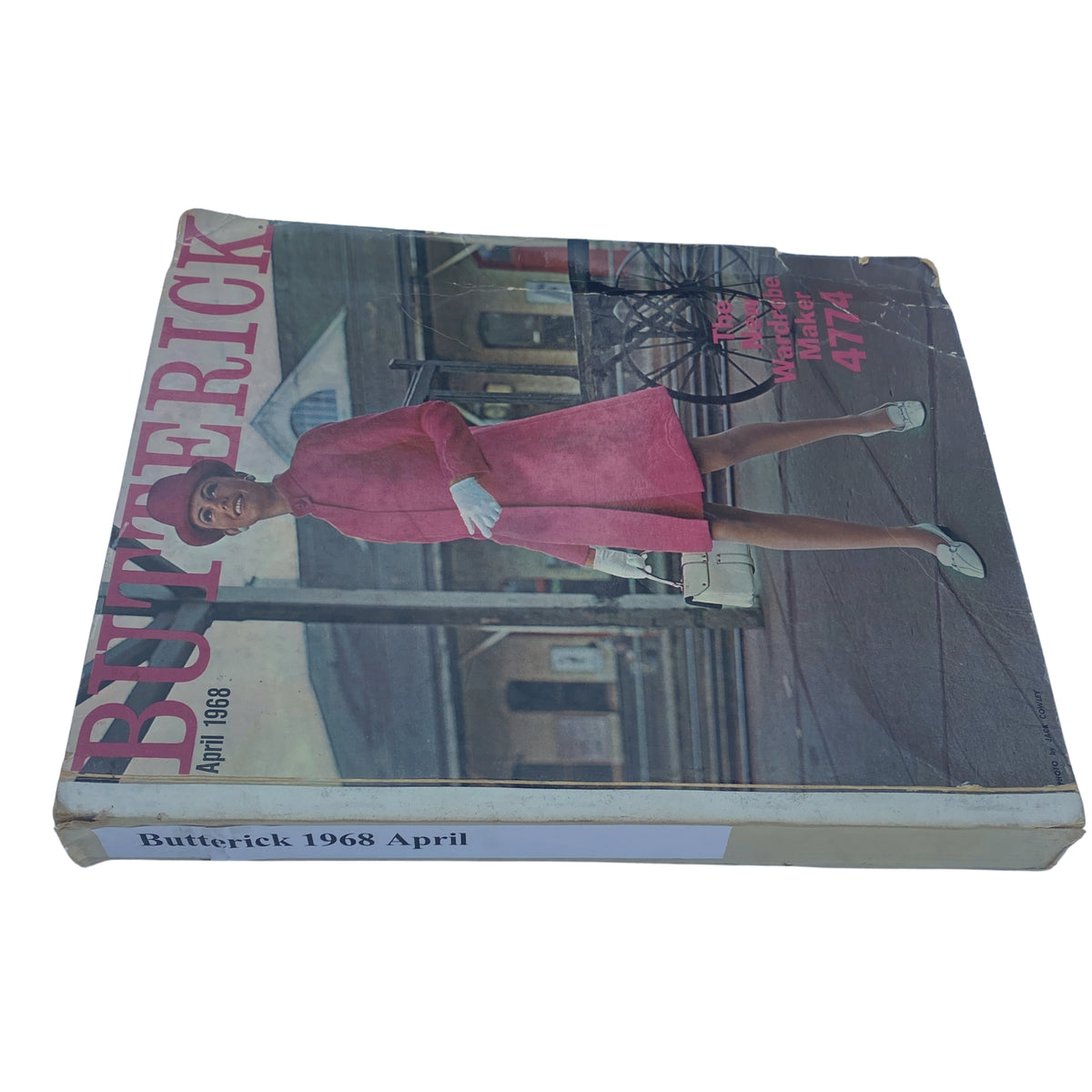
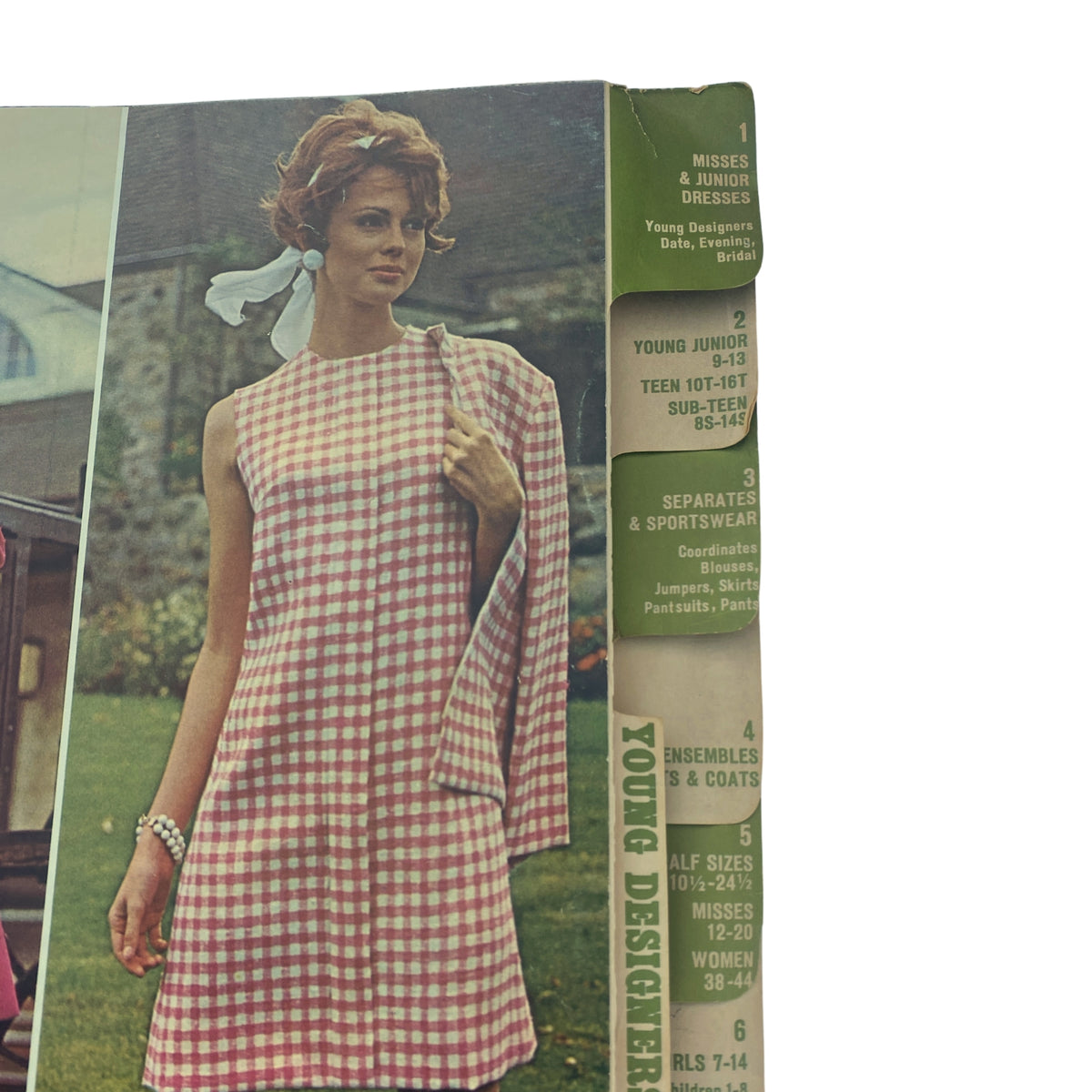

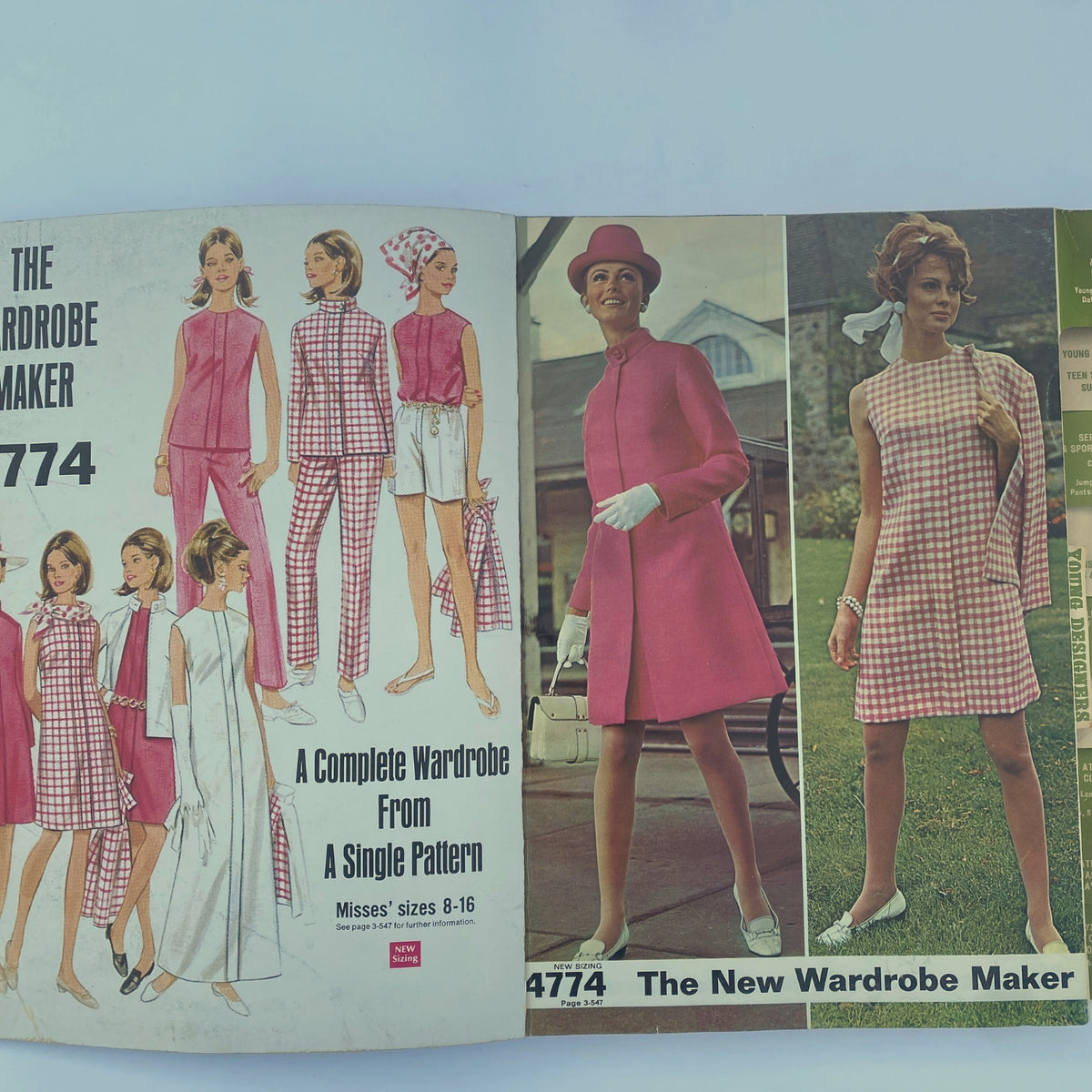
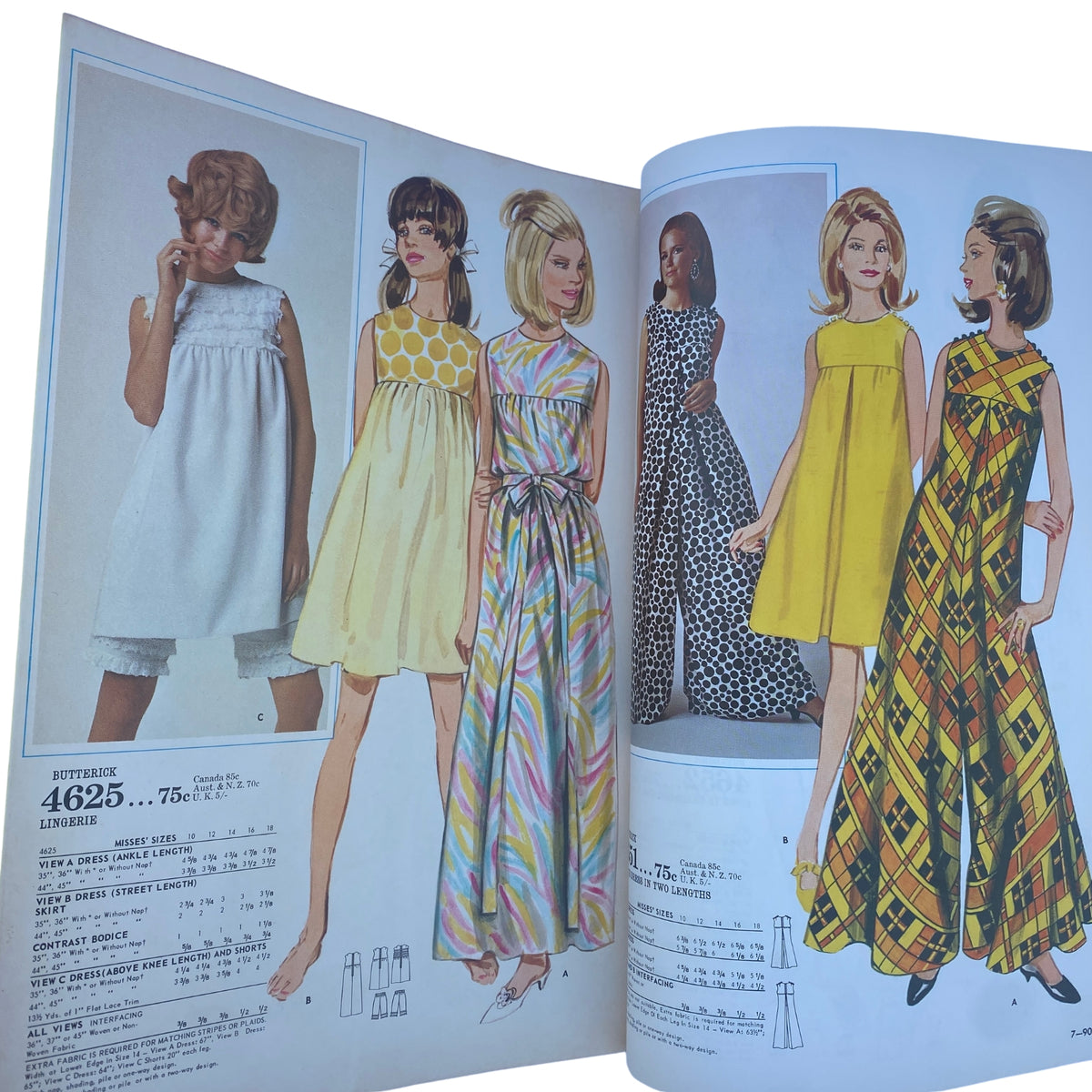
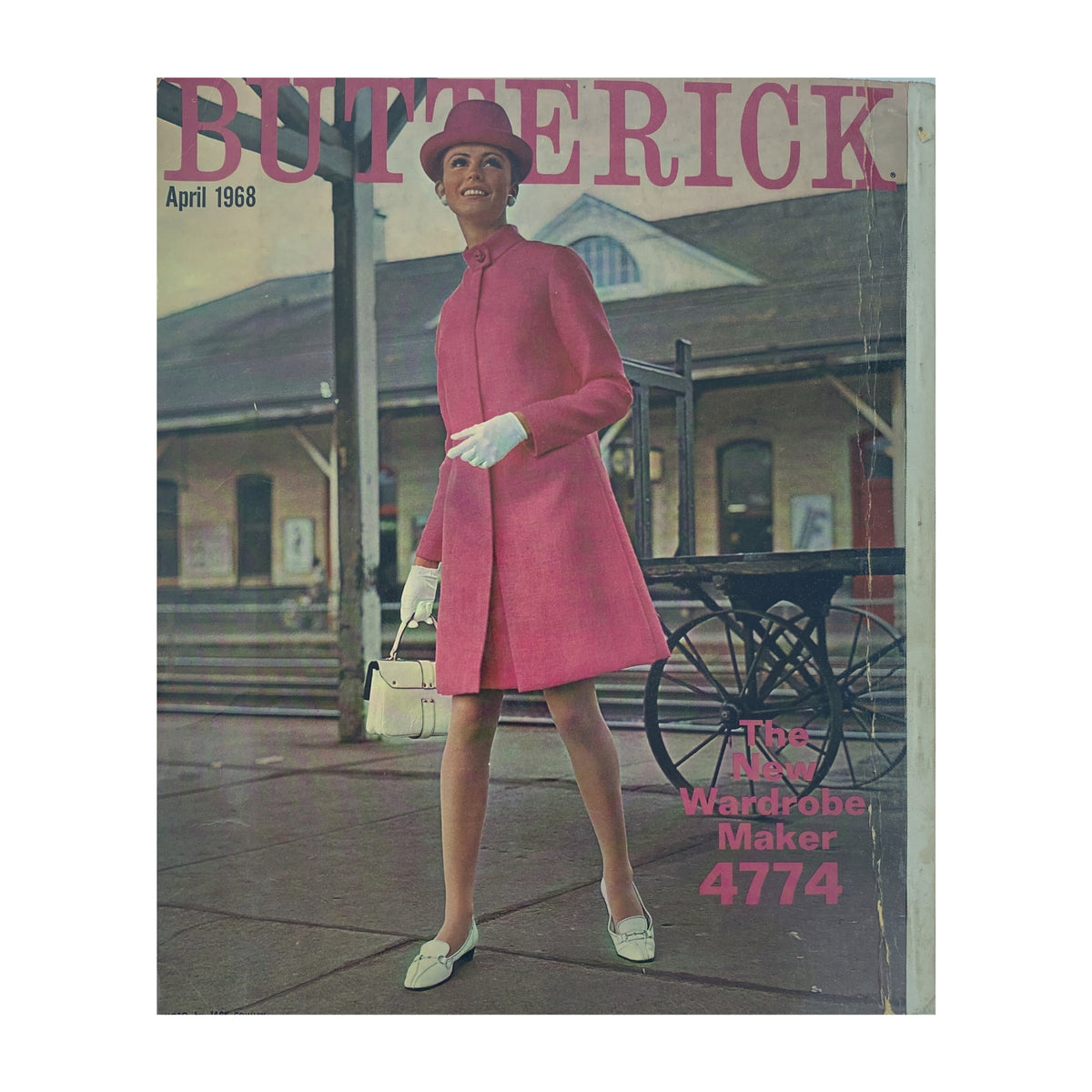


Description
Collector's Note – Why This Issue Matters
The April 1968 Butterick Pattern Catalog is a primary document of American home sewing culture at one of the most volatile and transformative moments in twentieth-century fashion history. April 1968 was not merely a season in fashion — it was a month of extraordinary historical turbulence. Martin Luther King Jr. was assassinated on April 4. The Columbia University student occupation began that month. The country was convulsing through the most politically charged spring since the Civil Rights Act's passage. Against that backdrop, a spring sewing catalog captured the fashion vocabulary that American women were choosing to construct and wear through all of it: the mini dress, the shift, the empire waist, the mod separates that represented the decade's youth revolution made available in pattern form to the home sewer. Butterick's spring catalogs of the late 1960s are among the most historically specific fashion documents available because they record not aspirational editorial fashion but actual purchasing decisions — the patterns that women took from store counters to sewing tables across the country. Collectors and fashion historians building archives of Butterick pattern catalogs across the decades understand that 1968 represents a precise and unrepeatable cultural crossroads in the publication's visual record.
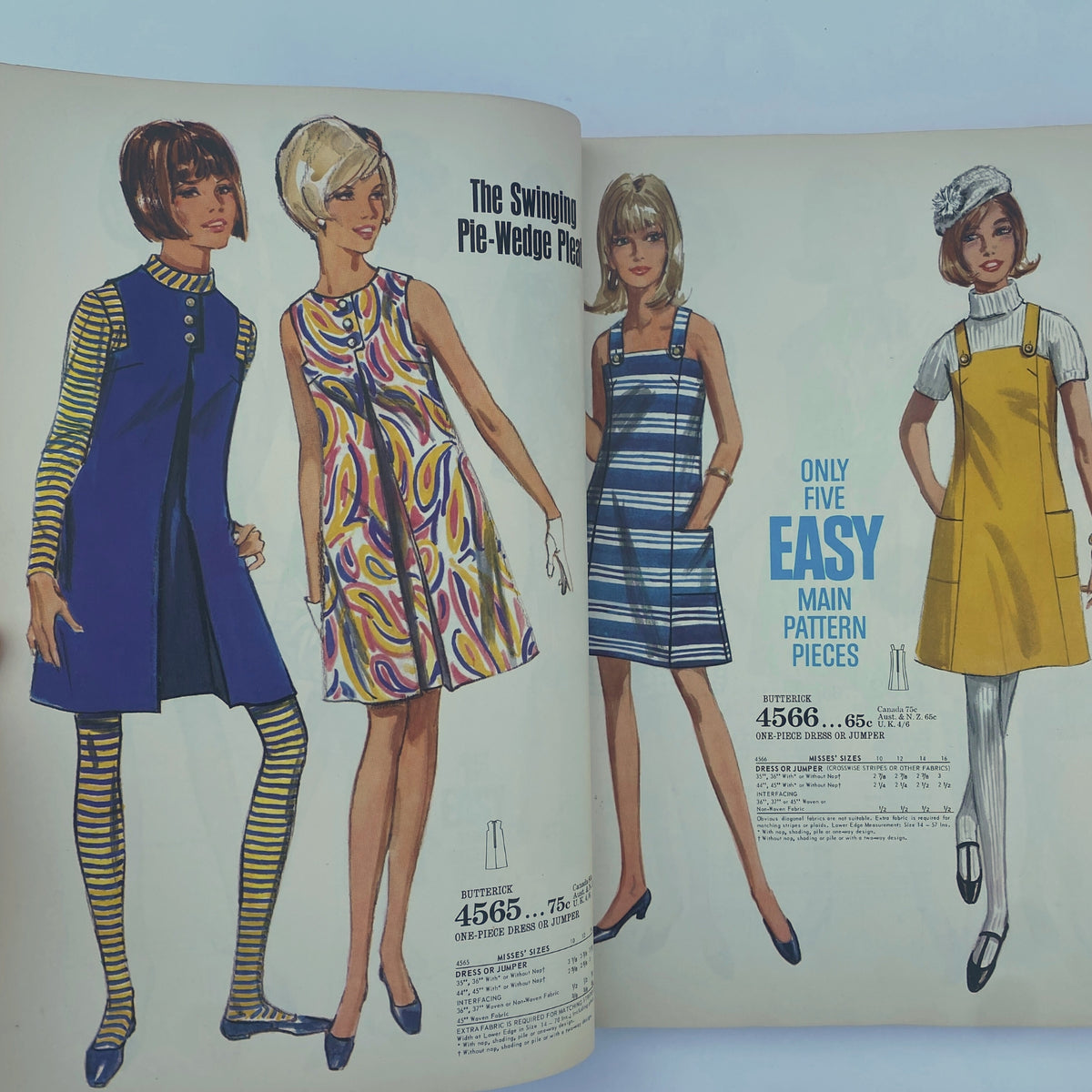
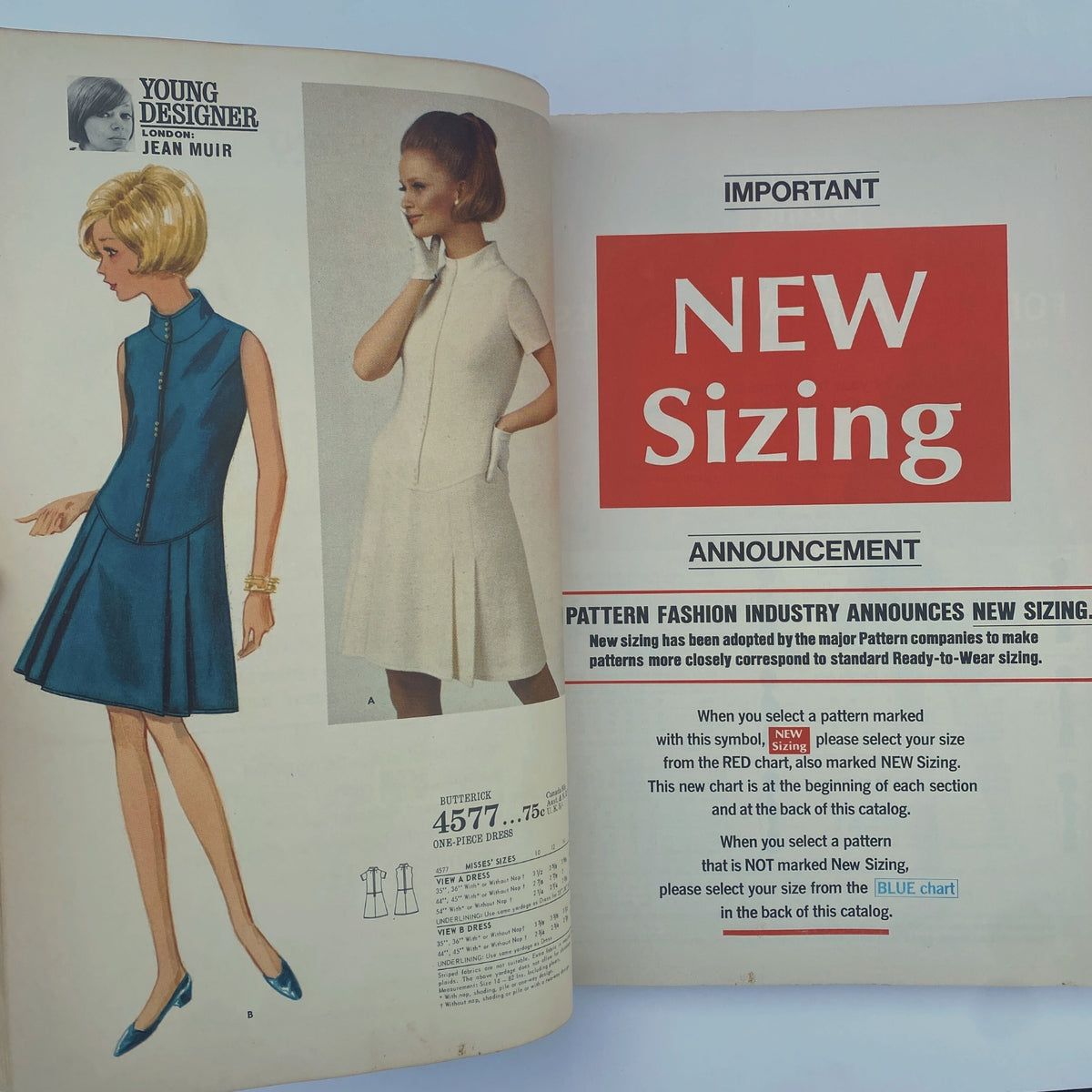
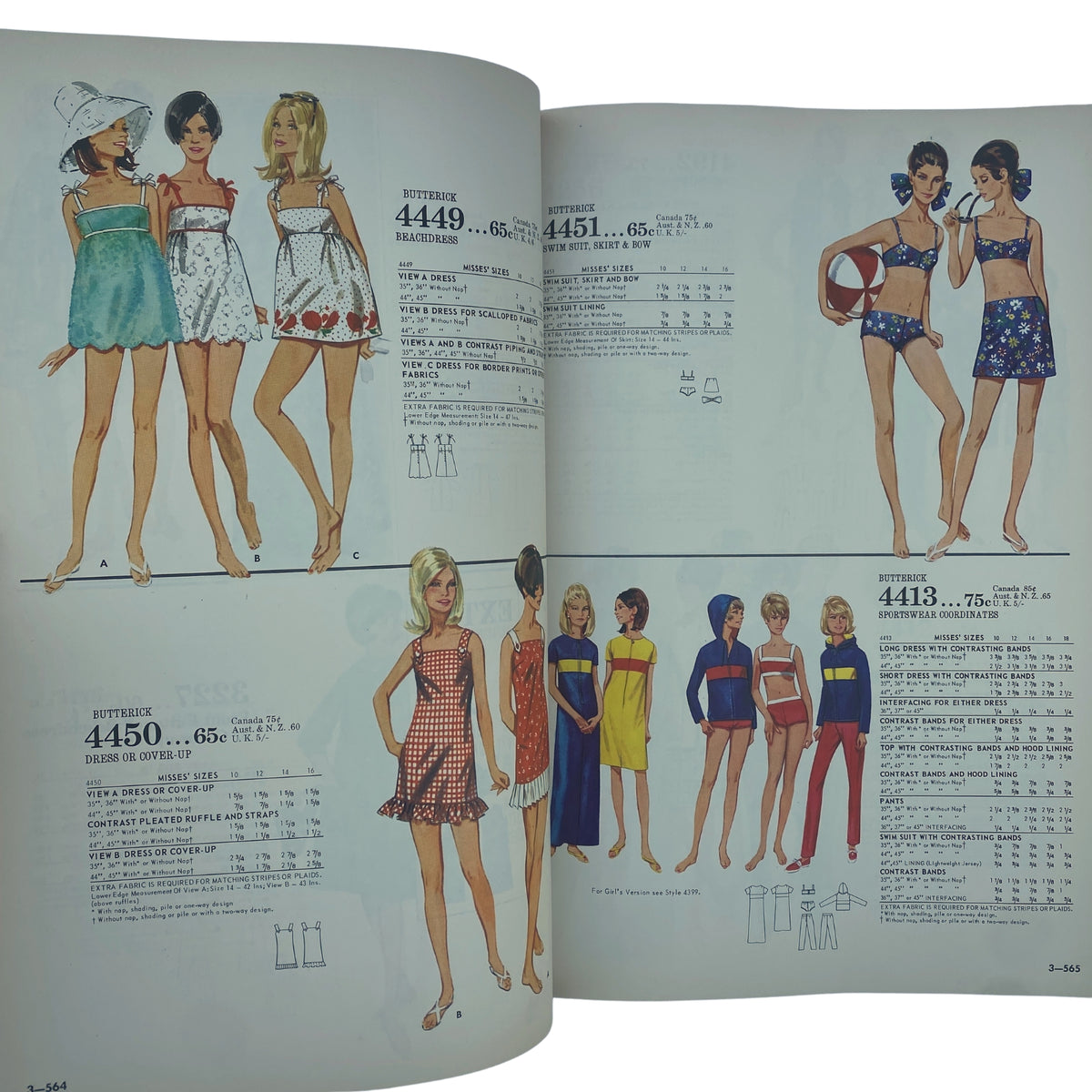
The fashion vocabulary documented in this catalog — mini skirts, shifts, empire-waist styles, bold mod prints, youthful teen and junior designs — captures the decade's aesthetic transformation at its most fully realized moment. By April 1968, the silhouette revolution of the early 1960s had fully penetrated mainstream American fashion: the hemline had risen, the waist had been liberated from the structured corseted shape of the 1950s, and the mod aesthetic had moved from London boutiques to American fabric stores. The Butterick catalog's teen and junior sections are particularly historically significant for this period — they document how youth fashion, which had originated as a subculture, had become the dominant commercial offering across all age categories by 1968. For collectors documenting 1968 through its material culture, an April Butterick catalog provides a cross-section of mainstream American fashion at its most historically specific — the choices being made by real women in the same weeks that the decade's defining political and social upheavals were occurring.
About the Publication
Butterick Publishing Company, founded in 1863 by Ebenezer Butterick as the originator of the standardized tissue paper sewing pattern, distributed seasonal catalogs to fabric stores and notions departments nationwide as the primary retail browsing tool for home sewers. These large-format counter catalogs were built for heavy store use — lying flat on counters, handled continuously by shoppers across an entire season — and combined full-color photography of completed garments with technical sewing illustrations. By 1968, Butterick was one of the three dominant American pattern companies alongside McCall's and Simplicity, and its spring catalog was among the most important commercial documentation of seasonal fashion trends available to the mainstream home sewing market. April catalogs specifically captured the spring season's full range, with particular emphasis on the lighter fabrics, shorter hemlines, and youth-oriented styles that defined late-1960s spring fashion.
Key Highlights Inside
- Women's dress patterns — mini, shift, and empire styles: The three dominant silhouettes of late-1960s mainstream American fashion documented in pattern form — each representing a specific aspect of the decade's liberation of women's clothing from the structured formality of the previous decade.
- Separates, coats, and suits with bold prints and youthful flair: The separates and coordinates sections document the fashion industry's transition away from the matched ensemble as the dominant organizing principle of women's wardrobes — a shift that would define 1970s fashion and that was already visible in 1968.
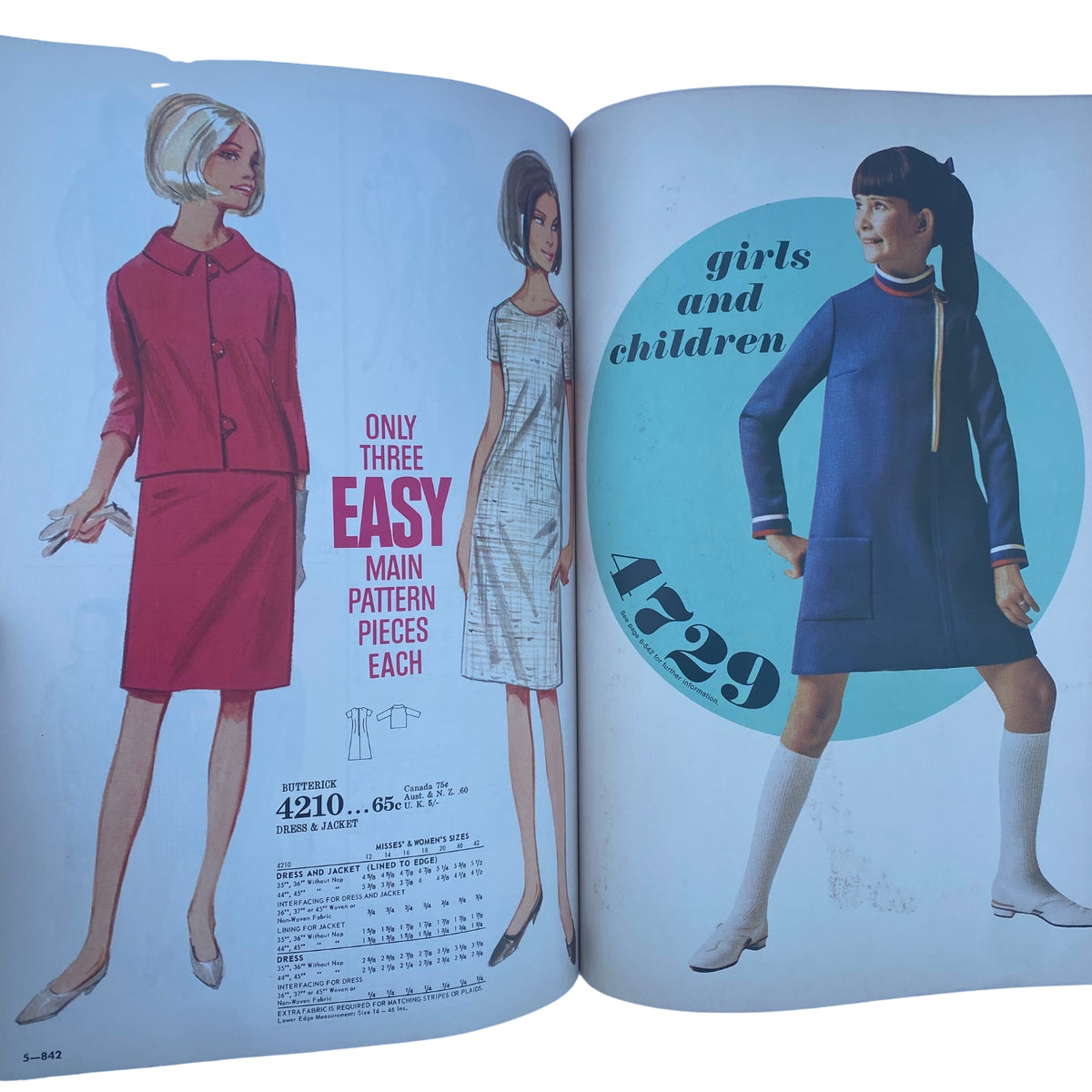
- Teen and junior designs with mod influence: The dedicated youth sections capture the moment when mod aesthetics — originating in London's Carnaby Street and King's Road — had fully penetrated the American mass market and were available as home sewing patterns to teenagers and their families.
- Children's clothing and home projects: The inclusion of children's patterns and home décor projects reflects the comprehensive domestic scope of the Butterick catalog — a resource for the full range of home sewing activity rather than purely adult fashion.
- Full-color photography throughout: The late-1960s Butterick catalogs are among the most visually sophisticated in the publication's history, with color photography that documents the decade's bold palette and graphic sensibility in a format produced for practical use rather than editorial display.
Condition & Rarity
Good condition for a fifty-five-plus-year-old large-format counter catalog represents a meaningful preservation result. These publications were designed for sustained retail use — continuous handling by shoppers over months — and most surviving examples from 1968 show significant spine stress, cover wear, torn pages, and in many cases partial loss of the pattern reference pages that were the catalog's primary functional content. The listing confirms the photographed item is the exact item to be received, allowing direct condition assessment from the provided images. The protective plastic covering indicates deliberate subsequent preservation. When evaluating any surviving copy of this catalog, page completeness is the paramount grading consideration — retail catalogs of this era regularly had pages removed by customers or store staff — followed by spine and cover integrity. A complete, good-condition example from the spring 1968 Butterick catalog represents a well-preserved survivor from one of the most turbulent and visually distinctive seasons in twentieth-century American fashion history.
Looking for More Issues Like This?
Late-1960s Butterick counter catalogs in good, complete condition are genuinely uncommon — the combination of heavy retail use and the passage of more than fifty years has reduced the surviving pool considerably, and spring 1968 specifically represents one of the decade's most historically charged seasonal moments. If this catalog has already found a home, the full archive of Butterick pattern catalogs across the decades is the best place to explore for other seasonal editions documenting the decade's fashion evolution. The 1968 magazine and print collection is also worth exploring for anyone building a broader documentary picture of American material and cultural life during that extraordinary year.