

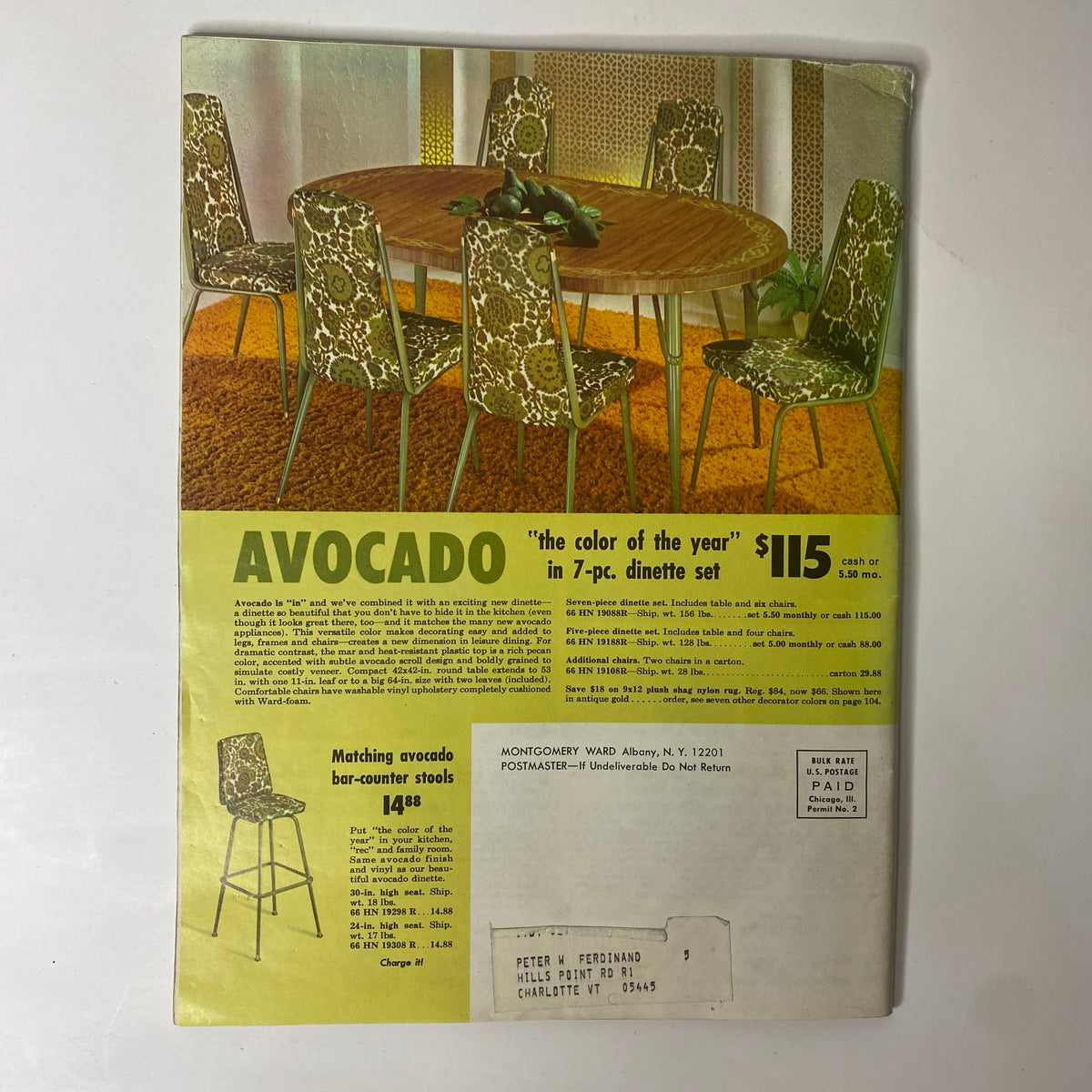


Description
Collector's Note – Why This Issue Matters
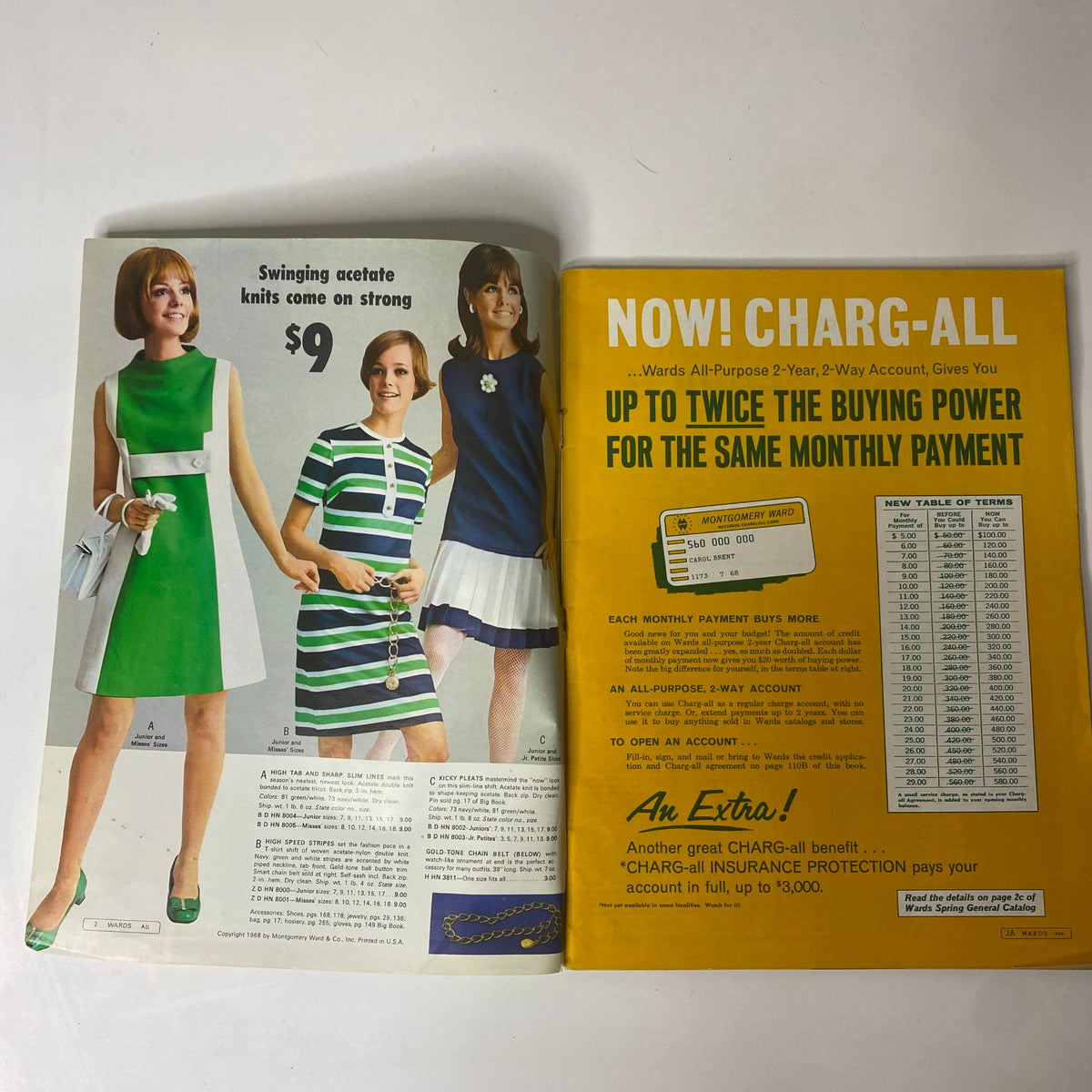
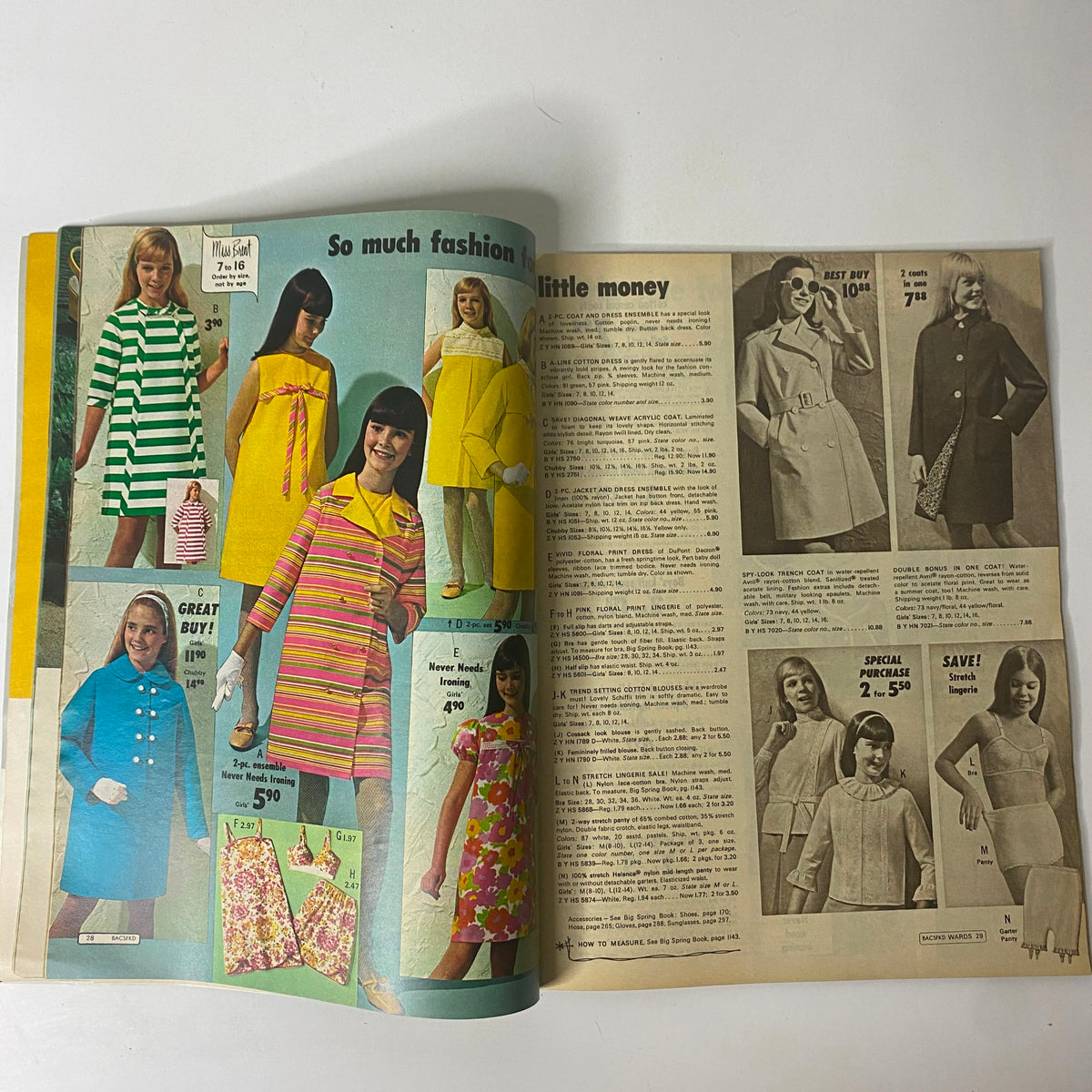
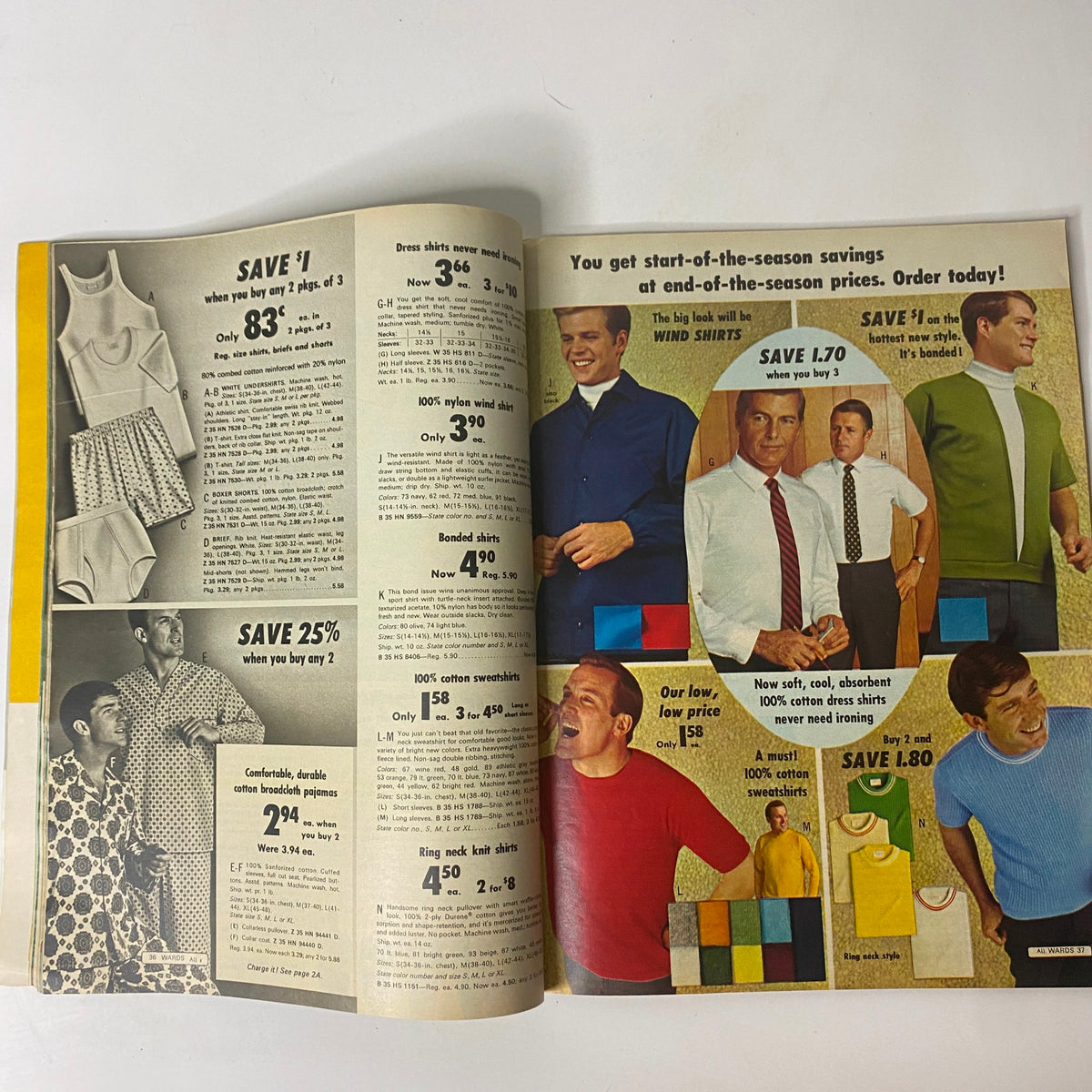
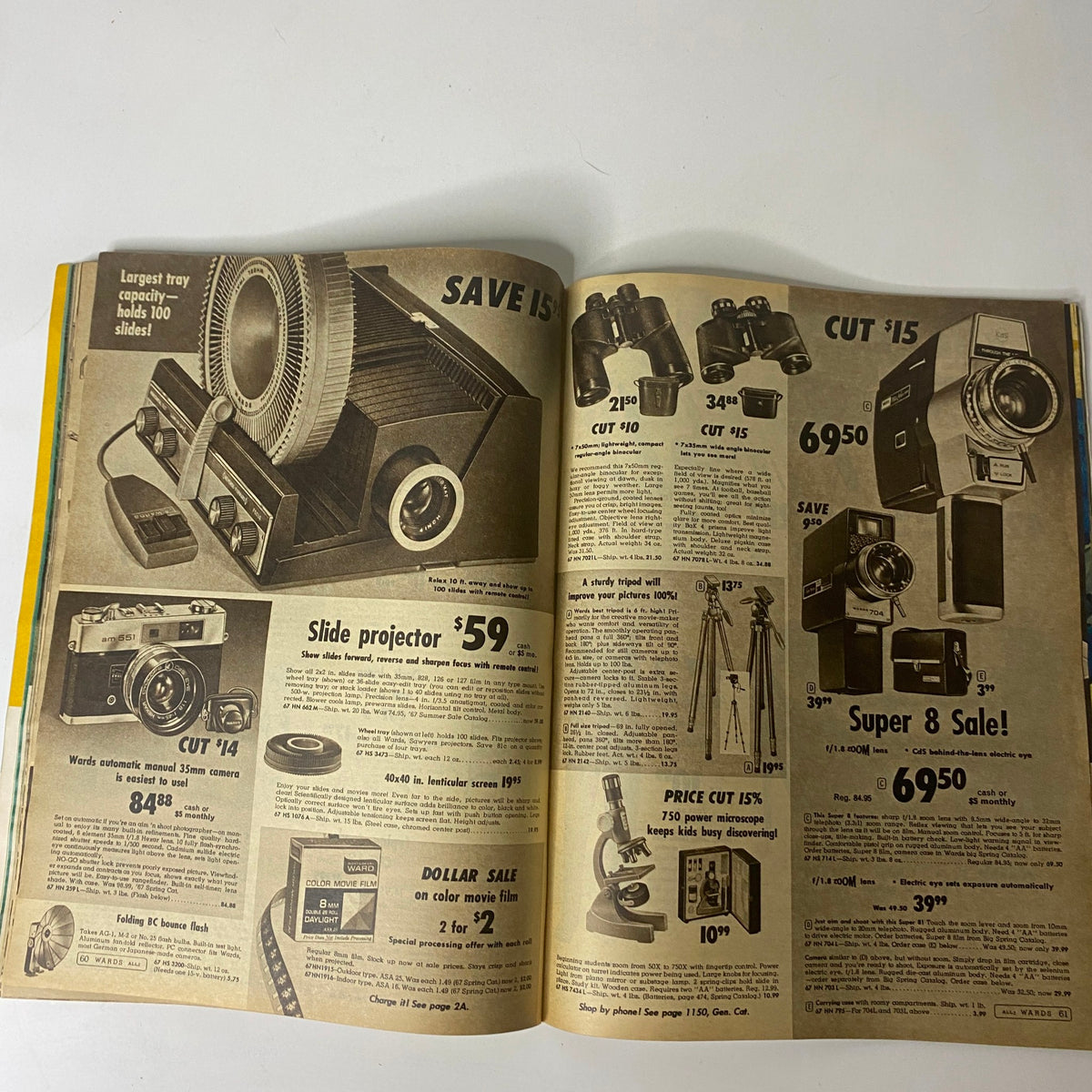
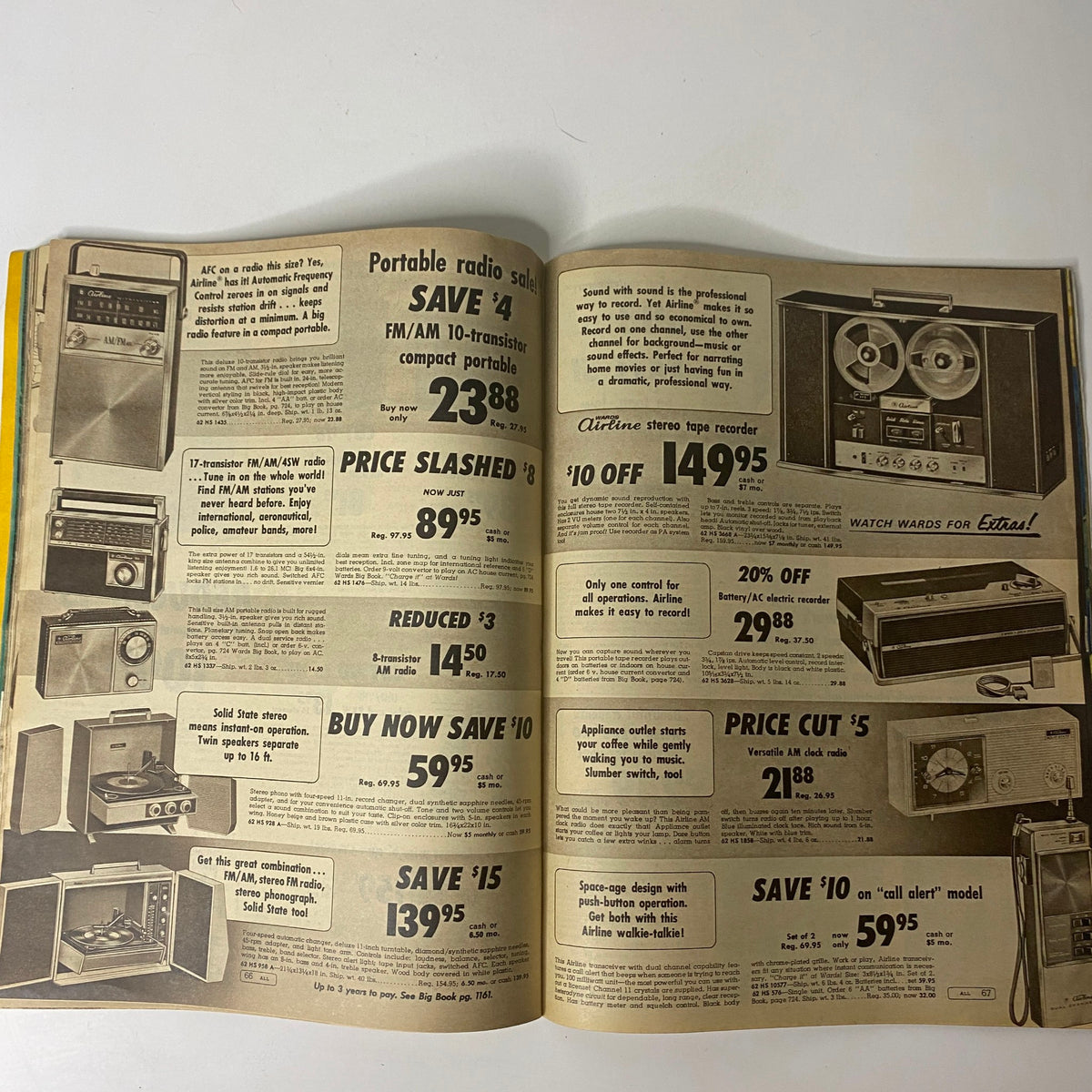
The 1968 Montgomery Ward Spring Sale Catalog is a primary document of American retail fashion and consumer culture at one of the most culturally turbulent moments in the nation's modern history. Spring 1968 was an extraordinary season — Martin Luther King Jr. was assassinated in April, Robert F. Kennedy in June, and the Democratic National Convention chaos unfolded in August. Yet against that backdrop of political violence and social upheaval, the consumer economy continued its forward momentum, and the seasonal catalogs of America's major mail-order retailers documented what ordinary American families were buying, wearing, and aspiring to with a directness and specificity that no editorial fashion magazine could match. Montgomery Ward, one of the oldest and largest mail-order retailers in the United States — founded in 1872 and by 1968 operating both an extensive catalog business and hundreds of retail stores — was documenting the fashion preferences and purchasing power of the American middle and working class with the precision of commercial necessity rather than the selectivity of editorial curation. The confirmed "Swinging Acetate Knits Come on Strong" collection with its $9.00 price points captures exactly this: the democratization of late-1960s fashion aesthetics for the mass market, translating the decade's bold color blocking and sleek silhouettes into affordable, practical garments that ordinary American women could actually buy and wear. For collectors building archives around American consumer culture publishing from 1968, the Montgomery Ward Spring Sale Catalog is a primary document of that democratized fashion moment.
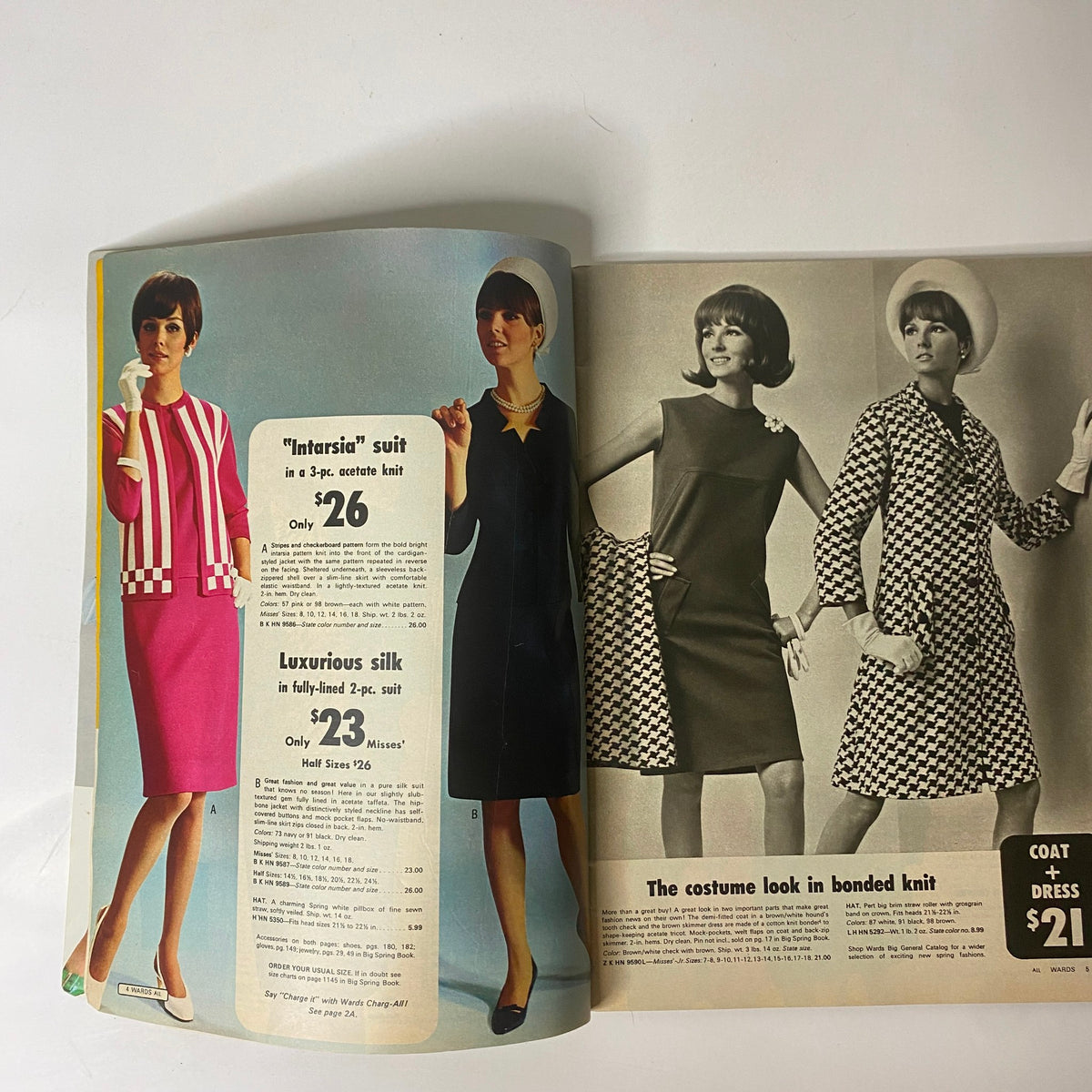
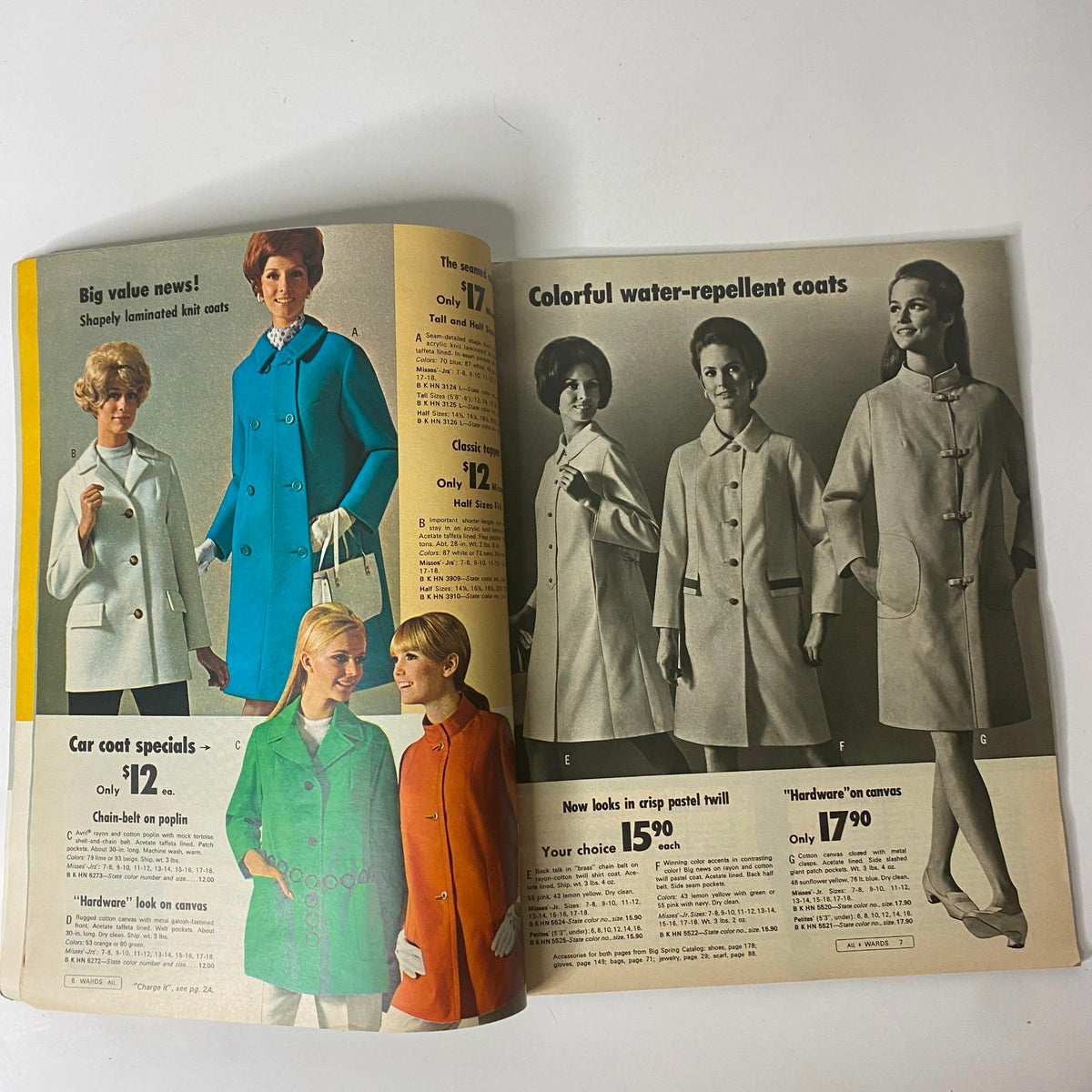
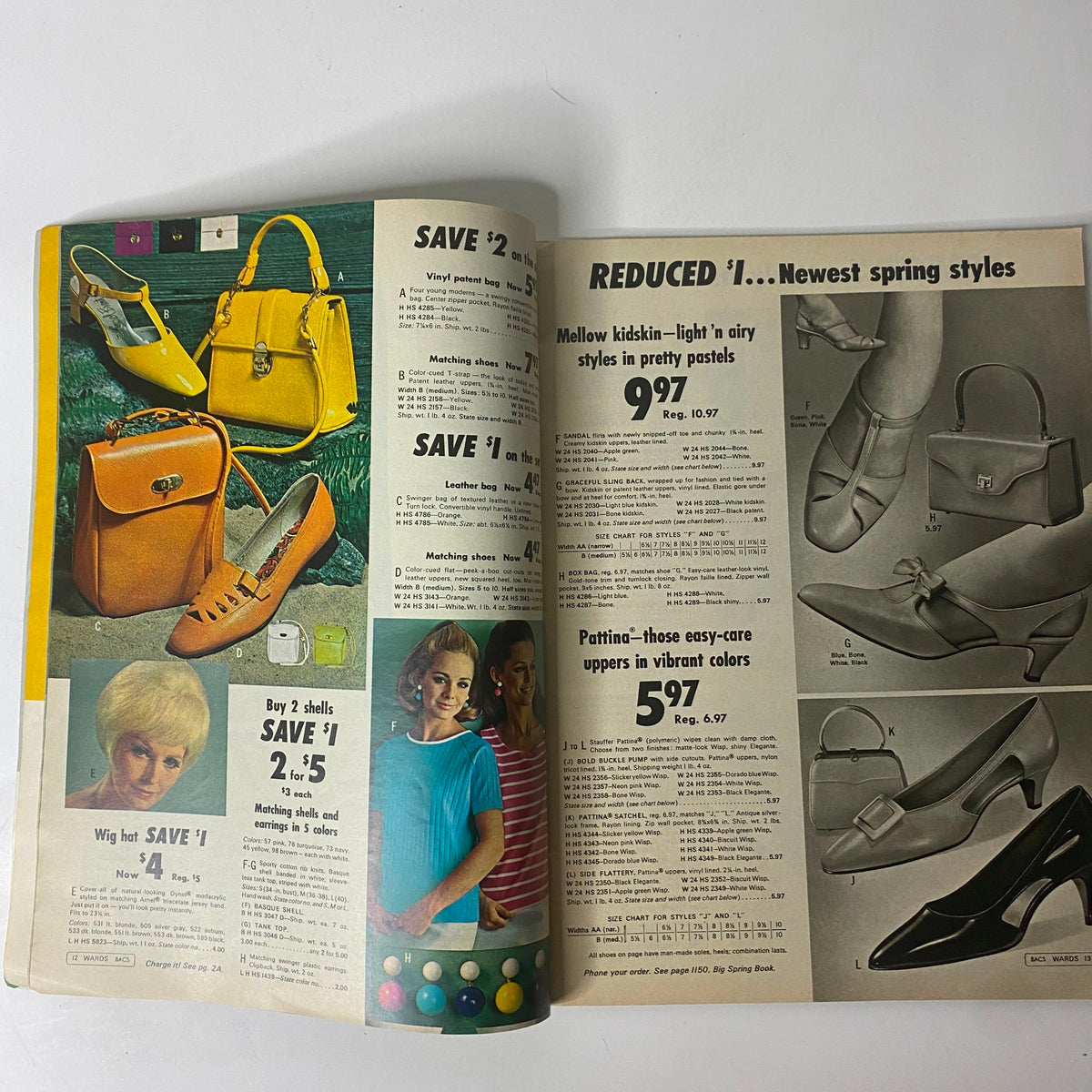
The specific fashion content documented in this catalog — acetate knit dresses, high tab and sharp slim line silhouettes, high-speed striped shifts, and gold-tone chain belt accessories — is a material culture record of how the late-1960s mod aesthetic that had originated on London's Carnaby Street and in the high-end fashion world had filtered down to mass-market American retail by the spring of 1968. The price points are themselves a historical document: at $9.00 for a dress in a 1968 Montgomery Ward catalog, these garments were positioned for working and lower-middle-class American women who wanted to participate in the decade's fashion revolution but whose budgets required the kind of affordable interpretation that mass-market mail-order could provide. That $9.00 in 1968 translates to roughly $80 in contemporary purchasing power — accessible but not trivial, reflecting Ward's calibration of its offerings for a specific income demographic whose fashion desires and spending capacity the catalog's buyers understood precisely. The inclusion of a Gold-Tone Chain Belt at $3.00 alongside the dresses documents the accessory ecosystem of the moment — the specific styling language of 1968 accessible to a mass audience. Fashion historians, costume researchers, economic historians, and social history researchers consistently find mass-market retail catalogs from this specific period more useful as primary sources than editorial fashion publications precisely because of this documentary specificity.
Montgomery Ward's catalog business in 1968 also occupied a specific and historically interesting position within American retail's evolution. The late 1960s were a period of significant transition for the major mail-order retailers — suburban shopping mall development was accelerating, and the physical retail stores that Ward and Sears had been adding to their operations throughout the postwar decades were beginning to compete with and eventually displace the catalog business that had been the companies' foundational model. A Spring Sale Catalog from 1968 is therefore a document of the mail-order retail format at a specific moment in its commercial transition, before the mall era fully reorganized American retail geography and before the catalog business's eventual twentieth-century decline had become visible on the horizon.
About the Publication
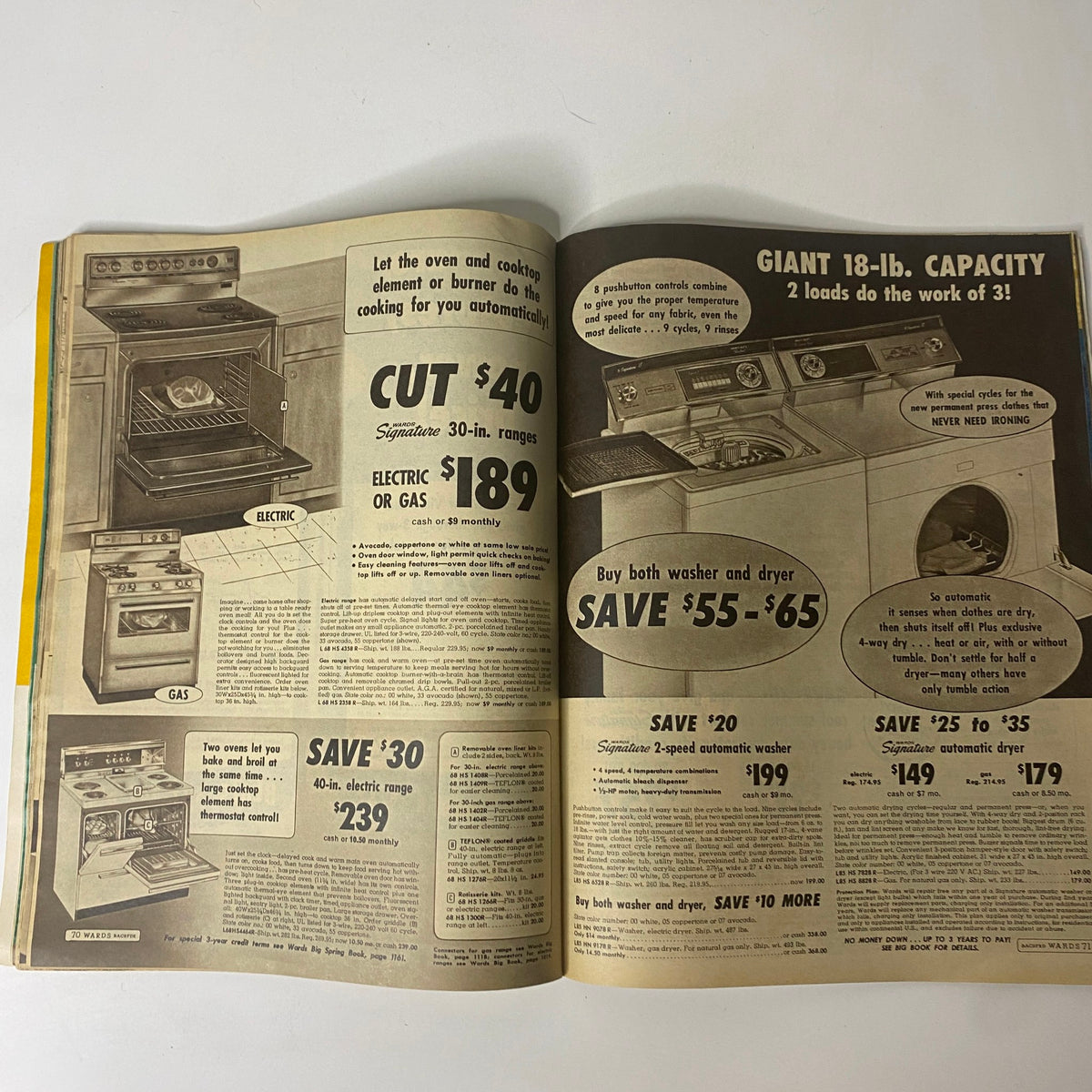
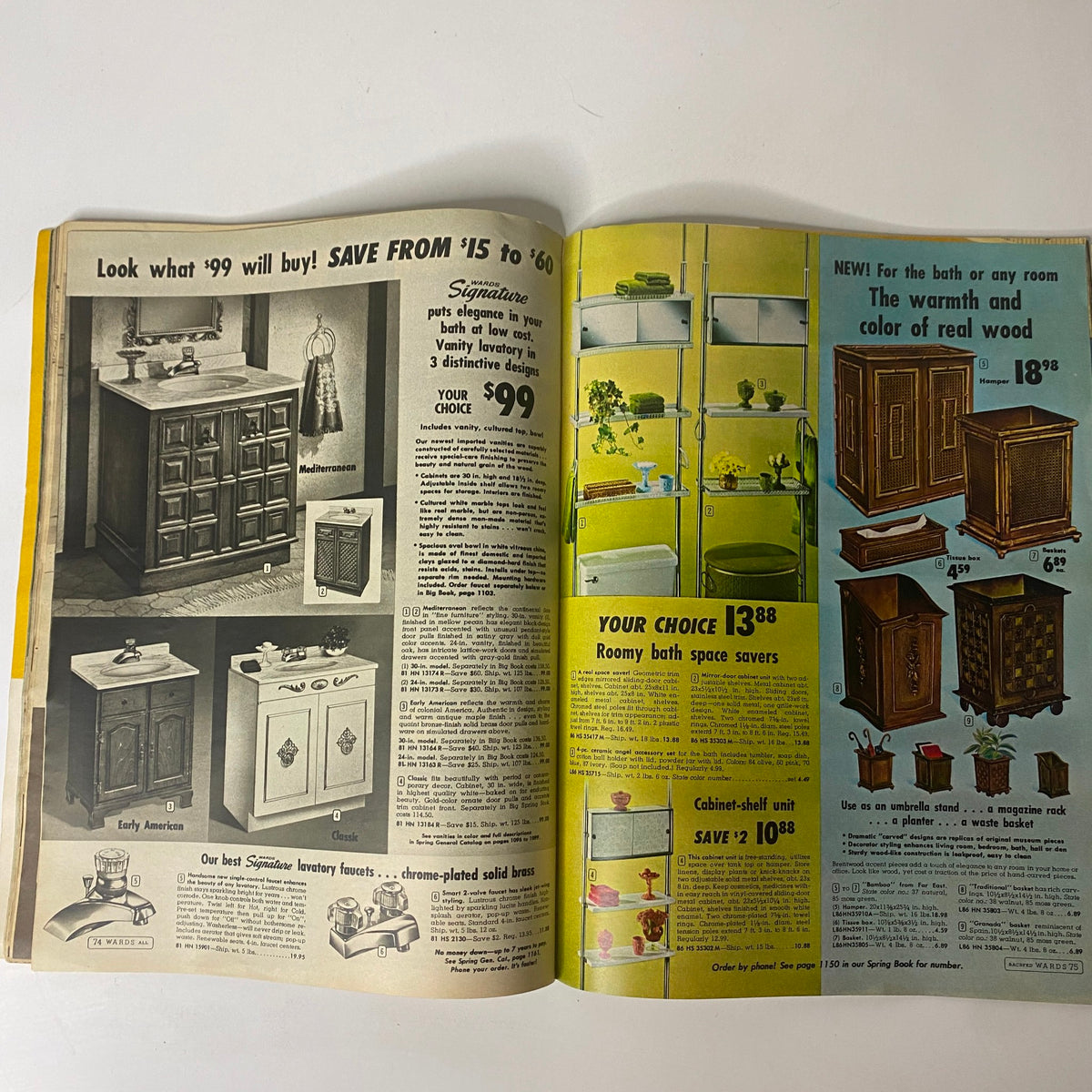
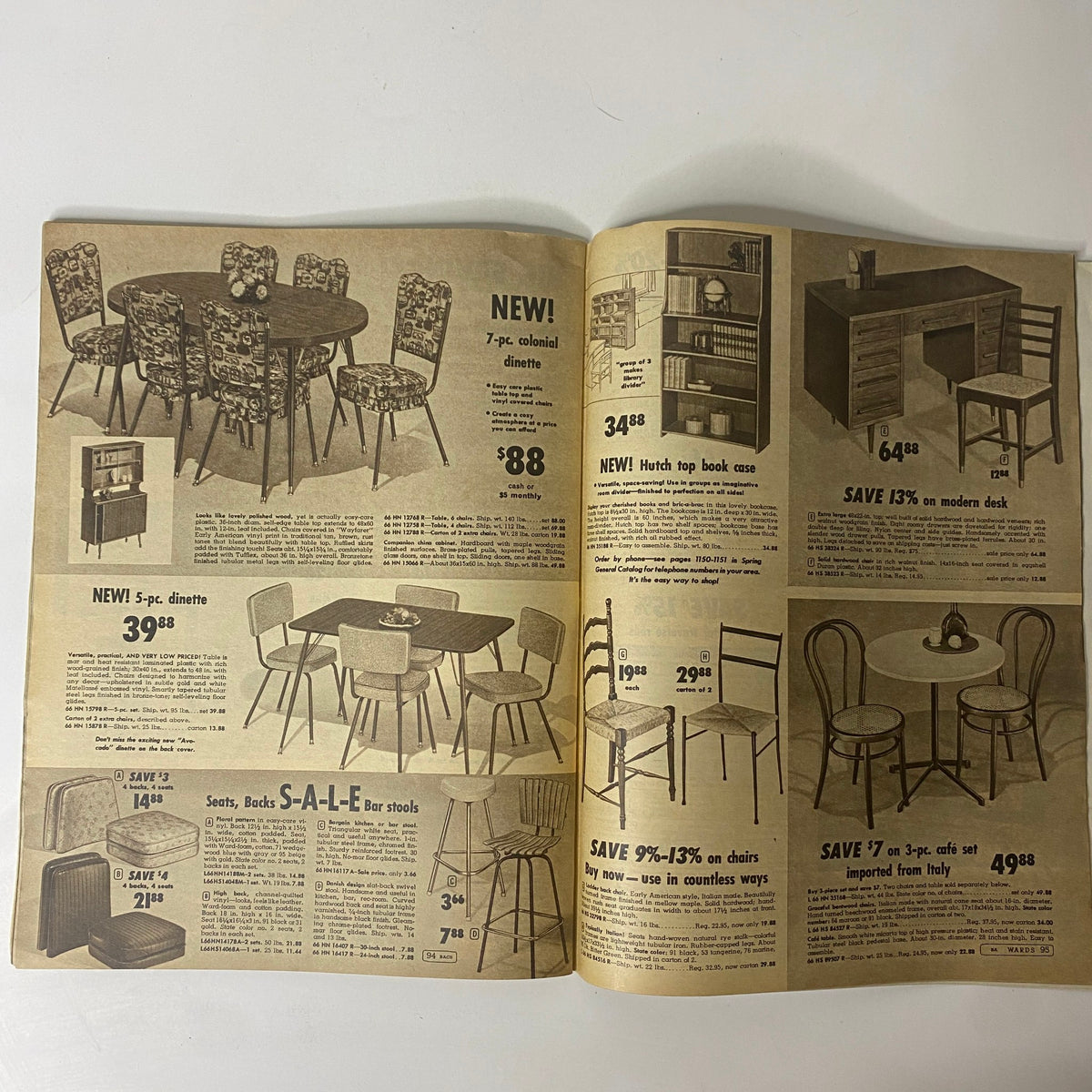
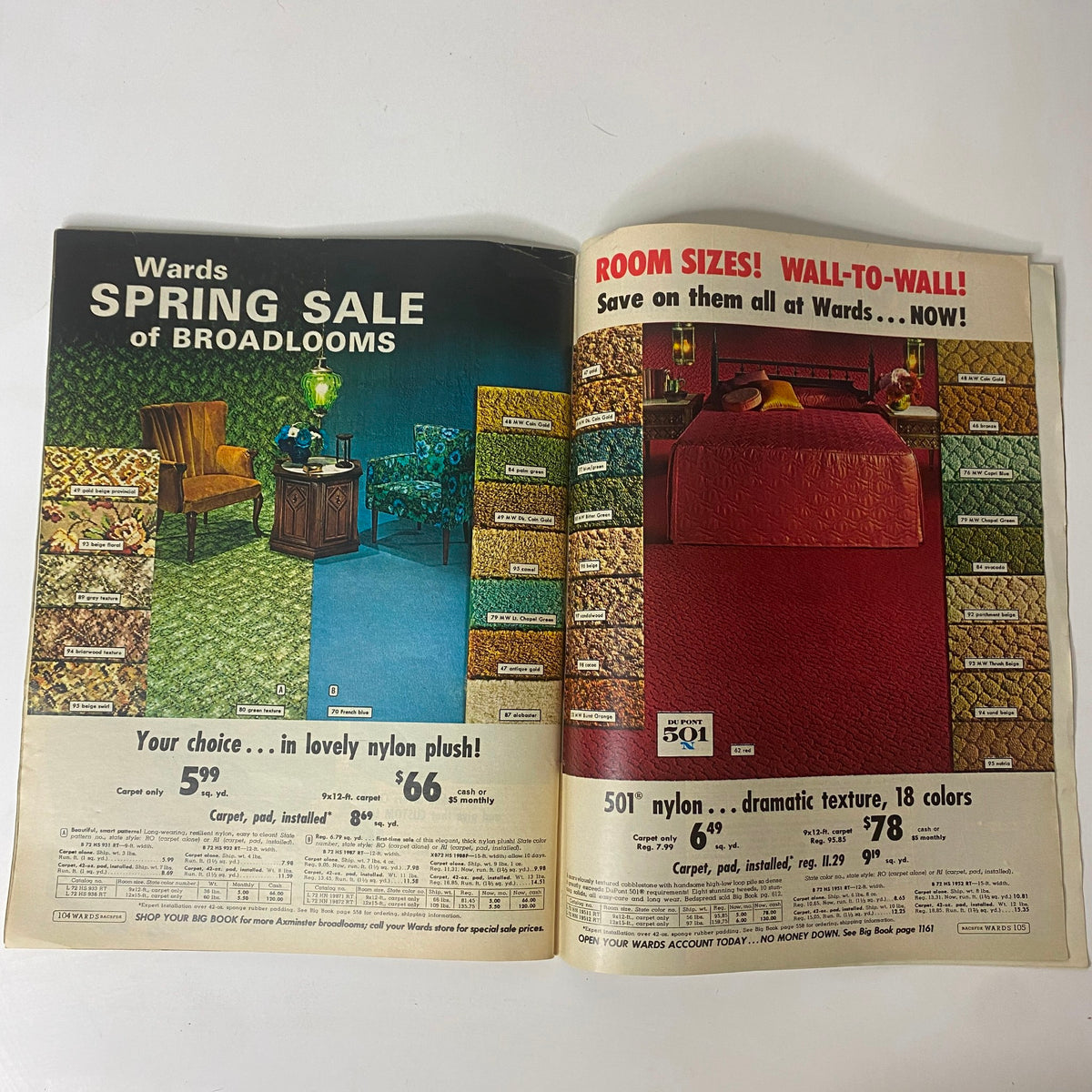
Montgomery Ward was founded by Aaron Montgomery Ward in Chicago in 1872 as America's first mail-order retail business, pioneering the catalog format that would become central to American consumer culture through the following century. By 1968, the company operated both an extensive catalog business reaching millions of American households and a growing network of retail stores, making it one of the two or three dominant forces in American mass-market retail alongside Sears and J.C. Penney. The Montgomery Ward Spring Sale Catalog was a specialized seasonal publication distinct from the company's main semi-annual catalogs — a focused compilation of sale-priced merchandise designed to generate purchasing activity in the spring commercial season. Its format combined fashion spreads, detailed product descriptions, specifications, and order information in the direct, transaction-oriented style of mail-order retail publishing, serving a readership of American families across income levels who relied on catalog shopping for access to the full range of consumer goods that their local retail environments might not provide. The 1968 Spring Sale Catalog documents the company at a moment of commercial confidence before the retail disruptions of the 1970s and 1980s would fundamentally challenge the mail-order business model.
Key Highlights Inside
- The "Swinging Acetate Knits Come on Strong" collection documents the late-1960s mod fashion aesthetic as it was being translated into affordable mass-market garments for American women in spring 1968 — a primary source record of how the decade's most distinctive fashion sensibility reached ordinary consumers through the mass-market retail channel.
- The High Tab and Sharp Slim Lines Dress and High-Speed Striped Shift Dress at $9.00 each provide precise price documentation for mass-market fashion in spring 1968 — economic history data that researchers use to track purchasing power, fashion accessibility, and the democratization of mid-century American style across income levels.
- The Gold-Tone Chain Belt at $3.00 documents the accessory vocabulary of the 1968 mass-market fashion moment — the specific styling language being sold to American women at this price point in this season, reflecting the trickle-down of high-fashion accessory trends into accessible mail-order retail.
- The catalog's Spring Sale format means its content represents specifically discounted merchandise rather than full-price seasonal offerings — a commercial document of how Montgomery Ward was managing inventory and driving purchasing activity in the spring of one of the most turbulent years in modern American history.
- The confirmed absence of a label indicates this is a newsstand or direct-purchase copy without subscriber delivery markings, preserving the catalog's original cover presentation — meaningful for a retail document whose cover imagery was designed to attract purchasing attention in its original commercial context.
Condition & Rarity
Surviving copies of this catalog are graded at the Good level with light wear consistent with fifty-seven years of existence — a condition designation that indicates a complete and usable document showing honest aging without more significant deterioration. For a Montgomery Ward Spring Sale Catalog from 1968, Good condition with light wear is a genuinely meaningful survival grade: retail catalogs of this type were produced as working commercial documents on paper stock of functional rather than archival quality, designed for transactional use and typically discarded when the sale season ended. Those that survived nearly six decades in any readable condition generally did so through deliberate retention by original recipients who valued them, which gives Good-grade surviving copies a collector significance that their original disposable commercial function would not have anticipated. The confirmed absence of a label is a positive condition attribute for this type of publication, preserving the cover in its original presentation without the adhesive surface disruption that subscriber delivery markings cause. The plastic protective covering currently housing this copy provides appropriate stabilization for a fragile late-1960s retail catalog, helping to prevent further cover surface deterioration and spine damage during handling and ongoing storage. Fashion historians, costume researchers, and American consumer culture collectors who focus on mass-market retail documentation consistently find that surviving catalogs from specific seasons of landmark cultural years — and 1968 qualifies decisively as such — carry research and collector value that their original disposable commercial status would never have predicted.
Looking for More Issues Like This?
Mass-market retail catalogs from the spring of 1968 are among the more historically specific and archivally underrepresented categories of American consumer culture documentation — produced for disposable commercial use rather than preservation, and carrying historical significance that only becomes fully visible in retrospect. For collectors building a broader picture of American consumer culture, fashion history, and publishing in 1968, the 1968 magazines collection at OriginalMagazines.com offers a wide cross-section of titles and publications that together capture the full range of American print culture during one of the most turbulent and historically dense years of the twentieth century.