



Description
Collector's Note – Why This Issue Matters
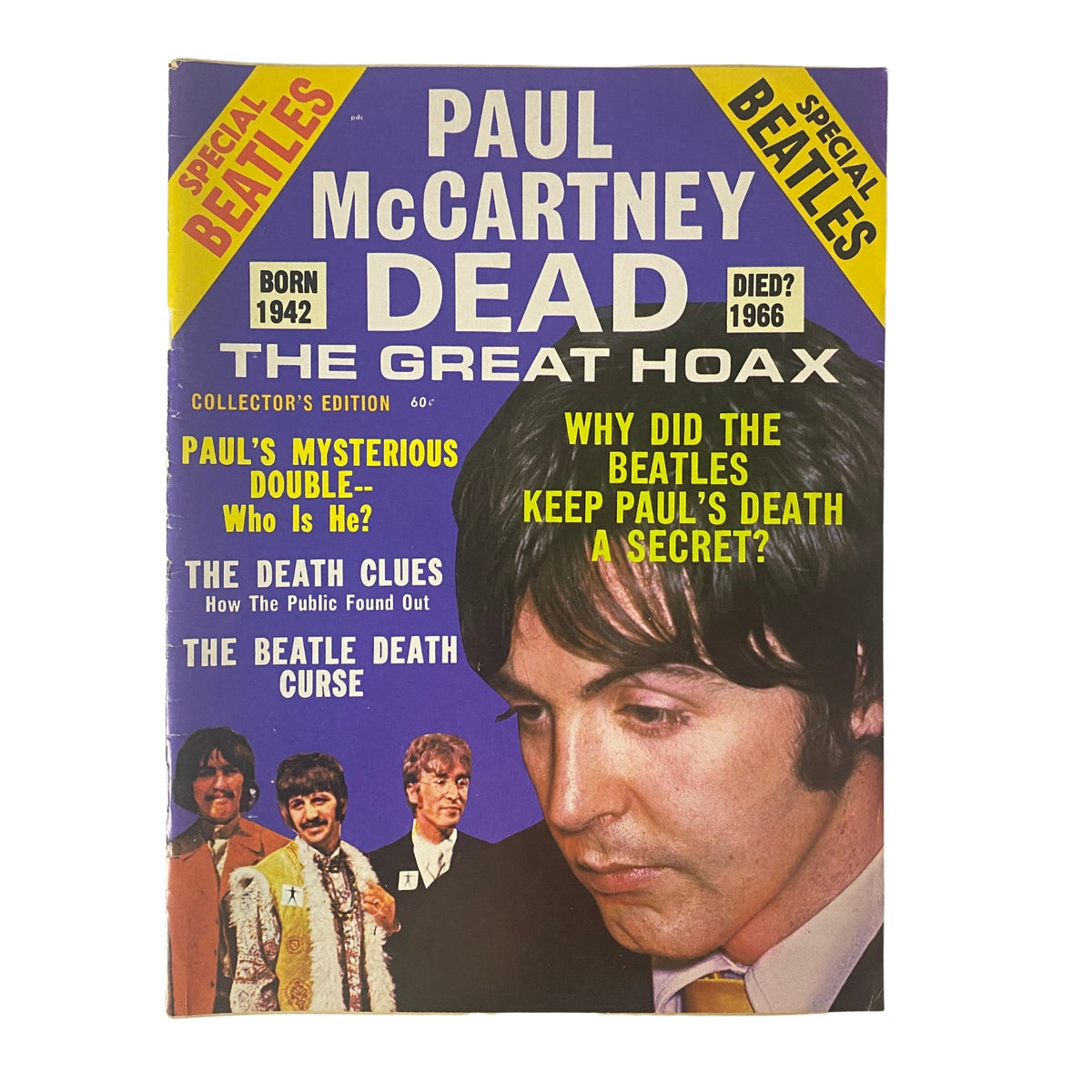
The 1969 Paul McCartney Dead — The Great Hoax Collector's Edition is one of the most historically specific and culturally revealing artifacts of the "Paul Is Dead" phenomenon, and its confirmed table of contents makes it an unusually transparent primary document of how the rumor was being commercially packaged and sold to the public at the height of its media saturation. The "Paul Is Dead" conspiracy had exploded into mainstream American consciousness in October 1969, driven largely by a Detroit DJ named Russ Gibb who broadcast an extended on-air discussion of the alleged clues on October 12, 1969, setting off a chain reaction of campus radio coverage, newspaper stories, and television segments that consumed the American media for weeks. The rumor — that Paul McCartney had died in a car accident in 1966 and been secretly replaced by a look-alike — was almost immediately recognized by most of its participants as a myth, but that recognition did not slow its commercial exploitation: publishers, radio stations, and news organizations found that the conspiracy generated audience engagement and sales with remarkable efficiency, and the cottage industry of "Paul Is Dead" publications that appeared in late 1969 is itself a primary document of how the media ecosystem of the era processed and monetized celebrity mythology. This Collector's Edition, with its fourteen confirmed chapter titles ranging from "The Accident That Took Paul's Life" to "Rejoice! Paul 'Lives,'" represents that commercial exploitation at its most comprehensive and most explicitly assembled form. For collectors building a serious archive of Beatles cultural history and the media phenomena that surrounded the band, the Paul McCartney magazine collection at OriginalMagazines.com provides essential depth for documenting his public presence across the full arc of his career, and this 1969 hoax publication sits within that body of material as one of its most historically distinctive items.
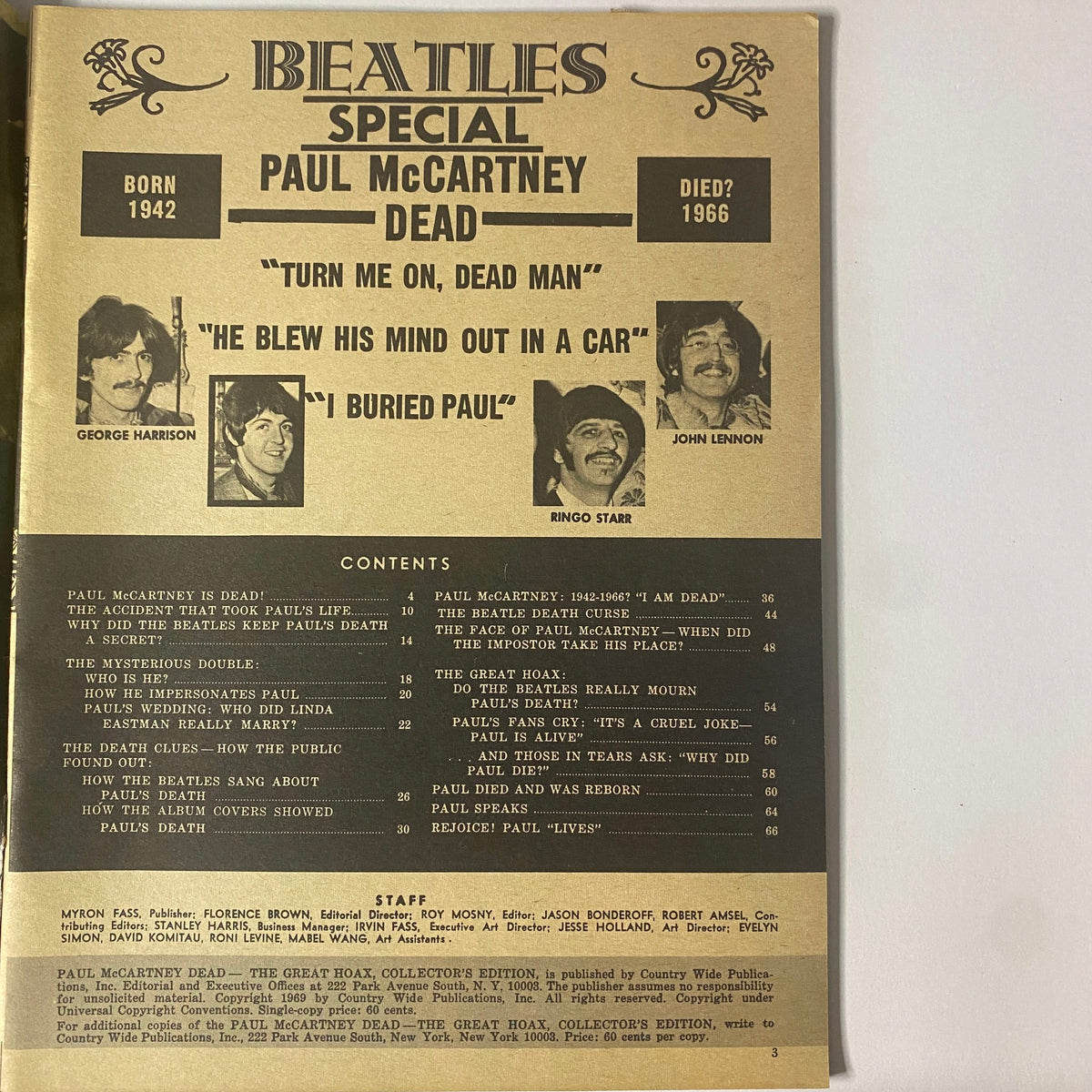
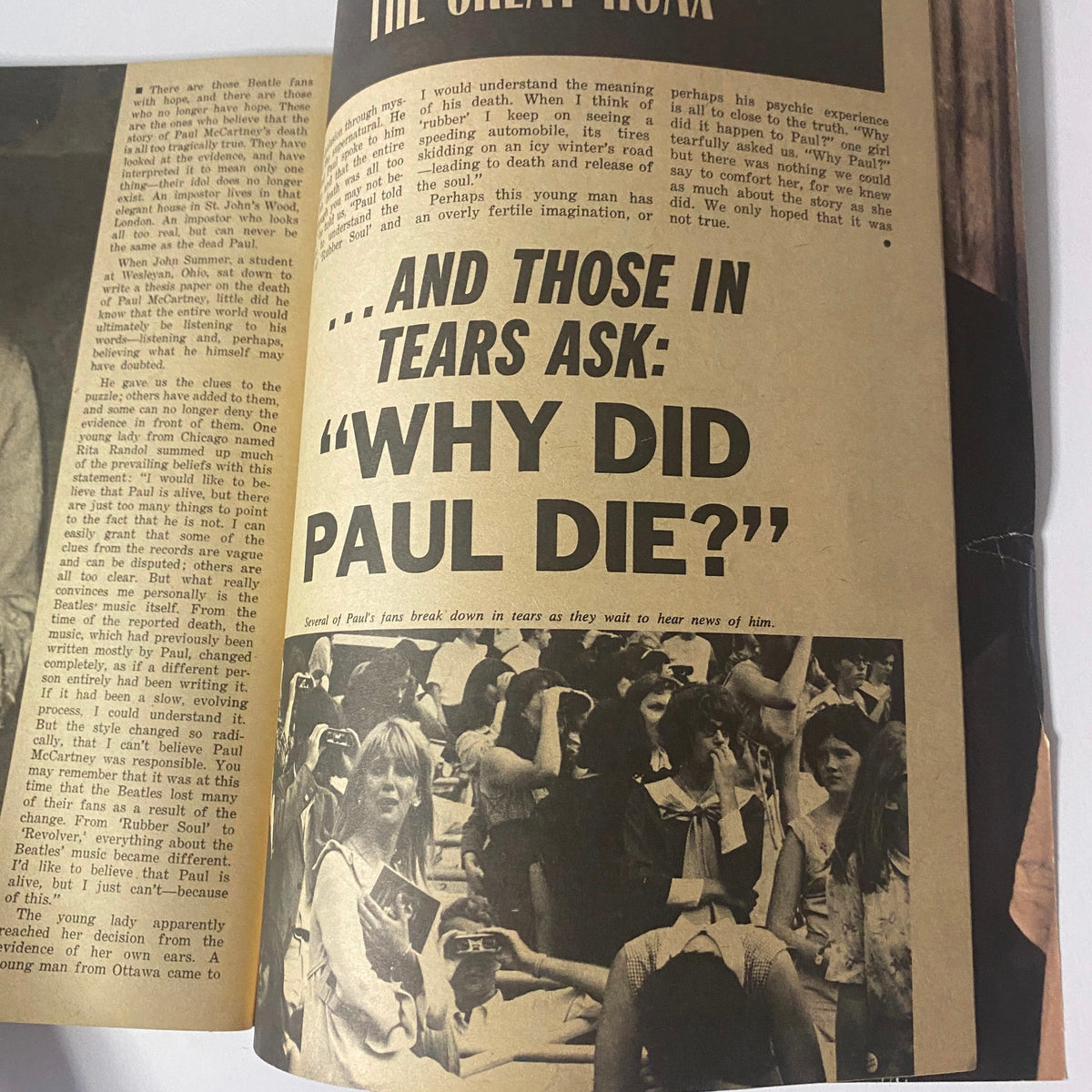
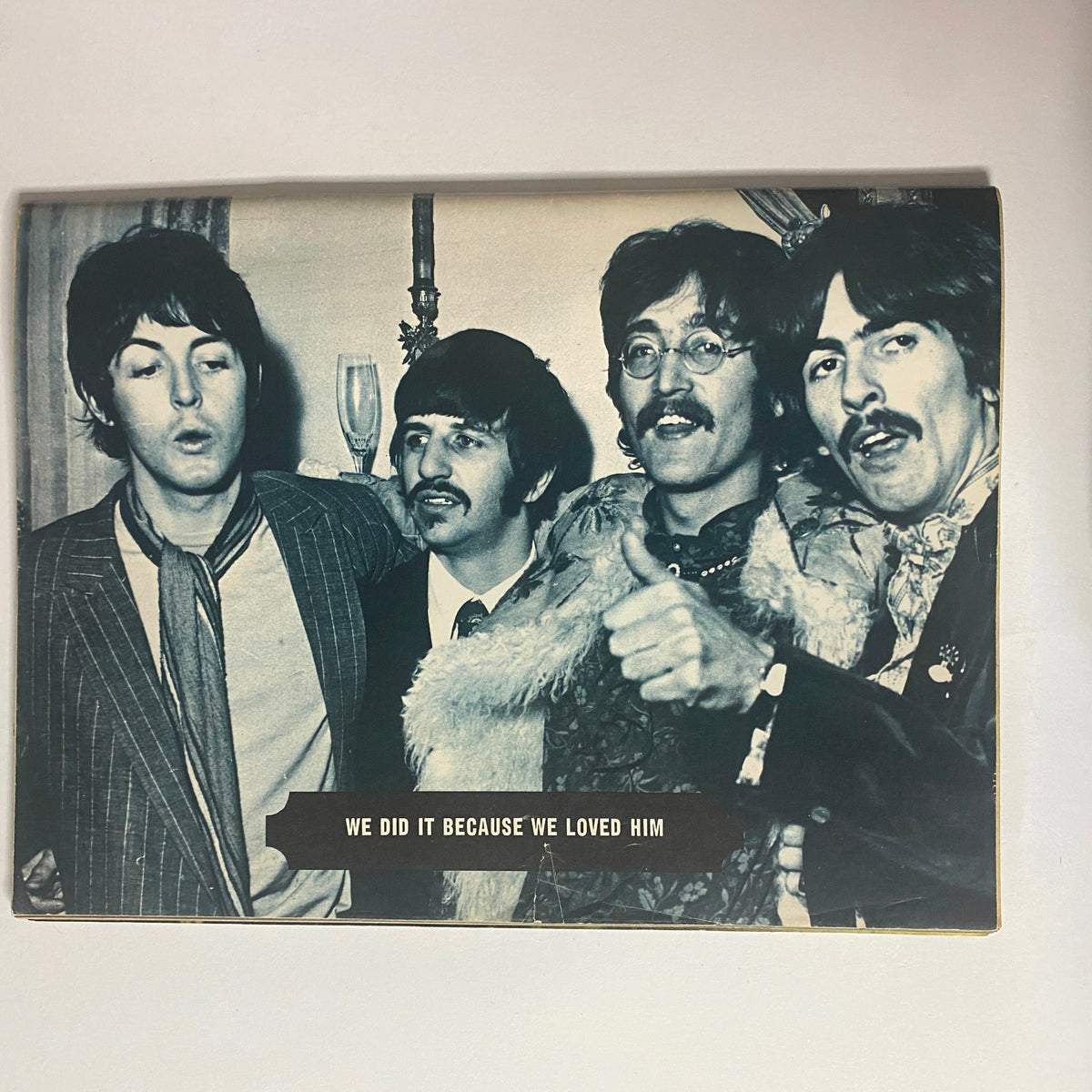
The confirmed chapter titles in this publication deserve careful attention as a complete inventory of the "Paul Is Dead" mythology's narrative components, because they reveal how thoroughly the conspiracy had developed its own internal logic and rhetorical architecture by the time this Collector's Edition was assembled. "Why Did the Beatles Keep Paul's Death a Secret?" establishes the cover-up as a premise. "The Mysterious Double — Who He Is and How He Impersonates Paul" provides the conspiracy's central character. "Paul's Wedding — Who Did Linda Eastman Really Marry?" weaponizes the biographical record against itself. "The Death Clues — How the Beatles 'Sang About' Paul's Death and Hinted Through Album Covers" documents the close-reading culture that had developed around Beatles recordings — the backward messages, the album cover symbols, the lyrical interpretations — that was the conspiracy's primary evidential apparatus. The arc from "Paul McCartney: 1942–1966?" through "Paul Speaks" to "Rejoice! Paul 'Lives'" maps a complete narrative trajectory that was itself aware of its own sensationalism, acknowledging the hoax dimension even while exploiting its entertainment value. That self-referential quality makes this publication more interesting as a media artifact than a straightforward conspiracy text: it was produced by people who knew the rumor was likely false and sold to readers who probably suspected the same, in a commercial transaction that both parties understood was primarily about entertainment and cultural participation rather than factual inquiry. The full range of 1969 magazines and publications from this year documents one of the most culturally dense twelve months in Beatles history, and this hoax publication sits within that body of material as a primary artifact of the most extraordinary media phenomenon the band ever generated without any deliberate participation.
The "Paul Is Dead" hysteria of late 1969 illuminates something genuinely important about the relationship between the Beatles and their audience by that point in the band's history — a relationship that had developed an intensity and a hermeneutic sophistication that made it uniquely vulnerable to this kind of mythology. Beatles fans had spent years treating the band's recordings as texts to be decoded, finding personal and cosmic meaning in lyrics and imagery that the band had sometimes intended cryptically and sometimes had not. The close-reading culture that the "Paul Is Dead" conspiracy's clue-hunting required was a culture that the Beatles had themselves cultivated through their own deliberate mystification, and the conspiracy's emergence in October 1969 — just weeks after Abbey Road's release, two months before John Lennon would announce his own departure — captured the band at the precise moment when the structure of meaning that had supported six years of intense fan investment was beginning to fracture. Publications like this Collector's Edition were both symptoms of that fracturing and commercial responses to it, providing a narrative framework — however absurd — for the anxiety and grief that attended the end of the most consequential popular music project of the twentieth century. A publication that concludes with "Rejoice! Paul 'Lives'" is a publication that understood its own function as consolation as much as sensation.
About the Publication
The Paul McCartney Dead — The Great Hoax Collector's Edition was a commercially produced publication assembled in 1969 specifically to capitalize on the "Paul Is Dead" media phenomenon that dominated American popular culture in October and November of that year. Publications of this type — hastily produced, often assembled from recycled journalistic content and original speculation, sold at newsstands and through informal distribution channels — were a standard product category in the sensational celebrity publishing market of the late 1960s and early 1970s, a category that occupied the space between mainstream magazine journalism and outright tabloid fabrication. The "Collector's Edition" designation was a marketing choice intended to signal permanence and archival value rather than a true publishing category, positioning the publication as a souvenir of the cultural moment rather than simply a news publication. Its audience was the Beatles fan community and the broader American public that had been following the "Paul Is Dead" story through mainstream media coverage and was now ready to purchase a comprehensive assembled treatment of the mythology's full narrative apparatus. The confirmed chapter structure — fourteen titled sections covering the full arc of the conspiracy from death through cover-up through revelation — suggests an editorial ambition to produce a complete reference document for the phenomenon rather than simply a collection of articles.
Key Highlights Inside
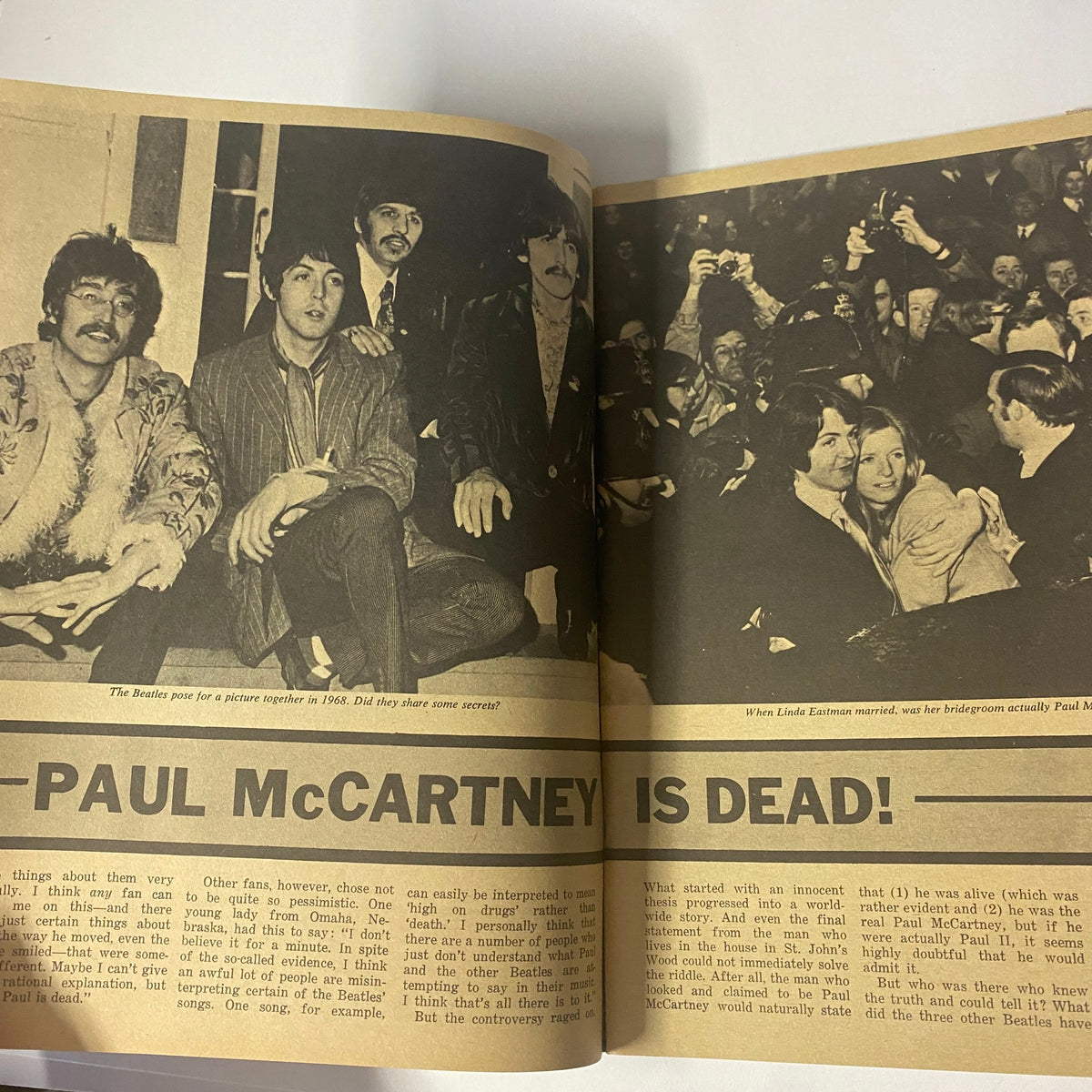
- "Paul McCartney Is Dead!" and "The Accident That Took Paul's Life" — The conspiracy's foundational premise documents the specific narrative construction of the alleged 1966 car accident that was the rumor's central factual claim, preserving the specific details of the mythology in its commercially packaged form at the height of its public circulation in 1969.
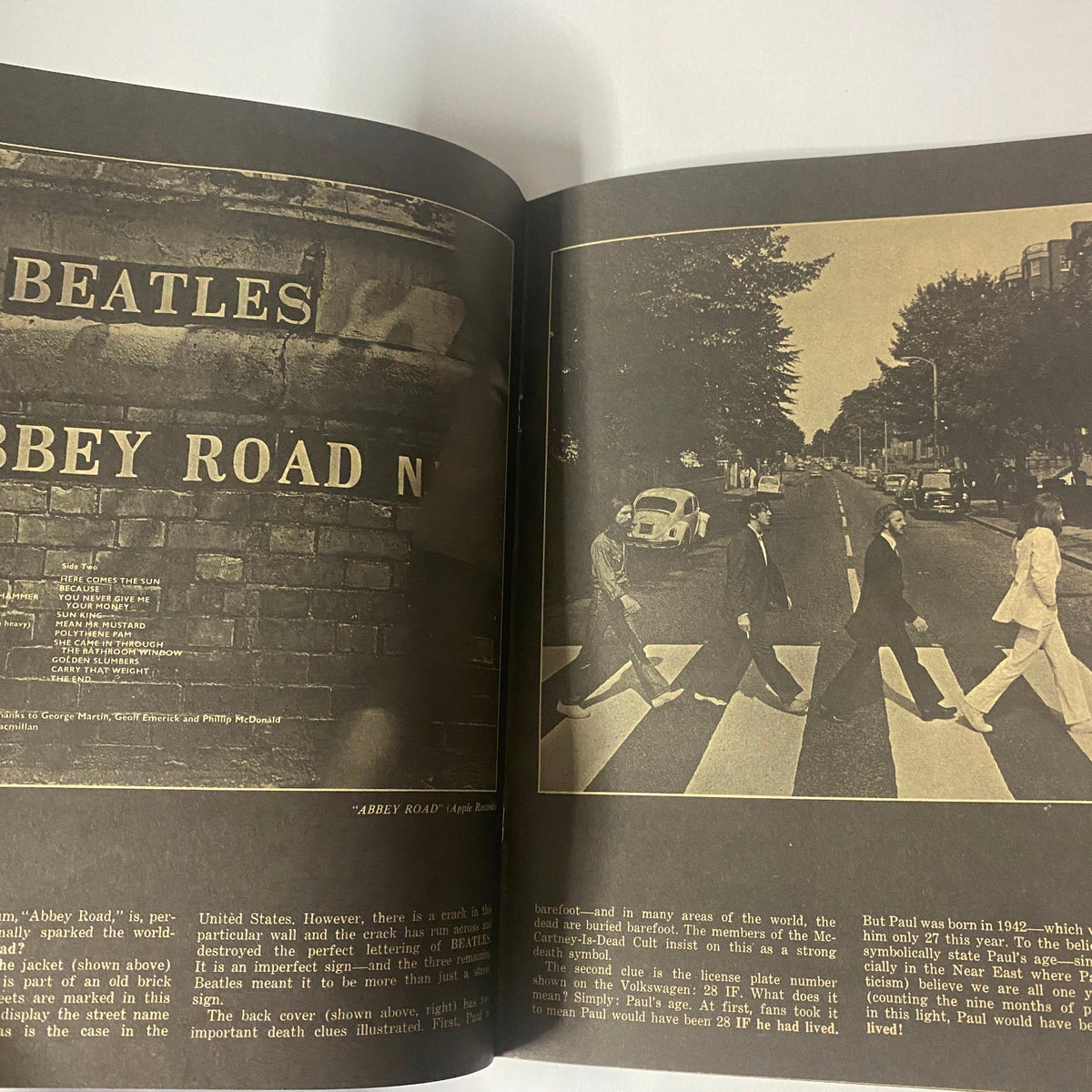
- "The Death Clues — How the Beatles 'Sang About' Paul's Death and Hinted Through Album Covers" — The clue documentation section is the most historically significant portion of the publication for researchers studying the "Paul Is Dead" phenomenon specifically, as it preserves the specific close-reading interpretations that were circulating in 1969 — the backward messages, the album cover symbols, the lyrical double meanings — in their original published form rather than in retrospective accounts.
- "The Mysterious Double — Who He Is and How He Impersonates Paul" — The impostor narrative documents the conspiracy's most dramatically compelling element, the claim that a "William Campbell" or "Billy Shears" had been surgically altered and trained to replace McCartney, preserving the specific form this narrative took in its 1969 commercial packaging.
- "Paul's Wedding — Who Did Linda Eastman Really Marry?" — The incorporation of Paul and Linda's March 1969 marriage into the conspiracy narrative documents how the mythology expanded to absorb contemporaneous biographical events, turning real-world occurrences into additional evidence for its central claim.
- "The Great Hoax" and "Rejoice! Paul 'Lives'" — The publication's self-aware hoax acknowledgment and consolatory conclusion document its awareness of its own sensationalism and its function as entertainment rather than serious journalism, a self-referential quality that makes it a more sophisticated media artifact than a straightforward conspiracy text.
- Complete 14-chapter structure preserved — The confirmed full chapter listing in the listing description documents the publication's complete narrative arc from conspiracy establishment through cover-up through resolution, providing researchers with a comprehensive inventory of how the "Paul Is Dead" mythology was organized and presented in its most complete 1969 commercial form.
Condition & Rarity
This publication is described as being in good condition, coming as pictured with a protective plastic covering and directing detailed condition assessment to the accompanying photographs — a standard and honest approach for vintage periodicals where the visual record provides precision that verbal description cannot fully replicate. For a publication now over fifty-five years old that was produced as sensational commercial ephemera rather than a durable archive publication, good condition represents a well-maintained survivor of a category that was printed on lightweight, inexpensive paper stock and distributed through newsstand and informal channels that rarely resulted in careful preservation. The no-label designation confirmed in the title is a meaningful positive attribute: publications of this type were distributed through multiple channels, and newsstand copies that avoided mailing label application present their full cover imagery and title without the disruption that subscription labels create. The plastic protective covering indicates intentional preservation care, correlating with better overall physical stability than unprotected copies stored under comparable conditions over the same period. "Paul Is Dead" publications from 1969 were produced in the compressed commercial window of the phenomenon's peak — approximately October through December 1969 — and were sold and discarded at the rapid pace of sensational journalism, making surviving examples in good condition considerably less common in the collector market than their original print runs might suggest.
Looking for More Issues Like This?
The 1969 "Paul Is Dead" publications represent a genuinely specific and historically fascinating category within Beatles collecting — primary commercial artifacts of the most extraordinary media mythology the band ever generated, documenting the conspiracy in its originally published form rather than in retrospective historical accounts. If this Collector's Edition is no longer available, the Paul McCartney magazine collection at OriginalMagazines.com is the most comprehensive resource for finding other significant coverage of his career and the cultural phenomena surrounding it across the full span of his public life. For collectors building a broader documentary record of the Beatles' final year as a band and the extraordinary cultural events of 1969, the 1969 magazines collection brings together a wide range of primary source material from that extraordinary year — publications that collectively document the full sweep of the most consequential twelve months in the history of popular music.