


Description
Collector's Note – Why This Issue Matters
The 1969 Sears Roebuck and Co. Fall and Winter Catalog is a primary document of American consumer culture at one of the most historically turbulent and culturally consequential moments of the entire twentieth century. The fall-winter season of 1969 was occurring in the immediate aftermath of one of the most extraordinary summers in American history: the moon landing in July, Woodstock in August, and the Manson murders in August had all occurred within weeks of each other, and the country entering the fall of 1969 was navigating the specific psychological complexity of a nation that had simultaneously achieved its greatest technological triumph and was experiencing the most acute social fractures of the postwar era. The Vietnam War was consuming American lives and American unity simultaneously, the Nixon administration was settling into its first year, and the counterculture was at its peak cultural visibility even as mainstream American consumer life continued with the remarkable continuity that large catalog retailers like Sears depended upon and helped sustain. A 1969 fall-winter catalog that runs over a thousand pages — covering clothing, electronics, furniture, toys, and the full range of seasonal essentials — is a primary document of that mainstream consumer life at its most comprehensive and its most specific, preserving the exact prices, products, and visual language of American middle-class aspiration in the fall and winter of this extraordinary year. For collectors building a serious archive of Sears catalog history and late-1960s American consumer culture, the Sears catalog collection at OriginalMagazines.com provides essential depth across the company's full publishing history, with the late-1960s fall-winter editions representing a particularly historically charged period of American retail documentation.
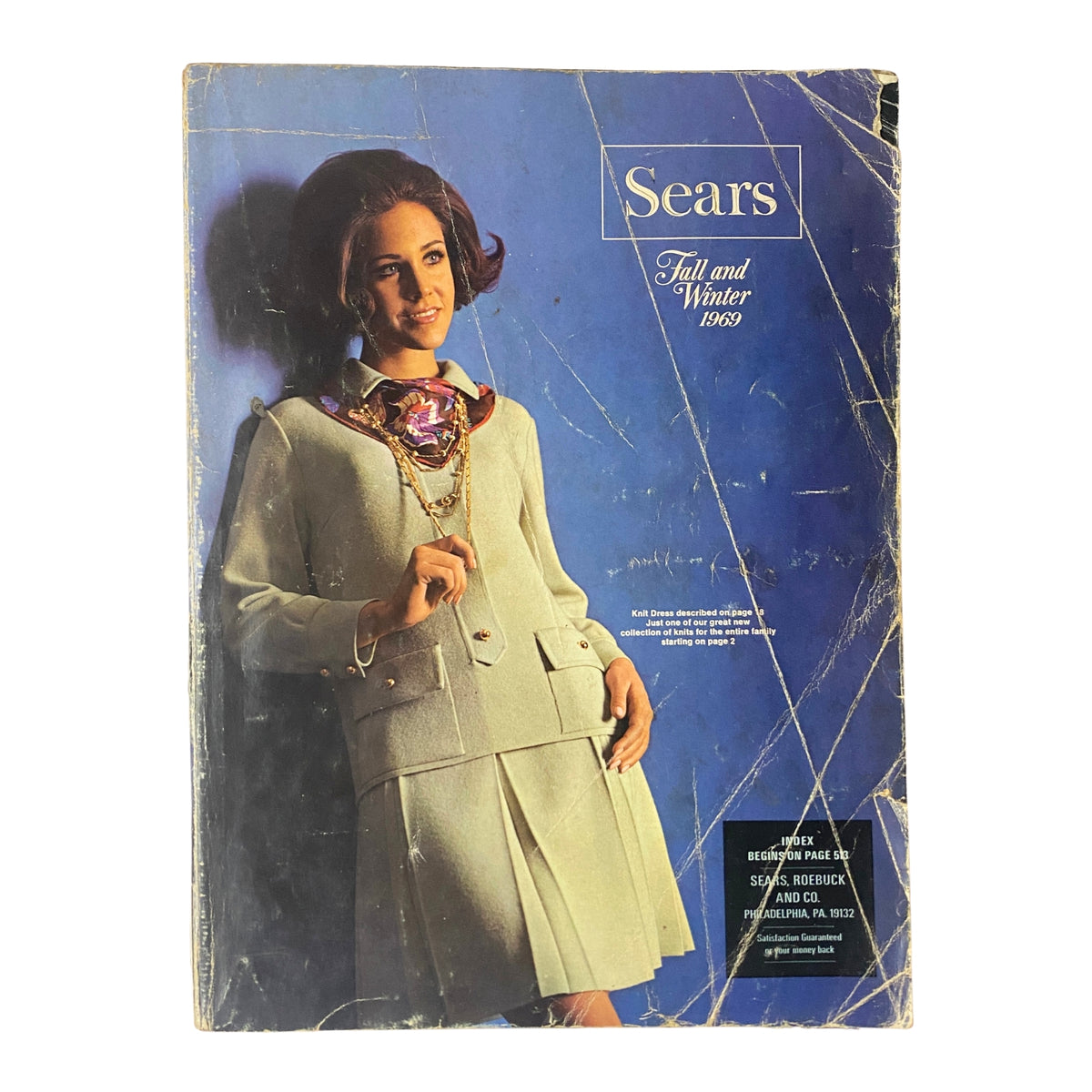
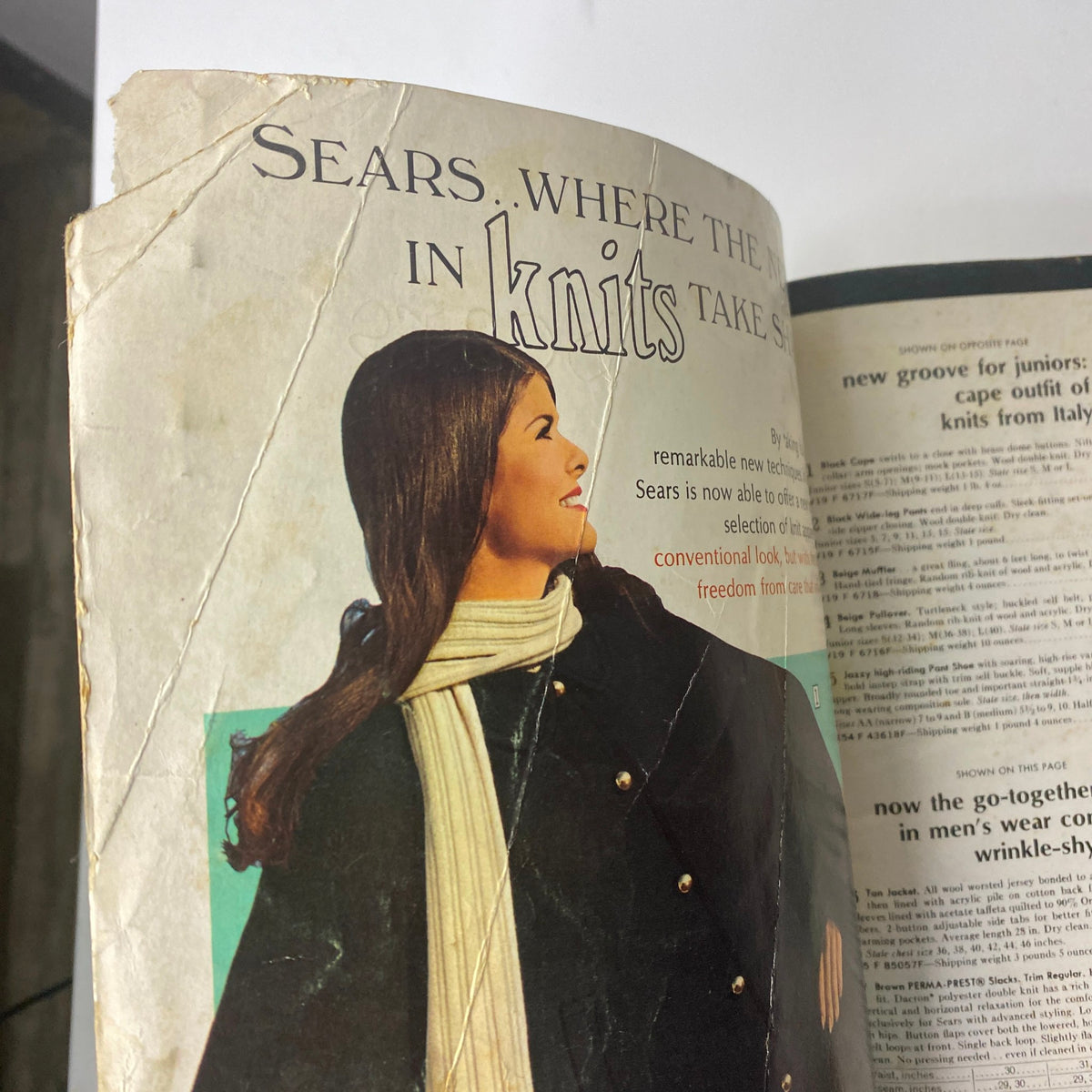
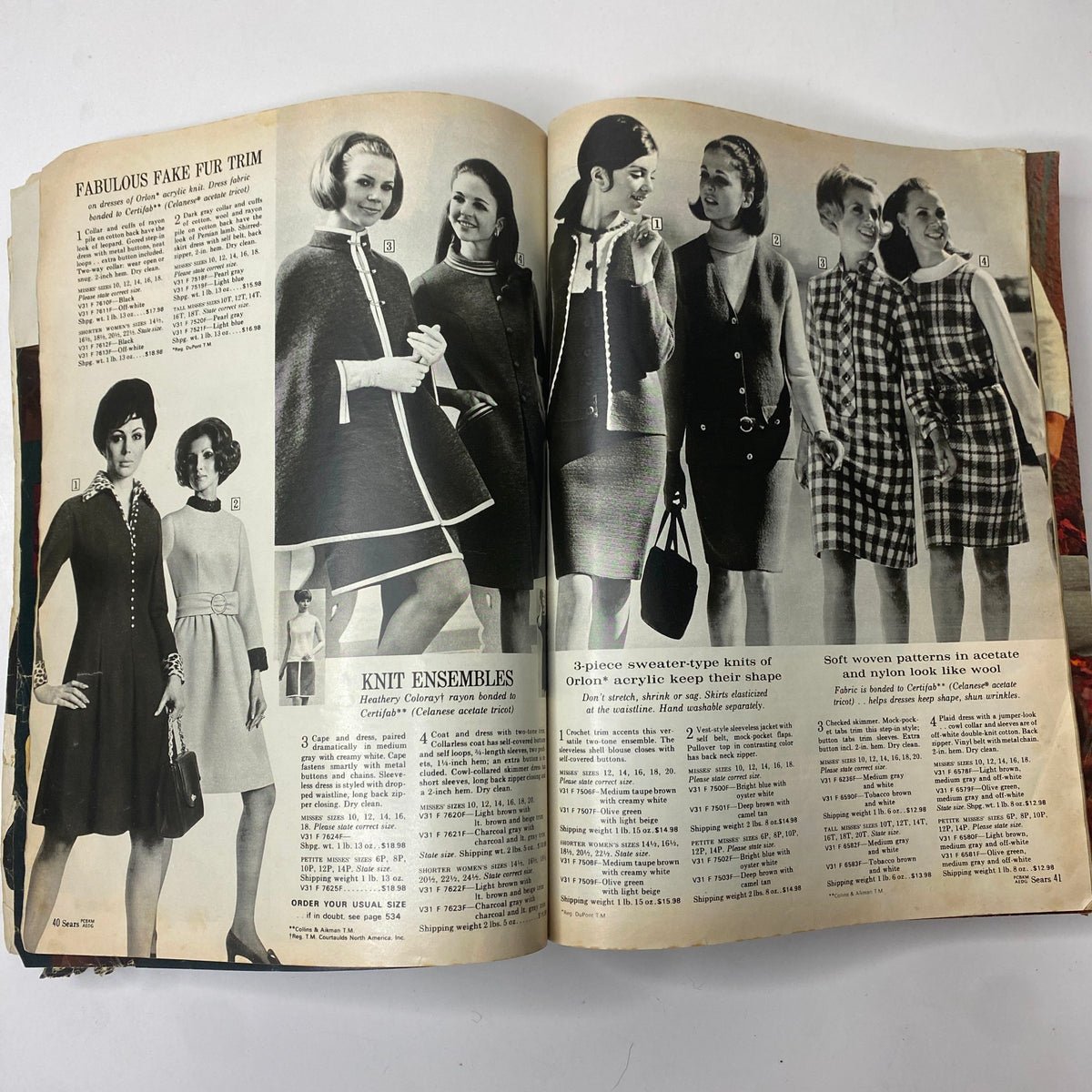
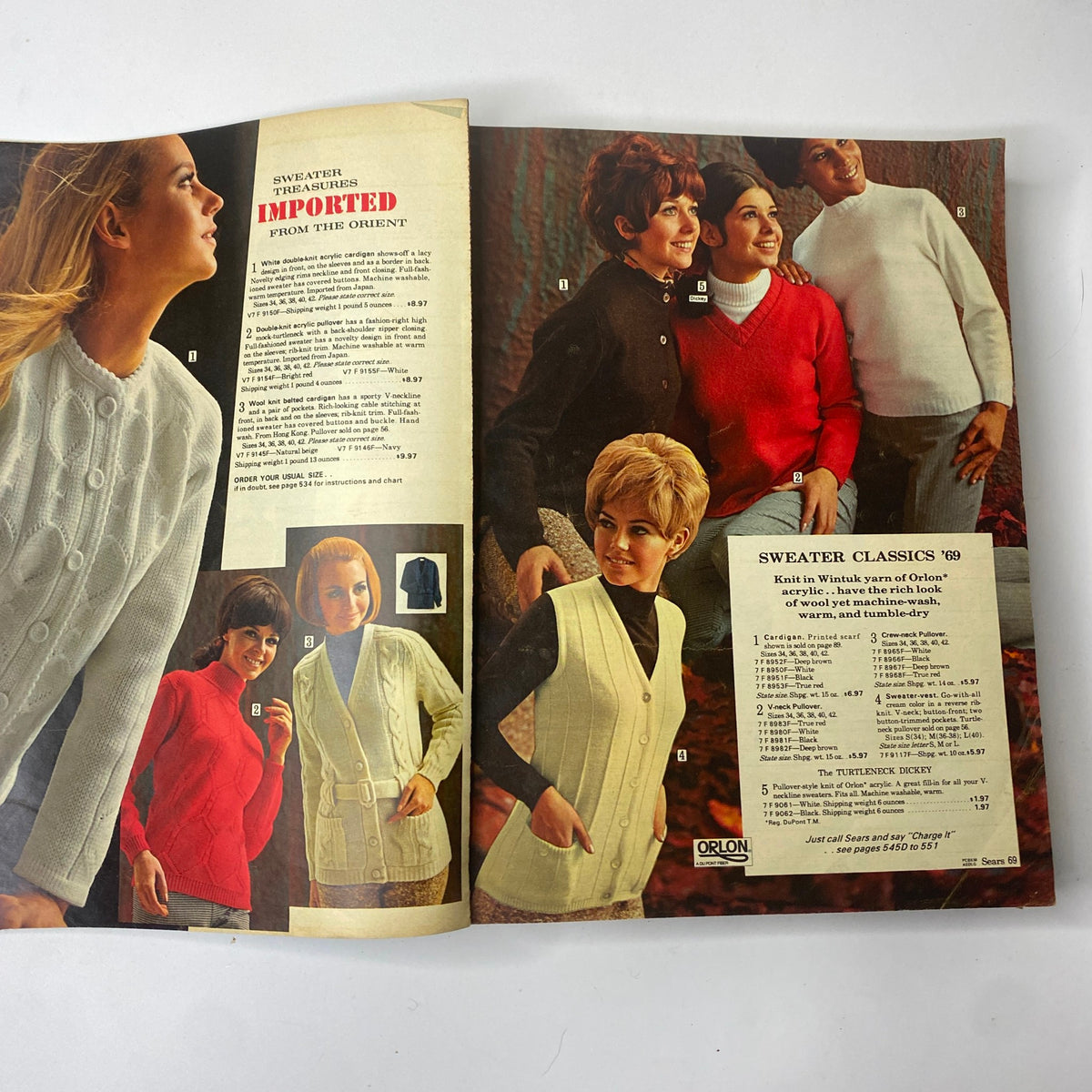
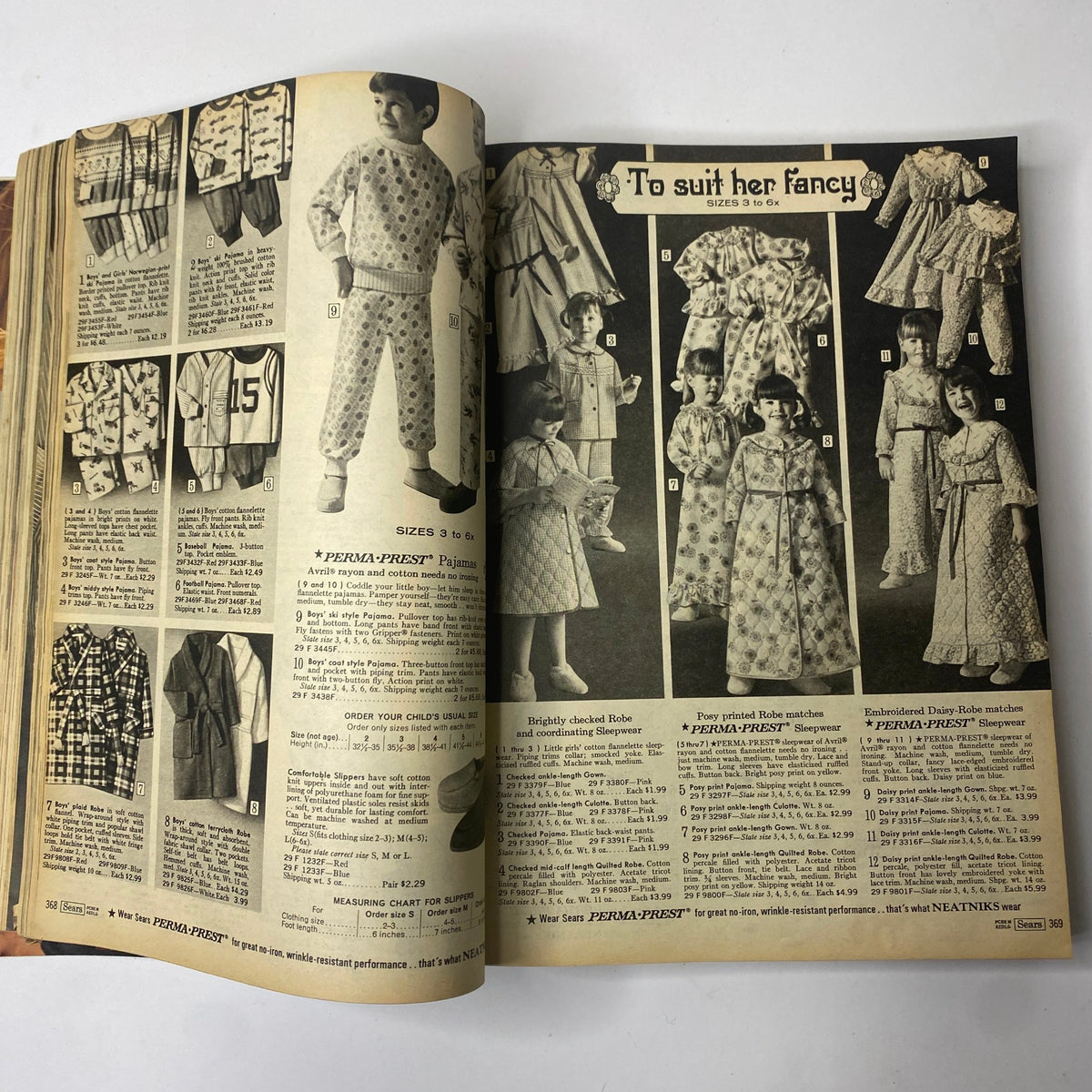
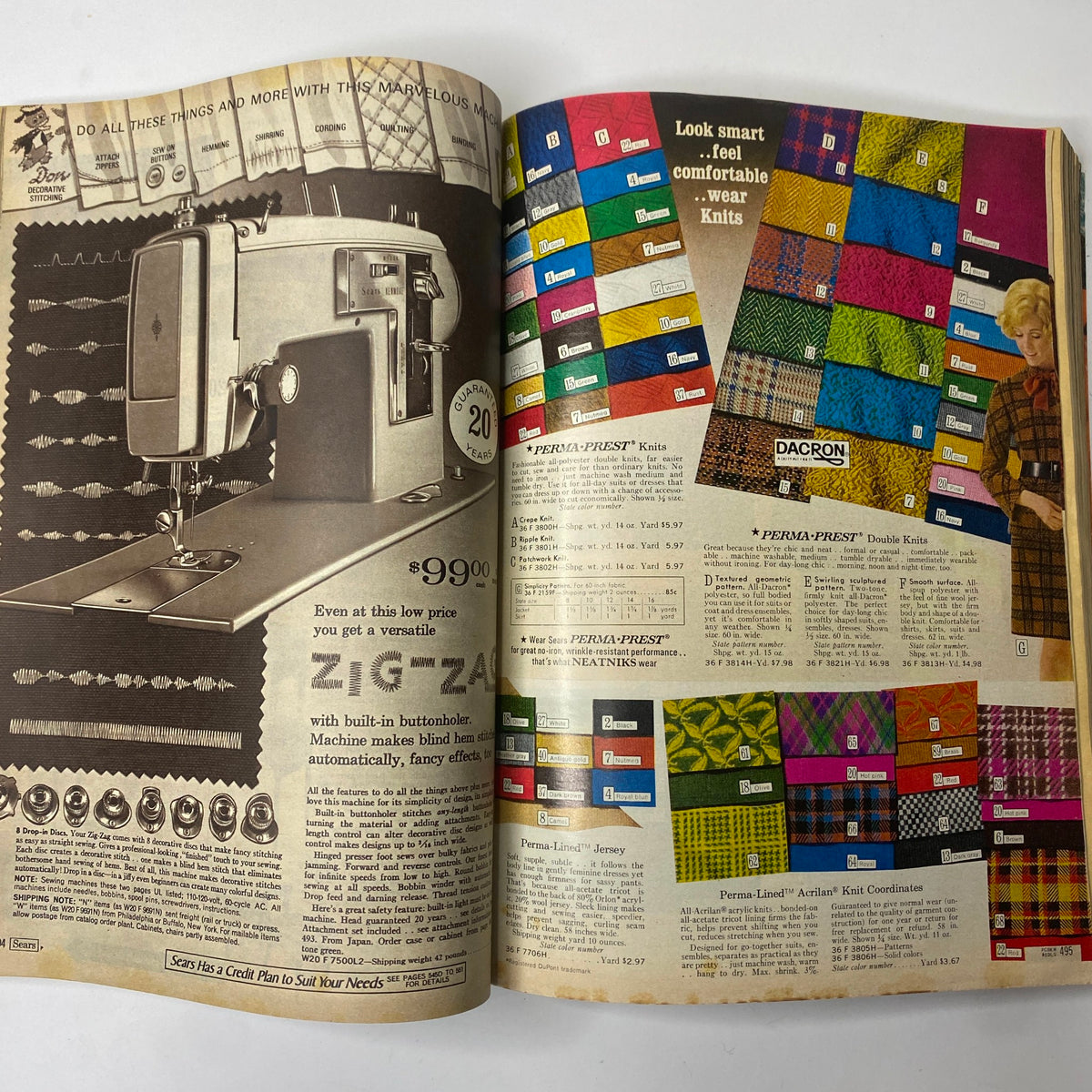
The fashion content confirmed in this catalog — fall and winter coats, sweaters, dresses, and shoes reflecting late-1960s trends — documents the mainstream consumer market's specific position within the decade's extraordinary aesthetic revolution at the precise moment of its full expression. By fall-winter 1969, the mid-decade mod explosion had worked its way fully through the fashion system, and the specific visual vocabulary of late-1960s American mass-market fashion — the miniskirts, the bold colors, the synthetic fabrics, the specific silhouettes that would define the decade in visual memory — was being offered to the broadest possible consumer audience in exactly this kind of comprehensive catalog context. But 1969 was also the moment when the decade's next fashion phase was beginning to assert itself: the late-1960s earth-toned, natural-material, anti-mod aesthetic that would define the early 1970s was emerging simultaneously, and the specific tension between these two aesthetic directions in a 1969 fall-winter Sears catalog is itself primary evidence of a fashion culture in genuine transition. The toy section's 1969 Christmas gift ideas — dollhouses, bicycles, and the full range of the era's most sought-after children's toys — add a secondary layer of primary documentation that is separately sought by toy collectors, childhood nostalgia researchers, and anyone studying the specific material culture of American childhood at the decade's end. The full range of 1969 magazines and publications from this year documents the most turbulent twelve months of the late 1960s from multiple perspectives and across multiple publication types, and the Sears fall-winter catalog sits within that body of material as one of its most comprehensive single-volume primary sources.
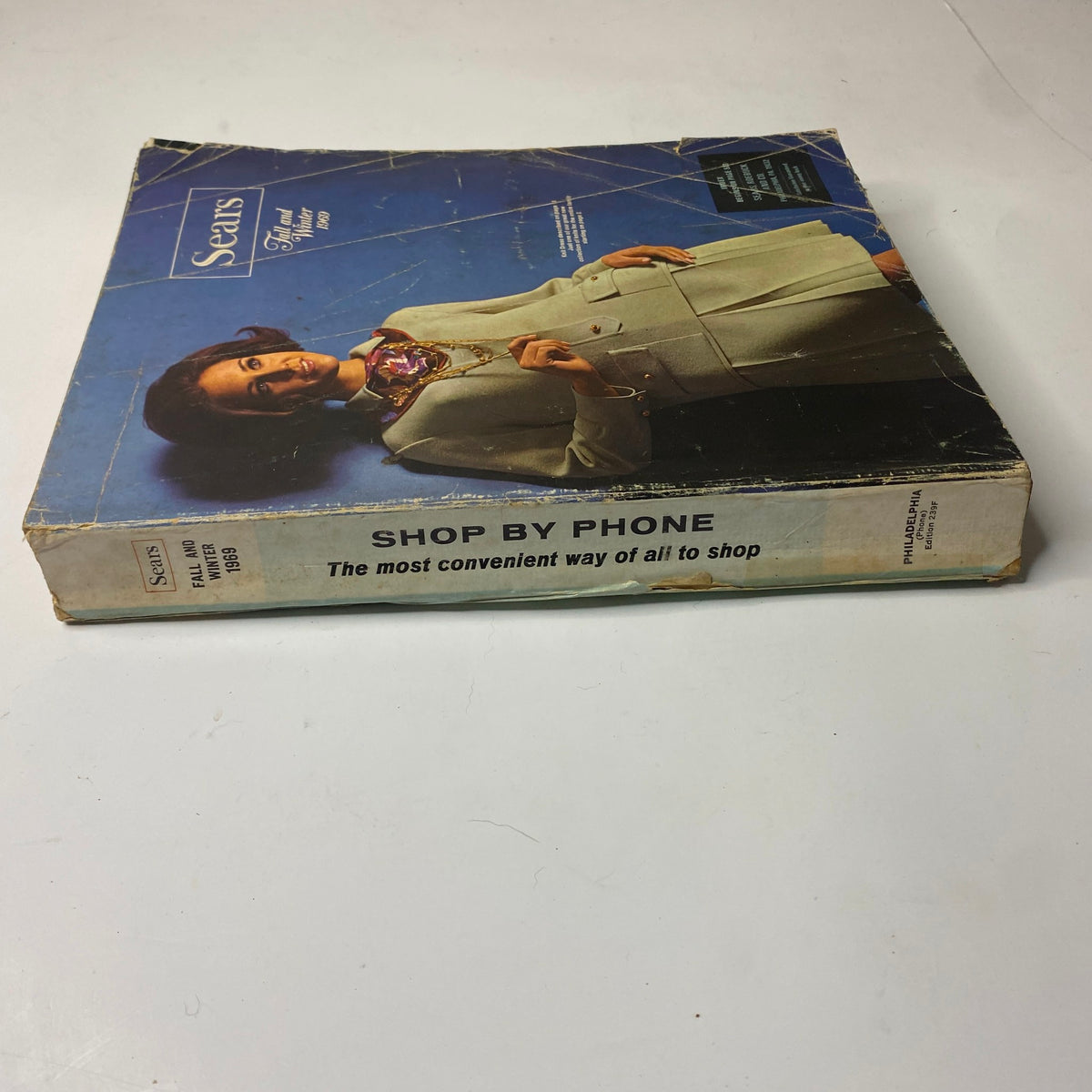
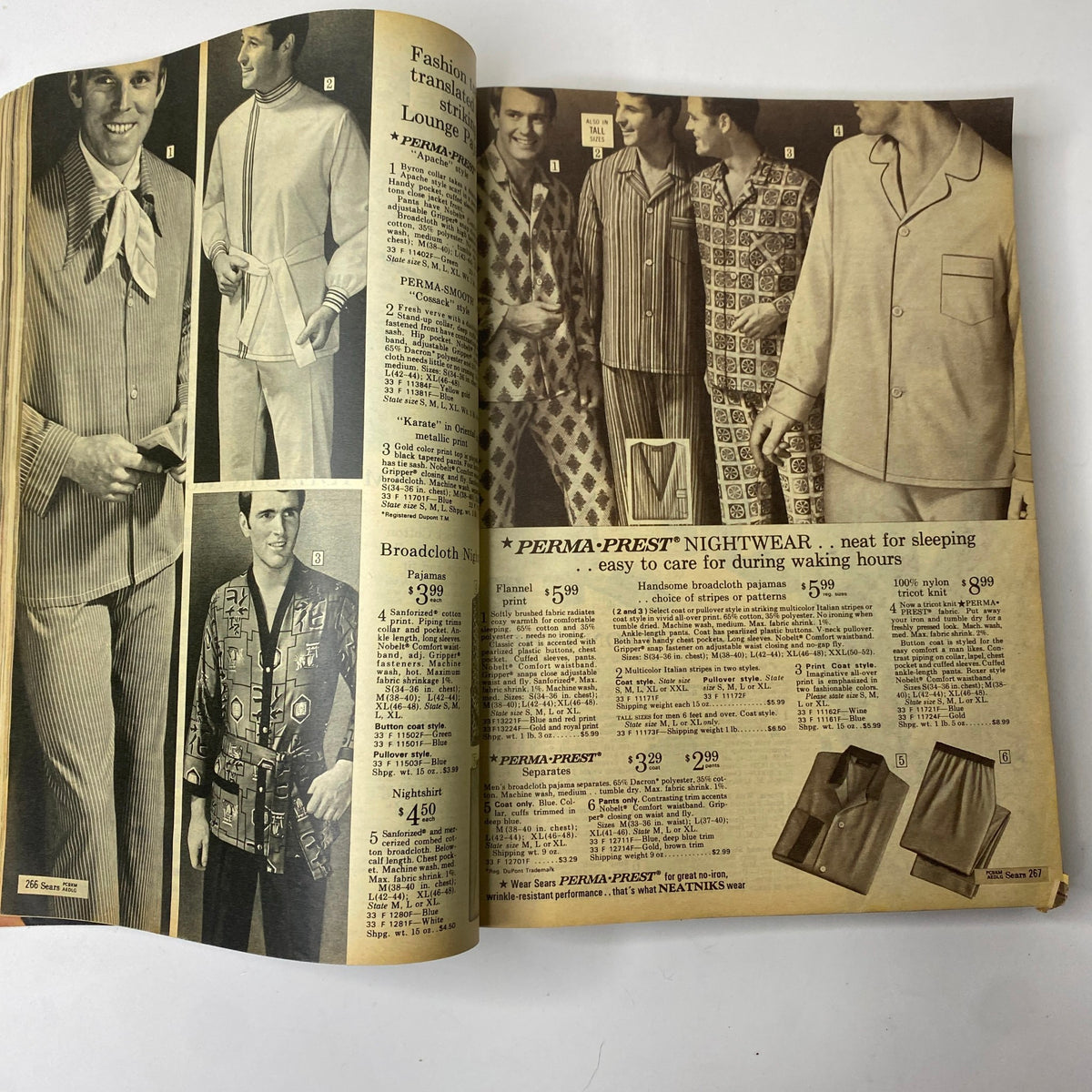
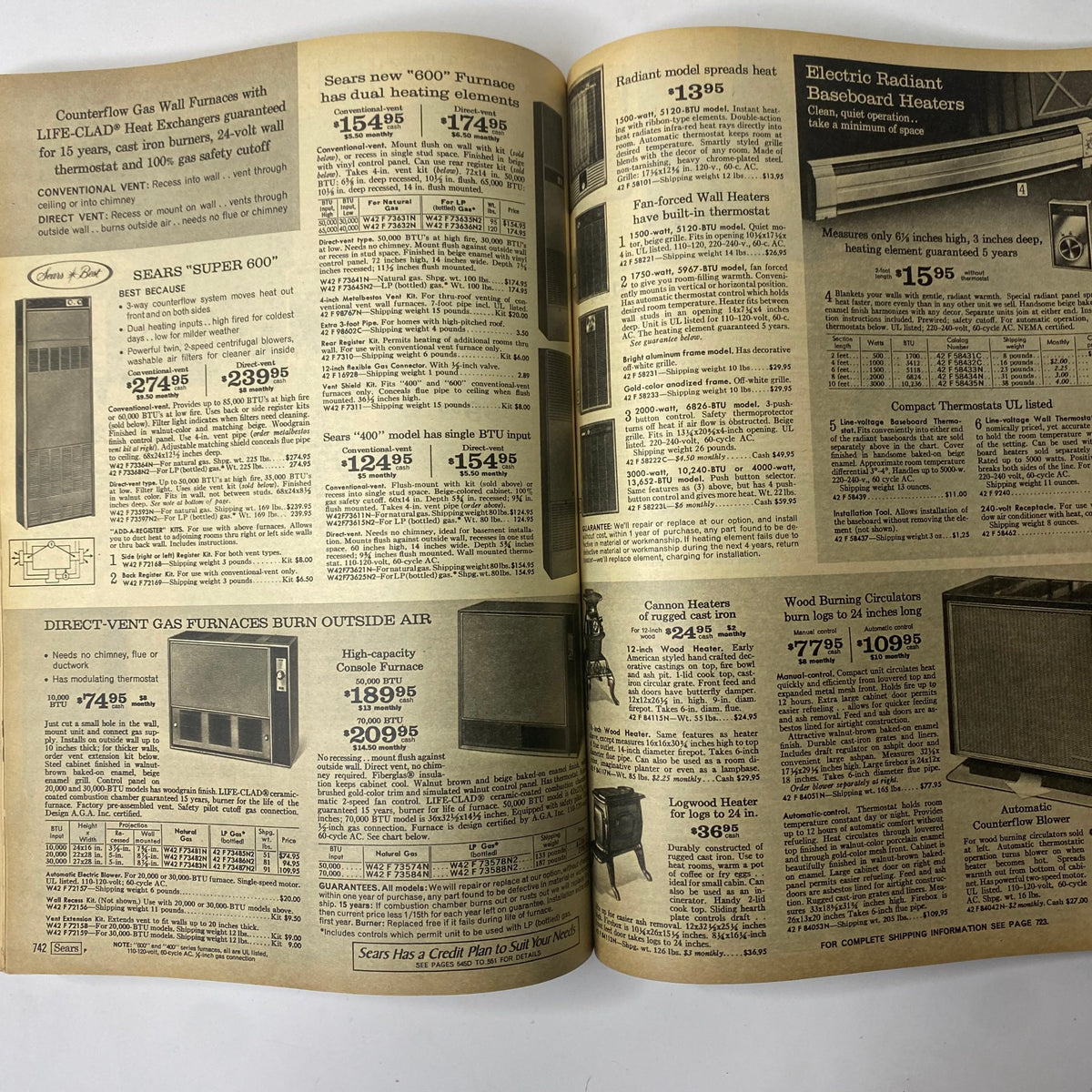
The over-one-thousand-page scope of this catalog — confirmed in the listing — deserves particular attention as a condition and collector assessment variable. A catalog of this size and scope is one of the most comprehensive single commercial documents that American retail produced in the late 1960s, covering not just fashion but the full material landscape of American consumer life: furniture, kitchen essentials, home décor, electronics, sporting goods, toys, and the complete range of seasonal merchandise that Sears offered its enormous customer base. For researchers approaching the 1969 fall-winter consumer market from any direction — fashion history, material culture, toy collecting, electronics history, furniture design — a complete or near-complete example of this catalog is a primary source of unusual breadth and documentary density. The acceptable condition with creases, marks, and rips noted in the listing is honest and expected for a publication of this size and age that was actively used as a practical shopping reference, and the specific condition variables that matter most for any given research purpose depend entirely on which sections of the catalog's thousand-plus pages are of primary interest.
About the Publication
The Sears Roebuck and Co. Fall and Winter Catalog was the flagship annual publication of Sears, Roebuck and Company, distributed to millions of American households through the direct-mail program that had been central to the company's retail dominance since its founding in 1886 as the first major mail-order catalog retailer in the United States. The fall-winter edition was the most commercially important catalog Sears produced each year, its pages carrying the full weight of the company's holiday-season fashion and merchandise offering to the broadest possible American consumer audience. By 1969, this catalog had been a fundamental institution in American domestic life for over eighty years, its arrival marking the beginning of the holiday shopping cycle for millions of households — particularly in rural and small-town America — and its over-one-thousand-page scope making it one of the most comprehensive single commercial documents in American retail history. The 1969 edition's position at the intersection of the late-1960s fashion revolution's full commercial expression and the emerging early-1970s aesthetic gives it a documentary significance that goes well beyond any typical seasonal catalog edition.
Key Highlights Inside
- Late-1960s fall and winter fashion — the decade's aesthetic at its mass-market peak — The confirmed fall and winter clothing content — coats, sweaters, dresses, shoes — documents the late-1960s fashion vocabulary in the specific commercial terms of the country's largest catalog retailer, preserving primary evidence of how the decade's most dramatic aesthetic revolution was being packaged and offered to mainstream American consumers at the moment of its fullest mass-market penetration.
- 1969 Christmas toy section — primary documentation of holiday gift culture — The confirmed toy section with 1969 Christmas gift ideas including dollhouses and bicycles documents the specific children's consumer culture of the late 1960s holiday season, preserving primary commercial evidence of the toys, prices, and marketing language of one of the most historically documented and most actively collected eras in American toy history.
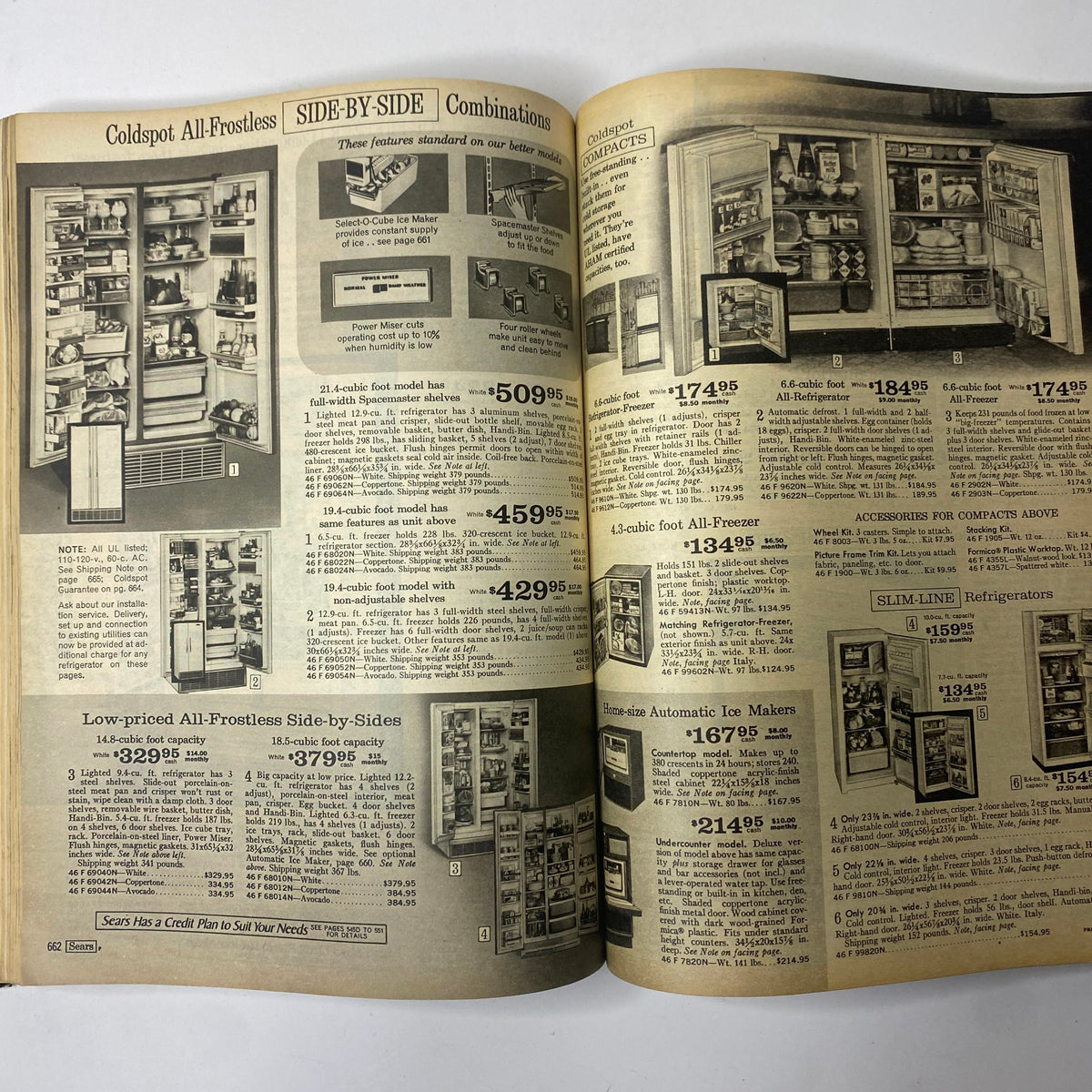
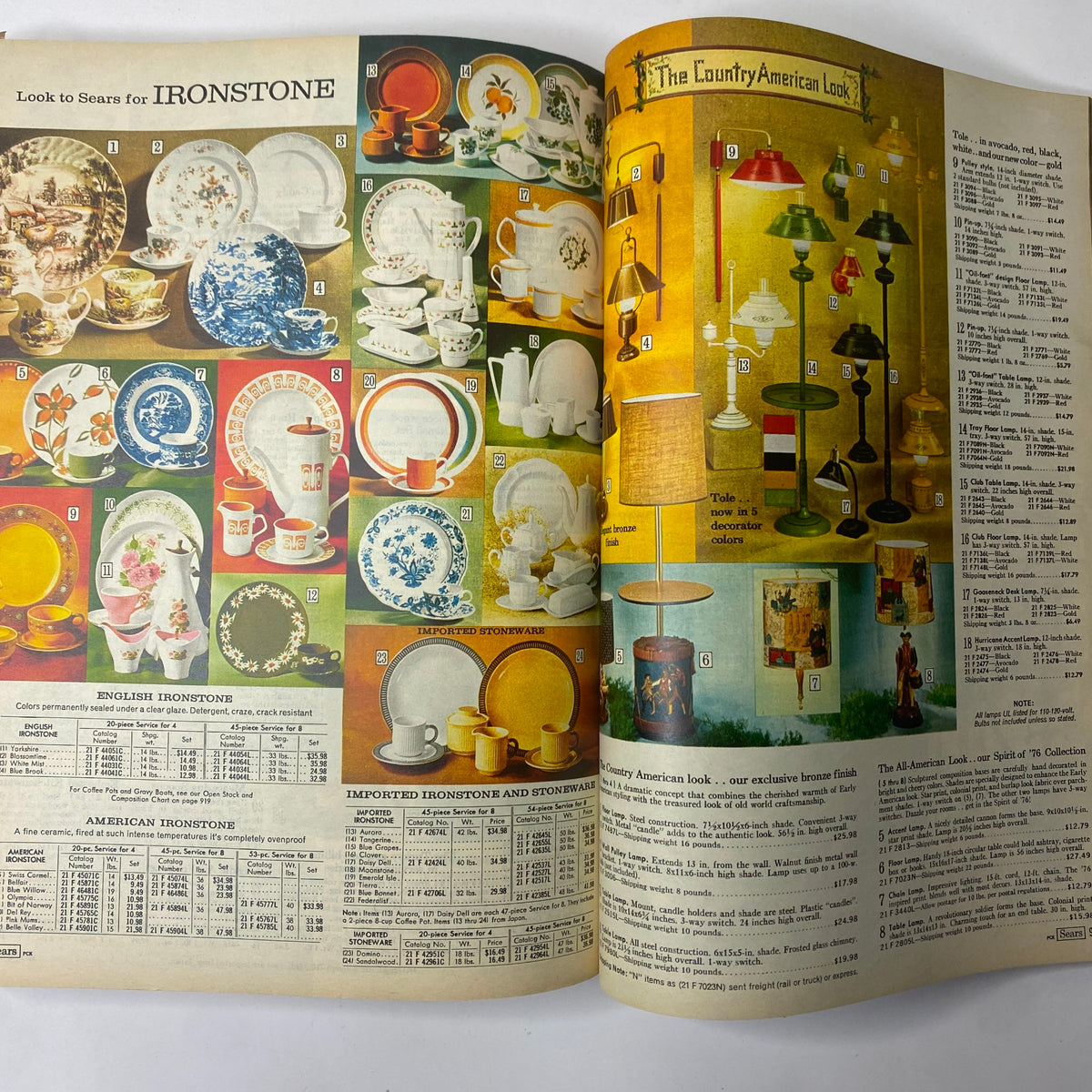
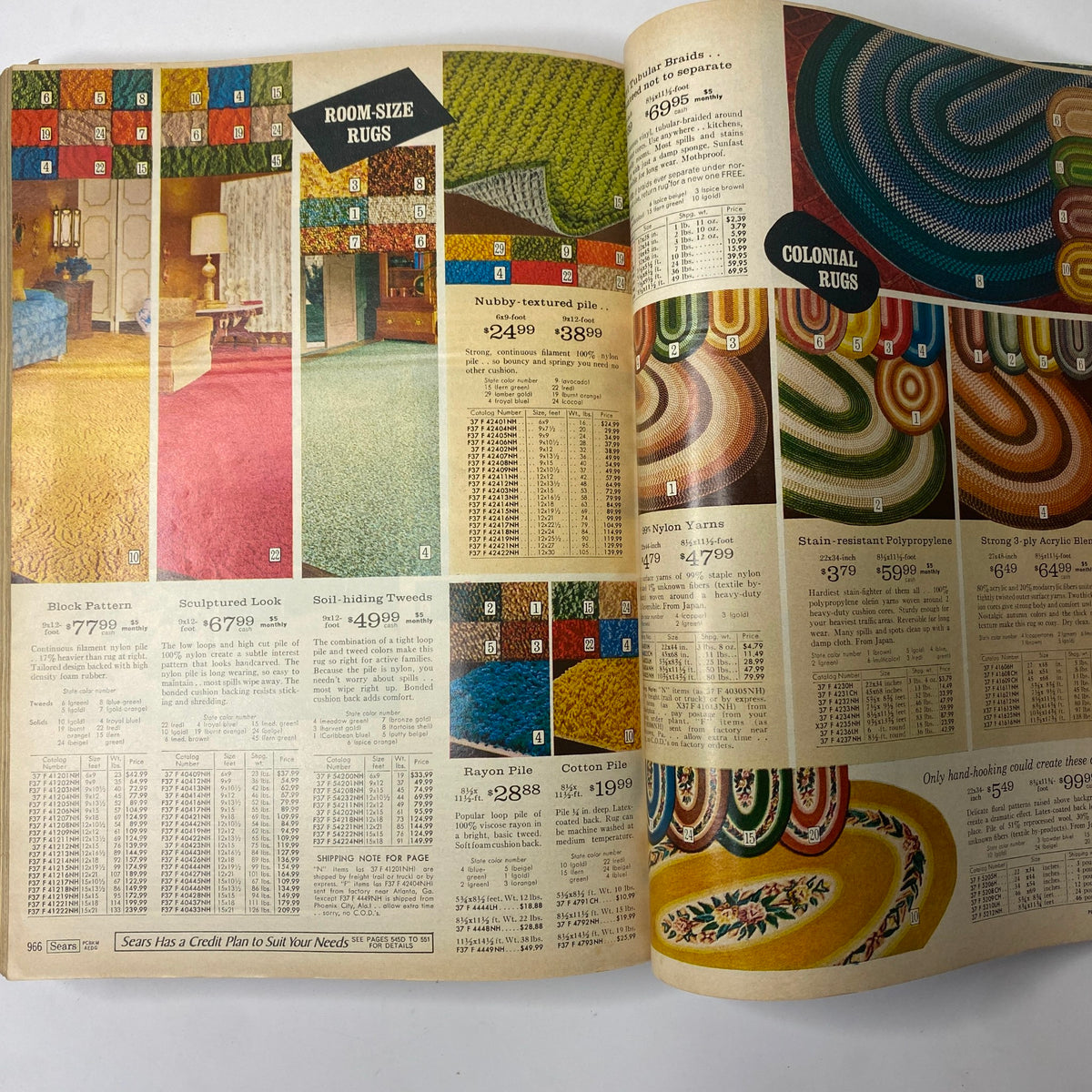
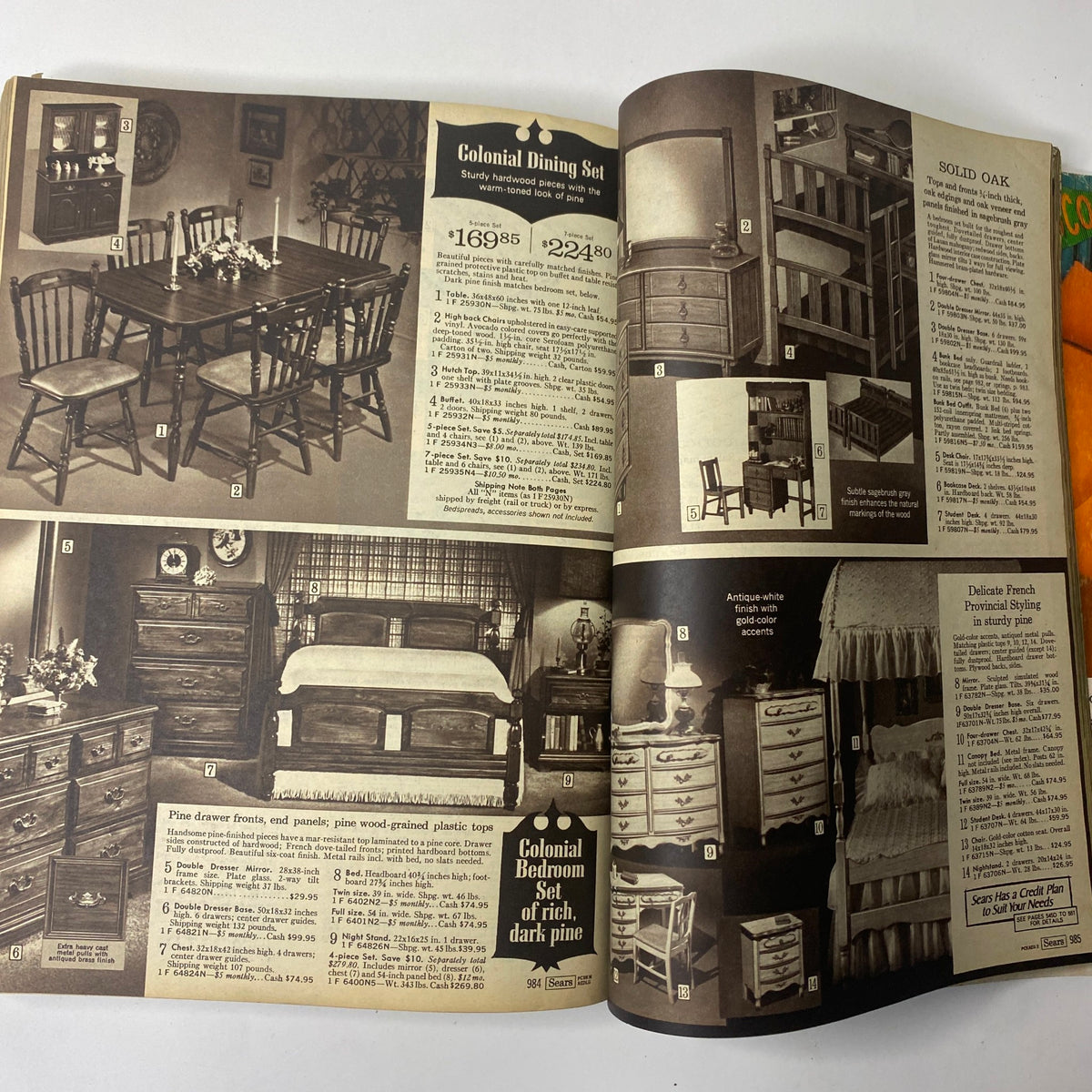
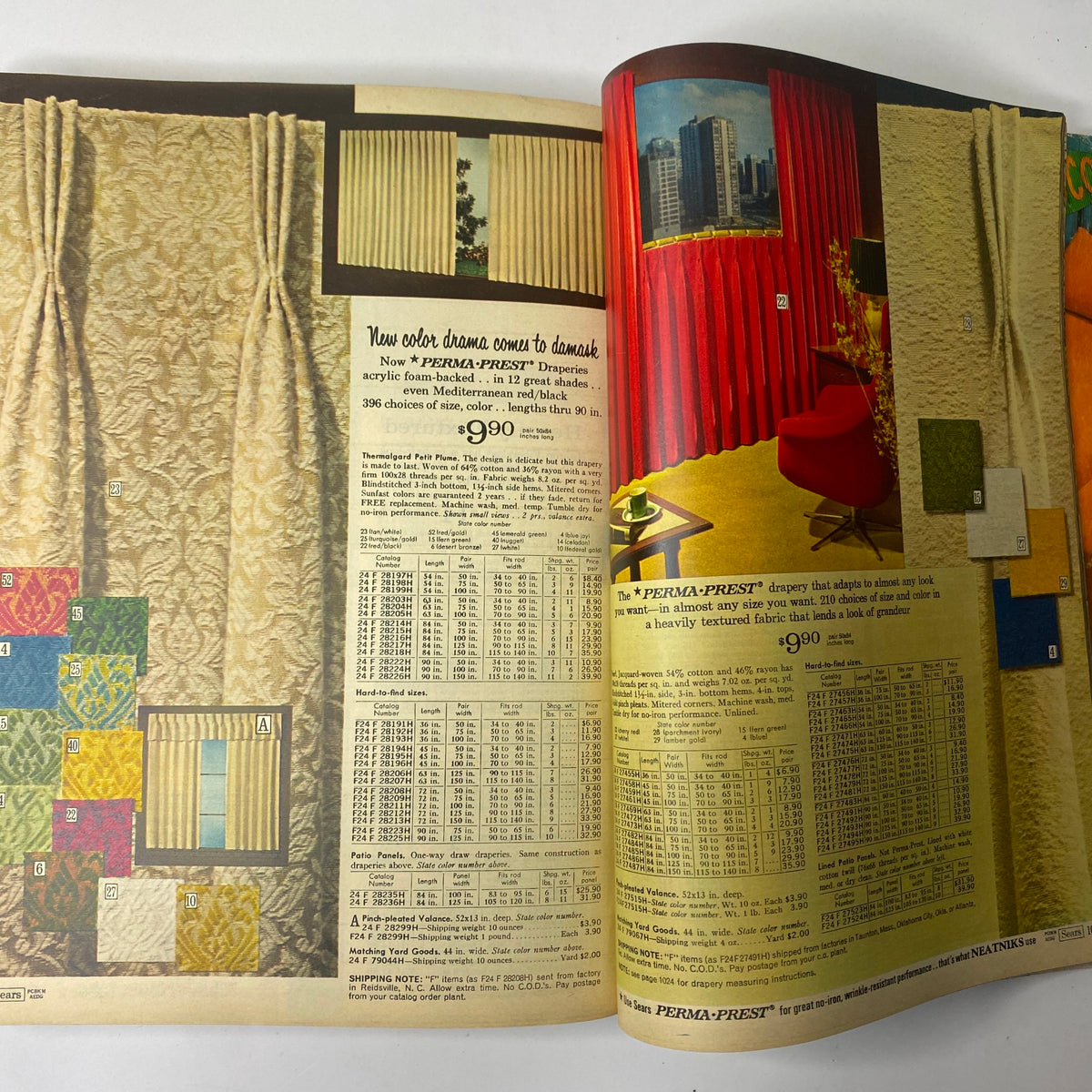
- Mid-century furniture and home décor documentation — The confirmed furniture, kitchen essentials, and home décor content documents the specific visual and material vocabulary of American domestic design at the end of the 1960s — the moment of transition between the mid-century modern aesthetic's mainstream dominance and the earthier, more eclectic interior design sensibility that would characterize the early 1970s.
- Over 1,000 pages — one of the most comprehensive single consumer documents of the era — The confirmed page count places this catalog among the most comprehensive single commercial documents produced by American retail in 1969, providing primary pricing and product documentation across an unusually broad range of consumer categories simultaneously.
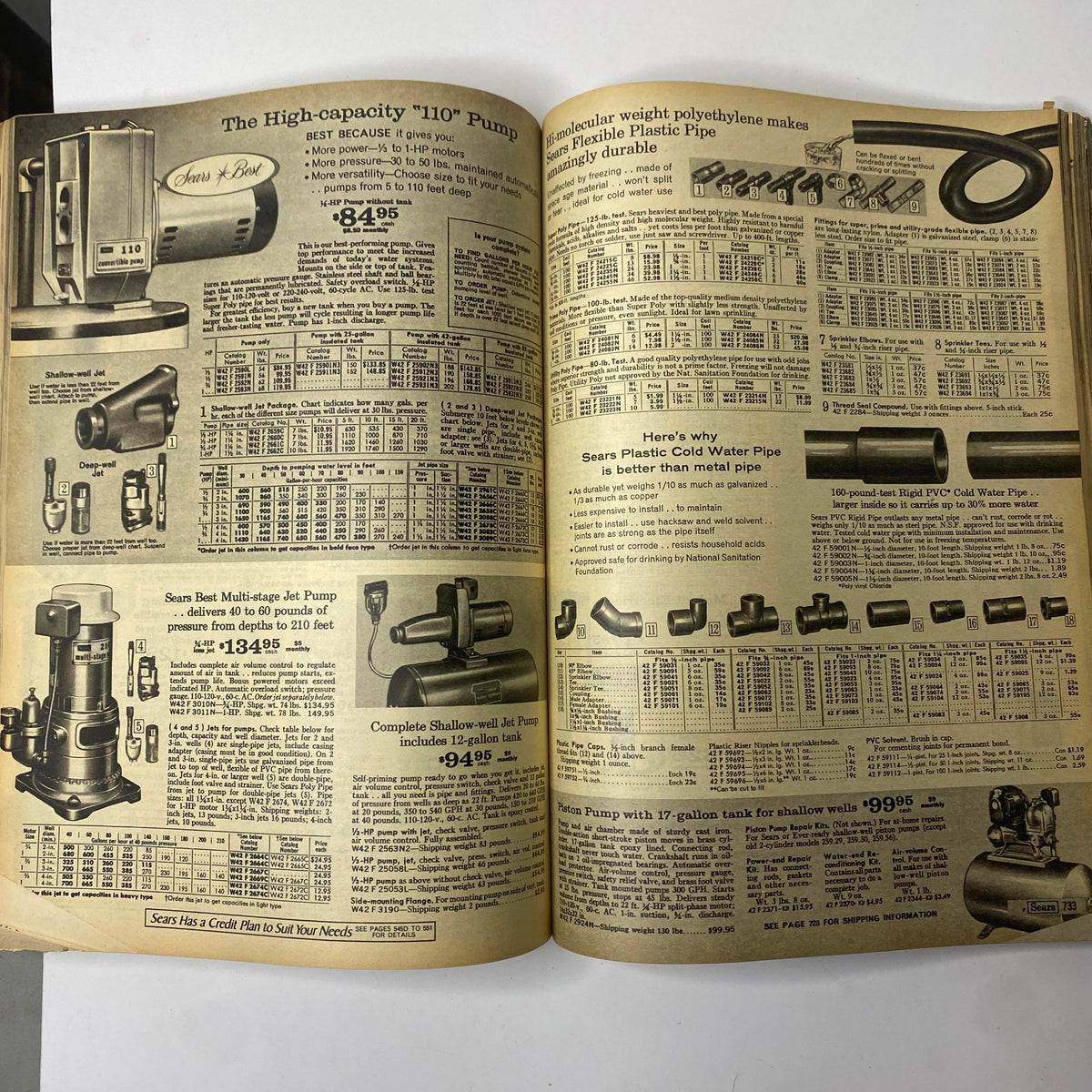
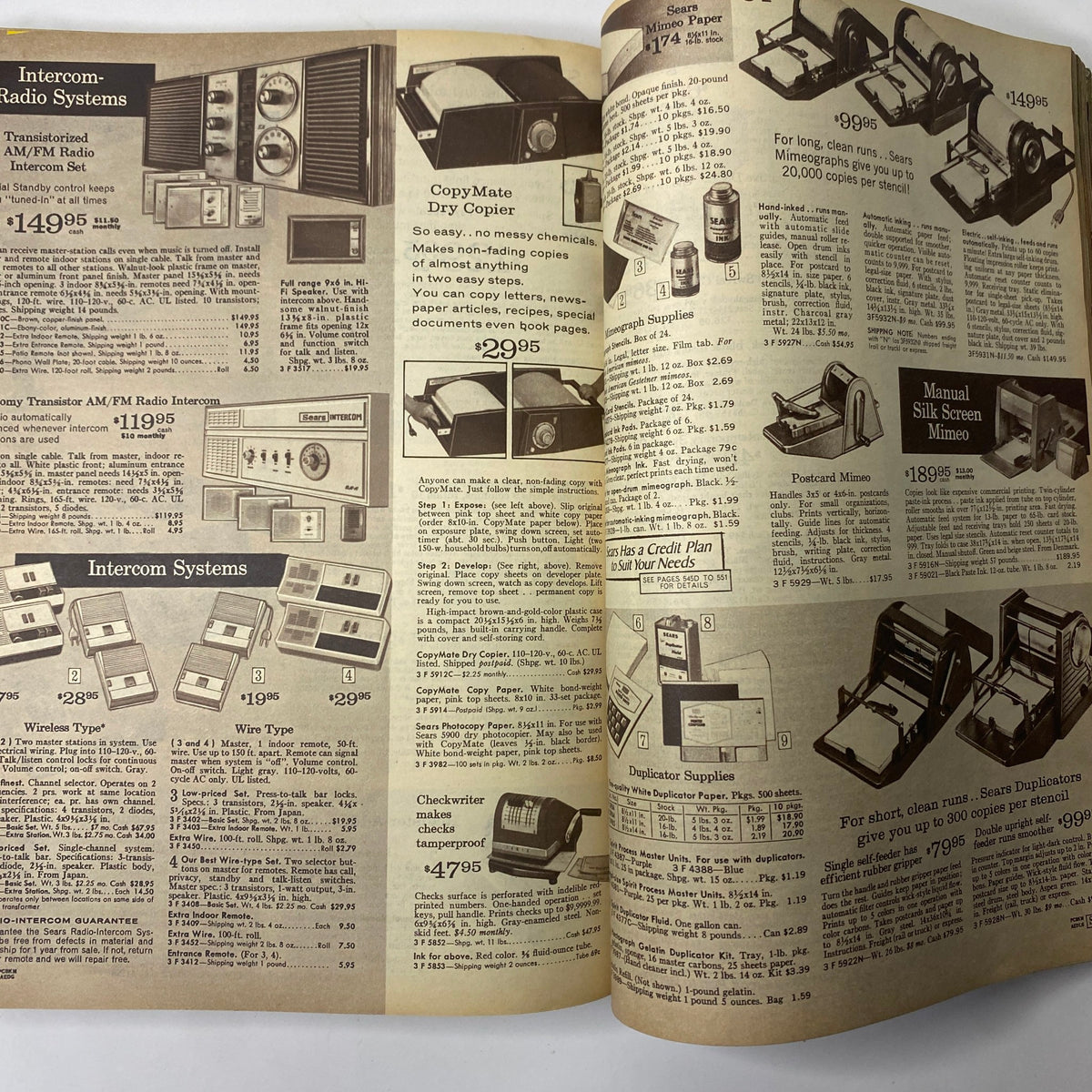
- Electronics and seasonal essentials documentation — The confirmed electronics and seasonal merchandise content documents the specific consumer technology and seasonal goods market of late-1969 America, preserving primary commercial evidence of the products and price points available to mainstream American consumers at a specific moment in the rapid development of consumer electronics and seasonal retail.
- Note: Specific fashion brand names, individual toy model documentation, furniture manufacturers, and the complete product and pricing details across all catalog categories have not been independently verified beyond the listing description. The highlights above reflect what is documentable from the listing and the well-established historical context of Sears' 1969 fall-winter catalog format and scope.
Condition & Rarity
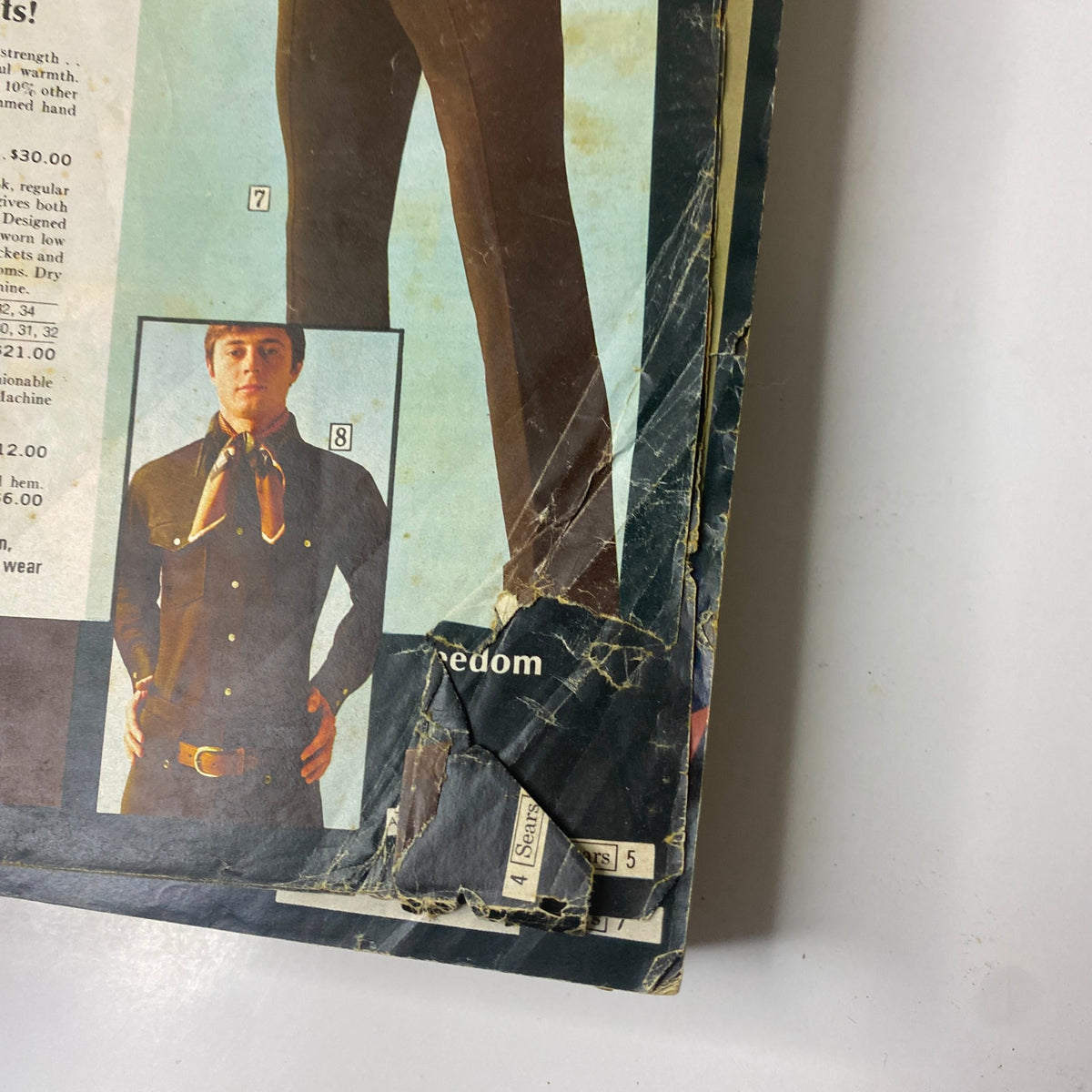
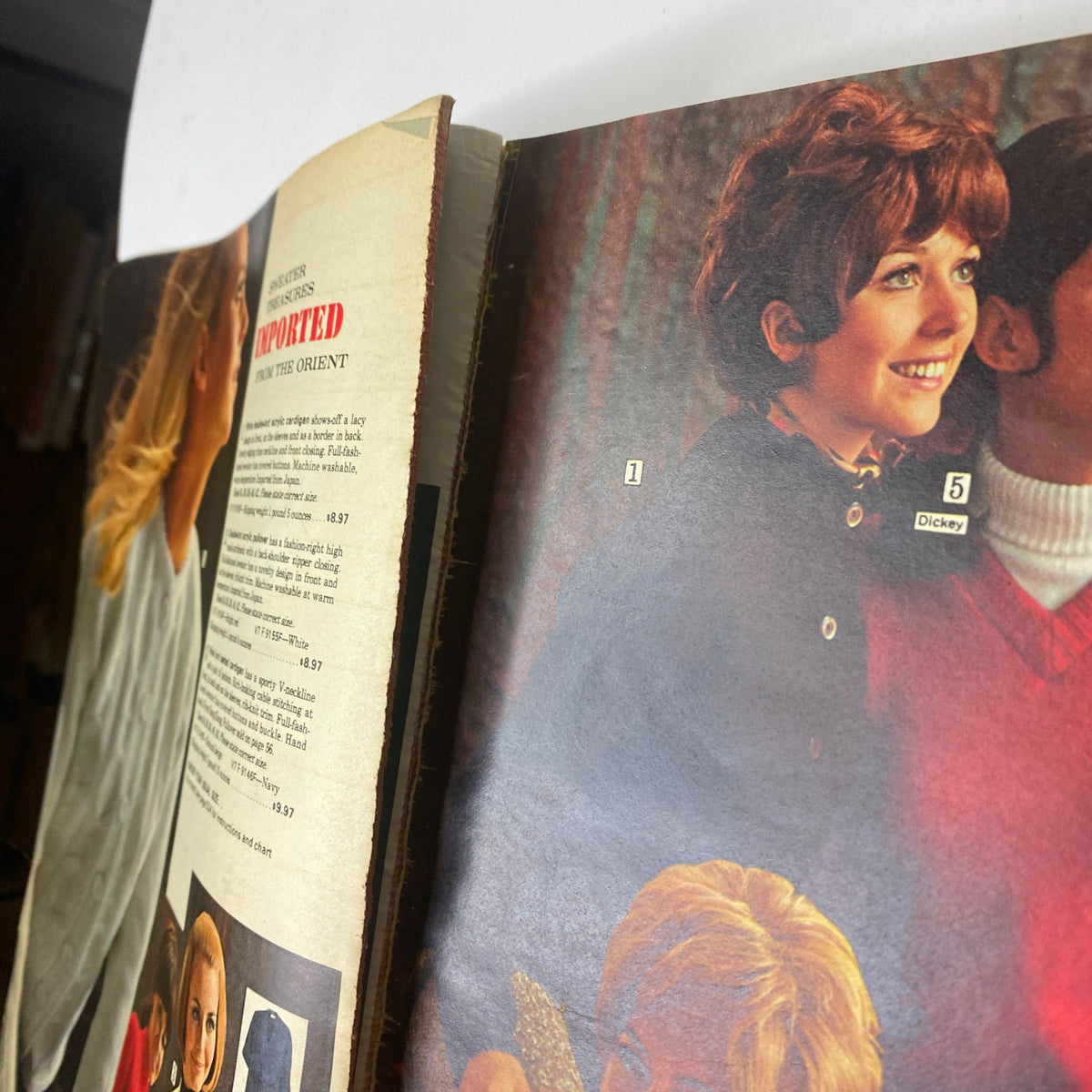
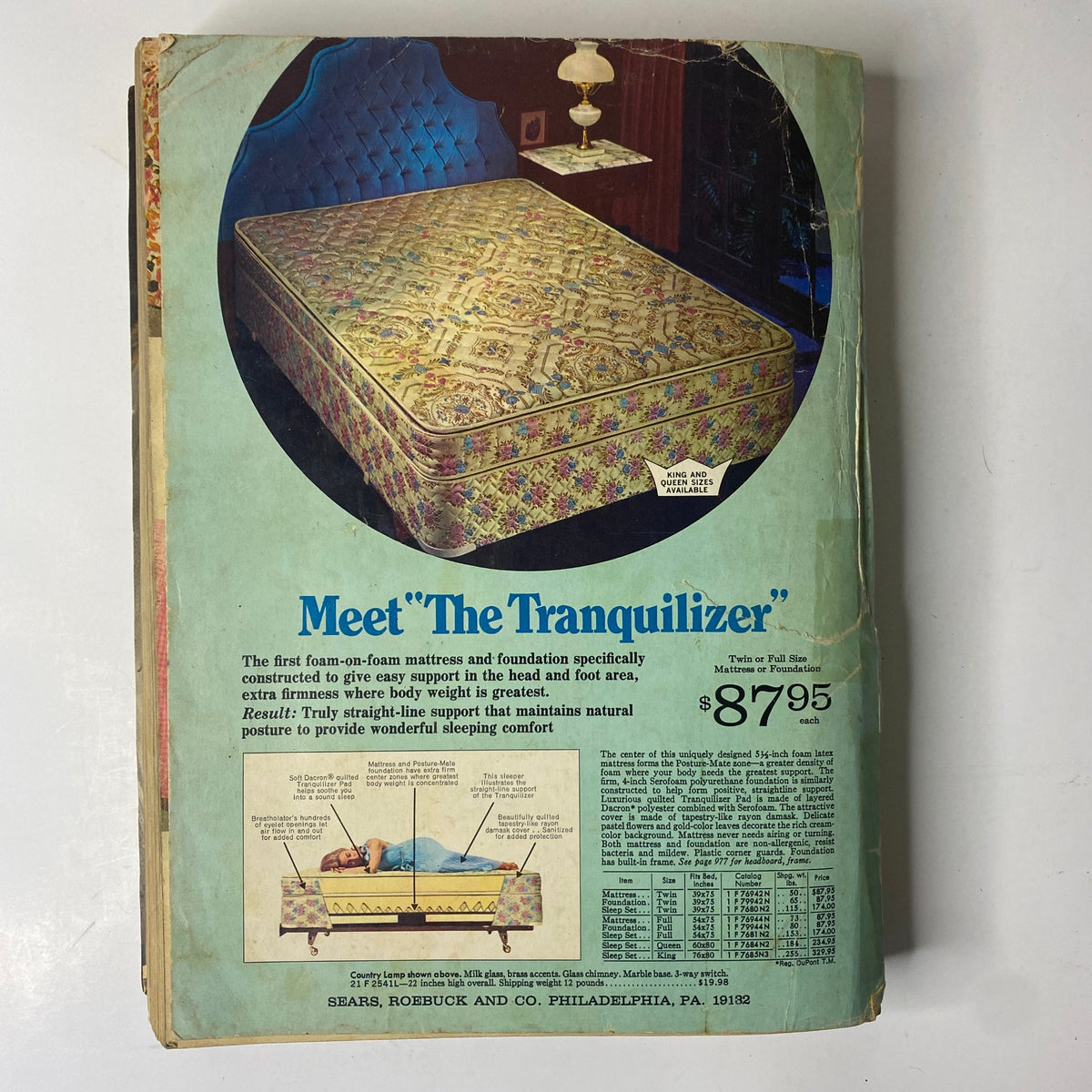
This catalog is described as being in acceptable condition with creases on the front cover and potential marks and rips within, with the listing directing detailed condition assessment to accompanying photographs. For a publication of this scale — over one thousand pages — and this age, acceptable condition with typical wear is an honest and expected characterization of a catalog that was actively used as a practical shopping and gift-planning reference by its original household, likely consulted repeatedly throughout the fall and winter shopping season and stored with the casual care that a working reference document rather than a collectible would typically receive. The creases on the front cover are the most visible surface-condition attribute and their impact on display quality depends on their placement relative to the cover's central imagery. The marks and rips within the catalog's interior pages require examination of the accompanying photographs to assess their extent and placement — for a thousand-plus-page catalog, marks and rips in back sections or specialty merchandise areas are considerably less consequential for most research purposes than equivalent damage in the fashion or toy sections that constitute the catalog's primary collector interest. The listing does not specify whether an address label is present on the cover, which is worth verifying from the photographs — direct-mail delivery was Sears' primary distribution method, and most surviving fall-winter catalogs from this era carry labels that have permanently bonded to the cover stock. A catalog in acceptable condition with its primary content sections accessible and readable represents a legitimate and usable primary source from a publication category that was designed for active use and that most original recipients ultimately discarded.
Looking for More Issues Like This?
Sears fall-winter catalogs from 1969 — with their thousand-plus pages documenting the full breadth of late-1960s American consumer culture across fashion, toys, furniture, electronics, and seasonal goods — are actively sought by fashion historians, toy collectors, material culture researchers, retail ephemera specialists, and consumer culture scholars who recognize these publications as among the most comprehensive single-volume primary sources available for the period. If this 1969 fall-winter edition is no longer available, the Sears catalog collection at OriginalMagazines.com is the most comprehensive resource for exploring what else has surfaced from this foundational American retail publishing tradition across its full span of production years. For collectors building a broader documentary record of American consumer life, popular culture, and the extraordinary social and cultural transformations of 1969, the 1969 magazines collection brings together a wide range of primary source material from one of the most historically dense and consequential years in twentieth-century American life.