
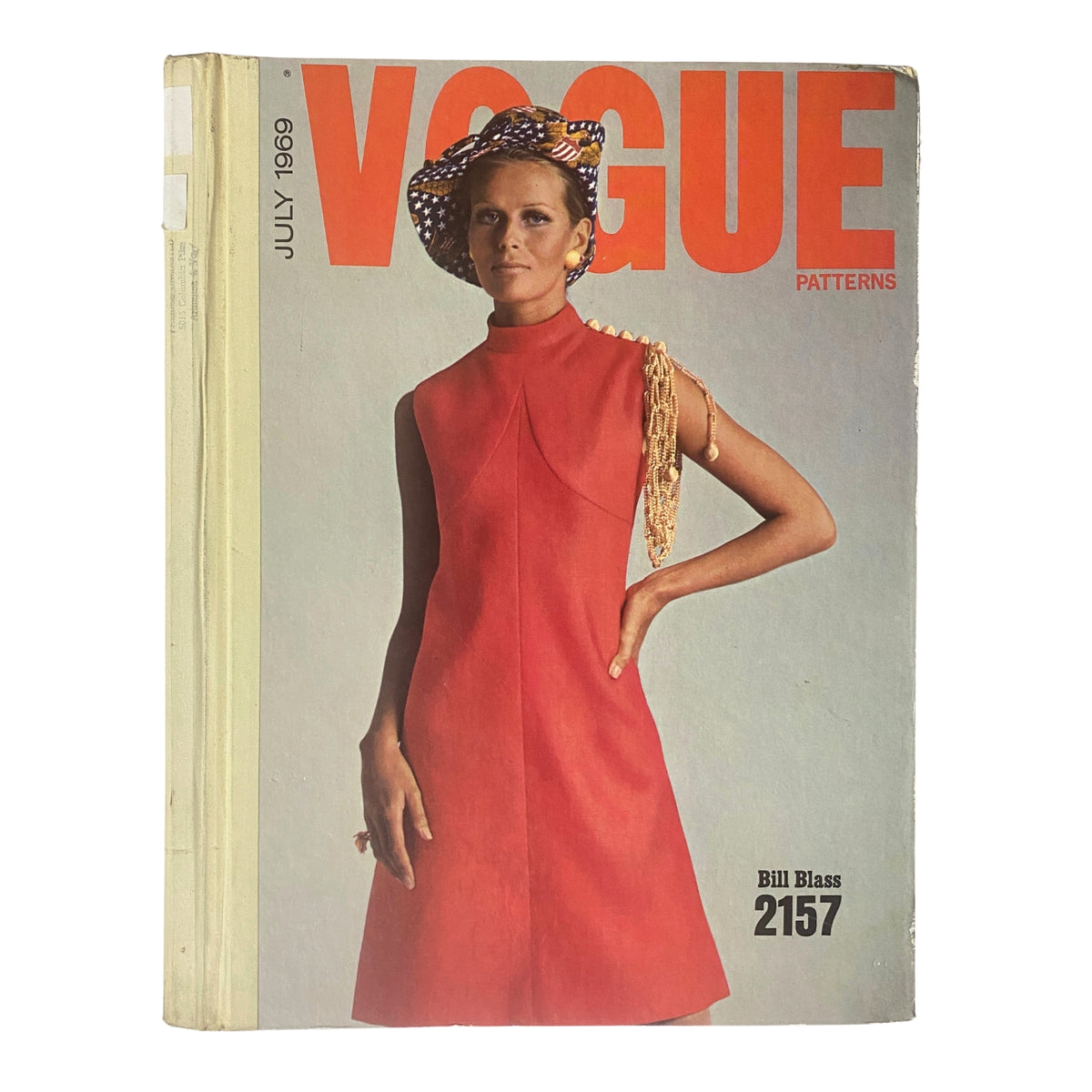
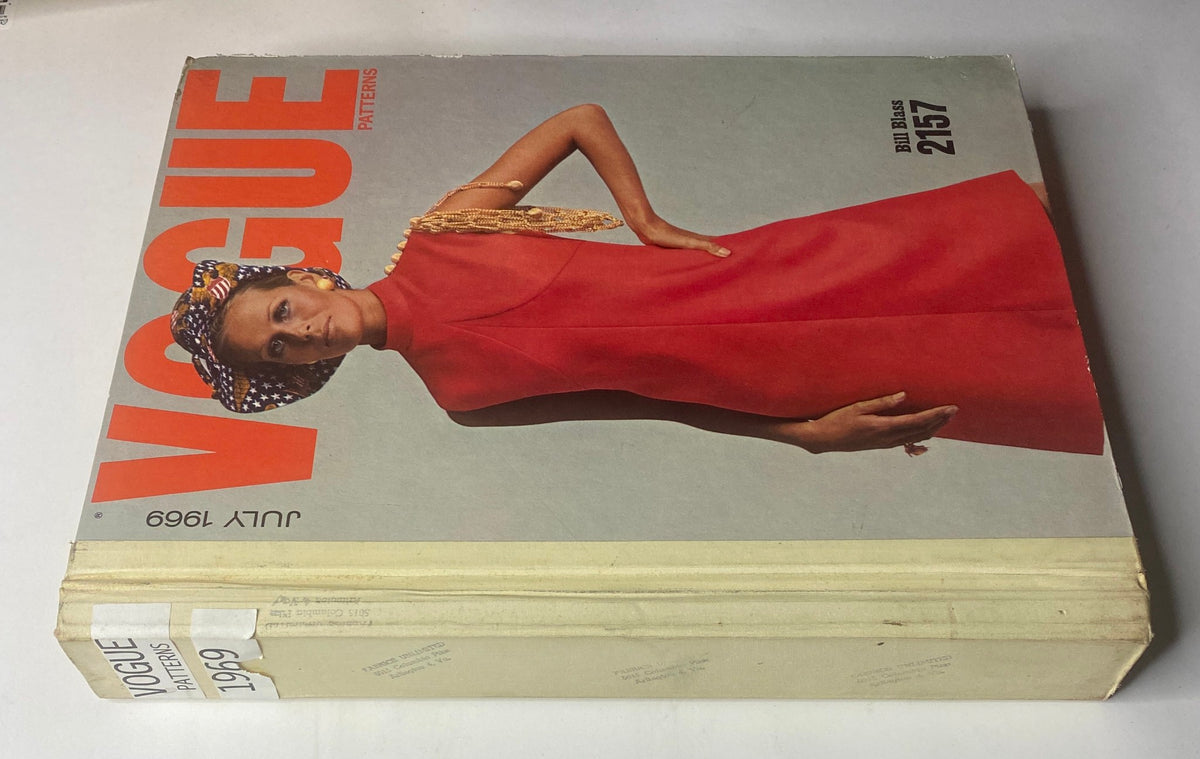
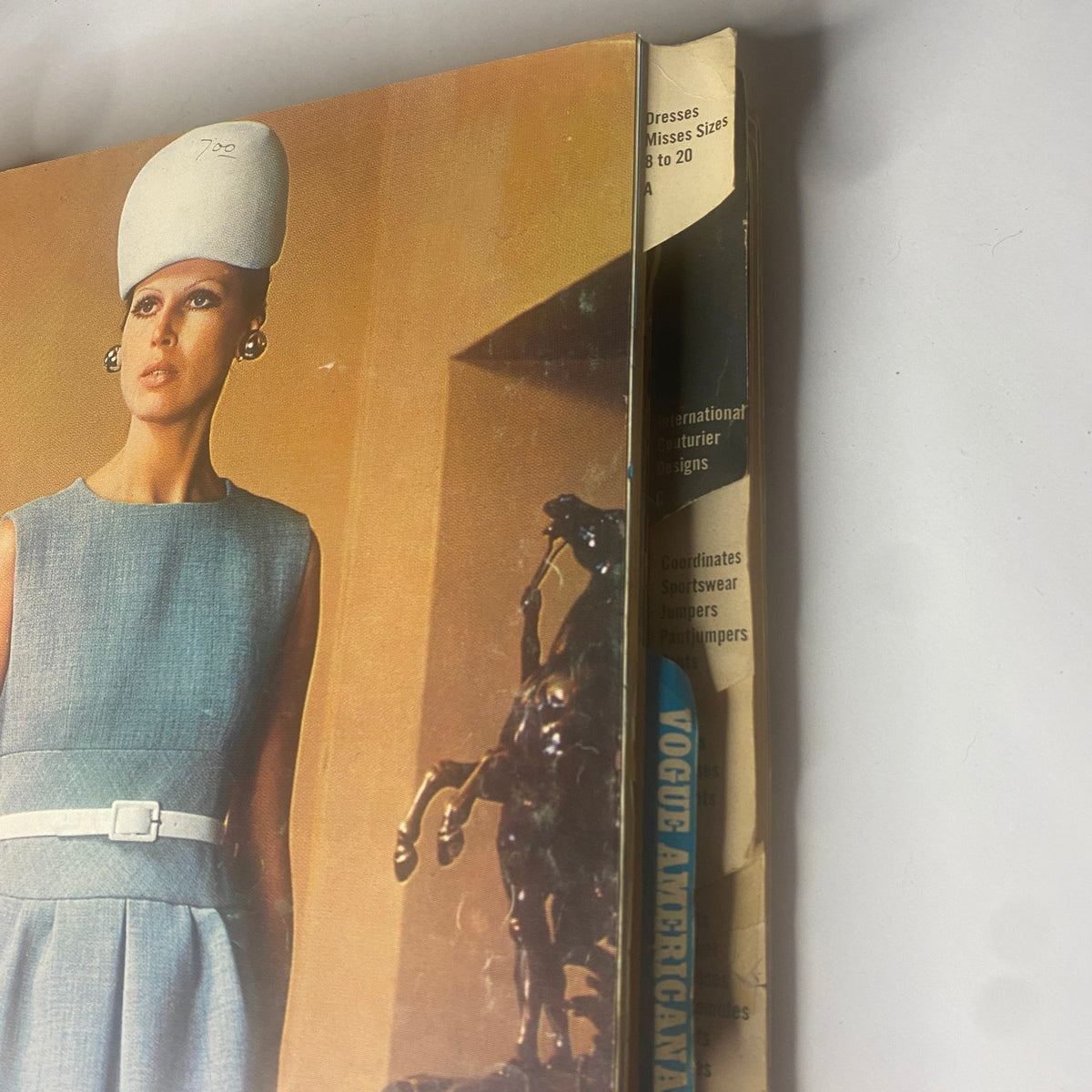
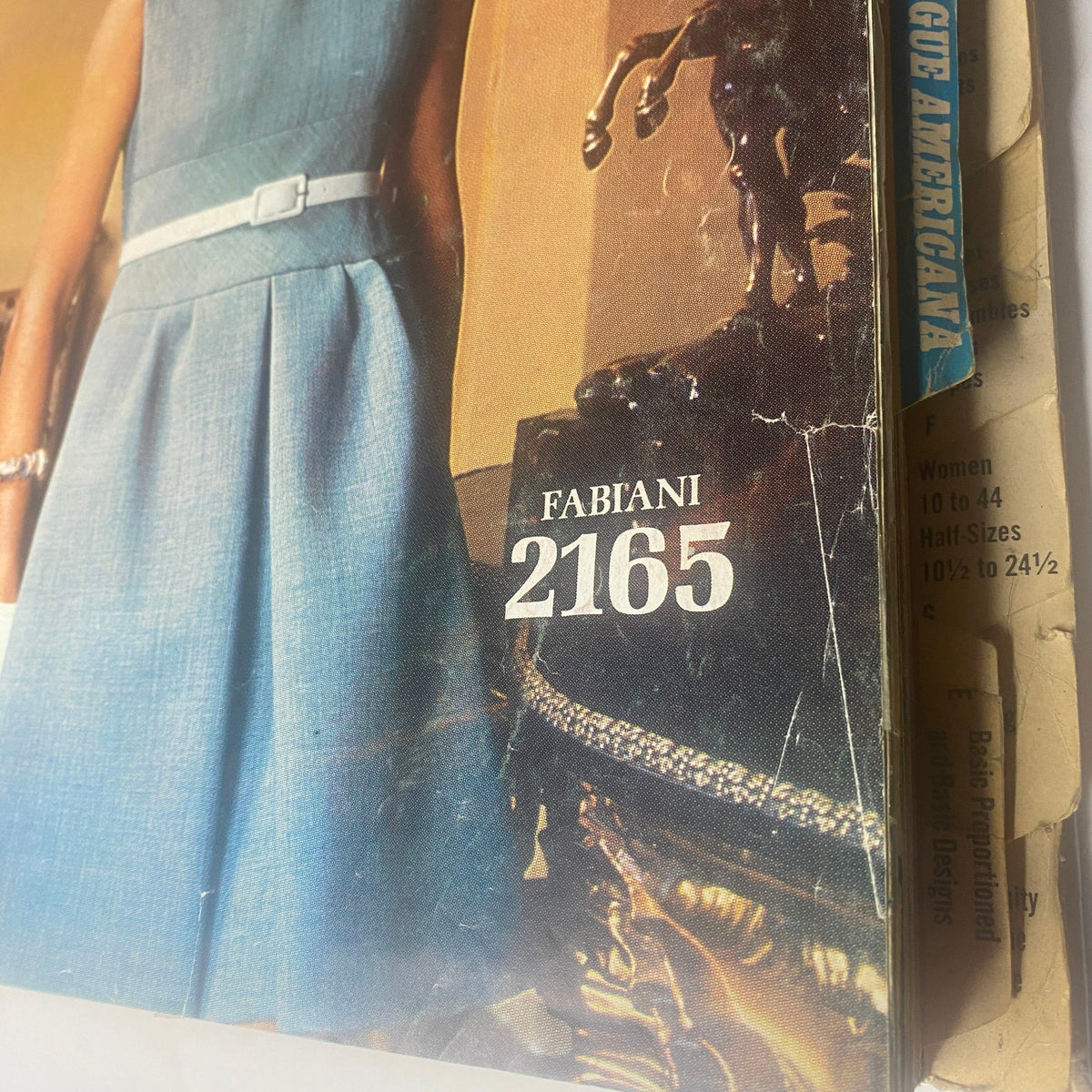


Description
Collector's Note – Why This Issue Matters
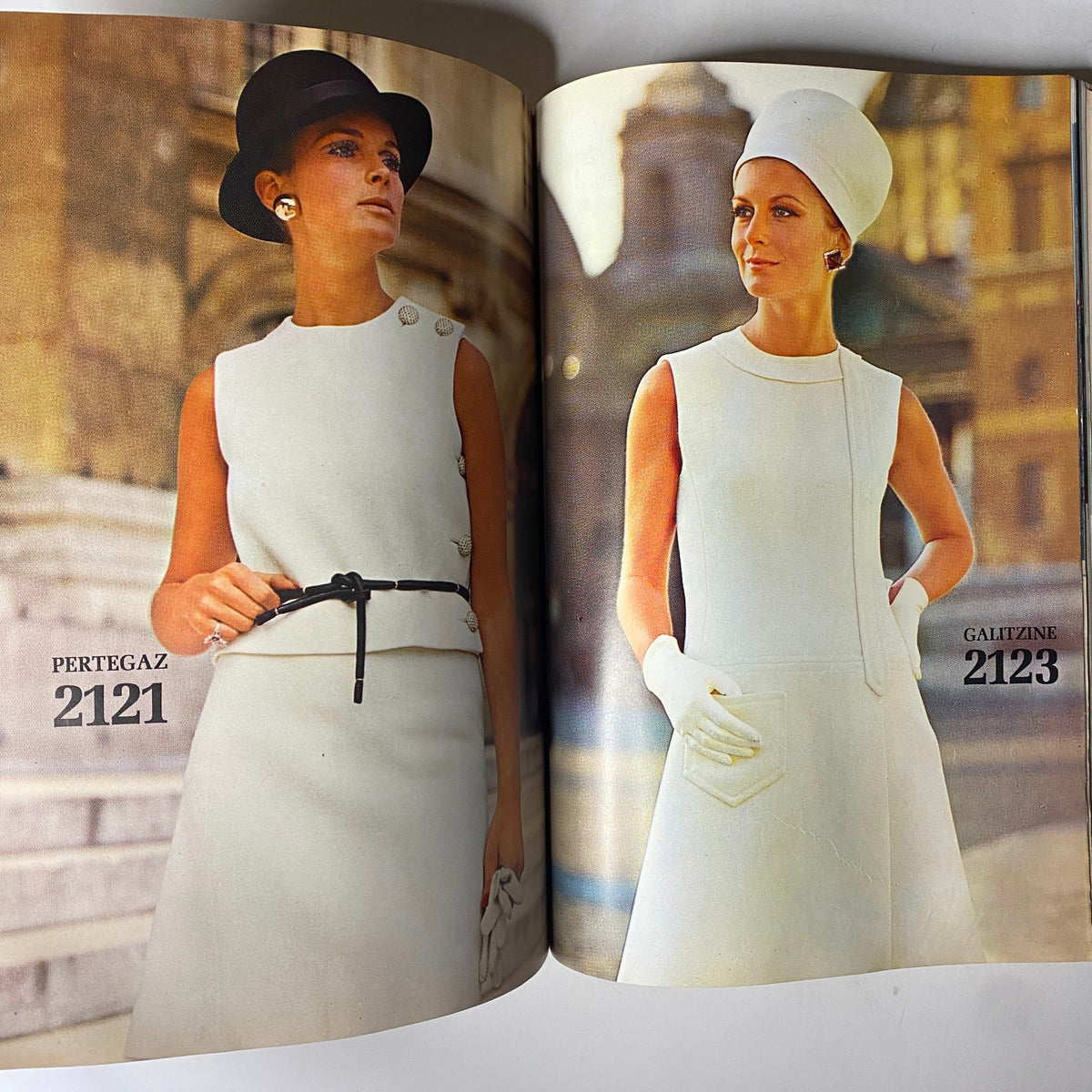
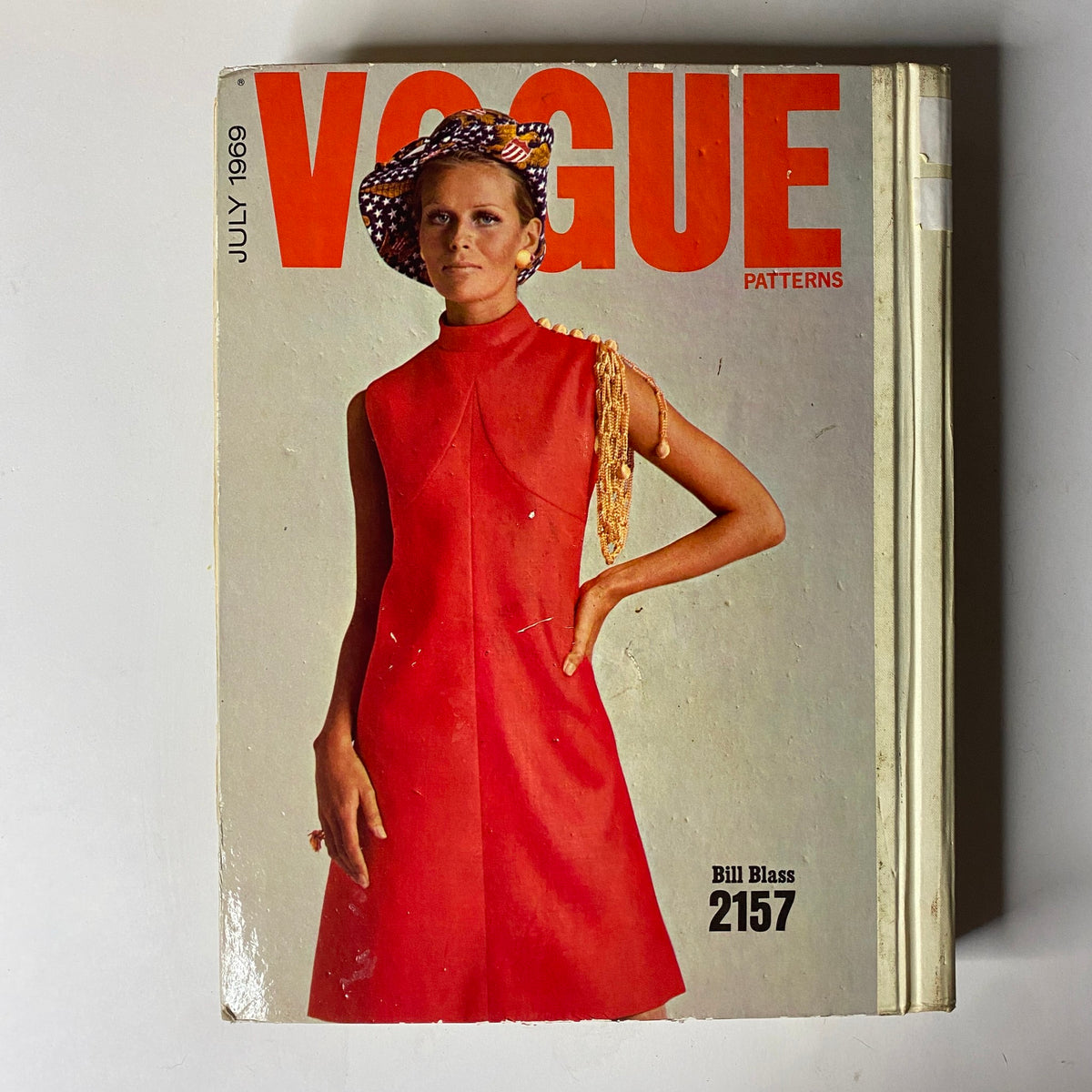
The July 1969 Vogue Patterns catalog arrived at one of the most dynamic and contradictory moments in twentieth-century fashion history. By mid-1969, the fashion world was navigating an extraordinary tension between the structured elegance that had defined the early and mid-1960s and the radical experimentation — mini skirts, op-art prints, unisex silhouettes, and the first stirrings of the maxi — that was pulling the decade toward its close. Vogue Patterns occupied a specific and important position in that landscape: it translated high fashion sensibility into home-sewable form, bringing the refined silhouettes associated with the Vogue name within reach of women who made rather than bought their wardrobes. A July catalog would have landed in fabric stores and sewing counters during peak summer sewing season, and its pattern offerings — wrap dresses, jumper-dresses, empire waists, and color-block designs — document precisely what the Vogue Patterns editors judged to be the most desirable and achievable looks of that moment. For collectors of vintage Vogue Patterns catalogs, the 1969 editions represent the brand at a genuine stylistic crossroads.
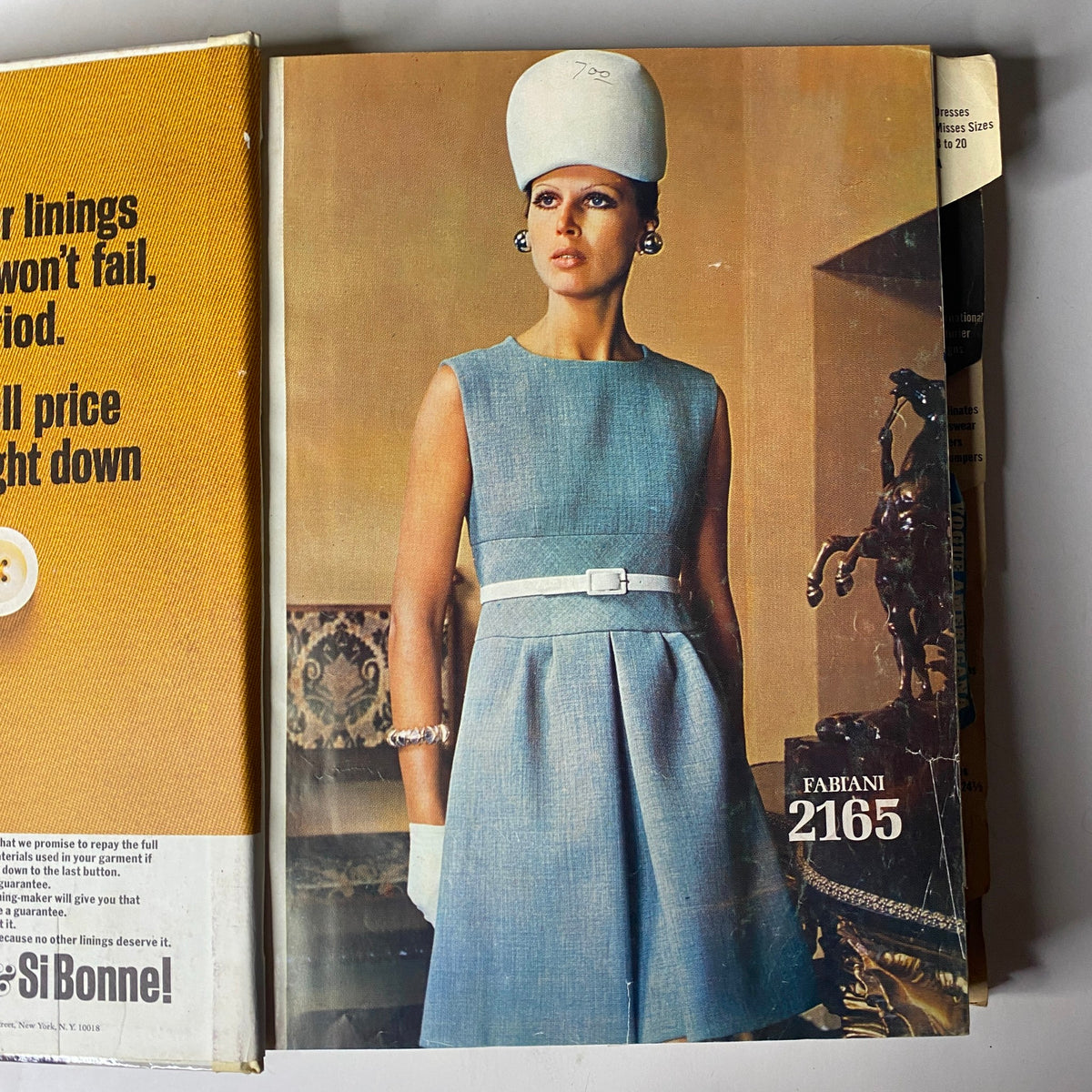
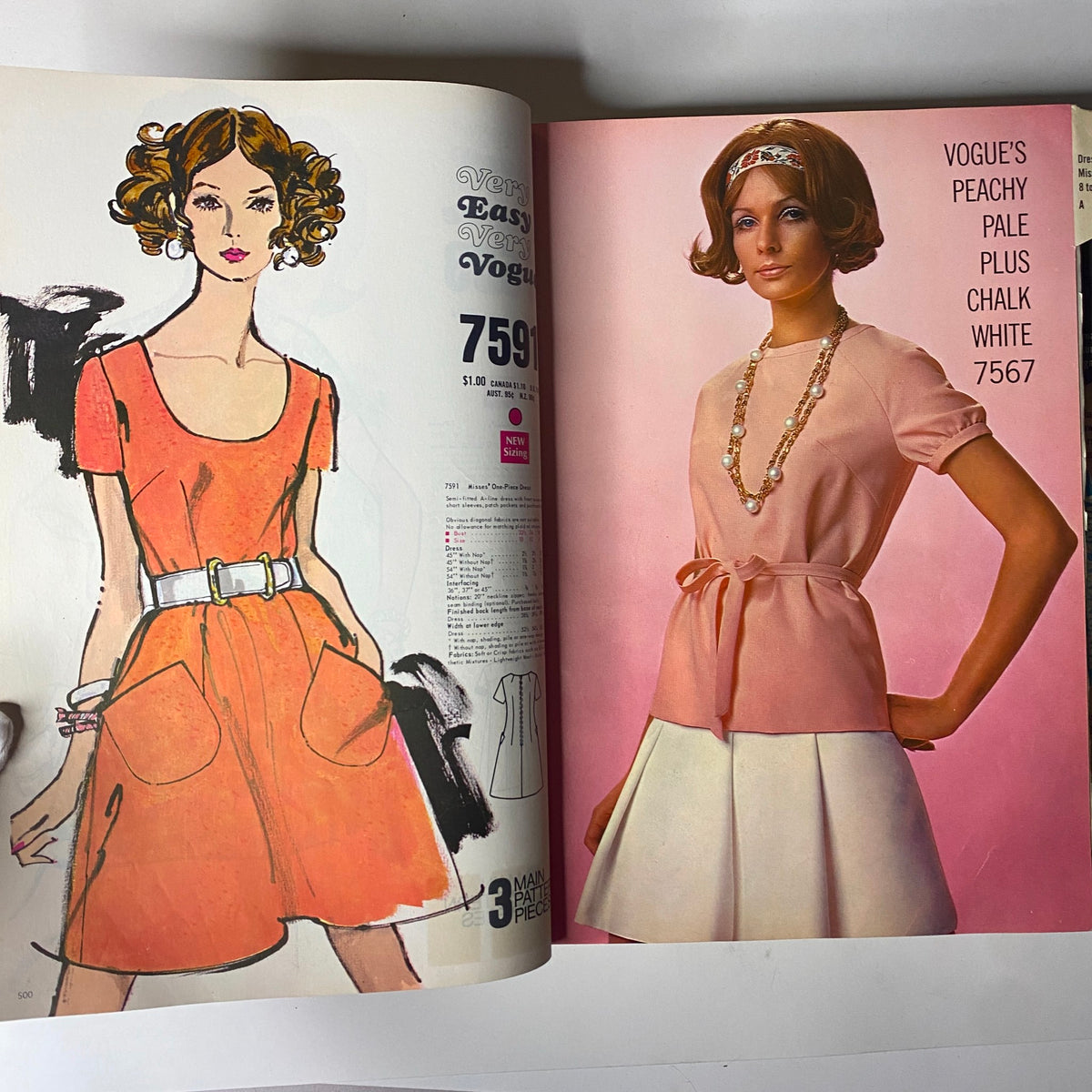
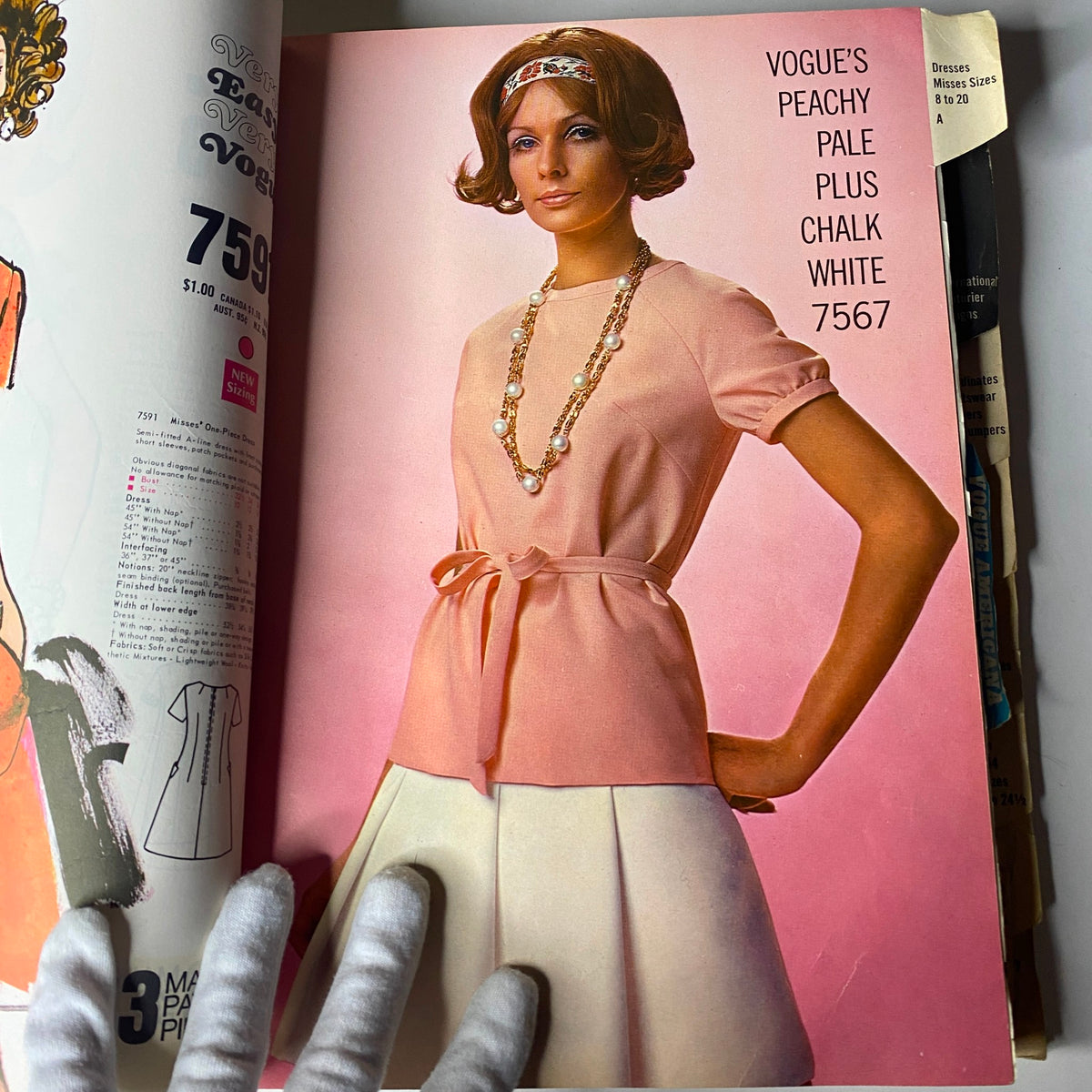
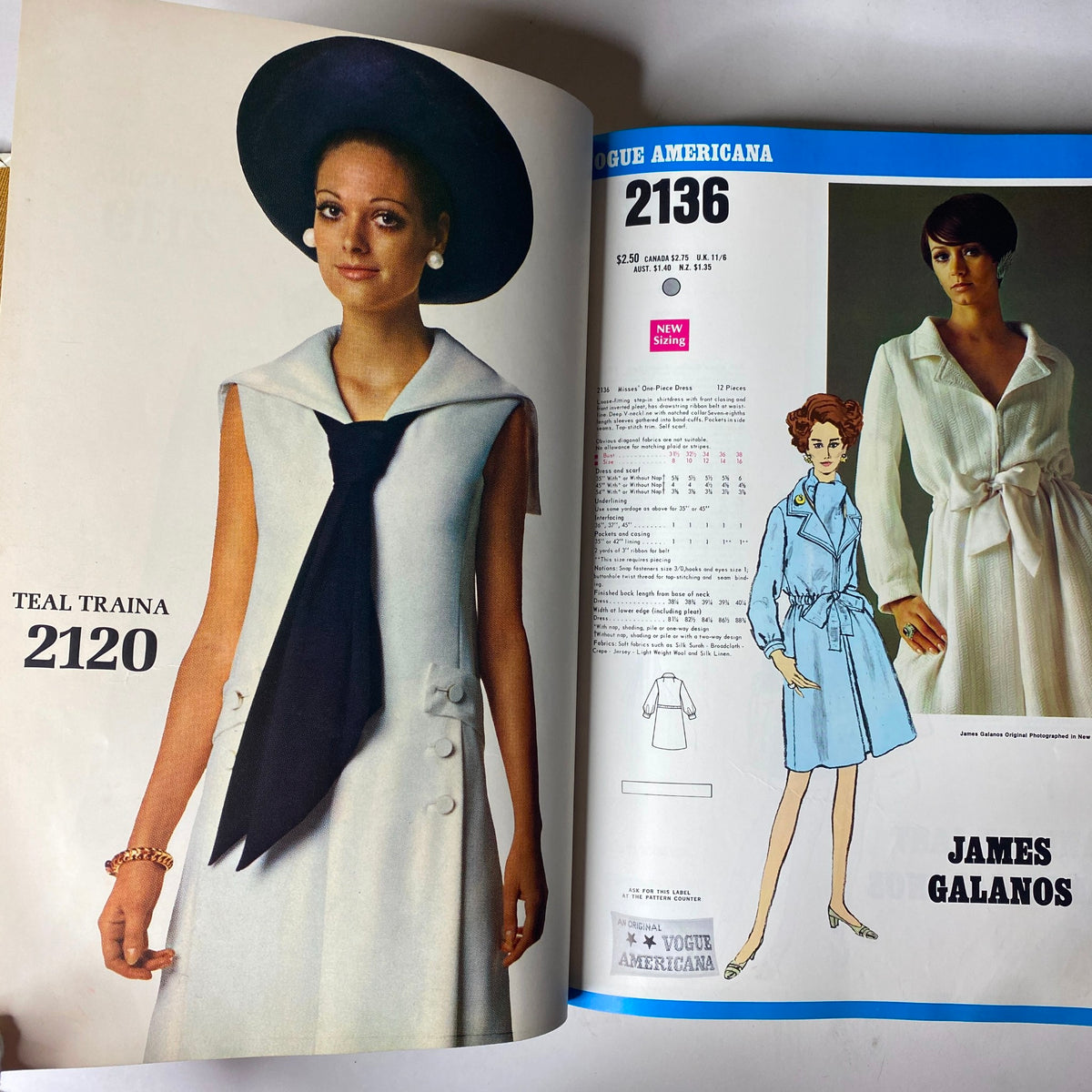
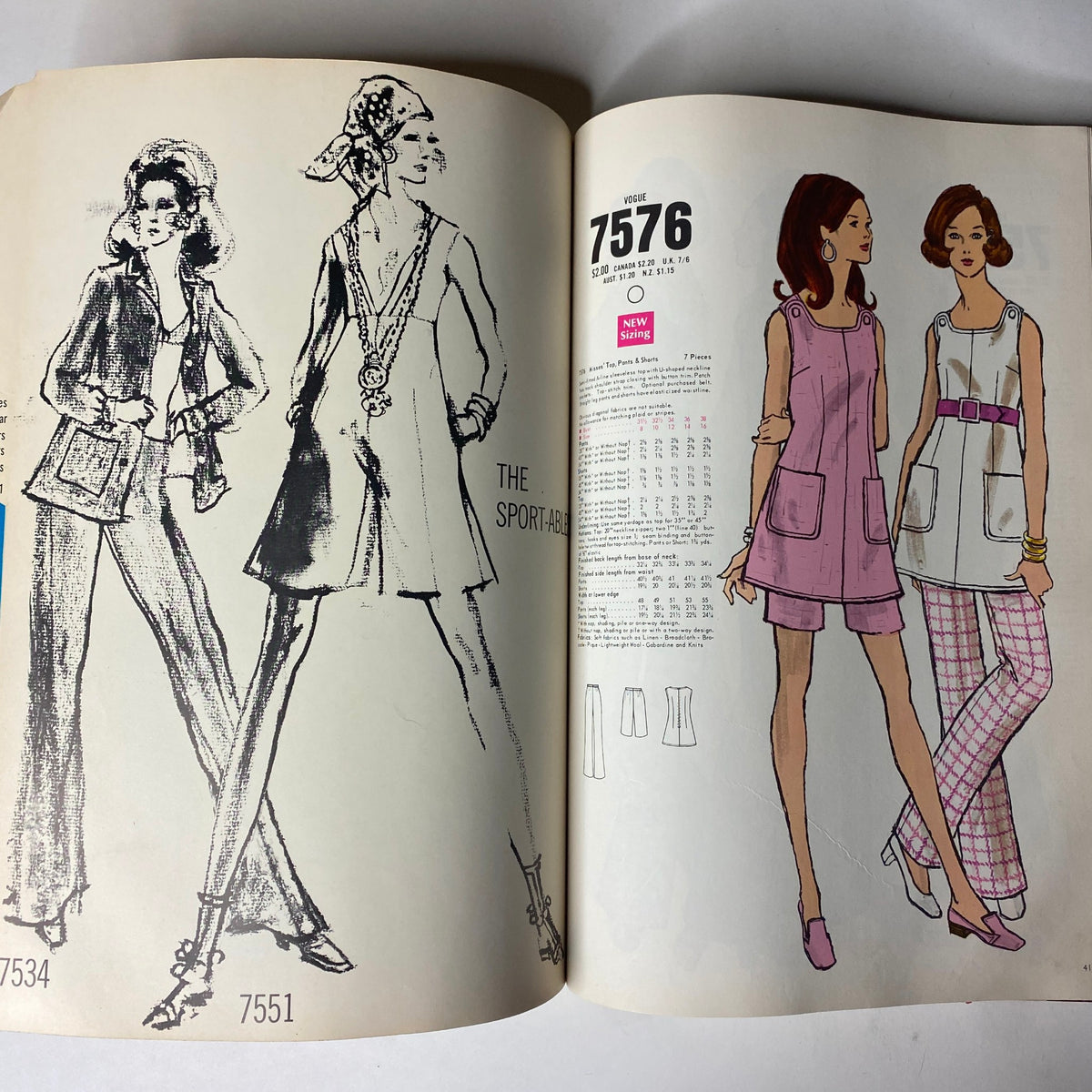
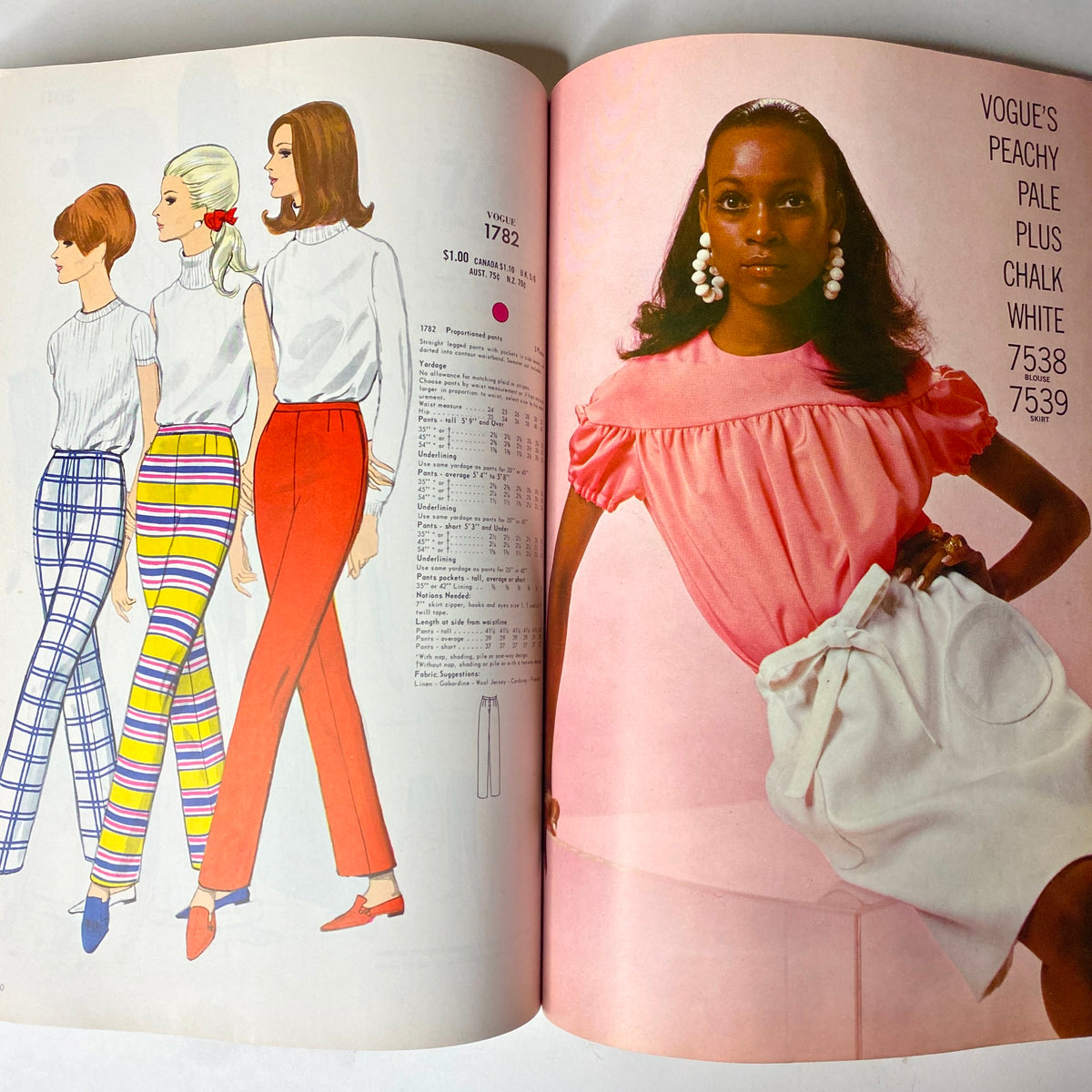
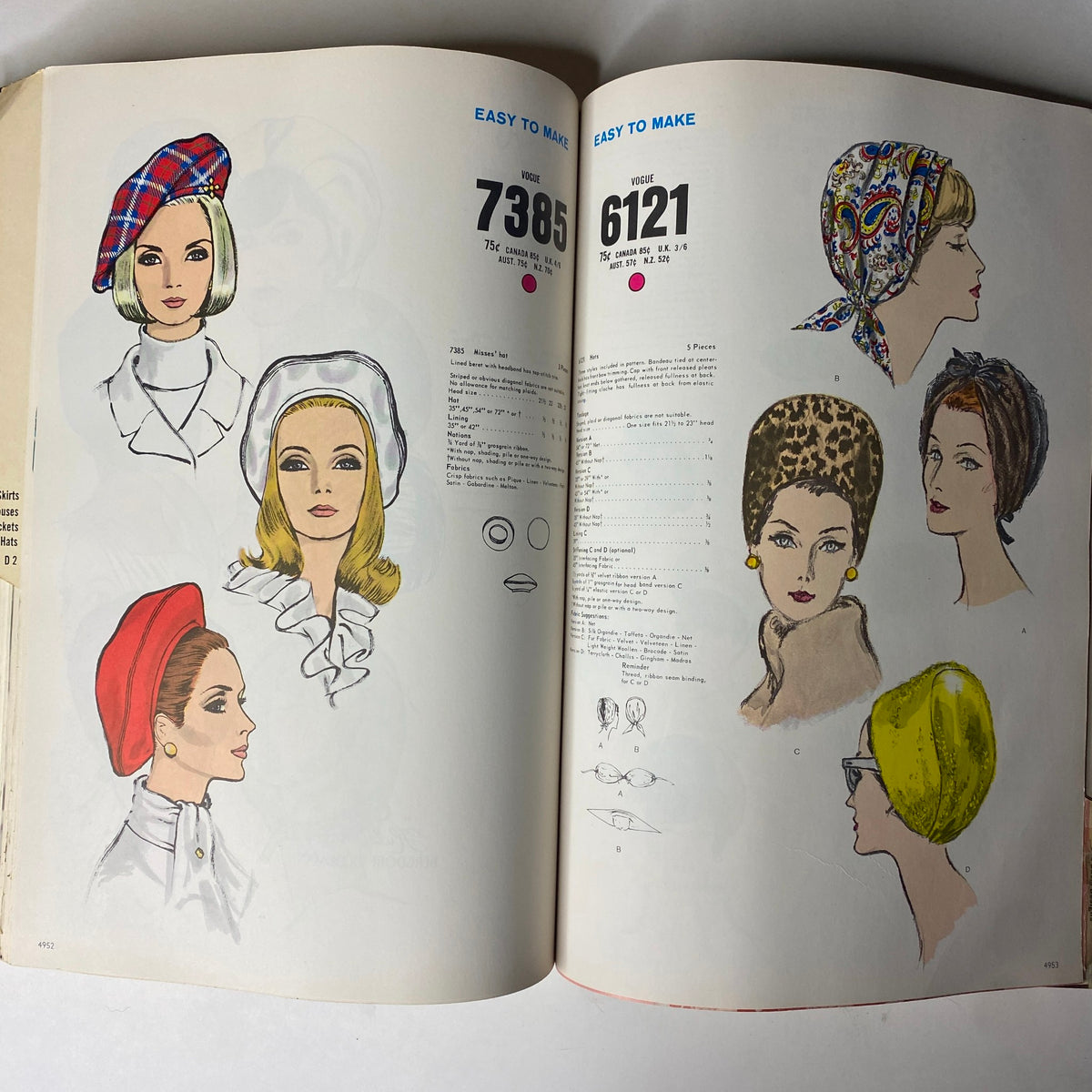
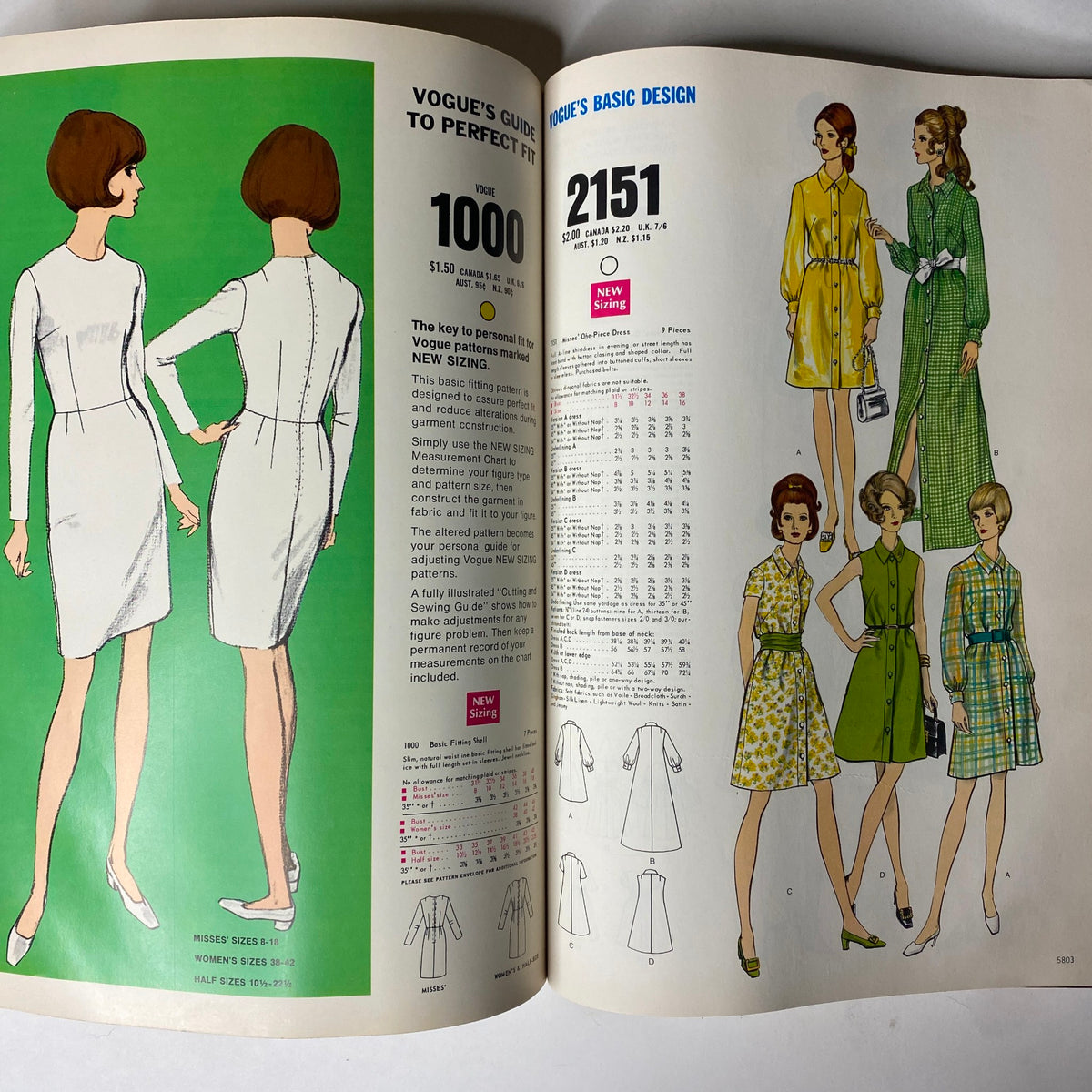
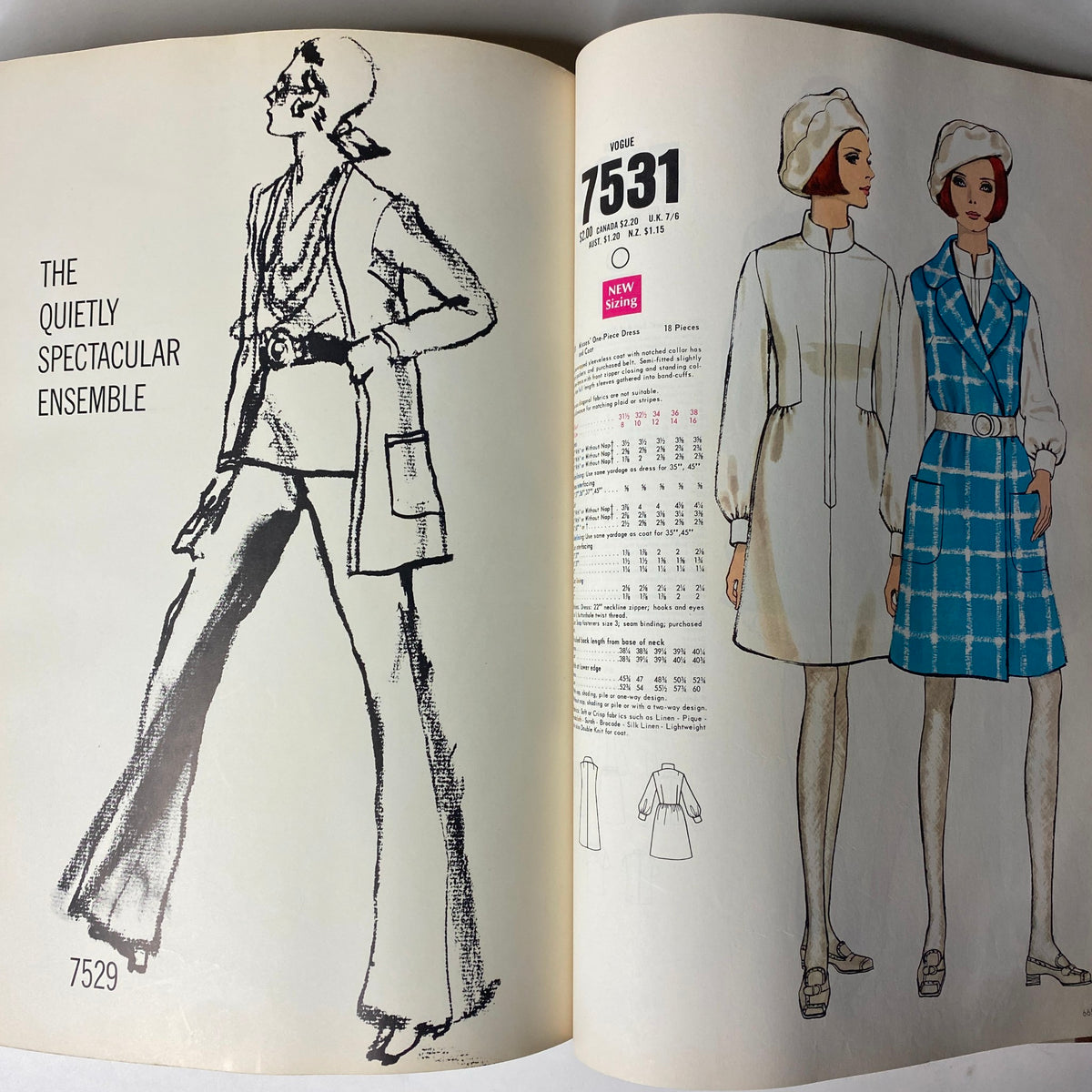
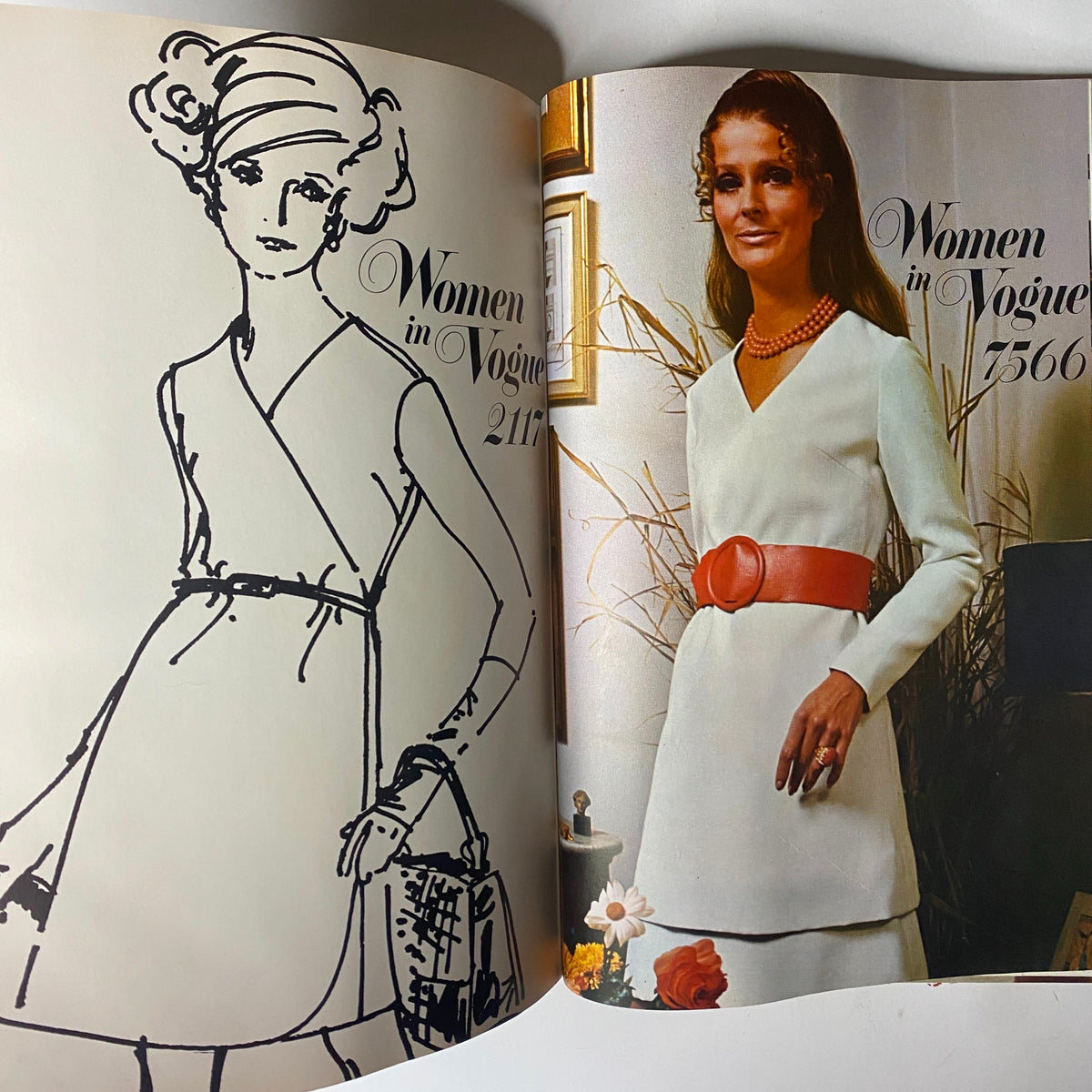
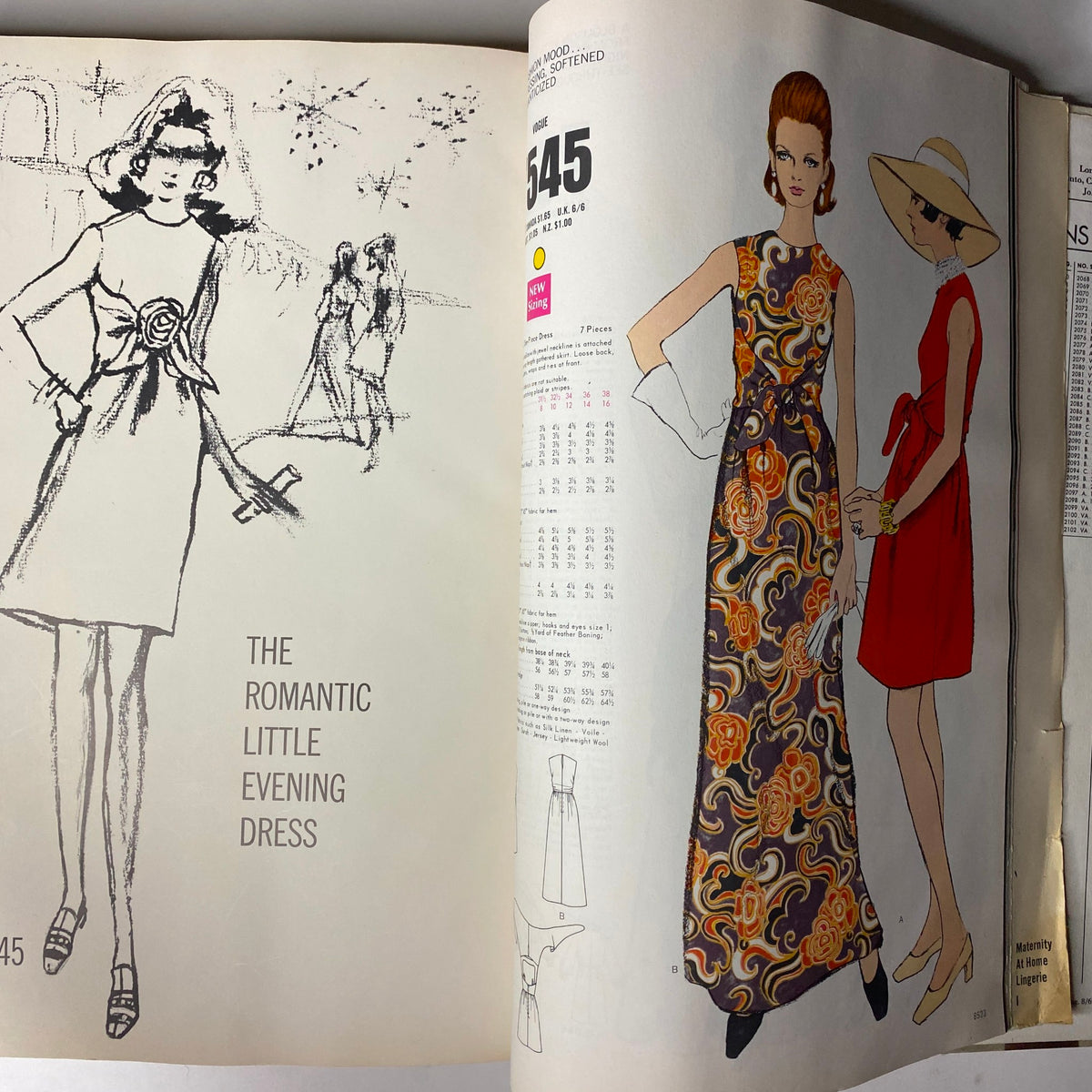
The specific patterns documented in this catalog — the empire-waist jumper-dress, the belted wrap dress, the semi-fitted jewel-neck design — are a precise record of how late-1960s fashion translated from runway and editorial to the home sewing table. The fabric recommendations embedded in each pattern description are themselves historically revealing: double knits, wool blends, bonded and stretchable knits were the practical materials of the era, and the pattern designs were engineered around their specific properties. The price points noted — $1.50 to $2.00 per pattern, with Canadian and UK variants listed — place the catalog within a specific commercial context that modern researchers studying the economics of home sewing and fashion accessibility will find valuable. These details are exactly the kind of granular primary source material that secondary histories of fashion cannot adequately reconstruct. Among collectors focused on publications from 1969, large-format store counter pattern catalogs survive in considerably smaller numbers than standard magazine issues, given their functional role in retail environments where wear and disposal were simply part of the object's working life.
The large store counter format of this catalog is itself a collecting category distinct from individual loose patterns. Counter books were the primary point-of-sale reference tool in fabric stores throughout the mid-twentieth century — oversized, spiral-bound or staple-bound volumes that customers leafed through at the cutting counter to select their patterns. They were working objects, handled daily by store staff and customers, and their survival in good condition is accordingly rarer than survival of the individual pattern envelopes they were designed to promote. A surviving July 1969 counter catalog in good condition is a more complete document of the retail sewing experience of that year than any individual pattern could provide.
About the Publication
Vogue Patterns was the pattern division of Condé Nast, drawing on the fashion authority of Vogue magazine to position its home sewing patterns at the premium end of the American pattern market alongside competitors such as McCall's, Simplicity, and Butterick. The seasonal and monthly pattern catalogs served as the primary retail reference tool distributed to fabric stores and department store sewing departments, presenting the full current pattern range in a large-format illustrated book designed for counter display and customer browsing. By 1969, Vogue Patterns had established a reputation for offering more sophisticated and fashion-forward designs than its competitors, targeting experienced home sewers who wanted to replicate the kinds of looks appearing in high-fashion editorial contexts. The catalogs were functional publications first, but their illustration quality, design sensibility, and comprehensive documentation of each season's offerings have made them increasingly valued as historical and collectible objects in the decades since.
Key Highlights Inside
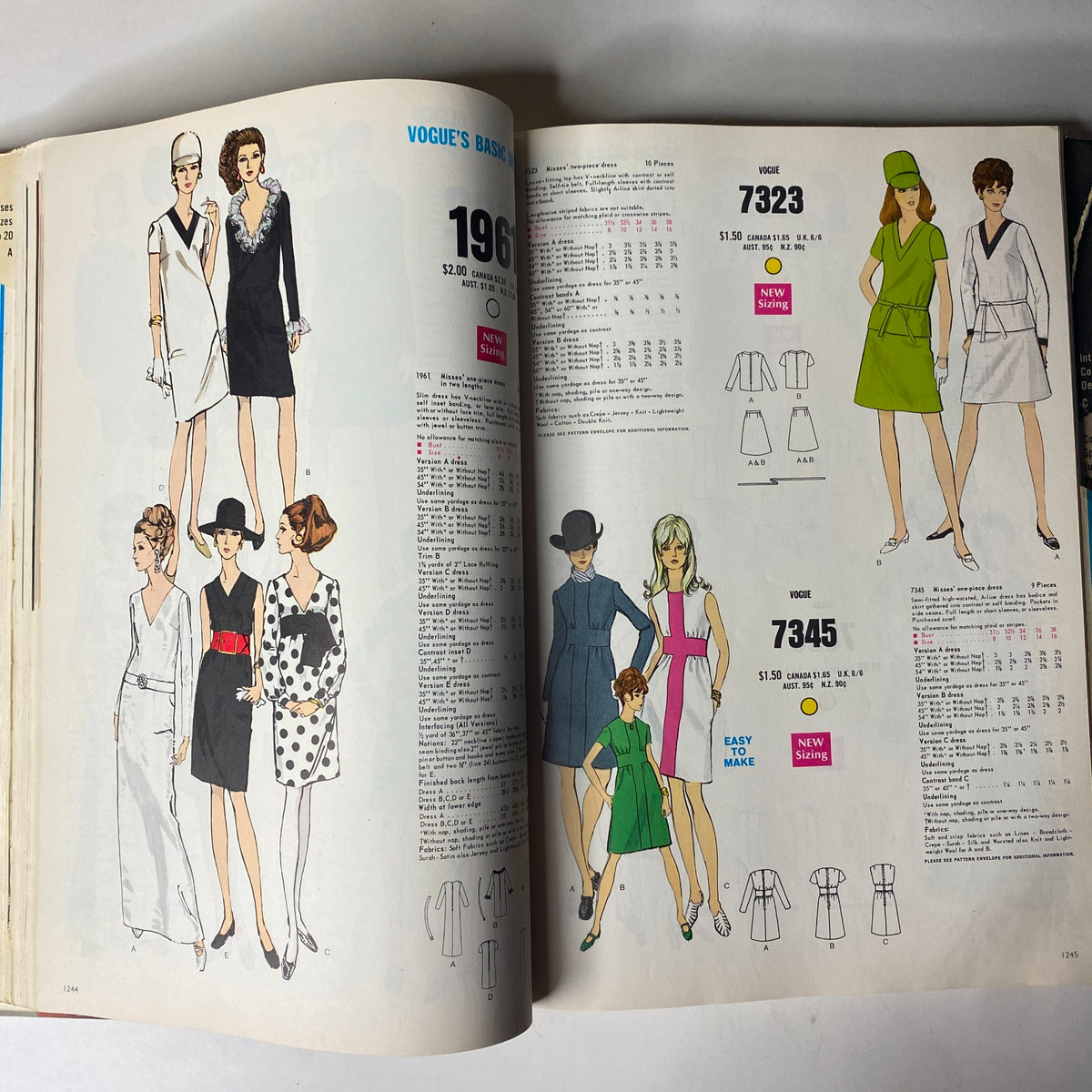
- Vogue Basic Design 1961: an empire-waist misses' jumper-dress in four design variations ranging from a floor-length white gown to a polka-dot long-sleeved dress, designed for stretchable knit fabrics at a $2.00 price point.
- Vogue 7323: a wrap dress with front-button closure, shoulder gathers, and belted waist, offered in long and short sleeve options and recommended for double knits and wool blends — a pattern representing one of the defining silhouettes of late-1960s fashion.
- Vogue 7345: a semi-fitted, beginner-accessible dress with optional front pleat and jewel neckline, shown in navy, pink-and-white color-block, and soft green empire-waist variations — documenting the color-block trend that was prominent across fashion at this moment.
- Fabric and construction guidance embedded in each pattern description, providing primary source documentation of the preferred materials and techniques of late-1960s home sewing practice.
- Retail pricing in US, Canadian, and UK currencies, offering a specific economic record of the pattern market across three national markets in mid-1969.
Condition & Rarity
Large store counter pattern catalogs were among the most heavily used publications in any fabric retailer's environment — handled daily, leafed through repeatedly, and treated as working tools rather than collectibles. A surviving example from July 1969 presenting in good condition, with the catalog intact as a complete reference volume, represents a meaningfully better survival rate than the typical fate of these objects. The plastic protective covering indicates collector-conscious storage. Good condition on a counter catalog of this age and original use profile implies intact binding, legible text and illustrations throughout, and no missing pages — the functional integrity that defines this type of object's value both as a collectible and as a working reference. Cover wear, edge softening, and minor interior marks are expected and consistent with Good grade on a publication that was designed for counter use rather than archival preservation. The combination of format — large counter book rather than individual pattern envelope — and specific date makes this a more specialized find than standard vintage pattern collecting typically produces.
Looking for More Issues Like This?
Surviving store counter catalogs from the late 1960s are genuinely uncommon, and the Vogue Patterns imprint places this one at the more sought-after end of the vintage sewing catalog market. The full collection of vintage Vogue Patterns catalogs at OriginalMagazines.com is the best place to explore what is currently available across different years and seasons. For collectors drawn to the broader fashion and print culture of this extraordinary year, the 1969 magazine collection offers a wide range of titles documenting one of the most visually and culturally rich years of the entire decade.