






Description
Collector's Note – Why This Issue Matters
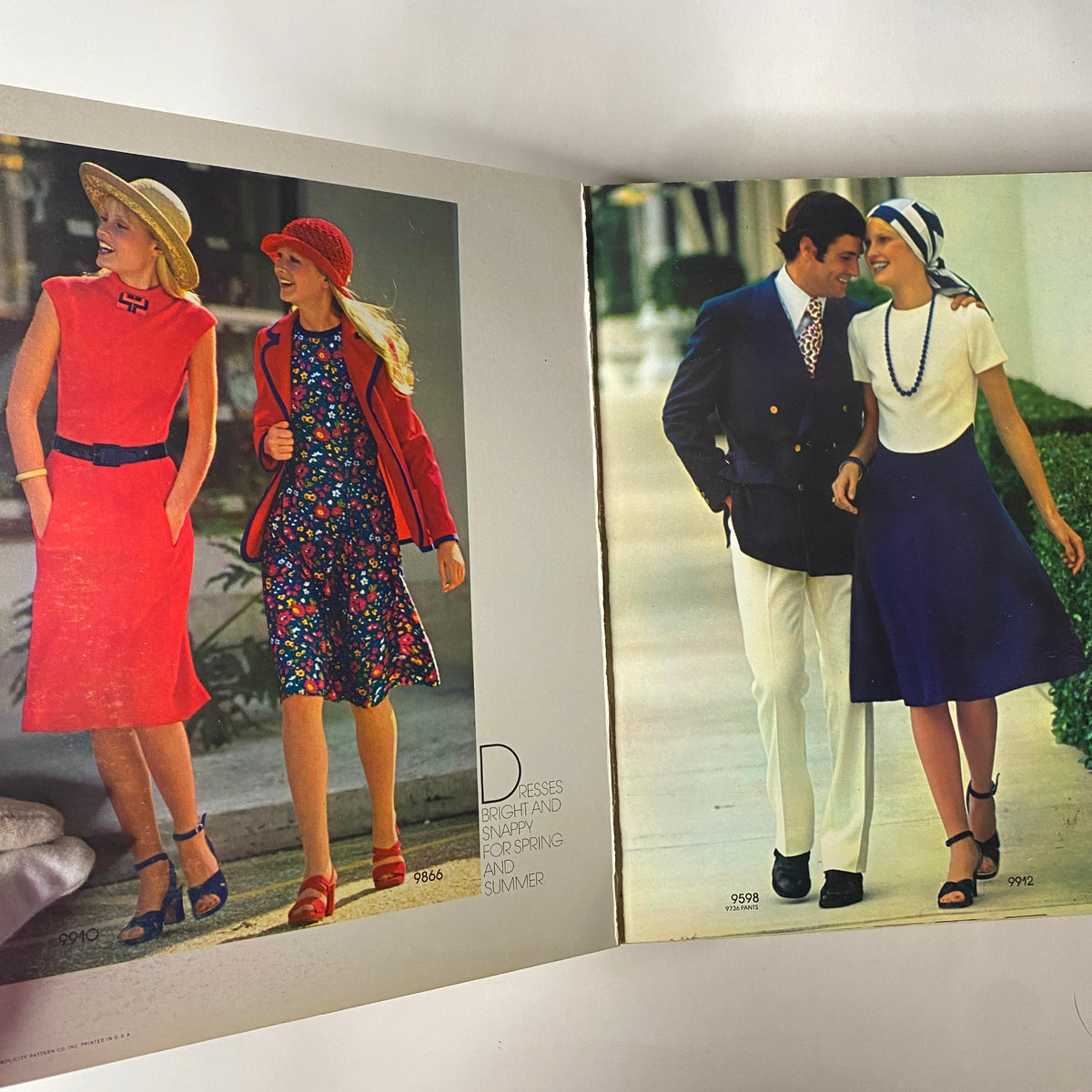
The spring of 1972 arrived at a fascinating crossroads in American fashion. The counterculture energy of the late 1960s had matured into something more wearable — boho silhouettes, relaxed separates, and expressive youth styles were finding their way into mainstream wardrobes, and home sewing was one of the primary vehicles through which everyday women participated in that shift. The Simplicity pattern catalog issued each season served as both a fashion document and a practical guide, translating runway and ready-to-wear trends into patterns that home sewists across the country could actually execute. The April 1972 Spring edition captures that moment precisely — a season when ponchos and blazers coexisted with bridal gowns and at-home wear, reflecting the genuine breadth of how American women dressed.
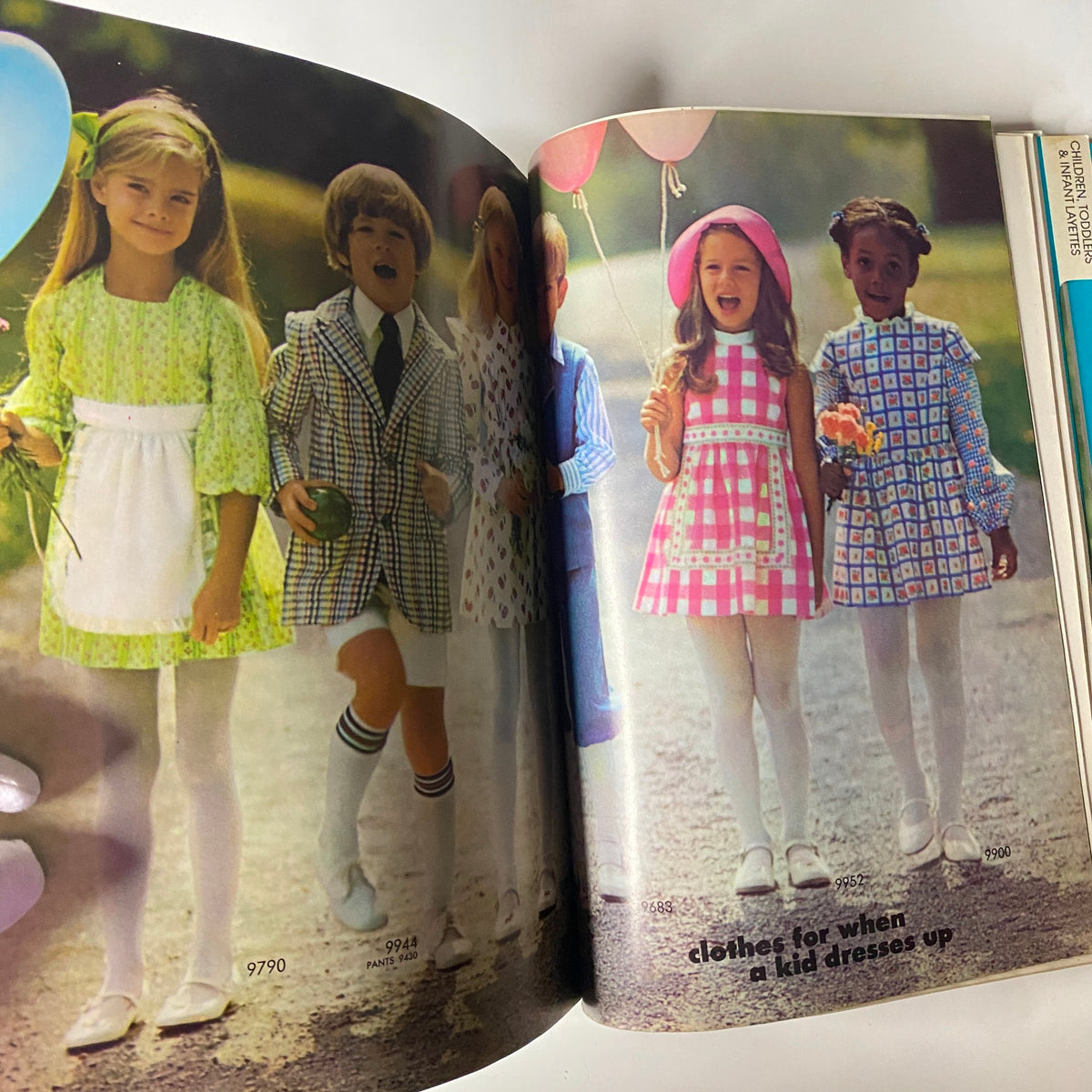
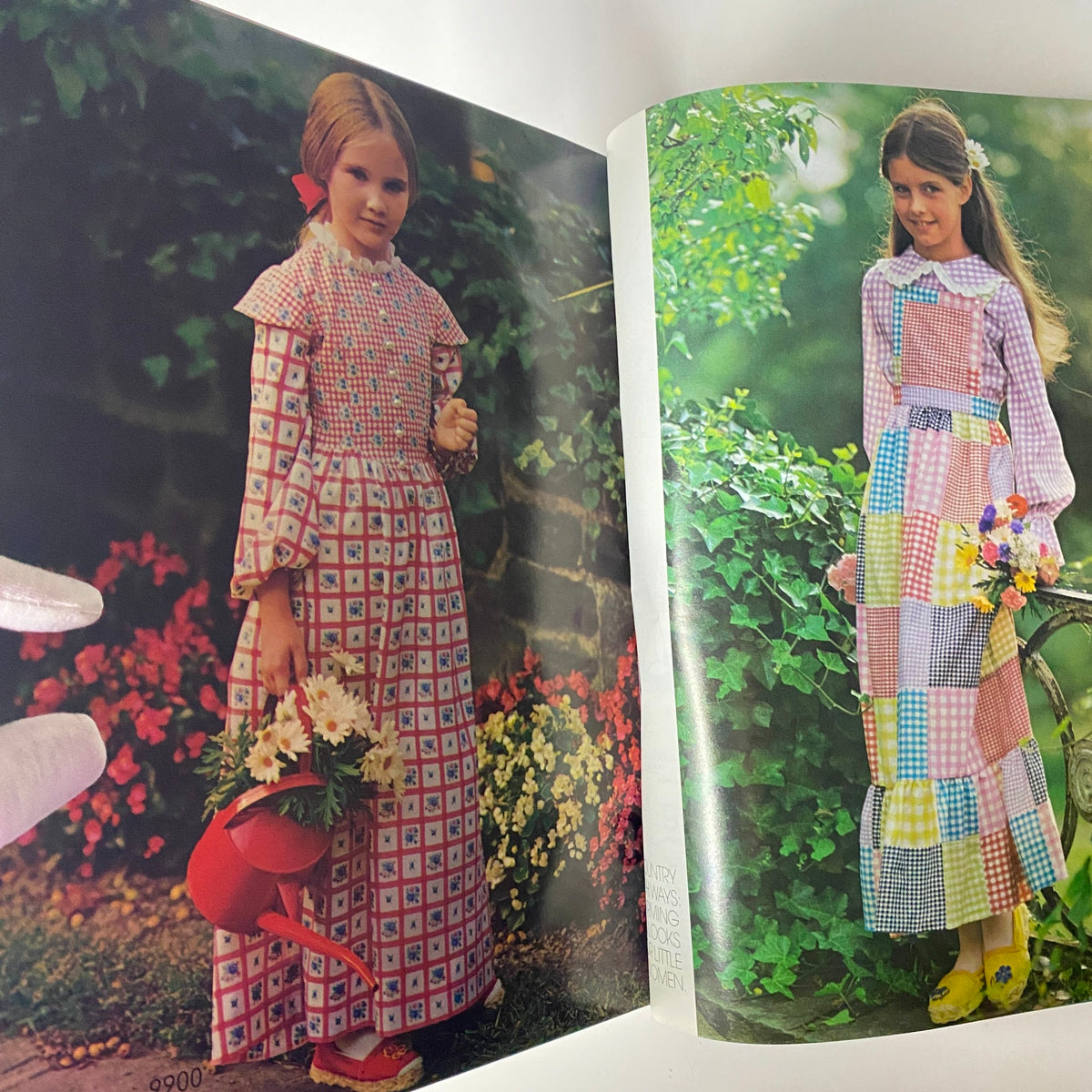
What makes this particular catalog historically meaningful is its role as a primary source. Unlike fashion magazines of the era, which reported on trends from a distance, a Simplicity counter catalog was a working document — dog-eared, consulted, and used. The patterns it contained were the clothes people actually made and wore. Sections like the Young Contemporary Shop and the Young Junior/Teens category speak directly to the generational energy of early-'70s style, while the inclusion of Designer Shop patterns confirms that Simplicity was actively bridging the gap between high fashion and the home sewing table. For researchers and collectors interested in what 1972 looked and felt like at a material, everyday level, this catalog is a direct artifact of that year.
The Spring 1972 edition also documents Simplicity's ongoing commitment to inclusive sizing — Half-Sizes and Women's categories appeared alongside the youth-oriented lines, a reminder that the catalog served a genuinely wide audience. The Jiffy and Super Jiffy lines, marketed as quick-sew solutions, reflect the period's awareness that modern women's time was increasingly pressured. These details, small on their own, add up to a remarkably complete picture of domestic fashion culture in the early seventies.
About the Publication
Simplicity Pattern Co. issued seasonal counter catalogs throughout most of the twentieth century, distributing them to fabric and notions retailers where they sat at cutting counters for customers to browse. Each volume — typically organized by garment category and size range — presented the full range of patterns available for that season, illustrated with fashion photography and technical drawings. By the early 1970s, Simplicity was one of the dominant pattern companies in the United States alongside Butterick and McCall's, and its catalogs were standard reference tools in fabric stores nationwide. The Spring catalog, issued in April, previewed the season's full pattern lineup and was aimed at home sewists of all skill levels, from beginners drawn to the Jiffy line to experienced dressmakers pursuing the Designer Shop offerings.
Key Highlights Inside
- The Young Contemporary Shop — Bold, expressive fashion aimed at younger sewists, reflecting the era's appetite for individualistic, trend-forward style.
- Young Junior/Teens, Young Miss, and Junior Petites — Dedicated sections addressing the youthful silhouettes and modern cuts that defined early-'70s casual and social dressing.
- Dresses across multiple categories — Including Misses, Miss Petites, Bridal, At-Home, and Party wear, representing the full spectrum of occasion dressing of the period.
- Designer Shop patterns — High-style offerings reflecting runway influences, positioned as accessible luxury for the skilled home sewist.
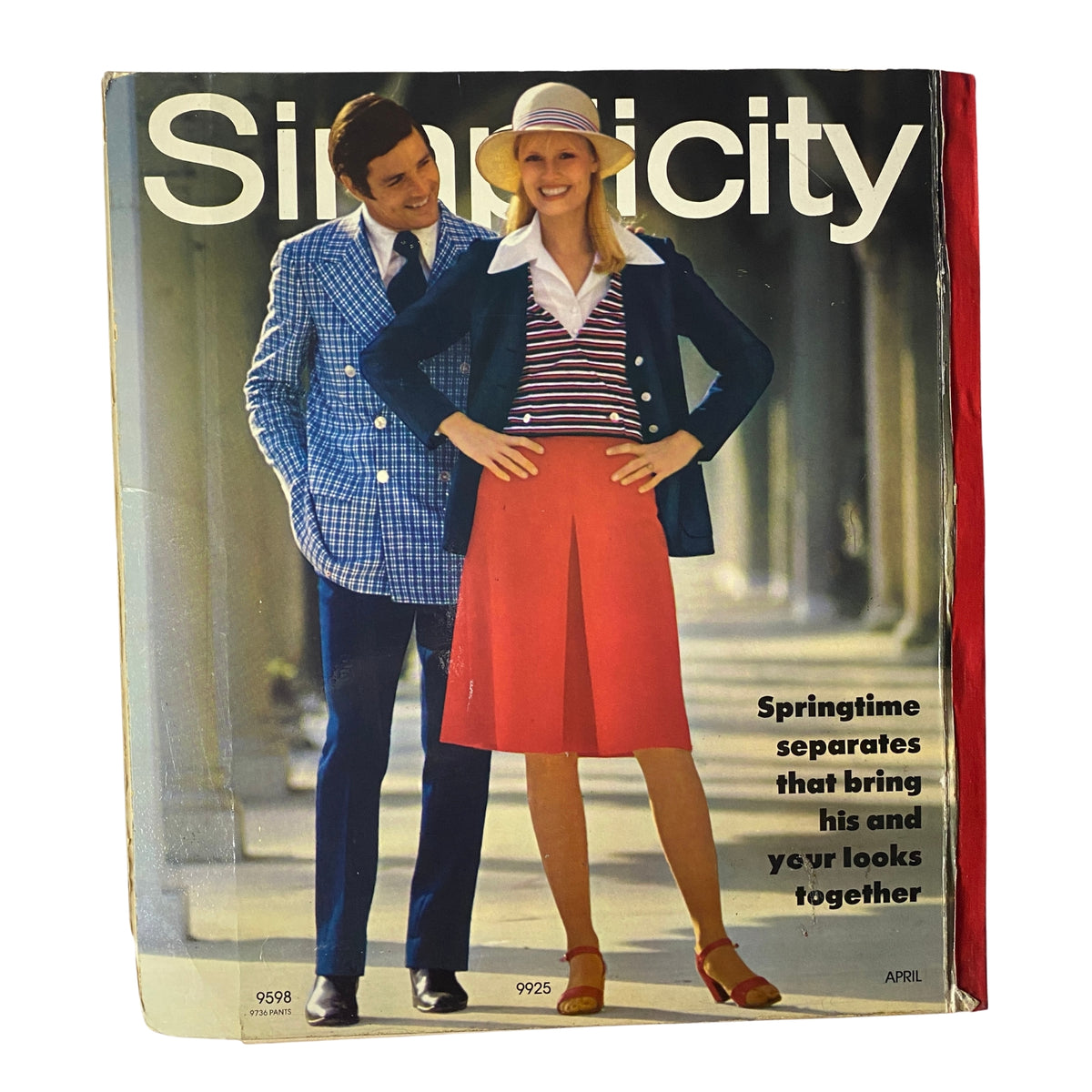
- Separates — Skirts, Blouses, Jumpers, Jackets, Ponchos, and Blazers — A robust separates section capturing the mix-and-match sensibility that defined early-'70s wardrobing.
- Coats, Capes, Suits, and Ensembles — Structured outerwear and polished coordinated pieces rounding out the seasonal wardrobe, reflecting the continued importance of tailored dressing in spring 1972.
Condition & Rarity
Simplicity counter catalogs from the early 1970s are genuinely difficult to find in collectible condition. These were working retail tools, not publications intended for preservation — most were discarded when the next season's catalog arrived. Surviving copies in good condition, with clean interior pages and only minor age-related wear, represent the upper tier of what the market typically offers. When evaluating any copy of this issue, the integrity of the interior pages is the primary concern: catalogs of this type were handled repeatedly by store customers, making page separation, heavy soiling, and torn covers the most common condition issues. A copy with clean pages and intact cover, showing only the expected light signs of age, is a sound find for a collector or researcher. The absence of price stickers or retailer stamps — common on counter copies — further adds to the desirability of any clean surviving example.
Looking for More Issues Like This?
The April 1972 Spring edition is a genuinely scarce survivor, and copies in collectible condition don't stay available for long. If you're building a reference library of home sewing history or early-'70s fashion documentation, the broader Simplicity pattern catalog collection at OriginalMagazines.com is the best place to continue browsing — seasonal and annual editions spanning multiple decades turn up there regularly. For collectors focused specifically on the cultural moment this issue documents, the full 1972 magazine and catalog archive offers a wide range of contemporaneous publications that together paint a detailed picture of that year.