






Description
Collector's Note – Why This Issue Matters
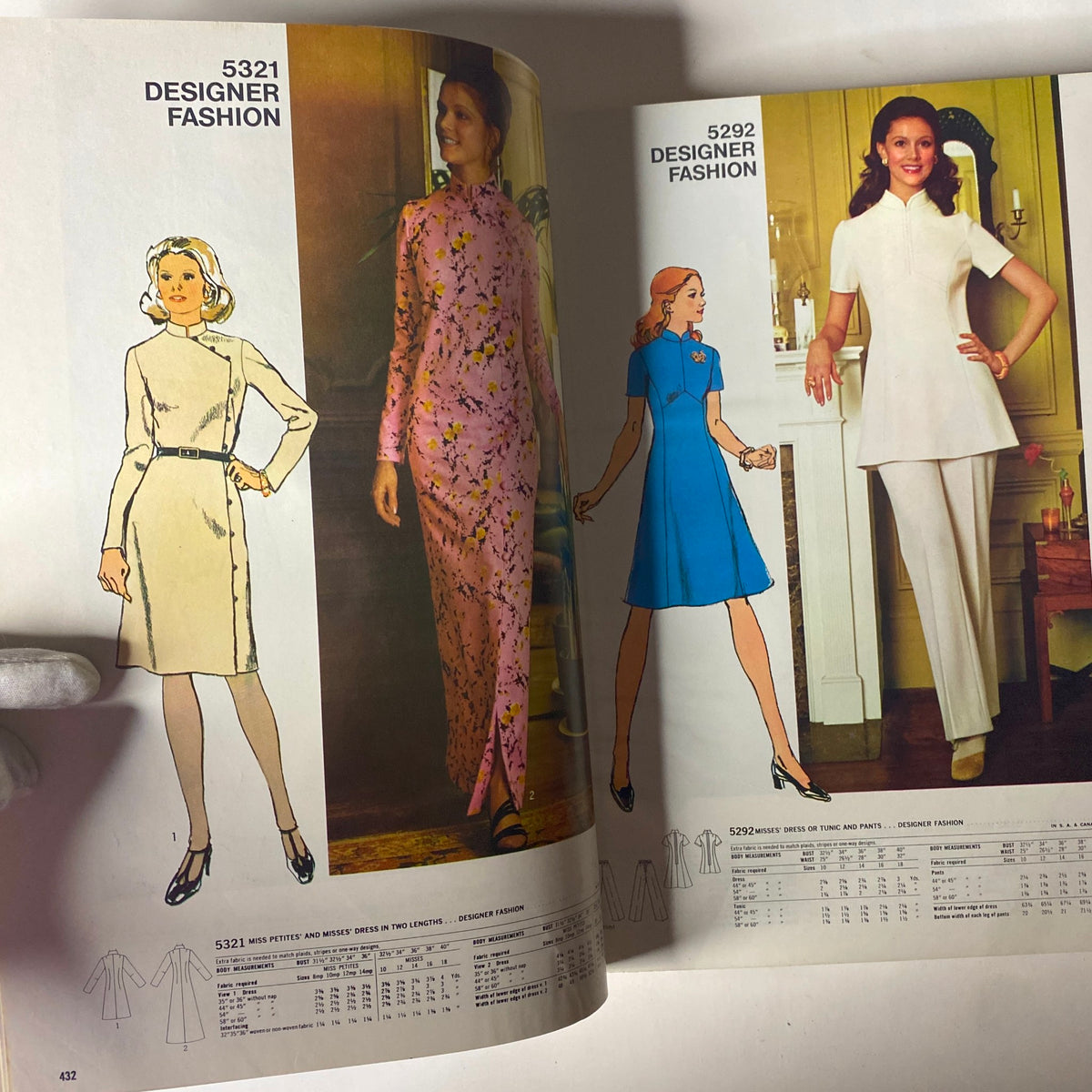
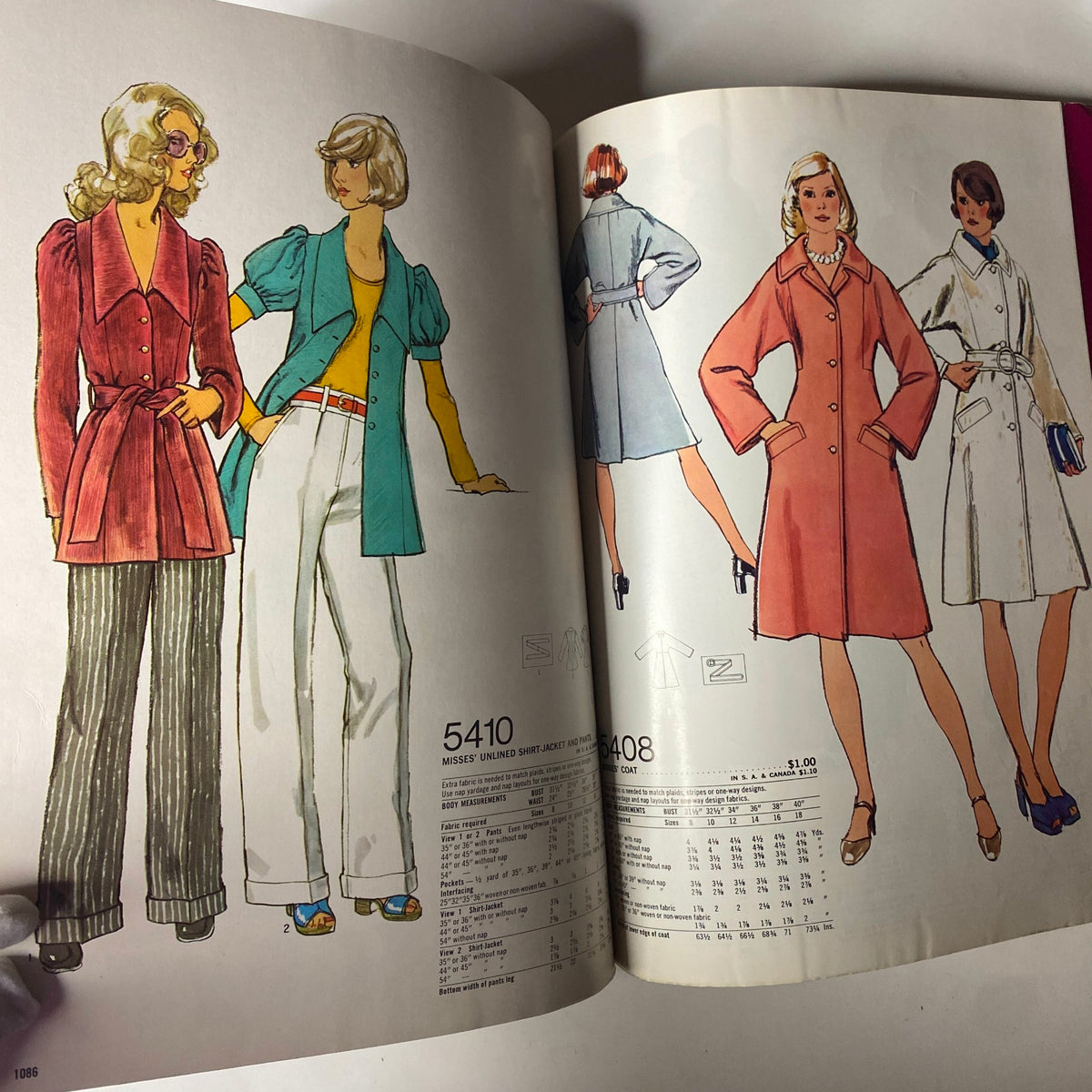
The December 1972 Simplicity Pattern Catalog closes out one of the more quietly transformative years in American ready-to-wear and home sewing history. By late 1972, the fashion industry was deep into the silhouette shift that would come to define the decade — midi and maxi hemlines competing with minis, the pantsuit fully normalized as women's daywear, and a general loosening of formality that made separates and mix-and-match dressing the dominant mode of practical fashion. A December catalog speaks directly to that moment: it was the edition home sewers consulted when planning winter wardrobes and holiday occasion wear, which means the pattern selection here reflects both everyday necessity and seasonal aspiration in equal measure.
For collectors building a chronological archive of Simplicity pattern catalogs, the December 1972 edition is a particularly useful data point. It sits just before the mid-1973 catalog, allowing direct comparison of how Simplicity's editorial categories and silhouette offerings evolved across a single year. The presence of dedicated "Young Contemporary" and "Young Junior/Teens" sections alongside the established Miss and Women's categories reflects the generational breadth Simplicity was deliberately cultivating — a company trying to be the pattern source for the fourteen-year-old and her mother simultaneously. The inclusion of Designer Fashions within the Miss & Miss Petite dress category signals that aspirational dressing was very much part of the pitch, even in a catalog defined by its accessibility.
Among publications from 1972, sewing catalogs occupy a distinct archival category. They are not commentary on fashion — they are fashion, reduced to its most functional and democratic form. Every illustrated pattern in this catalog represents something a real person could make at home with commercially available fabric and a basic machine. That directness gives December 1972 Simplicity an authenticity that fashion magazine coverage of the same period simply cannot match.
About the Publication
Simplicity Pattern Company, established in 1927 on the premise that stylish home sewing should be within reach of any skill level, published its seasonal and mid-year catalogs as large-format counter books intended for display in fabric and notions retailers. By the early 1970s, these catalogs were a fixture of the American sewing retail environment — browsed in stores, taken home, and used as working references throughout the season. The format organized patterns by demographic and category, moving from quick-sew beginner options through to formal and designer-tier looks, and was updated regularly to stay aligned with current fashion directions. The audience encompassed the full range of American home sewers: teenagers making their own clothes, women building practical wardrobes, and skilled sewists taking on formal occasion wear.
Key Highlights Inside
- Young Contemporary dresses and separates: Trend-forward designs aimed at younger adult sewists, reflecting the modern silhouettes — relaxed fits, wide legs, layered separates — that were defining early-seventies fashion at street level.
- Jiffy, Jiffy Knits & Super Simple patterns: Simplicity's accessible quick-sew lines, positioned for sewists who prioritized speed and wearability over construction complexity — a category that grew in commercial importance throughout this decade.
- Dresses across the full size spectrum: Patterns segmented by Young Miss, Junior, Junior Petite, Miss, Miss Petite, Women, and Half Sizes, with "Look-Slimmer" designated options and a Designer Fashions subcategory within the Miss range — notable for its acknowledgment of both fit diversity and aspirational style within a single catalog edition.
- Young Junior/Teens section: A dedicated category for younger sewists, with dresses and separates styled for the teen market — a segment Simplicity maintained as a distinct editorial priority throughout the early seventies.
- Comprehensive separates collection: Covering jumpers, pants, pantsuits, skirts, blouses, bodysuits, and accessories, the separates section documents the mix-and-match wardrobe philosophy that was displacing occasion-specific dressing as the dominant approach to everyday style in this period.
Condition & Rarity
Described as good condition with clean interior pages and light shelf wear, this catalog represents a meaningfully well-preserved example of a format that was engineered for heavy retail use and rarely survived it intact. Counter-format pattern catalogs from the early seventies were handled by store customers continuously throughout the season, making copies with clean interiors and intact bindings genuinely uncommon among surviving examples. Light shelf wear on the exterior of a counter book that remained in good structural condition throughout its useful life is a reasonable and expected attribute — the condition concern to watch for in any surviving copy of this issue is spine integrity and cover surface preservation, both of which appear to be sound here. The protective plastic sleeve indicates deliberate preservation practice at some point in the catalog's post-retail history.
Looking for More Issues Like This?
December counter catalogs from the early seventies are among the more elusive editions to find in genuinely good shape — they saw heavy holiday-season use and were rarely set aside for preservation. The Simplicity catalog collection is the right place to look for other seasonal and annual editions worth adding to a focused archive, and the 1972 magazine and catalog collection offers additional material from this same fashion moment for collectors working that specific year.