





Description
Collector's Note – Why This Issue Matters
The 1972 Neckermann Sommer catalog is a primary document of West German consumer culture at one of the most historically significant summers in the country's postwar history. The summer of 1972 was the year of the Munich Olympics — the first Summer Games held on German soil since the deeply tainted 1936 Berlin Games, and for West Germany an extraordinary opportunity to present a democratic, open, and modern national identity to the world. The Games opened in late August to international celebration, then ended in tragedy with the Munich massacre on September 5, when eleven Israeli Olympic team members were killed by Palestinian terrorists. The Neckermann summer catalog reached West German households in the weeks and months surrounding that extraordinary event, documenting the ordinary consumer life of a society simultaneously proud of its democratic reinvention and shattered by the violence that ended its Olympic moment. That specific historical positioning — the summer of Munich's pride and tragedy — gives the 1972 Neckermann summer catalog a contextual weight that few catalog editions from any era or country can match. Collectors building a documentary record of early-1970s West German life will find the Neckermann catalog archive an essential resource for understanding how mainstream consumer culture expressed itself through one of the postwar era's most historically charged years.
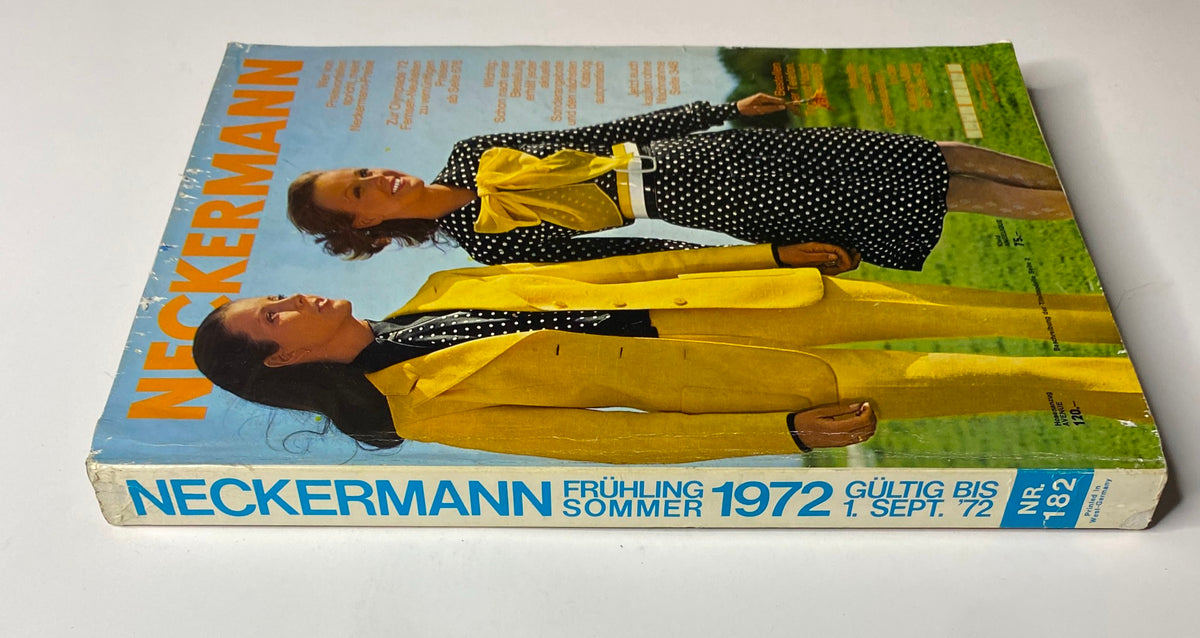
The early-1970s aesthetic documented in this catalog reflects a West German mass-market fashion moment that was actively and visibly transitioning. By the summer of 1972, the late-1960s mod aesthetic had largely receded from mainstream catalog fashion, and the distinctly 1970s visual language — earth tones, synthetic fabric confidence, relaxed and fluid silhouettes, the early emergence of the coordinated separates philosophy — was establishing itself with increasing commercial authority in the Neckermann summer line. The listing notes vibrant and evolving styles, which is an accurate characterization of a fashion moment in active development: 1972 summer fashion in the West German mass market was neither fully late-1960s nor fully mid-1970s but genuinely transitional, making this catalog a particularly useful primary source for researchers tracing the precise chronology of the decade's aesthetic development. Home goods and lifestyle products documented alongside the fashion pages illuminate the domestic priorities of West German families in the summer that the Munich Olympics briefly made the most watched city in the world. The full range of 1972 publications provides essential context for the extraordinary year this catalog documented.
Within the Neckermann collecting category, early-1970s summer catalogs from the transitional aesthetic period are particularly valuable for comparative research. The 1972 edition sits at the precise mid-point of the late-1960s-to-mid-1970s transition, and placing it alongside the 1969 or 1970 summer editions that preceded it and the 1974 or 1975 editions that followed provides one of the clearest available visual records of how the decade's aesthetic arrived in the West German mass retail market.
About the Publication
Neckermann Versand, founded in Frankfurt in 1950 by Josef Neckermann, grew into one of West Germany's largest and most recognized mail-order companies, issuing seasonal general merchandise catalogs that reached millions of German households at their peak. The company's summer editions covered fashion, household goods, outdoor products, and lifestyle merchandise in a comprehensive format designed to function as a complete warm-weather retail reference for subscribing households. By the early 1970s Neckermann's catalogs were full-color publications reflecting the era's evolving visual aesthetic, and they serve today as detailed primary sources for researchers of postwar German consumer culture, European fashion history, and the material culture of Cold War-era West German domestic life.
Key Highlights Inside
- Summer fashion for men, women, and likely children reflecting the early-1970s West German mass-market aesthetic in active transition — the late-1960s visual language receding and the distinctly 1970s sensibility of earth tones, synthetic fabrics, and relaxed silhouettes establishing itself as the emerging commercial standard.
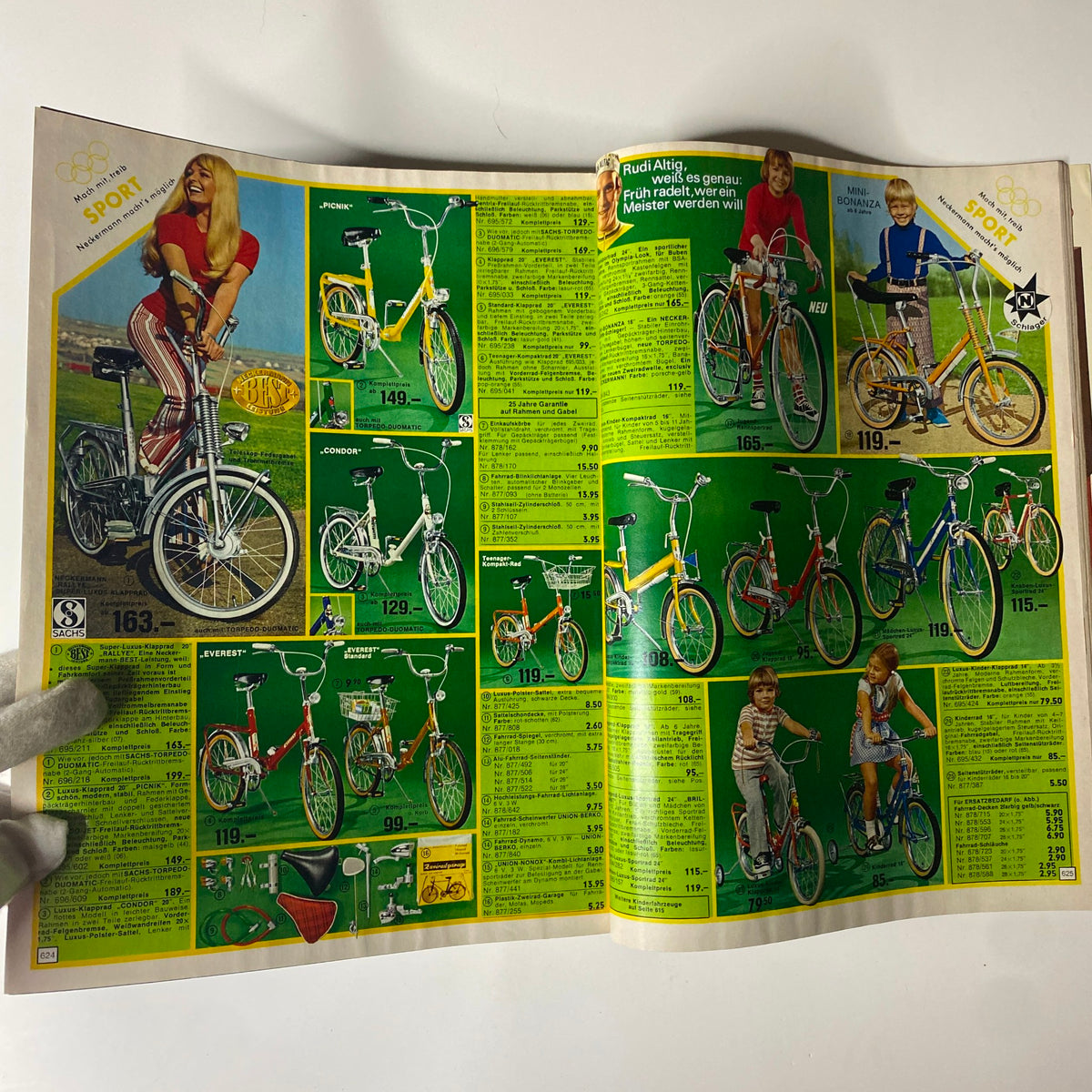
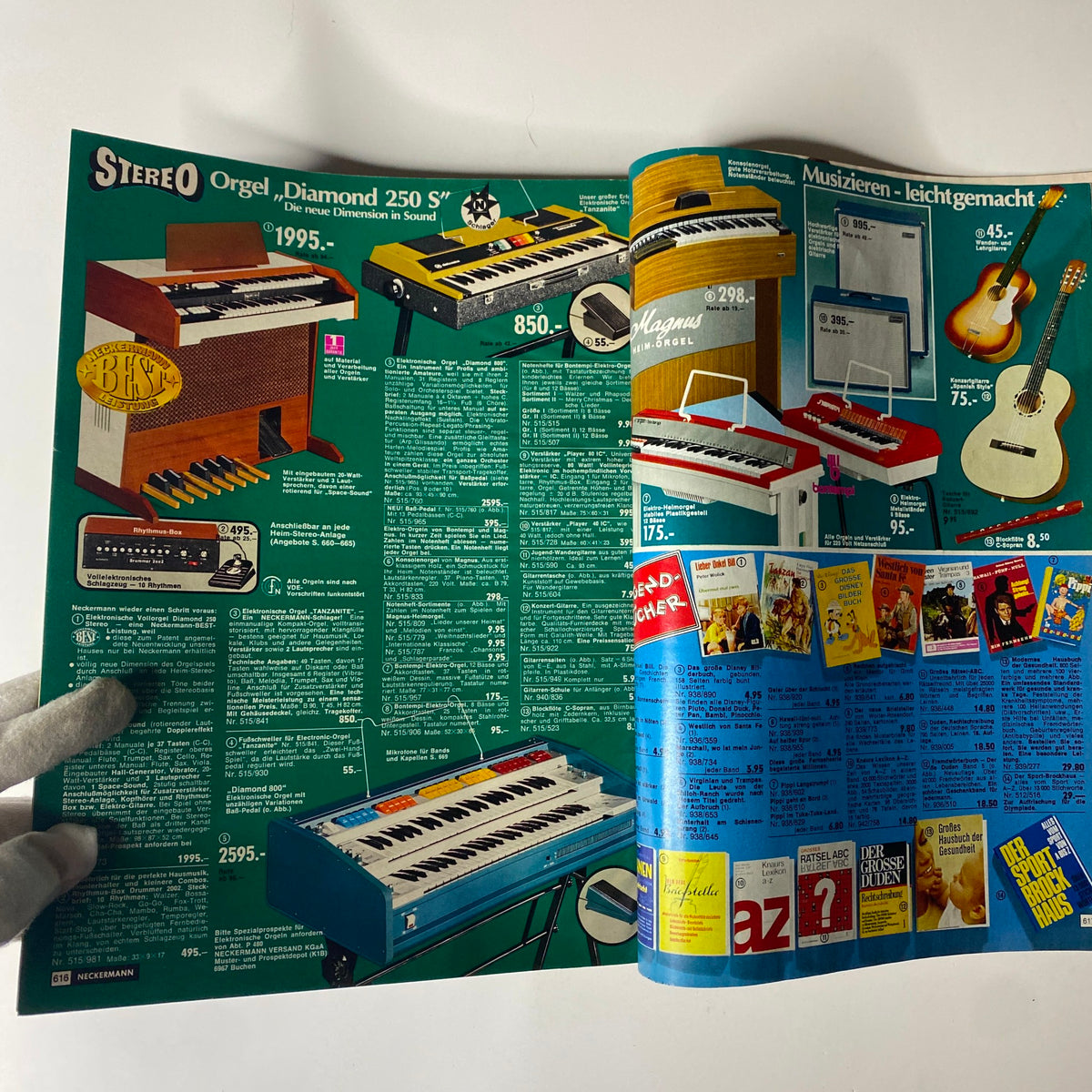
- Home goods and lifestyle products documenting the consumer priorities of West German families in the summer of 1972 — the Olympic summer that brought the world's attention to Munich before ending in tragedy, and whose ordinary consumer life this catalog records with the specificity of a working retail document.
- The visual production language of early-1970s German catalog publishing — photography conventions, color reproduction, and layout design characteristic of Neckermann's publications at this transitional aesthetic moment, distinct from both the late-1960s editions that preceded it and the mid-decade editions that followed.
- Note: Specific section titles, page counts, and detailed interior content beyond what is documented in the listing have not been independently confirmed. The above reflects what is verifiable from the listing description and well-documented knowledge of Neckermann's catalog format and the consumer culture of this era.
Condition & Rarity
Neckermann summer catalogs from the early 1970s were produced as working household retail documents with no expectation of long-term preservation, and surviving examples in good condition are less common in the international market than their original West German print runs would suggest. A copy rated in good condition with a protective plastic sleeve represents a well-preserved artifact by realistic standards for a catalog now more than fifty years old. When evaluating any surviving copy of this catalog, the primary condition factors are cover brightness and the integrity of the full-color printing — early-1970s catalog photography and graphic design are susceptible to color shift, paper tanning, and fading with age — along with binding cohesion, page completeness, and the absence of significant moisture damage or household markings. Good condition on a catalog of this age and format indicates structural soundness and visual legibility sufficient for both research and display purposes.
Looking for More Issues Like This?
Early-1970s Neckermann summer catalogs are a specialized and historically resonant find in the European vintage retail ephemera collecting category, and the 1972 edition — from the Olympic summer that defined and then devastated West Germany's most celebrated postwar moment — draws consistent interest from collectors and researchers of West German consumer culture and modern European history. The Neckermann catalog collection at OriginalMagazines.com is the most focused resource for locating other seasonal editions from this important West German mail-order institution. Collectors building around the extraordinary year of 1972 will also want to explore the 1972 magazine collection, which brings together a range of period publications that document the style, Olympic pride, tragedy, and everyday life of one of the most historically consequential years in postwar West German history.